Chicken and rice can soothe mild stomach upset and help dogs transition back to normal food. Learn safe recipes, portions, how long to feed it, and when to c...
Article
•
Designer Mixes
What to Give Your Dog for Diarrhea

Shari Shidate
Designer Mixes contributor
Diarrhea is a very common reason dogs end up in a vet clinic, and it can feel scary because it shows up fast. The good news is that many mild cases can improve within 24 to 48 hours with the right home support. The key is knowing what is safe to try at home, what to avoid, and when it is time to call your veterinarian. If symptoms worsen at any point, do not wait out the timeline.
As a veterinary assistant, I always tell families to focus on three basics first: hydration, gut-friendly food, and close observation. Let’s walk through exactly what to give your dog for diarrhea, step-by-step.
First, decide if it is safe to treat at home
Before you change food or add supplements, do a quick safety check. Home care is usually reasonable if your dog is still bright, alert, drinking water, and the diarrhea is mild.
Call your vet right away if you notice:
- Blood in the stool (bright red or black, tarry stool)
- Repeated vomiting or your dog cannot keep water down
- Signs of dehydration (tacky or sticky gums, sunken-looking eyes, weakness, reduced urination)
- Severe lethargy, collapse, fever, or obvious abdominal pain
- Diarrhea lasting longer than 24 to 48 hours or not improving
- Toy breeds and very small dogs: call sooner if not improving within 12 to 24 hours or if stools are frequent and watery
- Puppies, seniors, or dogs with chronic disease (kidney disease, diabetes, Addison’s, cancer, etc.)
- Possible toxin exposure (trash, human meds, xylitol, chocolate, rodent bait, compost)
If any of the above apply, it is safer to treat diarrhea as urgent, not a wait-and-see situation.
Note: This article is general guidance and does not replace veterinary diagnosis, especially if your dog seems unwell.
What to give your dog for diarrhea
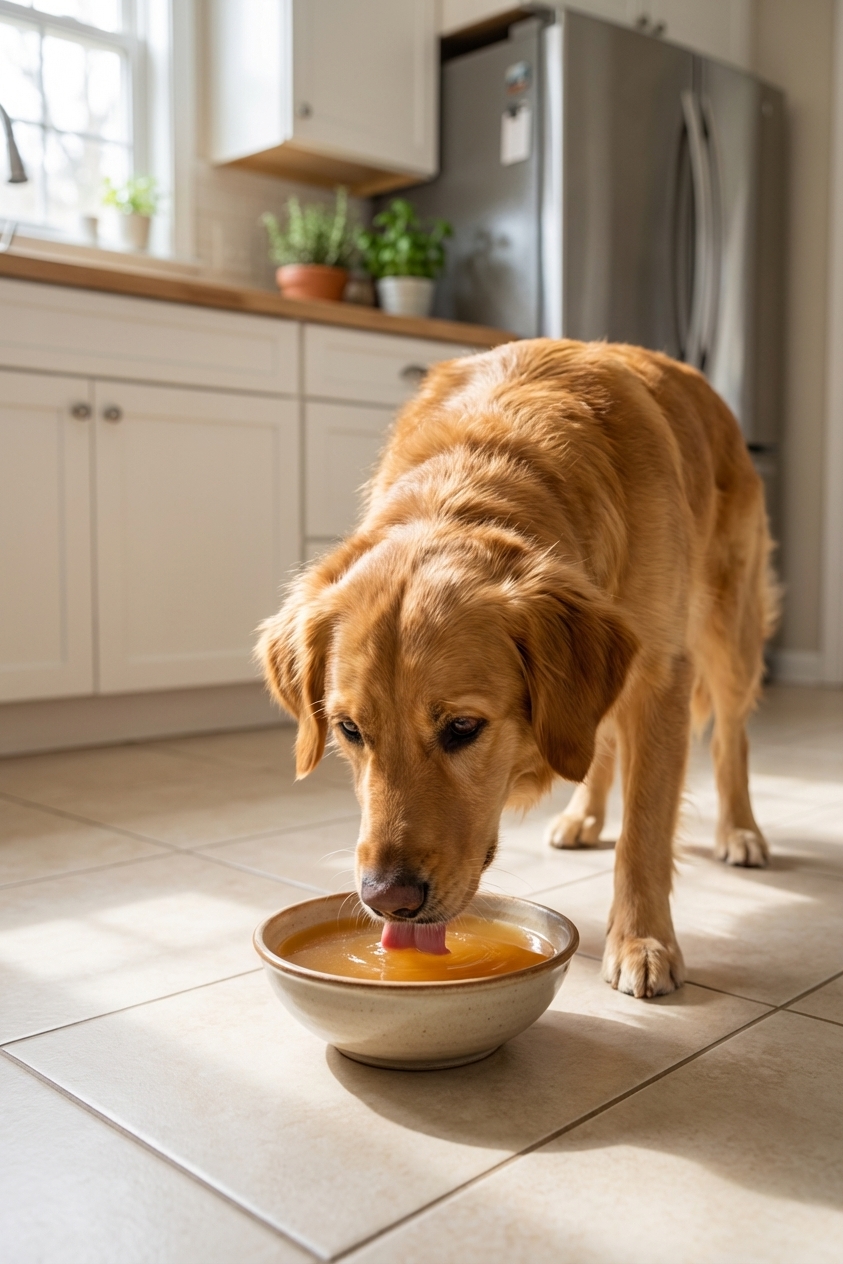
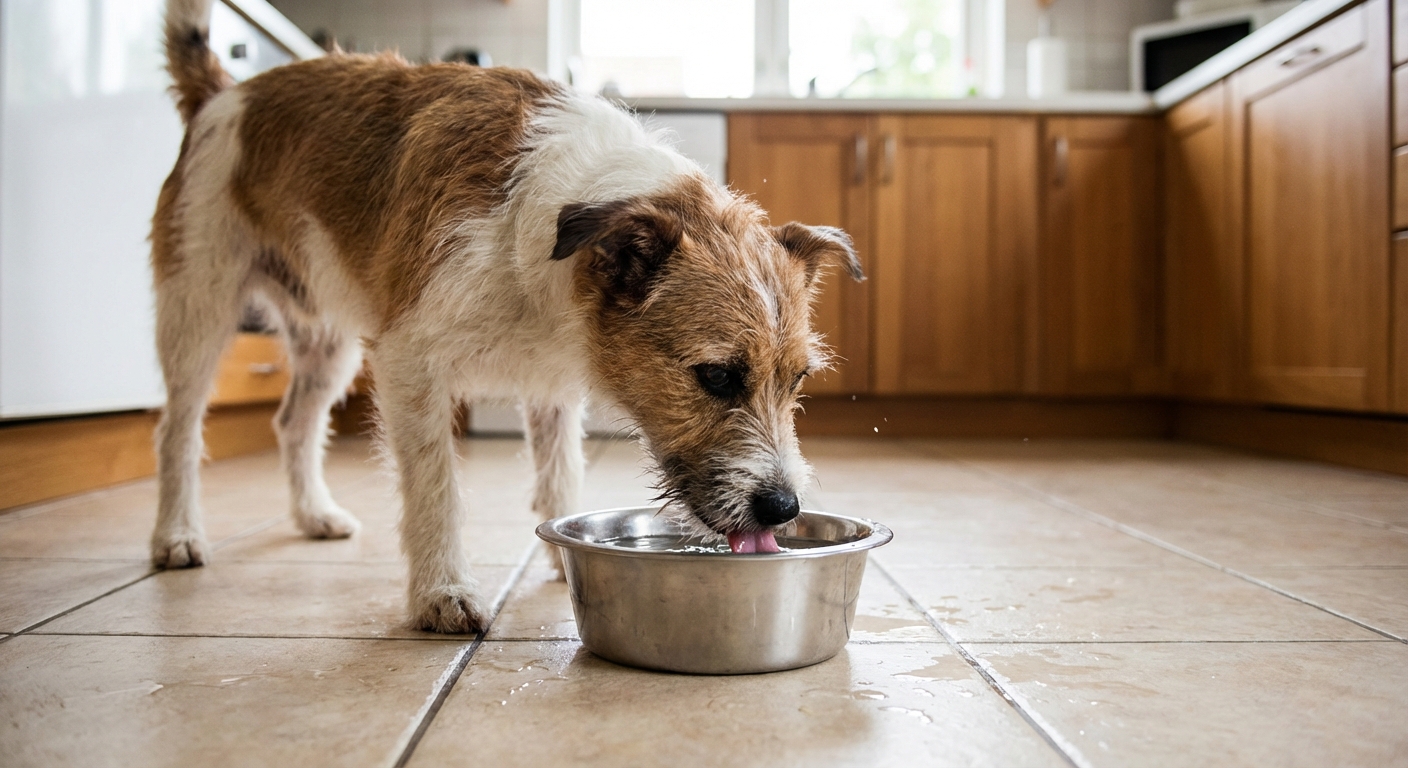
1) Water first
Diarrhea can lead to fluid and electrolyte loss. Fresh water should be available at all times. If your dog gulps water and vomits, offer smaller amounts more frequently.
- Offer small, frequent drinks (especially for dogs who drink too fast).
- For some dogs, ice chips can be easier to tolerate than a full bowl.
Electrolytes: In some cases, your veterinarian may recommend an oral electrolyte solution. Do not force sports drinks or heavily sweetened products. Avoid homemade salt and sugar mixes unless your vet gives you a recipe and dose, since the wrong concentration can cause problems.
2) A short pause on food (only for some dogs)
For a healthy adult dog with mild diarrhea and no vomiting, some vets suggest a brief food break. Many clinics recommend no more than 8 to 12 hours off food for an adult dog, with water available. Other dogs do better with small bland meals right away.
Do not fast puppies, tiny dogs, or dogs with diabetes unless your veterinarian tells you to. If there is vomiting, significant weakness, or you suspect your dog ate something risky, call your vet instead of fasting at home.
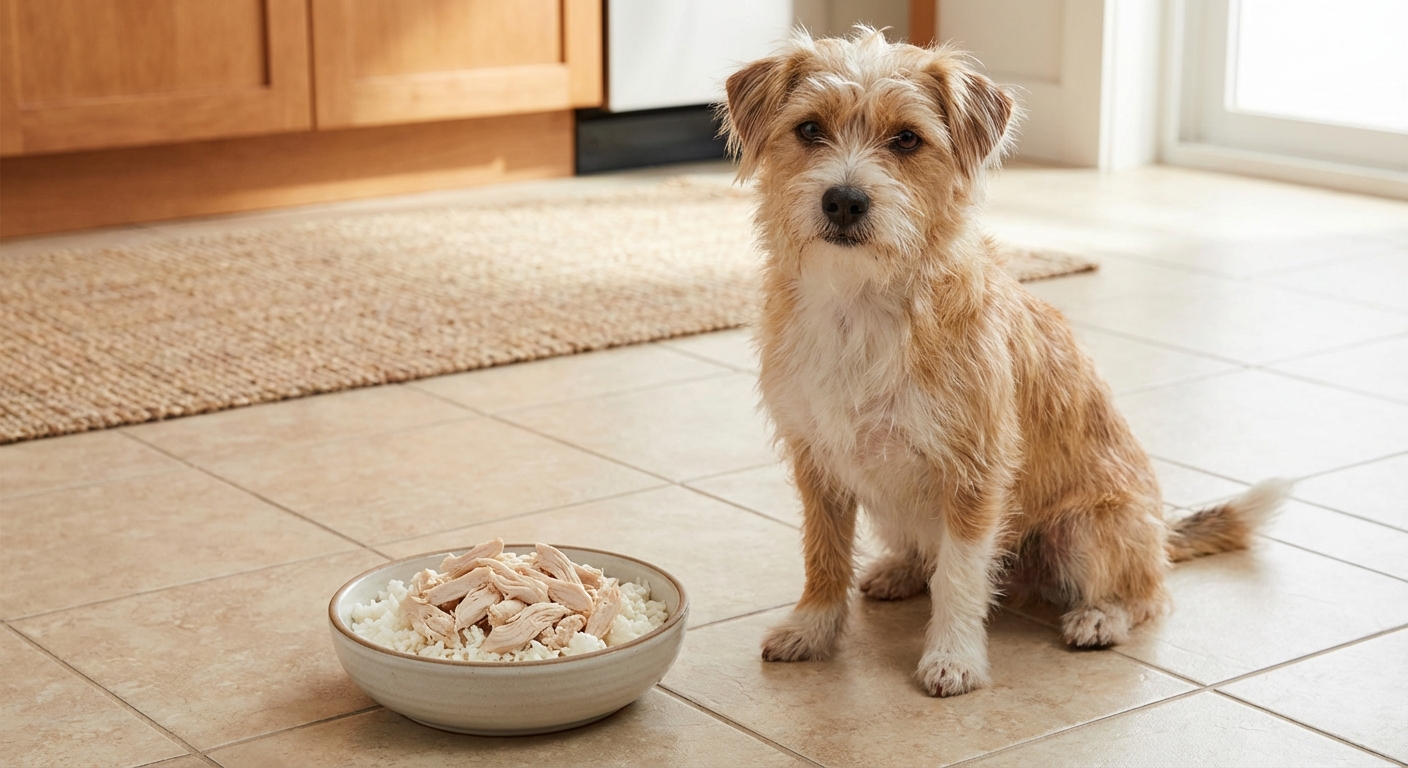
3) Bland, gentle meals
After the brief rest period, a bland diet can calm the gut and help stools firm up. Feed small portions, 3 to 6 mini-meals a day.
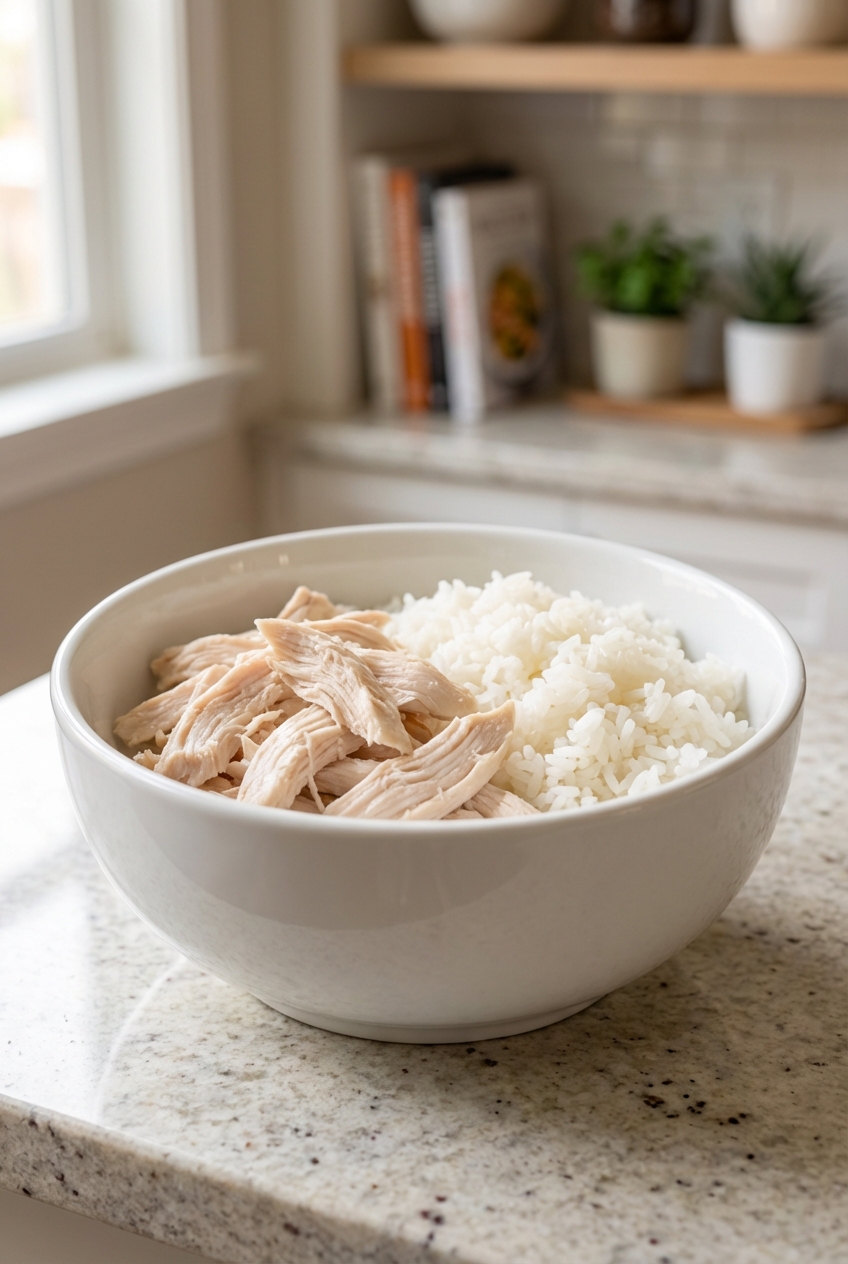
- Boiled skinless chicken breast (or lean turkey) + white rice
- Lean cooked ground beef (drained well) + white rice
- Prescription gastrointestinal diet from your vet, if available
Simple ratio (general): Many dogs do well with about 1 part meat to 2 parts rice. If your veterinarian has given you a specific plan for your dog, follow that instead.
Portion tip: Start smaller than you think. Overfeeding, even bland food, can keep diarrhea going.
Special note: If your dog has a history of food allergies or chronic itch and ear infections, chicken may not be the best choice. A veterinary GI diet can be a better option. When in doubt, ask your vet what protein is safest for your dog.
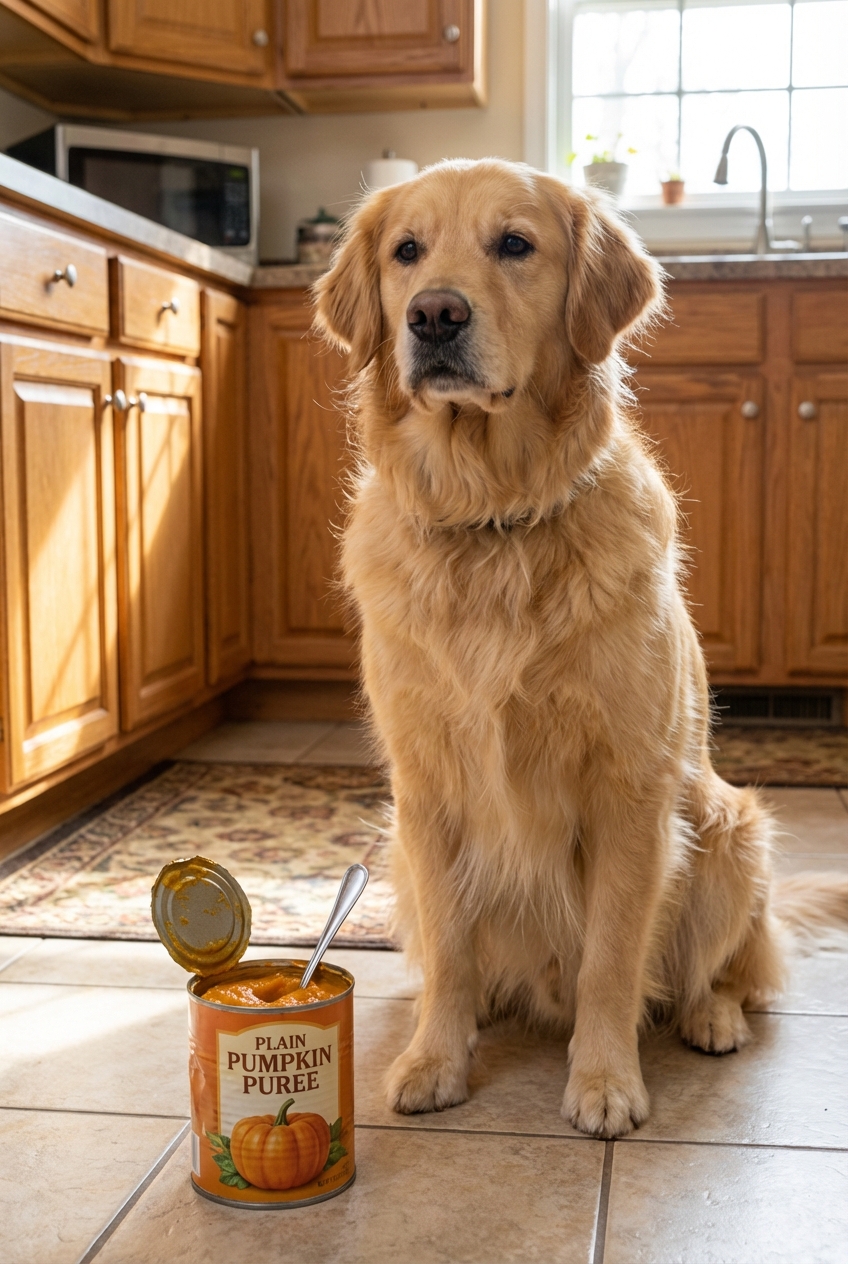
4) Plain pumpkin (the right kind)
Plain canned pumpkin (not pumpkin pie filling) is a gentle source of soluble fiber. Fiber can help normalize stool by supporting more consistent water balance in the gut. It may help with loose stools and, in some dogs, constipation.
- Small dogs: start with 1 teaspoon
- Medium dogs: start with 1 to 2 tablespoons
- Large dogs: start with 1 to 3 tablespoons
Mix it into bland food. If the stool worsens or your dog seems gassy or uncomfortable, stop and call your vet.
5) Probiotics made for dogs
Diarrhea often involves disruption of the gut microbiome. A veterinary probiotic can help restore balance. Look for products specifically made for dogs, ideally with clear strain information and storage guidance.
- Ask your veterinarian about a trusted probiotic (many clinics carry them).
- Use as directed for your dog’s weight.
6) Soluble fiber (only if your vet agrees)
Some dogs benefit from a small amount of soluble fiber, but it depends on the cause of diarrhea. Pumpkin is usually the simplest choice. In certain cases, your vet may recommend psyllium husk or a specific fiber supplement. Check first, especially if your dog has any history of constipation or bowel disease.
7) Track symptoms as you go
Keeping notes helps you catch red flags early and gives your vet better information if you need to call.
- Track frequency, volume, and whether you see mucus or blood.
- Note appetite, energy, vomiting, and water intake.
- If you can, take a clear photo of the stool to show your vet.
- Save a fresh stool sample (ideally from the same day) in a clean container in the refrigerator, and bring it in if your clinic asks.
What not to give your dog
This part matters just as much, because well-meaning choices can backfire.
- Fatty foods (bacon, sausage, greasy leftovers): can trigger pancreatitis and worsen diarrhea.
- Milk or ice cream: many dogs are lactose intolerant.
- Seasoned foods: onions, heavy spices, rich sauces can irritate the gut and some ingredients are toxic.
- Grapes or raisins, xylitol, chocolate: toxic, emergency-level concerns.
- OTC dewormers without guidance: diarrhea has many causes, and guessing can delay the right treatment. Your vet can recommend the correct test and medication.
- Random human anti-diarrhea meds: some can be dangerous for dogs or mask serious disease. Only use medications if your veterinarian tells you exactly what and how much.
If you are ever tempted to treat diarrhea with a medicine you already have at home, it is worth pausing and calling your vet first.
When your vet may prescribe medication
Not every dog with diarrhea needs medication, but it can be appropriate depending on the cause and how your dog is doing.
- Anti-nausea medication if vomiting is involved
- Deworming based on testing or strong suspicion
- Gut protectants and supportive care
- Antibiotics only when indicated (certain infections, specific test results, or more severe cases)
If your dog is getting worse, not better, it is a sign to stop home care and get veterinary help.
How to transition back to normal food
Once stools start to firm up, keep the bland diet for a short period so the intestines can truly settle.
- Continue bland food for 24 to 48 hours after stools normalize.
- Then transition back slowly over 3 to 5 days by mixing increasing amounts of your dog’s regular food.
If diarrhea returns during the transition, go back to bland meals and call your veterinarian. That can be a clue there is an underlying sensitivity, parasite, infection, or dietary issue that needs attention.
Common causes of diarrhea
Sometimes diarrhea is just a one-time upset stomach. Other times it is your dog’s way of saying something bigger is going on.
- Dietary indiscretion: trash, table scraps, new treats, chewing toys or bones
- Sudden food change: switching diets too quickly
- Stress: boarding, travel, new pets, schedule changes
- Parasites: especially in puppies or dogs who visit dog parks
- Infections: bacterial or viral
- Food intolerance or inflammatory bowel issues
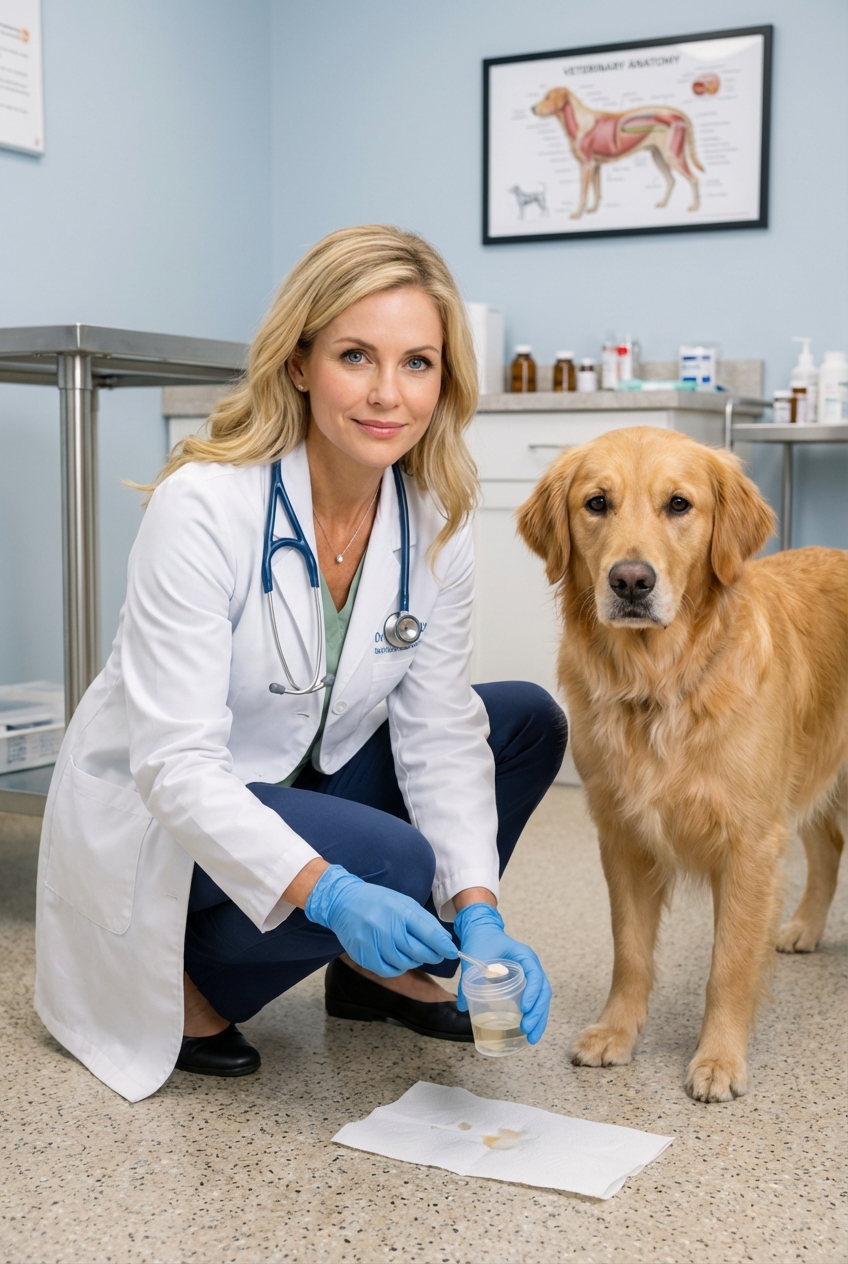
If diarrhea is recurring, bring a fresh stool sample to your vet. A simple fecal test can save weeks of guessing.
Quick care checklist
- Make sure your dog is drinking and acting mostly normal.
- Offer small, frequent water intake.
- Consider a short food break for healthy adult dogs only, if no vomiting and your vet agrees.
- Feed small portions of bland food (chicken or turkey and white rice).
- Add plain canned pumpkin in modest amounts.
- Use a dog-specific probiotic.
- Track stool, energy, appetite, and hydration.
- Call your vet promptly for blood, vomiting, weakness, dehydration, or prolonged diarrhea.
Gentle reminder: If your dog is very small, very young, very old, or has other health conditions, diarrhea can become serious faster. When in doubt, it is always okay to call your veterinary clinic for guidance.