Vet-informed guide to a short-term bland diet for dogs: chicken and rice 1:2 ratio, daily cup ranges by weight, how many meals to split into, and red flags t...
Article
•
Designer Mixes
What to Give Dogs for Diarrhea

Shari Shidate
Designer Mixes contributor
Diarrhea is one of the most common reasons I see worried pet parents call a clinic. The tricky part is that diarrhea can be a mild, short-lived upset or a sign of something more serious. This handbook will help you figure out what you can safely give your dog at home, what to avoid, how to support hydration, and when it is time to call your veterinarian.
First, check for red flags
Before you offer any home care, do a quick safety check. If any of these apply, skip home remedies and call your veterinarian or an emergency clinic.
- Puppy (especially under 6 months), senior dog, or any dog with chronic illness (kidney disease, diabetes, Cushing’s, cancer)
- Bloody stool (red streaks or black, tarry stool)
- Repeated vomiting, severe lethargy, collapse, pale gums, or signs of pain
- Possible toxin exposure (chocolate, xylitol, grapes/raisins, human meds, rodent bait, mushrooms)
- Suspected foreign body (ate a toy, sock, bone, corn cob, etc.)
- Dehydration (dry tacky gums, sunken eyes, weakness, reduced urination)
- Diarrhea lasting more than 24 to 48 hours, or frequent large-volume watery diarrhea
- Any worsening at any time, even if it has only been a few hours
Tip: Bring a photo of the stool and a list of any new foods, treats, chews, table scraps, or recent boarding and dog-park visits. It speeds up diagnosis.
Another tip: If you end up coming in, bring a fresh stool sample in a sealed bag or container. If it will be more than a couple of hours, refrigerate it and bring it within 12 hours when possible.
Why dogs get diarrhea
Diarrhea is a symptom, not a diagnosis. Common causes include:
- Dietary indiscretion (trash, fatty foods, sudden diet change)
- Food sensitivity or intolerance
- Stress (travel, guests, routine changes)
- Parasites (giardia, roundworms, hookworms)
- Infections (viral or bacterial)
- Pancreatitis (often after a fatty meal, can be serious)
- Inflammatory bowel disease or other chronic GI disease
One quick nuance: small frequent squirts with straining often point to large-bowel irritation (colitis), while large-volume watery diarrhea can dehydrate dogs faster. Either can be serious if your dog seems unwell.
What to give right now
1) Water, offered often
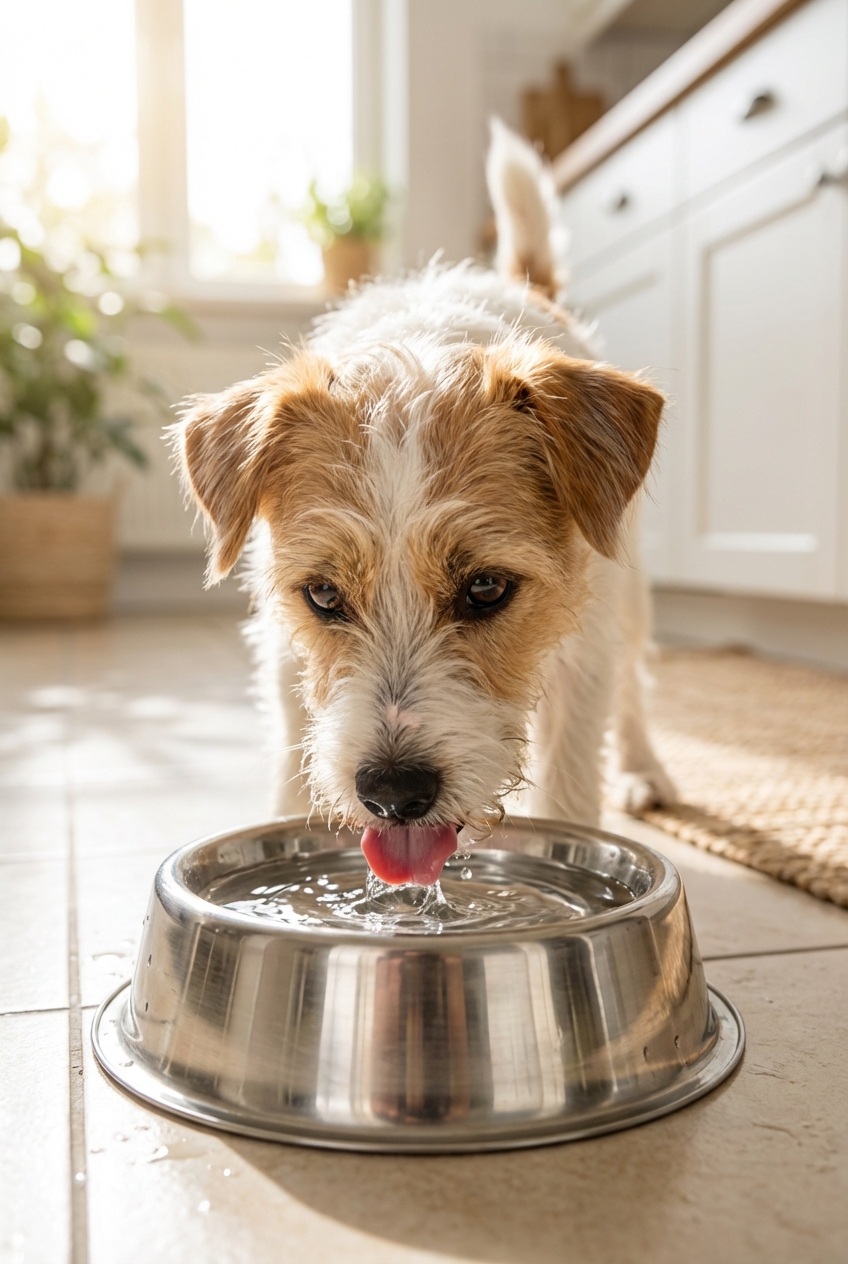
Your first goal is preventing dehydration. Offer clean water at all times. If your dog is gulping water and vomiting, offer small sips more frequently instead.
Exact amounts vary by size and situation, so focus on what your dog can keep down. If you want a starting point, many dogs do best with a few teaspoons to a few tablespoons every 10 to 15 minutes, then gradually increasing as tolerated.
Call your vet urgently if your dog cannot keep water down, seems weak, has very dry or tacky gums, or is not urinating normally.
What normal hydration can look like: moist gums, steady energy, and urinating at least a few times a day. Dark yellow urine or much less urine than usual can be a dehydration clue.
2) Electrolytes (only if appropriate)
Electrolyte support can help in some cases, but avoid anything with artificial sweeteners (especially xylitol) and avoid very sugary sports drinks. If you want to use electrolytes, choose a pet-specific oral rehydration solution when possible, and check with your veterinarian first if your dog has heart disease, kidney disease, is on a sodium-restricted diet, or you are unsure of the ingredients.
3) Food changes (do not rush)
For many uncomplicated cases, you can go straight to small bland meals rather than fasting.
A short food break is sometimes recommended by some veterinarians for healthy adult dogs with mild diarrhea and no vomiting, but it is not necessary for every dog and it is not safe for everyone. Do not fast puppies, very small dogs prone to low blood sugar, seniors, pregnant or nursing dogs, or dogs with medical conditions unless your veterinarian specifically tells you to.
Bland foods that may help
When you reintroduce food, go bland and simple. The goal is easy-to-digest nutrition that supports hydration and firms stool without irritating the gut.
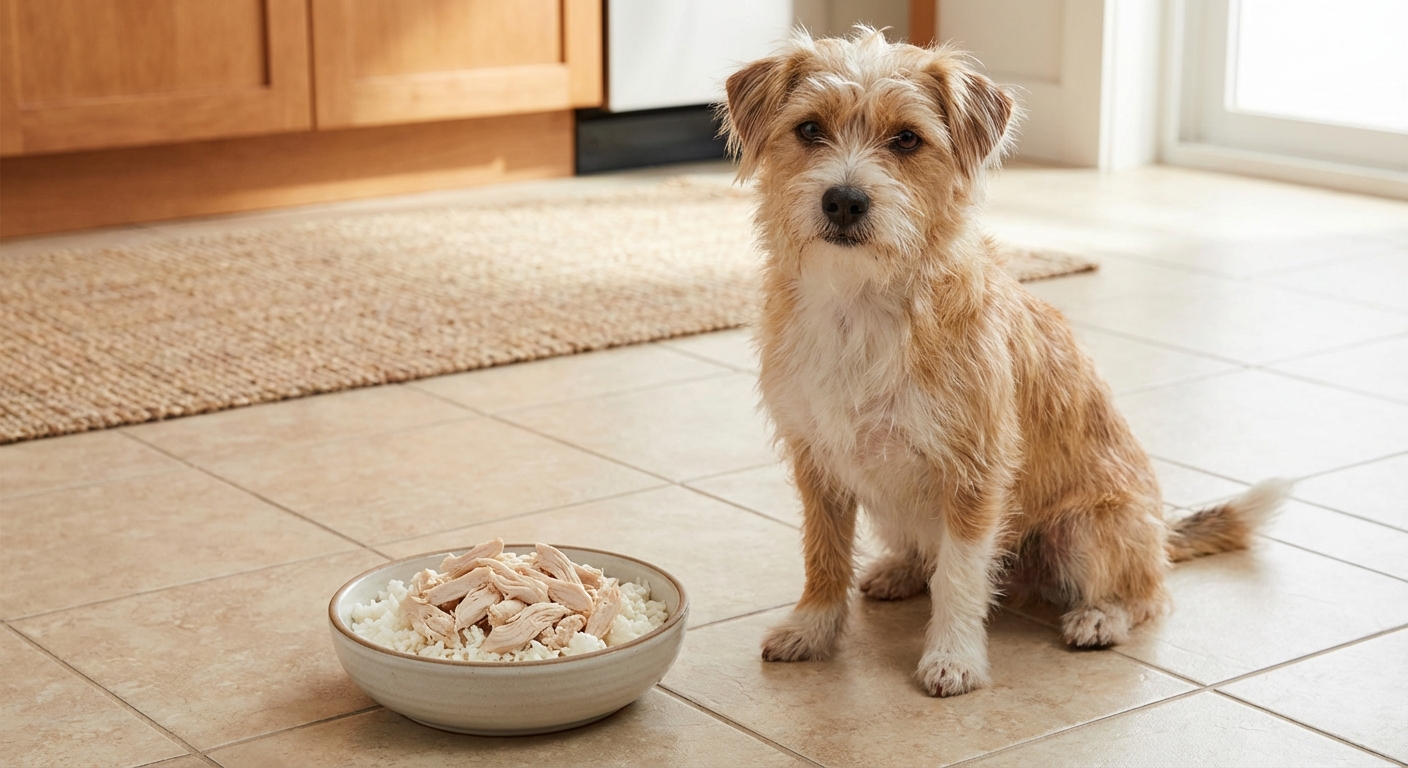
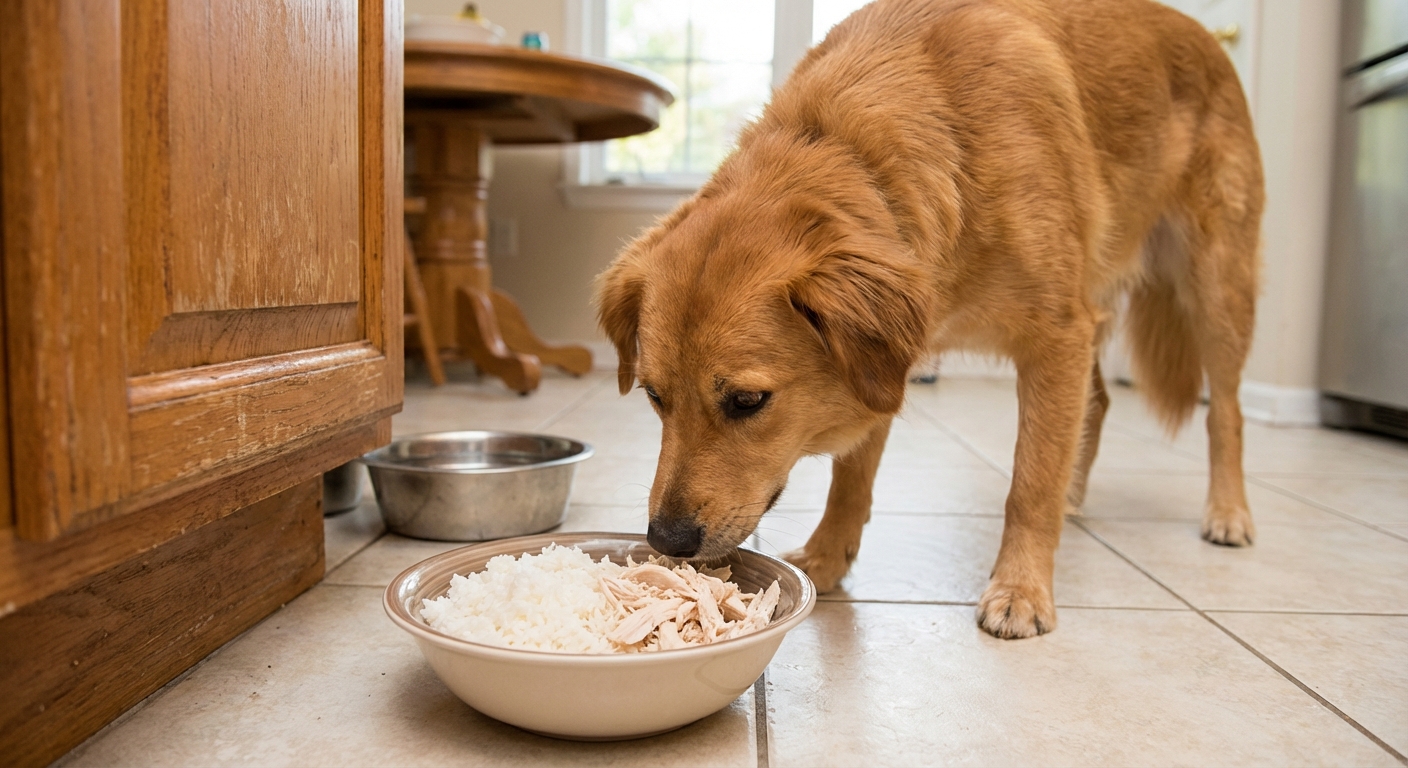
Option A: Chicken and rice
This is the classic. Use skinless, boneless chicken breast and plain white rice. No butter, no seasoning, and no garlic or onion powder.
- Mix ratio: about 1 part chicken to 2 parts rice (more rice is often gentler)
- Feed small meals: 3 to 4 times per day
Option B: Lean turkey and rice
Choose very lean ground turkey and drain any fat after cooking.
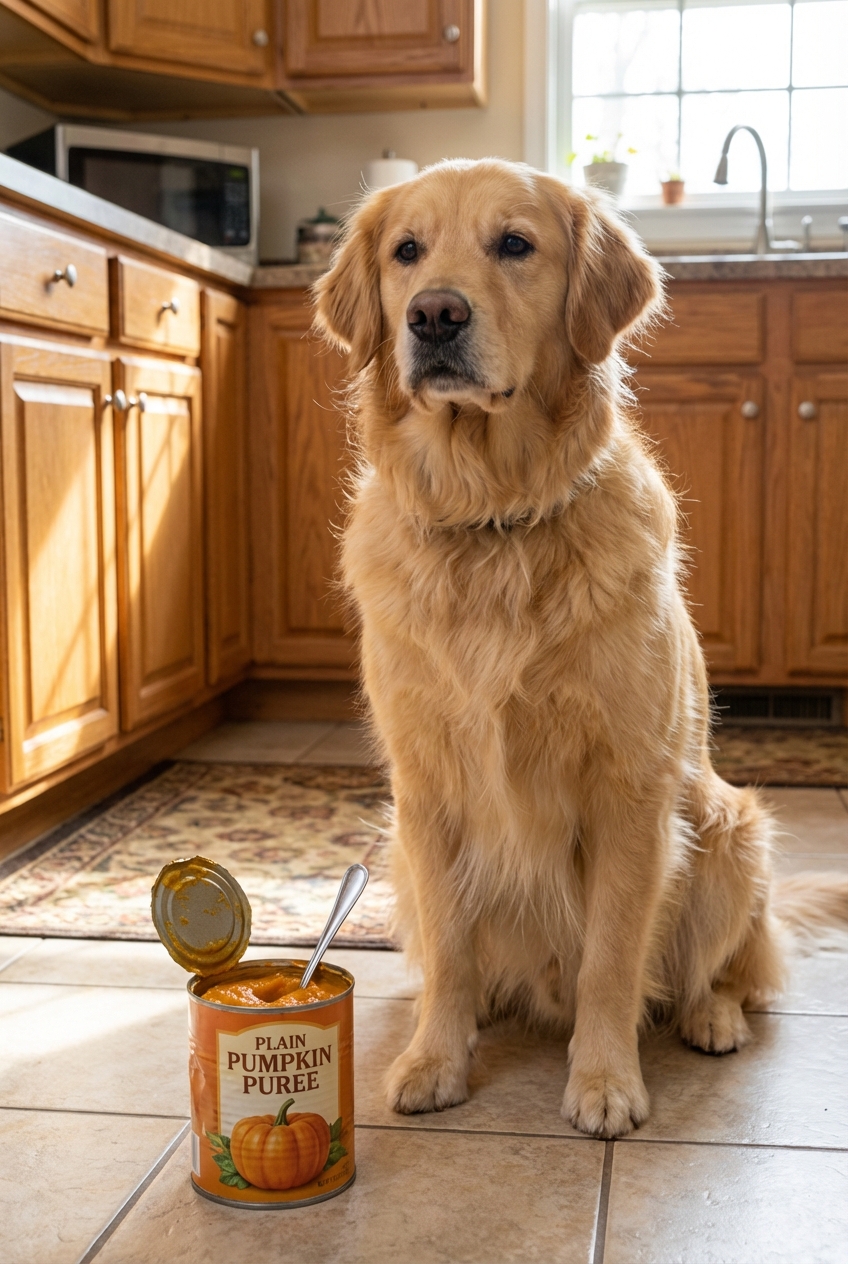
Option C: Pumpkin (plain, canned)
Plain pumpkin can help because its fiber supports stool quality. Make sure it is 100% pumpkin, not pumpkin pie filling.
- Small dogs: 1 teaspoon to 1 tablespoon
- Medium dogs: 1 to 2 tablespoons
- Large dogs: 2 to 4 tablespoons
Start small. Too much fiber can worsen very watery diarrhea in some dogs. If stool gets worse, stop and call your veterinarian.
Option D: Cooked sweet potato (plain)
Cooked sweet potato is another gentle fiber source. Keep portions modest, especially for small dogs. As with pumpkin, start small and stop if diarrhea worsens.
Option E: Scrambled egg (plain)
Egg is an easy protein for many dogs. Cook it plain with no butter or milk and offer a small amount at first. Avoid this option if you are worried about pancreatitis or your dog is very sensitive to richer foods.
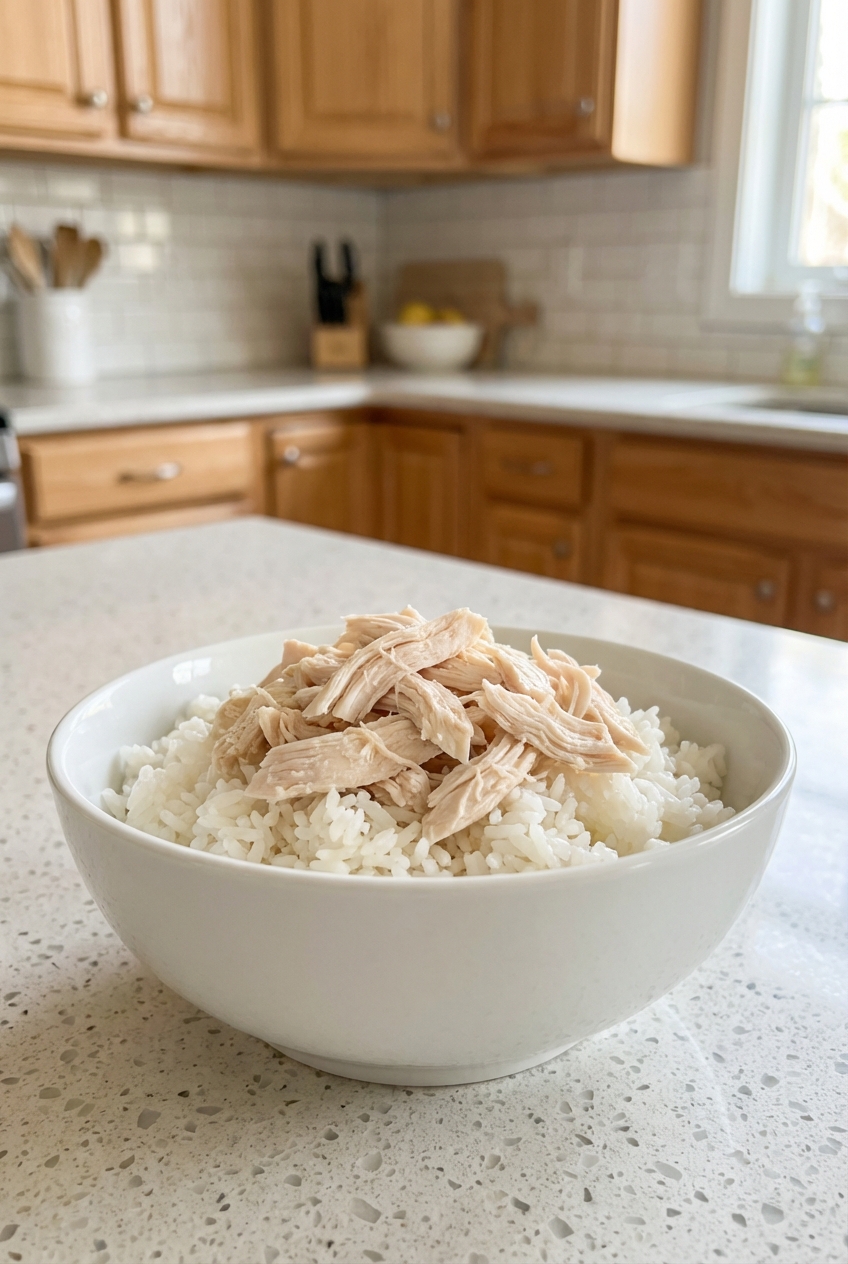
How long to feed bland: Usually 2 to 3 days after stool normalizes. Then transition back to the regular diet gradually over 3 to 5 days.
Probiotics and gut support
Probiotics can be very helpful for many diarrhea cases, especially stress-related diarrhea or mild digestive upset. Use a dog-specific probiotic when possible since the strains and dosing are designed for canine GI tracts.
If you are tempted to use yogurt, keep in mind many dogs are lactose sensitive. A tiny amount of plain, unsweetened yogurt may be okay for some dogs, but it can worsen diarrhea for others. When in doubt, choose a canine probiotic and ask your veterinarian which one they recommend.
What not to give
These are common mistakes that can make diarrhea worse or create a dangerous situation.
- Fatty foods (bacon, sausage, greasy leftovers). These can trigger pancreatitis.
- Milk or cream. Lactose can worsen diarrhea.
- Seasoned foods, especially anything containing onion, garlic powder, chives, or heavy spices.
- Bones (cooked or smoked). They can cause obstruction or GI injury.
- Over-the-counter human anti-diarrheals without veterinary guidance. For example, loperamide (Imodium) can be dangerous for some dogs, including certain herding breeds with MDR1 gene mutations (such as many Collies and some Australian Shepherds), and it can be risky if infectious diarrhea is possible.
- Pepto-Bismol (bismuth subsalicylate) without veterinary guidance. It contains a salicylate (aspirin-like ingredient) and overdosing or mixing with certain medications and conditions can be dangerous. It can also turn stool dark, which makes monitoring harder.
- Sudden diet switches or unproven “quick fix” supplements. The biggest issue is abrupt change. It often worsens GI upset.
How much to feed
Small, frequent meals
Think of the gut like a sore muscle. A big meal is a big workload. Small meals reduce intestinal stress and can help stool normalize sooner.
Monitor stool and energy
- Improving signs: stool gets more formed, frequency decreases, appetite returns, energy improves
- Worsening signs: watery stool every hour, straining, blood or mucus, new vomiting, refusing water, acting painful or withdrawn
When to bring a stool sample
If diarrhea lasts more than a day or two, or keeps coming back, a fecal test is one of the most valuable next steps. Parasites like giardia are common and require specific treatment.
Special situations
Diarrhea with vomiting
When both are happening, dehydration risk rises quickly. Call your veterinarian early, especially if vomiting is repeated or your dog cannot keep water down.
Puppy diarrhea
Puppies can dehydrate fast, and parasites or viral illness are bigger concerns. If a puppy has diarrhea, it is safest to call your veterinarian the same day.
Bloody diarrhea
Red blood can appear with colitis, stress diarrhea, parasites, dietary indiscretion, or more serious issues. Black, tarry stool suggests digested blood and needs urgent evaluation.
Diarrhea after antibiotics
Antibiotics can disrupt the gut microbiome. Ask your veterinarian about adding a probiotic and whether the medication should be adjusted.
At-home plan (24 hours)
If your dog is a healthy adult with mild diarrhea and no red flags, here is a simple plan many vets consider reasonable. When in doubt, call your clinic for guidance.
- Hydration first: Keep water available. If needed, offer small sips more frequently.
- Start bland food: Small, frequent meals of chicken and rice or lean turkey and rice.
- Add fiber carefully: A small amount of plain pumpkin if your dog tolerates it.
- Consider a canine probiotic for a few days.
- Reassess: If not improving within 24 to 48 hours, or if anything worsens at any time, call your veterinarian.
Preventing future diarrhea
- Transition foods slowly: over 7 to 10 days for most dogs.
- Limit rich treats: especially high-fat chews and table scraps.
- Keep garbage secured: trash raids are a top cause of sudden diarrhea.
- Regular fecal testing: especially for dogs who visit parks, daycare, boarding, or drink from puddles.
- Support the gut: Some dogs benefit from ongoing probiotics or a consistent, high-quality diet. Your vet can help you choose one.
Quick FAQ
Is rice always the best choice?
Rice is often helpful because it is bland and easy to digest, but some dogs do better with alternatives like cooked sweet potato. What matters most is simple, low-fat, gentle food for a short period.
Can I give my dog Pepto-Bismol?
Do not give it without veterinary guidance. Bismuth subsalicylate contains a salicylate (aspirin-like ingredient) and can be risky with certain conditions or medications. It can also darken stool and make it harder to monitor for bleeding.
How long is too long?
Mild diarrhea that improves within 24 to 48 hours with home care is common. If it persists, worsens, or returns frequently, your dog needs a veterinary workup.