A practical guide to feeding dogs with diarrhea: hydration first, bland meal plans (chicken/rice, turkey/potato, egg/rice), portion tips, pumpkin and probiot...
Article
•
Designer Mixes
What to Give a Dog for Diarrhea

Shari Shidate
Designer Mixes contributor
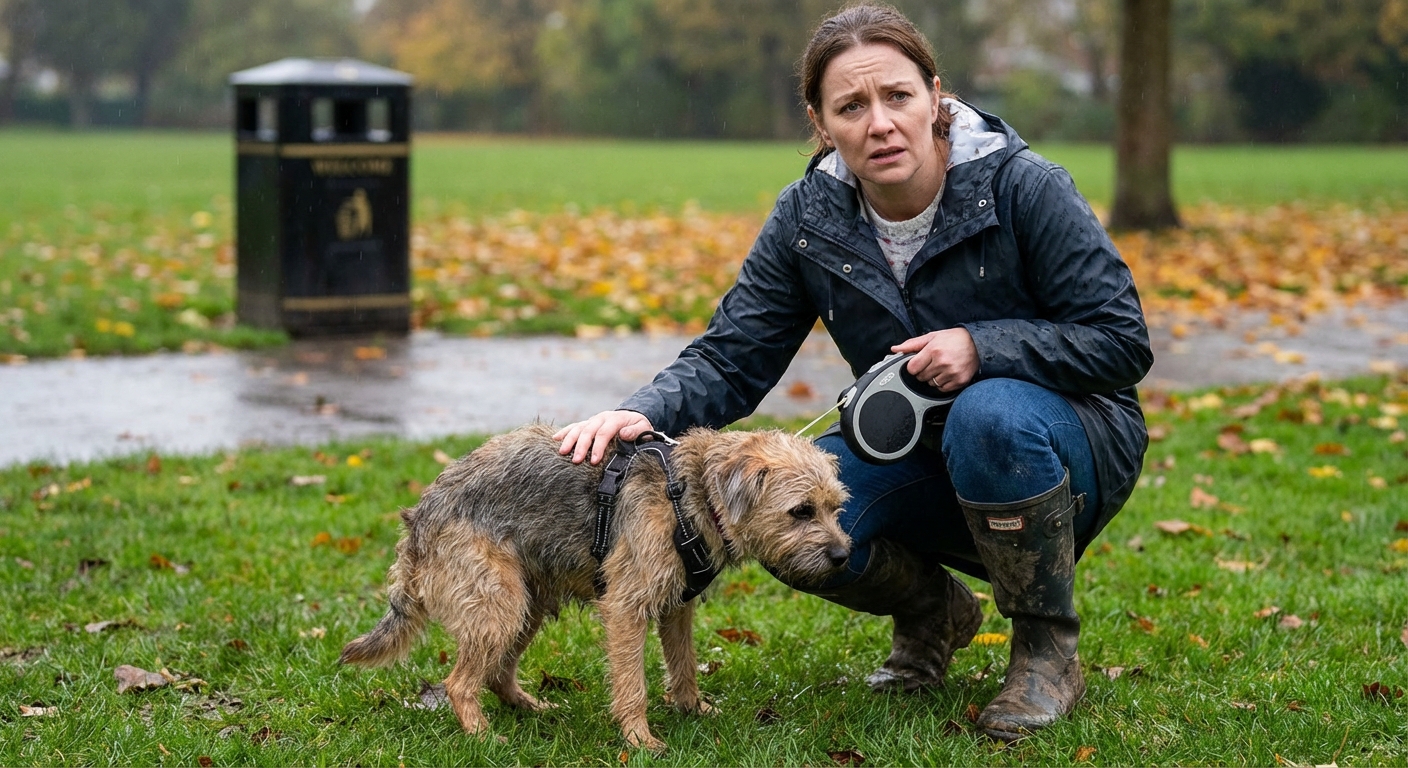
Diarrhea is one of the most common reasons pet parents panic, and I get it. Nobody wants to see their dog uncomfortable, dehydrated, or racing to the door. The good news is that many mild cases improve quickly with simple, safe at-home care. The key is knowing what helps, what can harm, and when it is time to call your veterinarian.
What “mild” usually looks like
Most home care advice applies when your dog has soft stool or mild diarrhea but is otherwise doing fairly well.
- Bright, alert, and responsive
- Drinking water and able to keep it down
- Eating at least some food (or only mildly picky)
- No significant belly pain
- No blood, or only a small amount of mucus
Common causes of mild, short-lived diarrhea include diet changes, getting into the trash, new treats, stress, or a minor stomach bug. You should typically see improvement within 24 to 48 hours with supportive care. If it is not improving in that window, it is time to loop in your vet.
First, check for emergency red flags
Before you try home remedies, do a quick safety check. Contact a veterinarian urgently (same day or emergency) if you notice:
- Blood in the stool (bright red streaks) or black, tarry stool (this can be digested blood)
- Repeated vomiting, severe lethargy, collapse, or weakness
- Signs of dehydration (sticky gums, sunken eyes, skin “tents” when gently lifted)
- Frequent, large-volume watery diarrhea, especially multiple episodes within 1 to 2 hours
- Abdominal pain, bloating, or repeated straining with little output
- Your dog feels very hot, seems feverish, or is clearly “not themself”
- Puppies, seniors, toy breeds, or dogs with chronic disease (kidney, diabetes, Addison’s, IBD)
- Recent use of higher-risk medications (for example NSAIDs like carprofen, or steroids like prednisone), or any dog with a history of ulcers or pancreatitis
- Possible toxin exposure (xylitol, grapes/raisins, antifreeze, medications, garbage, etc.)
- Diarrhea lasting more than 24 to 48 hours
If none of the above apply and your dog is bright, drinking, and acting mostly normal, you can often start with supportive care at home.
Quick at-home steps that help mild diarrhea
1) Hydration comes first
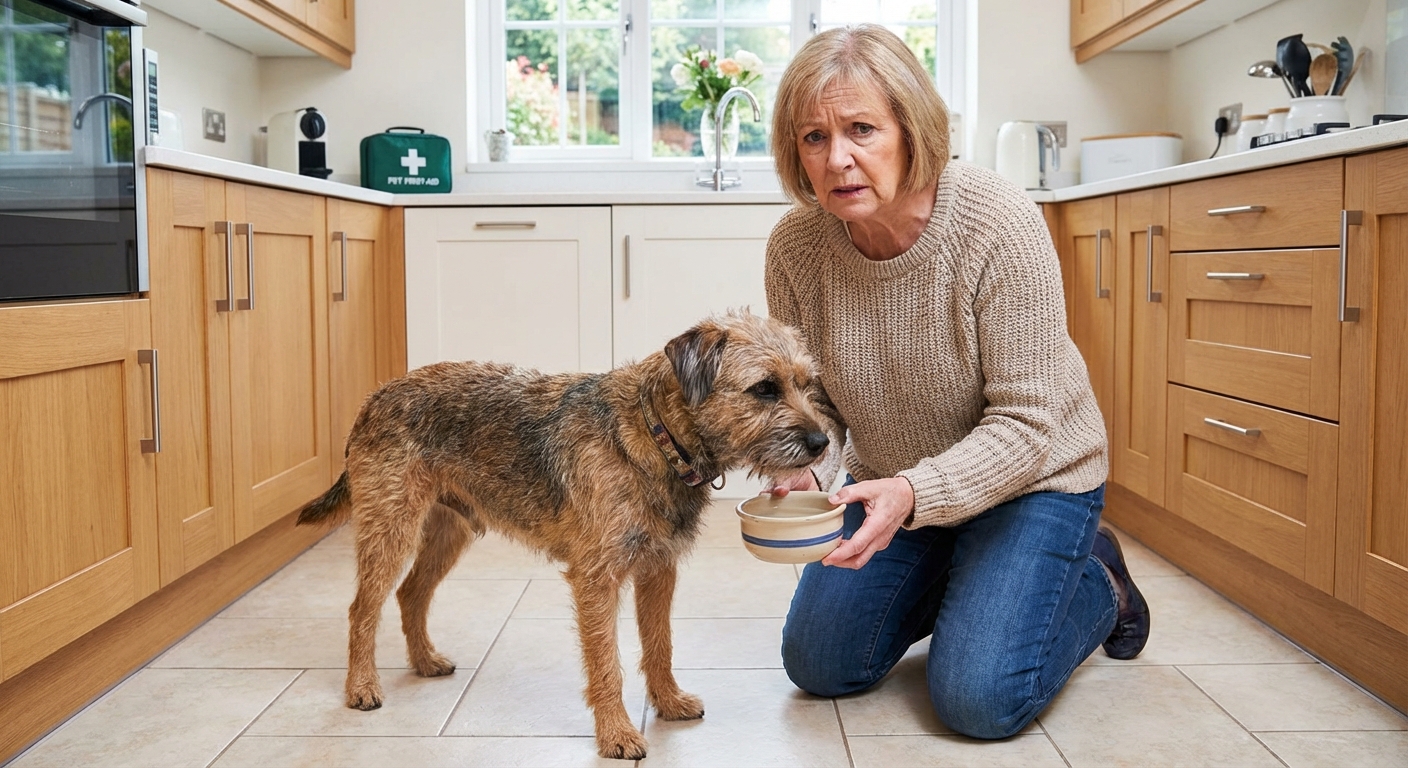
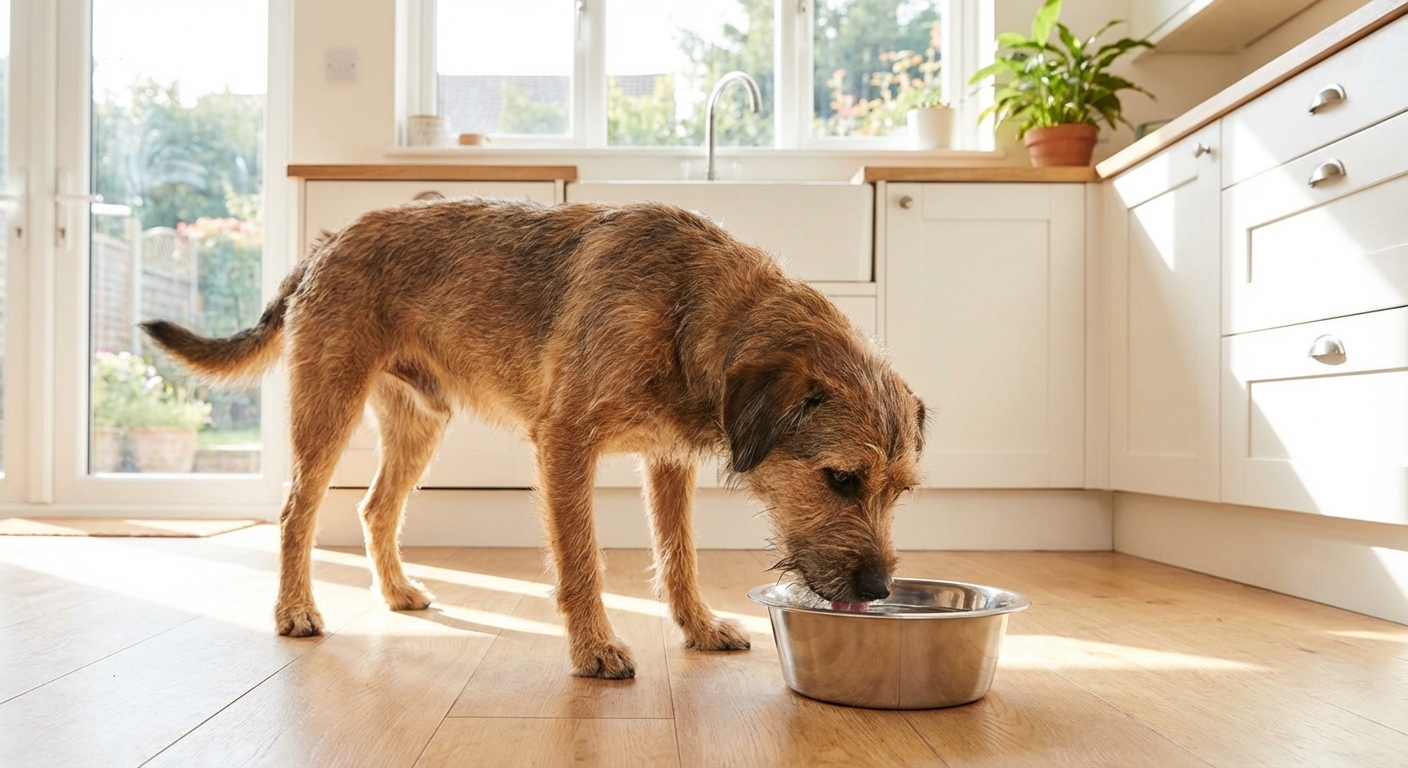
Diarrhea pulls water and electrolytes out of the body. Encourage frequent small drinks of fresh water.
- If your dog is not vomiting, you can offer ice chips or small spoonfuls of water every 15 to 30 minutes.
- Ask your veterinarian about a pet-safe oral electrolyte solution if stools are very watery or your dog is small.
Do not force water if your dog is nauseated or vomiting. That is a reason to call your vet.
2) Food: bland and easy
Fasting advice varies, and many veterinarians now prefer no fasting for diarrhea-only cases (no vomiting). Some veterinarians may recommend a very short break from food (often 6 to 12 hours) for healthy adult dogs, but it is not required for everyone.
- Do not fast puppies, tiny dogs, seniors, or dogs with medical conditions unless a veterinarian specifically tells you to.
- If your dog seems hungry and is not vomiting, it is often reasonable to go straight to small, bland meals.
3) Bland diet for 24 to 48 hours
Once your dog can keep food down and seems comfortable, feed small meals. A simple bland diet is often the fastest, gentlest reset.
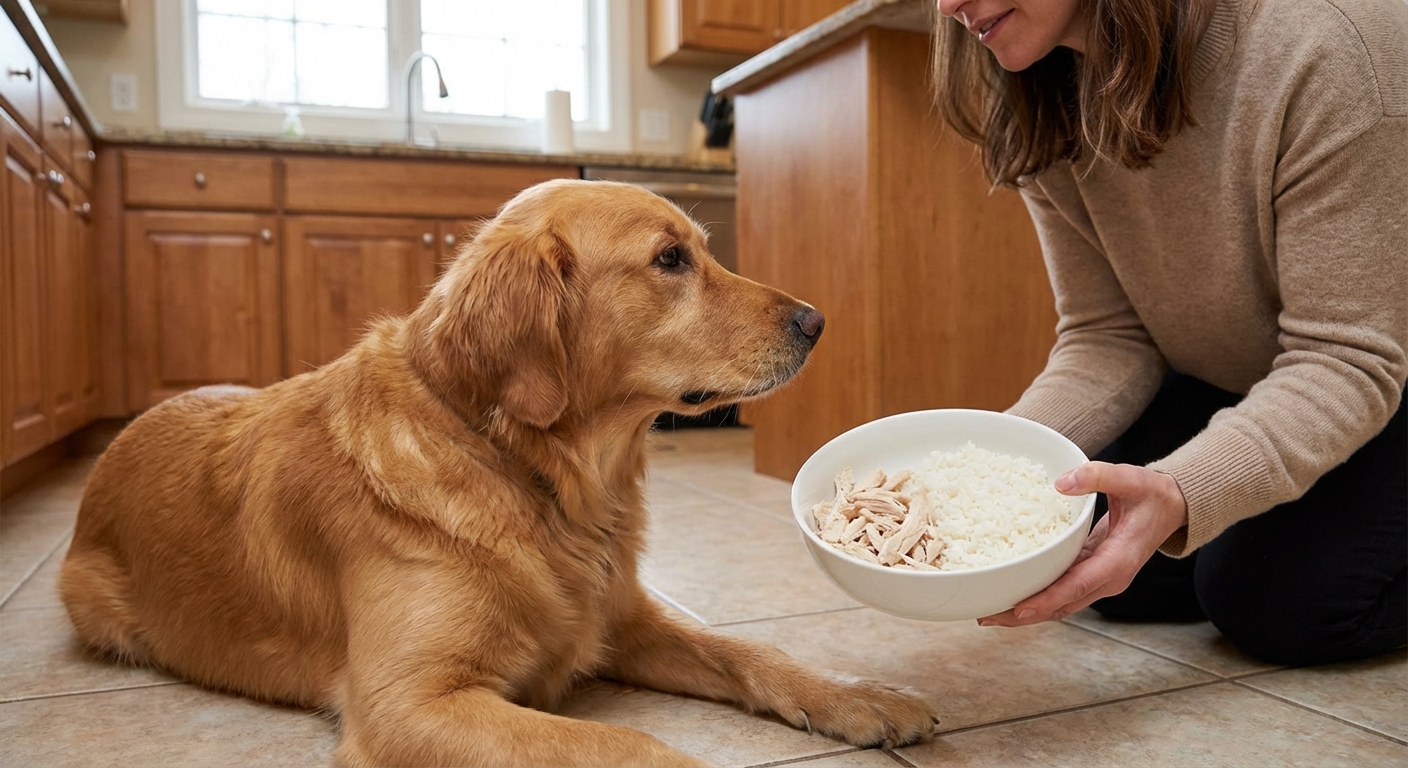
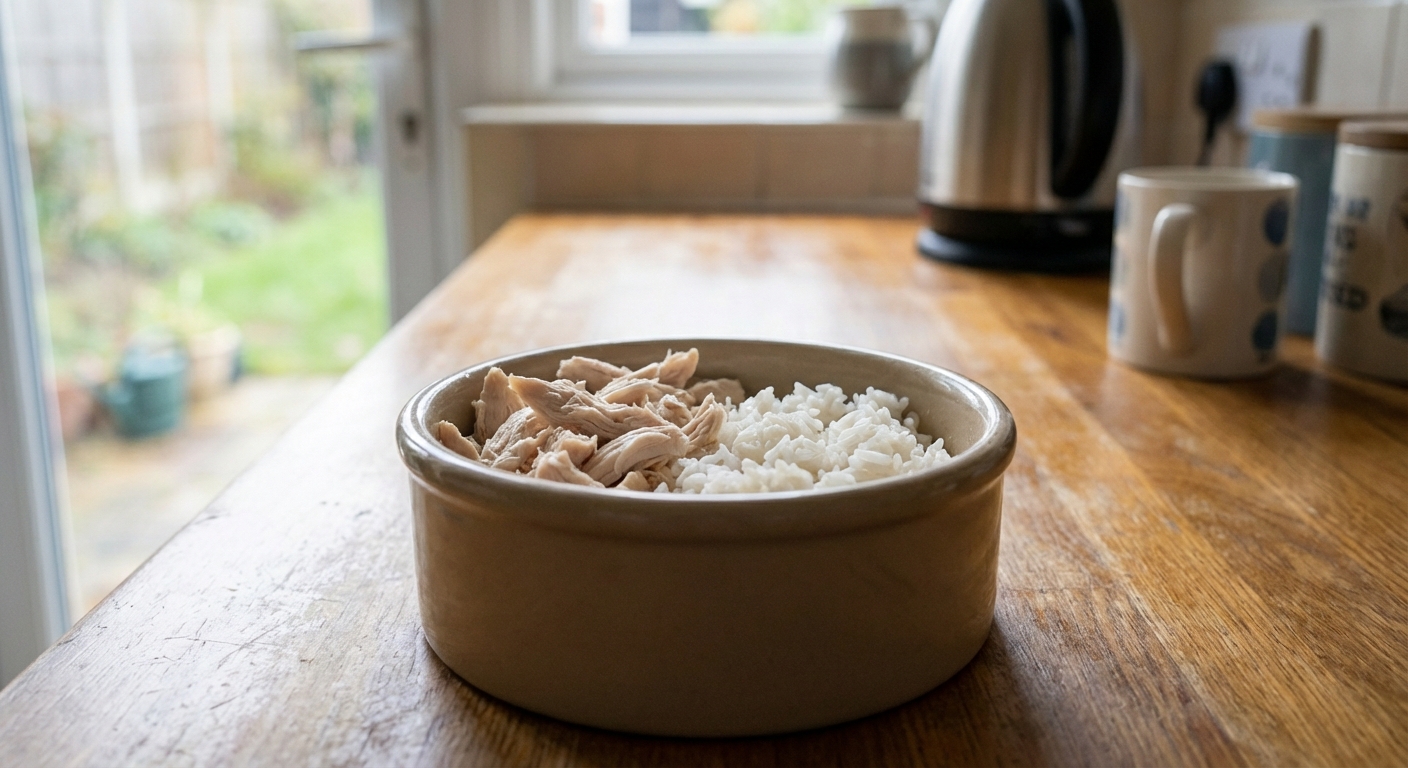
- Boiled chicken breast (skinless, boneless) plus plain white rice
- Lean ground turkey (boiled and drained) plus rice
- Plain scrambled egg (no butter, no oil) can work for some dogs
A common starting ratio is 1 part protein to 2 parts carb. Feed small portions 3 to 4 times per day.
If your dog does not tolerate rice (some do not), ask your vet about alternatives like plain cooked pasta or plain boiled potato.
Important: Chicken and rice is not a balanced long-term diet. It is meant as a short-term bridge while the gut settles.
4) Soluble fiber to firm stools
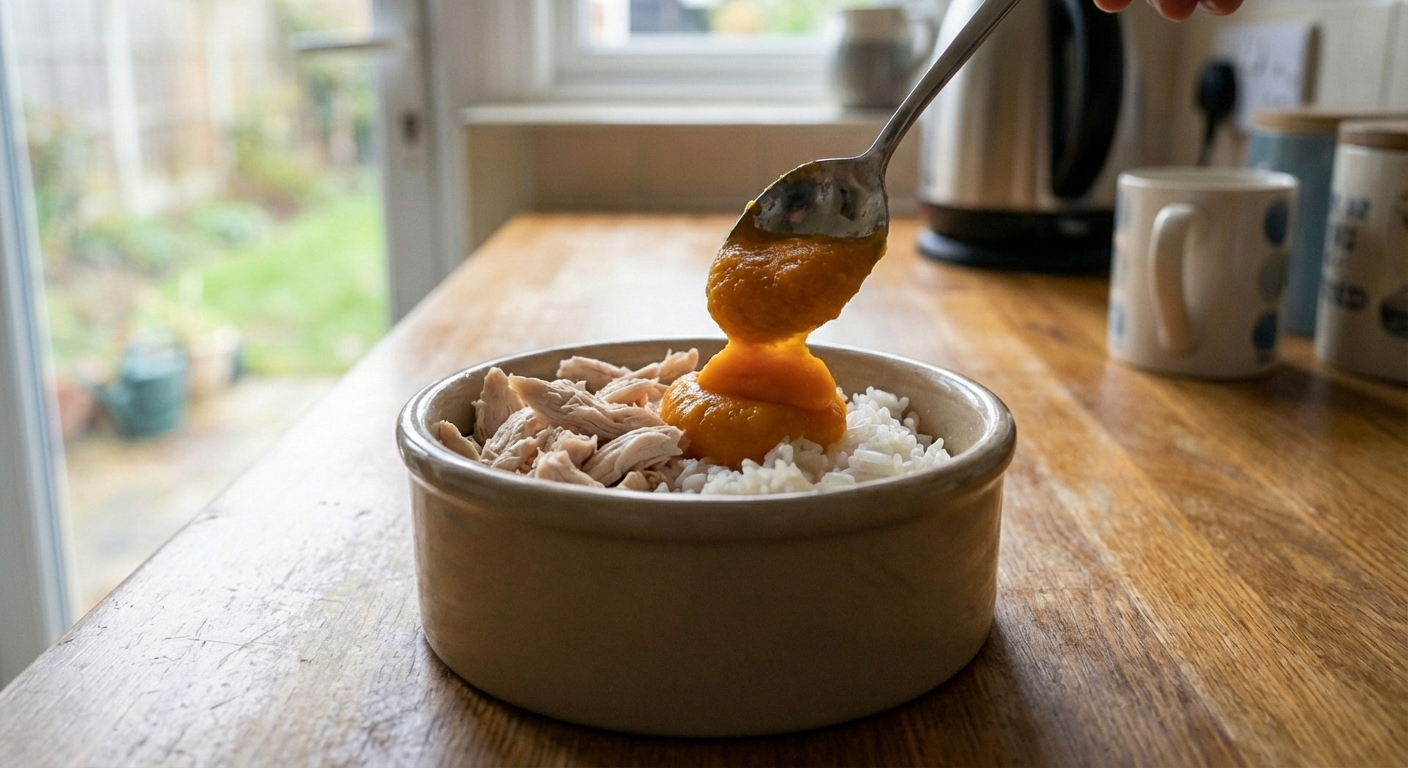
Soluble fiber can help absorb extra water and soothe an irritated colon. Plain canned pumpkin (not pumpkin pie filling) is a popular option, although results vary from dog to dog.
- A common starting amount is about 1 teaspoon per 10 pounds of body weight mixed into food, 1 to 2 times daily.
- Start smaller for tiny dogs, and if you are unsure, ask your veterinarian for a dose that fits your dog.
Too much fiber can cause gas or looser stool, so start low and adjust.
5) Probiotics for gut support
Probiotics can help support a healthier gut microbiome, especially after stress, diet changes, or antibiotics. Choose a dog-specific probiotic and follow label directions. If your dog is immunocompromised or very ill, ask your vet before using any supplement.
What not to give
Some well-meaning fixes can backfire. Avoid:
- Human anti-diarrheal medications (like loperamide/Imodium) unless your veterinarian approves. Some dogs can have serious side effects, and certain breeds (including herding breeds with MDR1 gene issues like Collies, Australian Shepherds, and Shelties) may be at higher risk. It can also be a bad idea if infection, toxins, or significant systemic illness is possible.
- Pepto-Bismol unless your vet specifically instructs you. It can interfere with other medications and can darken stool, masking bleeding.
- Fatty foods, rich treats, table scraps, dairy, and greasy meats
- Raw diets during an active diarrhea episode, which can be harder to digest and can increase bacterial risk
- Seasonings like onion, excessive salt, spicy ingredients, and heavy oils
What to feed today
Here is a simple, gentle 24-hour plan for many healthy adult dogs with mild diarrhea:
- Morning: Small bland meal (chicken and rice) plus a small amount of pumpkin (optional)
- Midday: Small bland meal, water offered frequently
- Evening: Small bland meal, consider adding a dog probiotic
If stool starts to firm up, continue the bland diet for 24 to 48 hours. Then transition back to regular food over 3 to 5 days by mixing increasing amounts of the normal diet into the bland food.
If diarrhea returns during the transition, step back to the bland diet for another day and slow the switch. If it keeps happening, call your vet.
What to track at home
If you are managing diarrhea at home, a little monitoring helps you catch problems early. Keep an eye on:
- Number of diarrhea episodes per day and whether it is improving
- Any blood (red) or black, tarry stool
- Vomiting or nausea
- Energy level and comfort
- Appetite and water intake
- Normal urination (reduced peeing can be a dehydration clue)
If you are not seeing clear improvement within 24 to 48 hours, or anything worsens, contact your veterinarian.
When to bring a stool sample
If diarrhea persists or keeps returning, your veterinarian may want to test for parasites (like Giardia) and other infectious causes. Bring a fresh stool sample in a sealed bag or container if you can.
- Ideally, bring a sample that is just a few hours old.
- If you cannot bring it right away, refrigerate it and follow your clinic’s instructions on timing and storage.
Preventing the next episode
Once your dog is feeling better, these simple habits can reduce repeat flare-ups:
- Make diet changes slowly over 7 to 10 days.
- Keep treats to 10 percent or less of daily calories.
- Use a consistent, high-quality diet and avoid frequent brand hopping.
- Prevent “snacking” on walks: consider training a solid leave it cue.
- Ask your vet about fecal testing and parasite prevention that fits your region and lifestyle.
My veterinary assistant reminder
Diarrhea is a symptom, not a diagnosis. Mild cases can be simple, but diarrhea can also be the first sign of something bigger, like pancreatitis, dietary intolerance, parasites, infections, or inflammatory bowel disease. Trust your instincts. If your dog seems painful, weak, or “off,” it is always appropriate to call your veterinarian.
When in doubt: hydrate, keep it simple with a bland diet, and loop in your vet sooner rather than later, especially for puppies and small dogs.