Vet-informed guide to a short-term bland diet for dogs: chicken and rice 1:2 ratio, daily cup ranges by weight, how many meals to split into, and red flags t...
Article
•
Designer Mixes
What To Give a Dog for Diarrhea

Shari Shidate
Designer Mixes contributor
When your dog has diarrhea, it can feel urgent and stressful. I get it. As a veterinary assistant in Frisco, Texas, I have seen how quickly a mild upset tummy can turn into dehydration, especially in puppies, seniors, and small dogs.
The good news is that many cases of short-term diarrhea improve with simple, supportive care at home. The key is knowing what to give, what to avoid, and when it is time to call your vet.
Quick guide: If your dog is bright and alert with mild diarrhea and no red flags, start with water and a bland diet. If you see any red flag below, call your vet right away.
First: When diarrhea is an emergency
Before trying home care, check for red flags. Contact your veterinarian promptly or seek emergency care if you notice:
- Blood in the stool (red streaks or black, tarry stool)
- Vomiting repeatedly, or your dog cannot keep water down
- Lethargy, collapse, weakness, or a painful belly
- Signs of dehydration (tacky or dry gums, sunken eyes, reduced urination, skin that tents and stays up, weakness)
- Puppies, toy breeds, seniors, pregnant dogs, or dogs with chronic disease (kidney disease, diabetes, Addison’s disease)
- Diarrhea lasting more than 24 to 48 hours
- Possible exposure to toxins (human medications, xylitol, grapes or raisins, rodent poison, compost, etc.)
- Suspected foreign body (chewed toy, sock, bone pieces) or straining with little output
- Unvaccinated or under-vaccinated puppies, especially if diarrhea is severe, watery, or paired with vomiting or low energy (parvo risk)
If your dog is otherwise bright, drinking, and acting mostly normal, supportive home care is often reasonable for a short time.
What to give a dog for diarrhea
1) Water and hydration support
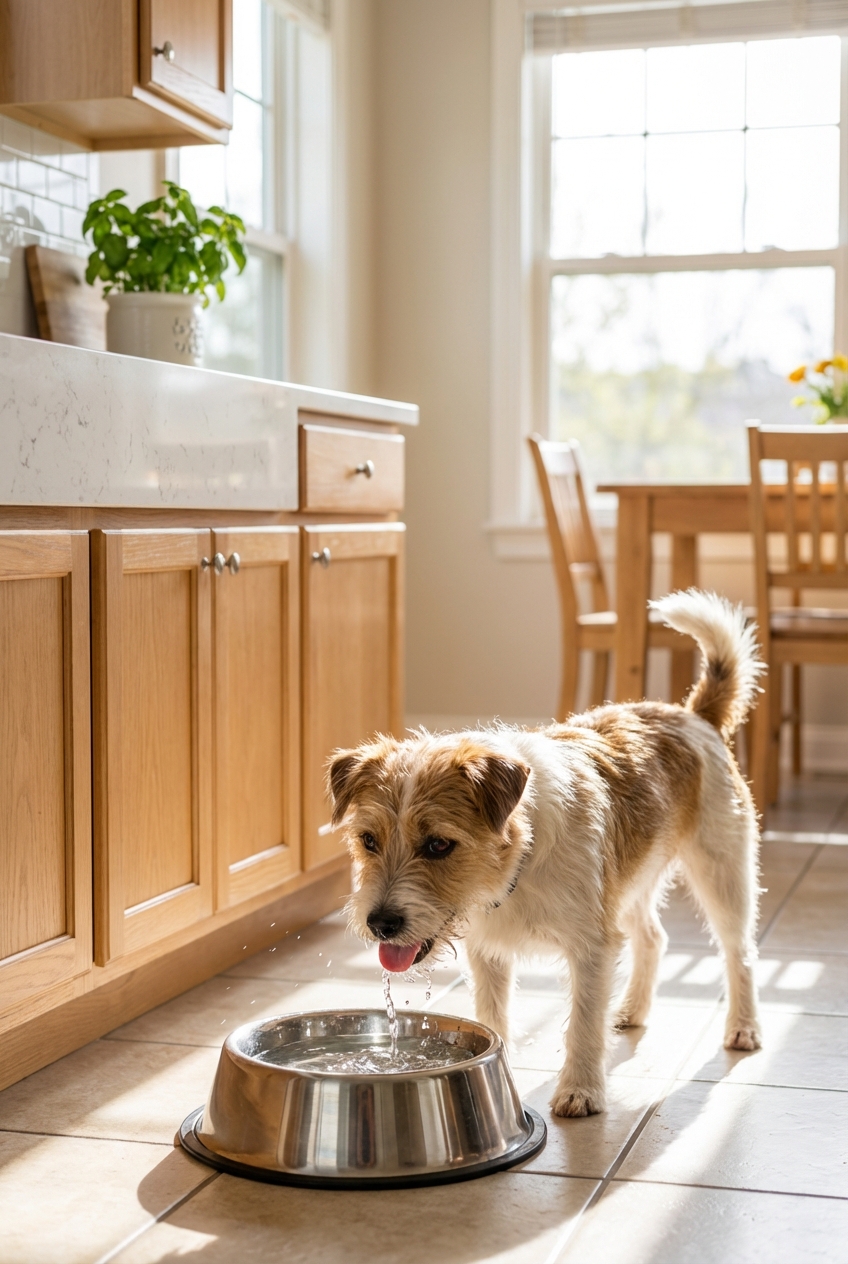
Diarrhea pulls water and electrolytes out of the body. Your first “treatment” is hydration.
- Offer fresh water frequently. Some dogs drink better from a wide bowl or a pet fountain.
- Ice chips can help dogs who gulp and then vomit.
- Electrolytes only with vet guidance. An unflavored pediatric electrolyte solution may be used in small amounts if your vet approves. Avoid anything with xylitol or other artificial sweeteners. Most sports drinks are not a good choice due to sugar and additives.
If your dog seems unwilling to drink, or diarrhea is very watery and frequent, call your vet sooner rather than later.
2) Food rest (only sometimes)
For healthy adult dogs, some vets may suggest a brief rest from food to let the gut calm down. This is often 8 to 12 hours, not all day and not for multiple days. Other vets prefer skipping fasting and going straight to small bland meals. When in doubt, call your clinic and ask what they recommend for your dog.
- Do not fast puppies, tiny dogs, or dogs with medical conditions unless your veterinarian specifically instructs you to.
Even if you pause food, continue offering water.
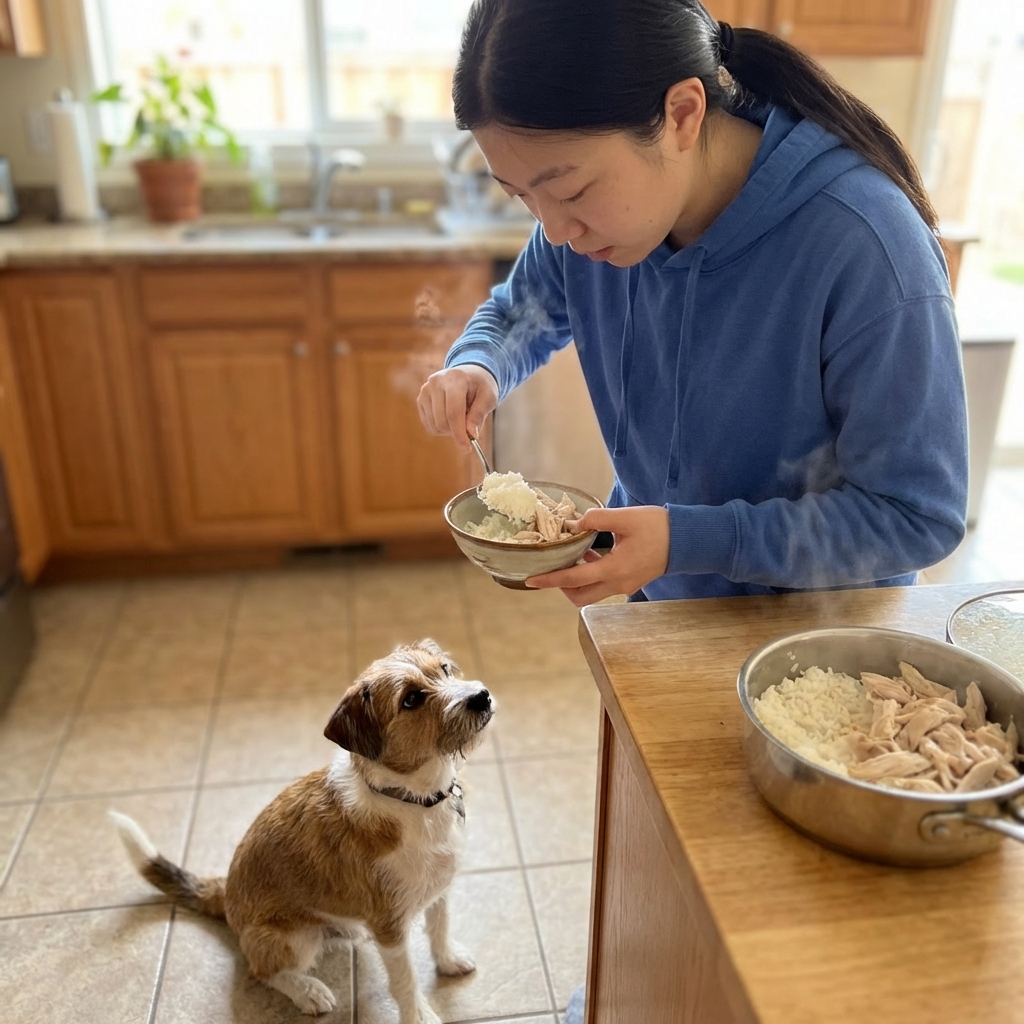
3) A bland diet for 2 to 3 days
Once your dog is ready to eat, bland food is often the best next step. Think easy-to-digest, low-fat, and simple.
Common bland diet options:
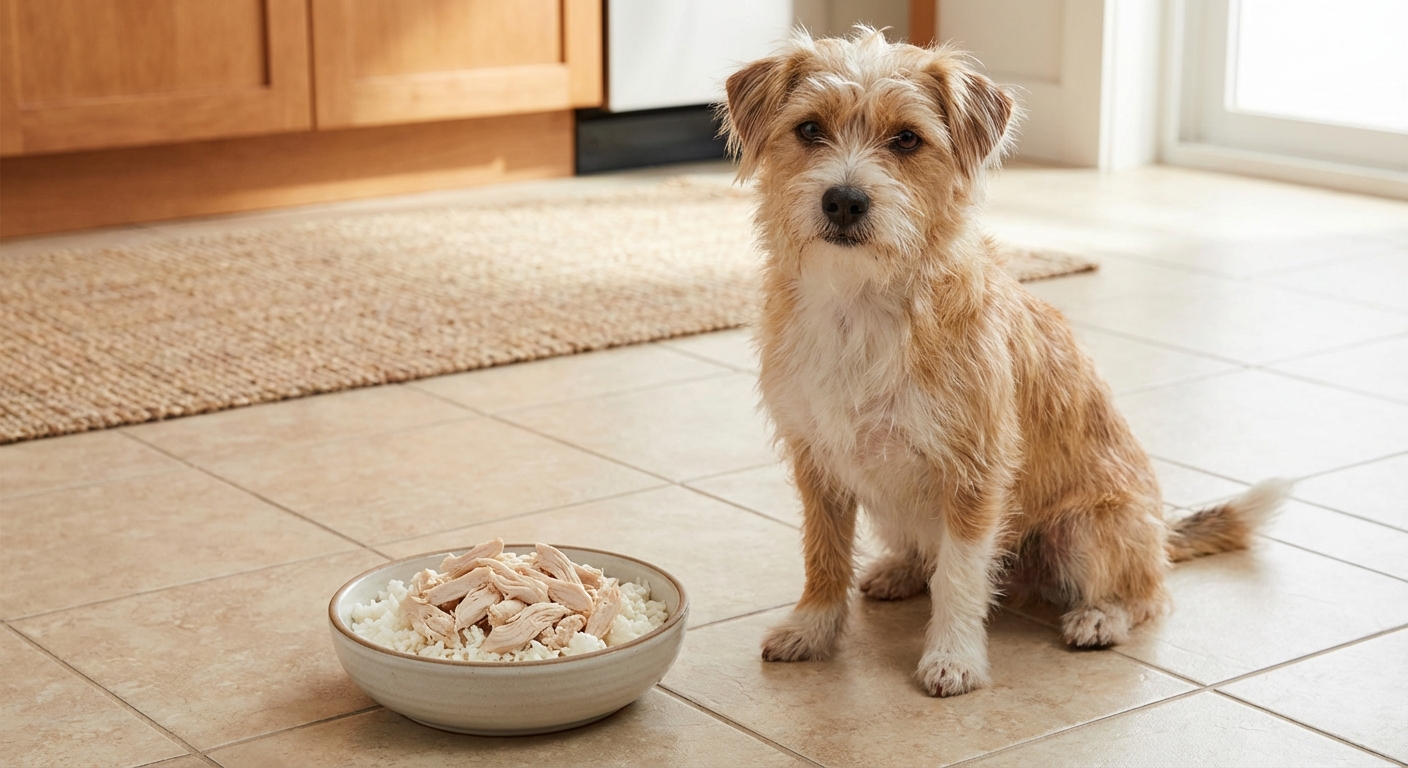
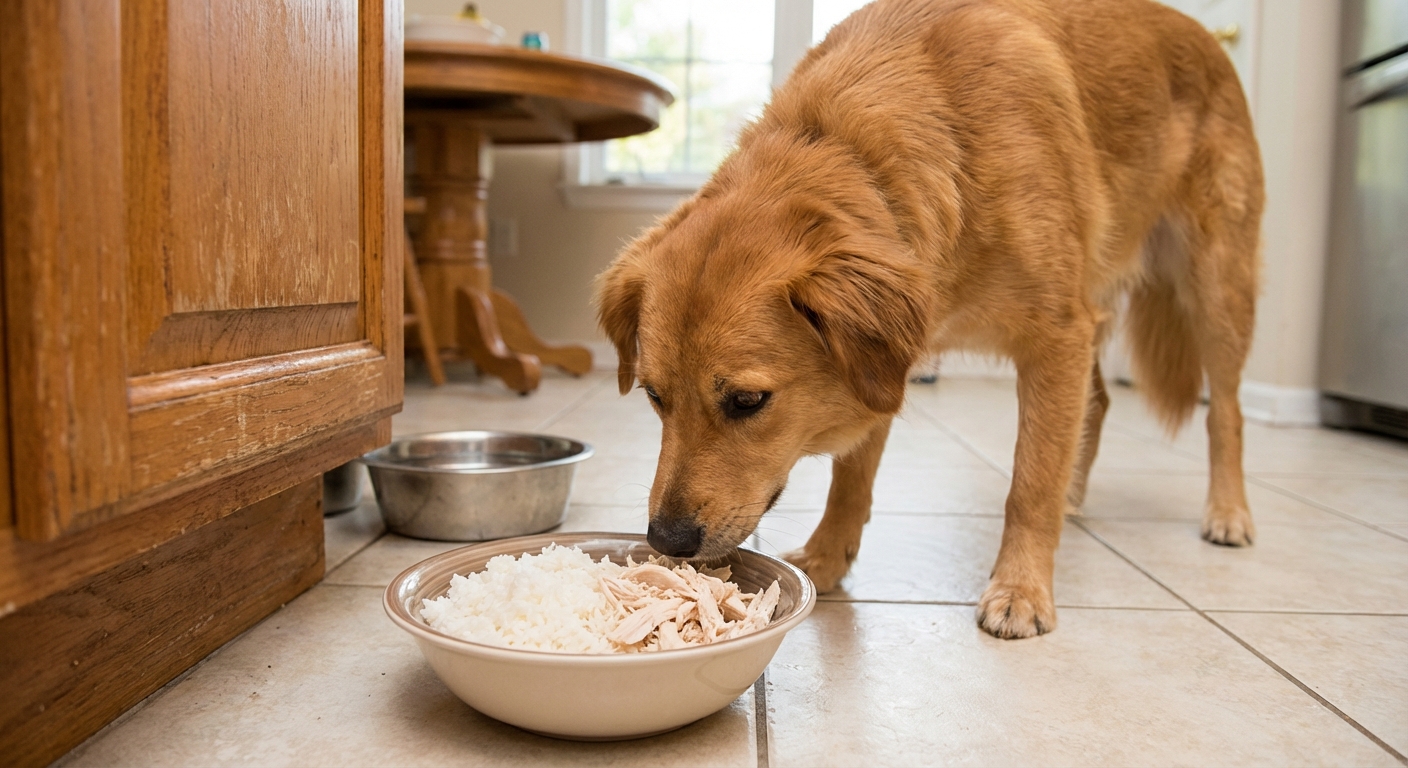
- Boiled chicken breast (skinless, boneless) plus white rice
- Lean ground turkey (drained well) plus white rice
- Boiled white fish (plain) plus white rice
Feed small meals, about 3 to 6 times per day, instead of one or two big meals. Big meals can trigger more cramping and urgency.
How much? A safe general approach is to start with a smaller portion than normal, then slowly increase over 24 to 48 hours if stools improve.
Another option: If you have access, a veterinary prescription GI diet can be an excellent choice. It is consistent, highly digestible, and often easier than home cooking. Ask your vet what they recommend.
Gentle add-ins that may help
These options are commonly recommended for mild diarrhea, but always consider your dog’s individual health history and check with your veterinarian if you are unsure.
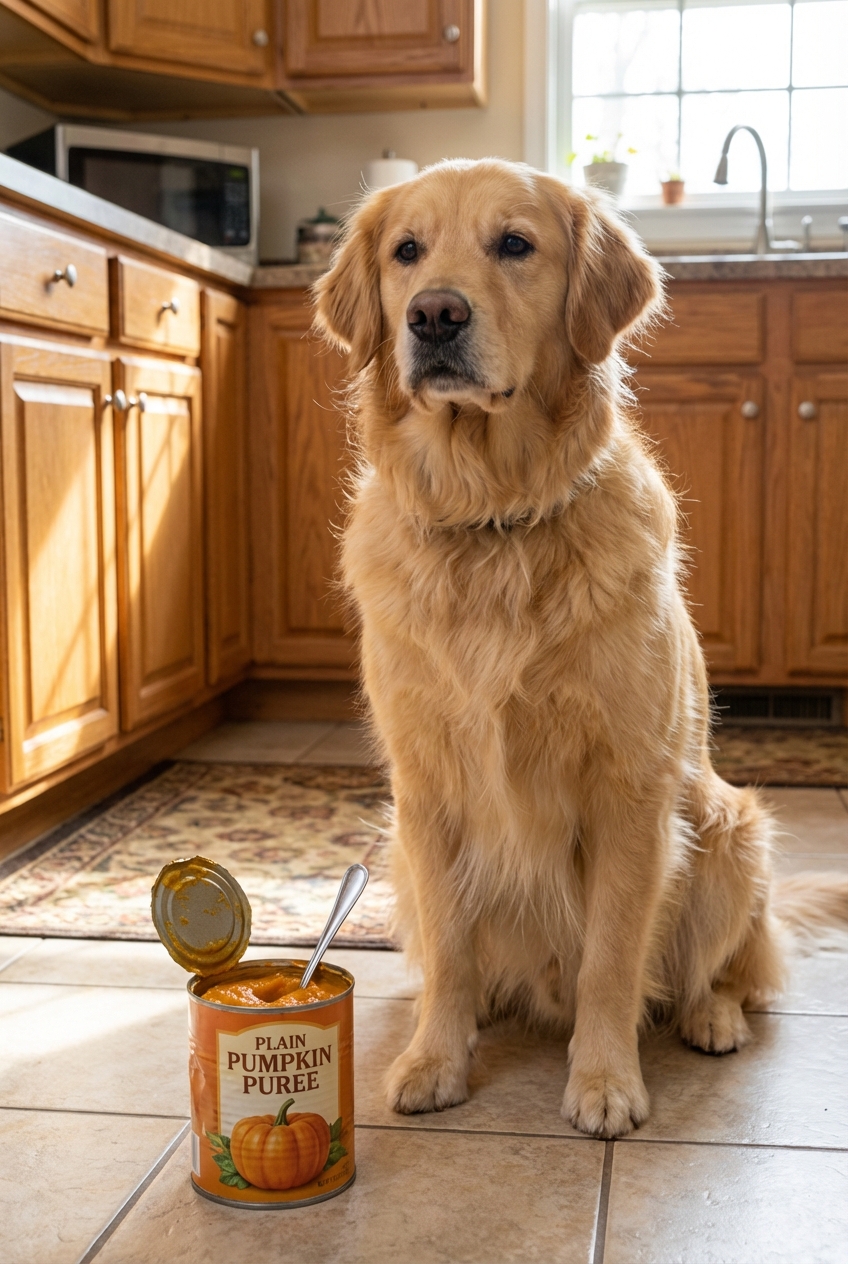
Plain canned pumpkin
Plain pumpkin (not pie filling) provides soluble fiber that may help firm stool for some dogs. Use plain pumpkin with no spices or sweeteners.
- Small dogs: 1 to 2 teaspoons
- Medium dogs: 1 to 2 tablespoons
- Large dogs: 2 to 4 tablespoons
Mix into the bland diet once or twice daily. If your dog gets gassy or stools worsen, back off. Too much fiber can be too much of a good thing.
Probiotics made for dogs
Probiotics can support a healthier gut microbiome during digestive upset. Look for a veterinary-formulated probiotic and follow label directions.
If your dog has frequent tummy trouble, ask your vet about longer-term probiotic use and whether diet changes could help prevent recurrences.
Cooked sweet potato (plain)
In small amounts, plain cooked sweet potato can add gentle fiber. Keep it simple and avoid butter, oils, and seasoning.
OTC meds: safe or not?
Avoid human anti-diarrheals unless your vet says yes
Some human medications can be risky for dogs, especially if the diarrhea is caused by infection, toxins, parasites, or a blockage.
- Never give Pepto-Bismol or bismuth products to cats, and for dogs only use if your veterinarian approves. It can also turn stool dark, which can mask bleeding.
- Loperamide (Imodium) can cause dangerous side effects in certain dogs, including herding breeds with MDR1 gene mutations. It is also generally avoided in very young puppies, and it can cause constipation or sedation. Do not use it if there is suspicion of toxins, infection, or obstruction unless your vet directs you.
- Never give human pain meds like ibuprofen or naproxen. These can cause severe GI injury and kidney damage.
If you want medication help, the safest move is to call your vet and describe the stool, frequency, and your dog’s overall behavior. They can tell you what is appropriate for your specific dog.
What to avoid feeding
Even well-meaning treats can keep diarrhea going. Avoid:
- Fatty foods (bacon, sausage, greasy table scraps)
- Dairy (many dogs are lactose intolerant, especially when the gut is irritated)
- Rich treats
- Chews like bones, rawhide, antlers, and hard dental chews during GI upset
- Sudden diet changes
- High-fiber raw veggies while your dog is actively having diarrhea
When stools are normal for 24 to 48 hours, transition back to your regular diet slowly over about 3 to 5 days.
Common causes of diarrhea
Knowing the likely cause helps you prevent the next episode. Diarrhea is a symptom, not a diagnosis. Some common causes include:
- Dietary indiscretion (trash, new treats, people food)
- Sudden food switch or food intolerance
- Stress (travel, boarding, visitors, storms)
- Parasites (giardia, roundworms, hookworms), especially with dog parks, daycare, and shared water bowls
- Infections (viral or bacterial). In unvaccinated puppies, parvovirus is a major concern.
- Pancreatitis (often after a fatty meal)
- Chronic GI disease (IBD, food-responsive enteropathy)
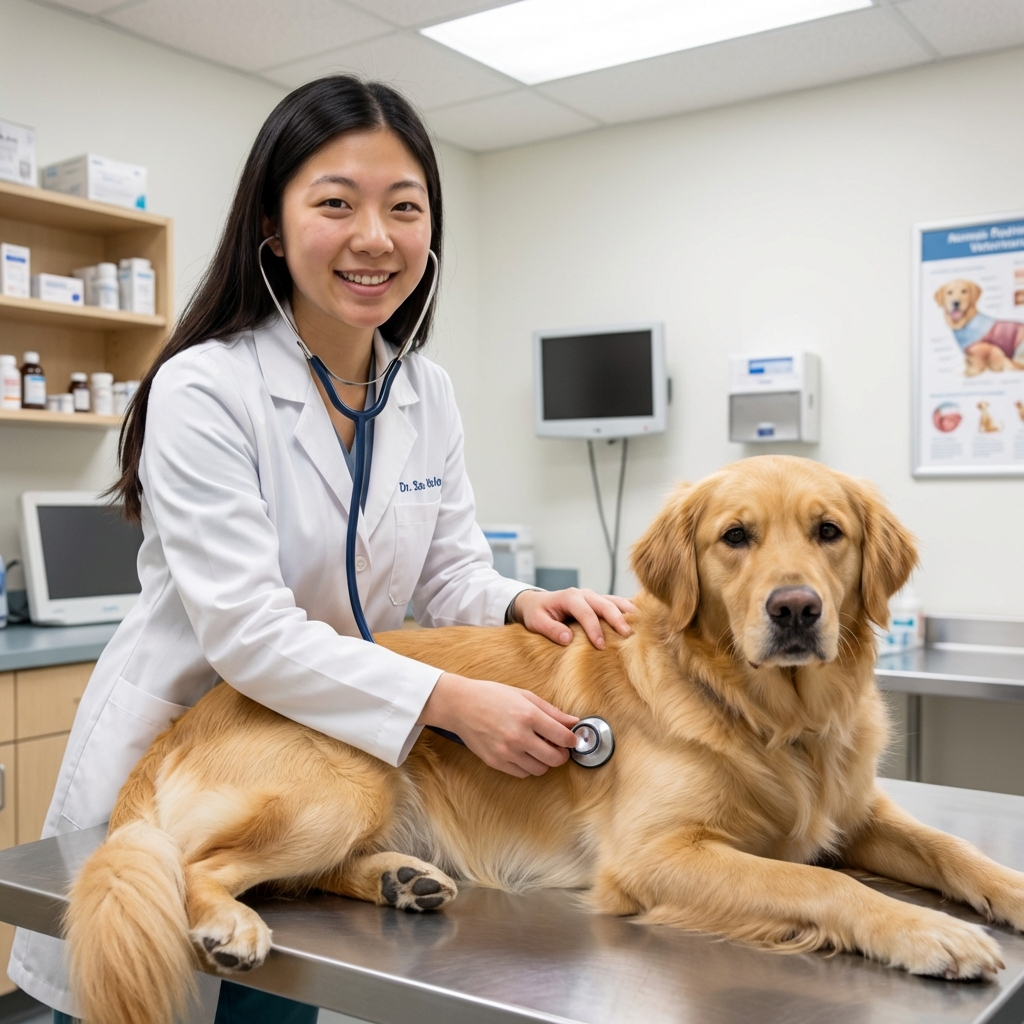
If diarrhea keeps coming back, bring a fresh stool sample to your veterinarian. Parasites are more common than many pet parents realize, and some do not show up without the right test. Giardia can also shed intermittently, so your vet may recommend repeat testing or a specific antigen test.
How to monitor at home
While you support your dog, track a few details. This helps you know if things are improving, and it gives your veterinarian better information if you need to call.
- Frequency: How many times per day?
- Volume: Small frequent squirts or large piles?
- Appearance: Watery, pudding-like, mucus, or blood?
- Behavior: Energy level, appetite, and comfort
- Hydration: Drinking normally? Gums moist? Urinating as usual?
A simple rule: if your dog is acting sick, treat it as more than “just diarrhea.”
Stool sample tips
If you are heading to the vet, a stool sample is often helpful.
- Collect fresh if possible (within a few hours).
- Use a clean bag or container and avoid mixing in litter, grass, or lots of dirt.
- Refrigerate if you cannot bring it in right away. Do not leave it in a hot car.
- Do not freeze unless your clinic specifically tells you to.
Transition back to normal food
Once stools are improving and your dog is acting normal, transition slowly to avoid a relapse. One simple example:
- Day 1: 75% bland diet, 25% regular food
- Day 2: 50% bland diet, 50% regular food
- Day 3: 25% bland diet, 75% regular food
- Day 4: 100% regular food
If loose stool returns, slow the transition and check in with your vet.
Prevention tips
Once your dog is feeling better, prevention is the next gift you can give them.
- Transition foods slowly over 7 to 10 days.
- Keep treats predictable and limit rich people food.
- Use parasite prevention as recommended by your veterinarian.
- Support gut health with consistent, high-quality nutrition and vet-approved probiotics when needed.
- Trash control: secure lids, pick up yard debris, and watch for “snack hunting” on walks.
If your dog has a sensitive stomach, talk with your vet about a long-term plan. For many dogs, the best solution is not a stronger medication. It is a more consistent diet and a careful approach to treats.
When to call your vet
Call your vet if:
- Diarrhea lasts longer than 24 to 48 hours
- Stool is getting worse, not better
- Your dog stops eating or seems painful
- There is blood, black stool, or repeated vomiting
- Your dog has had recent antibiotics or has a chronic condition
- Your dog is very young, very small, elderly, or not fully vaccinated
Most of the time, getting help early saves time, money, and discomfort for your dog. You are not overreacting. You are paying attention, and that is good pet parenting.