Worried about a vomiting dog? Learn when vomiting is an emergency, how to offer small sips safely, and the best bland foods (chicken/rice, turkey, pumpkin, e...
Article
•
Designer Mixes
What to Give a Dog for an Upset Stomach

Shari Shidate
Designer Mixes contributor
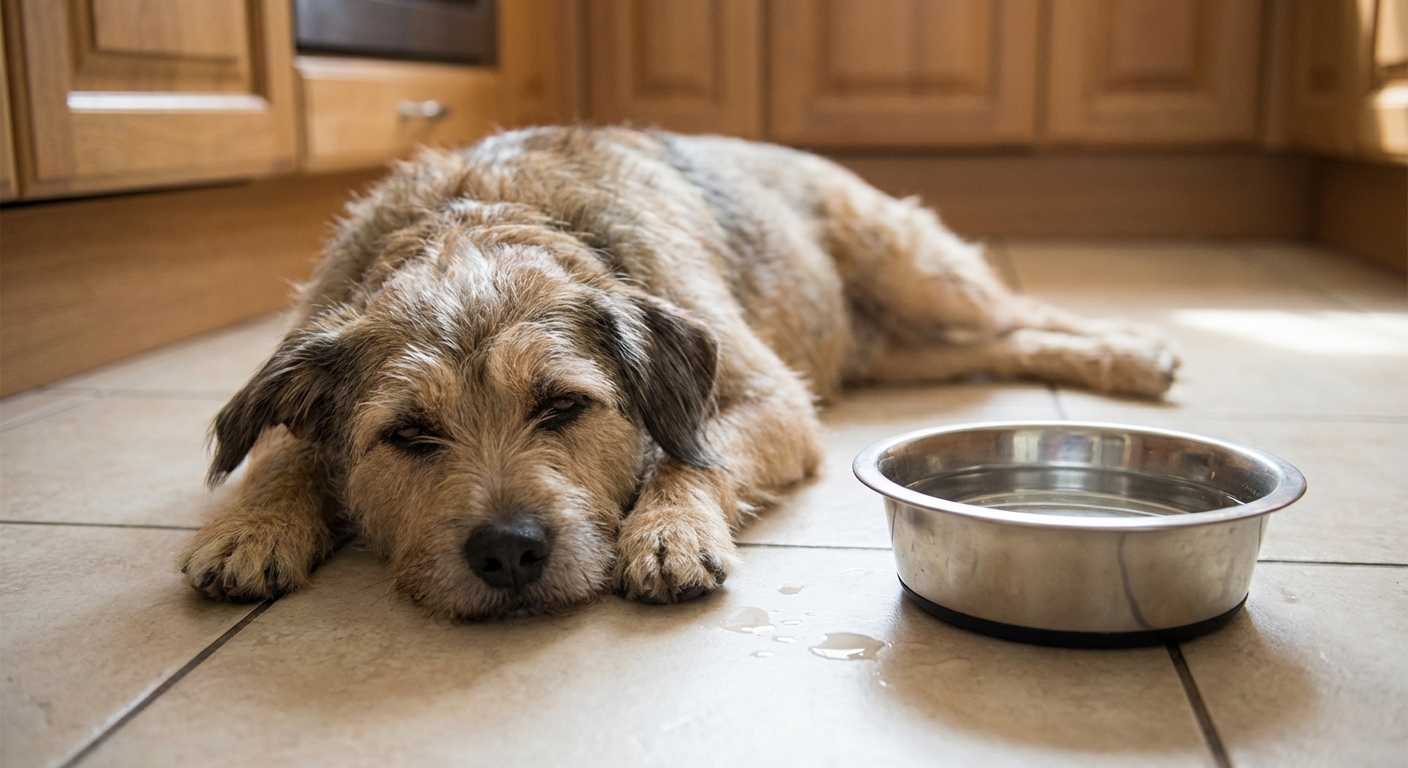
When your dog has an upset stomach, it can feel urgent and scary. As a veterinary assistant in Frisco, Texas, I have seen plenty of mild cases of acute gastroenteritis that resolve with simple, supportive care. I have also seen cases where “just a tummy ache” was actually pancreatitis, a foreign body, or a toxin exposure.
This guide will help you decide what you can safely give at home, what to avoid, and when it is time to call your veterinarian. It is not a substitute for an exam or diagnosis, so if something feels off, trust that instinct and call.
First: quick safety check
Before you offer any food or remedies, pause and look for red flags. If any of these are happening, skip home care and contact your veterinarian or an emergency clinic.
- Repeated vomiting, vomiting that will not stop, or vomiting for more than 12 to 24 hours
- Vomiting plus lethargy, weakness, collapse, or your dog seems “not themselves”
- Blood in vomit or stool, or black tarry stool
- Bloated belly, unproductive retching, pacing, or sudden severe abdominal pain (possible bloat or obstruction)
- Diarrhea that is profuse or watery, especially in small dogs or puppies
- Signs of dehydration: sticky gums, sunken eyes, weakness, very dark urine
- Known or possible toxin exposure (xylitol, grapes or raisins, chocolate, rodent bait, medications)
- Foreign body risk: chewing toys, socks, bones, corn cobs, strings
- Puppies, seniors, pregnant dogs, or dogs with chronic disease (kidney, liver, heart disease, diabetes, Cushing’s, IBD)
If your dog is bright, alert, and symptoms are mild with no ongoing vomiting, supportive care at home is often reasonable for a short window.
What you can give at home (most dogs)
1) Water and electrolyte support
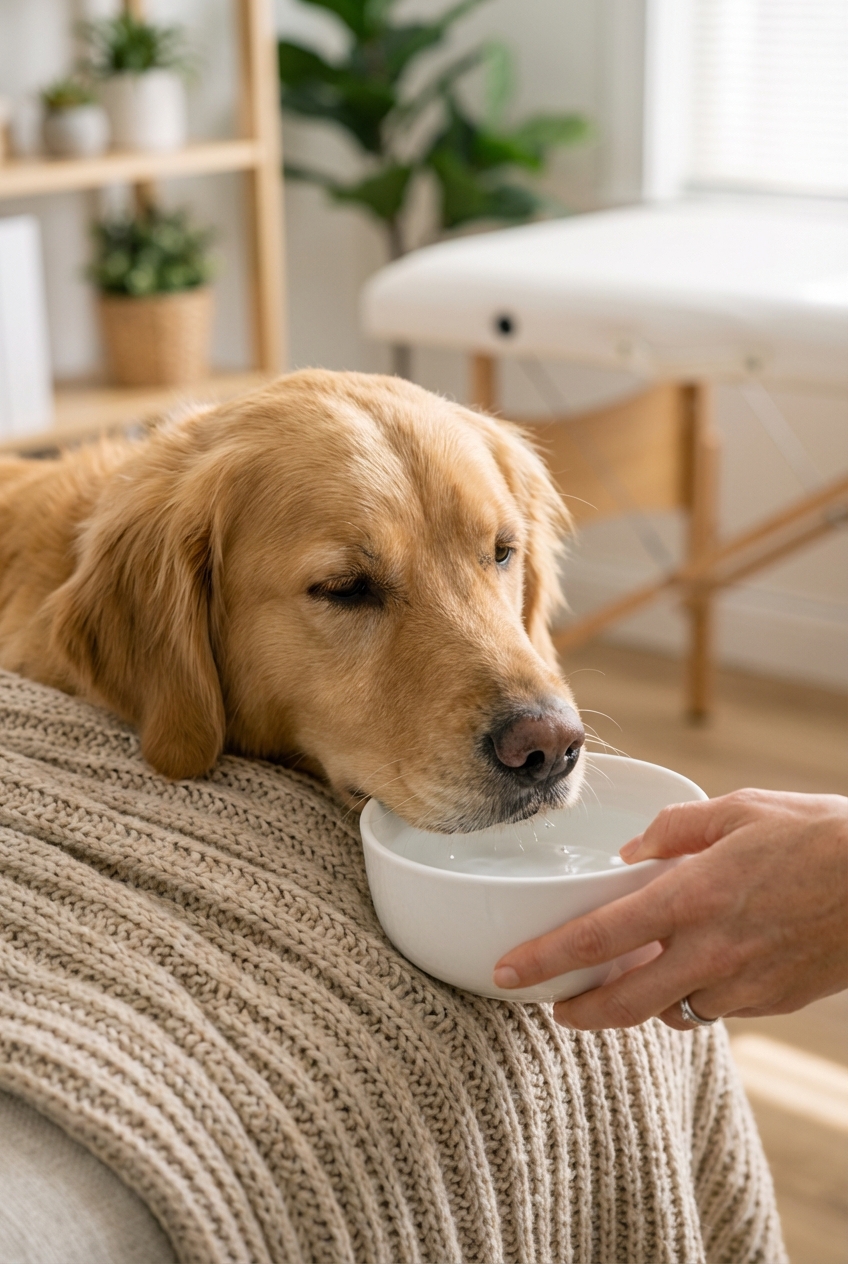
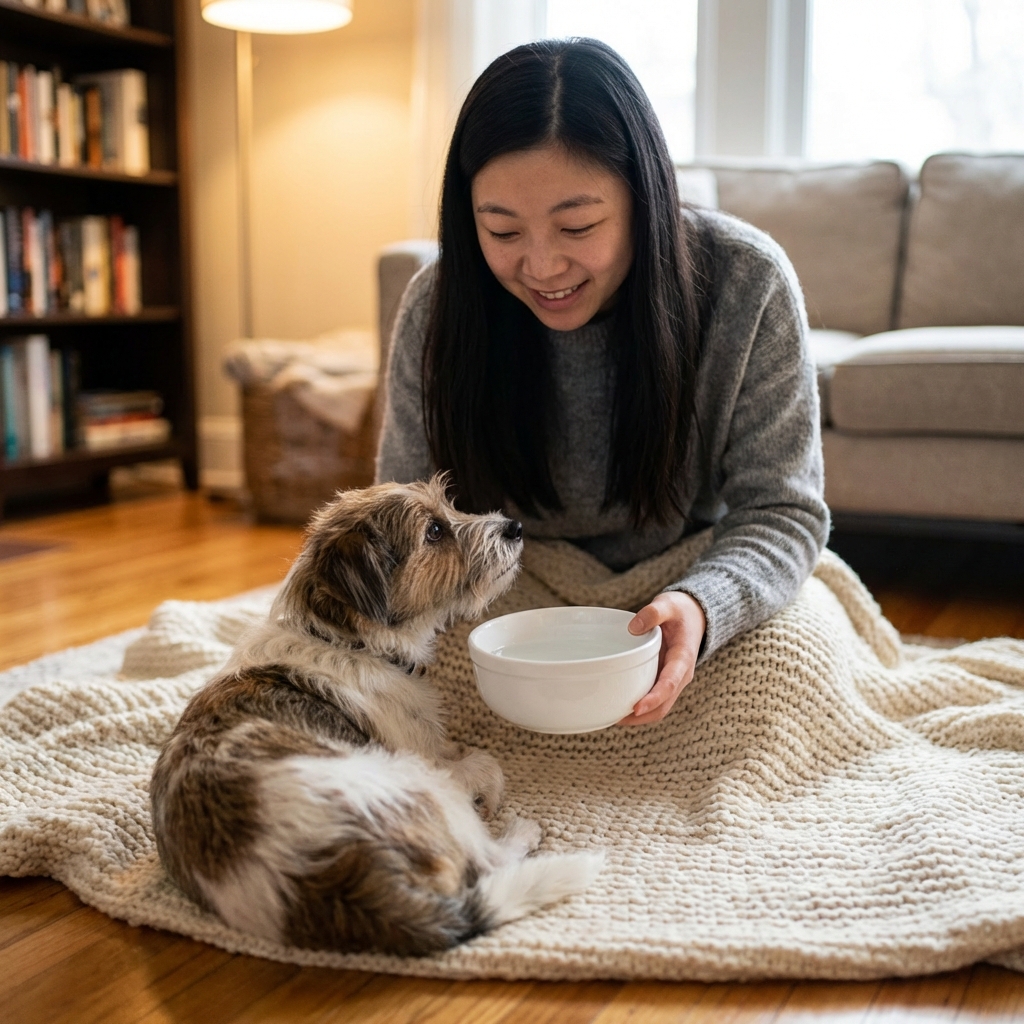
Hydration is the top priority. After a vomiting episode, many vets recommend waiting about 30 to 60 minutes before offering fluid again, then starting with tiny amounts.
- Water: Start small and adjust to what your dog can keep down. For many dogs, that means a few tablespoons at a time for small dogs, and up to about a quarter cup for medium and large dogs, every 30 to 60 minutes. If your dog gulps and vomits, offer less, more often.
- Ice chips: Helpful for dogs who vomit after drinking.
- Unflavored pediatric electrolyte solution: In small amounts can be useful if diarrhea is present. Avoid anything flavored with xylitol or artificial sweeteners. If your dog has kidney disease, heart disease, or is on a sodium-restricted diet, ask your veterinarian before using electrolyte solutions.
If your dog refuses water, cannot keep water down, or seems to be getting weaker, that is a vet visit.
2) A short stomach rest (vomiting only)
For adult dogs with mild vomiting and no red flags, your vet may recommend a brief break from food, often 6 to 12 hours. Practices vary, and some dogs do better with earlier small bland meals. Do not fast puppies, toy breeds, or diabetic dogs without veterinary guidance due to blood sugar risk. Unless your vet tells you otherwise, continue offering small amounts of water.
3) Bland, easy food
Once vomiting has stopped for several hours and your dog seems interested in eating, offer a bland diet in small portions.
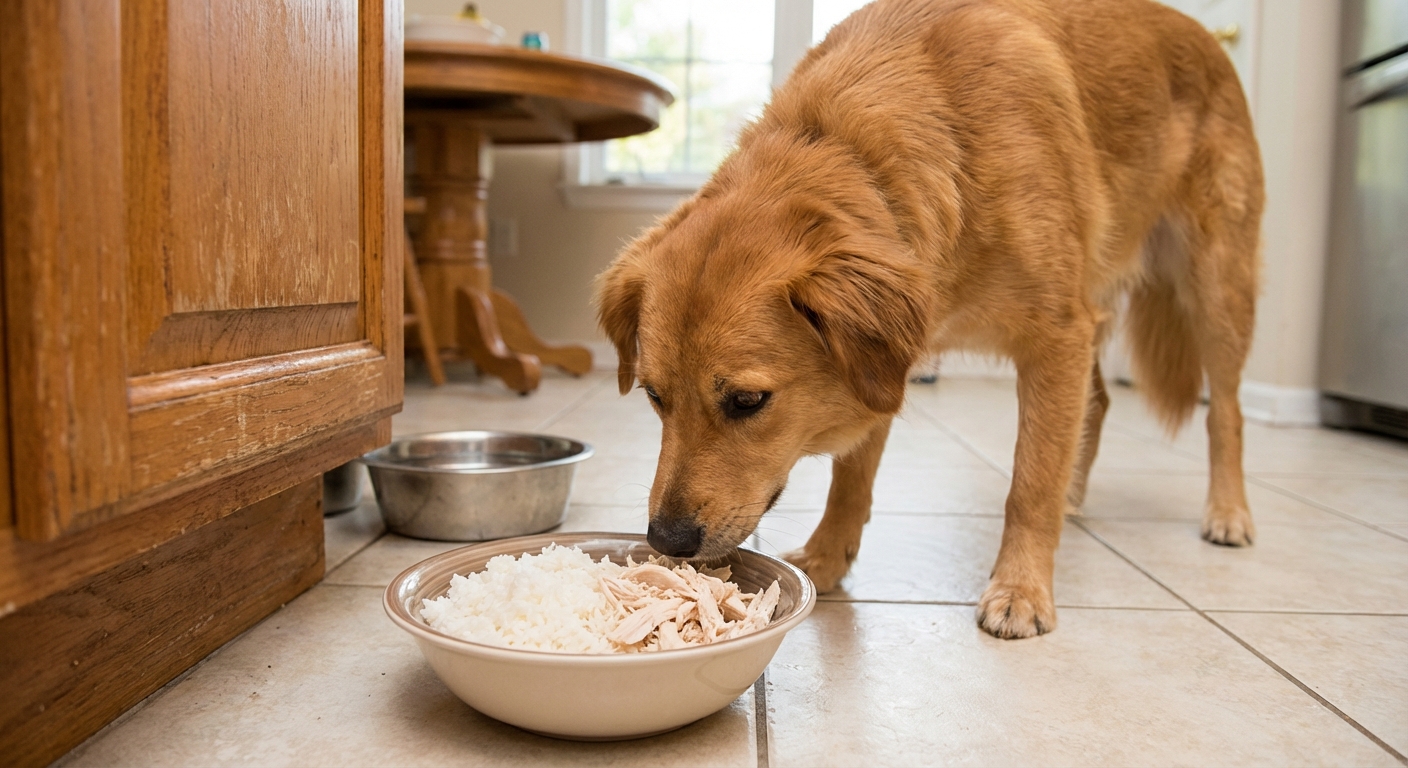
- Boiled chicken breast (no skin) + white rice
- Boiled lean ground turkey + white rice
- Boiled white fish + rice
Typical starting portions are about 1 to 2 tablespoons for small dogs, and about 1 to 2 tablespoons per 10 pounds for larger dogs, given every 3 to 4 hours. These are starting points. If your dog keeps it down, gradually increase the amount over 24 to 48 hours and slowly transition back to the regular diet over 3 to 5 days.
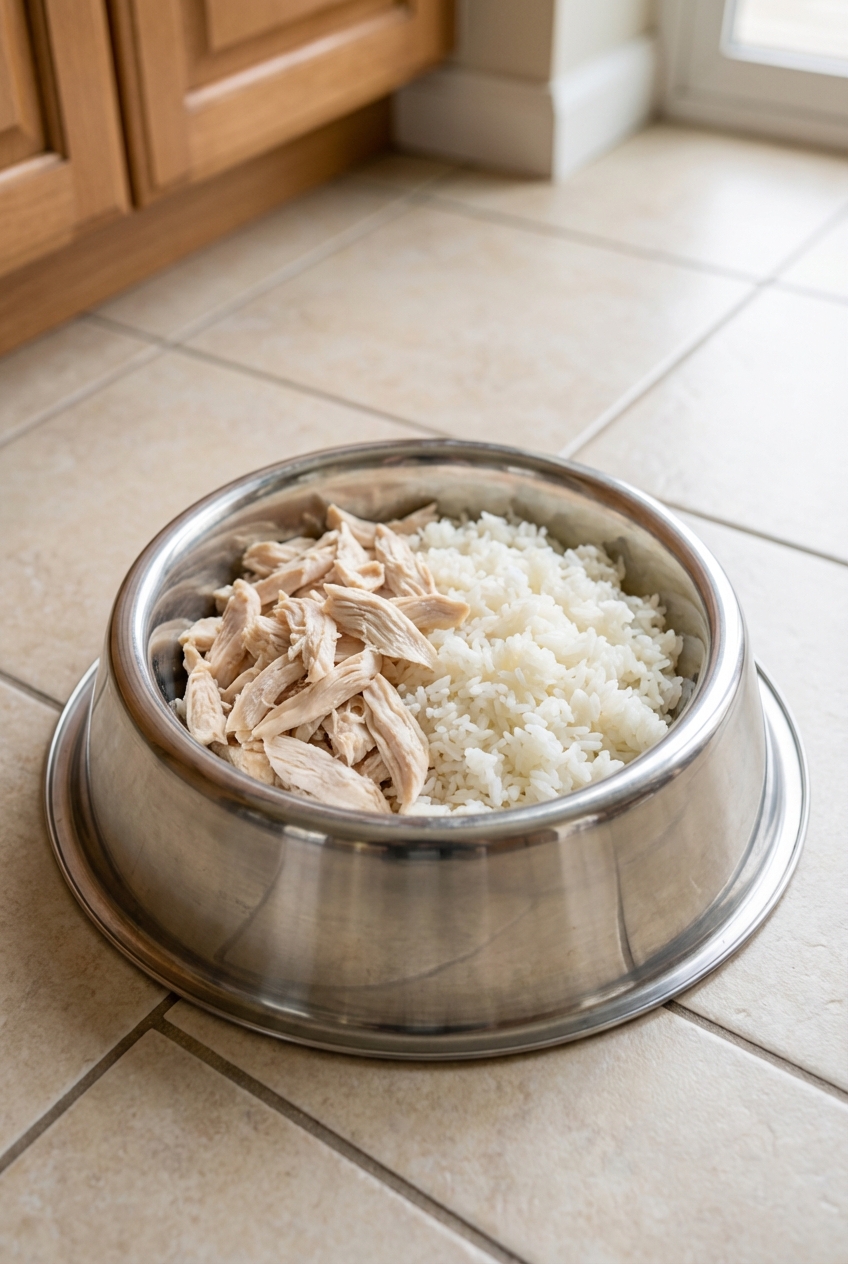
4) Plain canned pumpkin (for mild stool issues)
Plain pumpkin may help normalize stool in some dogs because of its soluble fiber. Choose 100% pumpkin, not pie filling. Fiber is not always the answer, and too much can worsen diarrhea in some cases, so start small.
- Small dogs: 1 to 2 teaspoons mixed into food
- Medium dogs: 1 to 2 tablespoons
- Large dogs: 2 to 4 tablespoons
Quick note: owners sometimes mistake frequent straining from colitis (inflammation in the lower gut) for constipation. If your dog is straining and producing small amounts of soft stool, mucus, or blood, or needs to go out constantly, call your vet for guidance.
If your dog has vomiting plus severe diarrhea, or symptoms worsen after pumpkin, stop and call your veterinarian.
5) Probiotics made for dogs
Evidence varies by strain, but some canine probiotics can shorten episodes of acute diarrhea and support the gut during stress or diet change. Choose a veterinary probiotic or a reputable canine-specific product and follow the label dosing. If you want something with veterinary research behind it, ask your vet about products that include strains like Enterococcus faecium SF68.
If you only have yogurt at home: a small amount of plain, unsweetened yogurt may be tolerated by some dogs, but many are sensitive to dairy. Skip yogurt if your dog is gassy, lactose intolerant, or already has diarrhea.
What not to give
- Pepto-Bismol or bismuth products unless your veterinarian tells you to. They can interfere with certain conditions and may darken stool, which makes it harder to spot bleeding.
- Human anti-diarrheals (loperamide/Imodium) without vet guidance. Some dogs can have serious neurologic side effects, especially breeds at risk for the MDR1 mutation (Collies, Shelties, Australian Shepherds, and related mixes). It can also be dangerous if the cause is infection, obstruction, or toxin exposure.
- NSAIDs like ibuprofen or naproxen, and do not use aspirin unless your veterinarian specifically directs you. These can cause ulcers, kidney damage, and life-threatening toxicity.
- Fatty foods like bacon, sausage, and greasy table scraps. High-fat meals are a common trigger for pancreatitis flare-ups.
- Bones, rawhides, and chews while the stomach is upset. They can irritate the gut or create an obstruction.
- Milk, rich treats, or new foods during the episode. Keep it boring and gentle.
When a dog is nauseous, simple is powerful. Bland food, small meals, hydration, and time often do more than a cabinet full of human meds.
How long to try home care
For a healthy adult dog with mild symptoms, you can usually try supportive care for about 24 hours.
- Call your vet sooner if vomiting returns, diarrhea becomes watery, your dog seems painful, or energy drops.
- Do not wait if your dog cannot keep water down, becomes weak, has blood in stool or vomit, or you suspect toxin exposure.
- Diarrhea only still counts: persistent diarrhea without vomiting can still warrant a vet call sooner than 24 hours, especially for small dogs, dogs with other medical conditions, or if there is any blood or dehydration.
Simple feeding plan (48 hours)
Step 1: stabilize
- After vomiting, wait 30 to 60 minutes, then offer tiny sips of water
- Offer small amounts of water frequently
- If vomiting, your vet may recommend resting food 6 to 12 hours for adult dogs only
Step 2: reintroduce food
- Start bland diet in small meals every 3 to 4 hours
- Add a canine probiotic if you have one
Step 3: transition back
If stools firm up and appetite returns, begin mixing back to normal food over several days:
- Day 1: 75% bland, 25% regular
- Day 2: 50% bland, 50% regular
- Day 3: 25% bland, 75% regular
- Day 4: 100% regular
If symptoms come back during the transition, go back to the previous step and talk with your veterinarian.
Why it happens (and when it matters)
Many mild cases are caused by dietary indiscretion, sudden diet change, stress, or a minor stomach and intestinal upset. But if episodes are frequent or severe, it is worth investigating triggers like food intolerance, parasites, pancreatitis, inflammatory bowel disease, Addison’s disease, or chronic GI infection.
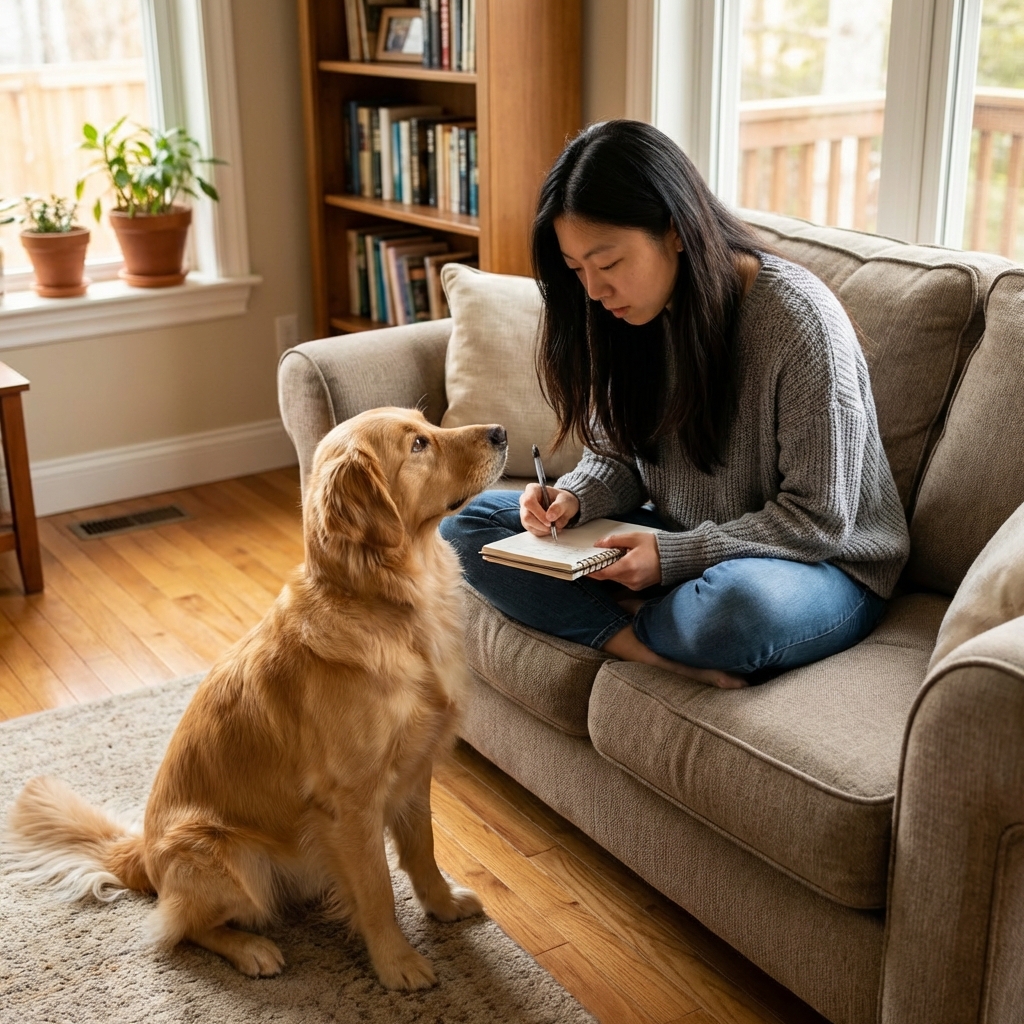
Keep a simple log of:
- What your dog ate (including treats and chews)
- Stool quality and frequency
- Vomiting episodes
- Energy level and appetite
This information is incredibly helpful for your vet, especially if the issue is recurring.
Special cases
Puppies and toy breeds
Puppies can dehydrate quickly and may be at risk for low blood sugar if fasted. If a puppy vomits repeatedly, has diarrhea, seems weak, or skips meals, call your veterinarian the same day. Puppies with significant diarrhea also need to be assessed for parasites and contagious illnesses such as parvovirus, especially if they are not fully vaccinated.
Senior dogs
Older dogs are more likely to have underlying disease, medication side effects, or dehydration risk. If your senior dog is “just not right,” get help sooner.
Pancreatitis risk
If your dog has a history of pancreatitis or is prone to it, avoid high-fat foods entirely and ask your veterinarian what bland diet is best. Pancreatitis can become severe fast.