Vet-backed guidance on Miralax (PEG 3350) for cat constipation: typical starting doses, how to mix it into food, expected timing, side effects, and when to s...
Article
•
Designer Mixes
What to Give a Constipated Cat

Shari Shidate
Designer Mixes contributor
If your cat is straining in the litter box, producing tiny dry stools, or going less often than usual, constipation can be the culprit. The good news is that many mild cases improve with safe, simple support at home. However, constipation can also be a sign of dehydration, pain, intestinal blockage, or a medical condition that needs veterinary care.
As a veterinary assistant here in Frisco, Texas, I always tell pet parents this: help early, and watch closely. Cats are masters at hiding discomfort.
First, make sure it is really constipation
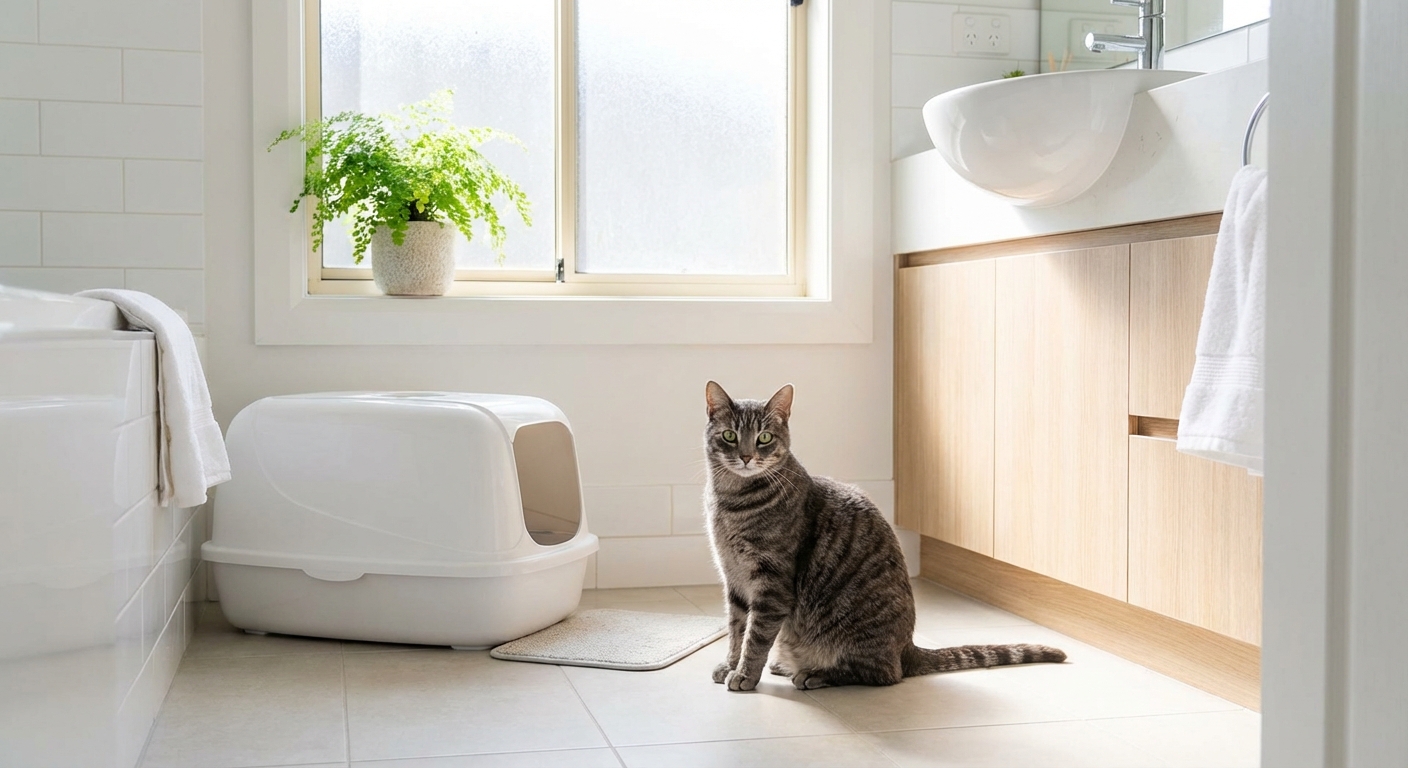
Cats can look similar when they are constipated versus when they have a urinary blockage. One is uncomfortable. The other can become life-threatening quickly.
Common constipation signs
- Small, hard, dry stools or no stool
- Straining to poop
- Less frequent bowel movements
- Decreased appetite or mild lethargy
- Occasional vomiting (can happen with constipation)
Urgent red flags (do not wait)
- Straining with little or no urine, especially in male cats
- Crying out, severe pain, a hard swollen belly
- Repeated vomiting, collapse, or profound lethargy
- No stool for 48 to 72 hours, especially if paired with straining, vomiting, pain, or appetite changes
- Suspected string, ribbon, bone, toy, or other foreign material ingestion
- Blood in stool, or black tarry stool
If you see any red flags, skip home remedies and call your vet or an emergency clinic right away.
What you can give a constipated cat
For a generally healthy cat with mild constipation and no red flags, these are commonly vet-recommended options. When in doubt, call your veterinarian for dosing guidance for your cat’s weight and health history.
1) Water, water, water
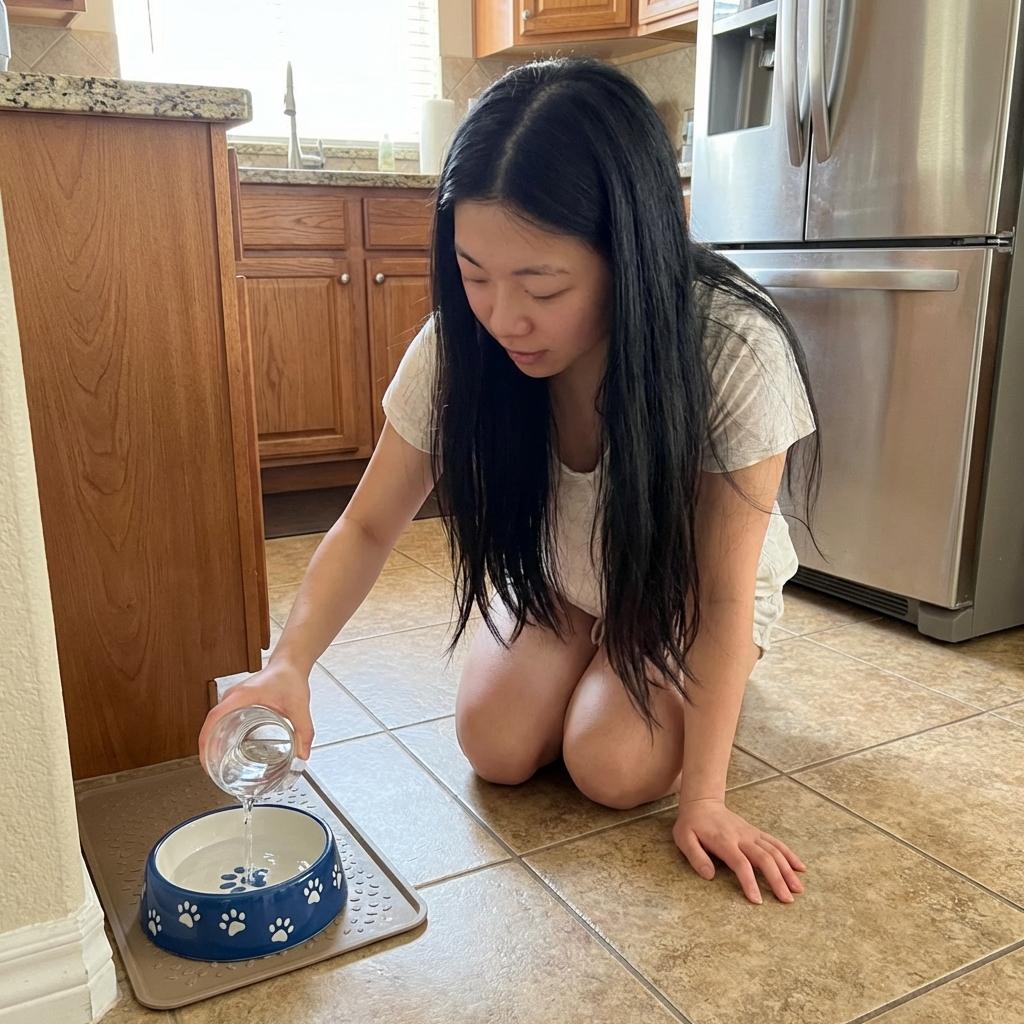
Dehydration is one of the biggest drivers of constipation in cats. Increasing water intake often helps the most, and it is the safest place to start.
- Switch to canned food for a few days if your cat will eat it. Moisture matters.
- Add water or broth to wet food to make a gravy texture. Use only low-sodium broth with no onion or garlic (these ingredients are toxic to cats). When in doubt, choose a pet-safe broth.
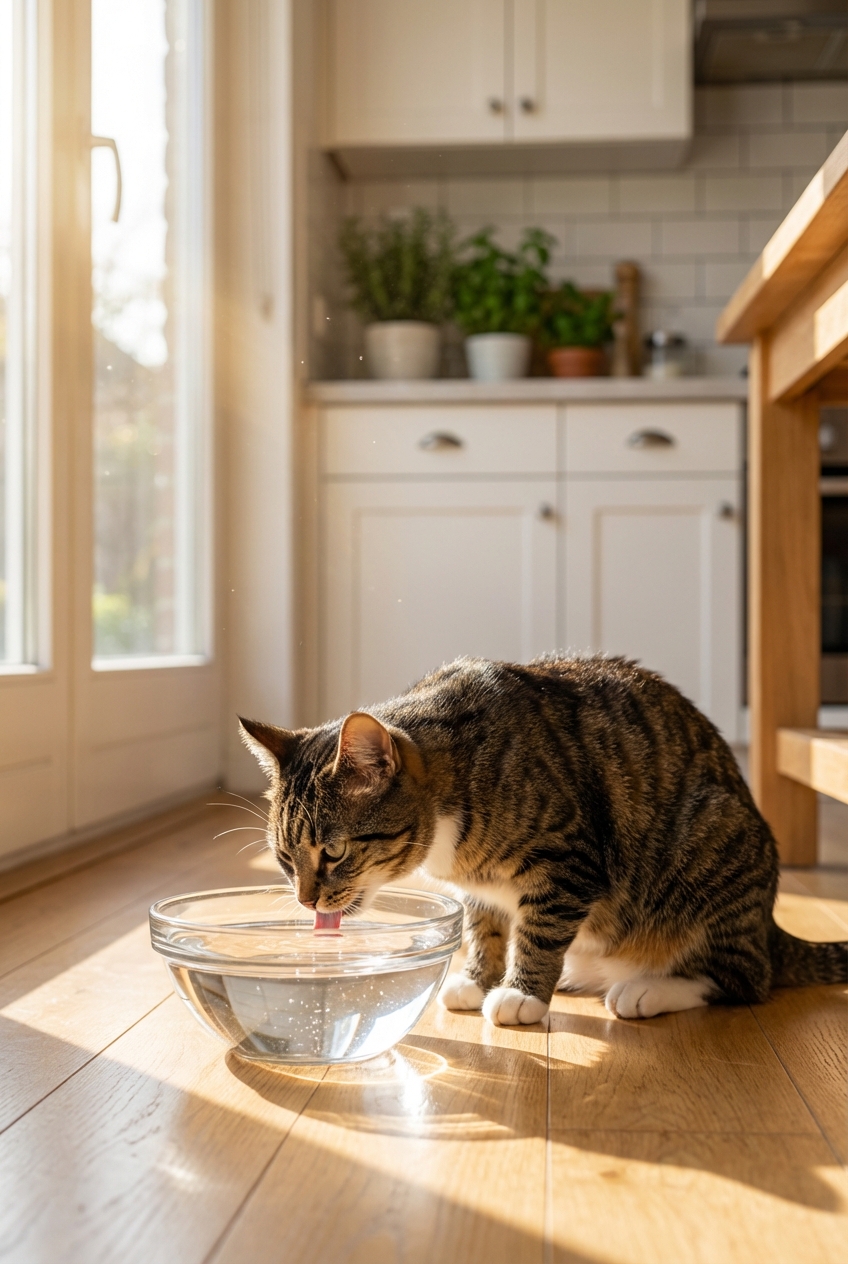
- Try a cat water fountain. Many cats drink more from moving water.
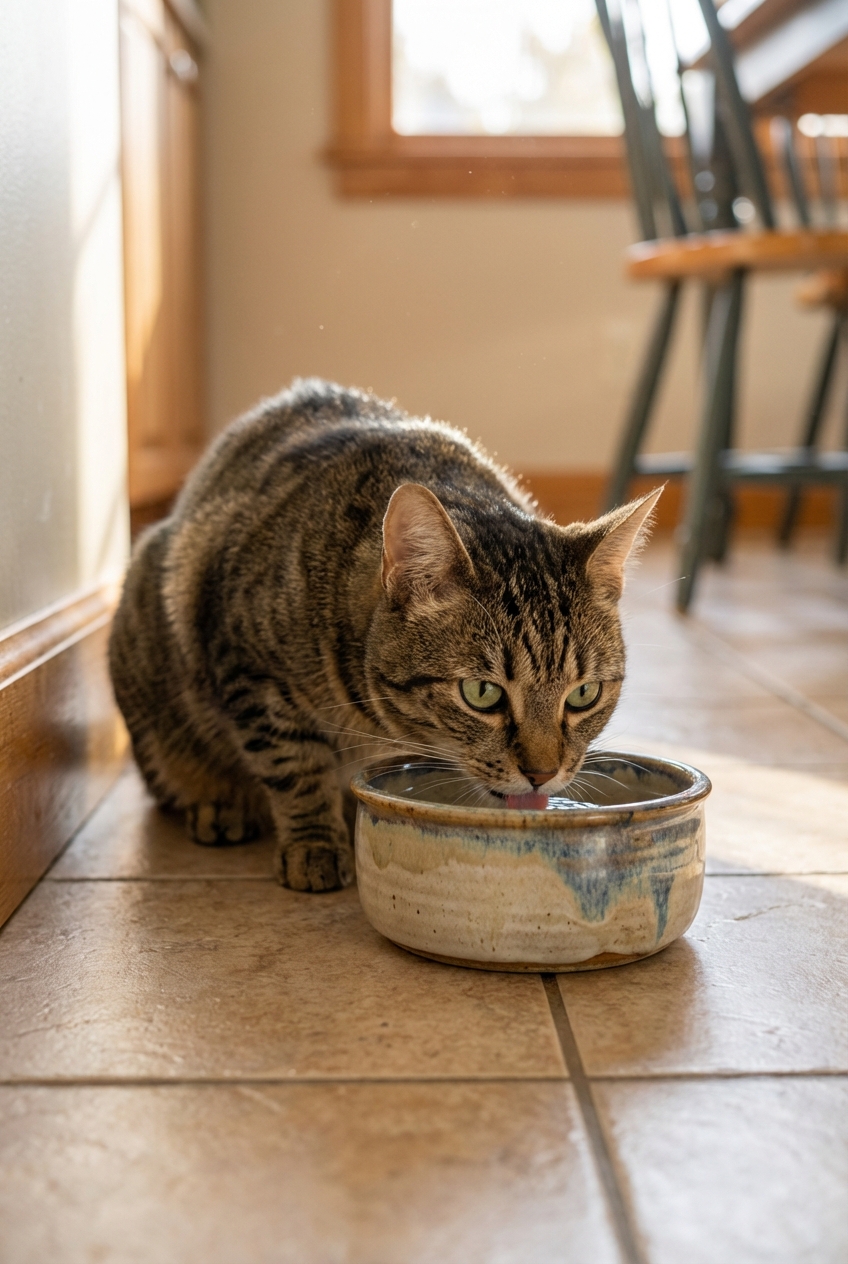
- Offer multiple bowls in quiet places, away from the litter box.
2) Canned pumpkin (plain)
Plain pumpkin is commonly suggested for mild constipation because it adds gentle fiber and moisture. It helps some cats, but it is not a magic fix for every case. Use only 100% pumpkin, not pumpkin pie filling.
- Typical starting amount: 1/2 to 1 teaspoon mixed into food once or twice daily.
- If your cat gets gas, diarrhea, or refuses food, stop and try another option.
3) A vet-recommended stool softener (polyethylene glycol 3350)
Many veterinarians recommend polyethylene glycol 3350, often recognized by the brand name MiraLAX, for cat constipation. It works by drawing water into the stool, making it easier to pass. This is commonly used off-label in cats.
- Use only with veterinary guidance, especially if your cat has kidney disease, heart disease, is elderly, or is on other medications.
- Do not use if you suspect an intestinal blockage.
4) Fiber supplements (only if they fit your cat)
Some cats do well with added fiber, while others get worse if they are already dehydrated or have painful stool sitting in the colon. If your vet recommends it, options may include psyllium or other feline-specific products.
- Fiber works best when water intake is also increased.
5) Hairball support (when fur is part of the problem)
If your cat has long hair, grooms heavily, or you are seeing frequent hairballs, fur can contribute to constipation.
- Daily brushing can reduce swallowed hair.
- Your vet may recommend a hairball gel or a diet designed for hairball management.
6) Gentle activity and stress reduction
Movement helps gut motility. Stress can slow it down.
- Schedule short play sessions, even 5 minutes at a time.
- Keep the litter box area calm and accessible.
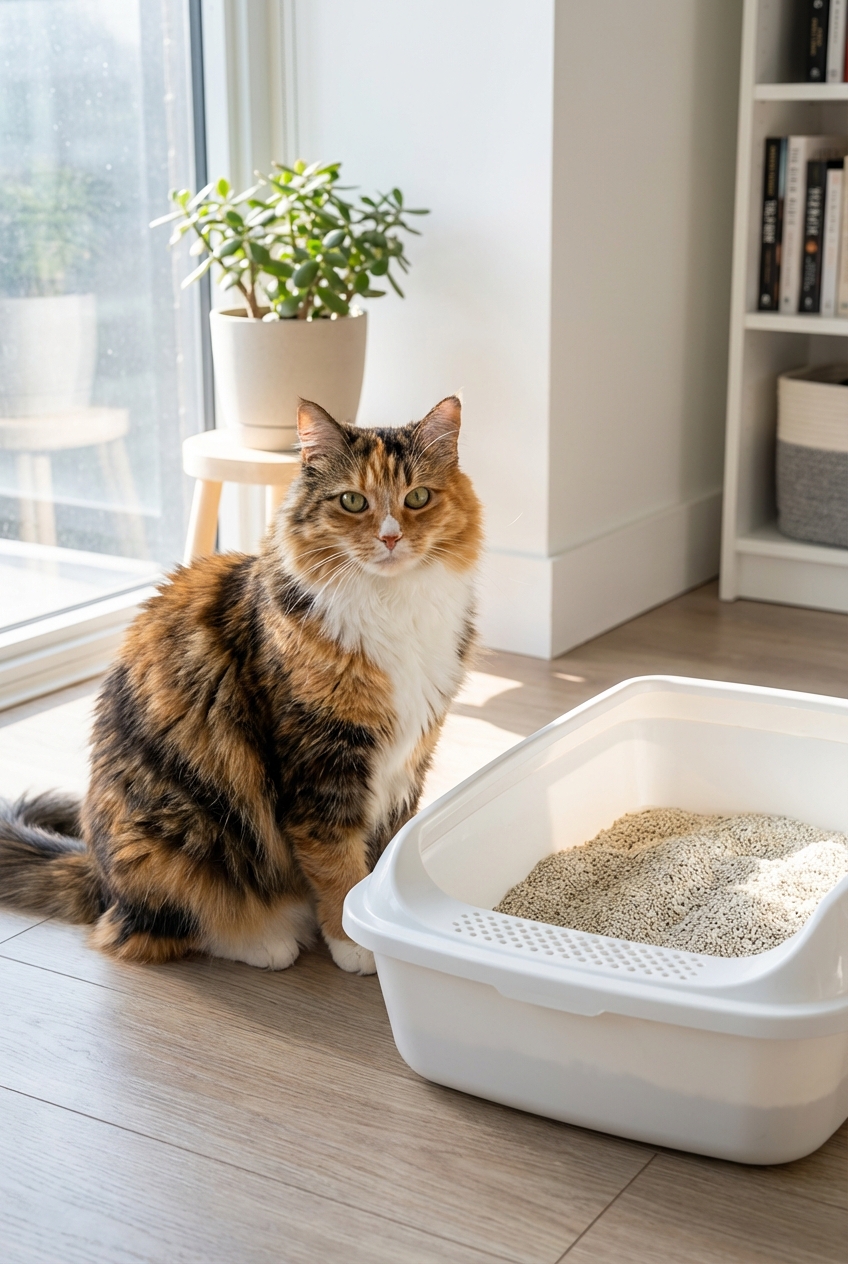
- Provide one litter box per cat, plus one extra, in multi-cat homes.
What not to give a constipated cat
This is where loving pet parents can accidentally create a crisis. Avoid these unless your veterinarian specifically instructs you.
- Human enemas (especially sodium phosphate types). These can be toxic to cats.
- Mineral oil by mouth. Aspiration risk can lead to severe pneumonia.
- Laxatives meant for people that are not specifically recommended by your vet.
- Essential oils. Many are unsafe for cats.
- Bones, stringy meats, or risky chew items that could cause an obstruction.
Also, do not attempt an enema at home unless your veterinarian has specifically trained and instructed you. In-clinic enemas are much safer.
Constipation by age
The approach changes with age. When a cat is very young or older, I recommend involving your veterinarian sooner rather than later.
Kittens
- Kittens can dehydrate quickly. If a kitten is not pooping normally, call your vet.
- Never give adult laxatives or home enemas.
Adult cats
- Mild constipation is often linked to dehydration, diet, hair, stress, or litter box issues.
- If it becomes recurrent, it is time to look deeper for underlying causes such as pain (including arthritis), obesity and inactivity, medication side effects, prior pelvic injury, neurologic issues, or dehydration related to other diseases.
Senior cats
- Older cats are more likely to have arthritis pain that makes posturing in the litter box difficult.
- Kidney disease is also common and can worsen dehydration.
- Chronic constipation can progress to megacolon, which requires veterinary management.
How long to try home care
If your cat is otherwise bright, eating at least somewhat, and you are not seeing red flags, you can often try supportive care for 24 hours.
- If there is no stool in 48 hours and your cat is straining, acting unwell, vomiting, or not eating, it is time to call your veterinarian.
- If your cat is repeatedly straining with no result at any point, contact your veterinarian the same day.
- If vomiting, pain, or weakness appears, seek care right away.
Prevention tips that work
Once your cat is comfortable again, a few habits can help prevent the next episode.
- Prioritize hydration: wet food, fountains, extra bowls.
- Choose the right diet: some cats do best on higher moisture, others need a prescription GI or fiber-balanced diet. Your vet can guide you.
- Make the litter box inviting: clean daily, low-stress location, and a box with easy entry for seniors. Some cats will hold stool if the box is dirty, hard to access, or they dislike the litter texture.
- Maintain a healthy weight: obesity can reduce activity and worsen constipation.
- Brush routinely, especially long-haired cats.
Action step: If constipation happens more than once, start a simple log. Note stool size and frequency, diet changes, water intake, litter box changes, and any vomiting. That information helps your veterinarian find patterns fast.
When the vet may recommend more help
In clinic, treatment depends on what is causing the problem and how impacted the colon is. Your veterinarian might recommend:
- Fluids to correct dehydration
- A physical exam with abdominal palpation, and sometimes a rectal exam when appropriate
- Prescription laxatives or motility medications
- Enemas performed safely by the veterinary team
- X-rays to rule out obstruction or evaluate stool burden
- Bloodwork to check kidney function, electrolytes, and overall health
If your cat is constipated repeatedly, needs laxatives often, or is also losing weight, vomiting frequently, or acting painful, please do not feel like you are overreacting by scheduling a visit. You are protecting your cat.