Vomiting or diarrhea in cats can turn serious fast. Learn safe home care steps, hydration and bland diet tips, probiotics, red flags for the vet, and risky r...
Article
•
Designer Mixes
What to Give a Cat With an Upset Stomach

Shari Shidate
Designer Mixes contributor
If your cat is dealing with an upset stomach, it can feel stressful fast. The good news is that some mild cases can be supported at home with simple, gentle care. That said, cats can worsen quickly, so it is important to watch closely and get veterinary guidance promptly if things are not improving.
As a veterinary assistant, I always remind pet parents: vomiting and diarrhea are symptoms, not a diagnosis. The goal at home is to keep your cat hydrated, avoid making the stomach work harder, and recognize when it is time to stop home care and call your veterinarian. This is general guidance and not a substitute for an exam.
First: check for emergency signs
Before you offer any food or home care, look for signs that mean your cat needs veterinary help right away. Call your vet or an emergency clinic if you notice:
- Multiple vomiting episodes in a day, vomiting that is worsening, or vomiting that keeps returning
- Cannot keep water down, or vomits after drinking
- Blood in vomit or stool, or stool that looks black and tarry
- Severe lethargy, weakness, collapse, or hiding more than usual
- Signs of dehydration: dry or tacky gums, very low energy (sunken eyes can happen, but gums and energy are usually easier to judge at home)
- Straining to poop with little or no stool (constipation or obstruction concern)
- Swollen or painful belly, crying when touched
- Known toxin exposure (plants, medications, chemicals, lilies)
- A kitten, senior cat, pregnant cat, or a cat with chronic illness (kidney disease, diabetes, IBD)
- Urination trouble: straining to urinate, crying in the litter box, producing little or no urine, or visiting the box repeatedly with little output (especially male cats). This is an emergency even without vomiting.
If any of these are present, skip home treatment. It is much safer to get an exam and the right medication early.
Hydration comes first
When a cat has vomiting or diarrhea, dehydration can sneak up quickly. What you can offer depends on what your cat is doing right now.
What to give
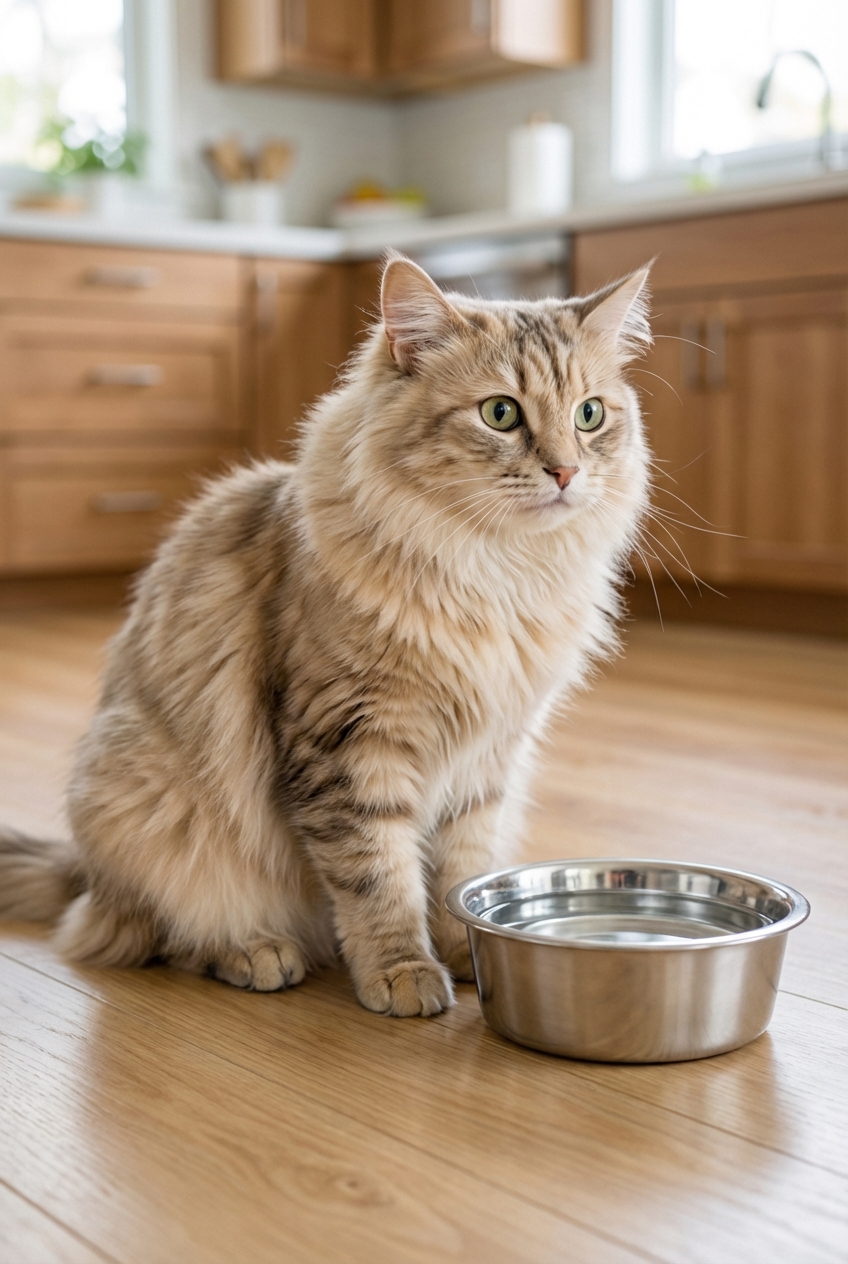
- Fresh water in a clean bowl, refreshed often.
- Ice cubes or ice chips if your cat seems interested, some cats lick these more willingly.
- Low-sodium chicken broth (no onion, no garlic, no added seasoning). Read labels carefully, since onion or garlic may be listed as “natural flavors.” If possible, choose a pet-safe broth.
What to avoid
- Sports drinks and human electrolyte drinks. They can have sugar or additives that do not fit cats well.
- Milk or cream. Many cats are lactose intolerant and this can worsen diarrhea.
Important: If your cat cannot keep even small sips down, or vomits after drinking, stop oral intake and call your veterinarian.
What to feed
If your cat has not vomited for several hours and is interested in food, offer small meals of bland, easy-to-digest options. Think tiny portions, more often.
Best first choices
- A veterinary gastrointestinal diet (canned is often easiest on the stomach). These are designed to be highly digestible and consistent. This is my top recommendation when possible.
- Plain boiled chicken breast (boneless, skinless) shredded into tiny bites. No salt, no seasoning.
- Plain cooked turkey (lean, unseasoned) as an alternative protein.
Note: Plain chicken and turkey are for short-term support only (typically 24 to 48 hours) unless your veterinarian advises otherwise, because they are not complete and balanced long-term diets.
How much and how often
Start with 1 to 2 teaspoons every 2 to 3 hours. If that stays down, gradually increase the portion size over 24 to 48 hours. Once stools normalize and vomiting stops, transition slowly back to your regular food over several days.
Should you fast a cat?
For dogs, short fasting is sometimes recommended. For cats, extended fasting can be risky. If your adult cat refuses all food for 12 to 24 hours (sooner if your cat is older, has medical issues, or seems “off”), call your veterinarian. Overweight cats are at higher risk of serious liver complications if they do not eat.
Rice, pumpkin, baby food
You will see a lot of online advice that is more dog-focused. Cats are true carnivores, so the “best” bland plan is typically a highly digestible cat diet or plain lean meat.
Plain pumpkin
Sometimes helpful for mild diarrhea or constipation because of its fiber, but it is not a complete food. If your vet agrees, start small: about 1/4 to 1/2 teaspoon mixed into food once or twice daily for an average adult cat. Use plain canned pumpkin, not pumpkin pie filling. Stop if it worsens diarrhea or your cat refuses food.
Plain rice
Rice can be used in tiny amounts, but many cats do not need it, and too much can dilute the protein your cat actually needs. If you use rice, keep it minimal and paired with lean meat.
Meat-only baby food
In a pinch, meat-only baby food can help tempt a cat to eat. Read the label carefully and avoid any that contain onion or garlic powder (common and unsafe for cats). Use this only as a short bridge, not a long-term plan.
Vomiting, regurgitation, hairballs
These issues can look similar, but a few details help your vet (and can change how urgent the situation is).
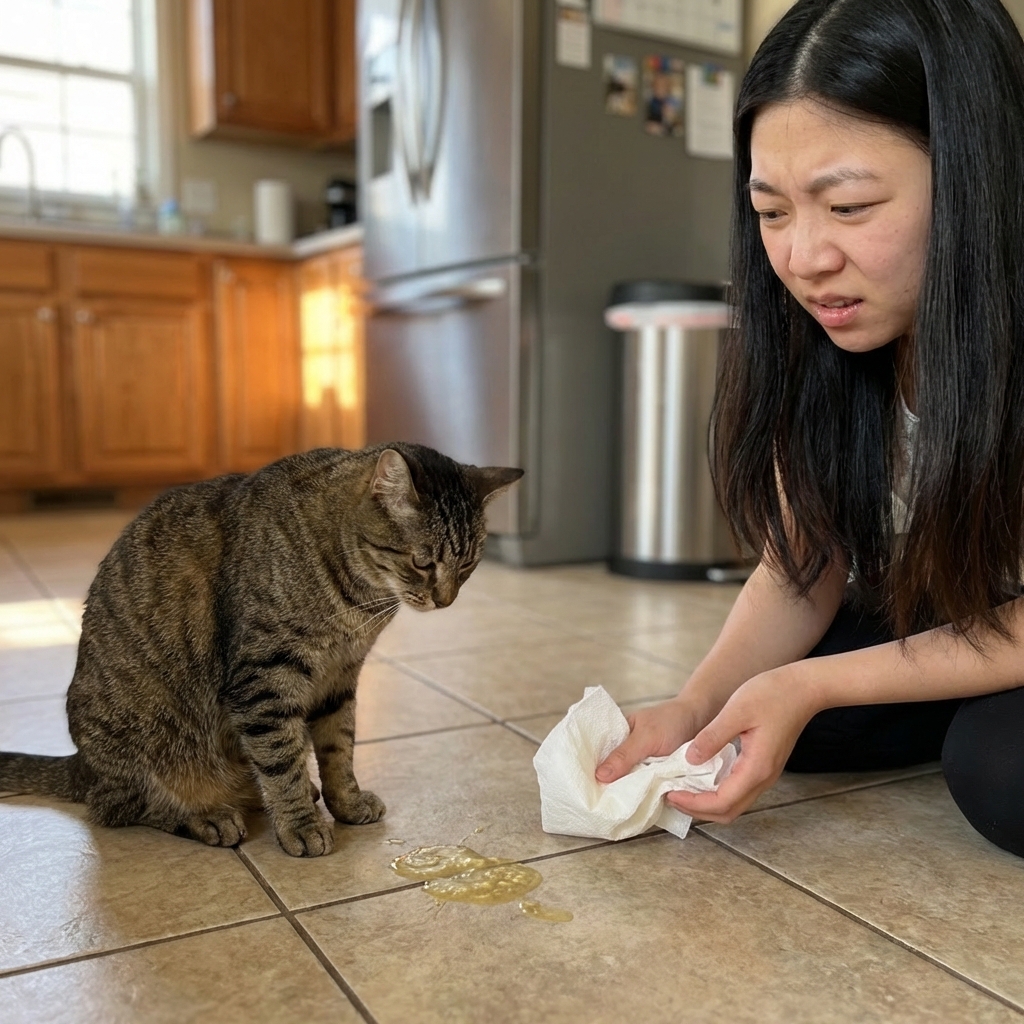
- Vomiting often includes nausea signs first (drooling, lip licking), then abdominal heaving, and you may see partially digested food or fluid.
- Regurgitation is more passive and sudden, with little to no retching. Material often looks like undigested food. This can suggest an esophagus problem and should be discussed with your vet.
- Hairballs can cause gagging and retching. A hairball should eventually come up. Repeated unproductive retching, especially with lethargy or poor appetite, can also happen with obstruction, so it is a reason to call.
Over-the-counter meds
I know it is tempting to reach into the medicine cabinet, but cats are very sensitive to many common human medications.
Do not give these unless your vet instructs you
- Pepto-Bismol or other bismuth products (can be dangerous for cats)
- Imodium (loperamide) (can cause serious side effects in cats)
- Aspirin, ibuprofen, naproxen, acetaminophen (toxic risk)
- Any “natural” supplements without veterinary guidance. “Natural” is not automatically safe.
What your vet may recommend
Depending on symptoms and your cat’s history, your veterinarian may prescribe anti-nausea medication, probiotics, deworming, fluids, or a targeted treatment if parasites, dietary intolerance, pancreatitis, or another condition is suspected.
Supportive care at home
- Keep meals small and boring for a couple of days. Sudden diet changes can prolong diarrhea.
- Reduce stress. Stress can trigger GI upset in cats. Provide a quiet room, predictable routine, and clean litter box.
- Remove rich treats, dairy, and table scraps until fully recovered.
- Track symptoms: how many times vomiting occurs, stool consistency, appetite, energy, and drinking.
- Watch litter box output: note urination frequency and amount, and whether diarrhea is watery, high-volume, or causing accidents (all reasons to call sooner).
If you can, take a quick photo of the vomit or stool. It sounds unpleasant, but it can genuinely help your vet.
Common causes
Some causes are mild and short-lived, and others need diagnosis and treatment. Common culprits include:
- Eating too fast or eating something unusual
- Sudden food change
- Hairballs
- Intestinal parasites (yes, even indoor cats can get them)
- Food intolerance or allergy
- Stress
- Inflammatory bowel disease
- Pancreatitis
- Foreign body obstruction (string, toys)
- Toxin exposure (especially lilies)
If GI upset keeps returning, it is worth scheduling an appointment for a thorough workup. Your vet may recommend fecal testing for parasites, even if your cat stays indoors.
When to call the vet
- Vomiting continues past 24 hours, or is worsening
- Diarrhea lasts more than 24 to 48 hours, is watery or high-volume, or your cat cannot stay hydrated
- Your cat stops eating, seems painful, or is losing weight
- You suspect a hairball but your cat is gagging without producing anything
- You see worms or rice-like segments in stool
- Your cat is on any medication or has a chronic condition
Trust your instincts. If something feels off, you are not overreacting by calling. It is always easier to treat stomach upset early than to catch up later.
A simple 24-hour plan
Hours 0 to 6
- Offer small amounts of water frequently.
- If your cat vomits after drinking, cannot keep water down, or worsens at any point, stop oral intake and call your vet for guidance.
Hours 6 to 24
- If no vomiting for several hours, offer a teaspoon or two of a vet GI canned diet or plain boiled chicken.
- Repeat small meals every 2 to 3 hours if tolerated.
Day 2
- Gradually increase meal size.
- Transition slowly back to normal food over 3 to 5 days.
- If symptoms return during the transition, pause and check in with your veterinarian.