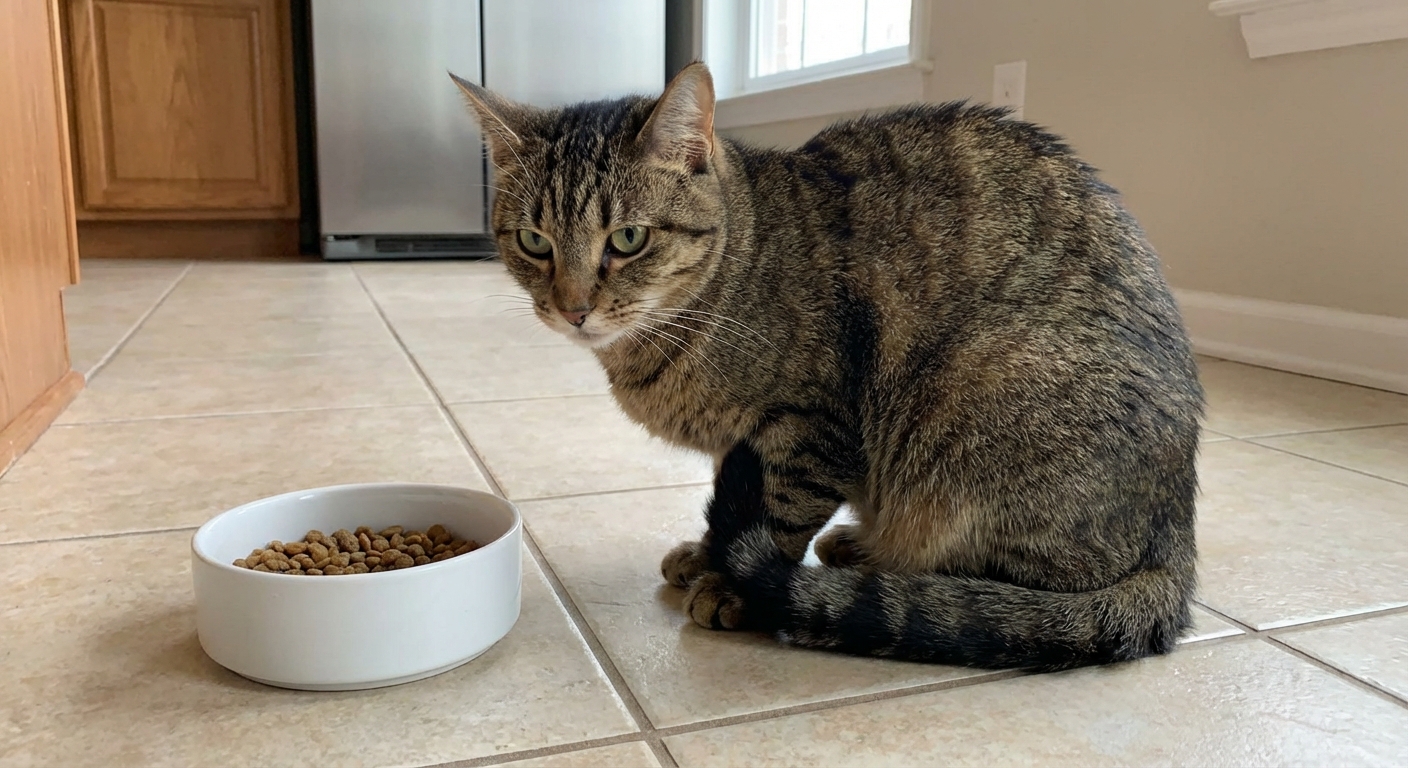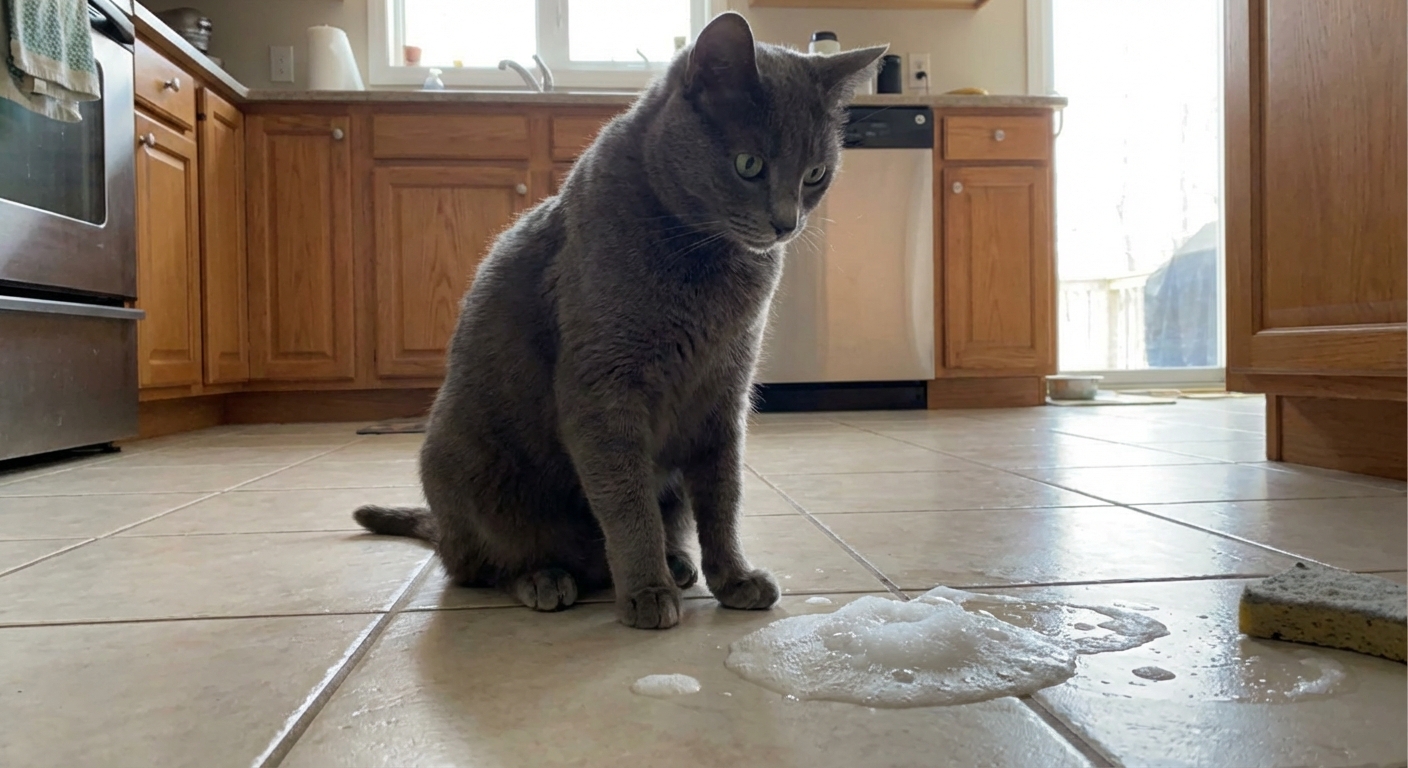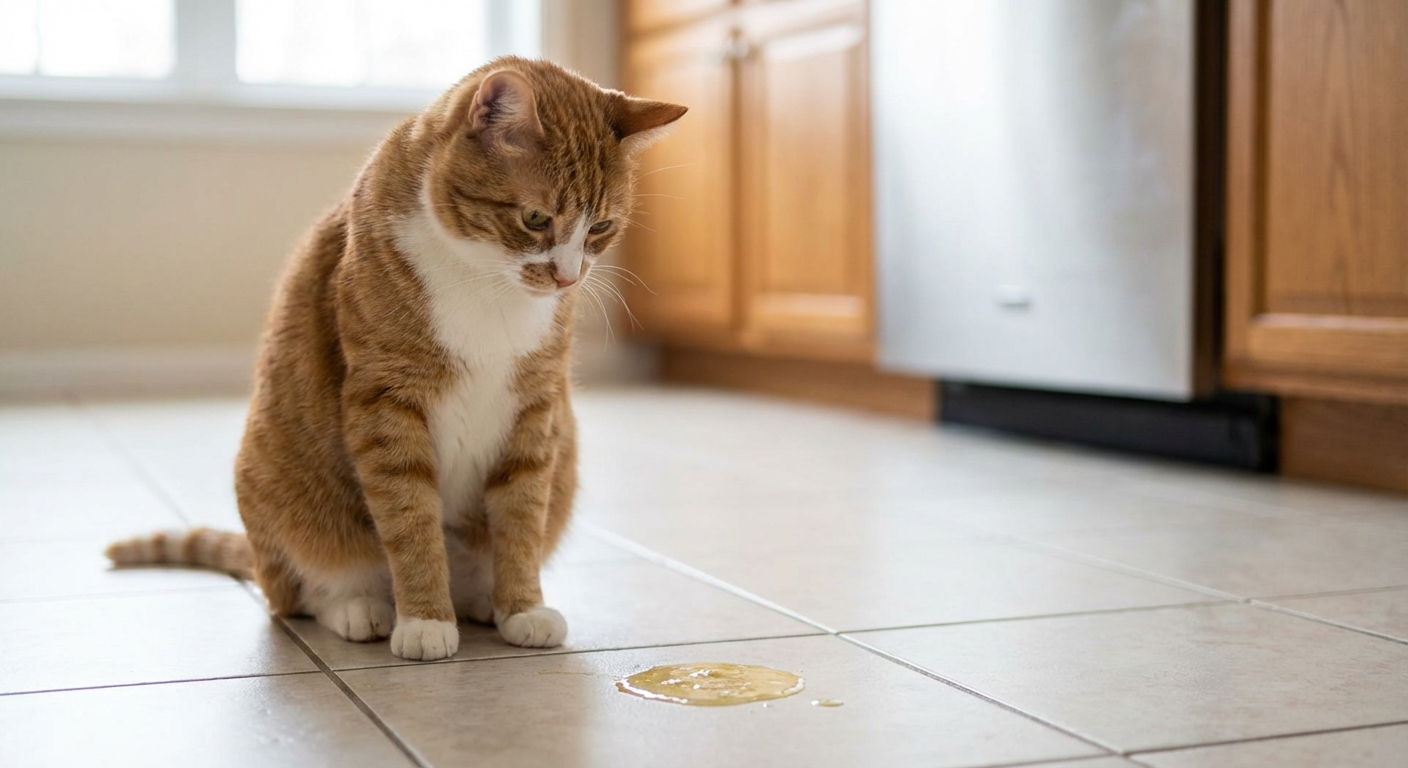
From hairballs to toxins and foreign bodies, this guide explains what cat vomit can mean, when it’s an emergency, what to do at home, and what your vet wil...
Article
•
Designer Mixes
What to Give a Cat That Is Throwing Up

Shari Shidate
Designer Mixes contributor
If your cat is throwing up, it is scary, messy, and honestly confusing. As a veterinary assistant, I can tell you this: vomiting can be as simple as hairballs or as serious as a blockage. The goal is to keep your cat safe while you figure out why it is happening and what support is appropriate at home.
Important note: This article is educational and not a substitute for veterinary care. If you are unsure, call your vet. A quick phone triage can save a life.
First, what kind of vomiting is it?
The best thing you can do right away is take 20 seconds to observe. The details matter because they help your vet narrow down causes fast.
Vomiting vs regurgitation
These look similar, but they can point to different problems.
- Vomiting: often includes nausea, drooling, and belly heaving. You may see foam, fluid, bile (yellow), or partially digested food.
- Regurgitation: is usually more passive and effortless, with little to no abdominal heaving. Food often comes up soon after eating and can look undigested or “log-shaped.”
- When in doubt: take a quick video. It can be incredibly helpful for your vet.
Look at the timing
- Right after eating: may be eating too fast, food intolerance, or regurgitation (different from true vomiting).
- Hours after eating: can suggest gastritis, hairballs, parasites, inflammatory bowel disease, constipation, or other medical issues.
- Random, frequent episodes: can be associated with systemic illness (kidney disease, hyperthyroidism), pancreatitis (which can be subtle in cats and does not always cause obvious vomiting), toxins, or a foreign body.
Look at what comes up
- Undigested food (sometimes log-shaped): can fit with regurgitation, especially if it happens soon after eating and looks effortless.
- Foam or clear fluid: can be associated with an empty stomach, nausea, reflux, gastritis, or other GI issues. It is not specific.
- Yellow liquid: bile, commonly seen when the stomach is empty or irritated.
- Hair: classic hairball pattern, especially in long-haired cats.
- Worms: possible parasites and a strong reason to call the vet.
- Blood (red or coffee-ground looking): urgent.
If you can, snap a quick photo of the vomit and the product label of the food. It sounds gross, but it is genuinely useful.
When vomiting is an emergency
Please do not try home care first if any of these are happening. Cats can crash faster than many people realize, especially kittens and seniors.
- Vomiting multiple times in a day or cannot keep water down
- Repeated dry heaving or trying to vomit with little coming out
- Bloated or painful belly, hunched posture, crying, or guarding the abdomen
- Lethargy, weakness, collapse, or hiding and acting “not themselves”
- Blood in vomit or black, tarry stool
- Known or suspected string ingestion (thread, yarn, ribbon) or a missing toy
- Poison risk (lilies, certain pest products, human medications, cleaners)
- Kittens under 6 months, seniors, or cats with kidney disease, diabetes, or hyperthyroidism
- Vomiting plus straining with little or no stool, or a history of constipation or megacolon
Red flag for cats: if your cat will not eat for around 24 hours, call your vet. Call sooner for kittens, diabetic cats, cats with prior hepatic lipidosis, older cats, and any cat that seems weak, dehydrated, or “off.” Cats are at risk for hepatic lipidosis (fatty liver) when they stop eating.
So what can you give a cat that is throwing up?
The safest approach depends on how your cat looks overall. If your cat vomited once, is bright-eyed, and is acting like themselves, you may be able to support them at home briefly while you monitor.
1) Give the stomach a short rest
For many healthy adult cats who vomit once and seem okay, a short pause from food can help.
- Healthy adult cat: consider holding food for 2 to 4 hours, then reintroduce a small meal.
- Kittens, seniors, or cats with medical conditions: do not fast without veterinary guidance.
Unlike dogs, cats do not do well with long fasts. The goal is a brief reset, not an all-day fast.
2) Offer water strategically
Dehydration is a major risk with vomiting. Offer water, but do it in a way that does not trigger more vomiting.
- Provide fresh water and keep the bowl nearby.
- If your cat gulps and vomits, offer small amounts more often.
- A cat water fountain can encourage gentle sipping.
Avoid: forcing water with a syringe unless your vet instructs you. Forced liquids can be aspirated.
3) Feed a small amount of bland, easy-to-digest food
If your cat has gone a few hours without vomiting and is acting comfortable, try a small test meal.
- Veterinary GI diets are commonly recommended because they are formulated for digestibility and nutrient balance.
- If you do not have a prescription diet, use a simple, bland option in tiny portions and watch closely.
Portion guidance: start with 1 to 2 teaspoons for an average adult cat, then wait 1 to 2 hours. If that stays down, offer a slightly larger portion.
Common home bland choices: plain cooked chicken or turkey (no skin, no seasoning, no onion or garlic), mixed with a small amount of their regular food as they improve.
Important safety note: a home bland diet is a short-term bridge only. It is not balanced for long-term feeding.
When they improve: transition back to their regular diet gradually over 1 to 3 days (or longer if your vet advises), rather than switching abruptly.
4) Consider hairball support if the pattern fits
If vomiting is occasional and you see hair, your cat may need hairball management.
- Brush more often, especially during seasonal shedding.
- Ask your vet about a hairball gel or fiber support that is appropriate for your cat. Many common products are petroleum-based and can be appropriate when used as directed, so it is best to get guidance for your specific cat.
- Switching to a hairball formula diet can help some cats, especially long-haired cats.
What not to give
Some well-intended remedies can be harmful to cats.
- No human anti-nausea meds unless your vet specifically prescribes them for your cat. Many are dangerous at small doses.
- No Pepto-Bismol (bismuth) without veterinary direction. It can be risky for cats.
- No pain relievers like ibuprofen or acetaminophen. These are toxic to cats.
- No Imodium (loperamide) unless your vet tells you to use it.
- No essential oils for nausea. Cats are very sensitive to many oils.
- No milk as a “soother.” Many cats are lactose intolerant, which can worsen GI upset.
- No bones or fatty scraps. Rich foods can worsen GI inflammation and trigger more vomiting.
Common reasons cats vomit
Vomiting is a symptom, not a diagnosis. Here are some of the more common causes vets see.
- Hairballs and overgrooming
- Eating too fast or scarfing and barfing
- Dietary sensitivity or sudden food change
- Gastritis from eating something irritating
- Constipation (including megacolon in some cats)
- Parasites (especially in kittens or outdoor cats)
- Foreign body (string, foam, toys)
- Pancreatitis (signs can be vague in cats)
- Inflammatory bowel disease
- Kidney disease or hyperthyroidism (common in older cats)
How often is too often? As a general rule, call your vet if vomiting happens 2 or more times in 24 hours, if it is getting more frequent, or if it happens more than once a week even when your cat seems normal in between. Chronic vomiting is not “normal” in cats.
What your vet may recommend
If you come into the clinic, your vet will likely start with a history and exam, then choose tests based on your cat’s age and symptoms.
- Fecal testing for parasites
- Bloodwork to check kidney values, liver enzymes, glucose, thyroid, and hydration status
- X-rays to look for foreign bodies, constipation patterns, or other concerns
- Ultrasound to evaluate intestines, pancreas, and other organs
- Prescription anti-nausea medication formulated for cats
- Fluids (subcutaneous or IV) if dehydrated
- Diet trial (GI diet or hypoallergenic diet) if food sensitivity is suspected
Evidence-based care often looks like a simple plan: stop the vomiting, protect hydration, then address the cause so it does not keep happening.
At-home monitoring checklist
If your cat vomited once and is otherwise stable, monitoring at home for the next 24 hours is reasonable in many cases. Here is what I want you to keep an eye on.
- Energy: alert, interactive, and moving normally?
- Hydration: drinking some water, gums not tacky?
- Appetite: interested in food, not refusing everything?
- Litter box: urinating normally, stool normal, any diarrhea, or straining with little output?
- Vomiting frequency: one episode, or repeating?
- Exposure risks: plants, string toys, new treats, meds, garbage?
Write down the timing of each episode. If you end up calling your vet, this timeline is incredibly helpful.
Preventing future vomiting
Once your cat feels better, prevention is where you win long-term.
- Slow down fast eaters: use puzzle feeders, spread food on a flat plate, or offer smaller meals more often.
- Reduce hairballs: brush regularly and discuss diet changes if hairballs are frequent.
- Make food changes slowly: transition over 7 to 10 days.
- Keep strings out of reach: thread, ribbon, hair ties, and yarn are common surgical emergencies.
- Schedule routine checkups: especially for cats over 7, when thyroid and kidney issues become more common.
Quick guide
If you want a simple decision path, here it is.
- Vomited once, seems comfortable: pause food 2 to 4 hours, offer small sips of water, then a tiny bland meal or GI diet.
- Vomiting continues or your cat acts off: call your vet the same day.
- Any red flags (blood, string risk, repeated vomiting, bloated belly, cannot keep water down, lethargy, straining with little stool): go to urgent care or emergency.
You know your cat best. If something feels wrong, trust that instinct and call. It is always okay to ask for help early.