Vet-informed guide to a short-term bland diet for dogs: chicken and rice 1:2 ratio, daily cup ranges by weight, how many meals to split into, and red flags t...
Article
•
Designer Mixes
What to Feed a Vomiting Dog

Shari Shidate
Designer Mixes contributor
When your dog is vomiting, it is scary and exhausting for both of you. The good news is that many mild stomach upsets improve with a short-term bland diet and smart hydration support. The goal is simple: calm the stomach, prevent dehydration, and gently get your dog eating again without triggering another round of vomiting.
As a veterinary assistant, I also want to say this clearly: vomiting can be minor, but it can also be urgent. Use this guide to support your dog at home only if your dog is otherwise bright, alert, and stable.
What “stable” looks like (quick check): normal gum color (pink, not pale or gray), comfortable breathing, no severe belly pain, able to keep down small sips of water, and acting mostly like themselves between episodes.
When vomiting is an emergency
Please contact your veterinarian or an emergency clinic right away if you notice any of the following:
- Repeated vomiting in a short period (multiple episodes over a few hours), vomiting that will not stop, or vomiting that keeps returning after you try small sips of water
- Blood in vomit (red or coffee-ground appearance)
- Bloated, painful abdomen, retching without producing vomit, or sudden restlessness (possible bloat)
- Severe lethargy, collapse, weakness, or pale gums
- Suspected toxin exposure (xylitol, chocolate, grapes/raisins, medications, rodent poison, plants)
- Possible foreign body (sock, toy, corn cob), or your dog is trying to vomit but cannot
- Vomiting plus diarrhea that is severe or watery, especially in puppies
- Signs of dehydration (sticky gums, sunken eyes, skin that stays “tented”)
- Puppies, seniors, pregnant dogs, and dogs with diabetes, kidney disease, Addison’s disease, a pancreatitis history, or other chronic conditions
Extra caution for tiny dogs and puppies: call sooner rather than later. They can dehydrate and crash faster than you think.
If none of these apply and your dog vomited once or twice but seems otherwise okay, a bland diet is often a reasonable next step while you monitor closely.
First steps: stomach rest and fluids
Food pause (if your vet agrees)
For many healthy adult dogs, your vet may recommend a brief pause from food after vomiting to let the stomach settle. Often this is around 6 to 12 hours, but some dogs do better with earlier re-feeding using tiny bland meals, depending on the cause. If your dog is very small, a puppy, or has a medical condition, do not fast without veterinary guidance.
Hydration comes first
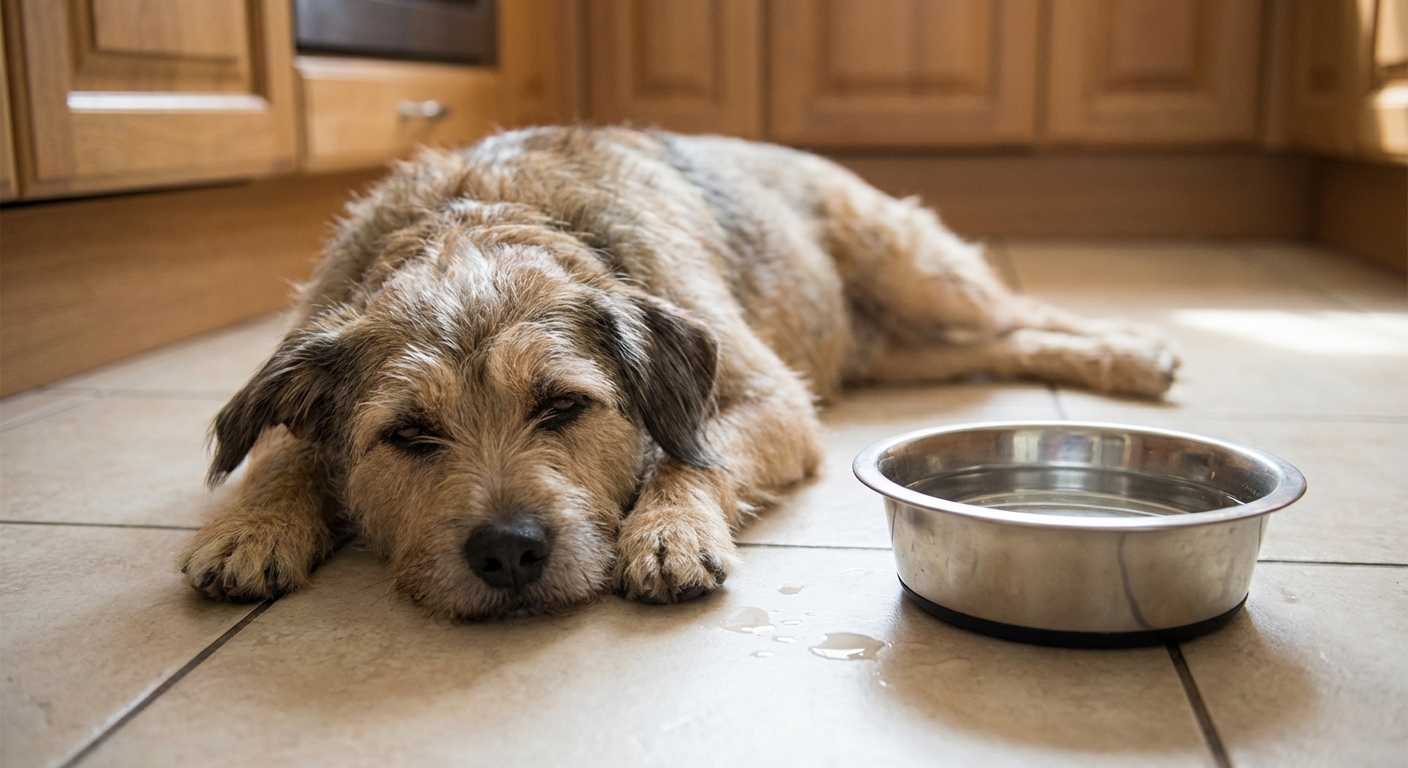
Vomiting can dehydrate dogs quickly. Offer small amounts of water frequently.
If your dog gulps water and vomits again, remove the bowl and try small sips on a schedule. A common starting point is 1 to 2 tablespoons every 10 to 15 minutes, then gradually increase as tolerated. Scale by size (less for toy breeds, more for large dogs). When in doubt, go smaller and slower.
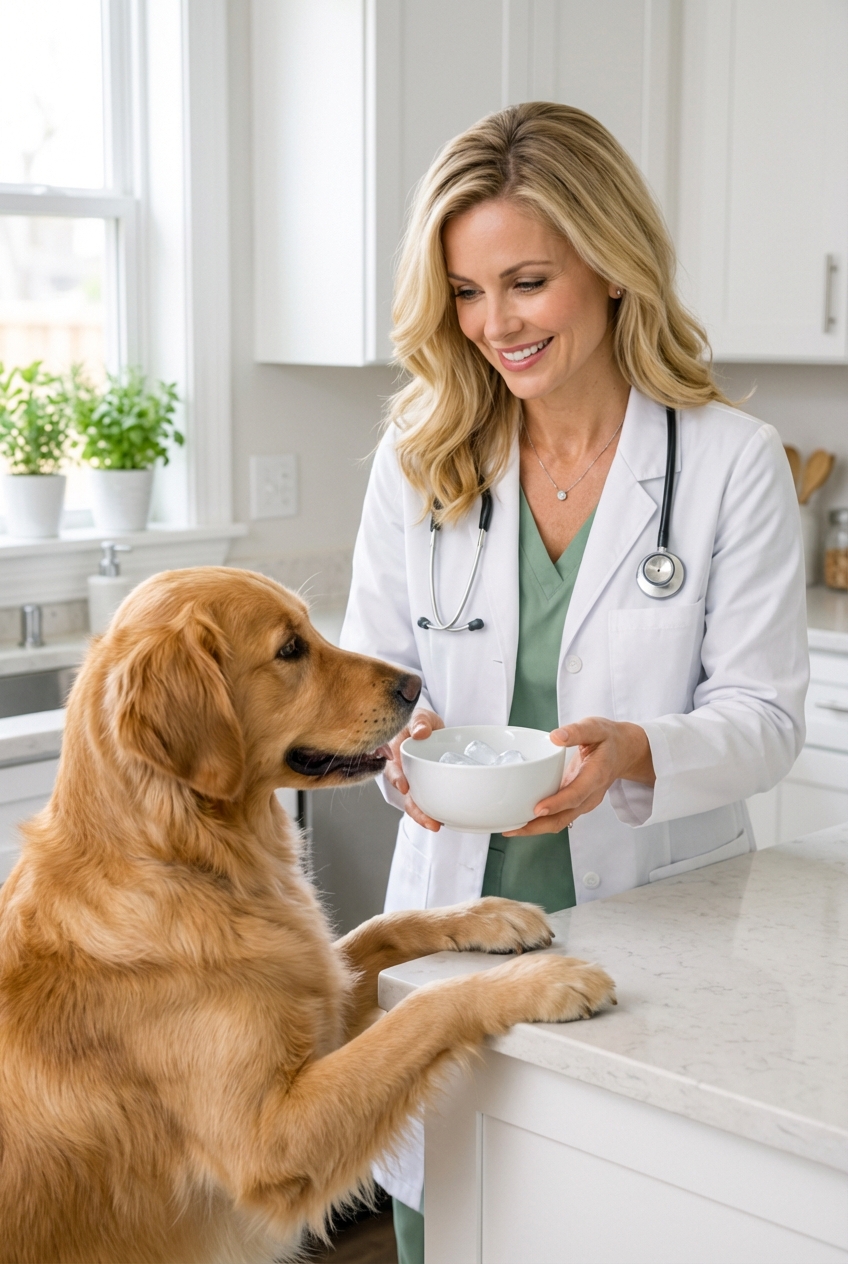
- Ice chips can be easier for some dogs to keep down.
- Unseasoned broth (no onion, no garlic, low sodium) can encourage drinking.
- Electrolytes: Ask your vet before using pediatric electrolyte solutions. Some dogs need them, others should not.
Call your vet right away if your dog cannot keep even small sips of water down.
Bland foods that help
A bland diet is meant to be low fat, easy to digest, and gentle. These are the classic options most veterinarians recommend for short-term use.
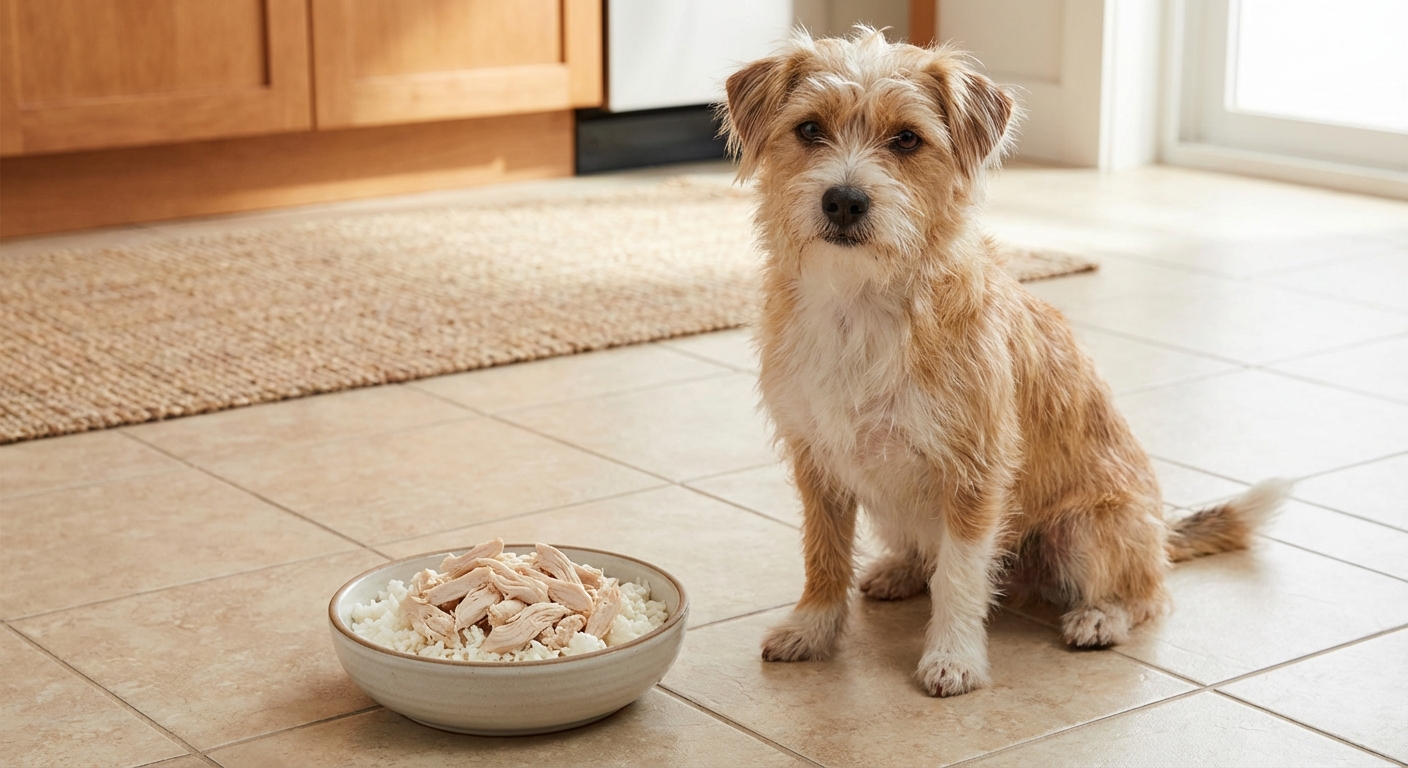
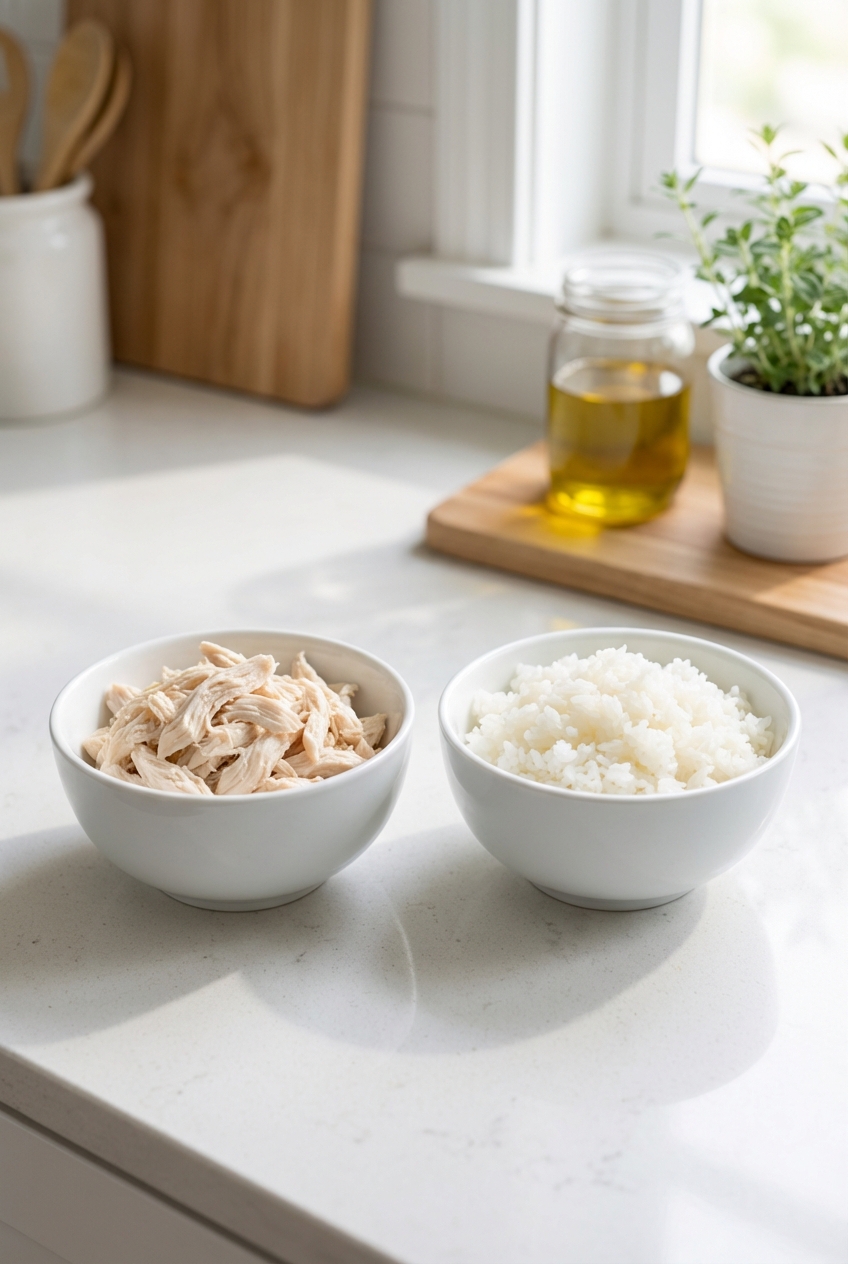
Option 1: Chicken and rice
- Protein: Skinless chicken breast or tenderloin, boiled and shredded
- Carb: Plain white rice, well-cooked
Why it works: Low fat and typically easy on the stomach.
Option 2: Turkey and rice
Cook lean ground turkey thoroughly, drain well, and avoid any oils or seasonings.
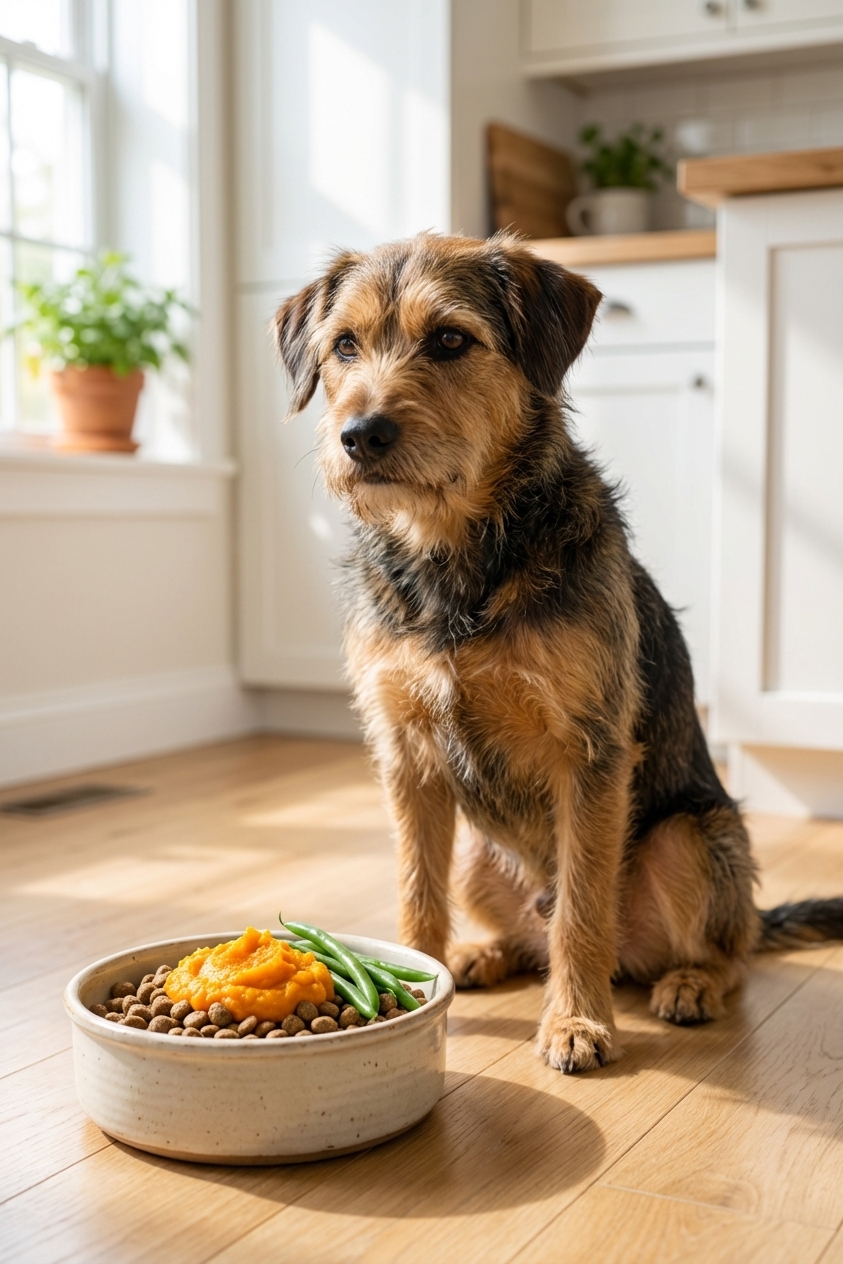
Option 3: Pumpkin (plain)
Plain canned pumpkin (not pumpkin pie filling) can help some dogs, especially if stool is getting soft. For vomiting-only cases, use modestly and pair with a lean protein. A simple approach is to start with a small spoonful mixed into food, then reassess.
Option 4: Plain scrambled egg
Scramble with no butter, no oil, no milk. This can help when chicken is not available or your dog refuses it. Keep portions small.
Option 5: GI prescription diets
If your dog has frequent stomach issues or a sensitive GI tract, your vet may recommend a therapeutic diet (wet or dry). These can be very effective and nutritionally complete.
What to avoid
- Fatty foods: bacon, sausage, greasy hamburger, cheese, butter, oils (fat may worsen nausea and may contribute to pancreatitis in some dogs)
- Seasonings: especially onion and garlic (toxic), plus spicy foods
- Rich treats: milk bones, dental chews, bully sticks, pig ears while recovering
- Sudden diet changes: switching brands or adding multiple new foods at once
- Human meds unless your veterinarian tells you the exact product and dose
- Pepto-Bismol unless your veterinarian okays it (it can turn stools black, which can hide signs of GI bleeding, and some ingredients are risky for certain dogs)
- NSAIDs: never give ibuprofen or naproxen
- Leftover prescriptions: do not give old antibiotics or anti-nausea meds from a past illness unless your vet specifically directs you
How much to feed
Once your dog has kept water down and has had no vomiting for about 6 to 8 hours, you can usually start with small, frequent meals. This is gentler than one full meal.
Starter portions (very general)
These are conservative starting points. If your dog has other health issues, is very small, or you feel unsure, ask your vet for exact amounts.
- Under 10 lb: 1 to 2 tablespoons
- 10 to 30 lb: 2 to 4 tablespoons
- 30 to 60 lb: 1/4 to 1/2 cup
- 60+ lb: 1/2 to 1 cup
How often
- Day 1: every 3 to 4 hours
- Increase slowly each meal if no vomiting returns
Typical bland ratio
Many dogs do well with about 2 parts carbohydrate (rice) to 1 part lean protein at first. If stools become too soft, your vet may suggest adjusting the ratio or adding a small amount of pumpkin.
Important: If vomiting returns, stop food, return to tiny sips of water, and call your veterinarian for next steps.
How long to use a bland diet
For a simple stomach upset, bland diets are usually used for 2 to 3 days, sometimes up to 5 days depending on your veterinarian’s guidance. Bland diets are not designed to be nutritionally complete long-term.
Back to normal food
Once your dog has gone at least 24 hours with no vomiting and is acting normal, transition slowly over 2 to 3 days:
- Day 1: 75% bland diet, 25% regular food
- Day 2: 50% bland diet, 50% regular food
- Day 3: 25% bland diet, 75% regular food
- Day 4: 100% regular food if all is well
Go slower if your dog has a sensitive stomach. A gentle transition helps prevent relapse.
Helpful add-ons (ask your vet)
Dog probiotics
Evidence supports certain veterinary probiotics for helping restore a healthier gut environment after GI upset. Choose a product formulated for dogs, and follow your vet’s dosing guidance.
Anti-nausea meds
If vomiting is ongoing, your vet may prescribe an antiemetic (like maropitant) and, when appropriate, a GI protectant. This matters even more if your dog cannot keep water down.
Fiber support
Plain pumpkin or a vet-recommended fiber supplement can help some dogs, especially if diarrhea is also present. Too much can backfire, so keep it modest.
Vomiting or regurgitation?
These look similar, but they are not the same.
- Vomiting: often includes heaving, drooling, belly effort, and you may see partially digested food or yellow bile.
- Regurgitation: food or water comes back up more passively, often shortly after eating, and it may look undigested or tube-shaped.
If you suspect regurgitation (especially if it happens repeatedly), call your vet. The causes and home care can be different.
Common causes
A simple stomach bug happens, but many cases are from everyday things like diet indiscretion (trash, table scraps), sudden diet changes, stress, or motion sickness. Parasites, pancreatitis, infections, foreign bodies, and other medical issues are also on the list. If vomiting is recurrent or your dog is not improving, your vet may recommend fecal testing, bloodwork, x-rays, or ultrasound to find the real cause.
Monitoring at home
While you are doing a bland diet, watch these closely:
- Energy: improving or getting worse?
- Water: can your dog keep it down?
- Urination: normal frequency and amount?
- Stool: normal, soft, watery, black/tarry, or bloody?
- Appetite: returning gradually is a good sign
- Vomiting log: write down timing and what it looked like
Time-based rule that helps: call your vet if vomiting continues beyond 24 hours, sooner if episodes are frequent, your dog is worsening, or you are seeing any red flags from the emergency list.
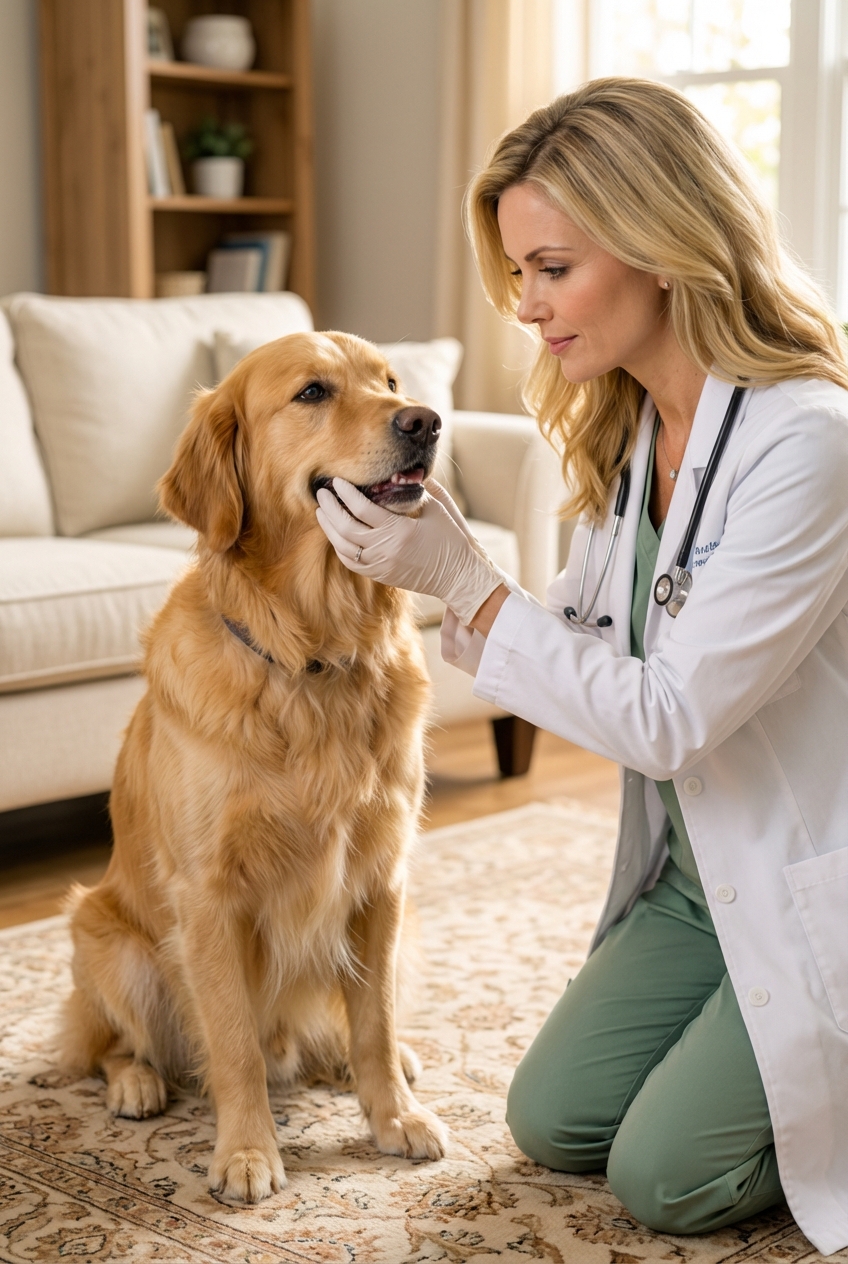
My clinic-floor tip: if your dog looks “off” between vomiting episodes, not just queasy, do not wait it out. That “not my normal dog” feeling is worth a quick call to your vet.
Quick bland recipes
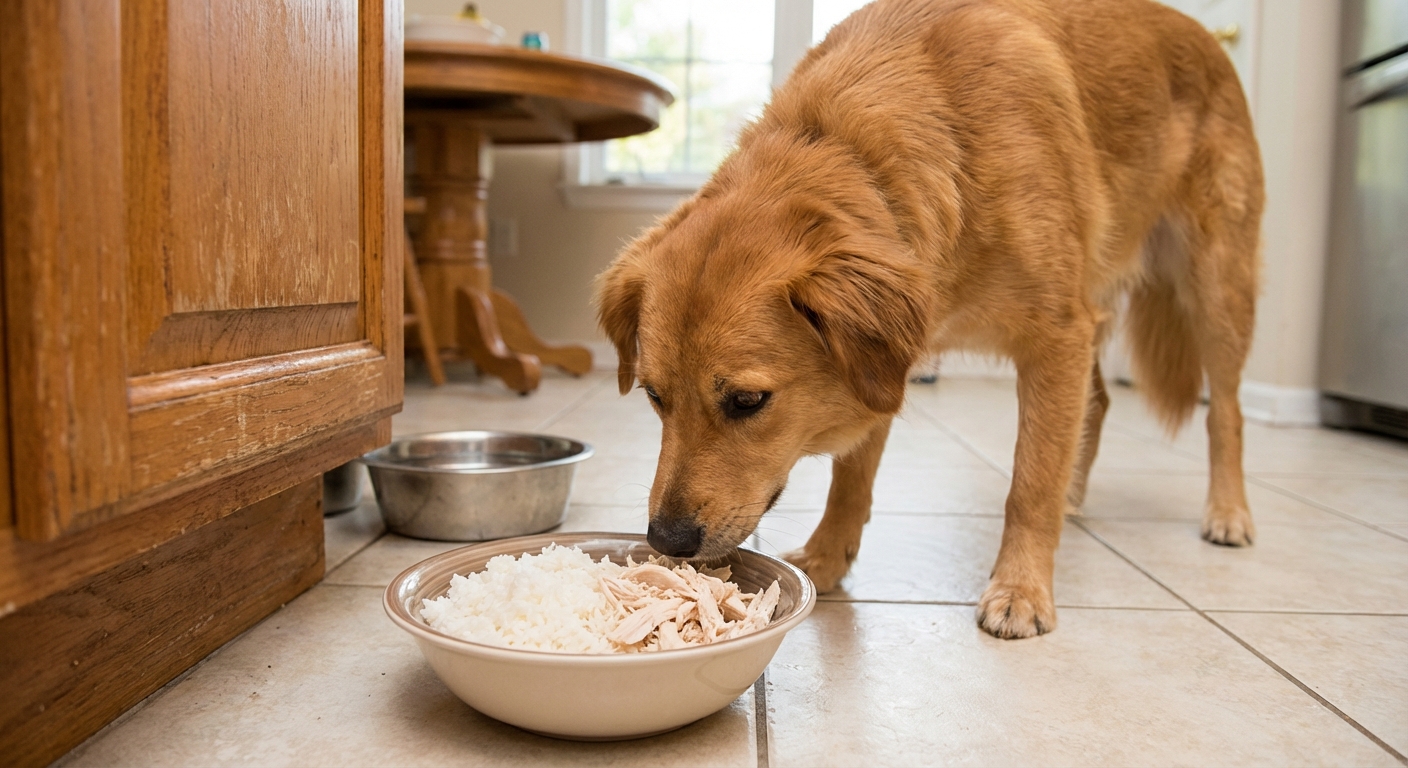
Chicken and rice
- Boil skinless chicken breast in plain water, then shred
- Cook white rice until soft
- Mix 1 part chicken with 2 parts rice
Turkey and rice
- Brown lean ground turkey thoroughly
- Drain well and rinse lightly if needed to reduce fat
- Mix with well-cooked white rice
Egg and rice (short-term)
- Scramble one egg in a dry pan
- Mix with rice and offer a small portion
Keep everything plain. No salt, no pepper, no oil. Boring is beautiful when the stomach needs to heal.