Chicken and rice can soothe mild stomach upset and help dogs transition back to normal food. Learn safe recipes, portions, how long to feed it, and when to c...
Article
•
Designer Mixes
What to Feed a Puppy With Diarrhea

Shari Shidate
Designer Mixes contributor
As a veterinary assistant here in Frisco, Texas, I can tell you one thing with total confidence: puppy diarrhea is common, and it deserves your attention. Mild, short-lived diarrhea in an otherwise bright, playful puppy can often be monitored at home, but puppies have sensitive digestive systems, their immune systems are still developing, and they can get dehydrated much faster than adult dogs.
The good news is that most mild cases improve quickly with the right feeding plan, smart monitoring, and a calm approach. Below is a comprehensive, behavior-friendly guide to what to feed, what to avoid, and when it is time to call your veterinarian.
Note: This article is for education and home support. It is not a substitute for an exam, diagnosis, or veterinary instructions for your specific puppy.
First, check for an emergency
Before you change food, pause and look at the whole picture. Some diarrhea is simply a diet change or stress. Other cases need medical care right away.
Call your vet today if you notice any of these
- Blood concerns: blood in the stool, black tarry stool, or diarrhea that looks like raspberry jam
- Vomiting: vomiting more than once, or vomiting plus diarrhea together
- Dehydration signs: dry or tacky gums, sunken eyes, weakness, lethargy
- High-risk puppies: very young (especially under 12 weeks), very small, or not fully vaccinated
- Pain or systemic signs: fever, belly pain, hunched posture, or crying when picked up
- Duration: diarrhea lasting more than 24 hours, or repeated episodes over several days
- Toxins or foreign objects: suspected toxin exposure or foreign object chewing (sock, toy stuffing, cooked bones, rocks)
- Parasite exposure: dog parks, daycare, boarding, shelters or rescues, recent transport, exposure to contaminated feces or standing water
Important: If your puppy is not keeping water down, do not wait. Dehydration can become dangerous quickly.
Parvo watch-outs
If your puppy is unvaccinated or not fully vaccinated, be especially cautious. Parvovirus can start with vomiting, lethargy, and diarrhea that becomes severe and sometimes bloody and foul-smelling. If that possibility is on the table, treat it like an emergency and call your veterinarian or an emergency clinic right away.
Why puppies get diarrhea
Knowing the likely cause helps you choose the safest feeding strategy.
- Food change: switching kibble suddenly, new treats, rich chews, people food
- Stress: new home, travel, loud events, separation anxiety
- Parasites: roundworms, hookworms, whipworms, giardia, coccidia
- Infection: viral or bacterial causes, especially in unvaccinated puppies
- Overfeeding: too many calories, too many training treats
- Diet intolerance: dairy, high fat foods, certain proteins
- Fleas and tapeworm: fleas can transmit tapeworms, which can cause GI upset in some dogs (it is a different situation than giardia or coccidia)
The feeding goal
When a puppy has diarrhea, we are trying to do three things:
- Keep fluids and electrolytes on board
- Lower irritation in the intestines
- Return to a balanced puppy diet gradually
If you remember nothing else, remember this: smaller meals, simpler ingredients, and slow transitions usually win.
What to feed (best options)
1) A bland, vet-style diet
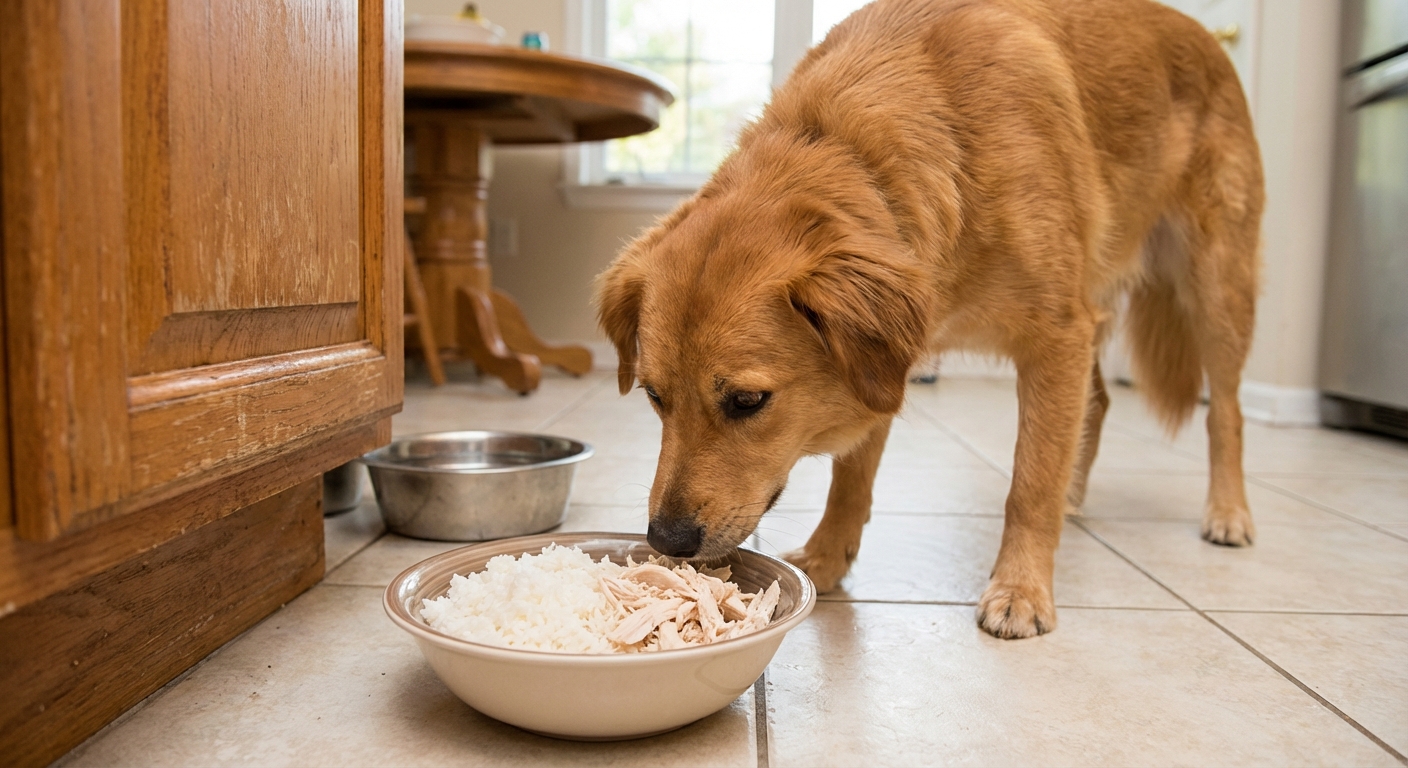
A classic bland plan is easy to digest, low in fat, and gentle on the intestines. Offer small portions every 3 to 4 hours.
- Protein: boiled skinless chicken breast or extra-lean ground turkey (drained well)
- Carb: plain white rice
Simple starting ratio: about 1 part protein to 2 parts rice for 24 to 48 hours.
Important for puppies: This is not a balanced long-term diet for a growing puppy. Use it short-term only (typically 24 to 48 hours) unless your veterinarian directs otherwise.
Tip: Keep seasoning out completely. No butter, oil, garlic powder, onion powder, or salty broths.
2) Pumpkin (plain, canned)
Plain pumpkin can help regulate stool because it adds gentle fiber. It is not a magic cure, but it is often helpful for mild cases.
- Start with 1 teaspoon per 10 pounds of body weight, mixed into food, once or twice daily.
- Use 100% pumpkin, not pumpkin pie filling.
3) A prescription GI puppy diet
For some puppies, especially those with recurrent diarrhea, sensitive stomachs, or recent illness, a veterinary therapeutic GI diet can be the smoothest path back to normal stools. If you have it available, follow your veterinarian’s feeding instructions closely.
4) Probiotics made for dogs
Some canine probiotics may help shorten the duration of diarrhea, especially in stress-related cases, but results can be strain-specific. Look for a product designed for dogs and follow the label. If your puppy is very young or immune-compromised, ask your vet which brand and dose they trust.
Hydration
Diarrhea pulls water out of the body. For many puppies, hydration support is as important as the food.
Best hydration plan
- Fresh water available at all times
- If your puppy gulps water and vomits, offer small amounts frequently instead
- Ask your vet if an oral electrolyte solution is appropriate for your puppy’s age and size
Avoid: sports drinks, heavily flavored electrolyte beverages, or anything with xylitol. When in doubt, keep it simple and call your clinic.
Do not fast young puppies
Many adults hear advice to withhold food for stomach upset. With puppies, especially tiny breeds and very young puppies, fasting can increase the risk of low blood sugar and make them feel worse. In most mild cases, a bland diet in small, frequent meals is safer than skipping food. If your puppy is vomiting, very small, or under 12 weeks, ask your veterinarian before withholding food.
What not to feed
- Fatty foods: bacon, sausage, greasy table scraps
- Dairy: milk, ice cream, cheese for most puppies (lactose intolerance is common)
- Raw diets during diarrhea: not the time to experiment with bacterial risk
- High-fiber overload: too much pumpkin or too many vegetables can worsen gas and urgency
- New treats or chews: especially bully sticks, pig ears, rich training treats
- Human anti-diarrheal medications: do not give loperamide or other meds unless your veterinarian tells you to
Behavior tips
Diarrhea is stressful for puppies and their people. A few low-stress adjustments can prevent accidents and reduce anxiety.
Go out more often
- Right after waking
- After every small meal
- After play
- Before crating or naps
- Every 1 to 2 hours during active diarrhea
Reward calmly
Bring tiny, bland training rewards or use a piece of the boiled chicken from the bland diet. Quiet praise and a small reward after potty outside helps your puppy feel safe and successful.
Do not punish accidents
Punishment increases stress, and stress can worsen diarrhea. Clean thoroughly with an enzymatic cleaner, then adjust your schedule and supervision.
Create a recovery zone
If your puppy is having urgency, set up a small, easy-to-clean area with a bed on one side and a puppy pad on the other. This is not a long-term potty plan. It is a short-term way to reduce stress while the gut settles.
How much and when
For mild diarrhea in a puppy who is otherwise bright and alert, a gentle feeding reset often looks like this:
Day 1
- Feed smaller meals more frequently (4 to 6 mini-meals)
- As a rough starting point, aim for 25 to 50% of your puppy’s usual meal size per mini-meal, then adjust based on tolerance and your vet’s guidance
- Use a bland diet and skip all extras
Day 2
- If stools are improving, continue bland diet
- Keep portions modest and steady
Day 3 and beyond
- Start a slow transition back to regular puppy food
- Mix 75% bland with 25% puppy food, then 50/50, then 25/75 over several days
If diarrhea is not improving within 24 hours, or returns as soon as you reintroduce puppy food, contact your veterinarian. That pattern often points to parasites, infection, or diet intolerance that needs a tailored plan.
Special situations
Diarrhea after vaccines
A mildly soft stool can happen after vaccines due to stress or immune activation. That said, true diarrhea that is watery, frequent, lasts longer than a day, or comes with vomiting, lethargy, or poor appetite should be discussed with your veterinarian.
Diarrhea after deworming
Some puppies have looser stool after deworming as parasites die off and the gut adjusts. Still, if the diarrhea is watery, frequent, or your puppy seems weak, call your clinic. They may want to test a stool sample or adjust medication.
Watery diarrhea with a normal appetite
This can still be parasites like giardia or coccidia. These are very common in puppies and require specific treatment, not just diet changes. A fecal test is often the fastest way to get the right answer.
Bring a stool sample
If your puppy has diarrhea, your veterinarian will often request a fresh stool sample. If you can, bring:
- A sample from the same day, in a sealed bag or clean container
- Notes on frequency, color, and any vomiting
- A list of foods, treats, chews, and supplements from the past 7 days
This information helps your vet narrow down parasites, dietary causes, and infection faster.
Simple bland recipe
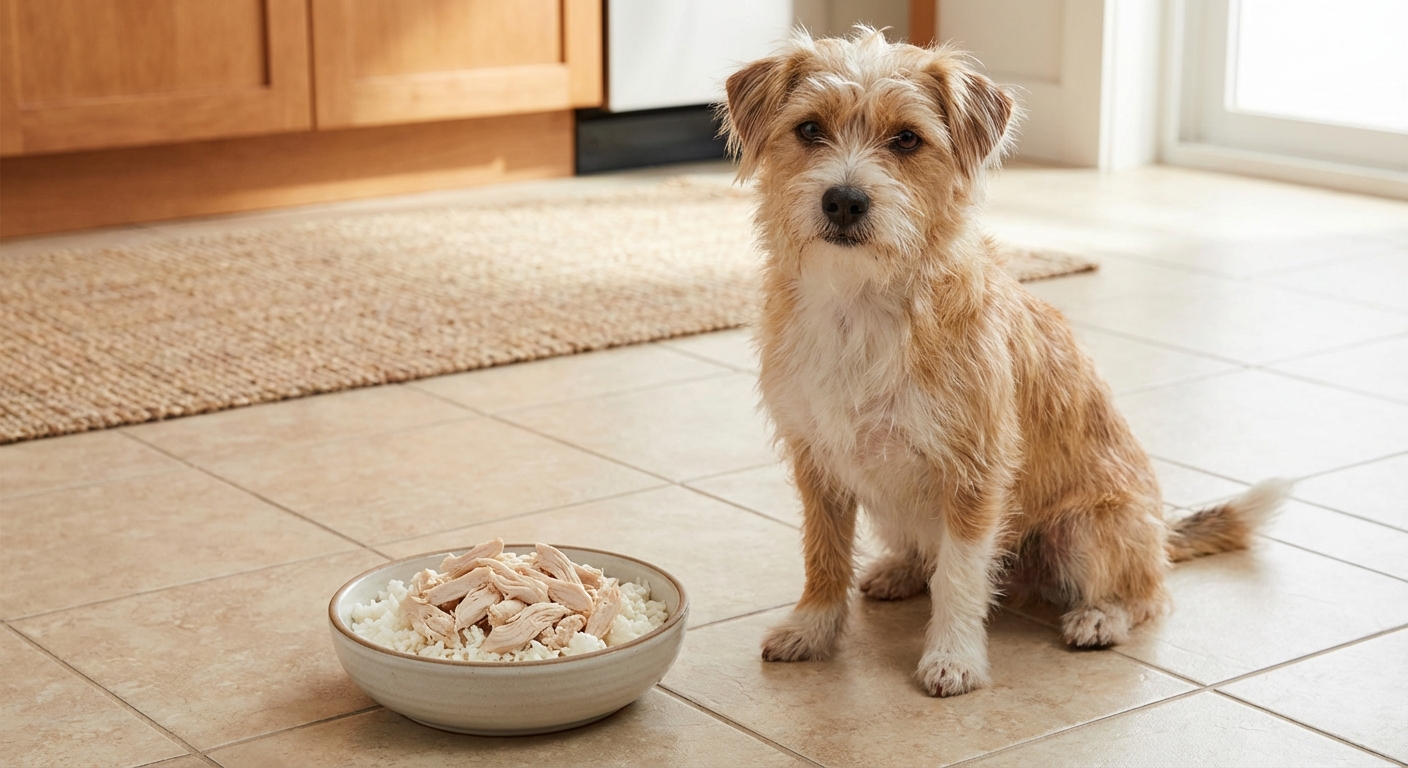
Basic Puppy Tummy Reset Bowl
- Boiled skinless chicken breast, shredded
- Plain white rice, fully cooked
- Optional: a small spoon of plain pumpkin
Feed in small portions. Keep it plain. If you are tempted to make it tastier, resist. The goal is to calm the gut, not impress a picky eater.
Bottom line
If your puppy is bright, drinking, and only has mild diarrhea, a bland diet, plenty of water, and a quiet routine often turns things around quickly. If your puppy is very young, lethargic, vomiting, has blood in the stool, or diarrhea lasts more than a day, it is time to involve your veterinarian.
If diarrhea becomes chronic or keeps coming back (think weeks, not days), that is also a sign your puppy needs a proper workup rather than repeated diet resets.
Your puppy’s gut can recover beautifully with the right support. Go slow, keep it simple, and do not be afraid to ask for help.