A practical chameleon care guide covering species selection, enclosure size and plants, UVB and basking gradients, humidity and hydration, feeder insects and...
Article
•
Designer Mixes
What to Feed a Leopard Gecko

Shari Shidate
Designer Mixes contributor
Leopard geckos are one of those pets that make you fall in love with reptiles fast. They are expressive, curious, and surprisingly food-motivated. The best part is that feeding them well is not complicated once you know a few basics about insects, supplements, and safe routines.
As a veterinary assistant here in Frisco, Texas, I am a big believer in evidence-based care that is also realistic for real life. Let’s make feeding your leopard gecko feel confident and fun, not stressful.
Quick note: I am not a veterinarian, and this is general education. For a plan tailored to your gecko’s age, weight, and setup, a reptile-savvy veterinarian is your best resource.
Quick facts about their diet
- They are insect-eaters. Leopard geckos are designed for animal prey. Plant matter is not a meal for them, even if they occasionally lick or sample things in their environment.
- They are most active at dusk and night. Many leopard geckos are crepuscular, and some act more nocturnal depending on the home setup. Feeding in the evening usually matches their rhythm.
- They store fat in their tail. A healthy tail is plump, but not ballooned. The tail is one of your best visual “nutrition reports.”
- They shed and grow regularly. Nutrition, calcium, and hydration support good sheds and strong bones.
Best feeder insects
A healthy leopard gecko diet is built around a variety of appropriately sized insects. A good rule is: no insect wider than the space between your gecko’s eyes.
Top staples
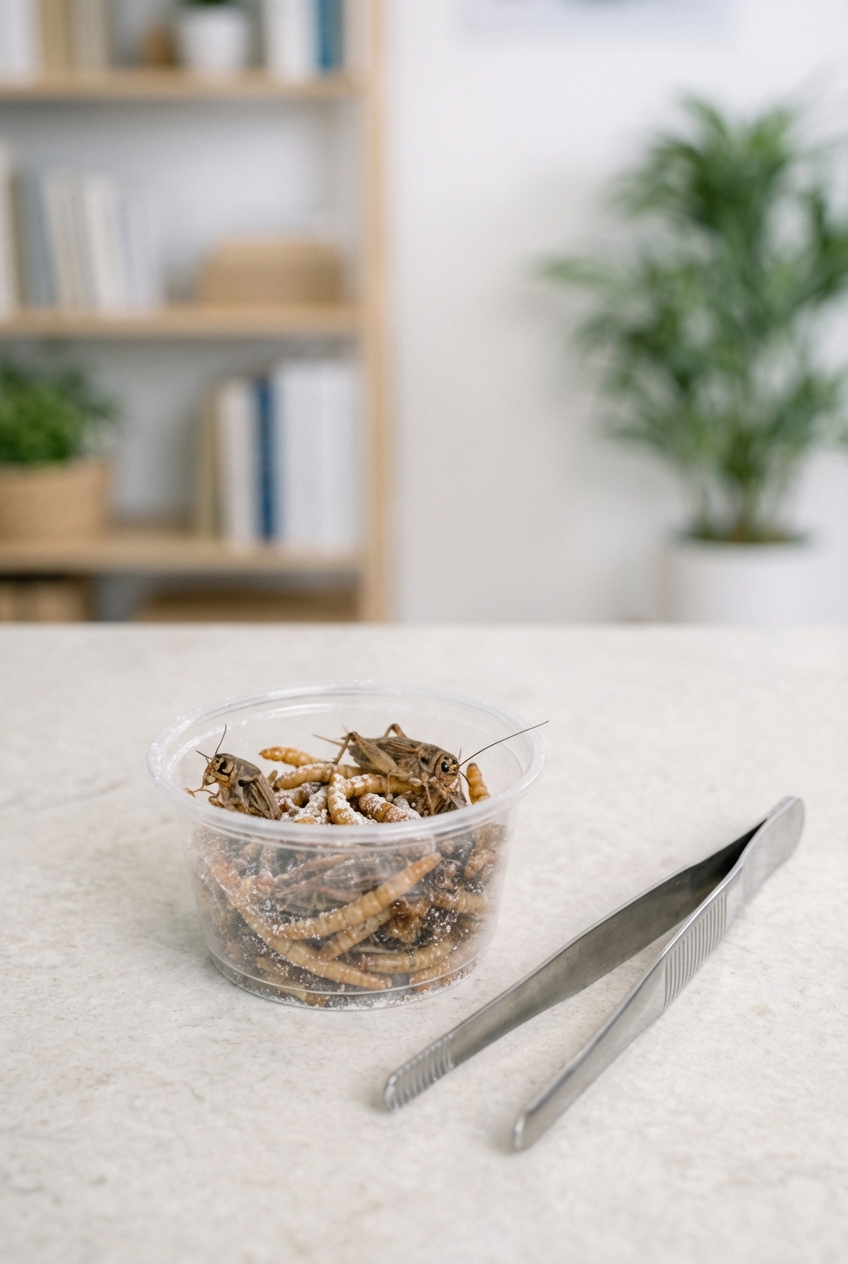
- Crickets: Great staple, encourages hunting. They can be noisy and can nibble on reptiles if left loose overnight, so offer what will be eaten and remove extras.
- Dubia roaches: Nutritious, easy to digest, and less messy than crickets. Many keepers love these as a main staple.
- Black soldier fly larvae (BSFL): Naturally higher in calcium than many common feeders. They are an excellent option, especially for juveniles, but they do not automatically replace a thoughtful calcium, D3, and UVB plan.
Good rotation feeders
- Mealworms: Convenient and widely available. Their exoskeleton is tougher than soft-bodied feeders, so many geckos do best when mealworms are part of a rotation rather than the only feeder.
- Silkworms: Soft-bodied and nutritious, nice for variety.
- Hornworms: High moisture, great occasional treat, but not a staple.
Treats only
- Superworms: Higher fat and more intense for smaller geckos. Treat use only.
- Waxworms: Very high fat and very “addictive.” Think of them like dessert.
How much to feed
If you are wondering “how many bugs,” you are not alone. Use this as a simple starting point, then adjust based on body condition and weight trends:
- Timed method: Offer what your gecko will eat in about 10 to 15 minutes, then remove leftovers.
- Count method: Start with a small handful of appropriately sized feeders and increase or decrease based on weight, tail condition, and appetite.
After meals, your gecko should look satisfied, not swollen. If your gecko always seems ravenous, check your temperatures and basking area first, because poor heat often looks like picky or unsettled eating.
How often to feed
Feeding frequency depends on life stage, body condition, and temperature and lighting setup. These are common, keeper-friendly starting points:
- Hatchlings and juveniles: Feed daily. Growing bodies need consistent nutrition.
- Subadults: Usually 4 to 6 times per week.
- Adults: Often 2 to 4 times per week.
If your adult gecko is gaining too much weight, reduce frequency and cut back on high-fat feeders. If they are thin, review temperatures, parasite risk, and overall husbandry with a reptile-savvy veterinarian.
Special cases: Gravid females, recovering geckos, and seniors may need different routines. This is where a scale and a vet-guided plan really shine.
Gut-loading matters
Gut-loading means feeding your feeder insects a nutritious diet 24 to 48 hours before offering them to your gecko. This is one of the simplest ways to improve nutrition without changing your gecko’s behavior at all.
What to gut-load with
- Commercial cricket or roach gut-load diets
- Leafy greens (in moderation) and safe veggies for the insects like squash or carrots
- Moisture sources like water crystals or fresh produce (avoid drowning risks)
Avoid relying only on potato or bran type fillers. Your gecko is only as nourished as the insects you serve.
Calcium and vitamins
Most leopard gecko nutrition problems I see people struggle with are not about “the wrong bug.” They are about missing calcium, missing vitamin D3, or inconsistent supplementation.
Basic supplement toolkit
- Plain calcium powder (no D3)
- Calcium with D3 (especially important if you do not use UVB)
- Reptile multivitamin (used less often than calcium)
Example schedules
These are examples, not one-size-fits-all rules. UVB use, feeder choices, and health status change the best schedule.
- Juveniles: Many keepers dust most insect meals with plain calcium. Use calcium with D3 and a multivitamin on a rotating schedule based on the product label and your UVB setup.
- Adults: Many keepers dust at least some meals each week with plain calcium. Add D3 and multivitamin less often, guided by your label, your UVB, and your veterinarian.
If you run UVB, your gecko may rely less on dietary D3, but it does not erase the need for a consistent plan. Over-supplementing can also cause problems, especially with fat-soluble vitamins. When in doubt, bring your exact products to your vet and ask for a schedule.
Hydration and water
Yes, always provide fresh water in a shallow dish. Leopard geckos may not drink in front of you often, but they do drink.
A humid hide is strongly recommended for most leopard geckos. It supports healthy shedding and hydration, especially around toes and tail tips.
Feeding tips
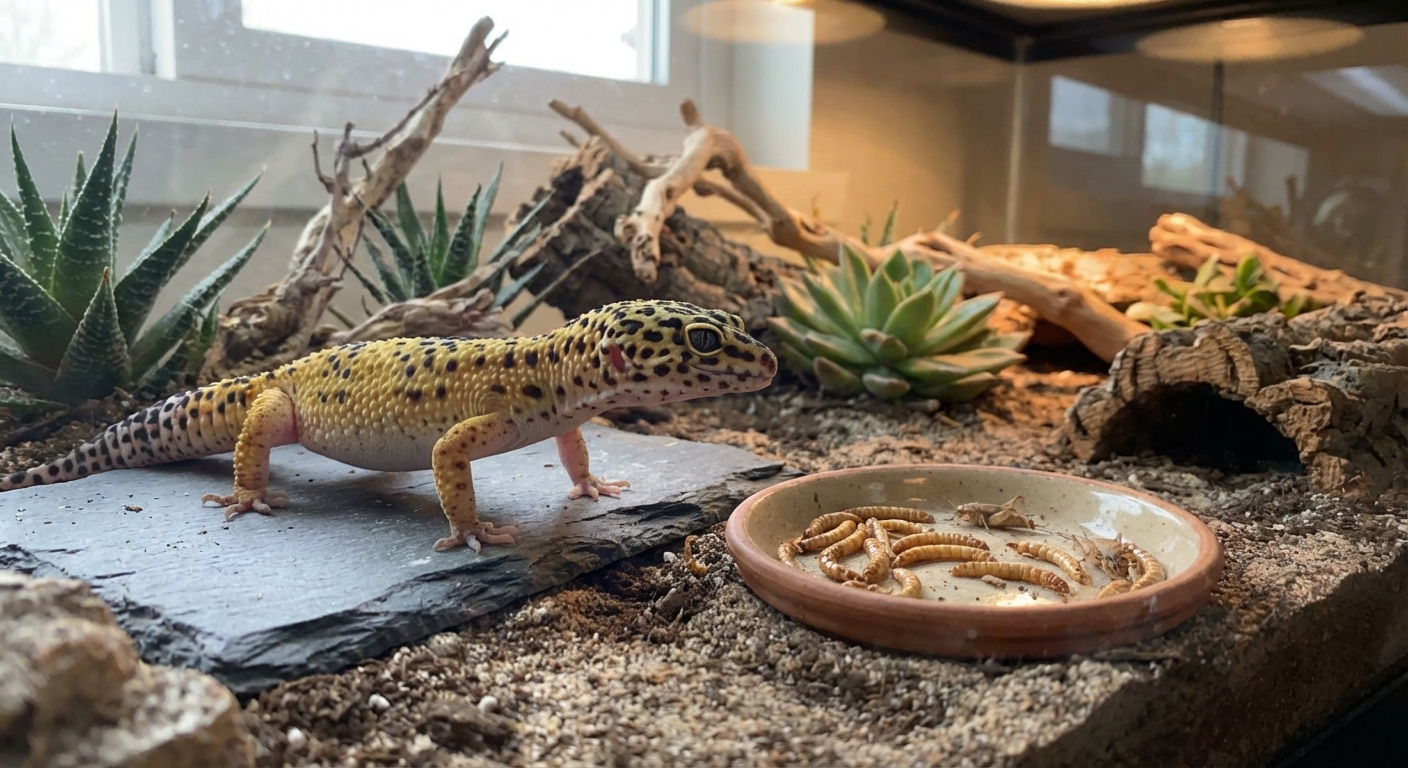
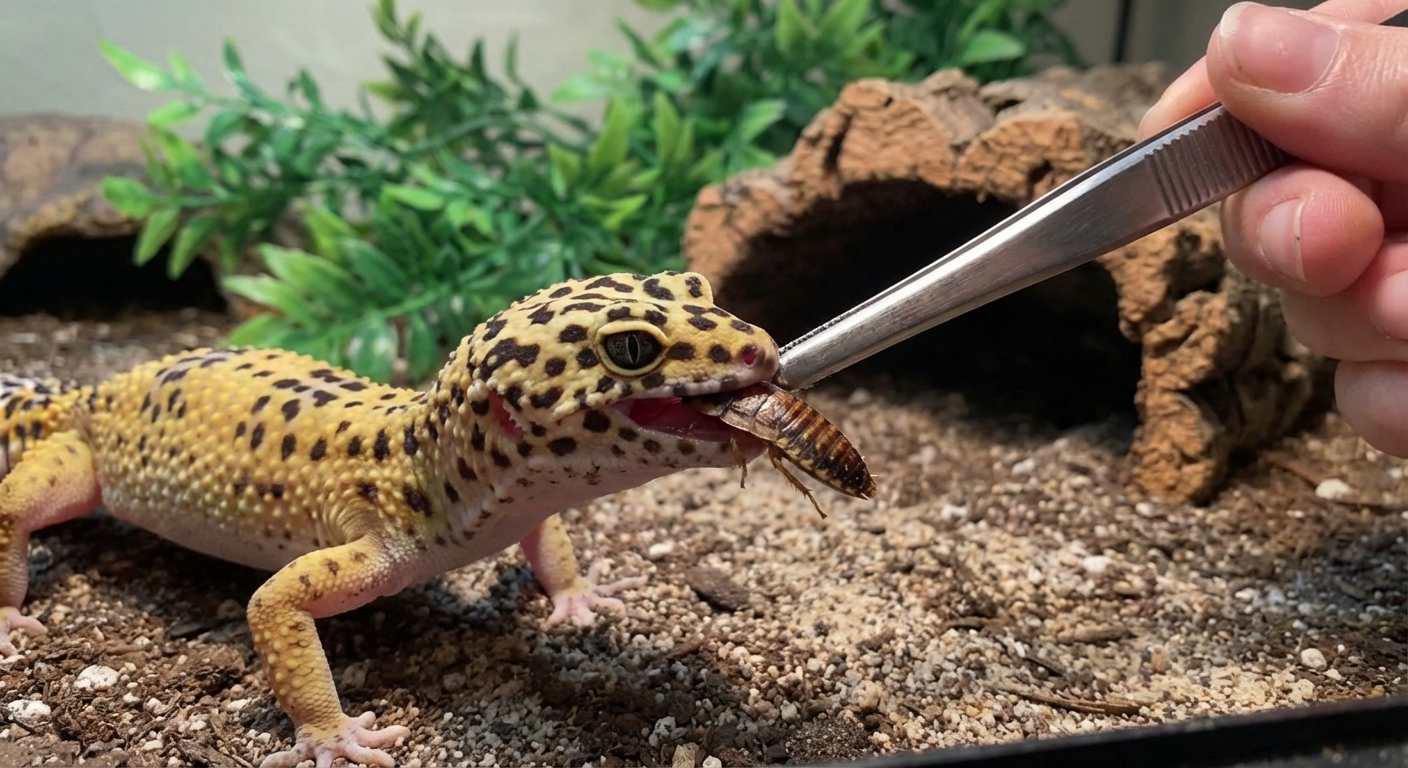
- Try tong-feeding for accuracy. It helps you track how much is eaten and avoids insects hiding in the enclosure.
- Do not leave crickets roaming overnight. Remove uneaten insects after feeding time.
- Use a feeder bowl for worms. Smooth-sided bowls keep mealworms from escaping into substrate.
- Watch body condition, not just appetite. A gecko can beg for waxworms and still not need them.
- Keep temperatures correct. Poor digestion often traces back to inadequate heat rather than “picky eating.”
Safety notes
- Avoid wild-caught insects. They can carry parasites or pesticides.
- Never feed fireflies. Fireflies and some glowing insects are toxic to many reptiles and can be fatal.
- Buy from reputable sources. Clean feeder colonies make a real difference in long-term health.
Common mistakes
1) Feeding only one insect forever
Fix: Rotate 2 to 4 feeders over time. Variety helps balance nutrients and keeps meals interesting.
2) Skipping supplements
Fix: Pick a simple schedule you can truly stick to. Consistency beats perfection.
3) Offering prey that is too large
Fix: Follow the “between the eyes” sizing rule and choose smaller insects when in doubt.
4) Confusing hunger with habit
Fix: Adult geckos do not need to eat daily. Use body condition and weigh-ins, not just begging behavior.
When to call a vet
If you notice any of the following, it is worth getting professional help sooner rather than later:
- Not eating with weight loss, lethargy, or other symptoms. Adult leopard geckos can have seasonal slowdowns, but ongoing refusal to eat outside of known cycles, especially with weight loss, deserves a call.
- Soft jaw, tremors, weak limbs, or trouble walking (possible metabolic bone disease)
- Persistent diarrhea or very foul stool
- Regurgitation
- Stuck shed on toes or tail that does not improve with a humid hide
Bring photos of your enclosure setup, your supplement brands, and a list of feeders. That information helps your vet pinpoint the real cause fast.
Feeding checklist
- Offer appropriately sized insects
- Rotate feeders for variety
- Gut-load 24 to 48 hours before feeding
- Use calcium and vitamins consistently
- Provide fresh water and a humid hide
- Remove uneaten insects after feeding time
- Track weight monthly (a kitchen scale works great)
Bottom line: a leopard gecko diet does not have to be fancy. It just needs to be consistent, varied, and properly supplemented.