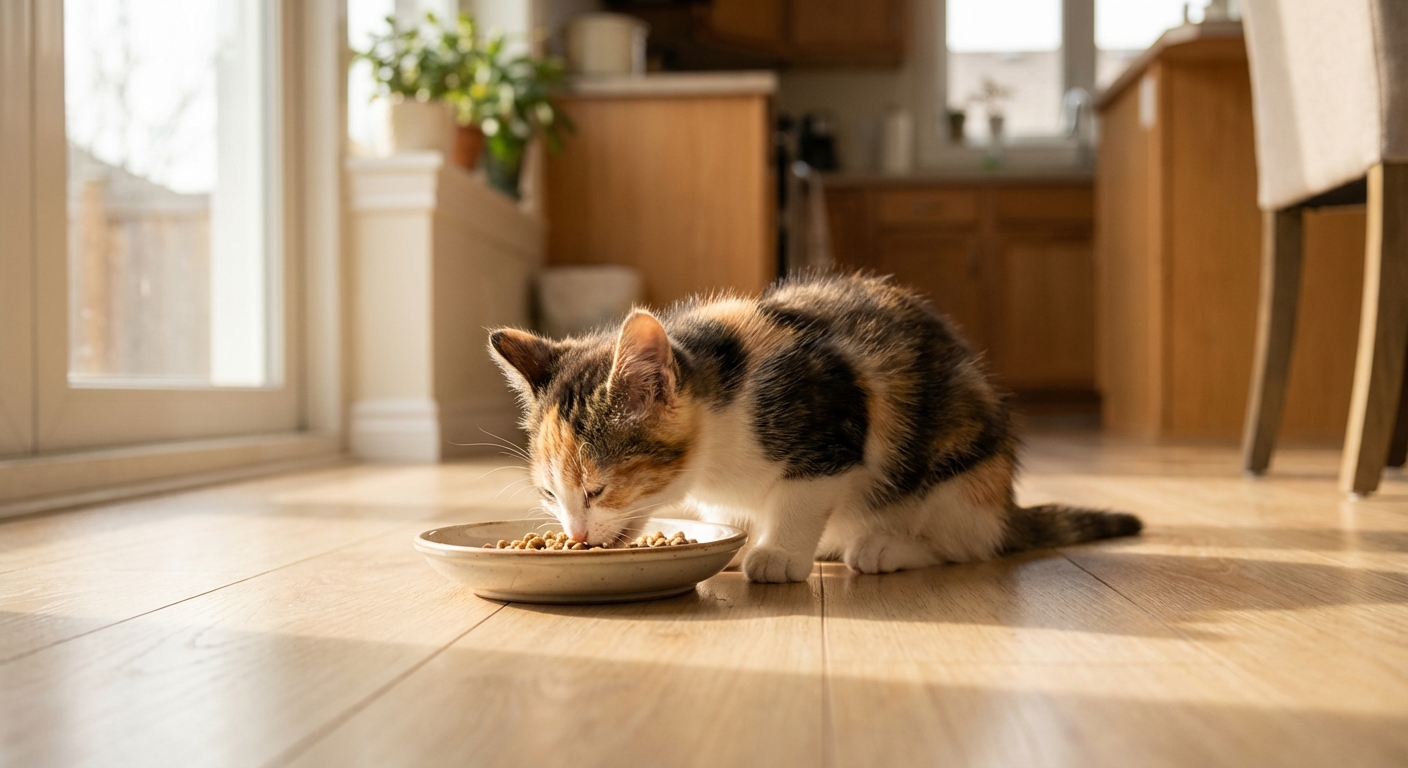
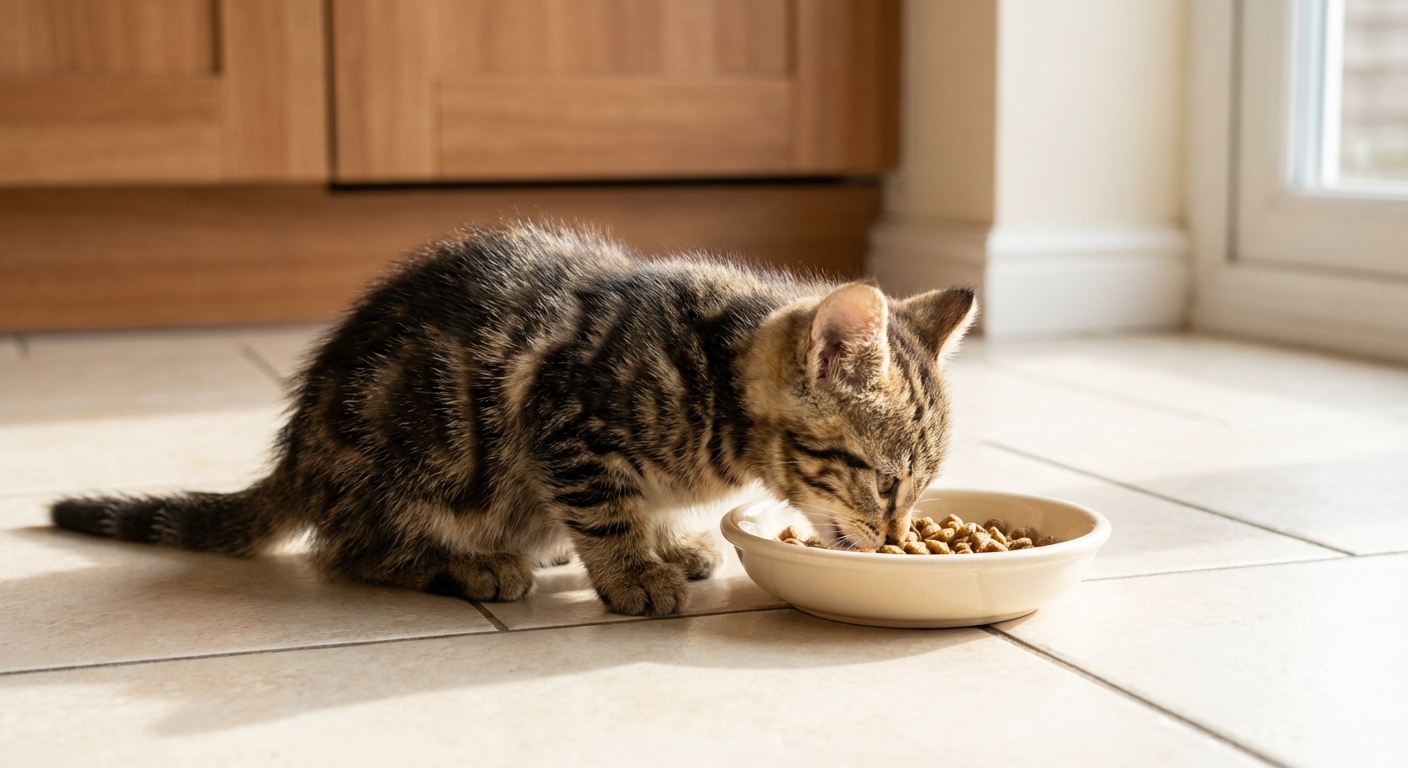
Vet-backed kitten feeding guide covering the best wet vs dry foods, how much to feed by age, meal schedules, safe food transitions, hydration tips, and warni...
Article
•
Designer Mixes
What to Feed a Kitten

Shari Shidate
Designer Mixes contributor
Bringing home a kitten is pure joy, but feeding a tiny, fast-growing body can feel confusing quickly. The good news is that kitten nutrition is very well-studied, and once you understand a few basics, choosing the right food becomes much simpler.
As a veterinary assistant here in Frisco, Texas, I have seen firsthand how the right diet supports steady growth, healthy digestion, a shiny coat, and good energy. Let’s walk through what kittens need, what to buy, how much to feed, and the common mistakes that trip up even loving pet parents.
Quick note: This article is educational and not a substitute for veterinary advice, especially for very young, underweight, or sick kittens.
Kitten nutrition basics
Kittens are not just small cats. They have higher needs for calories, protein, fat, and key nutrients because they are building muscle, bone, brain tissue, and an immune system at the same time.
What kittens need most
- Complete and balanced kitten food labeled for “growth” or “all life stages” with an AAFCO nutritional adequacy statement (nutrient profiles or feeding trials in the U.S.).
- High-quality animal protein to support muscle and organ development.
- Fat and essential fatty acids for brain and eye development and energy.
- Calcium and phosphorus in the right ratio to build strong bones and teeth.
- Taurine, an essential amino acid cats must get from food for heart and vision health.
- Plenty of water because good hydration supports the kidneys and urinary tract long-term.
Evidence-based tip: If a food is not labeled “complete and balanced,” it should not be the main diet. Treats, toppers, and “supplemental feeding only” products are fine sometimes, but they cannot replace a full kitten diet.
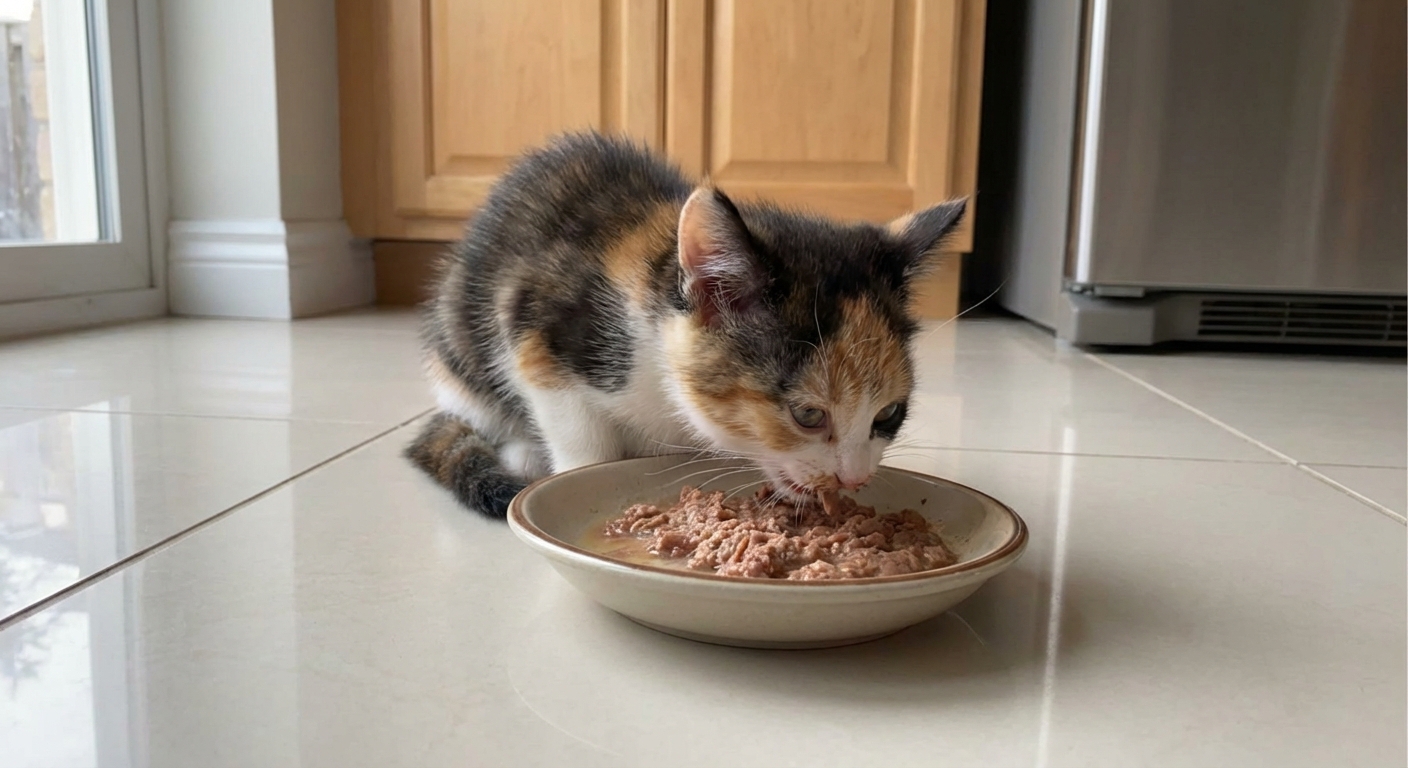
Wet food vs. dry food
This is one of the most common questions I get. Both can work, and many kittens do best with a combination, but they are not identical.
Wet food benefits
- Higher moisture helps with hydration.
- Often more enticing for picky eaters.
- Easier to chew for very young kittens.
Dry food benefits
- Convenient for busy households and timed feeders.
- Can be left out briefly without spoiling as quickly as wet food.
- Helpful for grazing kittens if portioned appropriately.
My practical recommendation: Use wet food daily for hydration support, plus a measured amount of dry food if it fits your routine. If you choose only dry, be extra intentional about water intake and schedule regular veterinary checkups.
What to feed by age
Kittens change quickly. A feeding plan that works at 6 weeks may not work at 6 months. Here are general guidelines for healthy kittens.
0 to 4 weeks: mostly milk
- Kittens should nurse from mom.
- If orphaned, use a commercial kitten milk replacer (KMR) and follow your veterinarian’s instructions.
- Many kittens begin showing interest in weaning foods around 3 to 4 weeks, but milk is still the foundation at this stage.
- Do not give cow’s milk, which can cause diarrhea and digestive upset.
Extra orphan-kitten note: Neonates need very specific feeding frequency, formula temperature, and help with elimination. If you are caring for an orphaned newborn, call a veterinarian or local rescue for step-by-step guidance.
4 to 8 weeks: weaning
- Offer a gruel made from wet kitten food mixed with warm water or kitten milk replacer.
- Gradually reduce liquid as chewing improves.
- Small, frequent meals work best.
8 weeks to 6 months: rapid growth
- Feed a kitten-specific complete and balanced diet.
- Most kittens do well with 3 to 4 meals per day.
- Expect a healthy appetite. Growing bodies need fuel.
6 to 12 months: steady growth
- Transition toward 2 to 3 meals per day.
- Continue kitten food until about 12 months (some large breeds may benefit from longer, per your veterinarian).
Note: Always confirm age-based plans with your veterinarian, especially for kittens who were underweight, sick, or rescued from the street.
How much to feed
There is no one perfect portion for every kitten. Calorie needs depend on age, current weight, activity level, and whether your kitten is spayed or neutered.
Smart starting points
- Start with the feeding guide on the label for your kitten’s current weight and age.
- Track body condition weekly. You should be able to feel ribs with light pressure, and your kitten should have a visible waist from above.
- Weigh weekly if you can. A kitchen scale works for tiny kittens, and a bathroom scale works for bigger ones (weigh yourself, then weigh yourself holding the kitten).
When to adjust
- If your kitten is leaving food behind regularly, reduce slightly.
- If your kitten is acting frantic for food and staying thin, increase slightly.
- A practical “slightly” is often a 5 to 10% change for a week, then reassess.
- If your kitten is gaining too quickly or getting round, talk with your veterinarian about portion control and spay or neuter timing.
After spay or neuter: calorie needs often drop. Re-check portions within the first couple of weeks after surgery and ask your veterinary team what adjustment makes sense for your kitten.
Feeding is not just about the bowl. It is about the kitten in front of you. Watch growth, stool quality, energy, and coat condition, then fine-tune.
What “complete and balanced” means
For kittens, the phrase “complete and balanced” is not marketing fluff. It is a nutritional safety net.
Look for a statement indicating the food is formulated to meet the nutritional levels established by the AAFCO Cat Food Nutrient Profiles for growth or all life stages, or that it passed AAFCO feeding trials.
This matters because kittens can develop serious problems from nutritional deficiencies or imbalances, including poor bone development, vision problems, heart issues (taurine deficiency), and slowed growth.

Foods to avoid
Some foods are unsafe, and others are simply not appropriate as a regular part of a kitten’s diet.
Unsafe or risky foods
- Cow’s milk: can cause digestive upset.
- Raw diets: higher risk of bacterial contamination and nutritional imbalance, especially dangerous for young or immunocompromised kittens.
- Uncooked meat, eggs, or fish: infection risk and possible nutrient issues (for example, raw egg whites can interfere with biotin, and some raw fish can contain thiaminase that reduces thiamine).
- Onion, garlic, chives: can damage red blood cells.
- Grapes and raisins: possible toxicity risk. Evidence is stronger in dogs than cats, but it is safest to avoid.
- Chocolate, caffeine, alcohol: toxic.
- Cooked bones: splinter risk and GI injury.
- Dog food as a main diet: not enough taurine and not balanced for feline needs.
“Sometimes” foods
- Tuna: can be a treat, but too much may lead to nutrient imbalance and picky eating.
- Human table scraps: often too salty, too fatty, or seasoned with unsafe ingredients.
If you suspect your kitten ate something toxic, call your veterinarian right away. In the U.S., you can also contact the ASPCA Animal Poison Control Center (fees may apply).
Schedules that work
Consistency helps kittens feel secure and helps you spot appetite changes early.
Simple schedule ideas
- 8 to 12 weeks: breakfast, lunch, dinner, and a small bedtime meal.
- 3 to 6 months: breakfast, afternoon, dinner.
- 6 to 12 months: breakfast and dinner, with a small lunch if needed.
Free-feeding
Leaving food out all day can help some underweight kittens or kittens who truly prefer grazing. But it can also lead to overeating, especially after spay or neuter when calorie needs can drop.
Best middle ground: offer measured portions at set times and remove leftovers after 20 to 30 minutes for wet food (sooner in warm rooms, and always follow label guidance).
Switching foods safely
If you need to change foods, go slowly to reduce stomach upset.
- Days 1 to 2: 75% old food, 25% new food
- Days 3 to 4: 50% old food, 50% new food
- Days 5 to 6: 25% old food, 75% new food
- Day 7: 100% new food
If your kitten develops vomiting, diarrhea, or refuses food during the transition, pause and contact your veterinarian. In young kittens, dehydration can happen quickly.
Hydration tips
Cats are naturally low-thirst drinkers, and supporting hydration early is a gift to their future health.
- Feed wet food daily if possible.
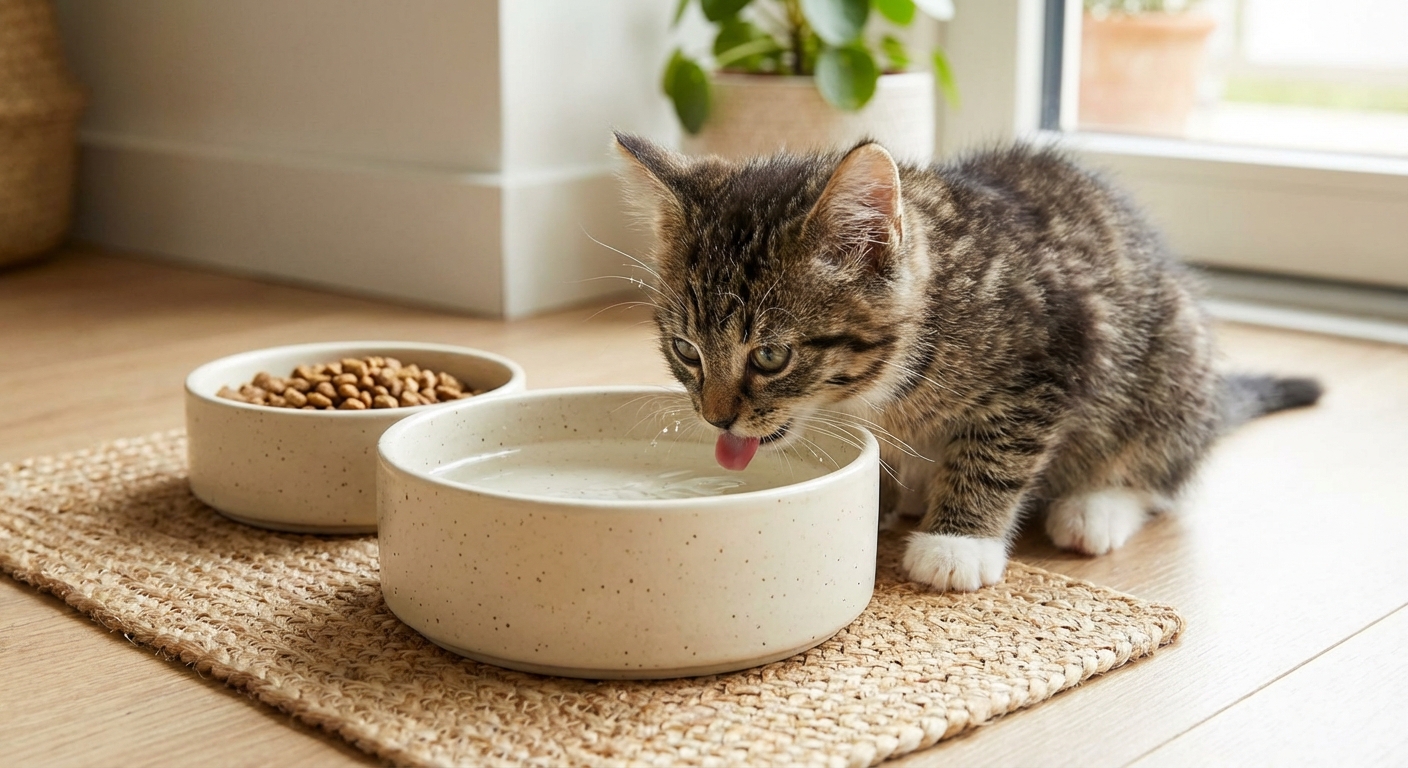
- Use a wide, shallow water bowl and clean it daily.
- Try different water locations. Some cats drink more when water is placed away from food and far from the litter box.
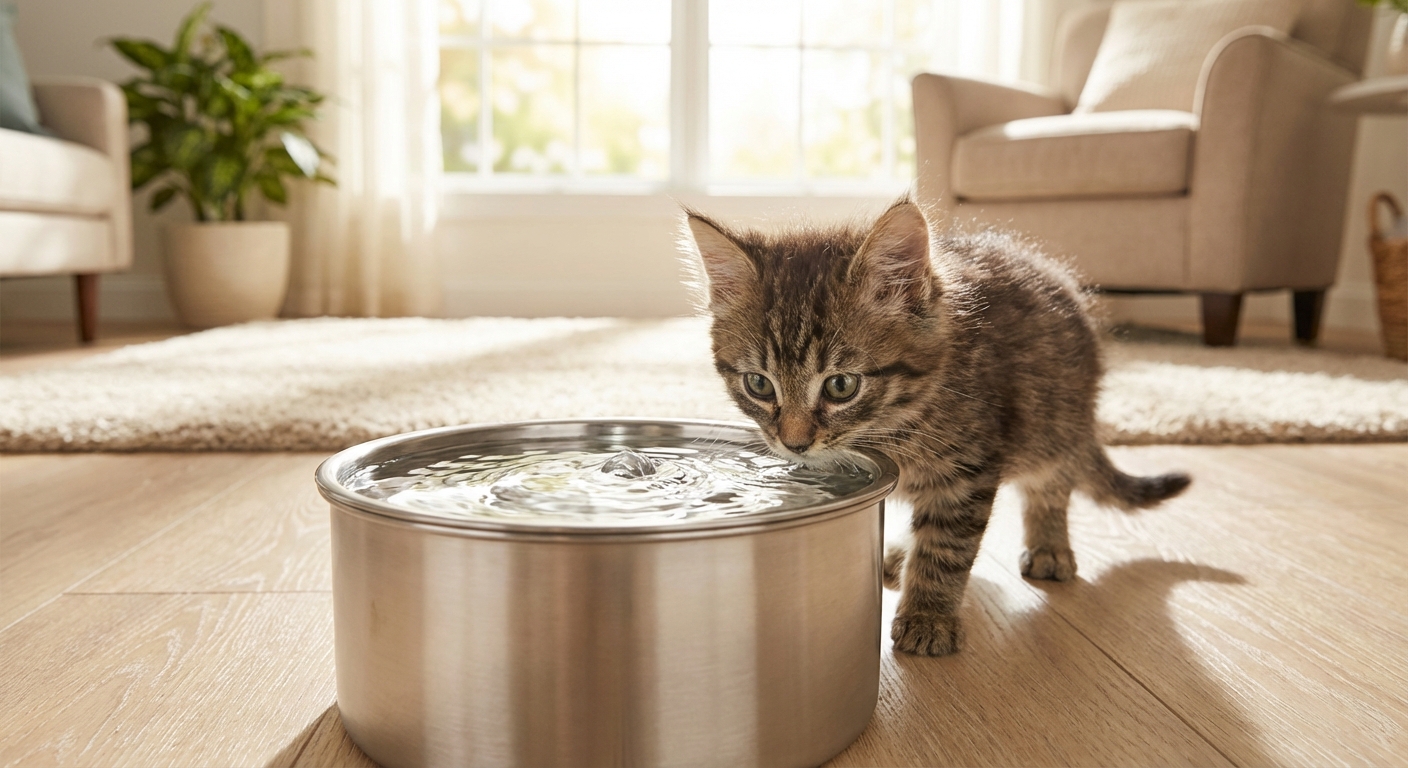
- Try a pet fountain if your kitten loves moving water.
Treats and toppers
Treats can be a wonderful training tool and bonding ritual, but kittens fill up quickly.
- Keep treats to under 10% of daily calories.
- Choose single-ingredient treats when possible, like freeze-dried chicken made for cats.
- Avoid heavy seasoning and high-salt options.
- If using toppers, make sure your kitten still eats a full serving of complete and balanced food.
When to switch to adult food
Most kittens can switch around 12 months of age. The goal is to support growth without overfeeding once that rapid growth phase slows down.
Your veterinarian may recommend a different timeline if your cat is a large breed, was underweight, has a medical condition, or has special growth needs.
Signs the diet is working
Nutrition shows up in everyday details. These are the signs I love to see in healthy kittens:
- Steady weight gain and growth
- Bright eyes and good energy
- Soft, shiny coat with minimal dandruff
- Normal stools that are formed and consistent
- Good appetite without constant frantic hunger
If you notice chronic diarrhea, vomiting, poor growth, a dull coat, or a suddenly picky appetite, schedule a veterinary visit. Also remember that in kittens, loose stool is very commonly caused by parasites, not just food. Your veterinarian can guide deworming and stool testing.
Quick checklist
- AAFCO statement for growth or all life stages
- Reputable brand with quality control
- Protein from animal sources as a key component
- Includes taurine
- Works for your kitten’s digestion and stool quality
- Fits your budget so you can feed it consistently
And remember, you do not have to be perfect. You just need to be consistent, observant, and willing to adjust. Your kitten is counting on you, and you are already doing the right thing by learning.