Chicken and rice can soothe mild stomach upset and help dogs transition back to normal food. Learn safe recipes, portions, how long to feed it, and when to c...
Article
•
Designer Mixes
What to Feed a Dog With Diarrhea

Shari Shidate
Designer Mixes contributor
Diarrhea is one of the most common reasons pet parents call the vet, and I get it. It is messy, stressful, and it makes you worry that you are missing something serious.
The good news is that many cases of diarrhea are mild and short-lived, especially when you respond early with the right foods, hydration, and a little patience. In this guide, I will walk you through what to feed your dog with diarrhea at every life stage, what to avoid, when to call your veterinarian, and how to prevent the next episode.
What to do in the next 24 hours
- Do a quick safety check for red flags (blood, vomiting, weakness, dehydration).
- Prioritize hydration first.
- Feed small, bland meals if your dog is stable and not vomiting.
- Call your vet sooner for puppies, seniors, or if anything feels off.
First: is it diarrhea or an emergency?
Diarrhea can be as simple as dietary indiscretion, stress, or a minor stomach bug. But it can also signal parasites, pancreatitis, toxin exposure, intestinal obstruction, or serious infection. Before changing food, do a quick safety check.
Call your veterinarian urgently if you notice:
- Blood in the stool (bright red) or black, tarry stool (can mean digested blood)
- Repeated vomiting, or diarrhea plus vomiting together
- Severe lethargy, collapse, weakness, or pale gums
- Signs of dehydration (sticky gums, sunken eyes, not drinking, extreme thirst)
- Frequent, large-volume watery diarrhea (for example, happening about hourly)
- Abdominal pain, bloating, unproductive retching
- A high-risk dog with diarrhea (puppy, senior, pregnant, or immunocompromised)
- Known toxin exposure (xylitol, grapes/raisins, chocolate, rodent bait, medications)
- Diarrhea lasting longer than 24 to 48 hours, even if mild
Quick hydration check: Lift the skin gently over your dog’s shoulder blades and release. If it snaps back quickly, hydration is often okay. If it stays tented or returns slowly, dehydration may be present and you should call your vet. Note: this test is not perfect, especially in senior dogs or very lean or overweight dogs. Also check gum moisture, energy level, and urination.
Step 1: prioritize hydration
With diarrhea, your dog loses water and electrolytes. Dehydration is one of the biggest near-term risks, especially for small dogs and puppies.
What to offer
- Fresh water available at all times
- Ice chips for dogs that gulp water too fast
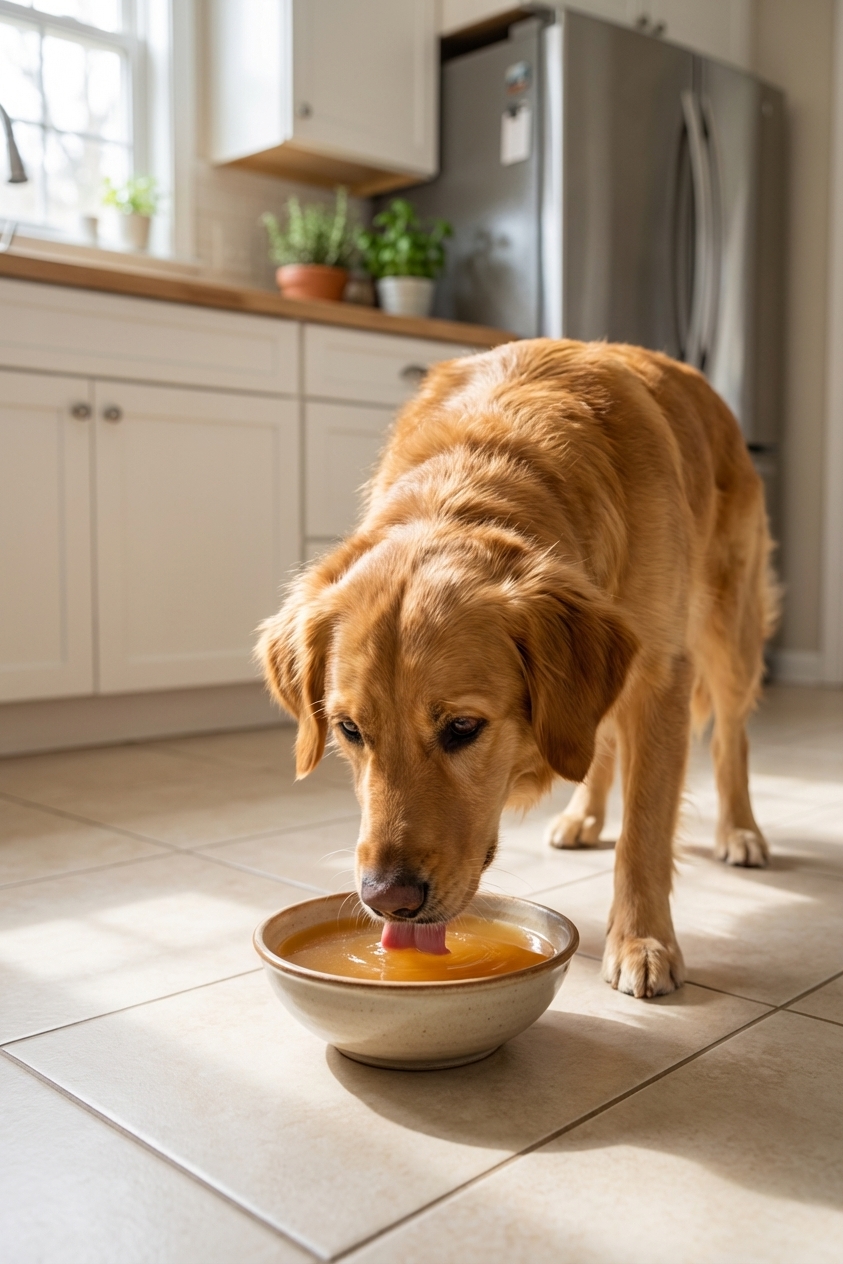
- Low-sodium, unseasoned broth (no onion, no garlic) warmed slightly to encourage drinking
If your dog has heart disease, kidney disease, or needs sodium restriction, ask your veterinarian before offering broth.
If your dog will not drink, is vomiting water back up, or is having frequent watery diarrhea, call your veterinarian. Some dogs need fluids and electrolyte support.
Step 2: decide on a brief food pause
Some veterinarians recommend a short period of “GI rest” for otherwise healthy adult dogs with mild diarrhea and no vomiting. Others prefer skipping fasting and going straight to small bland meals. If you are unsure, your vet can help you choose the safest plan.
General approach
- Healthy adult dogs: You may consider a short fast of about 8 to 12 hours, then start small meals.
- Puppies and toy breeds: Skip fasting unless your veterinarian specifically advises it. They can become dehydrated and hypoglycemic quickly.
- Senior dogs or dogs with chronic illness: Call your vet first. They may need a different plan.
Step 3: choose bland, low-fat foods
When you start feeding again, the goal is gentle calories and a calmer gut. Think low-fat, bland, and in small portions.
Common vet-recommended bland options
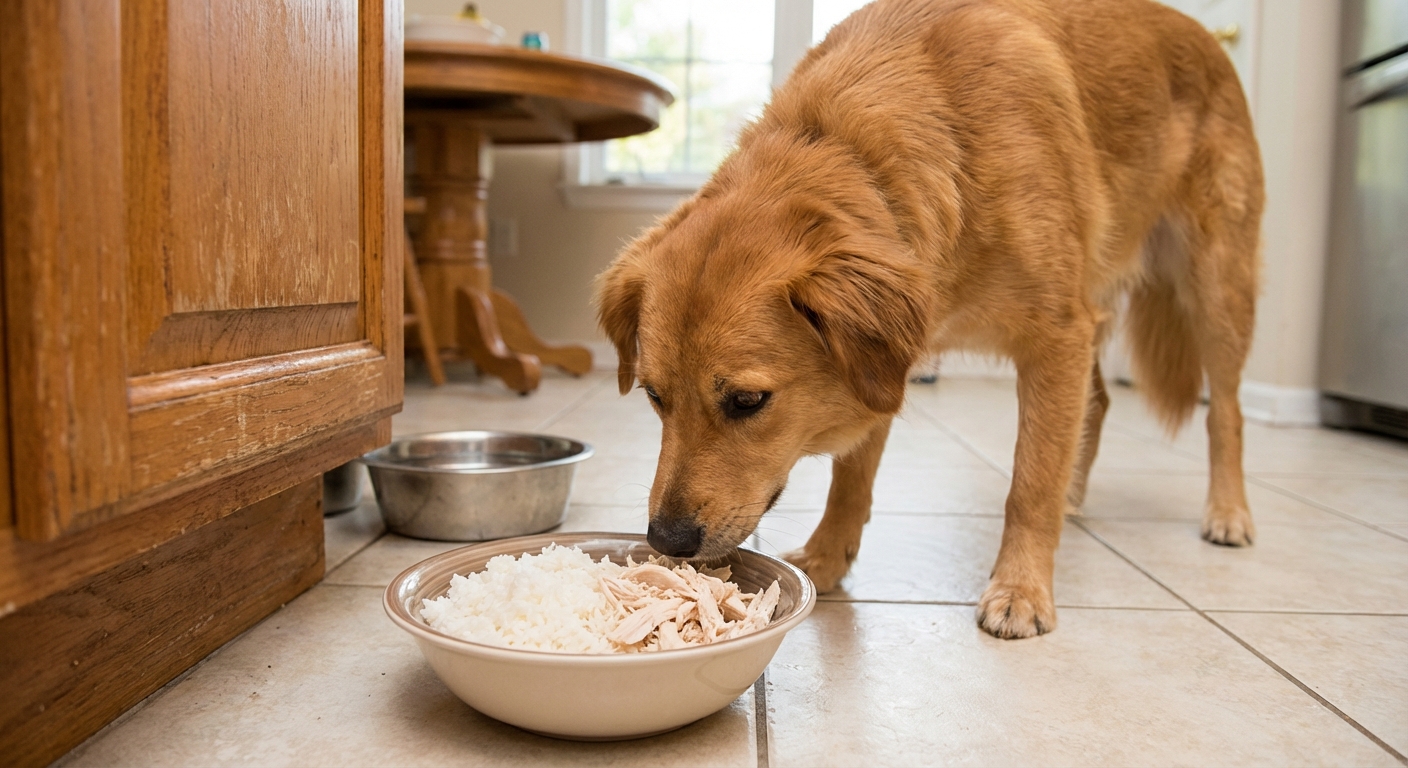
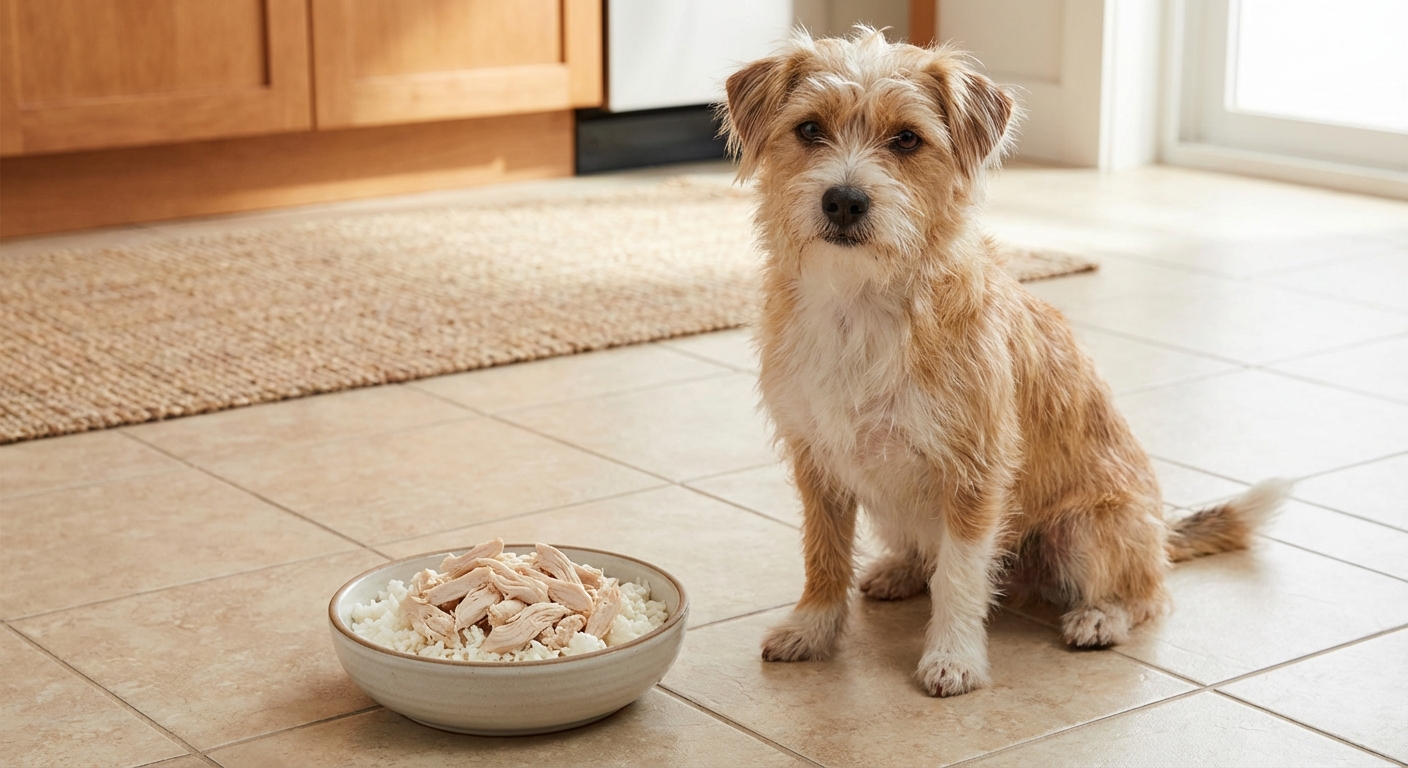
- Boiled skinless chicken breast (shredded, no seasoning)
- Boiled lean turkey (drained well)
- Cooked white rice (soft, slightly overcooked is fine)
- Plain canned pumpkin (not pie filling)
- Boiled potato (plain, no butter, no sour cream)
- Plain scrambled egg (no butter, cooked through)
For most dogs, a classic starting mix is 1 part protein to 2 parts carb (example: chicken and rice). Keep it very low-fat. If your dog has a history of pancreatitis, or you suspect pancreatitis (vomiting, belly pain, “praying” posture), call your vet before feeding any home plan.
If cooking is not realistic, ask your veterinarian about a therapeutic gastrointestinal diet. These prescription foods can be very helpful, especially for sensitive stomachs or recurring diarrhea.
How much to feed and how often
Small, frequent meals help reduce the workload on an irritated GI tract.
Simple feeding schedule
- Day 1: 4 to 6 small meals
- Day 2: 3 to 4 small meals if stools are improving
- Day 3: Begin transitioning back to regular diet
Start with a modest portion. A common guideline is about 25% to 33% of their normal meal size per feeding, then increase gradually if your dog is keeping it down and stool is firming up.
Age-by-age guidance
Puppies (under 12 months)
Puppies can crash fast with diarrhea. Parasites are also a very common cause, even in well-cared-for pups.
- Offer water frequently and call your vet sooner rather than later.
- Feed a bland diet without fasting unless directed.
- Ask your vet about a fecal test if diarrhea lasts more than a day, is severe, or keeps coming back.
Good puppy-friendly bland choices: boiled chicken or turkey, white rice, and a tiny amount of pumpkin if tolerated.
Adult dogs
For adults, uncomplicated diarrhea often improves within 24 to 48 hours with bland feeding and rest.
- Keep fat low, especially if there was a rich treat or table food trigger.
- Reduce treats and stop new chews until stools are normal.
- If diarrhea is persistent or recurring, ask your vet about a fecal test even for adults. Giardia is common in social dogs (parks, daycare, boarding).
Senior dogs
Older dogs may have underlying conditions that make diarrhea more dangerous or more complicated.
- Call your vet early if your senior seems “off” at all.
- Watch closely for dehydration and weakness.
- Be cautious with sudden diet changes, even bland ones, if your dog has kidney disease, diabetes, or heart disease.
Helpful add-ins
Some gentle add-ins can support stool quality. Always introduce one change at a time, and if your dog is on medication or has chronic illness, check with your veterinarian.
Plain canned pumpkin
Pumpkin provides soluble fiber that can help absorb excess water in the stool. Start low, because too much fiber can worsen diarrhea in some dogs.
- Small dogs: start with 1 teaspoon, up to 1 to 2 teaspoons mixed into food
- Medium dogs: start with 1 tablespoon, up to 1 to 2 tablespoons
- Large dogs: start with 1 to 2 tablespoons, up to 2 to 3 tablespoons
Probiotics
Veterinary-specific probiotics can help restore a healthier gut microbiome during and after diarrhea.
- Choose products made for dogs with clear dosing instructions.
- Avoid random human probiotic blends unless your veterinarian approves.
Unflavored psyllium (fiber)
In some cases, your vet may recommend a small amount of psyllium for fiber support. Dose varies widely by dog size and situation, so this is best discussed with your clinic.
Foods to avoid
These foods often worsen diarrhea, increase inflammation, or add too much fat for an already irritated gut.
- High-fat foods (bacon, sausage, greasy leftovers)
- Dairy (milk, cheese, ice cream), unless you know your dog tolerates it well
- Rich treats and bully sticks or very dense chews
- Spicy foods, seasoned meats, sauces
- Raw diets during an acute diarrhea episode (higher bacterial risk)
- High-fiber veggies in large amounts (broccoli, cabbage) while stools are loose
- Anything toxic: grapes/raisins, onions, chives, chocolate, xylitol, macadamia nuts
Transition back to normal food
Once stools are formed and your dog is acting normal, transition gradually to prevent a relapse.
Easy 3-day transition
- Day 1: 75% bland diet, 25% regular food
- Day 2: 50% bland diet, 50% regular food
- Day 3: 25% bland diet, 75% regular food
- Day 4: back to regular meals if stool remains normal
If diarrhea returns during the transition, go back to the last ratio that produced normal stool. Once recovered, reintroduce treats slowly and avoid sudden diet changes for a week or two.
Call your veterinarian if it does not improve quickly.
Over-the-counter meds
Please be cautious. Some human medications can be unsafe for dogs, and diarrhea sometimes needs diagnosis rather than suppression.
- Do not give Pepto-Bismol or Imodium without veterinary guidance.
- Imodium (loperamide) can be risky for some herding breeds (MDR1 mutation), and it can be unsafe if diarrhea is caused by certain infections or if there is concern for obstruction.
- If your dog has blood in the stool, fever, vomiting, or pain, skip the home medicine cabinet and call your vet.
Common causes and prevention
In veterinary clinics, we see a pattern. Many diarrhea episodes come down to one of these:
- Dietary indiscretion: trash, table scraps, new treats, sudden diet changes
- Parasites: giardia, roundworms, hookworms, whipworms
- Stress: travel, boarding, new pets, schedule disruptions
- Infections: viral or bacterial
- Food intolerance or allergy: recurring diarrhea, gas, itchy skin
- Pancreatitis: often after a fatty meal, may include vomiting and abdominal pain
- Chronic GI disease: IBD, malabsorption, endocrine disease
Prevention basics: keep trash secured, introduce new foods slowly, stay current on parasite prevention, and consider fecal testing if your dog has recurring GI issues or frequent exposure to other dogs.
A simple diarrhea diary
If diarrhea lasts more than a day or keeps coming back, tracking details can speed up diagnosis.
- When it started and how often your dog goes
- Stool appearance (watery, pudding-like, mucus, blood)
- Any vomiting, appetite changes, or behavior changes
- Recent diet changes, new treats, chews, people food
- Possible scavenging, trash access, or new environments
- Current medications and supplements
Bring a fresh stool sample to your appointment if your clinic requests one.
Diarrhea is a symptom, not a diagnosis. If it is severe, persistent, or paired with vomiting, blood, pain, or lethargy, your vet visit is the most loving next step.