Vet-informed guide to a short-term bland diet for dogs: chicken and rice 1:2 ratio, daily cup ranges by weight, how many meals to split into, and red flags t...
Article
•
Designer Mixes
What to Feed a Dog With Diarrhea

Shari Shidate
Designer Mixes contributor
Diarrhea is one of the most common reasons pet parents call a veterinary clinic. It can be as simple as your dog raiding the trash, or it can be a sign of something that needs medical help. The good news is that many mild cases improve quickly with the right at-home support, the right foods, and a little patience.
As a veterinary assistant in Frisco, Texas, I always like to start with two goals: keep your dog safe and calm the gut without making things worse.
First: When diarrhea is an emergency
Please do not wait it out if any of these apply. Call your vet or an emergency hospital.
- Blood in stool (bright red or black, tarry stool)
- Repeated vomiting or cannot keep water down
- Signs of dehydration (tacky or dry gums, sunken eyes, weakness, reduced urination, collapse)
- Severe lethargy, painful belly, or hunched posture
- Puppy, senior, or immunocompromised dog with diarrhea
- Suspected toxin or foreign object (sock, toy, bones, medications, xylitol, marijuana, grapes, etc.)
- Frequent watery stool (for example, every hour) or your dog cannot settle
Call your veterinarian if diarrhea lasts longer than 24 to 48 hours, even if your dog seems okay. Mild diarrhea in a bright, hydrated adult dog is sometimes monitored a bit longer depending on your vet’s guidance, but a quick check-in is always the safest call.
Why the urgency? Dogs can dehydrate quickly, and certain infections and pancreatitis can look like simple diarrhea at first.
What to feed: gentle foods that help
For mild diarrhea in an otherwise bright, alert dog, many veterinarians recommend a short-term, highly digestible diet. Think: low fat, simple ingredients, and small meals. This is meant to be temporary. Once stools improve, you will transition back to normal food slowly.
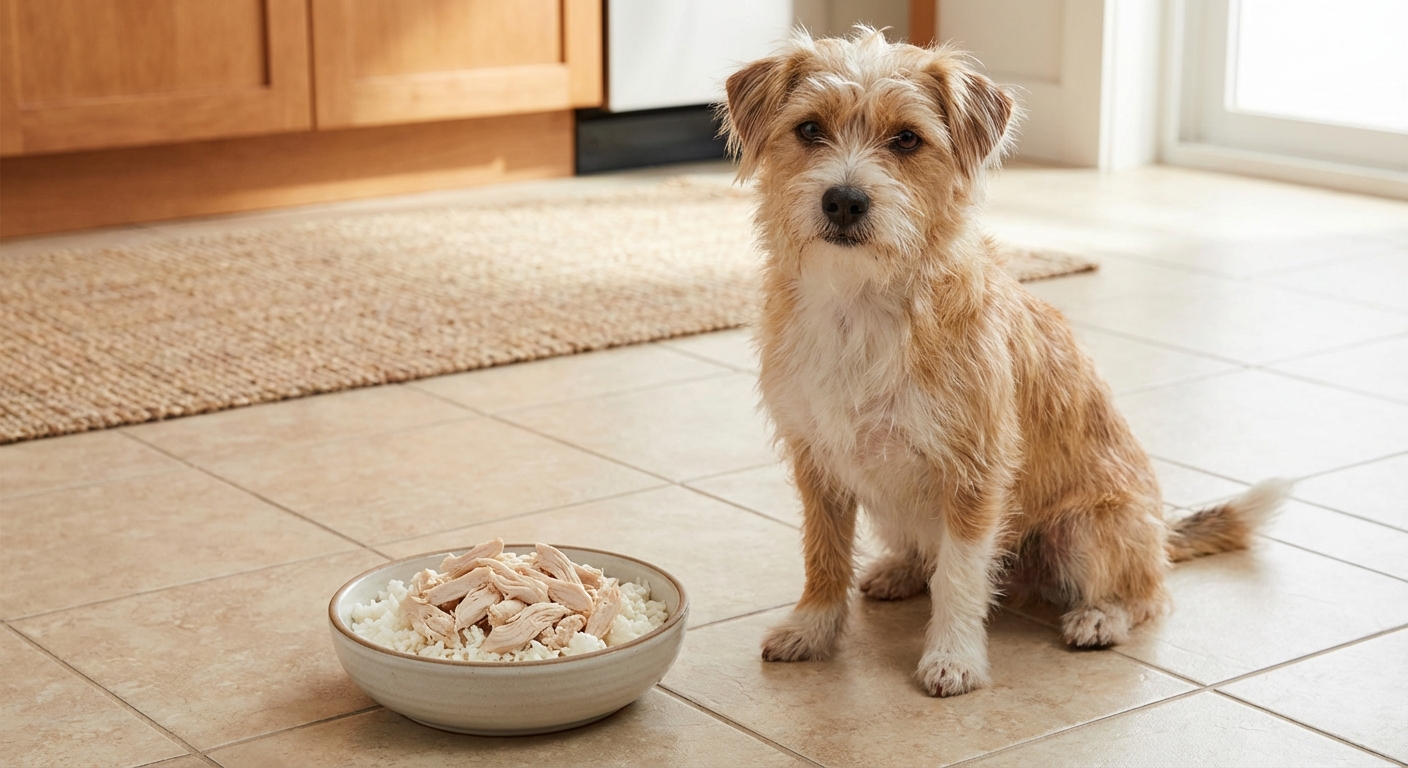
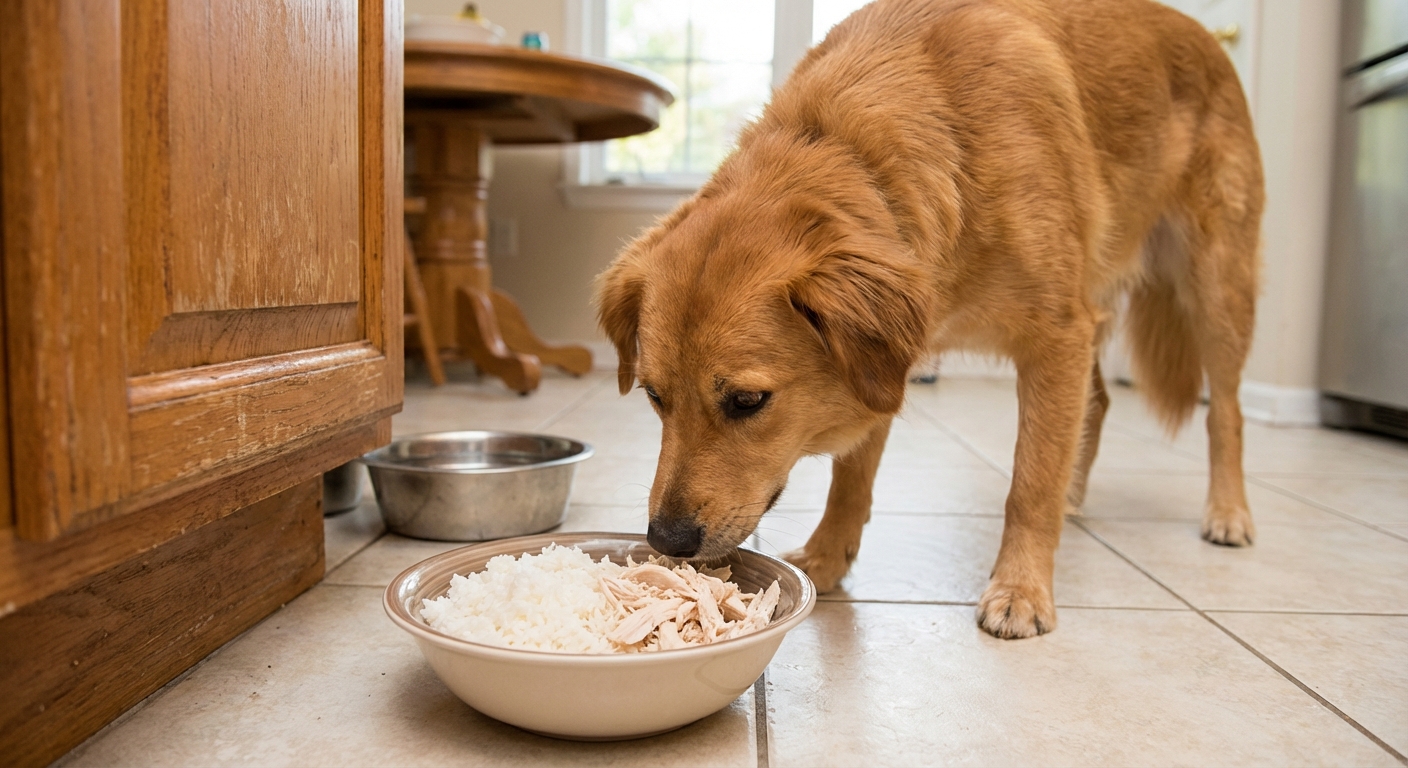
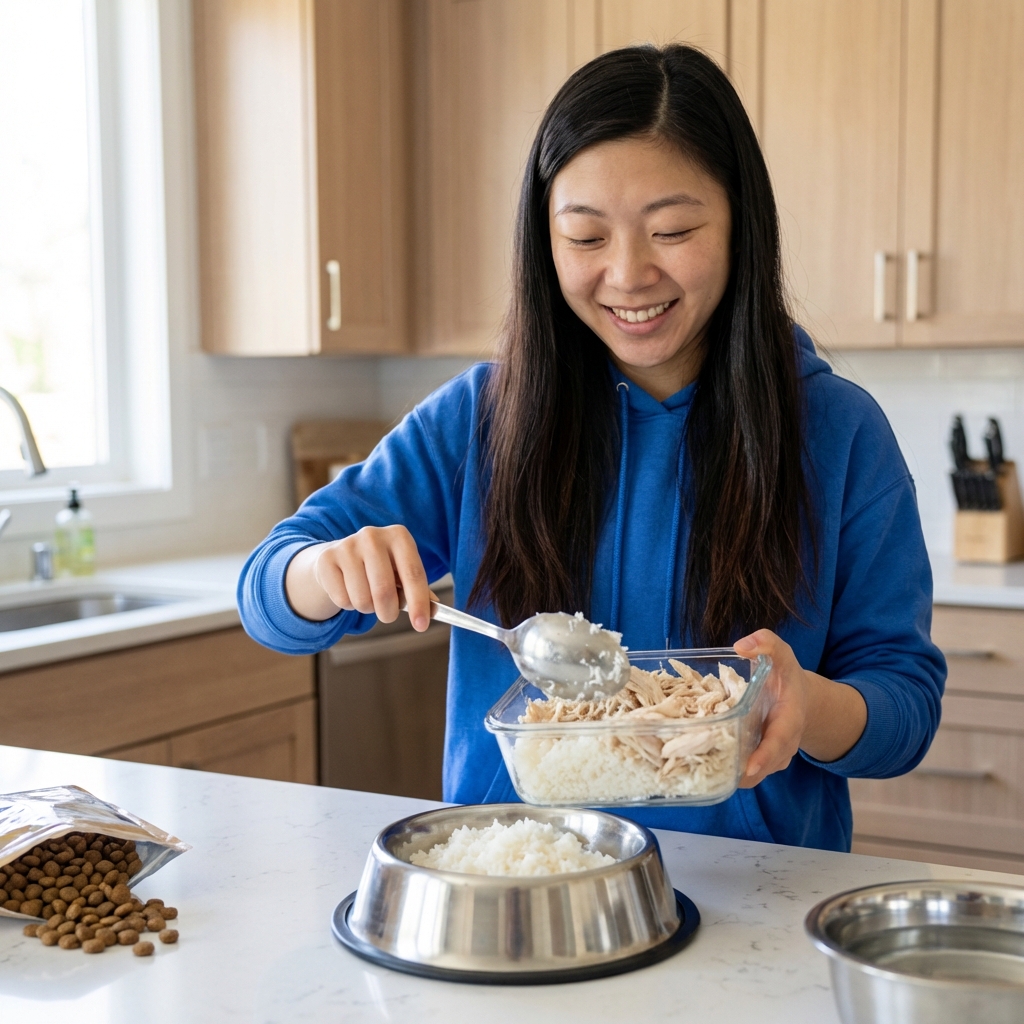
Option 1: Boiled chicken and white rice
This is the classic for a reason. It is bland, easy to digest, and usually well tolerated.
- Chicken breast boiled or baked, skinless and boneless
- White rice well cooked (soft)
- Typical ratio: about 1 part chicken to 2 parts rice for 1 to 3 days
Portion tip: Start with smaller portions than usual. Many dogs do well starting at about 25 to 50% of their normal meal size, then increasing as stool firms up and appetite stays normal.
Tip: If your dog has a history of pancreatitis or gets loose stool with fatty foods, be extra strict about removing all skin and visible fat.
Option 2: Lean ground turkey and white rice
Great alternative if chicken is not tolerated. Cook thoroughly and drain the fat.
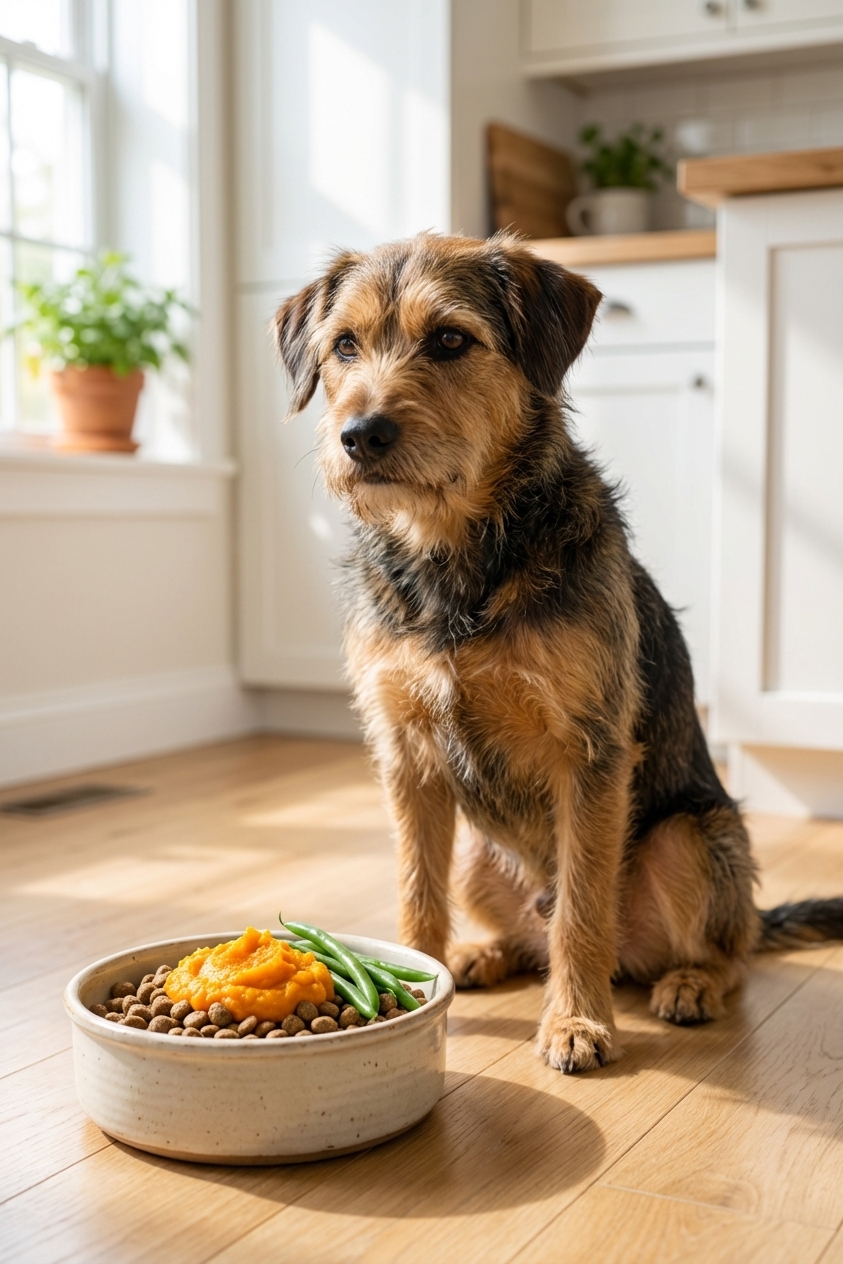
Option 3: Pumpkin (plain) for fiber
Plain canned pumpkin can help some dogs by adding gentle soluble fiber.
- Use plain pumpkin, not pumpkin pie filling
- Small dogs: start with 1 teaspoon mixed into food
- Medium to large dogs: start with 1 tablespoon mixed into food
Fiber is not one-size-fits-all. If stool becomes bulkier but still watery, or if gas and cramping increase, stop and call your vet.
Option 4: Veterinary GI diets
If your dog has recurring diarrhea, a sensitive stomach, or you just want the safest low-fuss option, ask your veterinarian about a highly digestible gastrointestinal diet. These diets are formulated for gut recovery and are often the fastest route back to normal stool.
How to feed: small meals, steady routine
When a dog has diarrhea, the gut is irritated and moving too fast. Large meals can worsen motility. Small, frequent meals are usually kinder.
- Feed small portions every 6 to 8 hours (2 to 4 meals/day)
- Keep the diet consistent for 24 to 48 hours
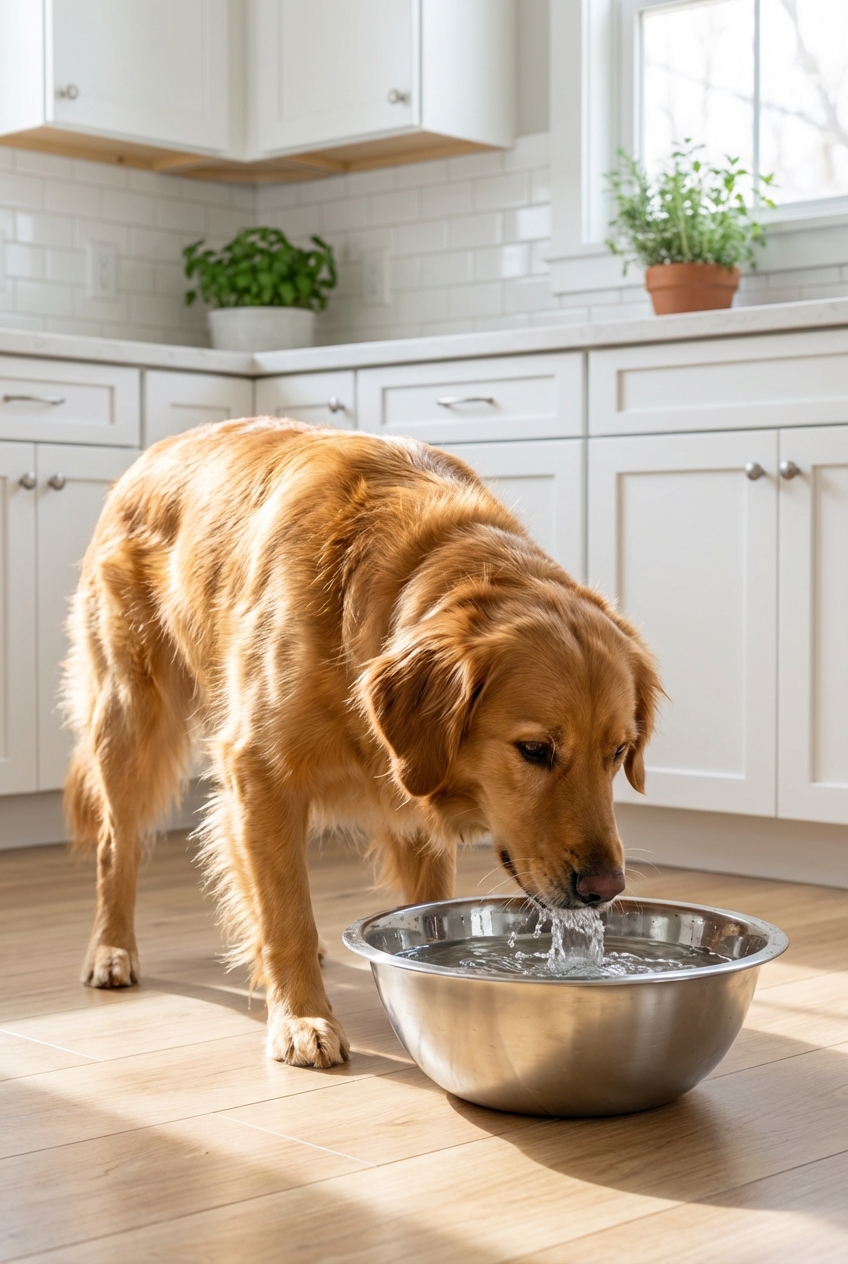
- Ensure fresh water is always available
If your vet has advised a short fast for an adult dog, follow that guidance. For many dogs, though, especially smaller dogs, gentle feeding is often better than going too long without calories.
Puppy note: Do not fast puppies unless your veterinarian specifically instructs you to. Puppies and toy breeds can develop low blood sugar quickly, so call your clinic early if a young dog has diarrhea.
Hydration: the part people underestimate
With diarrhea, fluid loss is the big risk. Even if your dog is eating, dehydration can sneak up.
Easy hydration support
- Offer water often, and keep bowls in multiple rooms
- Try ice cubes for dogs that like to lick
- Ask your vet if a pet-safe oral electrolyte solution is appropriate
Avoid: human sports drinks and any product that contains xylitol.
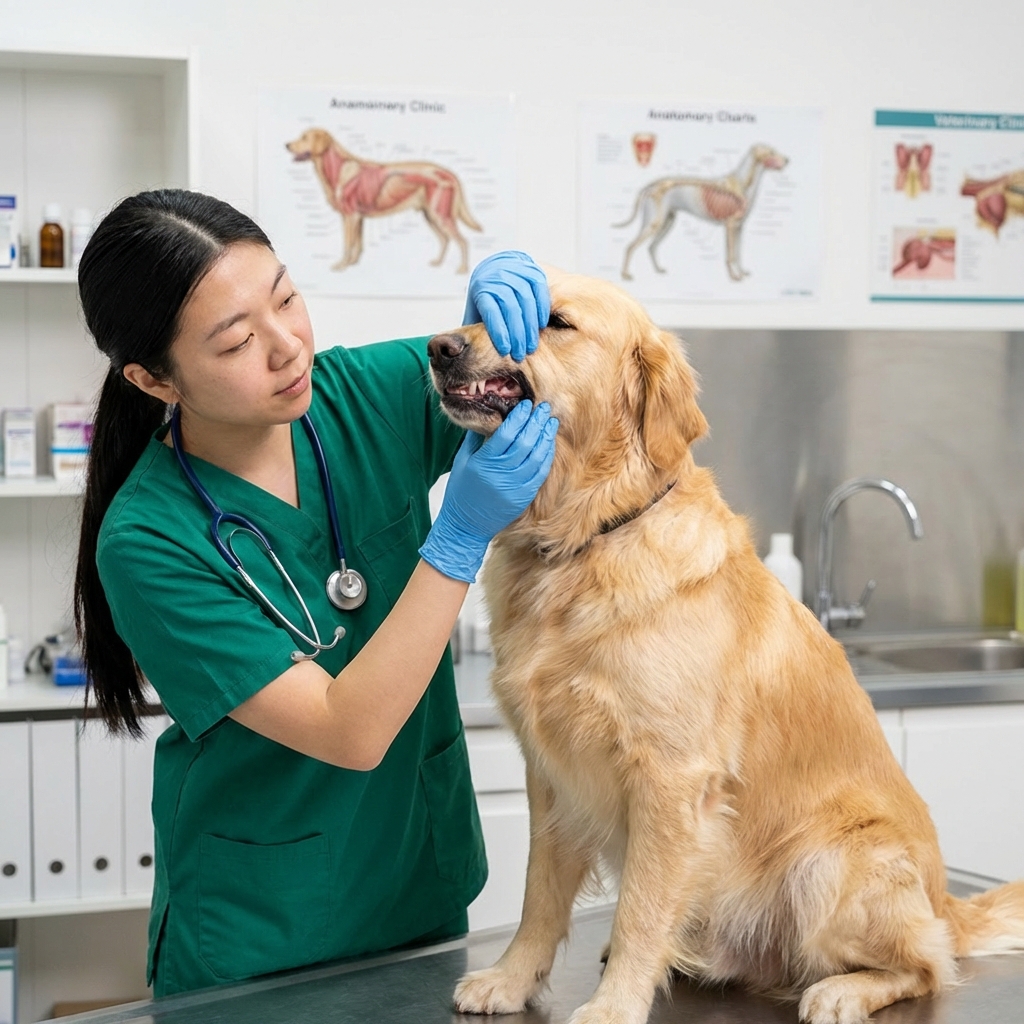
A quick gum check: Gums should be slick and moist, not tacky or dry. If you are seeing tacky gums plus lethargy or reduced urination, call your vet.
What not to feed during diarrhea
Some foods can inflame the gut or trigger pancreatitis, especially in sensitive dogs.
- High-fat foods (bacon, sausage, greasy leftovers)
- Dairy (many dogs are lactose intolerant)
- Rich treats and chewies (bully sticks, pig ears, new treats)
- Raw food during active diarrhea (higher bacterial risk, harder to assess)
- Spicy foods or heavily seasoned meats
- New supplements or sudden diet swaps
Also pause all “extras” for a couple of days. No table scraps, no new supplements, no sudden diet swaps. When the gut is upset, simple is healing.
Medicines: do not guess
Please do not give over-the-counter human medications unless your veterinarian tells you to. Some can be dangerous or mask a bigger problem.
- Loperamide (Imodium) is not safe for every dog and can be risky in certain breeds and medical situations.
- Bismuth subsalicylate (Pepto-Bismol) can cause problems in some dogs and may interfere with diagnosing bleeding.
- Pain relievers like ibuprofen, naproxen, and aspirin can be toxic to dogs.
If you are considering any medication, call your clinic first. We would much rather answer a quick question than have you dealing with a preventable emergency.
Probiotics: can they help?
In many cases, yes. Some dogs benefit from probiotics designed for pets, especially if diarrhea started after stress, a diet change, or antibiotics.
Evidence varies by strain and dose, so I recommend choosing a veterinary probiotic with clearly listed strains and CFUs, and checking with your veterinarian on the best match for your dog’s situation.
If diarrhea is severe, bloody, or persistent, probiotics alone are not enough. Your dog may need a fecal test, deworming, or other medication.
How long until stools are normal?
For mild cases, you often see improvement within 24 to 48 hours once you remove the trigger and feed a gentle diet. After stool looks normal for 1 to 2 days, transition back to regular food slowly.
Simple transition plan
- Day 1: 75% bland diet + 25% regular food
- Day 2: 50% bland diet + 50% regular food
- Day 3: 25% bland diet + 75% regular food
- Day 4: 100% regular food
If diarrhea returns during the transition, go back one step and call your vet for guidance.
Why diarrhea happens
Knowing likely causes can help you prevent the next round.
- Dietary indiscretion (trash, people food, sudden treat overload)
- Sudden food change
- Stress (boarding, travel, new baby, thunderstorms)
- Parasites (giardia, roundworms, hookworms)
- Infections (viral or bacterial)
- Food intolerance or allergy
- Pancreatitis (often triggered by fatty foods)
- Chronic GI disease (IBD, malabsorption)
If your dog has repeat episodes, bring a fresh stool sample to your vet. A simple fecal test can uncover treatable causes quickly.
Stool sample tips
If your veterinarian asks for a stool sample, these basics help a lot:
- Collect a fresh sample (ideally within a few hours).
- If you cannot bring it in right away, place it in a sealed bag or container and refrigerate it.
- Bring the sample and a quick timeline of symptoms (when it started, any new foods, any vomiting).
Many clinics also recommend routine fecal testing as part of wellness care, even for dogs that seem healthy.
Tips that make a real difference
- Keep a stool log: frequency, appearance, blood, mucus, accidents, and any new foods.
- Remove access to triggers: secure trash cans, block compost, supervise backyard time.
- Go slow with any diet change: your dog’s gut needs time to adapt.
- Use treats wisely: keep treats under 10% of daily calories, and avoid high-fat options.
- Recheck hydration twice a day during diarrhea.
If you are ever unsure whether it is “just diarrhea,” trust your instincts and call your vet. It is always okay to ask.