Vet-guided tips for mild dog diarrhea: hydration first, bland foods like chicken and rice, pumpkin and sweet potato, probiotic options, foods to avoid, and u...
Article
•
Designer Mixes
What to Feed a Dog for Diarrhea

Shari Shidate
Designer Mixes contributor
When your dog has diarrhea, it is stressful for both of you. As a veterinary assistant, I can tell you this is one of the most common reasons pet parents call the clinic. The good news is that many cases improve quickly with the right gut-friendly foods, smart hydration, and close monitoring.
In this guide, I will walk you through what to feed, what to avoid, and when diarrhea is a sign you should stop home care and call your veterinarian.
First, decide if home care is appropriate
Diet changes can help uncomplicated, mild diarrhea. But some situations are not wait-and-see problems.
Call your vet urgently if you notice:
- Blood in the stool (bright red) or black, tarry stool (this can mean digested blood)
- Repeated vomiting, or your dog cannot keep water down
- Severe lethargy, collapse, or signs of pain
- Bloated abdomen or unproductive retching
- Dehydration signs: tacky gums, sunken eyes, weakness
- Diarrhea lasting longer than 24 hours in puppies, toy breeds, seniors, or dogs with medical conditions
- Diarrhea lasting longer than 48 hours in an adult dog, or sooner if signs are not improving
- Puppies, seniors, or dogs with chronic disease (kidney disease, diabetes, Cushing’s, IBD)
- Known toxin exposure, foreign object risk, or recent garbage raids
Important: Dogs can dehydrate faster than you might expect, especially small dogs and puppies. If you are unsure, it is always okay to call your vet and describe what you are seeing.
Hydration comes first
With diarrhea, your dog is losing water and electrolytes. Food matters, but hydration matters more in the first phase.
What to offer
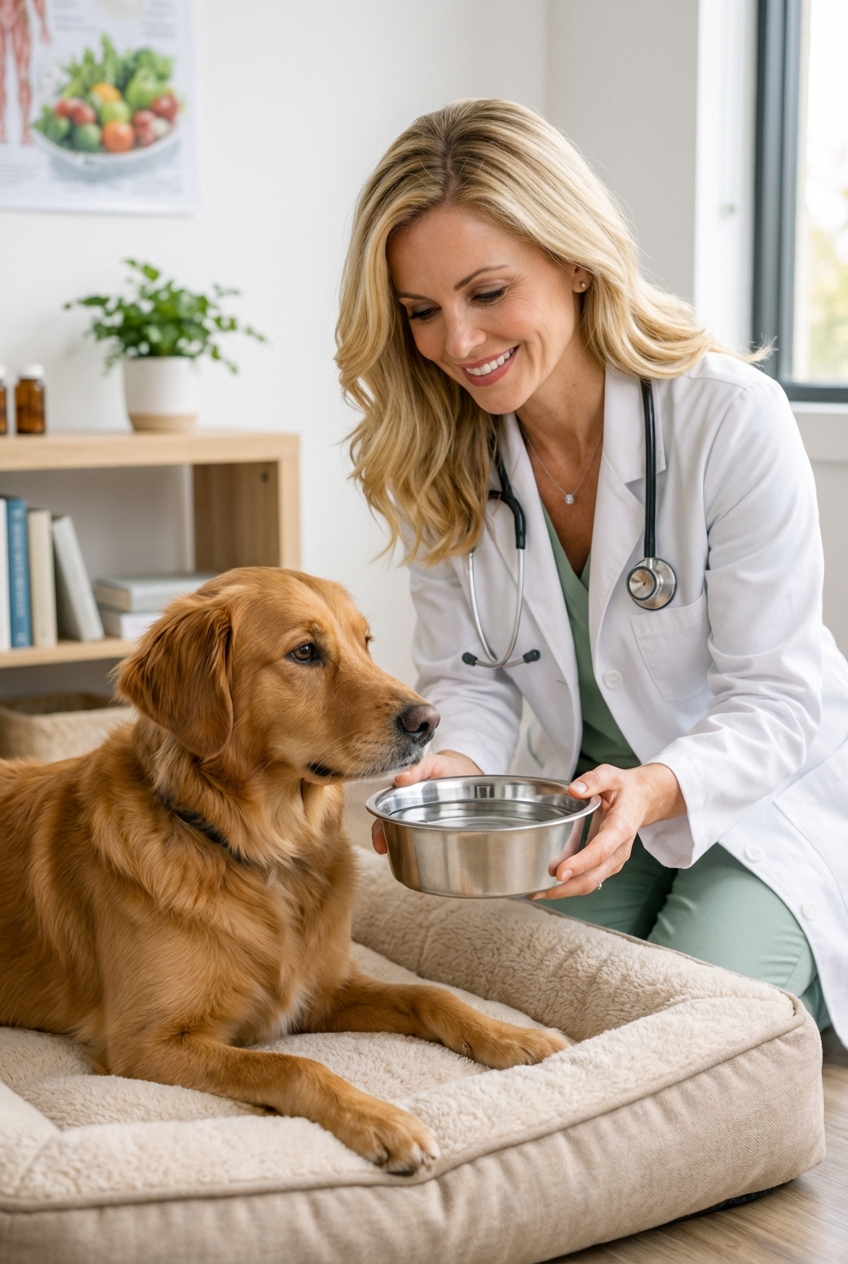
- Fresh water at all times.
- Small, frequent sips if your dog wants to gulp. Some dogs do better when you offer water every 30 to 60 minutes.
- Ice chips can help dogs who gulp or have a mildly upset stomach.
If your dog refuses water entirely, or seems too nauseated to drink, call your veterinarian.
Electrolytes
For mild cases, water is usually enough. For higher-risk dogs, ask your veterinarian whether an oral rehydration solution is appropriate and how much to give. Avoid sports drinks due to sugar and additives.
The best foods for diarrhea (the gentle gut menu)
For many dogs with uncomplicated diarrhea, a short-term bland diet helps the intestines calm down. The goal is easy-to-digest protein plus a gentle carbohydrate, served in small portions.
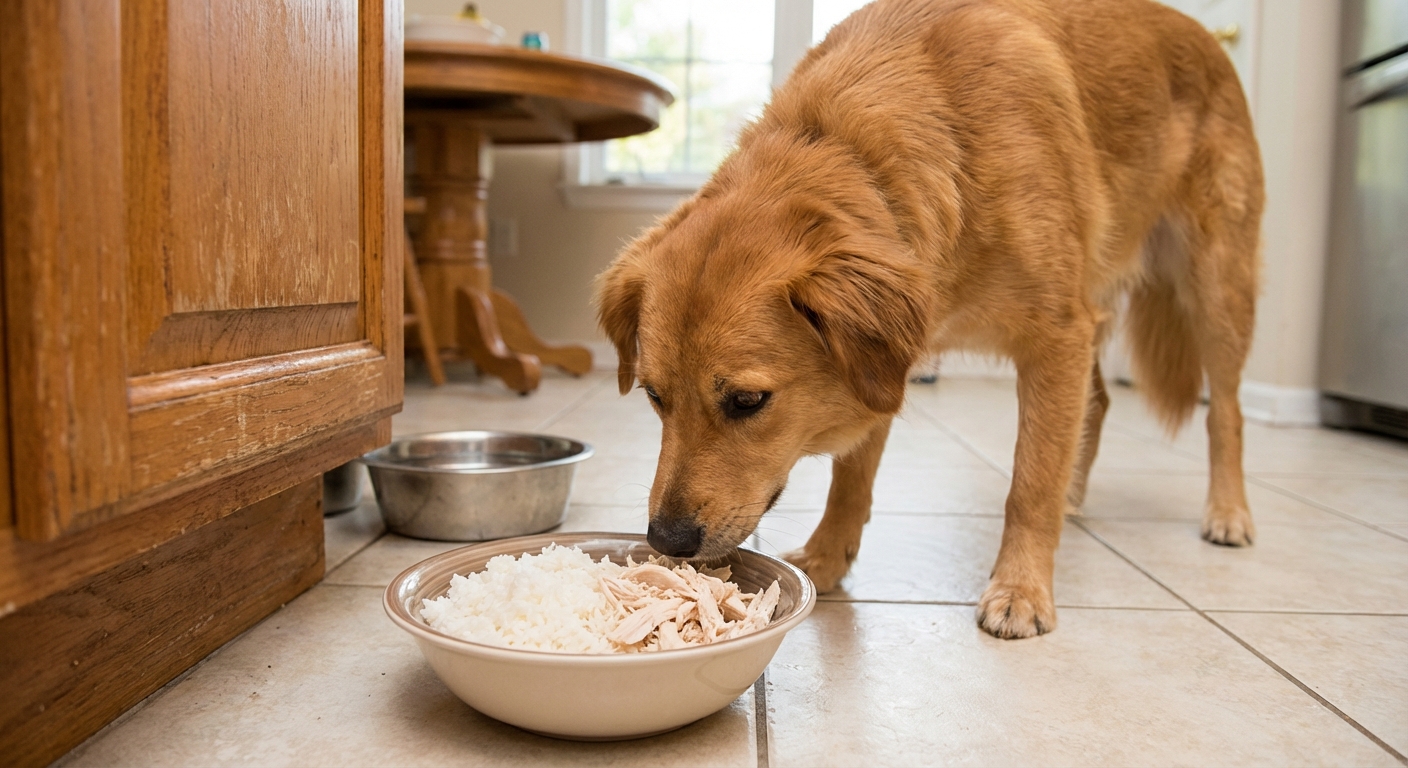
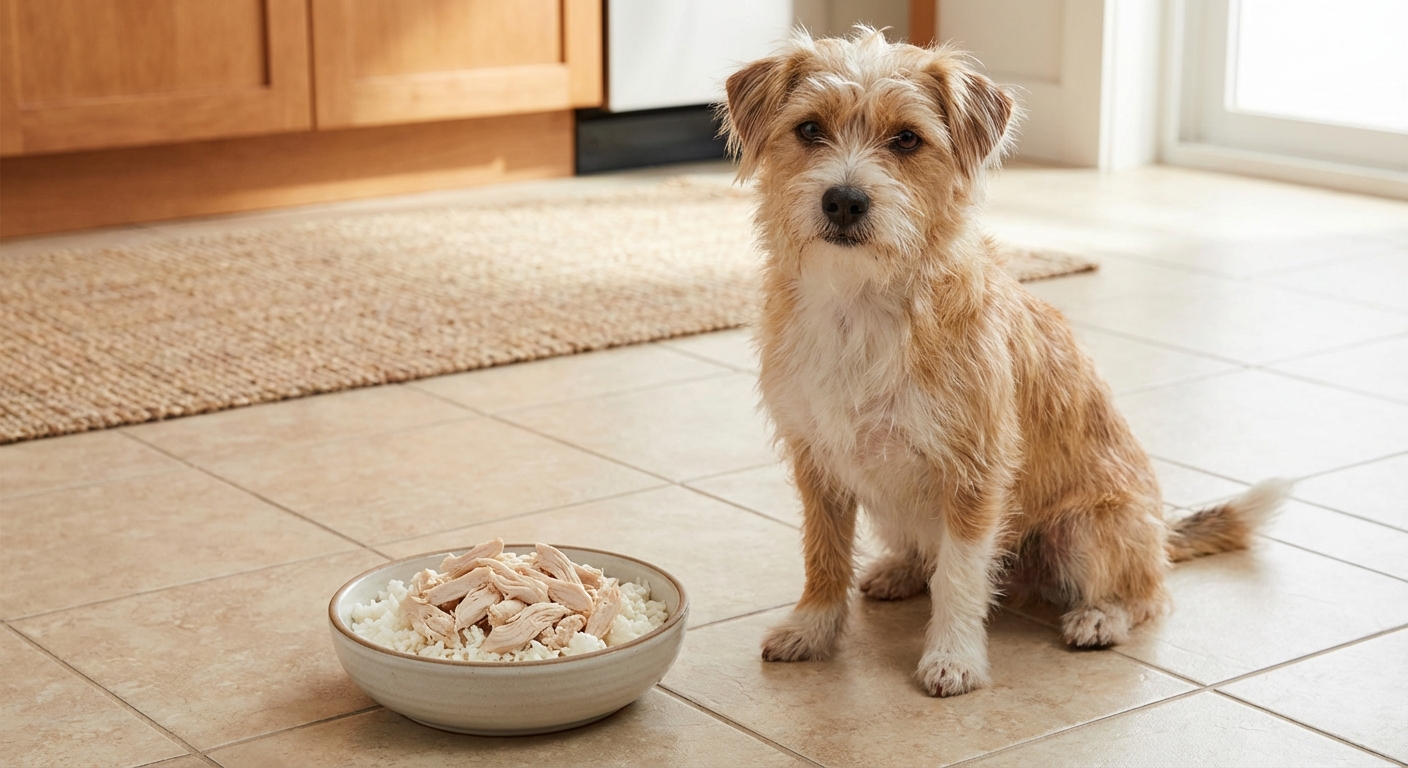
Option 1: Boiled chicken and white rice
This is a classic for a reason. Use skinless chicken breast (boiled, shredded, no seasoning) and plain white rice.
- Start with a ratio around 1 part chicken to 2 parts rice for the first day.
- Feed small meals, about 3 to 6 times per day instead of 1 to 2 big meals.
Option 2: Lean ground turkey and rice
Turkey is often well tolerated. Cook thoroughly and drain off fat. Avoid turkey seasoned for humans.
Option 3: White fish and rice (for chicken-sensitive dogs)
If chicken does not agree with your dog, plain white fish (like cod or tilapia) can be a gentle alternative. Cook it thoroughly and keep it simple, no oil, no butter, no seasoning. Serve with white rice in small meals.
Option 4: Pumpkin (plain, canned)
Plain canned pumpkin (not pumpkin pie filling) can help some dogs by adding gentle fiber. Too much can make diarrhea worse, so start small.
- Start with about 1 teaspoon per 10 pounds of body weight mixed into food once or twice daily.
- If you do not know your dog’s current weight, start with a very small amount and increase slowly only if stool improves.
If stool gets looser, reduce the amount or stop. Dogs are individuals.
Option 5: Cooked sweet potato
Plain cooked sweet potato (baked or boiled, no butter, no spices) is another fiber-rich choice many dogs tolerate well.
Option 6: A veterinary GI diet
If diarrhea is recurring, your veterinarian may recommend a prescription gastrointestinal diet. These are formulated for digestibility and nutrient balance, which can matter a lot for sensitive dogs.
Should you withhold food?
This depends on your dog’s age, symptoms, and overall health. For diarrhea without vomiting, many dogs do better with small, bland meals rather than a fast.
- Healthy adult dogs: some veterinarians may recommend a short food break (often 8 to 12 hours) in select cases, especially if there is nausea. If your dog is willing to eat and is not vomiting, starting small bland meals is often reasonable. When in doubt, ask your vet.
- Puppies and toy breeds: do not fast without veterinary guidance. They can get low blood sugar.
- Dogs with diabetes or other medical conditions: do not fast without a plan from your veterinarian.
How much to feed and how often
For diarrhea, portion control is your friend. Large meals can overwhelm an irritated gut.
A simple approach
- Offer small meals every 4 to 6 hours.
- Feed about 25 to 50 percent of your dog’s normal daily calories on day one, then increase if stool improves.
- If stool firms up within 24 hours, slowly increase the meal size and reduce frequency.
How long to stay on a bland diet
In many uncomplicated cases, stay on the bland diet until stools are normal, then continue another 2 to 3 days before you begin transitioning back to regular food.
If diarrhea worsens, vomiting starts, your dog refuses water, or your dog becomes lethargic, stop the home plan and call your veterinarian.
What to avoid during diarrhea
During a GI upset, avoid foods that are fatty, heavily seasoned, or difficult to digest.
- High-fat foods (bacon, sausage, greasy leftovers). Fat can trigger pancreatitis in some dogs.
- Dairy (many dogs are lactose intolerant when the gut is irritated).
- Rich treats and chews (bully sticks, pig ears, high-calorie training treats).
- Raw diets during active diarrhea. Raw foods can carry pathogens and are harder to manage when stool quality is already poor.
- Foods toxic to dogs: onions, grapes or raisins, xylitol, chocolate, macadamia nuts.
Probiotics and supplements
There is evidence that certain veterinary probiotics can shorten the duration of acute diarrhea in dogs, especially when diarrhea is stress-related or linked to a diet change. The key is that the evidence is strain and product specific, so it is worth asking your veterinarian what they trust and how to dose it.
Helpful options to ask your vet about
- Veterinary probiotics (made for dogs, quality controlled, clear dosing instructions).
- Prebiotic fiber in small amounts if recommended, especially for recurring soft stool.
Medication caution
Avoid giving human anti-diarrheal medications unless your veterinarian instructs you to. Common examples include:
- Loperamide (Imodium): can cause serious side effects in some dogs, and herding breeds with MDR1 sensitivity can be at higher risk.
- Bismuth subsalicylate (Pepto-Bismol): contains a salicylate, which can be risky in certain dogs and can also darken stool, making bleeding harder to spot.
If you already gave something at home, tell your vet what you gave and how much.
How to transition back to regular food
Once stool is improving, you can transition slowly. Moving too fast is one of the most common reasons diarrhea returns.
A gentle 3 to 5 day transition
- Day 1: 75% bland diet, 25% regular food
- Day 2: 50% bland diet, 50% regular food
- Day 3: 25% bland diet, 75% regular food
- Day 4 to 5: 100% regular food
If your dog has a sensitive stomach, go slower. There is no prize for rushing. The goal is a calm, stable gut.
What diarrhea can be telling you
Sometimes diarrhea is simply a one-time upset after a new treat, stress, or a trash treasure. Other times it is a clue that something bigger is happening.
Common causes
- Diet change or food intolerance
- Stress or anxiety
- Parasites (especially in puppies or newly adopted dogs)
- Viral illness
- Gut microbiome imbalance (dysbiosis)
- Inflammatory bowel disease
- Pancreatitis
- Foreign body or dietary indiscretion
If diarrhea is frequent, recurring, or your dog is losing weight, ask your veterinarian about a stool test and a more targeted plan rather than repeating bland diets over and over.
Parasites and hygiene
Some causes of diarrhea, including certain parasites and infections, can spread to other pets and sometimes to people. A few simple habits help protect everyone in the home:
- Pick up stool promptly from the yard.
- Wash hands after cleanup.
- If you have multiple pets, do not let them share poop areas during an active diarrhea episode.
- If diarrhea lasts more than a day or two, keeps coming back, or you have a new puppy or newly adopted dog, ask your veterinarian whether a fecal test is needed.
Simple home monitoring checklist
When you are deciding whether your dog is improving, track a few basics. This helps you catch problems earlier and gives your vet excellent information if you need to call.
- Stool frequency and consistency
- Any blood or mucus
- Appetite and water intake
- Energy level
- Vomiting or nausea signs (lip licking, drooling, repeated swallowing)
- Any recent diet changes, new treats, new chews, or scavenging
If your gut is telling you your dog is not acting right, trust that instinct and call your veterinarian.