A vet assistant’s step-by-step guide to spay recovery: what’s normal in the first 24 hours and week one, incision checks, activity restriction, cone opti...
Article
•
Designer Mixes
What to Expect After Your Dog Is Spayed

Shari Shidate
Designer Mixes contributor
Bringing your dog home after a spay can feel a little intimidating, even when it is a routine surgery. The good news is that most dogs recover beautifully with a calm setup, a little planning, and close observation. As a veterinary assistant, I like to tell families this: your job is not to “do more,” it is to protect the incision and keep your dog quiet long enough to heal.
This guide walks you through what is normal after a spay, what is not, and the pet-friendly tips that make recovery smoother for both of you.
The first 24 hours
Normal right after surgery
Most dogs are still feeling the effects of anesthesia the day they come home. Expect your dog to be:
- Sleepy or a little wobbly when walking
- Not very hungry at first
- Less interested in play and more interested in resting
- Quiet or slightly clingy
Some mild shivering can happen as anesthesia wears off, usually for a short time (often an hour or two). It should resolve as your dog warms up and settles. If shivering is intense,持续, or paired with pale gums or weakness, contact your veterinarian.
Feeding and water
Follow your veterinarian’s discharge instructions, but many clinics recommend a small meal the first evening. A simple approach that works for many healthy dogs is:
- Offer small sips of water first.
- If water stays down, offer a small portion of their normal food.
- Avoid rich new treats or fatty foods the first night because nausea is common after anesthesia.
If your dog vomits more than once, cannot keep water down, or seems increasingly lethargic, call your veterinarian.
Bathroom expectations
It is common for bathroom habits to be a little off after surgery. Because of anesthesia, stress, pain, and changes in routine (and sometimes IV fluids), urination can be delayed. Some dogs pee soon after getting home, while others take longer. Most dogs urinate within 24 hours.
Bowel movements may take a day or two to return to normal, especially if pain medication causes mild constipation.
Warmth and supervision
Keep your dog comfortably warm the first night, especially if they seem chilly. Use blankets and a cozy room rather than a heating pad (heating pads can cause burns unless they are veterinary-approved and closely supervised).
For the first few days, it also helps to keep your dog separated from rambunctious pets and young kids. Accidental bumps and sudden play are a common cause of sore bellies and irritated incisions.
Days 2 to 14
This is the tricky part: many dogs start acting normal within a few days, but the incision is still healing under the skin. The number one reason we see incision problems is too much activity too soon.
Energy changes
By days 3 to 5, it is common for your dog to seem brighter and ready to run, jump, or play. Plan ahead for calm alternatives because your dog will not understand why they suddenly have to take it easy.
Incision healing timeline
- Day 1 to 3: Mild swelling or bruising can be normal. The area may look slightly puffy.
- Day 4 to 7: The incision should look drier and less pink.
- Day 10 to 14: Many dogs are cleared for normal activity after healing is confirmed, depending on your veterinarian’s instructions.
Healing timelines can vary based on age, size, surgical technique, and individual recovery. Some clinics schedule a routine recheck, and others do not unless you have concerns or there are external sutures or staples to remove. When in doubt, ask your veterinarian what your dog’s specific plan should be.
Some dogs have internal sutures and glue on the skin. Others have external sutures or staples. The care is similar, but your veterinarian may schedule removal if sutures or staples are present.
Activity restrictions
Most veterinarians recommend 10 to 14 days of restricted activity. That usually means:
- No running
- No jumping on and off furniture
- No rough play with other pets
- No off-leash time
Ways to keep your dog calm
- Leash-only potty breaks: Short, boring walks are best at first.
- Use barriers: A crate, playpen, or baby gate can prevent surprise zoomies.
- Food puzzles: Lick mats, stuffed Kongs, or snuffle mats can help burn mental energy without physical strain.
- Calm companionship: Sit with your dog and offer gentle attention. Many dogs recover better when they feel safe.
Ask your veterinarian if a mild calming aid is appropriate for high-energy dogs. Never give human medications unless your veterinarian specifically instructs you to.
Cones and recovery suits
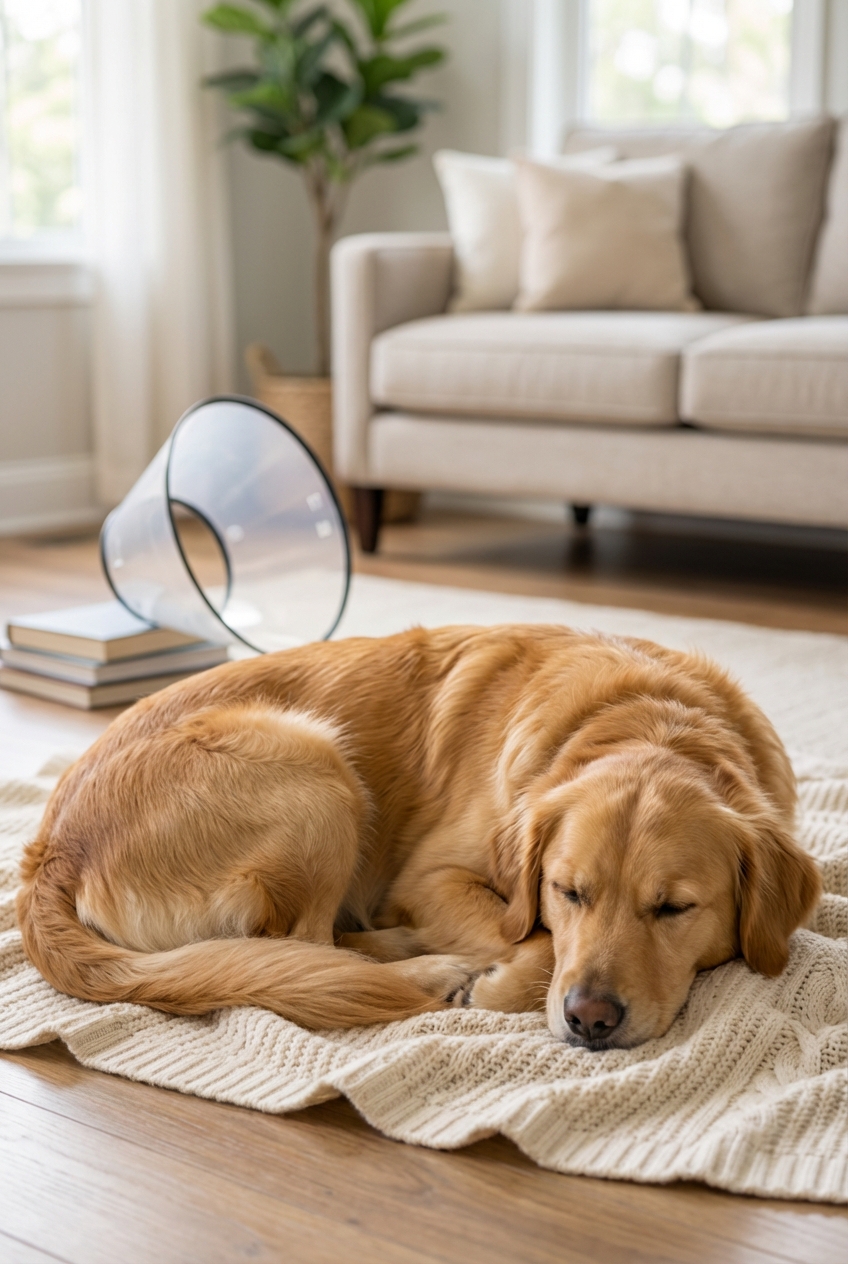
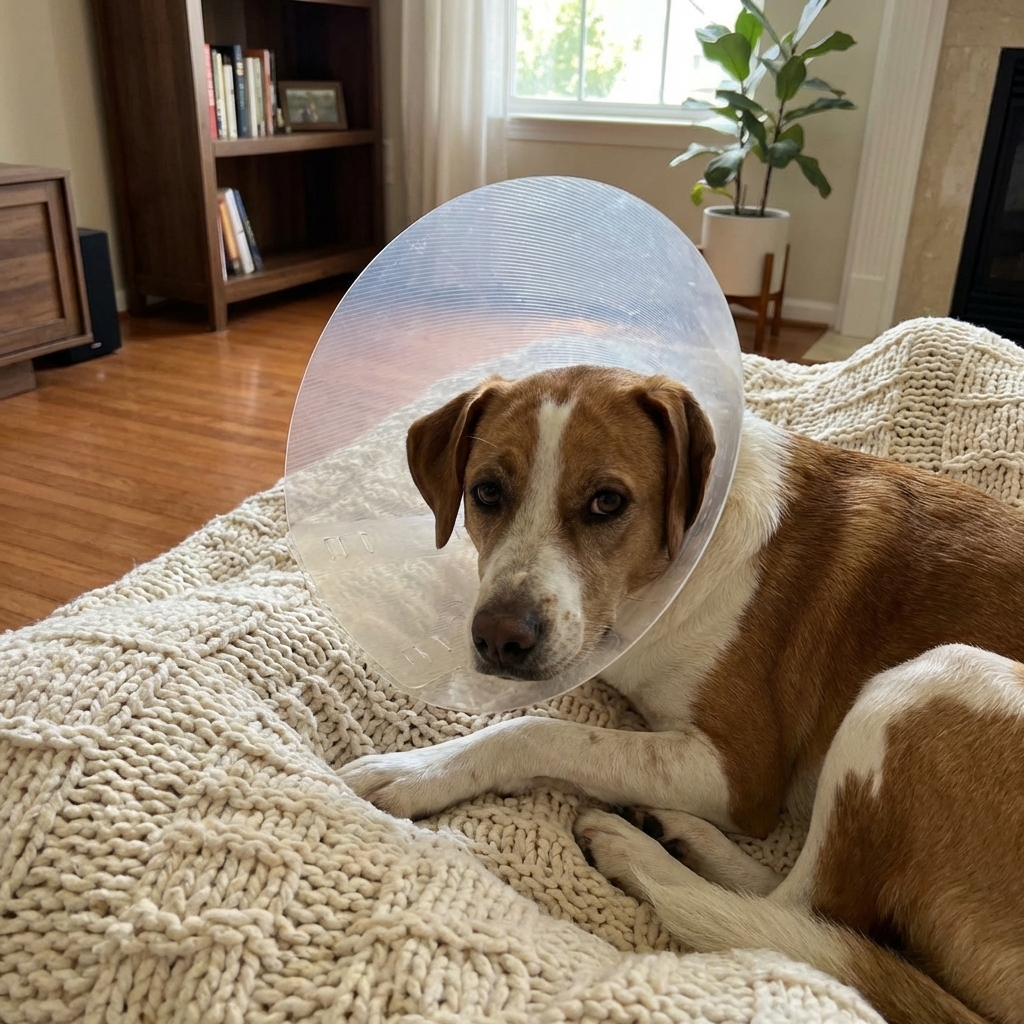
Licking is a big deal after a spay. Even a “quick lick” can introduce bacteria, loosen glue, or irritate the skin. If your dog can reach the incision, they need protection.
Important: Keep the cone or suit on 24/7 (even overnight and when you step away) until your veterinarian says the incision no longer needs protection. Many incision issues happen during a “just for a minute” break.
Your options
- E-collar (cone): Often the most reliable.
- Inflatable collar: Can work for some dogs, but it depends on body shape and flexibility.
- Recovery suit: Great for dogs who hate cones, as long as the suit stays clean and dry.
If you use a recovery suit, check the incision at least twice daily and keep the fabric from rubbing or trapping moisture.
Pain control and meds
Most dogs go home with pain medication, sometimes an anti-inflammatory, and occasionally additional meds depending on the case. Give medications exactly as directed and do not stop early unless your veterinarian tells you to.
Common side effects
- Mild sleepiness
- Decreased appetite
- Mild constipation
- Occasional nausea
Call your veterinarian if you see repeated vomiting, diarrhea, black or tarry stool, facial swelling, hives, or extreme lethargy.
Checking the incision
Take 30 seconds twice a day to look at the incision in good light, once in the morning and once at night. If your dog is wiggly, use a calm voice and offer a small reward afterward.
Usually normal
- Light pink skin along the incision line
- Mild swelling
- Mild bruising
- A small amount of clear or slightly blood-tinged seepage in the first day
Call your veterinarian if you notice
- Gapping or open areas along the incision
- Thick discharge (yellow, green, or foul-smelling)
- Heat and rapidly worsening redness
- Large swelling or a firm lump that grows quickly
- Bleeding that does not stop
- Persistent licking even with protection
Note: A small, firm lump near the incision can sometimes be a mild suture reaction or a small fluid pocket (seroma). It is still worth a call, especially if it is enlarging, warm, painful, or your dog seems unwell.
Bathing and home safety
Keep the incision dry
In most cases, you should avoid bathing until your veterinarian clears your dog, often around 10 to 14 days. Moisture can soften tissue, increase infection risk, and loosen skin glue.
Clean recovery space
- Wash bedding frequently
- Keep floors clean and dry
- Avoid dusty garages, tall grass, ponds, and dog parks until cleared
Stairs and jumping
Use a leash for short stair trips if needed, and block furniture access. For small dogs, consider lifting them carefully with support under the chest and hips, but ask your veterinarian if your dog has any special restrictions.
When to worry
Trust your gut. If your dog seems “off” in a way that worries you, it is always okay to call your veterinary team.
- Difficulty breathing
- Pale gums
- Collapse or inability to stand
- Rapidly enlarging abdomen or a distended, painful belly
- Continuous vomiting
- Not eating for more than 24 hours (especially in small dogs) or not drinking
- No urination within 24 hours
- Signs of severe pain like crying, trembling, or refusing to move
If you are ever unsure, take a photo of the incision in good lighting and send it to your veterinarian if they allow it. It can be very helpful for quick guidance.
Helping your dog feel better
Here are a few simple, pet-friendly comforts that make a real difference:
- Set up a quiet “recovery nest” away from busy doorways and excited kids or other pets.
- Stick to a routine for meds, potty breaks, and meals.
- Offer enrichment that does not involve running: sniffing games, gentle training like “touch,” or a chew approved by your veterinarian.
- Keep it calm for a full two weeks, even if your dog feels amazing by day four.
Spaying is one of the most loving preventive choices many families can make, and a calm recovery helps ensure your dog gets all the benefits with as few bumps in the road as possible.