A vet assistant’s step-by-step guide to spay recovery: what’s normal in the first 24 hours and week one, incision checks, activity restriction, cone opti...
Article
•
Designer Mixes
What To Expect After Your Dog Is Spayed

Shari Shidate
Designer Mixes contributor
Bringing your dog home after a spay can feel a little intimidating, especially if it is your first time caring for a pet after surgery. The good news is that most dogs recover smoothly with simple, consistent home care. In this article, I will walk you through what is normal, what is not, and exactly how to help your pup heal comfortably and safely.
Quick note: Always follow your clinic’s discharge sheet first. Spays can be done with different techniques (traditional abdominal incision, laparoscopic spay, and in some areas flank spay), and the recovery plan can vary a bit.
The first 24 hours
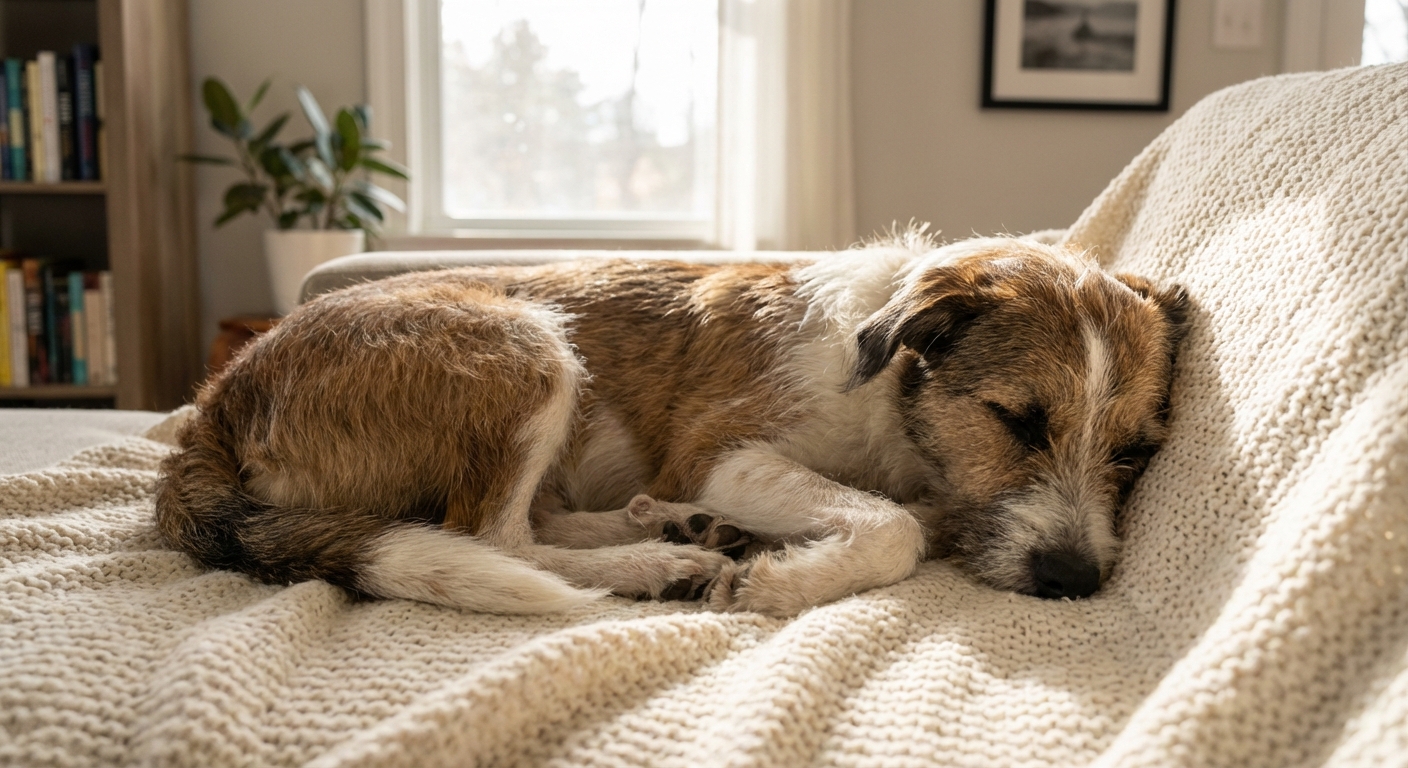
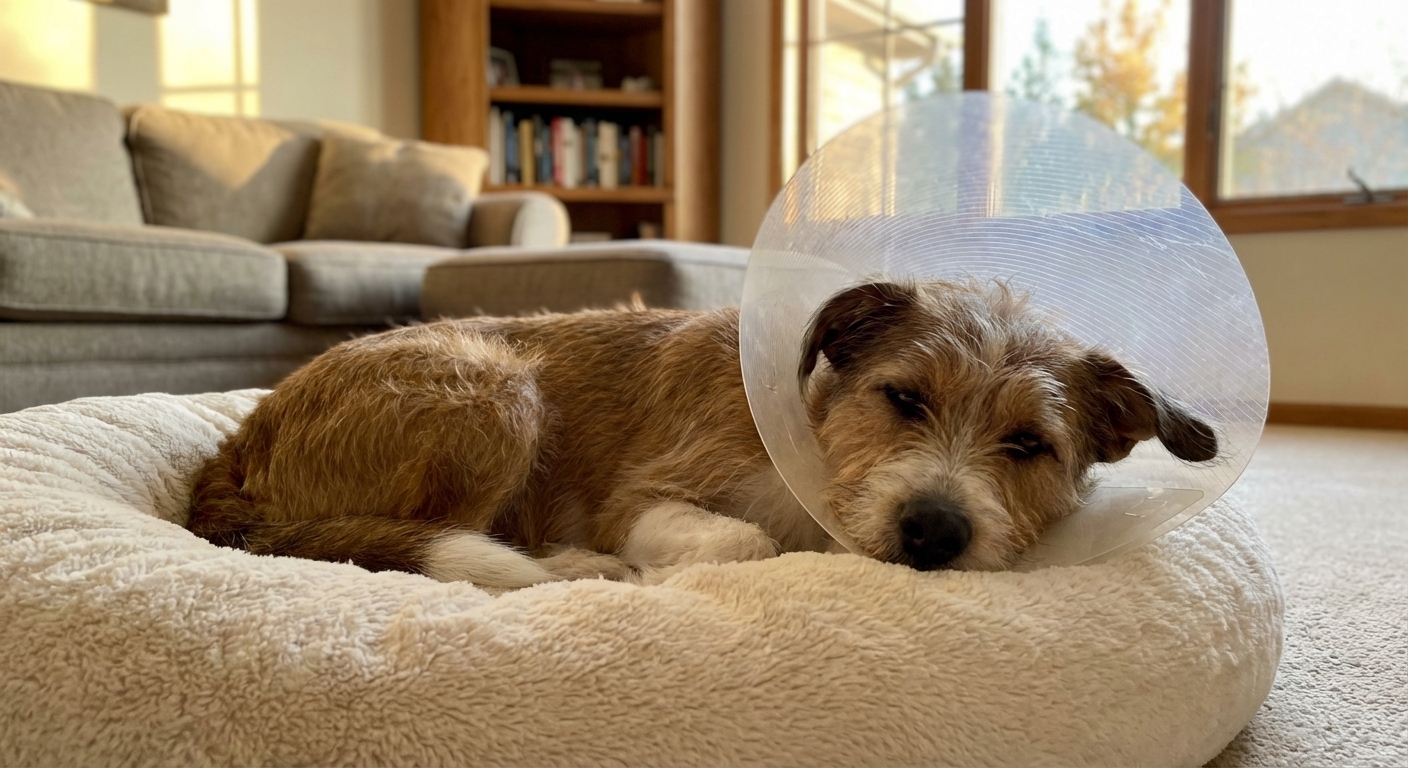
Spay surgery is a major procedure, and anesthesia effects can linger into the next day. Expect your dog to be quieter than usual.
What is normal
- Sleepiness and low energy for the rest of the day.
- Mild whining or restlessness as the anesthesia wears off.
- Wobbly walking or seeming a little “spacey.”
- A smaller appetite the first night.
- A mild cough for a day or so if a breathing tube irritated the throat.
How to help
- Keep her warm and quiet. Set up a cozy recovery spot away from kids, other pets, and stairs. Avoid heating pads unless your veterinarian told you to use one. Burns can happen faster than you think.
- Offer small amounts of water. Too much too fast can cause vomiting.
- Feed a small meal if your vet says it is okay. Many clinics recommend half the usual dinner the first night.
- Leash walk only for potty breaks.
Practical tip: If your dog is nauseated, do not panic. Skip food for a few hours, offer a few sips of water, and follow your discharge instructions. If vomiting continues, contact your clinic.
Cough note: A little cough can be normal. If coughing worsens, your dog is gagging repeatedly, or you notice any breathing changes, call your veterinarian.
Incision care: what to look for
Your dog’s incision should look clean and dry. Mild swelling and bruising can be normal, especially in the first few days.
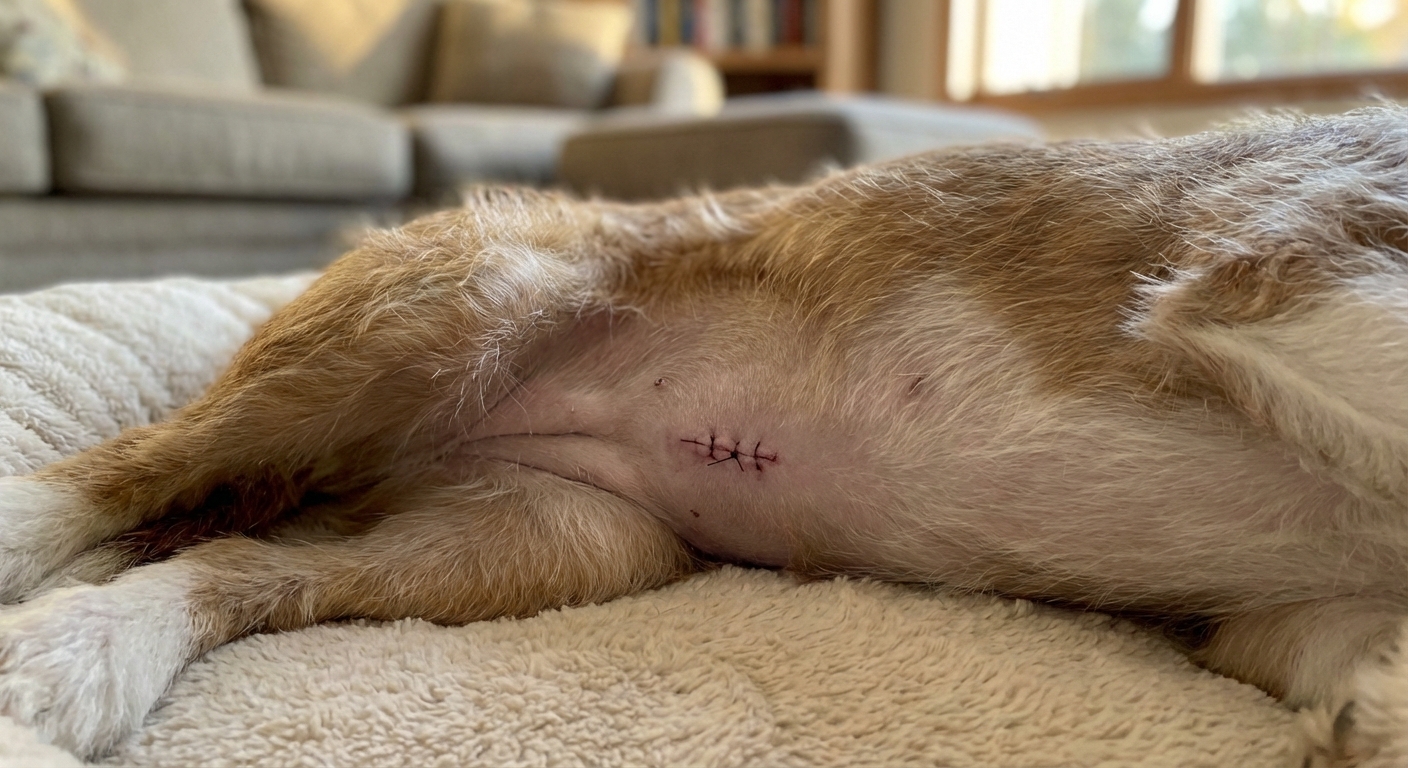
Normal incision changes
- Slight redness right along the incision line.
- Mild swelling around the site.
- Small amount of bruising, which can look purple or yellow as it fades.
- A tiny scab as the skin heals.
Not normal: call your vet
- Gapping or open incision.
- Thick discharge (yellow, green, or foul-smelling).
- Active bleeding or blood soaking the fur.
- Rapidly increasing swelling, especially a firm lump.
- Heat around the incision or worsening redness spreading outward.
Important: Do not clean the incision with peroxide, alcohol, or ointments unless your veterinarian specifically instructed you to. Many “helpful” products actually delay healing or cause irritation.
Sutures and staples: If your dog has external sutures or staples, do not let her chew at them. Even dissolvable sutures can be damaged by licking, and some absorbable stitches can loosen sooner than intended if the area stays wet.
Activity restrictions (yes, they matter)
This is the part that surprises many families. Your dog may feel better after a few days and act totally normal. Internally, she is still healing.
Typical restriction timeline
Most veterinarians recommend 10 to 14 days of limited activity after a spay. Some dogs, especially very active adolescents, need the full two weeks. Your timeline may be a little different with laparoscopic or flank spays, so follow your clinic’s instructions.
What to avoid
- Running, wrestling, and playing chase.
- Jumping on and off furniture.
- Stairs when possible.
- Bathing or swimming until cleared by your vet.
Safe ways to keep your dog calm
- Short, slow leash potty breaks.
- Food puzzles that do not encourage body-slamming or jumping.
- Sniffing games like scattering kibble in a snuffle mat.
- Calm chew time (ask your vet for the best options for your dog).
If your clinic prescribed a sedative or anti-anxiety medication for recovery, use it exactly as directed. It is not “overkill.” It is often the reason a high-energy dog avoids complications.
Pain control and medications
Most spay patients go home with pain medication. Some dogs are also sent home with an antibiotic depending on the clinic and the patient, but many routine spays do not require take-home antibiotics. Giving meds correctly is one of the best things you can do for healing.
Common medication tips
- Stick to the schedule. Pain is easier to prevent than to “catch up” to.
- Give with food if instructed, since some medications can upset the stomach.
- Never give human pain relievers like ibuprofen or naproxen. Acetaminophen is sometimes used in dogs only under strict veterinary direction and dosing, so do not give it unless your veterinarian specifically told you to.
Side effects to watch for
- Vomiting or diarrhea
- Refusing food for more than a day
- Extreme sedation or agitation
- Facial swelling, hives, or sudden itching (possible allergic reaction)
If you are seeing side effects, contact your veterinarian. Often, they can adjust the medication or dosing to keep your dog comfortable.
The cone, suit, or donut: stopping licking is non-negotiable
Licking and chewing are some of the fastest ways to turn a normal incision into a stressful situation. A determined dog can irritate the skin, loosen sutures, or introduce bacteria quickly.
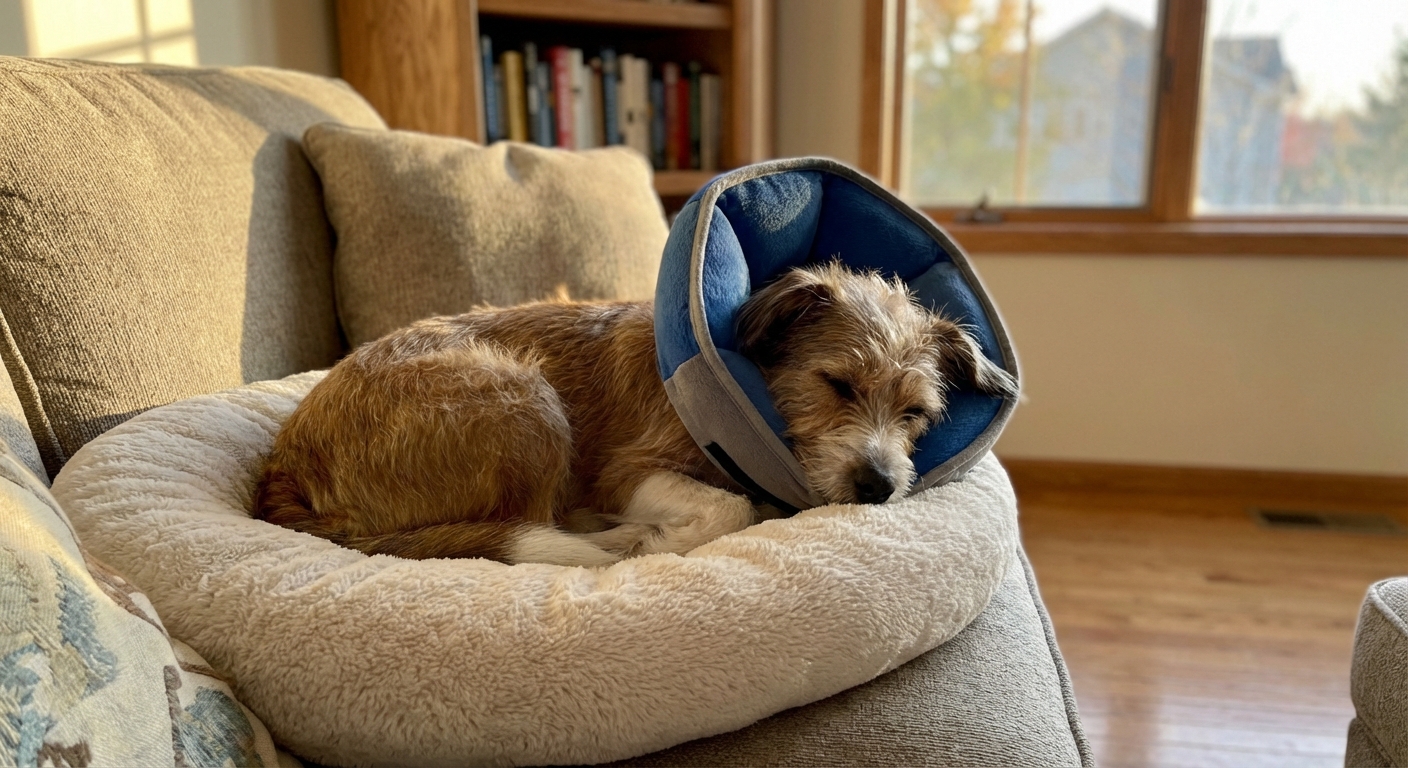
Options that may work
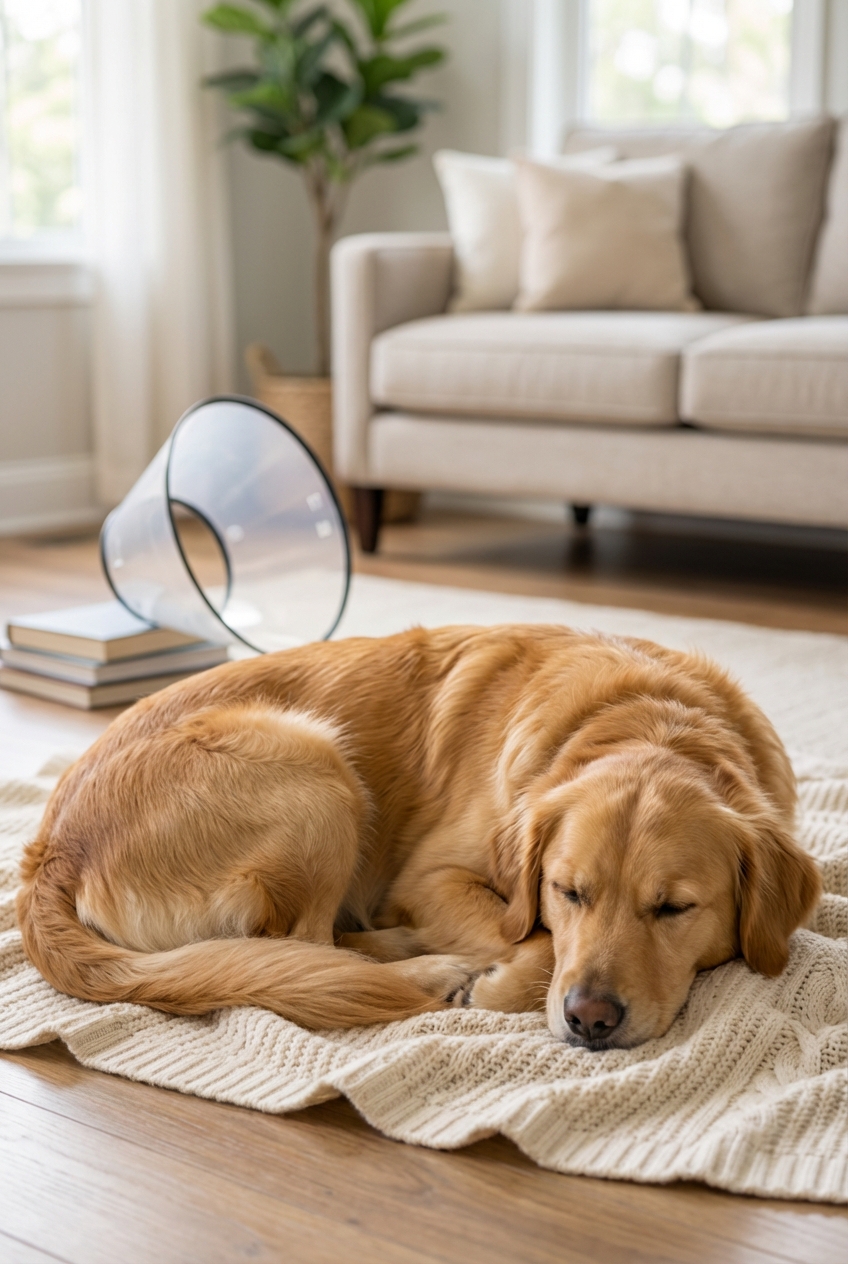
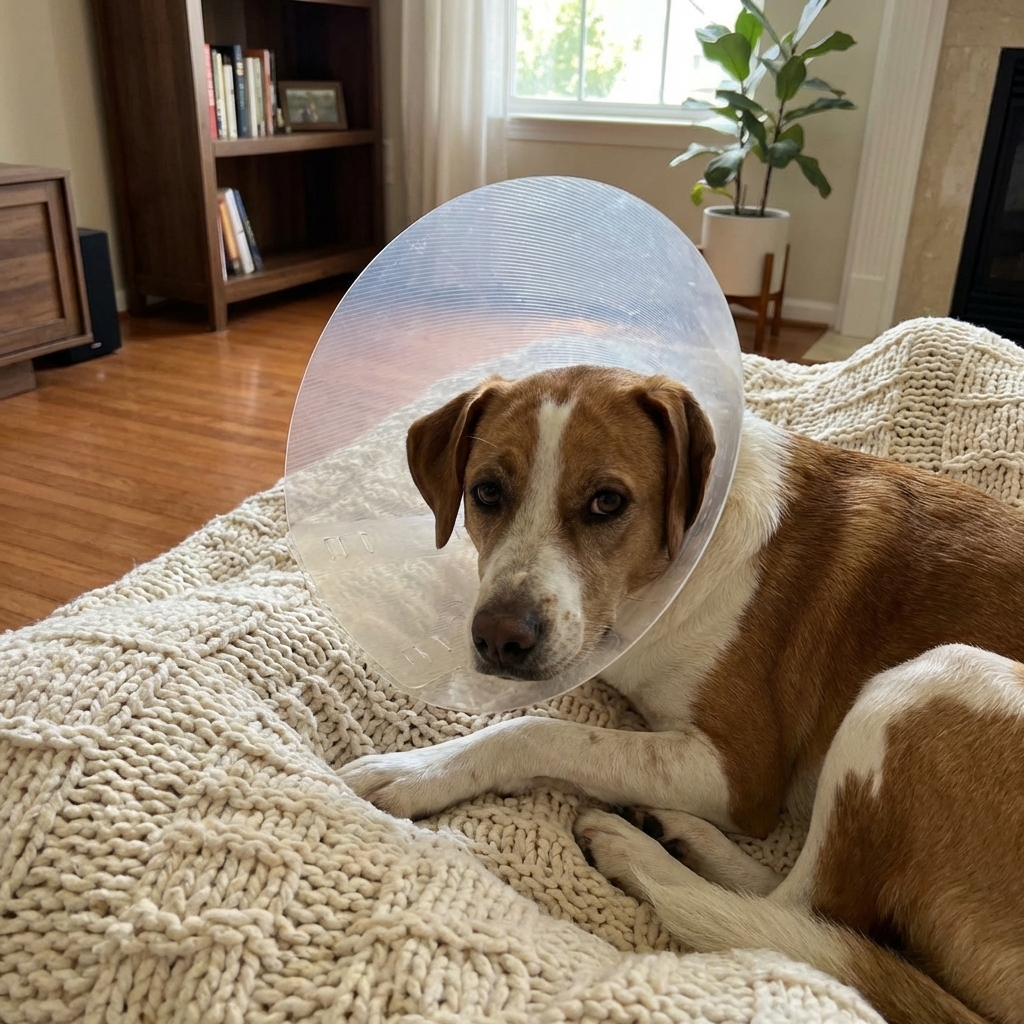
- Plastic e-collar (cone): Most reliable for many dogs.
- Soft cone: Often more comfortable, but some dogs can still reach the incision.
- Inflatable collar: Works well for some body shapes, not all.
- Recovery suit: Great for dogs who tolerate clothing, but it must stay clean and dry.
Rule of thumb: If your dog can reach the incision even once, that option is not enough for her.
How long to keep it on: Most dogs need cone or suit protection for the full restriction period (often 10 to 14 days), or until your vet clears her at a recheck.
Bathroom changes and appetite
It is very common to see small, temporary changes in eating and bathroom habits after surgery.
Constipation after spay
Your dog may skip a bowel movement for a day or two due to anesthesia, stress, lower food intake, and pain meds. This is usually temporary.
- Encourage hydration.
- Take a few short leash walks to stimulate the gut.
- Ask your vet before adding anything like pumpkin or fiber supplements, especially if your dog is on medications.
Urination
Some dogs urinate less the first day if they are sleepy and not drinking much. If your dog is straining, crying while urinating, or cannot urinate, call your vet immediately.
Spotting or discharge
Depending on where your dog was in her heat cycle, you may see a small amount of light spotting or mild vulvar discharge after surgery. This should be minimal and short-lived. If you see heavy bleeding, discharge with a strong odor, or anything that continues or worsens, contact your clinic for advice.
Day-by-day recovery: a realistic timeline
Days 1 to 2
- Sleepiness, mild grogginess
- Lower appetite possible
- Short leash potty breaks only
Days 3 to 5
- Energy starts coming back
- Incision may look slightly more bruised as bruising “blooms”
- This is when many dogs try to resume normal activity, so supervision matters
Days 6 to 10
- Most dogs feel much more normal
- Continue restrictions and anti-lick protection
- Incision should be dry, less red, and less swollen
Days 10 to 14
- Many dogs are cleared for gradual return to activity after a recheck or per your discharge plan
- Some dogs have dissolvable sutures, others need suture or staple removal
Always follow your clinic’s timeline, even if your dog seems “totally fine.” When complications happen, it is often because a dog felt better before her body was finished healing.
Red flags: when to call your vet right away
If you are ever unsure, it is okay to call. Veterinary teams would rather help early than treat a bigger issue later.
- Repeated vomiting or diarrhea
- Refusing food more than 24 hours
- Collapse, extreme weakness, pale gums
- Swollen abdomen or obvious pain
- Incision opening, discharge, or strong odor
- Fever (if you were instructed how to check)
- Heavy panting or trouble breathing not related to excitement
- Worsening cough, gagging, or any breathing changes
Your dog does not have to look “dramatically sick” to need help. Trust your instincts. If something feels off, call your veterinarian.
Helping your dog heal faster at home
Healing is not about doing something fancy. It is about doing the basics consistently.
- Quiet recovery space: soft bedding, low stress, and no roughhousing.
- Leash-only potty breaks: even in the backyard.
- Reliable incision protection: cone, suit, or both if needed.
- Good nutrition and hydration: follow your vet’s feeding guidance, keep fresh water available.
- Recheck appointment: do not skip it, even if things look great.
If you have a doodle or fluffy mix, ask your clinic if the shaved area needs special attention as hair grows back. Mats can form easily around collars or suits if the coat is prone to tangles.