A practical after-neuter care guide: what to expect, incision care, cone vs recovery suit, 7–14 day activity restrictions, calming enrichment, meds, and ve...
Article
•
Designer Mixes
What to Expect After Your Dog Is Neutered

Shari Shidate
Designer Mixes contributor
Neutering is one of the most common procedures we do in veterinary medicine, and most dogs recover smoothly with a little planning and a lot of calm, quiet rest. Still, it can be stressful to bring your pup home and wonder, “Is this normal?”
This quick guide walks you through what to expect after your dog is neutered, what’s normal, what’s not, and how to help your dog heal comfortably.
The first 24 hours
Sleepiness and grogginess
Most dogs are sleepy, wobbly, and a bit “out of it” after anesthesia. This typically improves steadily over the first night.
- Normal: Sleeping more than usual, mild disorientation, moving slowly, less interest in play.
- Call your vet today if: Your dog cannot stand, collapses, seems extremely weak, has trouble breathing, or is not improving several hours after arriving home.
Appetite changes
It is very common for dogs to have a smaller appetite the evening after surgery. Many clinics recommend a small meal that night, then a normal breakfast the next day if there is no vomiting.
- Normal: Eating less at dinner, mild nausea, skipping one meal.
- Call your vet today if: Vomiting repeatedly, cannot keep water down, or refuses food into the next day.
Bathroom habits
Your dog may urinate less the first evening because they have not been drinking much. A bowel movement can also be delayed 24 to 48 hours due to fasting, anesthesia, and pain medication.
- Normal: No poop the first day, smaller stools, slightly softer stool.
- Call your vet today if: Straining, crying when trying to urinate, blood in the urine, or no urination within about 12 hours of getting home (or sooner if your clinic gave you a different cutoff).
Days 2 to 3
Energy comes back
This is the tricky part. Many dogs feel better fast and want to run, jump, wrestle, and zoom around. The incision, however, needs time to heal.
Plan for strict rest even if your dog acts totally fine. A common recommendation is 10 to 14 days of restricted activity, but your veterinarian’s instructions should always override any general timeline. Some neuters (like a retained testicle or other complications) require a longer recovery.
Mild swelling and bruising can be normal
It is common to see a small amount of swelling at the incision line or mild bruising around the surgical area. Some dogs have a little redness from normal inflammation.
Where is the incision? In most routine male dog neuters, the incision is usually just in front of the scrotum (pre-scrotal), not on the scrotum itself. Even so, some dogs develop mild scrotal bruising or swelling, especially if they are larger, very active, or had a bit more tissue handling during surgery.
- Normal: Mild swelling, mild bruising, incision edges closed and dry.
- Call your vet today if: Spreading redness, thick discharge, a gaping incision, a strong odor, sudden large swelling (including a rapidly enlarging scrotum), or significant pain.
Days 4 to 7
Itching and licking temptations
As the incision heals, it can feel itchy. That itch is one reason many dogs suddenly become obsessed with licking the area. Licking is one of the fastest ways to cause infection or open the incision.
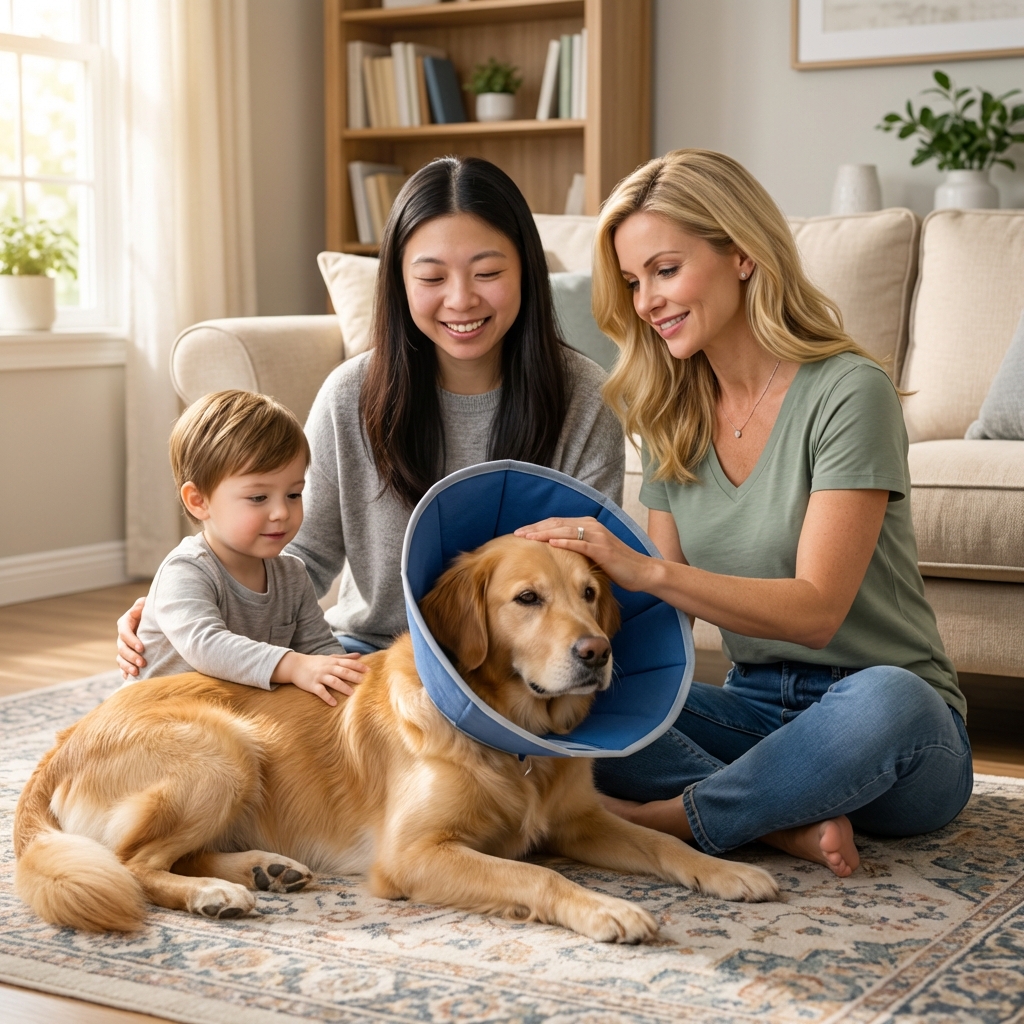
- Use an E-collar (cone) or a vet-approved recovery collar or suit as directed.
- In most cases, plan for the cone to stay on 24/7 when you cannot directly supervise, and many dogs need it on full time until the vet clears the incision.
Activity should still be limited
Many clinics recommend 10 to 14 days of restricted activity. That usually means:
- Short leash potty breaks only
- No running, jumping on furniture, or stairs if you can avoid them
- No rough play with other dogs
- No bathing or swimming until cleared by your clinic
Keep the incision clean and visible
Less is more with incision care.
- Do not apply ointments, sprays, peroxide, alcohol, or disinfectants unless your veterinarian specifically told you to.
- Avoid bandages unless your clinic placed one. Most incisions heal best when they can stay clean, dry, and easy to monitor.
- Try to keep the area dry. That includes avoiding mud, puddles, and wet grass when possible. If your dog gets a little dirty outside, wipe paws and belly gently with a damp cloth and keep the incision itself dry.
Medication routines matter
If your vet sent home pain medication or anti-inflammatory medication, give it exactly as prescribed. Do not substitute human medications like ibuprofen, naproxen, or acetaminophen unless your veterinarian specifically instructs you to do so.
Days 8 to 14
The incision should improve daily
By the second week, most incisions look calmer, less pink, and more sealed. Some clinics use dissolvable sutures under the skin, others use visible skin sutures or staples that must be removed.
- Follow your discharge instructions about recheck appointments and suture removal. Many rechecks happen around 10 to 14 days, but clinics vary.
- Continue to prevent licking until your veterinarian says it is safe.
Return to normal activity
After your clinic clears your dog, you can gradually return to normal routines. Start with calm walks and build back up to full play over several days.
What the incision should look like
Every dog and every surgical technique is a bit different, but here are general signs of a healthy healing incision:
- Closed edges that stay together
- Dry, or with only a tiny amount of clear or pink-tinged seepage in the first 12 to 24 hours
- Mild pinkness that improves over time
- No thick discharge
- No foul smell
Call your clinic if the incision stays wet, is dripping, or you see any discharge that is yellow, green, cloudy, or bloody.
If you are unsure, take a clear photo in good lighting and call your veterinary clinic. They would much rather reassure you early than treat an infection later.
Not normal: call your vet
Reach out to your veterinarian today if you notice any of the following:
- Bleeding that does not stop with gentle pressure
- Incision opening, missing sutures, or visible tissue
- Yellow, green, cloudy, or thick discharge
- Rapidly increasing swelling or a painful hard lump (including sudden, large scrotal swelling)
- Severe lethargy, refusal to get up, or worsening weakness
- Repeated vomiting, diarrhea, refusal of water, or signs of dehydration
- Signs that can suggest fever, such as feeling unusually warm plus low energy, shivering, or not wanting to eat (if you have a rectal thermometer, ask your clinic what temperature cutoff they use for concern)
- Go to an emergency clinic now: Labored breathing, pale gums, collapse, or facial swelling
If your gut says something is off, trust that instinct and call. You know your dog’s normal best.
Make recovery easier at home
Create a quiet recovery space
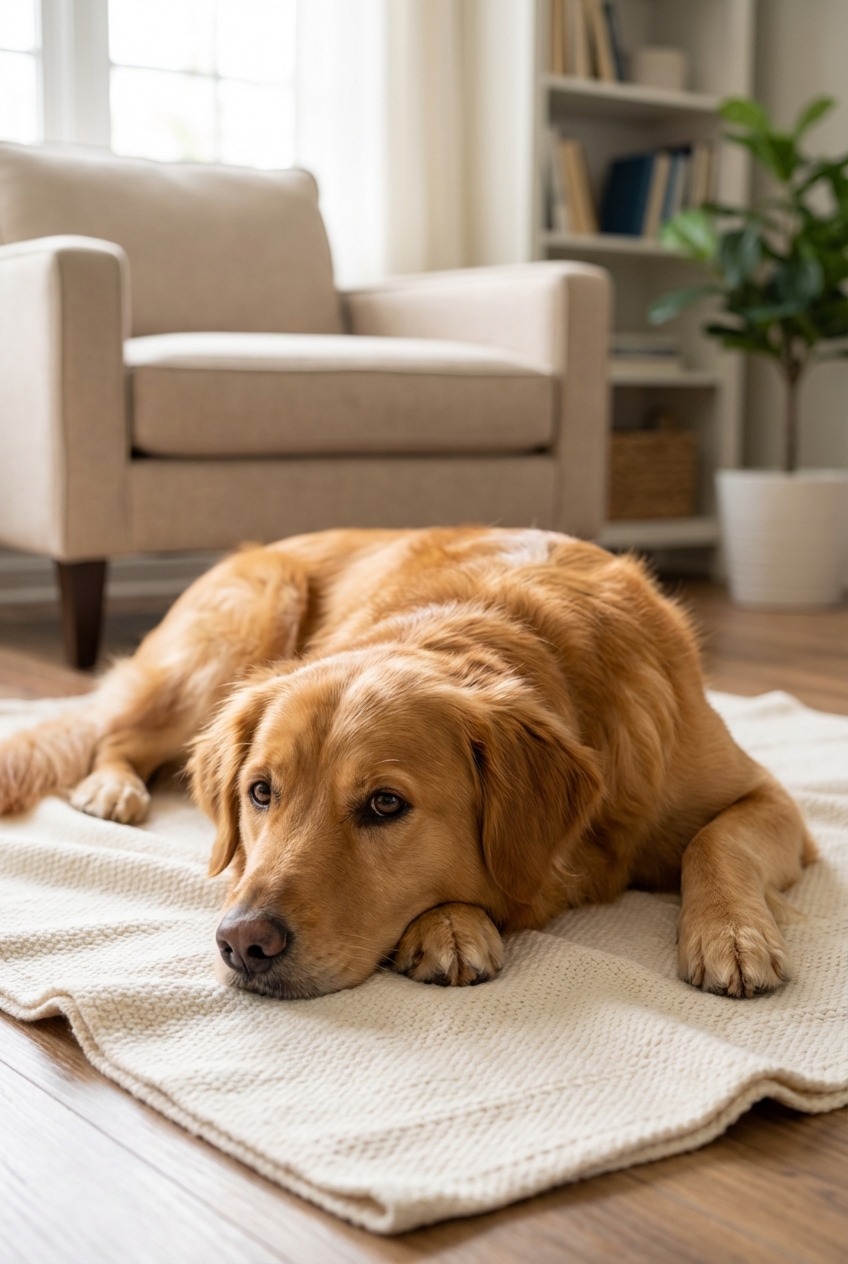
Choose a cozy, low-traffic area. Keep things simple: soft bedding, water nearby, and minimal excitement.
Leash walks only
Even if you have a fenced yard, use a leash for potty breaks during the restriction period. It prevents sudden sprints and jumps that can stress the incision.
Use calm enrichment
When your dog cannot exercise the usual way, boredom can lead to whining, pacing, or trying to lick the incision. Gentle enrichment helps.
- Frozen Kongs (vet-approved ingredients)
- Snuffle mats
- Scatter feeding in a small area
Feed a tummy-friendly plan
If your dog’s stomach seems sensitive after anesthesia, ask your vet if a bland diet for a day is appropriate. In general, keep treats minimal and avoid sudden diet changes during recovery.
Behavior changes
Some dogs are clingy after surgery, while others want space. Either can be normal. Over the long term, neutering may reduce roaming and some hormone-driven behaviors, but it is not an instant personality change.
Also, keep in mind that some dogs gain weight after neutering if their calorie intake stays the same. Calorie needs may decrease after neutering, and activity often drops during recovery. The fix is simple and kind: watch body condition, adjust portions if needed, and keep up with healthy movement once cleared.
Quick checklist
- Keep cone or recovery gear on as directed (often 24/7 when unsupervised)
- Restricted activity for 10 to 14 days, or your vet’s timeline
- Check the incision twice daily
- Keep the incision clean, dry, and free of licking
- Give medications exactly as prescribed
- No baths or swimming until cleared
- Call your vet today if swelling, discharge, odor, vomiting, or lethargy worsens