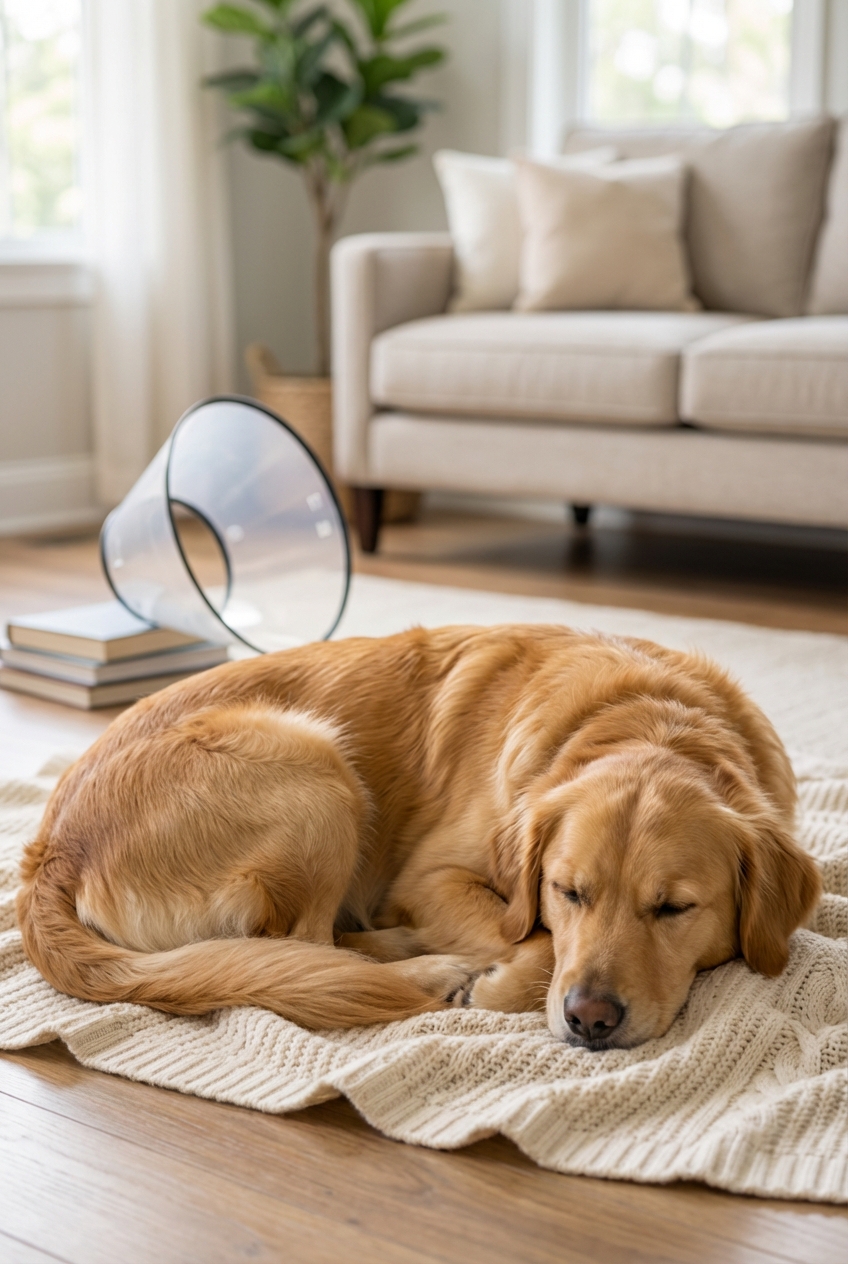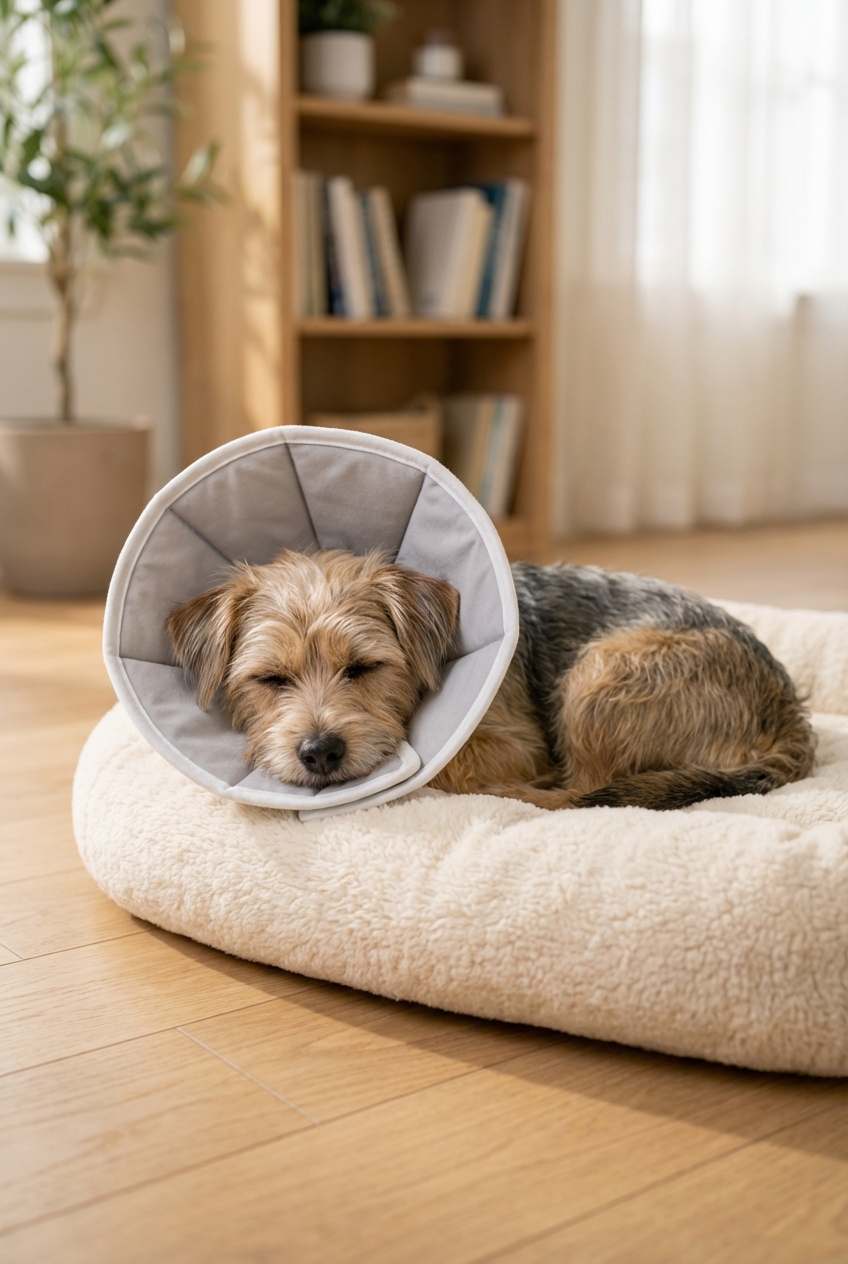
Bring your dog home after a spay with confidence. Learn what’s normal, how to manage pain meds, protect the incision with a cone, limit activity for 10–1...
Article
•
Designer Mixes
What to Expect After Your Dog Gets Spayed

Shari Shidate
Designer Mixes contributor
Spaying is one of the most common surgeries in veterinary medicine, and for most dogs it is a smooth, predictable recovery. Still, it can feel scary the first time you bring your dog home and she is sleepy, wobbly, and not quite herself. I am Shari Shidate, a veterinary assistant in Frisco, Texas, and I want you to feel confident about what is normal, what is not, and how to make healing as calm and comfortable as possible.
Quick note: Always follow your veterinarian’s discharge instructions first, especially if your dog has other health conditions or if she had a more complex surgery. If something in this article conflicts with your clinic’s guidance, call your vet and use their plan.
Right after surgery: first 24 hours
What you will probably see
- Sleepiness and grogginess from anesthesia for the rest of the day.
- Wobbly walking or mild disorientation, especially when first getting up.
- Less appetite the first evening is common. Some dogs skip dinner entirely.
- Mild whining or restlessness can happen as anesthesia wears off.
What to do at home
- Keep her warm, quiet, and supervised. A calm room, soft bedding, and dim lights help.
- Offer small amounts of water. If she gulps and vomits, pause and offer again later in smaller sips.
- Feed a small meal only if your vet says it is okay. Many clinics recommend half a normal portion the first night.
- Carry or leash-walk for potty breaks. No free roaming in the yard on day one.
- Give pain medication exactly as prescribed. Do not add human medications unless your veterinarian specifically instructs you to. Common over-the-counter pain relievers for people (especially ibuprofen and naproxen) can be dangerous for dogs.
Call your vet urgently if you notice
- Repeated vomiting, severe diarrhea, or a swollen belly
- Very pale gums, collapse, or extreme weakness
- Bleeding that soaks the incision area
- Labored breathing or persistent coughing
The first week
Most dogs start acting more like themselves within 24 to 48 hours, but the incision is still fresh and needs protection. Your job this week is simple: prevent licking, keep activity low, and check the incision regularly.
Incision care basics
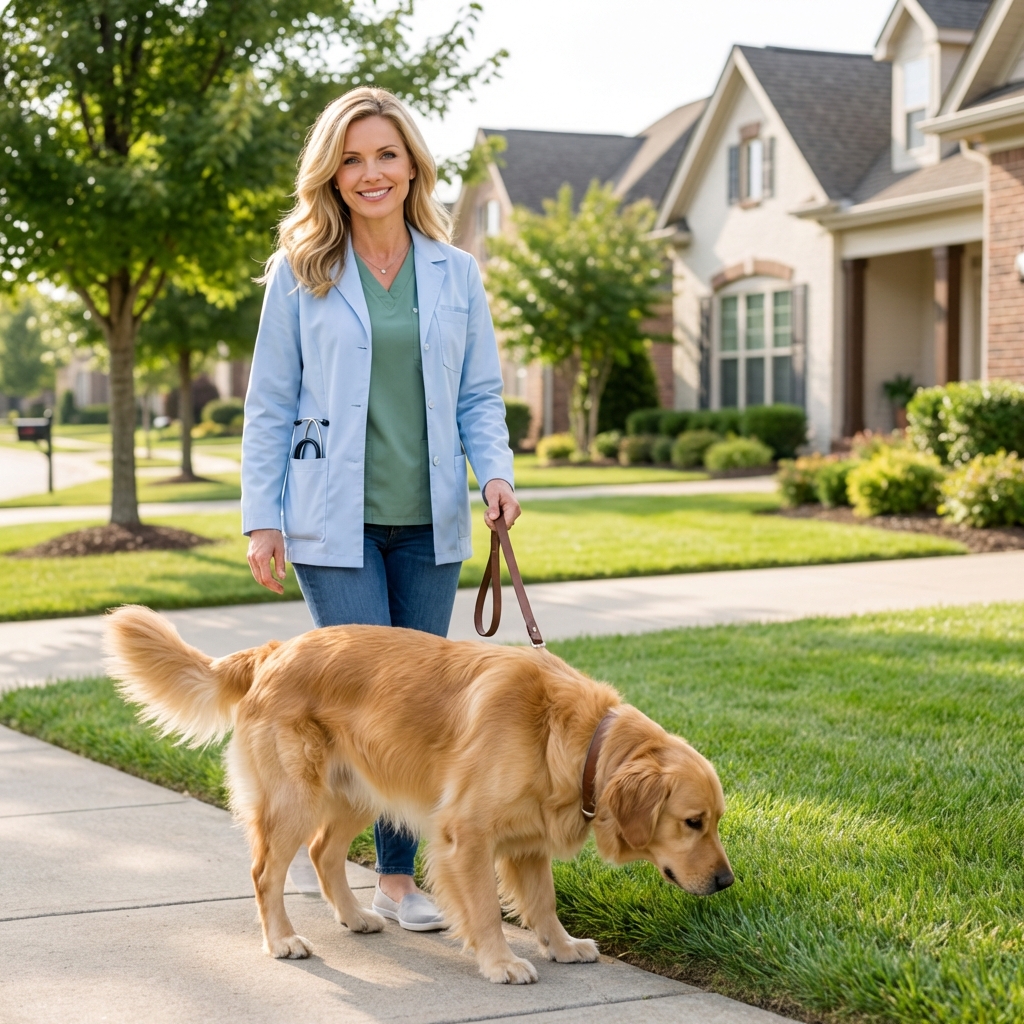
- Keep it clean and dry. Avoid baths, swimming, and muddy play until your vet clears it.
- Do not clean or apply ointments unless instructed. Skip hydrogen peroxide, alcohol, powders, and topical antibiotics unless your clinic told you to use them. These can irritate tissue or slow healing.
- Check the incision 1 to 2 times per day. Good lighting helps. You are looking for small changes so you can catch problems early.
- If you see dried blood or a little crusting, do not scrub it. Take a clear photo and call your clinic for advice.
- Closure methods vary. Your dog may have skin glue, external stitches, staples, or a fully internal closure. Your vet will tell you what to expect and whether a recheck is needed.
Normal incision changes
- Mild redness along the incision line for a few days
- Minor swelling or a small firm lump under the skin, especially near the center of the incision
- Light bruising around the surgical area, more common in light-skinned dogs
- A clean, dry incision with edges touching, not gaping
Not normal
- Open gaps or visible tissue
- Yellow, green, or foul-smelling discharge
- Heat, increasing redness, or rapidly increasing swelling
- Bleeding that continues or new bleeding after it had stopped
Common behavior changes
- Clinginess or wanting to be near you more than usual
- Grumpiness when picked up or when other pets get too close
- Low energy on and off for a few days
- More energy than you want once she feels better, which is why restrictions matter
Common complications (plain language)
- Seroma: a pocket of fluid under the incision that can look like a soft or squishy swelling. It is often linked to too much activity. Call your vet for guidance.
- Infection: worsening redness, heat, pain, or discharge. Do not wait it out.
- Dehiscence: the incision opening. This is urgent.
Activity restrictions
Spay surgery is abdominal surgery. Even if the skin looks fine, deeper tissue is still knitting together. Too much activity is one of the biggest reasons incisions open or develop swelling.
For 10 to 14 days (or your vet’s timeline)
- Leash walks for potty breaks only
- No running, jumping, zoomies, wrestling, or rough play
- No off-leash yard time unless your vet approves and you can prevent sprinting
- No stairs if you can avoid them (or go slowly on a short leash)
- No bathing or swimming until cleared (water can loosen skin glue, macerate skin, and raise infection risk)
Home setup tips
- Block jumping. Use baby gates and keep your dog off couches and beds if she likes to launch up and down.
- Make potty trips boring. Short leash, quiet praise, then straight back inside.
- Assist on steps if you cannot avoid them. Use a harness or support under the chest and belly as needed.
- Car rides: use a crate or seatbelt harness so she cannot stand, pace, or jump around.
Keep an active dog calm
- Low-movement enrichment: food puzzles, snuffle mats, lick mats, frozen Kongs (ask your vet about diet adjustments).
- Mini meals to keep her occupied.
- Calm training: “place,” “touch,” or gentle scent games in one room.
- Crate rest or an exercise pen if your dog struggles to settle.
Cone and lick prevention
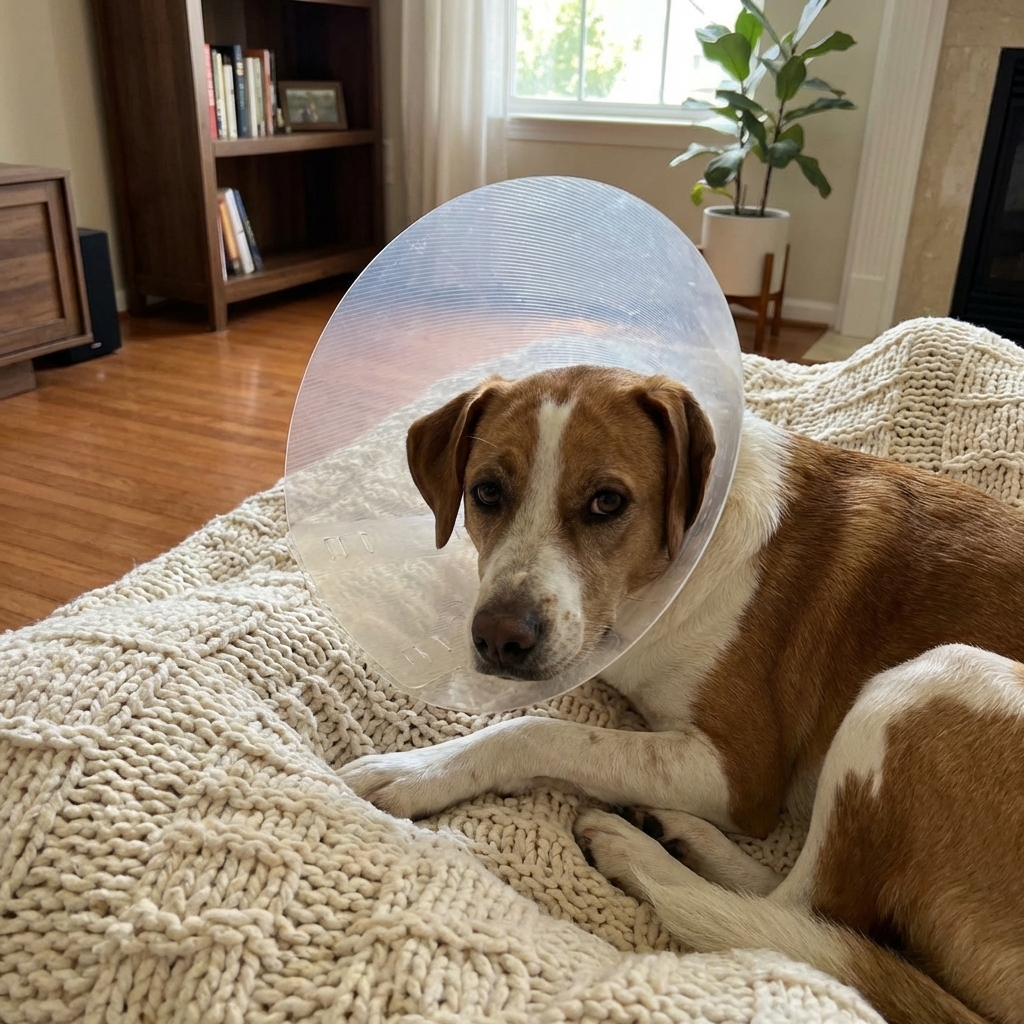
Licking is not harmless. Even a short time licking can introduce bacteria and irritate or damage the closure, whether that is skin glue, stitches, or staples. If your vet sent you home with an e-collar, it is not a punishment. It is protection.
Your options
- Plastic e-collar: very effective and often the safest choice, especially for determined lickers.
- Inflatable collar: comfortable for some dogs, but not enough for long-nosed dogs or very flexible dogs.
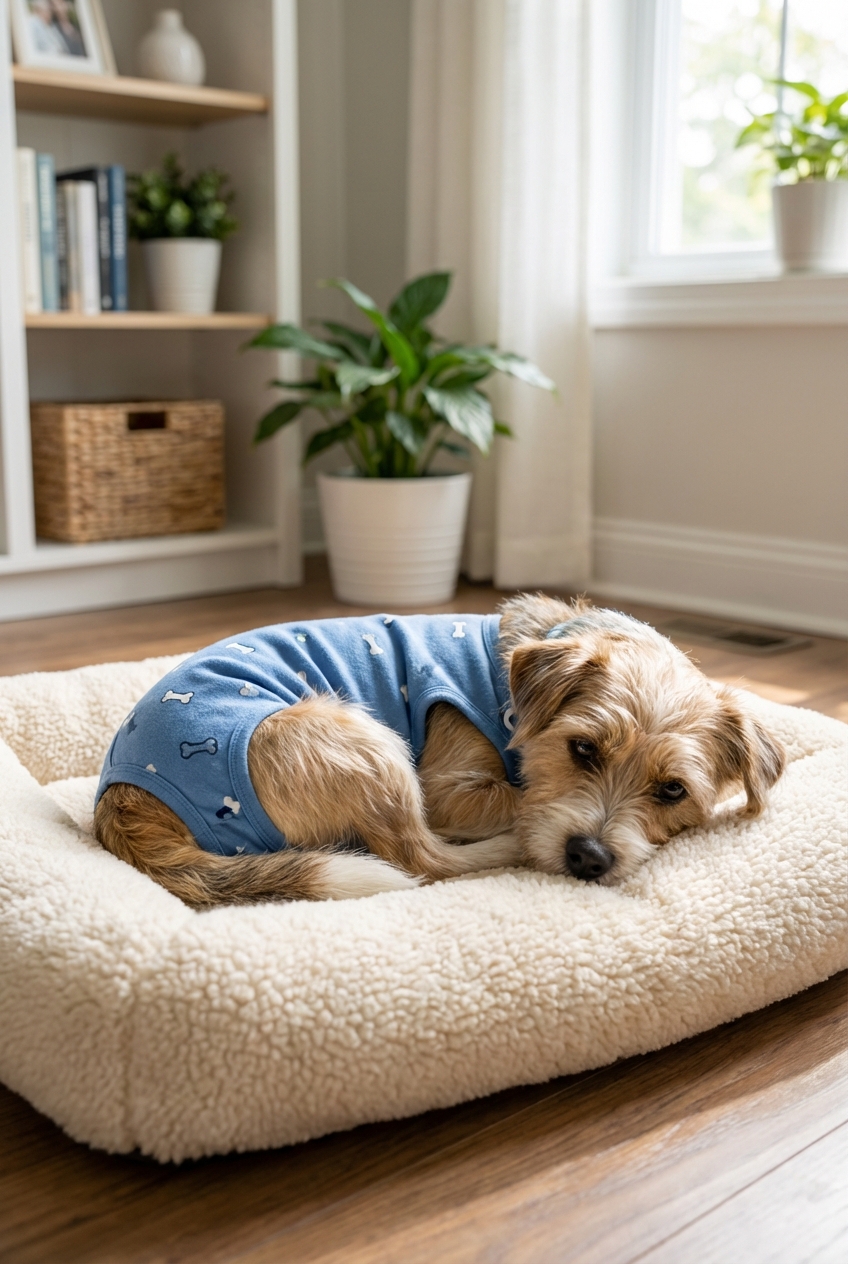
- Recovery suit: can work well if it fits correctly and stays clean and dry. You must still supervise because some dogs can lick through fabric.
Best practice
If you cannot directly supervise, keep the cone or protective gear on. Many incision complications happen when the cone comes off “just for a little while.”
Pain control and meds
Modern spay protocols typically include pain relief during surgery and medication to continue at home. Pain control helps healing because a comfortable dog rests better, eats better, and moves more carefully.
Simple tips
- Give medications with food if your vet recommends it, especially for anti-inflammatories.
- Do not double-dose if you forget a dose. Call your clinic for guidance.
- Watch for side effects: vomiting, diarrhea, refusing food, or acting unusually quiet can be medication-related and should be discussed with your vet.
- Never give human medications unless your veterinarian specifically prescribes them. Some medications that are common at home can be toxic to dogs.
Eating and drinking
A slightly reduced appetite the first night is common. By the next day, most dogs are interested in food again. Hydration matters, so keep fresh water available.
Feeding tips
- Start small: offer a smaller meal first, then gradually return to normal portions as tolerated.
- Skip rich treats right after surgery. Fatty foods can upset the stomach.
- Ask about calorie needs: after spaying, some dogs may need fewer calories long-term. Your vet can guide you based on age, breed mix, and activity level.
When in doubt, keep it simple: bland, familiar meals and calm routines help the stomach and the incision.
Bathroom changes
It is very common for dogs to have a slightly different bathroom pattern for a day or two after surgery.
Common, usually mild changes
- Not pooping for 24 to 48 hours (they fast before surgery, and anesthesia slows the gut)
- Slight constipation if appetite is down or activity is restricted
- Urinating a little less the first evening if they are sleepy and drinking less
Call your vet if
- Your dog strains to urinate, cannot urinate, or cries when urinating
- No urination for an extended period (ask your clinic what timeframe concerns them)
- Black, tarry stool, or significant blood in stool
Bleeding and discharge
After a routine spay, most dogs do not have noticeable vaginal bleeding. A tiny amount of light, blood-tinged discharge can occur in some cases, especially if a dog was recently in heat. It should be minimal and short-lived, and it should never be heavy like a heat cycle.
Contact your vet if you see
- Bright red blood dripping
- Bleeding that increases instead of improves
- Bad odor, green or yellow discharge
- Lethargy plus discharge or feverish behavior
Timeline (typical)
Every dog is different, but this is a helpful general timeline for many healthy dogs.
Days 0 to 1
- Sleepy, groggy, lower appetite
- Incision looks clean with mild redness
Days 2 to 3
- More alert and interested in food
- Energy starts coming back, which is when confinement becomes important
Days 4 to 7
- Most dogs feel normal but are not healed yet
- Incision may have mild itching, do not allow licking
Days 10 to 14
- Many dogs are cleared for a gradual return to activity
- Some dogs have a recheck or suture or staple removal if non-dissolving closure was used
When to call the vet
Urgent
- Pale gums, collapse, extreme weakness, or a swollen belly
- Difficulty breathing
- Incision opening, tissue visible, or bleeding that soaks the area
- Foul-smelling discharge, pus, or rapidly spreading redness
Soon (same day if possible)
- Repeated vomiting or diarrhea
- Not eating beyond the first day, or refusing water
- A new lump that is growing quickly, becomes soft and squishy, or seems painful
- Your dog keeps trying to lick the incision despite the cone or suit
You know your dog best. If something feels off, it is always okay to call and ask. The goal is simple: quiet rest, a protected incision, and steady improvement each day. With that plan, most dogs heal beautifully and are back to normal life before you know it.
FAQs
My dog is whining. Is she in pain?
Whining can be pain, but it can also be nausea, anxiety, or frustration from the cone. If whining is persistent, if she cannot get comfortable, or if her posture is tense, call your vet. Pain control is not something you should guess at.
Can my dog sleep without the cone?
Only if your vet says yes and you are actively supervising. Many dogs lick most when they are tired and everything is quiet. If you are asleep, you cannot stop licking.
When can she play with other dogs again?
Most clinics recommend waiting until the incision is healed and activity restrictions are lifted, often around 10 to 14 days. Rough play too soon is a top cause of incision problems.
Is a small lump under the incision normal?
A small firm bump can be normal scar tissue, a mild reaction to internal sutures, or a small seroma. If it gets rapidly larger, turns soft and squishy, becomes painful, or the skin looks increasingly red and hot, call your vet.