Make meals more tempting and nutritious with simple dog food toppers: bone broth, cooked eggs, sardines, pumpkin, and steamed veggies—plus portions, storag...
Article
•
Designer Mixes
What to Expect After Neutering Your Dog

Shari Shidate
Designer Mixes contributor
Neutering is one of the most common surgeries dogs have, but that does not mean it feels “routine” when it is your best friend coming home sleepy and sore. As a veterinary assistant in Frisco, Texas, I have seen the whole spectrum, from dogs who bounce back in a day to pups who need a little extra support. The good news is that most neuter recoveries are smooth when you know what’s normal, what’s not, and how to set your dog up for success.
First 24 hours: the “sleepy and weird” phase
Most dogs are groggy the day of surgery. That is largely from anesthesia, though some discomfort is also expected and is usually managed with pain medication. You may notice a wobbly walk, extra sleep, or a slightly glassy look in the eyes. Some dogs whine or seem restless as the meds wear off.
Quick note: Your clinic’s discharge instructions should always override general timelines and tips online.
What is normal
- Sleepiness and less interest in play
- Lower appetite or skipping a meal the first evening, then improving by the next day
- Mild nausea (some dogs drool or lick their lips)
- Mild cough or throat clearing from the breathing tube that improves within about 24 to 48 hours
What you can do at home
- Offer small amounts of water first. If that stays down, offer a small meal later.
- Keep them warm and quiet in a cozy, low-traffic area.
- Leash-walk only for potty breaks.
- Give all medications exactly as directed. Do not stop early unless your vet tells you to.
Call your vet the same day if your dog is very difficult to rouse, collapses, has repeated vomiting, has pale gums, seems to struggle to breathe, or develops a cough that worsens instead of improving.
Days 2 to 3: energy returns, but healing is not finished
This is the part that surprises many families. Your dog may look almost normal by day two, and that burst of energy can be the biggest risk to the incision. Inside, the tissue is still fragile.
Incision expectations
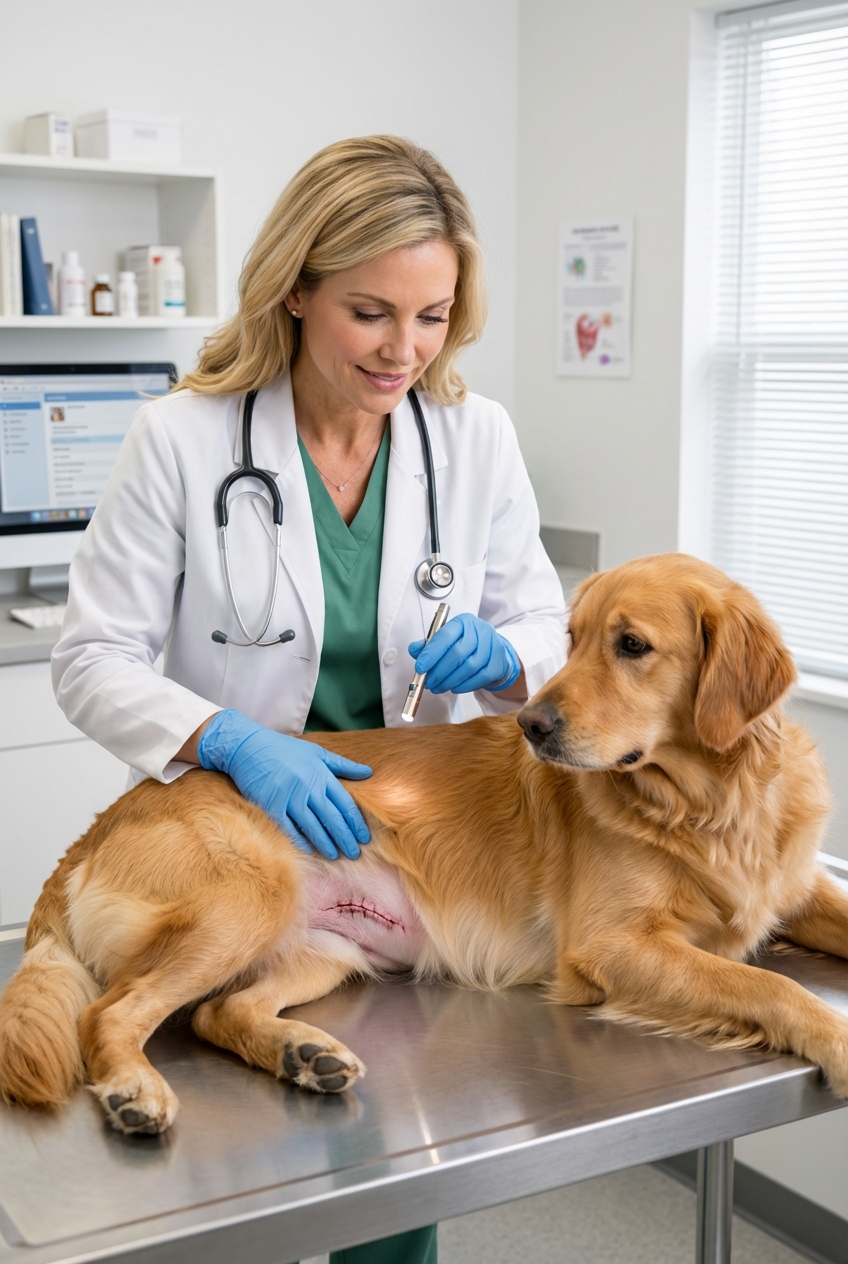
- A small amount of pinkness and slight swelling can be normal.
- The incision should be closed and dry, without discharge.
- There should not be a strong odor, gaping, or thick redness spreading outward.
Incision care basics
- Do not apply peroxide, alcohol, ointments, sprays, or bandages unless your vet instructed you to.
- Keep it clean and dry. No bathing or swimming.
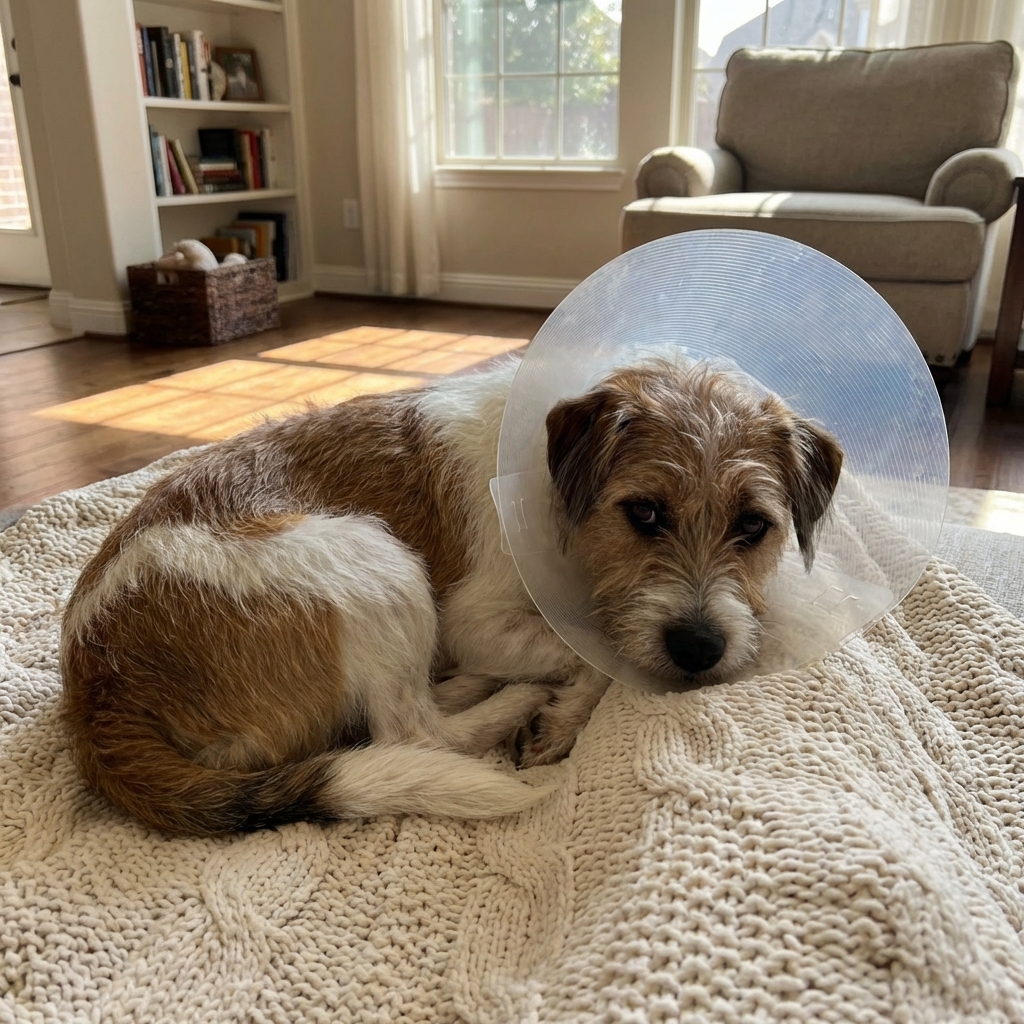
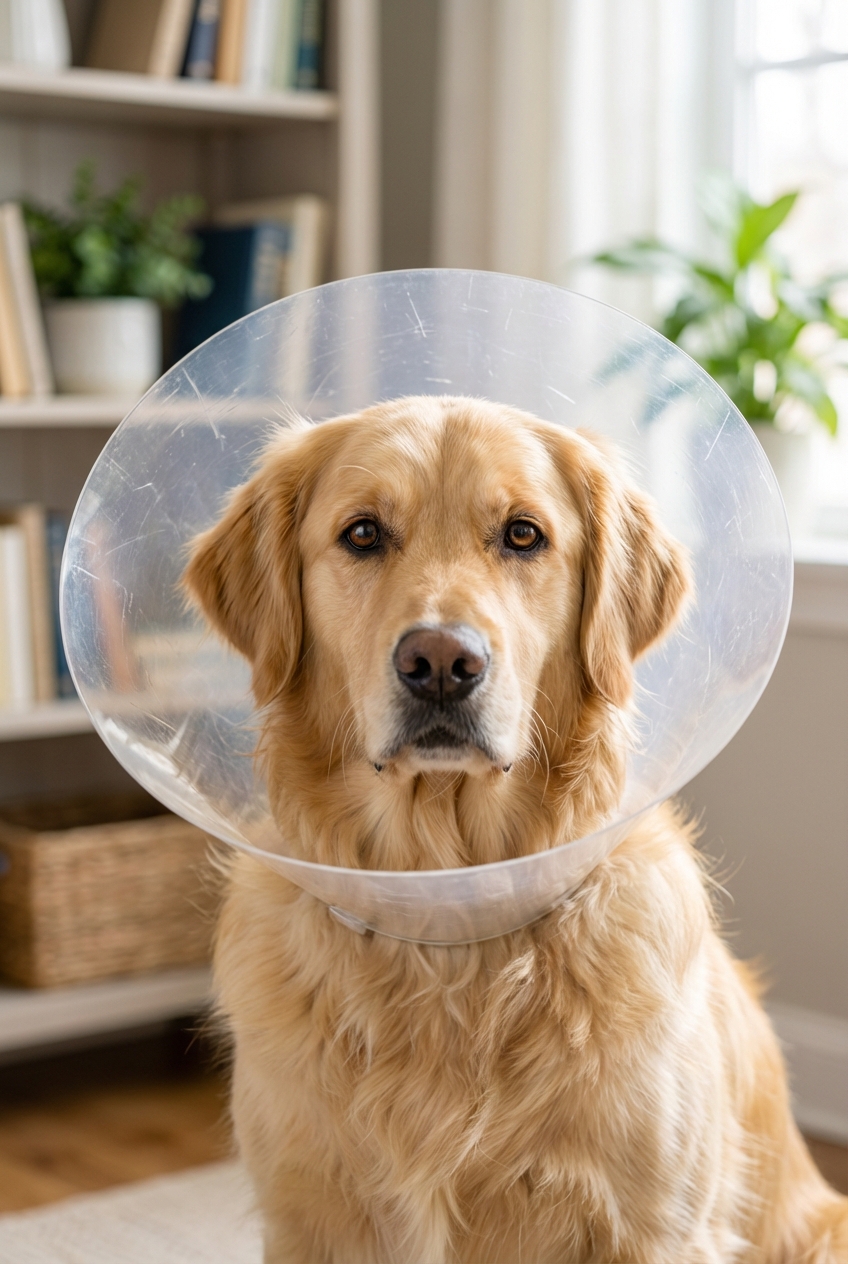
- No licking. If your dog can reach the incision, the cone (or a vet-approved recovery suit) stays on.
Activity rules
- No running, jumping, wrestling, or off-leash play.
- No bathing or swimming.
- Use a leash for potty breaks. Keep walks short and calm.
Signs of pain to watch for
- Shaking or trembling
- Panting at rest (when it is not hot)
- Reluctance to lie down, settle, or walk
- Guarding the belly, looking back at the incision, or acting “touchy”
If you see these, call your vet to ask if a medication adjustment or recheck is needed. Do not give human pain relievers unless your vet specifically prescribed them.
Days 4 to 14: the real recovery window
Many clinics recommend 10 to 14 days of restricted activity after a neuter, but the exact timeline can vary based on your dog’s age and size, surgical technique, and whether it was a more involved procedure (for example, a retained testicle that required abdominal surgery). Follow your veterinarian’s instructions.
What should improve
- Your dog’s appetite and energy should be close to normal.
- The incision should look less pink and more “settled” each day.
- Swelling should steadily decrease, not increase.
Recheck and suture removal
Some clinics use dissolvable sutures under the skin, while others schedule a recheck for suture removal. Follow your veterinarian’s instructions, and bring photos of the incision if you are unsure whether it looks normal.
Recovery insights
1) Behavior changes are not instant
The effects of testosterone do not vanish overnight. Hormone-related behaviors may improve gradually over time, and training and routine still matter. Also, recently neutered males can still potentially impregnate a female for a period of time. Ask your vet how long your dog should be kept away from intact females.
2) Your dog may need fewer calories
After neutering, many dogs have slightly lower energy needs, and some dogs also seem hungrier. That does not mean your dog is doomed to gain weight, but it does mean you should watch portions and treats. A simple, evidence-based habit: monitor body condition and adjust food before weight creeps up.
3) A cone is incision insurance
Most incision complications I see are from licking. Dogs can irritate the site fast, sometimes in minutes. If your dog can reach the incision, use an e-collar or a well-fitted recovery suit approved by your vet, and keep it on until your vet clears your dog (often the full 10 to 14 days).
4) Scrotal swelling can happen
Especially in larger dogs or very active dogs, the scrotum can look puffy for a few days. Mild swelling can be normal, but significant swelling, bruising that worsens, heat, or obvious pain should be checked.
5) Mild constipation can happen
Anesthesia, reduced activity, and some pain medications can slow things down. A slightly delayed bowel movement can be normal, but straining, crying, a swollen belly, or no stool for more than a day or two is a reason to call your vet.
Tips that make recovery smoother
Set up a “recovery station”
- A quiet room or penned area with non-slip flooring
- A washable bed or blanket
- Fresh water nearby
- Treats for calm behavior (tiny, low-calorie)
Use calm enrichment
- Stuffed food toy approved by your vet
- Snuffle mat with part of their measured meal
- Short training sessions: sit, touch, down, settle
Feed for healing
If your dog’s stomach is sensitive after anesthesia, keep it bland and simple unless your vet advises otherwise. Once appetite is normal, focus on balanced nutrition and portion control. If you are adding fresh foods, go slow and keep treats under 10 percent of daily calories.
When to call the vet
Trust your instincts. If something feels off, call. You will never regret checking in early.
- Incision is open, actively bleeding, or oozing pus
- Redness spreading or heat around the incision
- Bad odor from the surgical site
- Repeated vomiting, severe diarrhea, or refusal to eat beyond 24 hours
- Lethargy that worsens after day one
- Straining to urinate, crying when trying, or not urinating
- Swelling that rapidly increases, especially in the scrotum
- Cough that worsens or trouble breathing
Quick checklist
- Take a clear photo of the incision each day to spot changes early.
- Use a cone or recovery suit consistently until your vet clears it.
- Leash walks only until your vet clears normal activity.
- Give medications on schedule, exactly as directed.
- Keep food portions appropriate and treats small.
Neutering recovery is usually straightforward, but it is not “one day and done.” If you protect that incision for the full healing window, you are giving your dog the best chance at a smooth, complication-free bounce back.