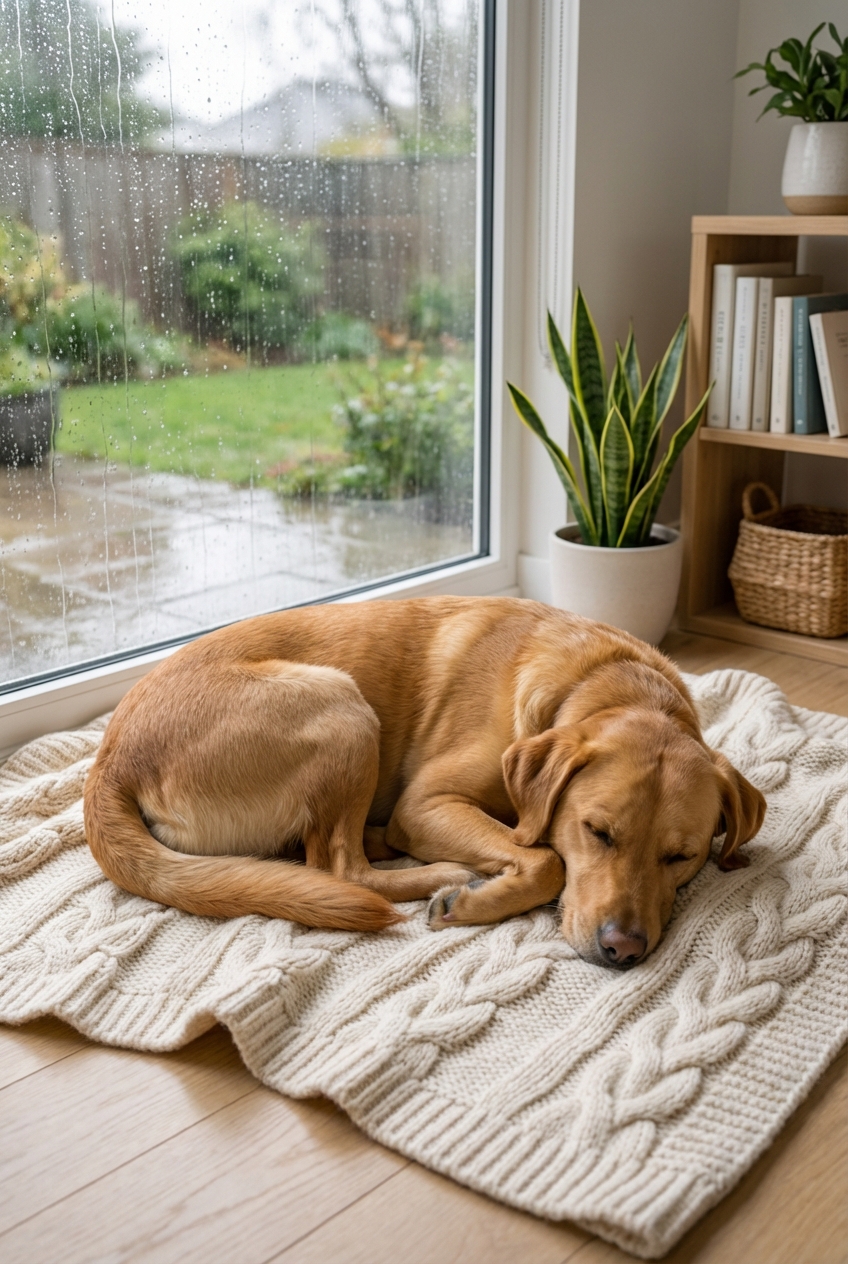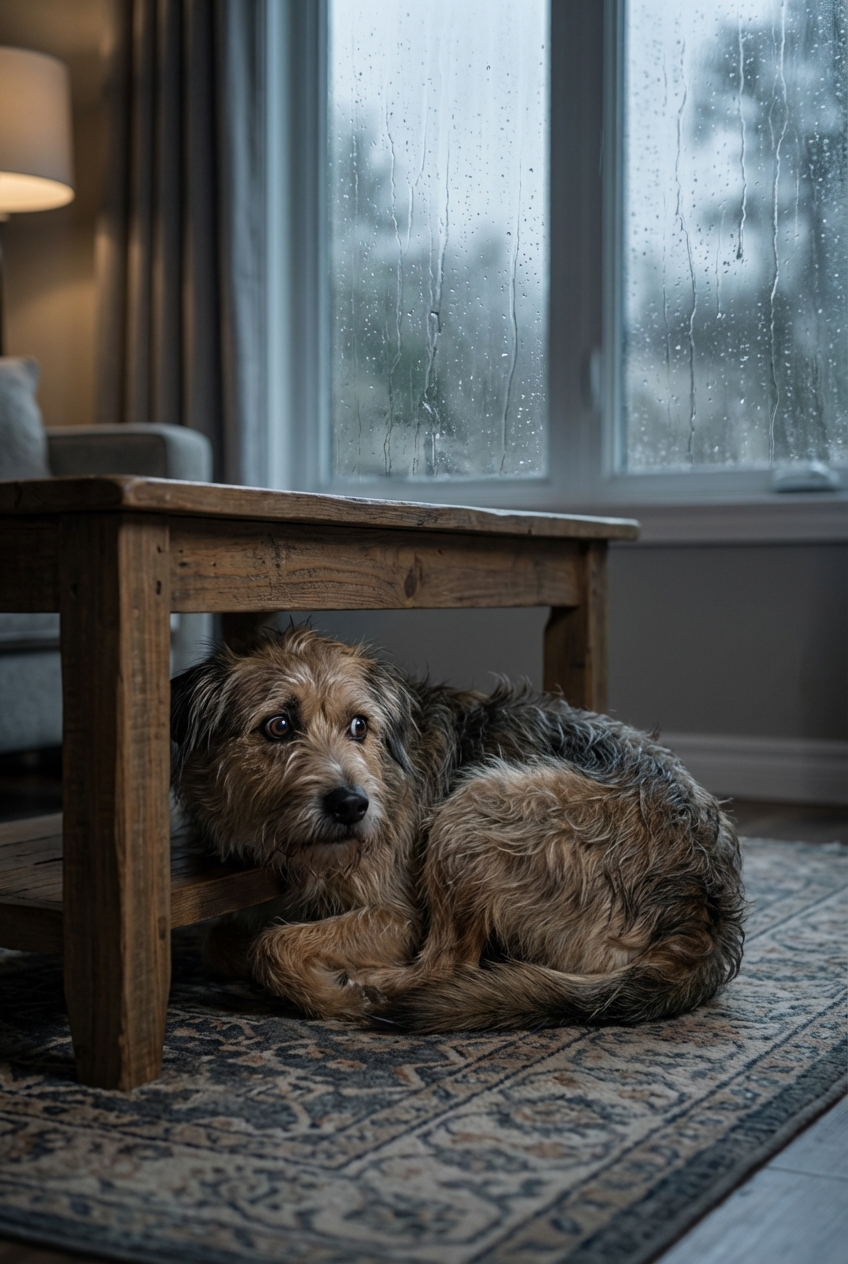
Thunderstorms can trigger shaking, hiding, and escape attempts. Learn vet-backed ways to calm your dog: storm station setup, steady sound, chews, training, w...
Article
•
Designer Mixes
What To Do When Your Dog Is Scared Of Thunder

Shari Shidate
Designer Mixes contributor
Thunderstorms are loud, unpredictable, and packed with cues dogs notice more than we do. If your dog shakes, pants, hides, drools, barks, or tries to bolt when thunder hits, you are not being “dramatic” by taking it seriously. Storm fear is common, and for some dogs it can grow into true noise phobia over time.
In my work as a veterinary assistant, I have seen plenty of sweet family dogs who only needed a solid, calm plan to get through storm season safely. The goal is not to force bravery. The goal is to help your dog feel protected, reduce panic, and prevent escape or injury.
Why thunder is so scary to dogs
Thunder fear is not always just about the sound. Storms bring a whole bundle of triggers that can stack up fast.
- Noise and vibration: Low-frequency rumbles travel through floors and walls and can feel intense to a dog.
- Sudden flashes: Lightning can startle, especially in dark rooms or at night.
- Barometric pressure changes: Some dogs seem to react before the storm arrives, possibly due to pressure shifts.
- Static electricity: One theory (and some early research) suggests static buildup may be uncomfortable for certain dogs, especially those with thicker coats.
- Learned fear: If a dog panicked once, the next storm can trigger an even bigger reaction.
That mix explains why you might see your dog pacing hours before the first thunderclap.
Signs your dog needs help
Some dogs handle storms with a mild startle. Others experience full-body panic. These signs suggest your dog could benefit from a structured plan and possibly veterinary support.
- Trying to escape through doors, windows, fences, or crates
- Destructive behavior during storms (chewing doors, scratching walls)
- Heavy panting, drooling, trembling, or frantic pacing
- Refusing food for hours, or gastrointestinal upset during storms
- Clinginess that looks like desperation, or freezing and shutting down
- Fear spreading to other noises (wind, rain, fireworks, trucks)
If your dog has injured themselves trying to escape, or if panic is escalating each season, it is time to talk with your veterinarian.
What to do during a storm
1) Create a storm-safe space
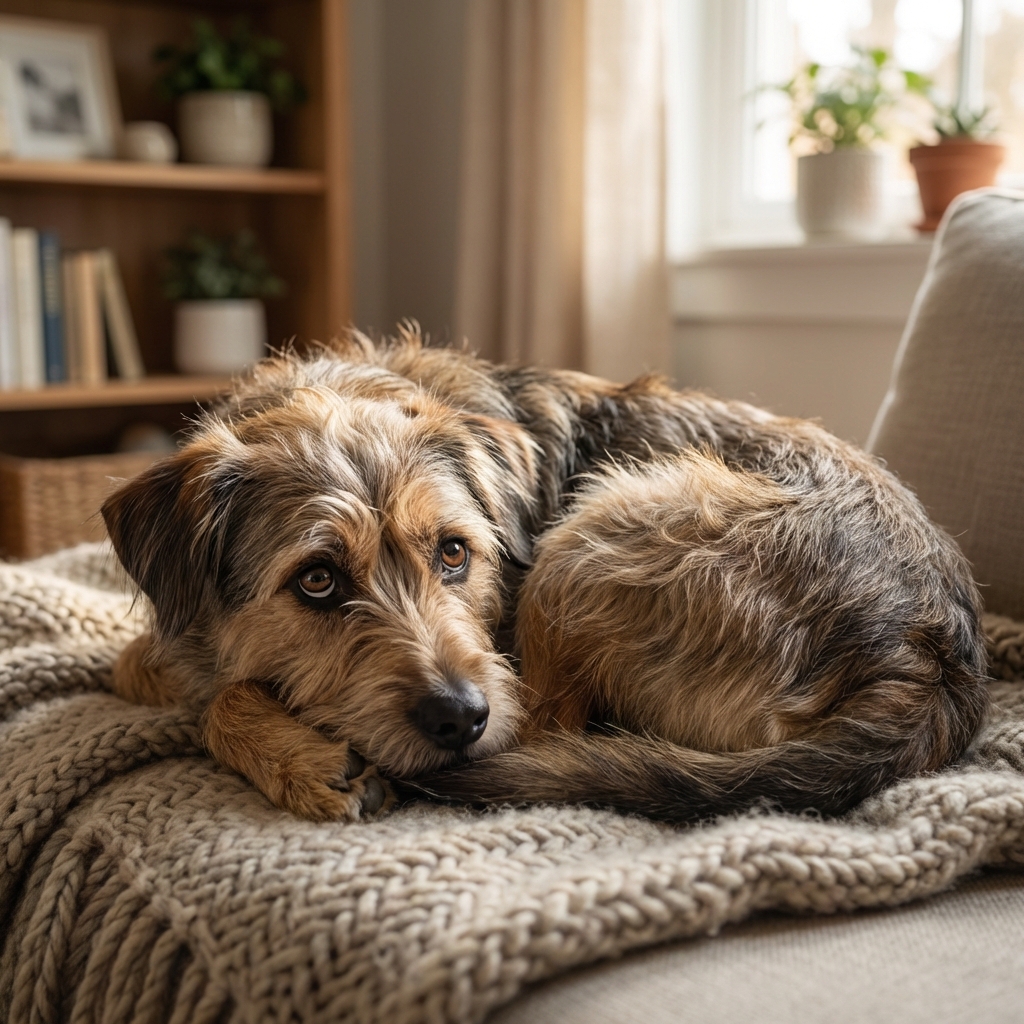
Pick a spot that buffers sound and light, ideally a closet, interior bathroom, laundry room, or a covered crate in a quiet area. The best safe space is the one your dog chooses, as long as it is safe.
- Close curtains and turn on soft indoor lighting to reduce lightning flashes.
- Add thick bedding and a familiar-smelling blanket.
- Use steady background noise: a fan, white noise, or calm music.
- If you use a crate, leave the door open if your dog prefers. Never force crating during panic.
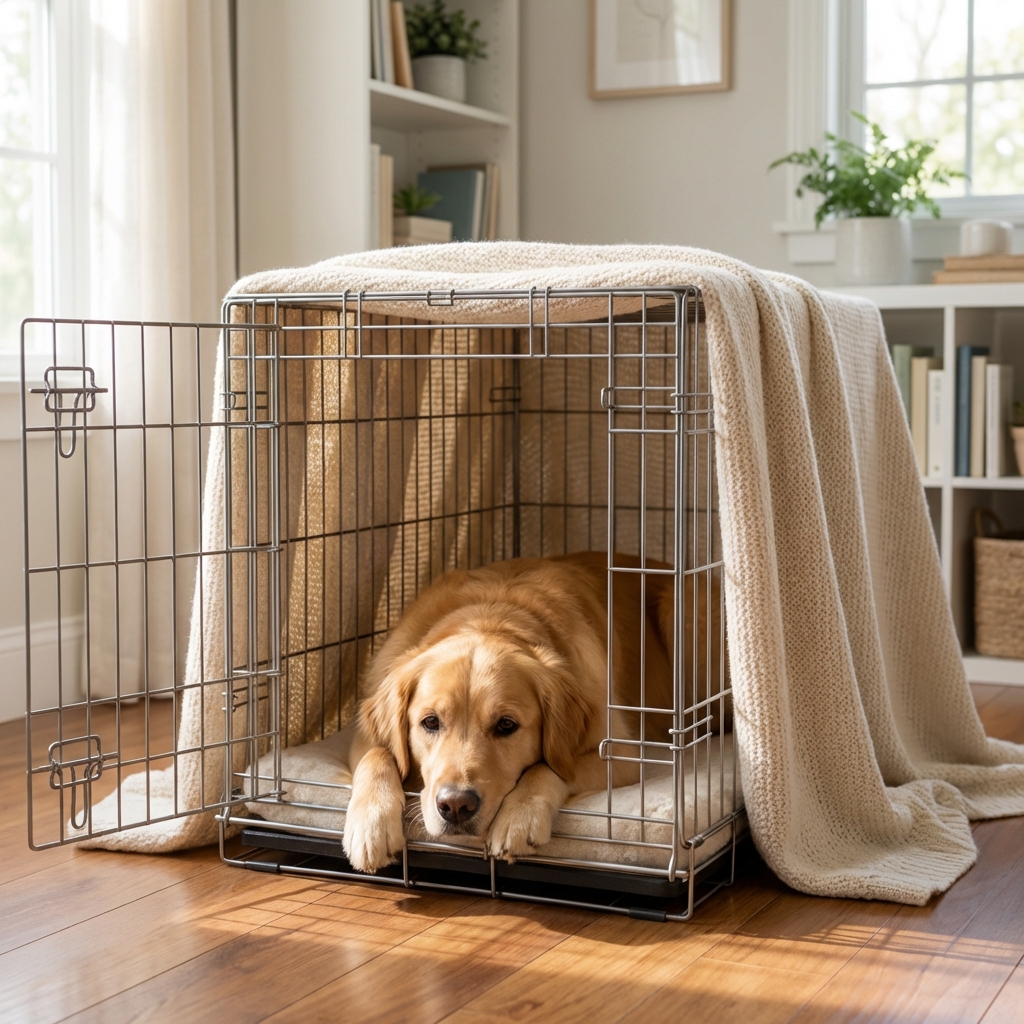
2) Stay calm and predictable
Dogs read our body language beautifully. Speak softly, move slowly, and keep your routine simple. Calm comfort will not make the fear worse. What can increase arousal is frantic energy or intense, repetitive reassurance. Aim for steady support.
3) Offer a safe distraction
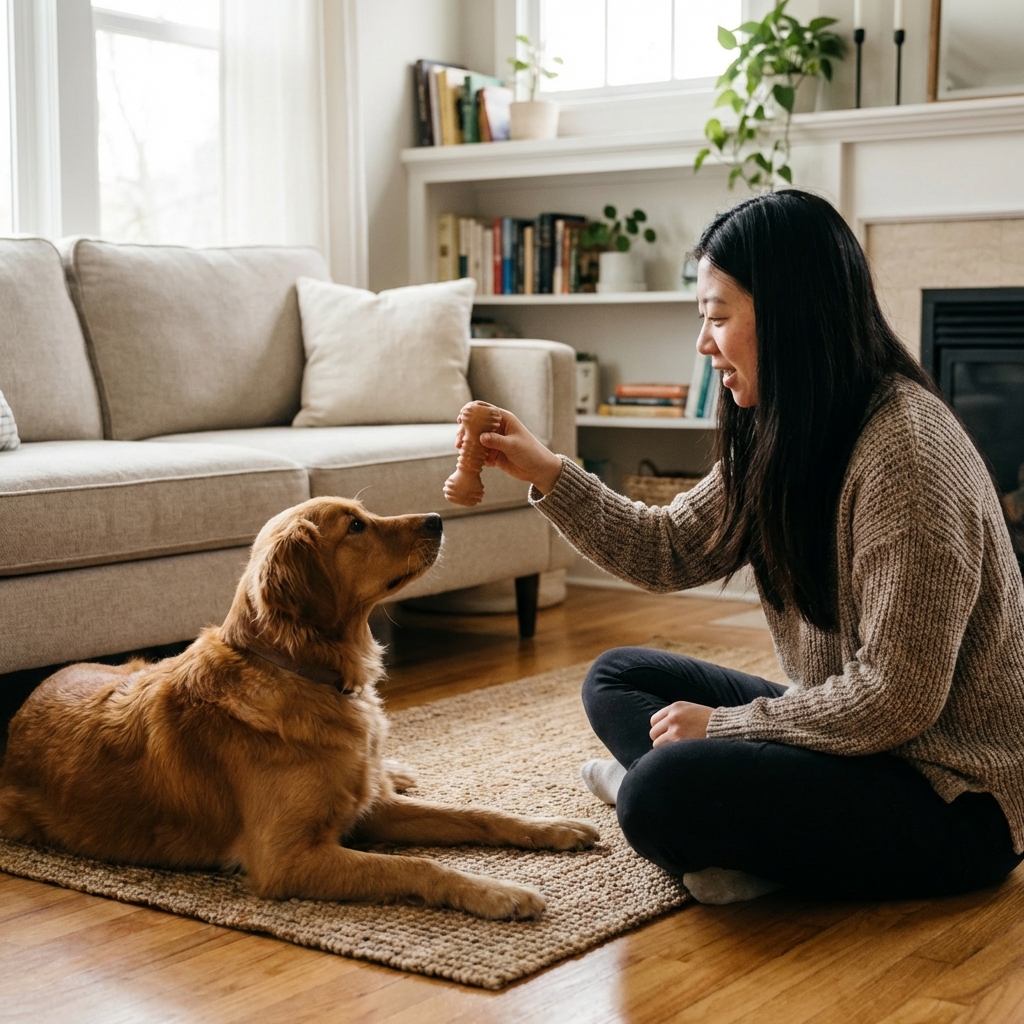
If your dog can still take food, enrichment can lower stress and build a more positive association with the routine around storms.
- Stuffed food toy with a smear of wet food or plain yogurt
- Snuffle mat or scatter feeding in the safe room
- Long-lasting chew if your dog safely chews (supervise)
If your dog is too panicked to eat, skip food and focus on safety and comfort.
4) Try gentle pressure (if they like it)
Many dogs respond well to a properly fitted pressure wrap (such as the ThunderShirt or a similar wrap). It is not a cure, but it can take the edge off for some pups, especially when paired with a safe space and sound masking.
5) Prevent escape
Storm panic is a common reason dogs go missing during bad weather.
- Bring your dog indoors before storms begin, even if they normally spend time in the yard.
- Check doors, baby gates, dog doors, and windows.
- Make sure ID tags are current and your dog is microchipped with updated contact info.
- Avoid taking your dog outside during thunder unless it is truly necessary. Use a leash even in fenced yards.
- During storm season, avoid off-leash time outdoors if weather can change quickly.
What not to do
- Do not punish fear. Scolding or using training tools during panic can worsen phobias and damage trust.
- Do not force exposure. “Letting them get used to it” by trapping them near storm noise often backfires.
- Do not ignore safety. A terrified dog can crash through a screen, chew through drywall, or bite unintentionally if grabbed.
- Do not give human meds. Many are toxic to dogs. Always ask your vet before giving anything.
Long-term solutions
In-the-moment steps help your dog get through today’s storm. Long-term work helps change how your dog feels about storms over time.
The best results come from combining environment, training, and when needed, medical support. Think of it like helping a child with a phobia: you build skills and lower the fear response in small, safe steps.
Sound training
Desensitization and counterconditioning is widely recommended by behavior professionals. You play high-quality storm recordings at a very low volume while pairing them with something wonderful (tiny treats, a favorite game). Over time, you gradually increase volume only if your dog stays relaxed.
- Work in short sessions (3 to 7 minutes).
- Stay below your dog’s fear threshold.
- Watch for stress signals (panting, lip licking, tucked tail, leaving the area). If you see them, lower the volume or stop and try later.
- End on success, not stress.
- Practice when there is no real storm happening.
If your dog is already panicking at any thunder-like sound, a qualified professional can help you design a plan that is humane and effective. Look for a trainer who uses reward-based methods, or ask your veterinarian about a board-certified veterinary behaviorist (DACVB) or a certified applied animal behaviorist (CAAB).
Calming supplements
Some dogs benefit from evidence-informed calming aids, especially when started before storm season. Options often discussed in veterinary settings include:
- Pheromone products (diffusers, sprays, collars) designed to promote calming signals
- L-theanine or alpha-casozepine based calming supplements
- Melatonin for certain dogs, only with veterinary guidance for dosing and safety
Not every supplement works for every dog, and quality varies. If your dog has health conditions or takes other medications, check with your veterinarian first.
Prescription medication
For true thunder phobia, medication can be life-changing. There are fast-acting options used situationally before storms, and longer-term daily medications used for dogs whose anxiety is broader or severe. Your veterinarian can help choose what is safest based on your dog’s age, health, and symptom level.
One important note: not all sedatives reduce fear. Some can make a dog appear sleepy while still feeling terrified inside. That is why it is so important to work with your vet on the right plan.
Rule out pain and health changes
Dogs who are older or dealing with chronic pain can become more noise-sensitive. If storm fear is new or suddenly worse, schedule a vet exam to rule out pain, cognitive changes, or other health issues that can affect anxiety and coping.
Quick storm plan
- Before: Bring your dog inside, prep the safe room, start white noise, offer a potty break on leash, and consider extra indoor enrichment earlier in the day if storms are forecasted.
- During: Guide them to the safe space, dim lights, offer a chew or stuffed toy if they will take it, stay calm and steady.
- After: Keep things low-key, do a calm decompression walk when safe, and note what helped for next time.
When to get help
Please reach out to a veterinarian or qualified behavior professional if:
- Your dog is injuring themselves or breaking out to escape
- Storm fear is escalating each season
- Your dog stops eating, cannot settle for hours, or shows prolonged distress
- Your dog’s fear spills into everyday life and routines
- Your dog struggles most when home alone, and storms are in the forecast (pet-sitting or safer confinement plans can help)
You are not failing your dog by asking for help. You are advocating for them.
Encouragement for pet parents
Thunder fear can feel heartbreaking, especially when you are doing everything you can and your dog still shakes. Start with safety and predictability, then build a long-term plan step by step. Many dogs improve significantly with consistent management and a little guidance from your veterinary team.
If you want, keep a simple “storm journal” on your phone: what time the storm hit, what your dog did, and what helped. Patterns show up fast, and those patterns make your next storm plan easier.