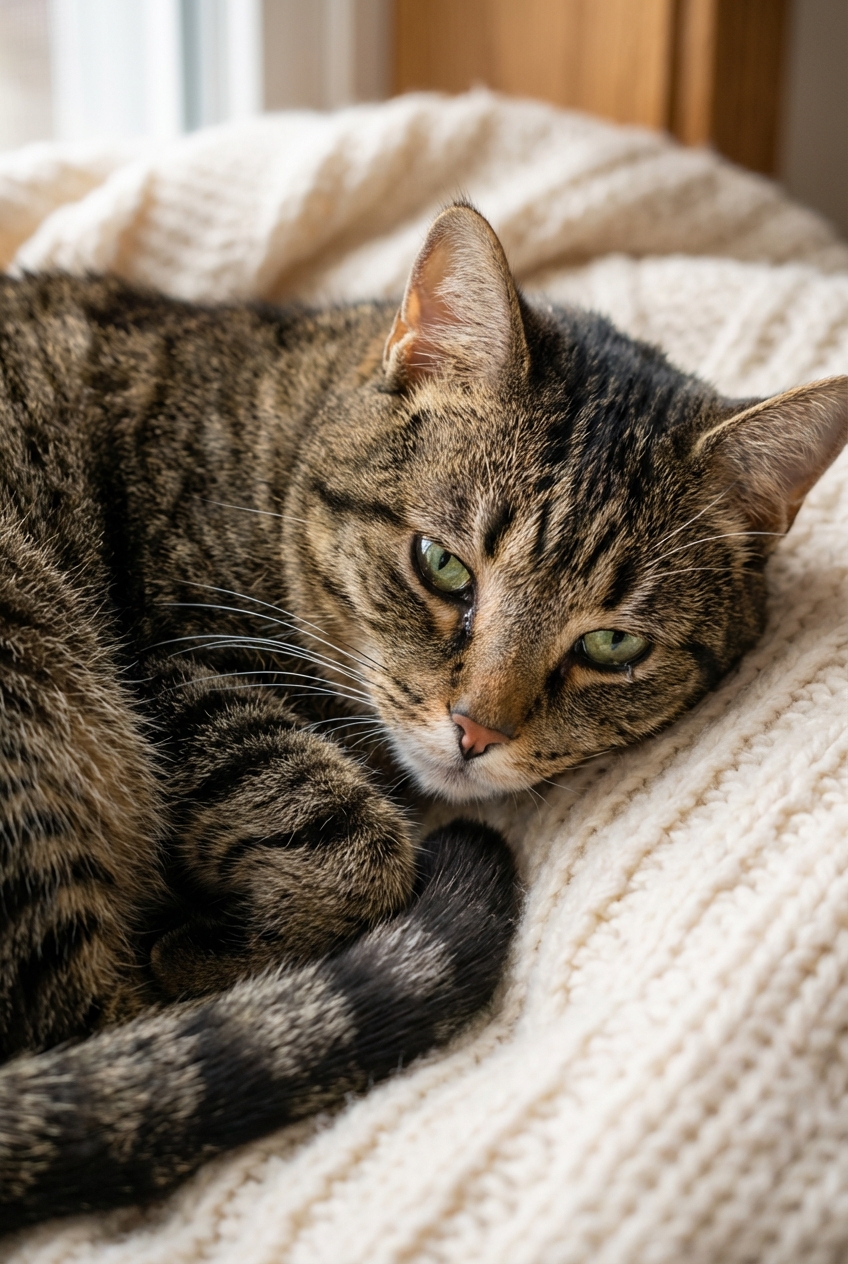
Help your cat feel better with safe, vet-backed cold care: appetite and hydration tips, humidity for congestion, gentle eye/nose cleaning, what to avoid, and...
Article
•
Designer Mixes
What to Do When Your Cat Has a Cold

Shari Shidate
Designer Mixes contributor
Cats can absolutely come down with “colds,” and it can be surprisingly stressful to watch. The good news is that most mild cases improve with supportive care at home, especially when you know what to monitor and when to call your veterinarian.
Important note: A “cat cold” usually means an upper respiratory infection (URI). Many URIs are caused by viruses like feline herpesvirus (FHV-1) or calicivirus, sometimes with secondary bacterial infection. Because cats are experts at hiding illness, it is smart to take symptoms seriously, even if they look mild at first.
Common signs of a cat cold
Most cat colds look a lot like human colds at the surface. The risks can be different, though. Cats may stop eating when they cannot smell well, and dehydration can sneak up quickly.
- Sneezing
- Runny nose (clear or cloudy discharge)
- Watery eyes or eye discharge
- Congestion, noisy breathing, new or increased snoring sounds while resting
- Coughing or gagging (less common, but possible)
- Low energy, hiding, “not quite themselves”
- Reduced appetite, slower eating, dropping food
- Mouth ulcers or drooling (more common with calicivirus)
- Fever (a thermometer is needed to confirm, and warm ears alone are not reliable)
If you have a kitten, a senior cat, or an immunocompromised cat, contact your veterinarian early. These cats can worsen faster.
A note about coughing: Occasional gagging can happen with post-nasal drip, but frequent or significant coughing can point to something else (like asthma or lower airway disease). If coughing is a major symptom, check in with your vet promptly.
What causes cat colds?
Cat colds spread most often through close contact with other cats and respiratory droplets. They can also spread through shared bowls, grooming, and contaminated hands or surfaces in some settings. Stress and crowded environments can increase risk, which is why URIs are common in shelters, multi-cat homes, and boarding facilities.
Typical culprits
- Feline herpesvirus (FHV-1): Can recur throughout life, especially with stress. Often associated with eye issues.
- Feline calicivirus: Can involve oral ulcers and more significant mouth discomfort.
- Bordetella, Chlamydia, Mycoplasma: Bacterial contributors that may require specific treatment.
Vaccines help reduce severity, but they do not guarantee a cat will never get a URI.
How long do cat colds last? Many uncomplicated viral URIs start improving within about 7 to 10 days. Herpesvirus, in particular, can flare up again later during stressful times.
At-home supportive care
Supportive care is about two things: helping your cat breathe easier and keeping them eating and hydrated. If your cat is bright, still eating at least some, and breathing comfortably, these tips can be very effective.
1) Clear the nose and eyes gently
- Use a soft cotton pad or tissue dampened with warm water to wipe discharge.
- Wipe from the inner corner of the eye outward, using a fresh pad for each eye.
- Avoid harsh rubbing. Sore noses can crack and sting.
2) Add humidity to loosen congestion
- Bathroom steam: Sit with your cat in the bathroom while a hot shower runs for 10 to 15 minutes. Do not put your cat in the shower.
- Humidifier: A cool mist humidifier near the resting area can help, especially in dry winter air.
If your cat fights it, do shorter sessions. Gentle and consistent is better than stressful and intense.
3) Encourage eating with smell and comfort
Cats rely heavily on smell. Congestion can make food unappealing even if they are hungry.
- Warm wet food slightly (test temperature with your finger first).
- Offer strong smelling foods your cat tolerates, like certain fish-based canned cat foods.
- Try smaller, more frequent meals.
- Keep the food and water bowls close to where your cat is resting.
Do not force-feed unless you have been specifically trained by your veterinarian. Forcing can cause food aversion or aspiration.
4) Protect hydration
- Offer fresh water in multiple locations.
- Use wet food to increase fluid intake.
- Ask your veterinarian before offering any electrolyte product. Use only vet-approved options, and never use sports drinks.
Dehydration is one reason a “simple cold” can turn into an urgent problem.
5) Keep them warm, quiet, and stress-free
- Provide a cozy bed away from drafts.
- Limit loud noises and chasing by other pets or kids.
- Make the litter box easily accessible.
Prevent spread at home
If you have more than one cat, assume a URI could be contagious until your vet tells you otherwise. A little separation now can prevent weeks of rotating sniffles.
- Separate sick cats when possible, especially from kittens, seniors, and medically fragile cats.
- Do not share bowls, bedding, or grooming tools between cats during illness.
- Wash hands between handling cats, and wipe down commonly touched surfaces.
- Keep the sick cat’s space low-stress, with easy access to food, water, and a litter box.
When you should call the vet
This is the part I never want you to second-guess. Cats can deteriorate quickly, and breathing and eating issues are always worth a call.
Call your veterinarian urgently if you notice:
- Labored breathing, open-mouth breathing, or fast breathing at rest
- Not eating for 24 hours (or 12 hours for kittens), or sooner if your cat has medical issues or seems very congested or lethargic
- Not drinking or signs of dehydration (tacky gums, sunken eyes, marked lethargy)
- Thick yellow or green discharge from nose or eyes that is worsening (color alone does not prove bacterial infection, but worsening discharge is a concern)
- Eye squinting, eye redness, or the third eyelid showing consistently
- Fever or profound lethargy
- Mouth ulcers, drooling, or visible pain when trying to eat
- Symptoms lasting longer than 5 to 7 days without improvement
If your cat has underlying conditions like asthma, heart disease, chronic kidney disease, or is on immune-suppressing medications, call early.
What your vet may recommend
Treatment depends on severity and whether a veterinarian suspects viral-only disease versus secondary bacterial infection or eye involvement.
- Physical exam and history, including vaccination status and exposure to other cats
- Eye medications if there is conjunctivitis or corneal concern
- Antibiotics if a bacterial infection is suspected (not all colds need them)
- Antivirals in select herpesvirus cases
- Appetite support if your cat is not eating enough
- Fluids if dehydration is present
Ask your vet before giving any over-the-counter human cold medications. Many are toxic to cats, even in small amounts.
What not to do
- Do not give human cold and flu medications, pain relievers, or decongestants unless your veterinarian specifically prescribes something.
- Do not use vapor rubs, essential oils, or strong diffusers around your cat, especially in small rooms.
- Do not force steam sessions if your cat is panicking or struggling. Stress can make recovery harder.
- Do not delay care if breathing is abnormal or your cat is not eating.
Helping prevent future cat colds
You cannot prevent every URI, but you can stack the odds in your cat’s favor.
- Keep vaccines current as recommended by your veterinarian.
- Reduce stress with predictable routines, enrichment, and safe hiding spaces.
- Quarantine new cats in a separate room for 10 to 14 days when possible.
- Clean shared items like bowls, carriers, and bedding.
- Support overall health with quality nutrition, dental care, parasite prevention, and regular wellness exams.
Quick checklist
- Monitor breathing and energy levels closely.
- Wipe nose and eyes with warm water as needed.
- Add humidity with bathroom steam or a humidifier.
- Warm wet food and offer small meals more often.
- Track eating, drinking, and litter box output.
- Call your vet if appetite drops, breathing changes, or symptoms worsen.
Most importantly, trust your instincts. If your cat looks “off,” you are not overreacting by checking in with your veterinary team. Early care is often simpler, less expensive, and much kinder for your cat.