Worried your dog has a fever? Learn what counts as fever, how to take a safe temperature, what to do at home, what to avoid, and when to seek urgent vet care.
Article
•
Designer Mixes
What to Do If Your Dog Has a Fever

Shari Shidate
Designer Mixes contributor
Seeing your dog feel hot, lethargic, and not quite themselves can be scary. The good news is that many fevers are manageable when you stay calm, confirm the temperature the right way, and know when to call your veterinarian.
As a veterinary assistant, I always tell pet parents the same thing: a “fever” is a symptom, not a diagnosis. Your job at home is to gather good information and keep your dog safe until you can get professional guidance.
What counts as a fever in dogs
A dog’s normal temperature is usually about 101.0°F to 102.5°F (38.3°C to 39.2°C).
These ranges are general guidelines. Some clinics use slightly different cutoffs based on your dog’s age, size, medical history, and symptoms.
- 102.6°F to 103.5°F: mild fever, monitor closely and contact your vet for advice
- 103.6°F to 104°F: fever that deserves prompt veterinary guidance
- 104°F or higher: potentially dangerous, seek veterinary care urgently
- 106°F or higher: emergency, risk of organ damage
Important: Feeling ears or a nose is not a reliable way to diagnose fever. A warm nose can be normal. Cold ears can happen in a cool house. A rectal temperature is the gold standard at home.
How to take your dog’s temperature safely
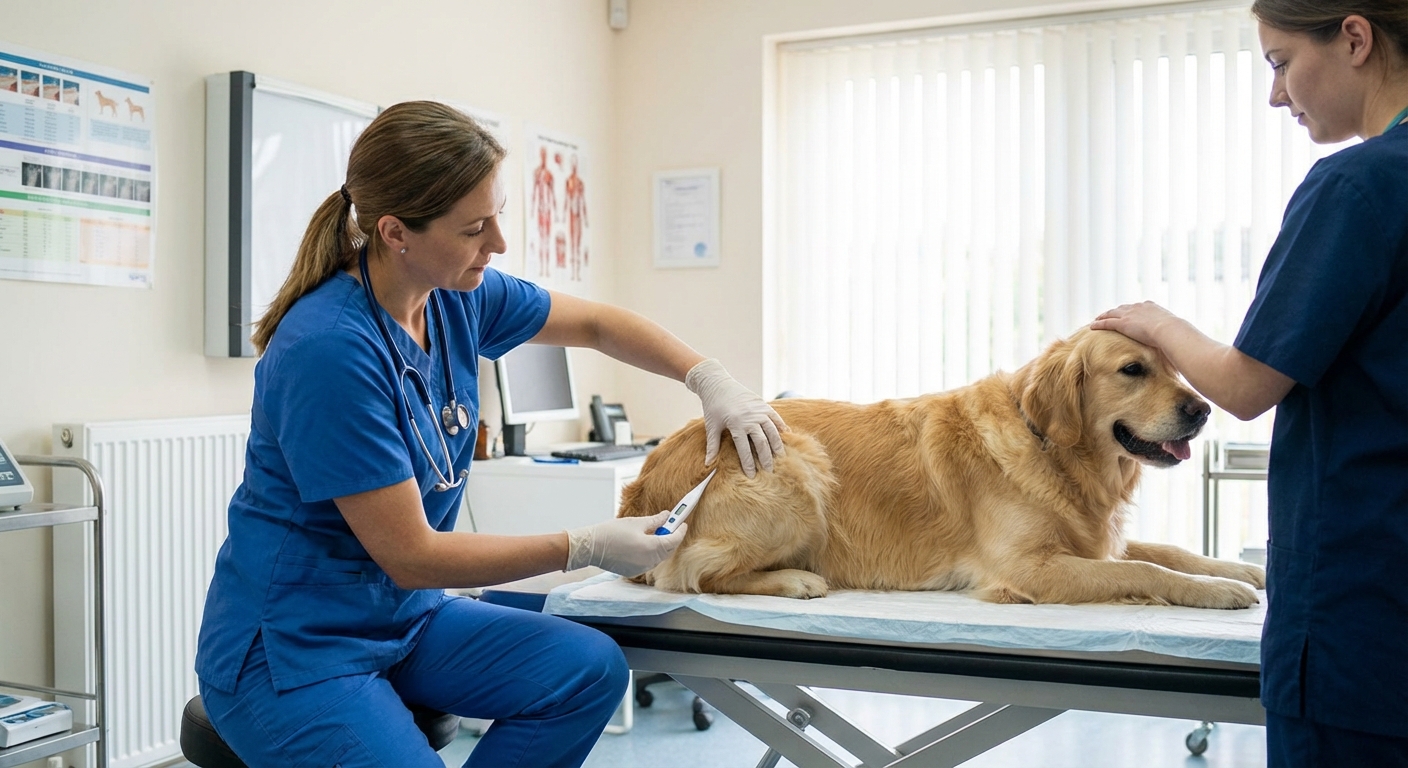
The most accurate home method is a digital rectal thermometer used only for your pet. A flexible-tip thermometer is often more comfortable.
Pet ear and forehead thermometers are sold in stores, but they can be less reliable at home if the placement is off or your dog will not hold still. Rectal readings are still the most dependable for most families.
Avoid glass mercury thermometers.
Step-by-step
- Get set up: Digital thermometer, lubricant (pet-safe or plain petroleum jelly), a few treats, paper towel, and a helper if possible.
- Keep it calm: Have your dog stand or lie on their side. Speak softly and reward often.
- Lubricate: Put a small amount of lubricant on the tip.
- Insert gently: Lift the tail and insert about 1 inch for small dogs, up to 2 inches for larger dogs, without forcing.
- Wait for the beep: Hold still until it reads.
- Clean and record: Write down the number, time, and any symptoms you notice.
If your dog is in pain, very anxious, or may bite, do not push it. It is safer to stop and call your veterinarian.
If the number seems surprising, recheck once. Common reasons for a weird reading include not inserting the thermometer far enough, a wiggly dog, or taking the temperature right after exercise or a stressful event. If you are still unsure, call your vet and share both readings.
Common signs that go with fever
Some dogs with fever look obviously sick, while others are subtle. Watch for:
- Low energy, hiding, or seeming “sad”
- Shivering or trembling
- Fast breathing or panting when resting
- Decreased appetite or not drinking normally
- Vomiting or diarrhea
- Coughing or nasal discharge
- Limping, stiffness, or sensitivity to touch
- Warm belly, warm ears, or warm paws (not diagnostic, but can be a clue)
These details help your veterinarian narrow down possible causes like infection, inflammation, tick-borne disease, dental problems, pancreatitis, heat-related illness, a reaction to a medication or vaccine, or immune-mediated disease and some cancers.
What you can do at home right now
Home care is about support, not “treating” the fever itself. The safest steps are the ones that prevent dehydration and overheating while you contact your vet.
1) Encourage hydration
- Offer fresh, cool water.
- Consider ice chips or a small amount of low-sodium broth if your vet says it is okay.
- Keep track of how much your dog drinks and how often they urinate.
2) Keep them comfortable
- Let them rest in a cool, quiet room.
- Use a fan for airflow, but do not aim it directly if your dog is shivering.
- Skip intense exercise and avoid outdoor heat.
3) Use gentle cooling only when appropriate
If your dog is hot and uncomfortable, you can apply cool, damp cloths to paws and the belly. Avoid ice-cold baths because rapid chilling can cause shivering, and shivering can raise body temperature.
Active cooling matters most when you suspect heat-related illness or the temperature is very high. If you are actively cooling while heading to the vet, many ER teams recommend slowing or stopping cooling as the rectal temperature approaches about 103°F to avoid overcorrecting. When in doubt, call your clinic for guidance while you travel.
4) Call your veterinarian with good notes
Have these ready:
- Current temperature and when you took it
- Any vomiting, diarrhea, coughing, sneezing, or pain
- Recent vaccines, new medications, or possible toxin exposure
- Tick exposure or travel history
- Eating, drinking, and urination changes
What not to do
- Do not give human fever reducers or pain meds. Acetaminophen (Tylenol), ibuprofen (Advil), and naproxen (Aleve) can be dangerous or even fatal to dogs depending on dose and health status. Even medications like aspirin are not safe without veterinary dosing guidance. Only give medication if your veterinarian specifically instructs you to.
- Do not give leftover antibiotics. They can delay proper diagnosis, cause side effects, and are often the wrong drug or dose for the illness.
- Do not force food. A bland snack is fine if your vet recommends it, but forcing can cause stress or vomiting.
- Do not wait “just to see” if your dog is very hot. High fevers can escalate quickly.
- Do not overcool. Ice baths, alcohol rubs, and aggressive cooling are unsafe.
When to call the vet or go now
Seek urgent care now
- Temperature 104°F or higher
- Temperature 103°F+ plus vomiting, diarrhea, cough, difficulty breathing, severe lethargy, collapse, pale gums, or obvious pain
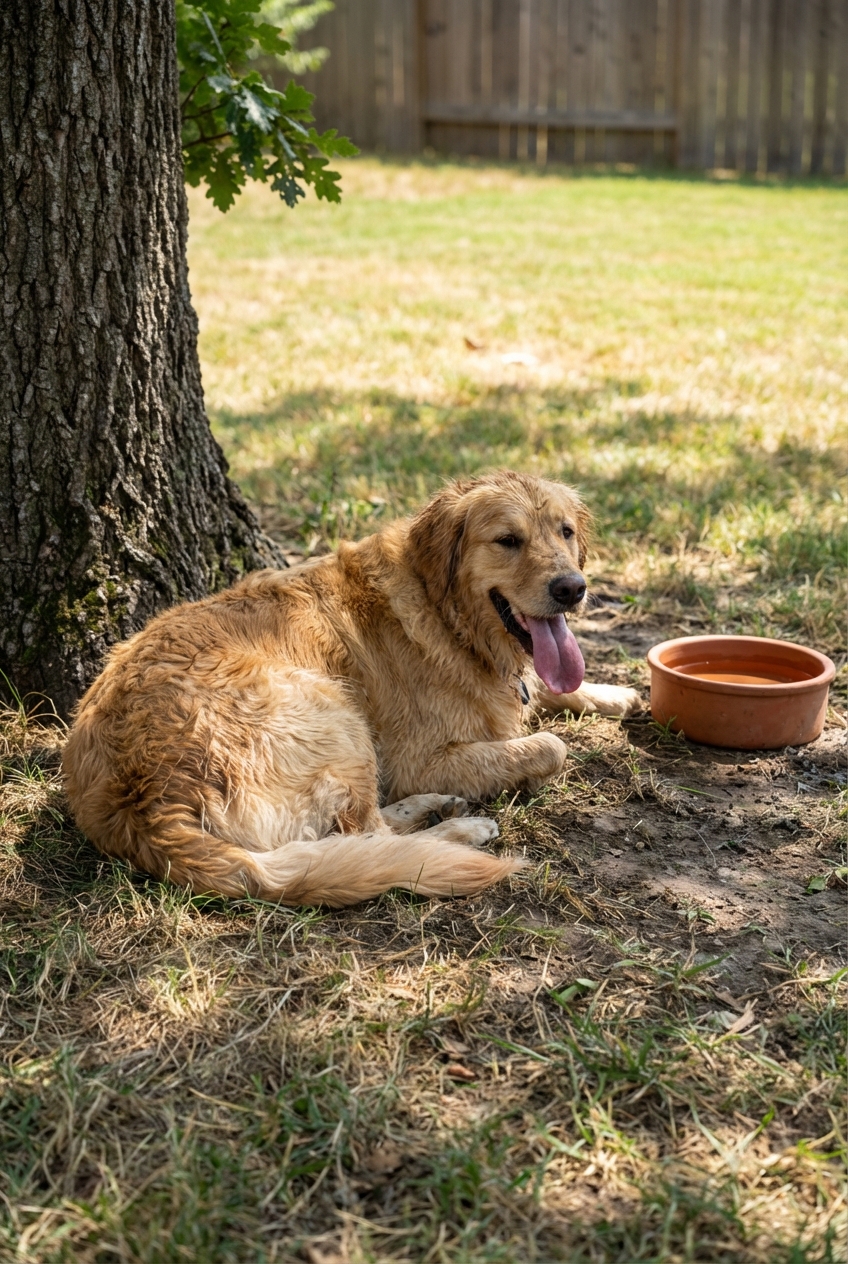
- Suspected heatstroke (heavy panting, drooling, weakness, bright red or pale gums, vomiting)
- Neurologic red flags like seizures, severe disorientation, or trouble standing
- Puppies, seniors, pregnant dogs, or dogs with chronic disease (kidney, heart, diabetes, cancer)
- Possible toxin exposure (human medications, rodent bait, certain plants, xylitol)
Call your vet today for guidance
- Temperature 102.6°F to 103.5°F with mild symptoms
- Fever lasting more than 24 hours even if your dog seems “okay”
- Any fever plus a known tick bite or tick-heavy area exposure
If you are unsure, it is always appropriate to call. A quick conversation can prevent a long night of worry and catch emergencies early.
Behavior help for sick dogs
When dogs feel sick, their behavior can change fast. Some become clingy, others withdraw, and some may growl if touched because they hurt.
Supportive handling
- Respect space: Let your dog choose a resting spot and avoid crowding them.
- Use calm touch: Gentle petting on the shoulder or chest is often better tolerated than hugging or face-to-face contact.
- Reduce stress: Keep kids and other pets away, lower noise, dim the lights.
- Prevent bites: If your dog is in pain or normally sweet but suddenly snappy, stop handling and call your vet. Pain can change behavior.
Safe isolation if needed
If your dog is restless, disoriented, or having GI symptoms, set up a quiet area with easy-to-clean bedding, water nearby, and a clear path to go outside for potty breaks.
What your vet may do
Fevers can come from many causes, so your vet will focus on finding the reason.
- Physical exam: hydration status, gums, heart and lung sounds, abdominal discomfort, ears, skin, and joints
- Diagnostics: bloodwork, urinalysis, fecal test, tick-borne testing, X-rays, or ultrasound
- Treatment: fluids for dehydration, anti-nausea support, antibiotics only when appropriate, pain control when needed, and targeted therapy for underlying disease
Ask your vet when to recheck the temperature at home and what changes mean you should return immediately.
Preventing future fevers
You cannot prevent every illness, but you can reduce risks.
- Tick prevention: use vet-approved tick control year-round and check after walks
- Dental care: gum infections and bad teeth can contribute to inflammation and systemic illness
- Vaccines and wellness visits: keep your dog’s preventive care current
- Heat safety: avoid midday walks in extreme heat, never leave dogs in parked cars, and keep cool water available
- Nutrition: a balanced diet supports immune function and recovery
If you are transitioning foods or adding wholesome ingredients, go slowly and keep meals balanced for your dog’s life stage and health needs.