Worried your dog has a fever? Learn normal vs dangerous temps, how to take a rectal reading safely, signs to watch, supportive home care, and when to call or...
Article
•
Designer Mixes
What To Do If Your Dog Has a Fever

Shari Shidate
Designer Mixes contributor
Finding out your dog might have a fever can feel scary, especially when you are trying to figure out what is “normal” and what is an emergency. As a veterinary assistant here in Frisco, Texas, I can tell you this: many fevers are your dog’s immune system doing its job, but fever can also be a sign of something serious and some cases need quick veterinary care.
This family-friendly guide walks you through how to check your dog’s temperature safely, what you can do at home, what to avoid, and when to call your vet right away.
What counts as a fever in dogs?
A dog’s normal body temperature is typically about 101°F to 102.5°F (38.3°C to 39.2°C). Normal can vary a little by the individual dog, time of day, and even stress or excitement. A fever is usually considered 103°F or higher.
High fever emergency: Temperatures around 106°F (41.1°C) can be dangerous and can damage organs. Temperatures 105°F and up are also very concerning. If you suspect your dog is that hot, treat it as an emergency and contact an emergency veterinary clinic immediately.
Signs your dog may have a fever
Some dogs look obviously “off,” while others act almost normal. Common fever clues include:
- Low energy, less interest in play
- Shivering or trembling
- Warm ears, warm paws, or a warmer-than-usual belly (not a reliable test, but can be a hint)
- Decreased appetite
- Drinking more or less than normal
- Rapid breathing, panting when resting
- Coughing, sneezing, nasal discharge
- Vomiting or diarrhea
- Stiffness, limping, or seeming in pain
Important note: A dry nose does not reliably mean fever. Nose moisture changes all day based on hydration, environment, and sleep.
Also, panting alone does not always mean fever. Dogs pant for many reasons, including stress, exercise, anxiety, and heat.
How to take your dog’s temperature safely
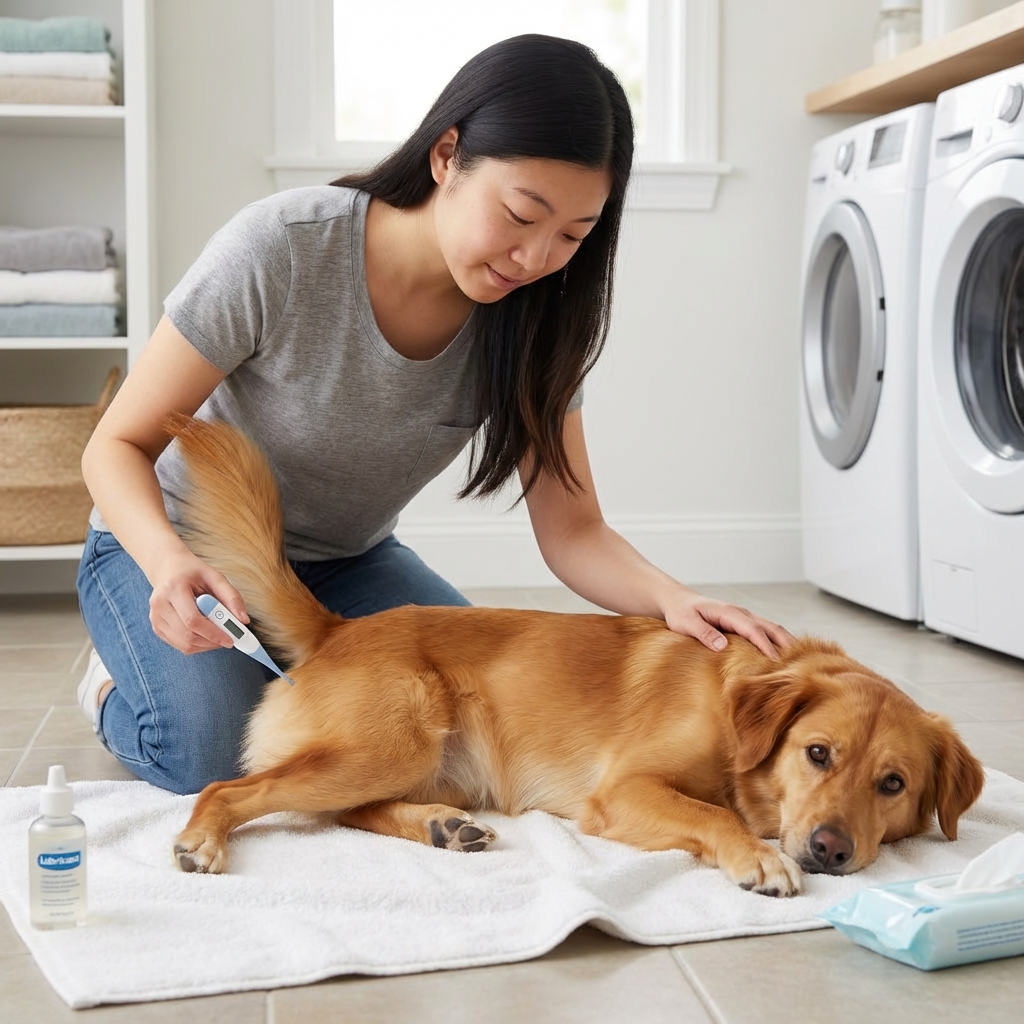
The only dependable way to know if your dog has a fever is to take their temperature with a thermometer. For most households, the easiest and most accurate method is a digital rectal thermometer used only for your pet. If you can, choose one with a flexible tip, label it clearly, and store it separately from human items.
Ear and forehead thermometers are often unreliable in dogs, especially at home, so they can miss a real fever.
What you need
- Digital thermometer (pet-only)
- Lubricant (pet-safe, like petroleum jelly or water-based lube)
- Paper towels or wipes
- A helper, if possible
- Treats for after
Step-by-step
- Stay calm and keep it gentle. Have your dog stand or lie on their side.
- Lubricate the tip of the thermometer.
- Lift the tail and insert the tip slowly into the rectum (about 1 inch for small dogs, up to 2 inches for larger dogs).
- Hold it steady until it beeps.
- Record the number, clean the thermometer thoroughly, and reward your dog.
If your dog is in pain, frightened, or trying to bite, stop and call your vet. Safety comes first.
What to do at home for a mild fever
If your dog is acting mostly normal, is breathing comfortably, and the temperature is 103°F up to 103.9°F, you can provide supportive care while you call your vet for guidance.
If the temperature is 104°F or higher, skip home monitoring and seek same-day veterinary care.
1) Call your veterinarian
Even if you plan to monitor at home for a short time, it is wise to call. Your vet will factor in age, breed, medical history, medications, and symptoms. This matters a lot for puppies, seniors, and dogs with heart, kidney, or airway issues.
2) Encourage hydration
- Offer fresh water nearby.
- Try ice chips (if your dog likes them and is safe to chew).
- Offer a small amount of low-sodium broth (no onion or garlic added), or water mixed with a tiny bit of broth for flavor.
3) Keep them cool, not cold
Use gentle cooling if your dog is warm but stable:
- Move them into air conditioning or a shaded area.
- Use a fan to improve airflow.
- Place a cool (not icy) damp cloth on paws and belly.
Avoid ice baths or very cold water, which can cause shivering and may actually raise body temperature.
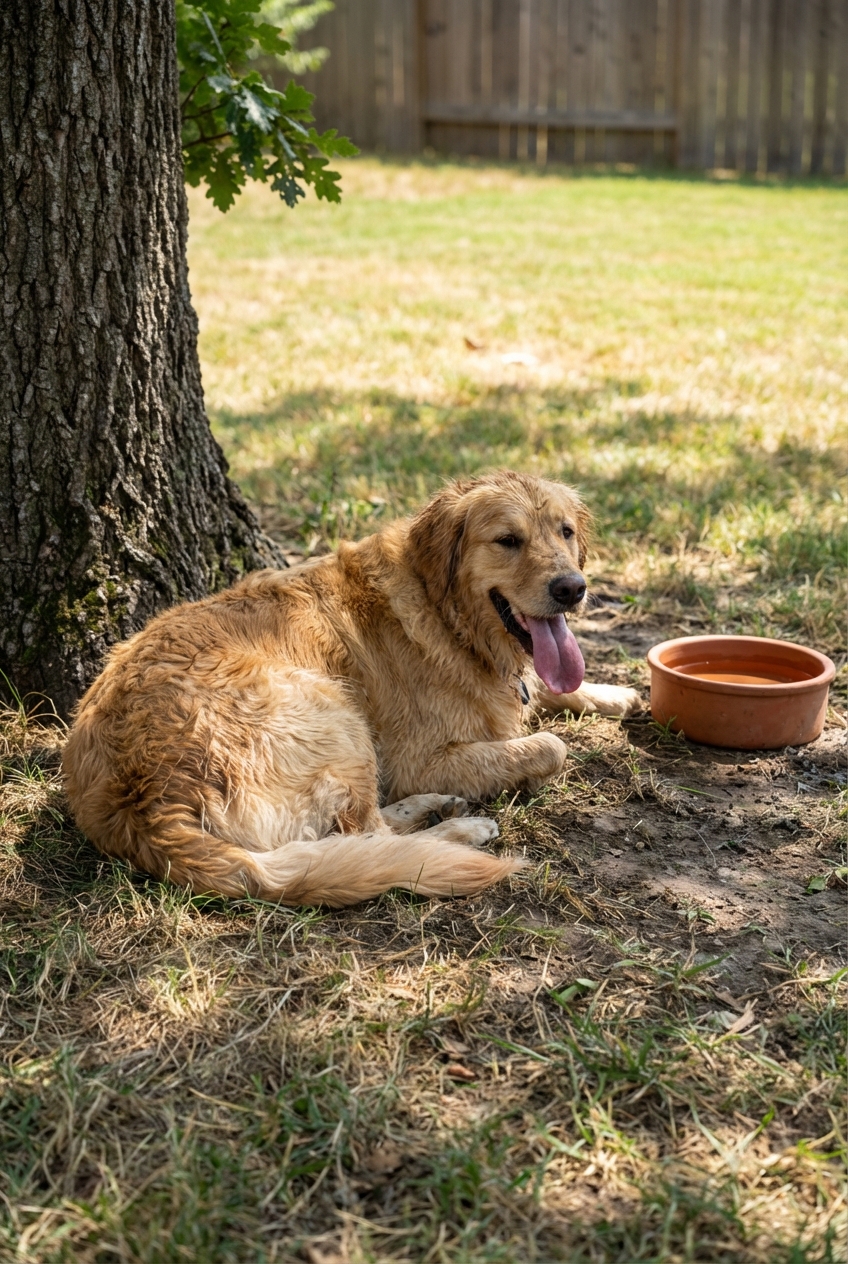
Texas note: In Frisco summers, dogs can overheat fast. If you think your dog may have heatstroke (hot environment, heavy panting, weakness, collapse), start cooling while you head to emergency care. Use cool water and a fan, and stop active cooling once you reach about 103°F unless an emergency vet tells you otherwise.
4) Rest and limit activity
Keep things quiet. No running, no long walks, and no exciting play until you know what is going on.
5) Recheck temperature
Unless your veterinarian gives different instructions, recheck your dog’s temperature about every 4 to 6 hours while you are monitoring.
What not to do
These are some of the most common mistakes I see families make when they are trying to help fast.
- Do not give human fever reducers like acetaminophen (Tylenol), ibuprofen (Advil, Motrin), or aspirin unless your veterinarian specifically instructs you. These can be toxic to dogs and can cause serious stomach ulcers, kidney injury, liver injury, and more.
- Do not force food. Appetite often returns once the fever and underlying issue are treated.
- Do not delay care if your dog is very young, very old, immunocompromised, or has other symptoms like vomiting, diarrhea, coughing, or pain.
When to go to the vet now
Seek same-day veterinary care (urgent or emergency) if any of the following apply:
- Temperature is 104°F or higher
- Temperature is 105°F or higher (very concerning)
- Temperature is 106°F or higher (emergency)
- Difficulty breathing, persistent heavy panting at rest, or blue or pale gums
- Repeated vomiting, bloody diarrhea, or signs of dehydration (sticky gums, sunken eyes, very low energy)
- Collapse, weakness, seizures, confusion, or extreme lethargy
- Known or suspected toxin exposure (xylitol, antifreeze, human meds, certain plants, rodent bait)
- Recent surgery, open wound, or swelling that looks infected
- Puppies, unvaccinated dogs, or dogs with chronic health conditions
If your vet told you to monitor at home, call or go in sooner if the fever is rising, lasts more than 24 hours, or is not improving with supportive care.
If you are unsure, call anyway. It is always better to ask than to guess.
Common reasons dogs get fevers
A fever is a symptom, not a diagnosis. Some common causes include:
- Infections (skin, ears, urinary tract, respiratory infections, dental infections)
- Inflammation or immune-mediated disease
- Heat-related illness (overheating is not the same as fever, but it raises body temperature and is an emergency)
- Tick-borne diseases (risk varies by region and travel history)
- Reaction to vaccines (mild and short-lived in some dogs, but still worth reporting to your vet)
- Pain or injury, including abscesses and internal inflammation
Your veterinarian may recommend tests such as bloodwork, urinalysis, fecal testing, X-rays, or tick disease screening depending on symptoms and exam findings.
Monitoring checklist
If your vet advises you to monitor at home briefly, keep notes. This helps your veterinarian spot patterns fast.
- Temperature and time taken
- Eating and drinking (how much and when)
- Bathroom habits (pee and poop frequency and appearance)
- Energy level (normal, quieter, cannot get comfortable)
- Any coughing, sneezing, vomiting, diarrhea
- Any new swelling, limping, or signs your dog is in pain
If anything worsens or you feel that “gut feeling” that something is not right, trust it and call your vet.
Preventing future fevers
Not every fever is preventable, but these steps reduce risk:
- Stay up to date on vaccinations as recommended by your veterinarian.
- Use vet-recommended flea and tick prevention, especially if your dog hikes, hunts, or visits grassy areas.
- Prioritize dental care. Dental infections are a sneaky cause of chronic inflammation and illness.
- Practice heat safety in warm months: shade, fresh water, avoid mid-day walks, never leave a dog in a parked car.
- Feed a balanced diet that supports immune health and a healthy weight. If you are adding fresh foods, go slowly and keep it consistent.
When you know your dog’s normal habits, you will notice illness earlier. That is one of the most powerful tools you have as a pet parent.
Quick takeaways
- Normal temp is usually about 101°F to 102.5°F, but it can vary a bit by dog and situation.
- 103°F is generally considered a fever.
- 104°F or higher means same-day veterinary care.
- 106°F is an emergency.
- Use a digital rectal thermometer for accuracy.
- Avoid human medications unless your vet says otherwise.
- When in doubt, call your veterinarian.