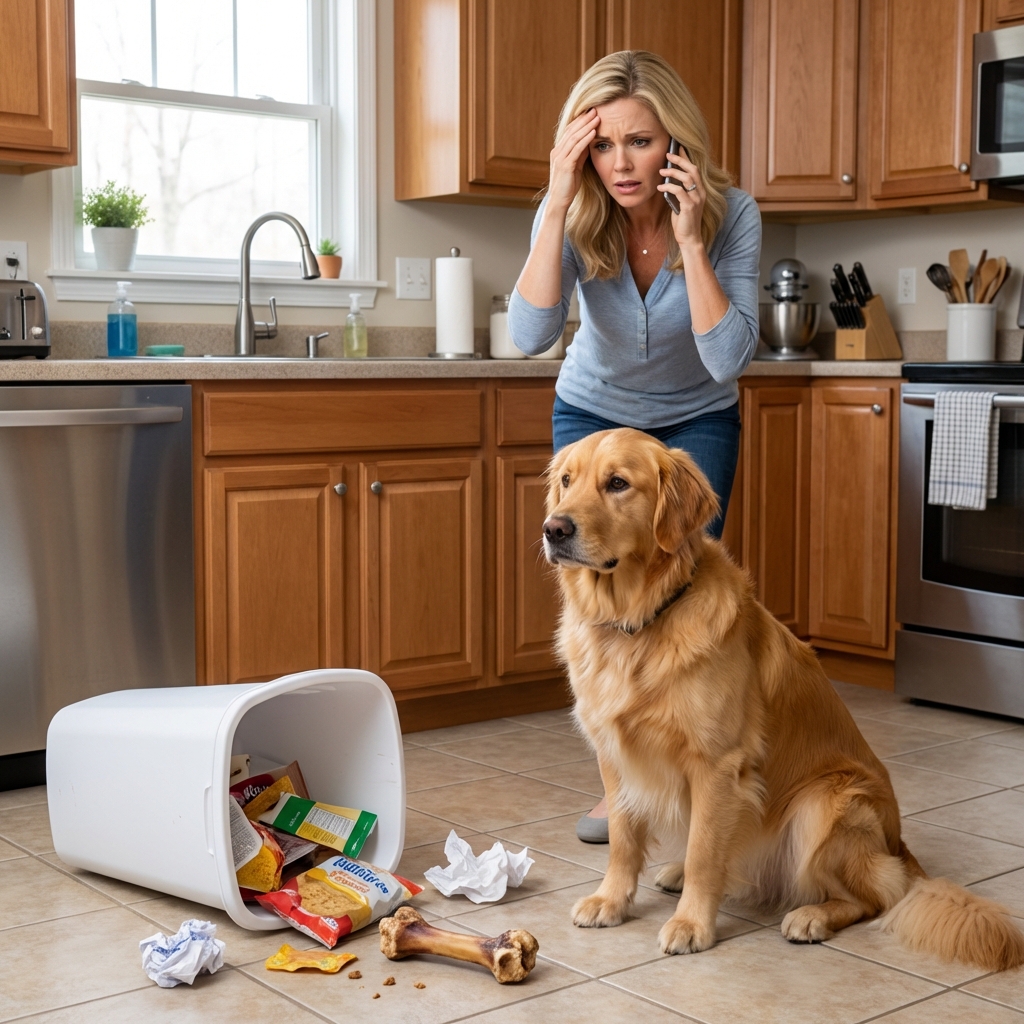
Step-by-step guidance if your dog ate chicken bones: cooked vs. raw risks, what to do immediately, what to avoid, ER red flags, monitoring timeline, and vet ...
Article
•
Designer Mixes
What to Do If Your Dog Eats a Chicken Bone

Shari Shidate
Designer Mixes contributor
As a veterinary assistant in Frisco, Texas, I have talked with many worried pet parents after a dog snatched a chicken bone. Take a breath. Some dogs get through it with no issues, but chicken bones can cause serious problems like choking, mouth or throat injury, stomach upset, or intestinal blockage and perforation. The key is to respond calmly, watch for specific warning signs, and know when to go to an emergency vet.
Note: This article is for general education and is not a substitute for veterinary care. When in doubt, call your veterinarian or an emergency clinic.
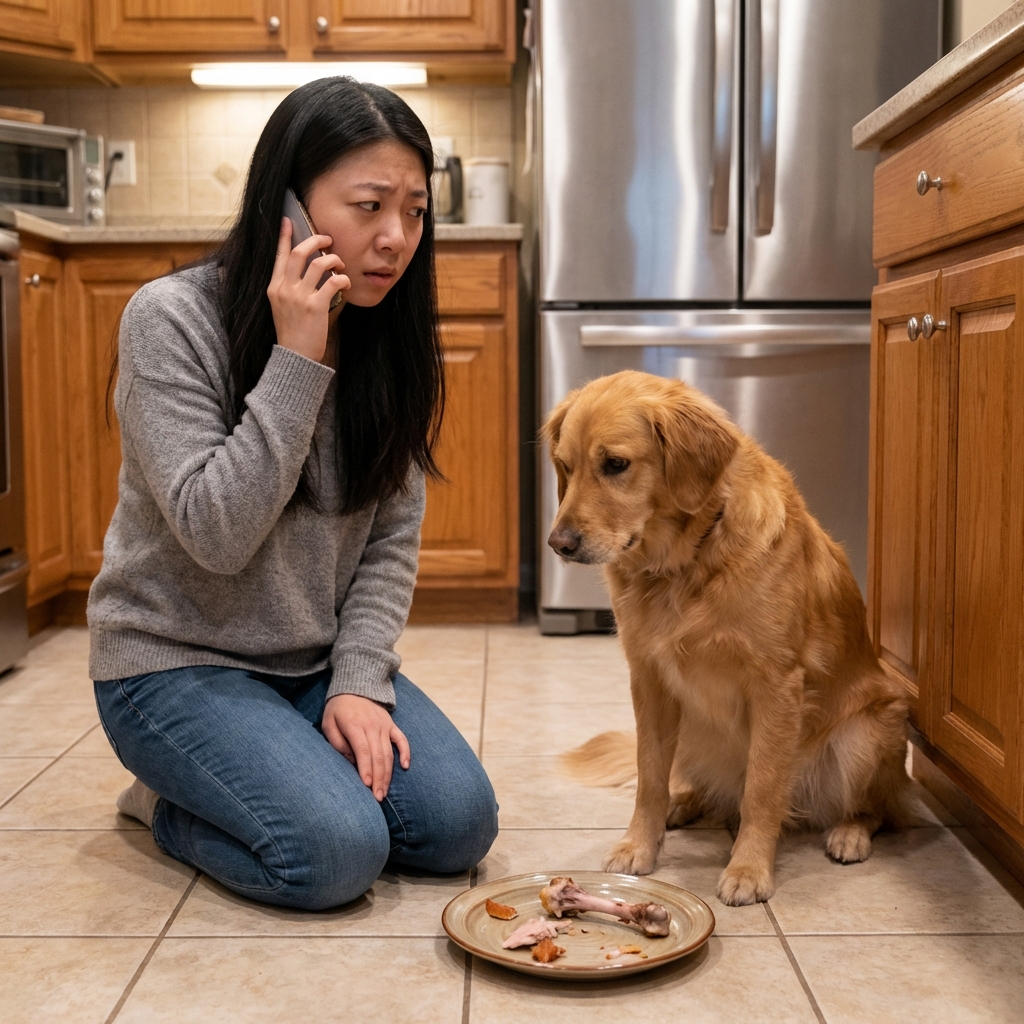
First, do not panic and do not try risky home fixes
What you do in the first few minutes matters. Avoid common internet advice that can make things worse.
- Do not induce vomiting unless a veterinarian specifically tells you to. Bones can scrape the esophagus on the way back up.
- Do not give bread, rice, pumpkin, or other “cushioning” foods unless your vet advises it. In some cases, adding bulk can increase obstruction risk or complicate vomiting.
- Do not give hydrogen peroxide without veterinary guidance. It can cause severe stomach irritation and vomiting complications.
- Do not pull a bone from the throat if it is not easily visible and gently removable. You can push it deeper, tear delicate tissues, or cause your dog to panic and inhale material into the airway.
- Do not do a blind finger sweep inside the mouth or throat. You can push a fragment farther back or get bitten.
Step-by-step: what to do right now
Step 1: Check for choking or breathing trouble
Look for coughing, gagging, pawing at the mouth, drooling, blue or pale gums, wheezing, or distress. If your dog cannot breathe normally, that is an emergency.
- If you can see a piece loosely in the front of the mouth, you may gently remove it.
- If you suspect choking and cannot quickly remove an obvious piece, go to an emergency vet immediately. Do not spend time trying to look deeper in the mouth.
- If your dog is struggling to breathe, go now and call ahead from the car if you can.
If you have been trained in canine first aid, follow your training. If not, focus on getting to an emergency clinic quickly.
Step 2: Identify what was eaten
Gather quick details for your vet. These details help determine risk.
- Cooked vs. raw: Cooked bones are more likely to splinter into sharp shards, but any bone can cause choking or GI injury.
- Size and shape: Small, sharp pieces can lodge in the throat or irritate the GI tract. Larger pieces can obstruct, especially in dogs that gulp.
- Amount: One small piece vs. multiple bones.
- Size of your dog: A Yorkie and a Lab face different risks with the same bone.
- Time: When it happened and whether vomiting has started.
Extra urgency is reasonable if your dog is very small, brachycephalic (flat-faced), a known gulper, or has a history of GI disease or prior abdominal surgery.
Step 3: Call your veterinarian or an emergency clinic
Even if your dog seems fine, it is smart to call. Many clinics can advise whether to monitor at home or come in. Be ready to describe the bone, your dog’s size, and any symptoms.
Step 4: Monitor closely
Many problems show up within the first few days, but delayed signs can happen, especially with partial obstructions or irritation. Plan to watch your dog closely for at least 72 hours, and continue to keep an eye on appetite, energy, vomiting, and stool for about a week.
Keep your dog calm, leash-walk only, and avoid strenuous activity while you monitor.
When it is an emergency
Go to an emergency veterinarian now if you notice any of the following:
- Repeated vomiting or unproductive retching (trying to vomit with little or nothing coming up)
- Choking, trouble breathing, excessive coughing, or gagging
- Swollen, painful abdomen or a “praying position” (front end down, rear end up) that can signal abdominal pain
- Refusing food or water, or extreme lethargy
- Bloody drool, blood in vomit, black tarry stool, or obvious blood in stool
- Straining to poop, producing only small amounts, crying while trying, or no stool at all
- Signs of severe pain, restlessness, trembling, or whining
Why these matter: Sharp fragments can irritate or puncture the GI tract, and larger pieces can cause an obstruction that becomes life-threatening.
What your vet may do (and why)
Veterinary teams choose diagnostics and treatment based on symptoms, bone size, and how long ago it was eaten.
- Oral exam: Checks for bone stuck in the mouth or lodged near the back of the throat.
- X-rays: May show bone and or secondary signs like abnormal gas patterns. Not every fragment is easy to see, especially small pieces.
- Contrast imaging or ultrasound: Helps if an obstruction is suspected but not obvious.
- Endoscopy: A scope may be used to retrieve bone pieces from the esophagus or stomach without surgery, when appropriate.
- Surgery: Recommended if there is a blockage, perforation risk, or severe injury.
- Medications and supportive care: Anti-nausea meds, pain control, GI protectants, and fluids may be used based on your dog’s condition.
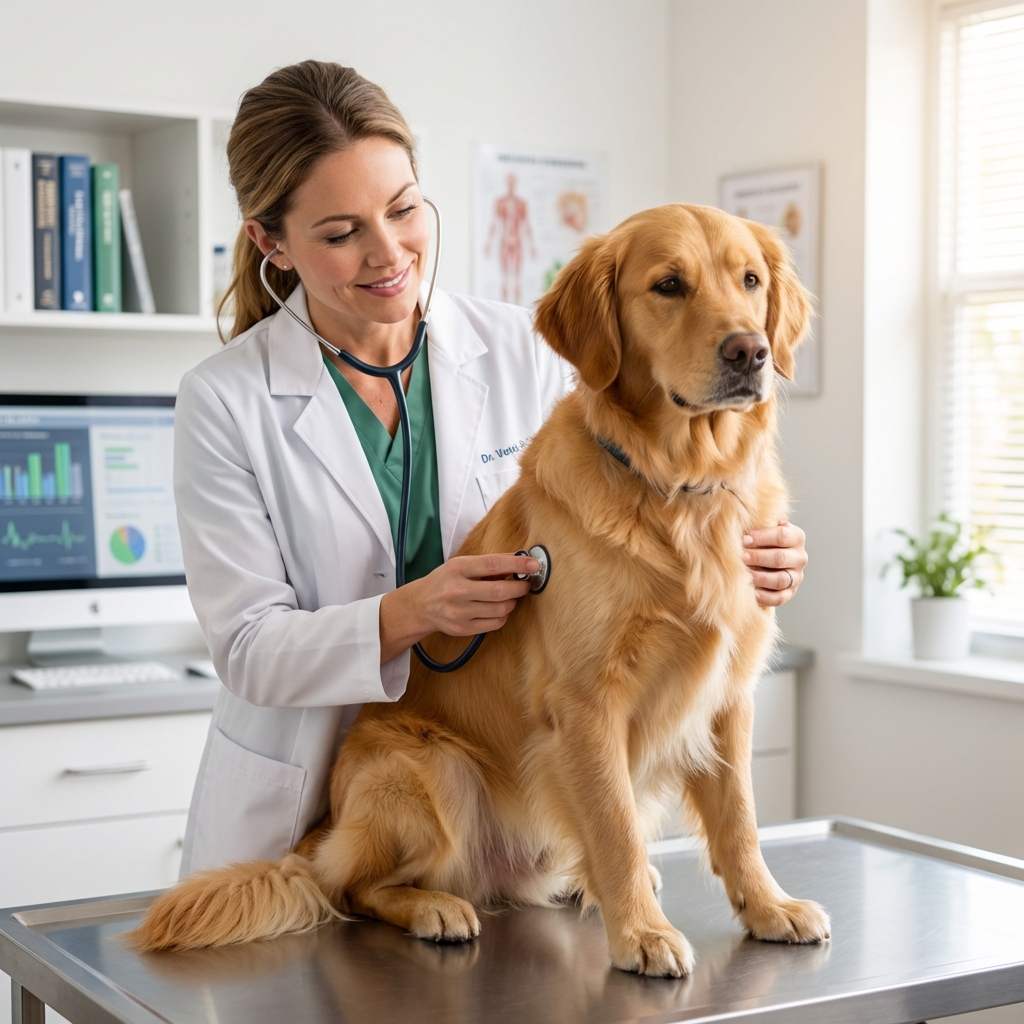
Home monitoring checklist
If your veterinarian says it is safe to monitor at home, use a simple checklist. You are looking for trends, not just a single moment.
- Appetite: Eating normally, eating less, or refusing food?
- Water intake: Normal drinking or avoiding water?
- Energy: Normal play and interest or unusually quiet?
- Vomiting: None, once, or repeated? Any drooling or repeated swallowing?
- Stool: Normal, constipated, diarrhea, blood, black or tarry, or straining? You may also notice small bone fragments.
- Discomfort: Hunched posture, pacing, panting, or belly tenderness?
If anything worsens, call your vet again or go to an emergency clinic. Trust your instincts. You know what “normal” looks like for your dog.
Prevention: keep it from happening again
Chicken bones are tempting. Prevention is the best medicine here.
- Secure trash: Use a lidded, heavy trash can or keep it behind a closed door.
- Clean up fast: Put plates and bones directly into the trash or a sealed container.
- Teach “leave it” and “drop it”: These cues can prevent an emergency.
- Use safe chew alternatives: Ask your vet for chew recommendations based on your dog’s size and chewing style.
- No cooked bones: Cooked bones splinter more easily, especially after roasting or frying.
Quick recap
- Stay calm, check breathing, and do not induce vomiting or try home remedies unless your vet instructs you to.
- Call your vet or an emergency clinic with details: cooked vs. raw, bone size and amount, dog size, time eaten, and symptoms.
- Monitor closely for at least 72 hours, and keep watching for about a week. Go in immediately for breathing trouble, repeated vomiting or unproductive retching, pain, blood, or trouble pooping.
If you are ever unsure, it is always appropriate to call an emergency clinic. It is better to ask early than to wait until a small problem becomes a dangerous one.