
A clear, vet-informed guide to choking emergencies: how to tell choking from coughing, what to do first, safe mouth checks, dog Heimlich techniques, and when...
Article
•
Designer Mixes
What To Do If Your Dog Chokes

Shari Shidate
Designer Mixes contributor
Choking is one of those emergencies that can turn a normal day into a heart-pounding moment in seconds. The good news is that many dogs can be helped quickly when an owner knows what to look for and what to do first. As a veterinary assistant, I have seen how fast and calm action can make all the difference.
This guide covers the key facts every owner should know, including how to tell choking from coughing, what to do right away, and when to go straight to the ER.
Quick note: This article is not a substitute for hands-on training or veterinary care. If you can, take a certified pet first aid course and ask your vet what they recommend for your dog.
Choking vs. coughing
Dogs gag, cough, and retch for many reasons, and not all of them are choking. Choking means the airway is blocked enough that your dog cannot breathe normally. Coughing usually means air is still moving.
Important: Some dogs with a partial blockage can still cough, gag, or make noise. If your dog seems panicked, is struggling to breathe, or symptoms started suddenly while eating or chewing, treat it as urgent.
More likely choking
- Sudden distress while eating or chewing a toy
- Pawing at the mouth or rubbing the face on the ground
- Wide eyes, panic, or inability to settle
- No sound or very little sound when trying to breathe
- High-pitched wheeze or harsh gasping
- Blue or gray gums or tongue (a late, serious sign)
- Collapse
More likely coughing or reverse sneezing
- Hacking cough with air movement and normal gum color
- “Goose honk” cough (can be tracheal irritation, common in some small dogs)
- Reverse sneeze: repeated snorting or “honking” while the dog is still able to inhale
If air is moving
If your dog is coughing strongly and can move air, do not do abdominal thrusts. Keep your dog as calm as possible, remove any obvious hazard you can safely reach, and call your vet or an emergency clinic for guidance. Go in urgently if breathing becomes labored, gums change color, or the distress does not quickly improve.
First steps
Take a breath, then move fast. Your goal is to restore airflow and get veterinary help if you cannot clear the obstruction quickly.
1) Call for help
- If someone is with you, have them call an emergency vet while you assess your dog.
- If you are alone, do a quick check, then call. Put your phone on speaker if possible.
- Be cautious: a frightened dog may bite, even a sweet one.
- If you use a muzzle, only do so if it is truly safe and your dog can breathe. Never muzzle a dog in respiratory distress.
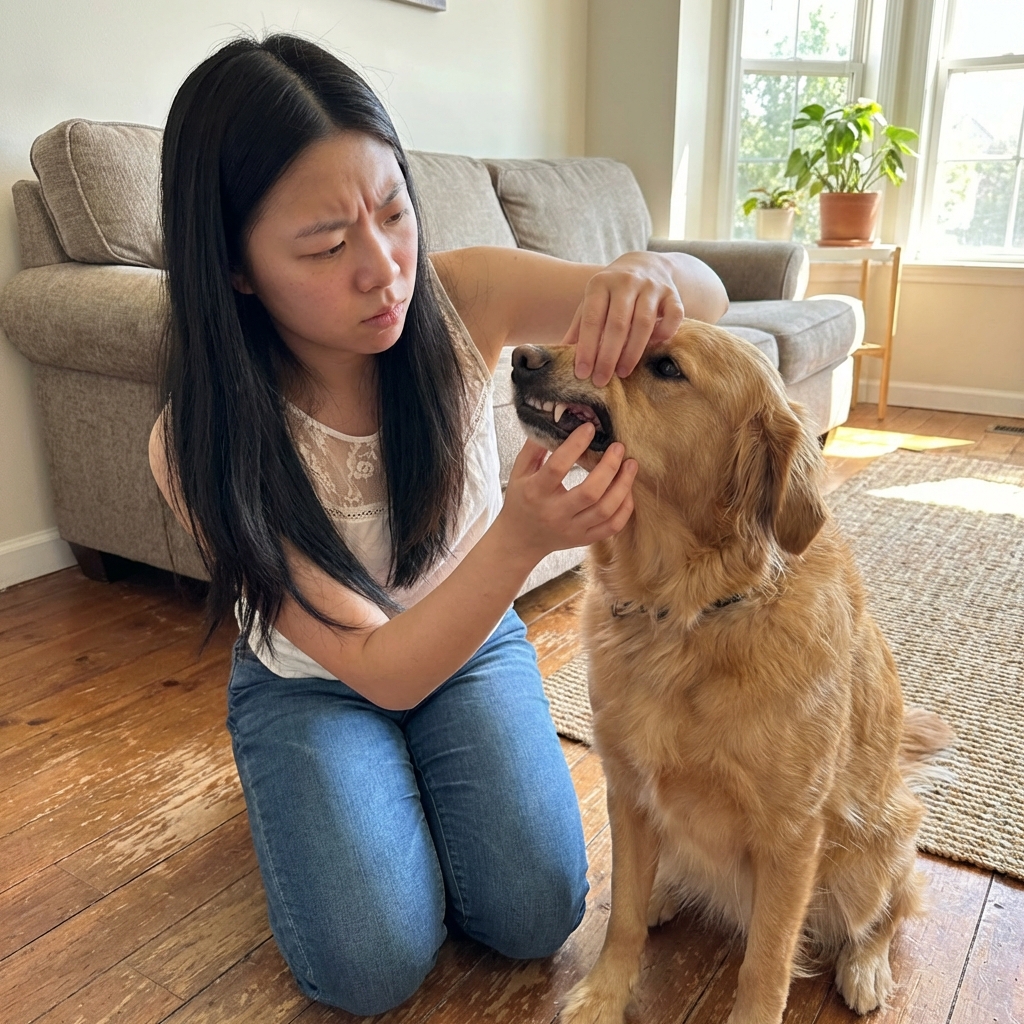
2) Check the mouth
If your dog will allow it, open the mouth and look for a visible object.
- If you can see the object and it is easy to grasp, gently remove it with your fingers.
- Do not blindly sweep the throat with your fingers. This can push the object deeper and worsen the blockage.
- If the object is embedded (like a bone wedged across the upper molars) and you cannot remove it quickly, go to the ER immediately.
3) If your dog cannot breathe
If there is severe distress with little to no airflow, use dislodging maneuvers. These techniques can cause injury if done with excessive force, so use firm, controlled thrusts and only when you suspect a true airway obstruction. Re-check the mouth between attempts.

Abdominal thrusts (standing dog)
- Stand or kneel behind your dog.
- Make a fist and place it just behind the ribcage (the soft area of the belly), then wrap your other hand over it.
- Thrust inward and upward in quick motions, like a “J” shape.
- After 3 to 5 thrusts, check the mouth again.
Small dog
- Hold your small dog with their back against your chest if you can do so safely.
- Place two or three fingers just behind the ribcage and push inward and upward in quick thrusts.
- Re-check the mouth after a few thrusts.
Dog on their side
- Place one hand on the back for support.
- With the other hand, press firmly behind the ribcage, pushing inward and slightly upward.
- Repeat a few times, then look in the mouth again.
Back blows
Some first-aid programs include back blows and some prioritize abdominal thrusts first. If you have had formal training, follow the method you were taught.
- With the dog standing or positioned securely, give 3 to 5 firm blows between the shoulder blades using the heel of your hand.
- Re-check the mouth.
If your dog collapses
If your dog collapses, is unconscious, or gums are blue or gray: this is an emergency right now. Call an emergency veterinarian immediately and begin pet CPR if you are trained. If you are alone, call first (speakerphone if possible), start CPR, and transport as soon as you can do so safely. CPR is hard to do effectively in a moving car, so have someone else drive whenever possible.
Even after an object comes out, dogs can develop airway swelling or aspiration pneumonia. A veterinary exam is still recommended after any serious choking episode.
What not to do
In an emergency, it is easy to do the wrong thing while trying to help. These mistakes can make choking worse.
- Do not do a blind finger sweep in the throat.
- Do not pour water down your dog’s throat.
- Do not waste time trying home remedies like butter or oil.
- Do not assume your dog is “fine” after the object comes out.
After the object is out
Once a blockage is cleared, many dogs act normal fast, but there can still be hidden trouble. Pieces can remain, the throat can be scraped, or material can be inhaled into the lungs.
Go to a vet urgently if you notice
- Persistent coughing, gagging, or repeated swallowing
- Drooling, bloody saliva, or pawing at the mouth
- Hoarse bark or noisy breathing
- Lethargy, fever, or decreased appetite
- Rapid breathing, labored breathing, or wheezing
Aspiration pneumonia can show up hours later, and it can also develop over the next 1 to 3 days. If something went down “the wrong pipe,” your vet may recommend chest X-rays and monitoring.
What to tell the ER
- What your dog was chewing or eating (bring the packaging or a matching item if you can)
- About what time it happened
- What signs you saw (gagging, collapse, gum color changes)
- What you did at home (mouth check, thrusts, back blows, CPR)
Daily prevention
Many choking emergencies are preventable. The best approach is a few smart routines you repeat every day and every time you hand your dog a chew.
Choose safer chews
- Pick chews that are appropriate for your dog’s size and chewing style.
- Avoid giving small, hard items to power chewers who try to swallow chunks.
- Be cautious with bones, rawhides, tendon-style chews, and toys that can break into pieces.
Supervise chew time
- Stay nearby, especially with new chews or new toys.
- Remove the last small piece when it becomes a swallowable “nub.”
- If you have multiple pets, feed and chew separately to reduce competition and gulping.
Slow down fast eaters
- Use a slow feeder bowl, puzzle feeder, or scatter feeding.
- Serve smaller meals more often if your vet agrees.
- For dogs who inhale food, talk to your vet about safety strategies and whether a GI issue is contributing.
Make your home floor-safe
- Pick up kids’ toys, socks, corn cobs, dental floss, and anything small and swallowable.
- Use a lidded trash can. Dogs can choke on packaging, sticks, and cooked bones.

Common choking hazards
In clinics, we see patterns. These are some of the most common offenders:
- Chunks of bully sticks, rawhide, or tendon chews
- Bones and bone fragments, especially cooked bones
- Balls that are too small and can lodge in the throat
- Sticks, corn cobs, and hard plastic pieces
- Socks, underwear, small dish towels
- Fruit pits and large seeds
When it is an emergency
Do not wait and see if your dog shows any of the signs below. Head to an emergency veterinarian immediately.
- Blue, gray, or very pale gums
- Collapse or severe weakness
- Struggling to inhale or exhale, or no air movement
- Suspected airway obstruction that you cannot clear within moments
- Choking episode followed by persistent cough or breathing changes
Tip: Save the number and address of your nearest 24/7 emergency vet in your phone today. In a true choke, you do not want to be searching online while your dog needs you.
Quick action plan
If you remember nothing else, remember this simple flow:
- Assess: Is your dog able to breathe and move air?
- Look: If safe, check the mouth for a visible object.
- Act: If there is little to no airflow, do abdominal thrusts (and follow your training on back blows).
- Re-check: Look in the mouth again after a few attempts.
- Go: ER visit after any serious choking episode, even if it seems resolved.
The best emergency plan is the one you can actually do under stress. Practice where your hands go, keep chews safe, and store your emergency vet info before you ever need it.
Sources
Emergency guidance for choking and airway obstruction is consistent across veterinary emergency training and animal first aid curricula. For formal training, consider a pet first aid course from a reputable provider and ask your veterinary clinic what they recommend for your area.
- American Red Cross: Cat and Dog First Aid (includes choking and breathing emergencies)
- MSPCA-Angell: First aid guidance for common pet emergencies (including breathing issues)