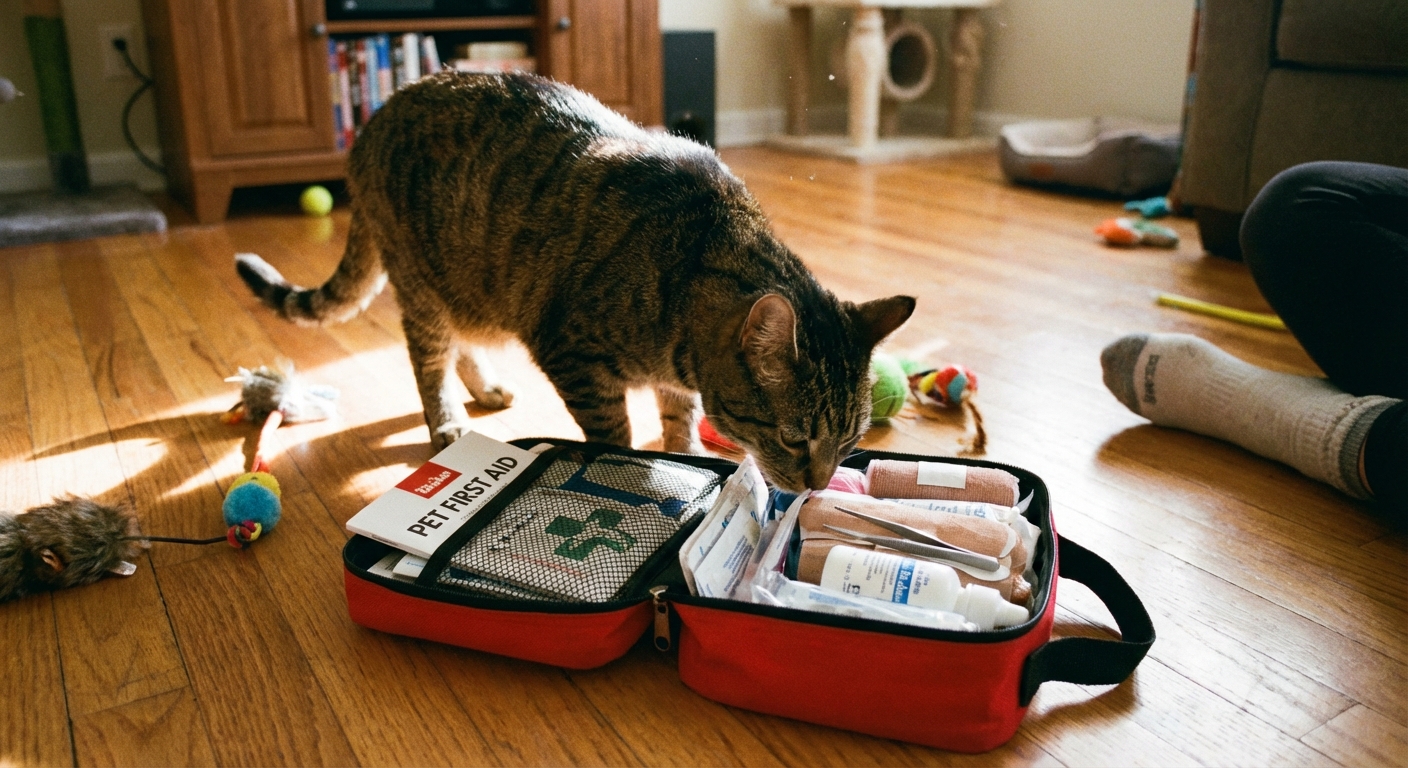
Build calm first-aid habits for your cat with quick nose-to-tail checks, gentle “purrito” practice, a simple kit list, and clear emergency warning signs.
Article
•
Designer Mixes
What to Do If Your Cat Is Choking

Shari Shidate
Designer Mixes contributor
If you ever think your cat is choking, your heart will race and your brain will want to do ten things at once. Take a breath. A calm, step-by-step response can truly save a life.
As a veterinary assistant in Frisco, Texas, I have seen that the biggest danger is losing time, either by assuming the cat will “work it out” or by trying to sweep a finger in a panicked way that pushes an object deeper. This guide walks you through what to look for, what to do right now, and when to go straight to an emergency vet.
First: Is it choking or something else?
Cats make scary noises for many reasons. Hairballs, asthma, nausea, upper respiratory infections, and even coughing fits can mimic choking. True choking is a foreign object interfering with airflow, and it can be partial or complete. Either way, trouble getting air is the emergency.
Signs that suggest choking or an airway blockage
- Sudden distress, panic, or wide eyes
- Pawing frantically at the mouth
- Gagging with little or no sound
- Obvious trouble inhaling, minimal air movement, or a high-pitched inspiratory noise (stridor)
- Drooling, foaming, or repeated swallowing attempts
- Blue or gray gums or tongue
- Collapse or extreme weakness
Signs more consistent with a hairball or cough
- Hacking or retching in repeated waves
- Some air movement is obvious, and your cat can still vocalize
- Episodes that come and go over minutes or days
If your cat is coughing but breathing well: keep them calm, do not pry the mouth open, and call your veterinarian for guidance.
When in doubt, treat it as choking. It is always better to be “too cautious” with an airway concern.
What to do immediately
1) Keep your cat and yourself safe
A choking cat may bite out of fear, even if they are normally gentle. Wrap your cat in a thick towel like a burrito, leaving the head exposed, if you can do so without delaying care.
- Move away from other pets and children.
- Keep the environment quiet and well-lit.
- If your cat is fighting hard, do not force the mouth open for long. Oxygen matters more than a perfect exam.
2) Call an emergency vet while you act
If another adult is present, have them call your nearest emergency clinic immediately and keep the line open. Put the phone on speaker so your hands stay free. If you are alone, you may need to act first and call as soon as you can. Let the clinic know you are coming with a suspected choking cat.
3) Look in the mouth only if you can do it quickly
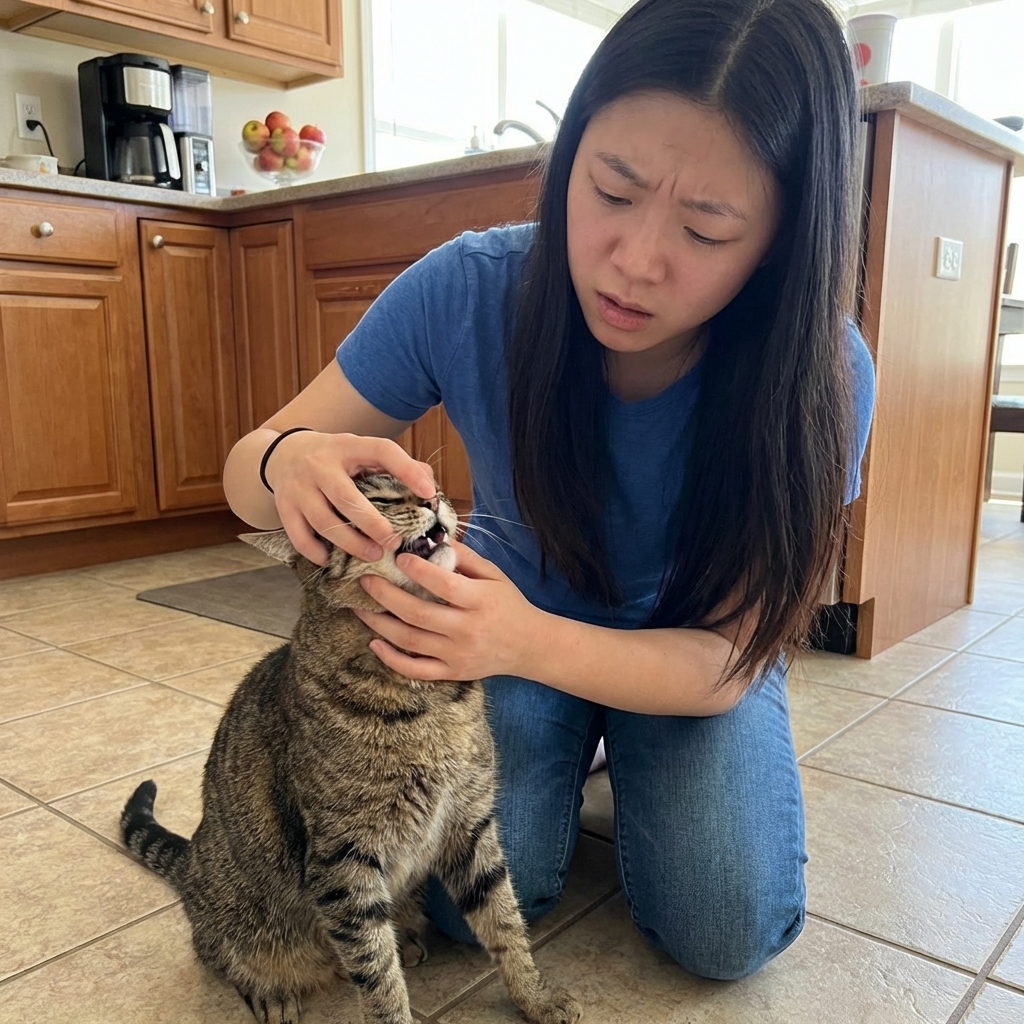
If your cat will allow it, gently open the mouth and look for a visible object like a toy piece, bone fragment, string, or a wad of food. If you cannot see clearly within a second or two, stop and focus on getting to the ER.
- If you can clearly see and easily grasp it, use tweezers or hemostats if available, or carefully pinch with your fingers.
- Do not blindly sweep with your finger. This can push the object deeper or cause injury.
- Never pull string that disappears down the throat. String can be anchored under the tongue or in the stomach and pulling can cause serious internal damage. Go to the vet immediately.

If your cat is not breathing or is collapsing
This is a life-threatening emergency. Your goal is to get airflow, then get to the vet fast.
Step A: Check for breathing and gum color
- Watch the chest for movement.
- Hold your hand in front of the nose to feel airflow.
- Check gums. Healthy gums are pink. Blue, gray, or very pale gums are an emergency.
Step B: If an object is visible, remove it carefully
If you can see it and safely grab it, remove it. If not, move to the next step.
Step C: Use abdominal thrusts only if you strongly suspect a blockage
Abdominal thrusts can cause injury, but a complete airway obstruction is worse. Use this only when you believe your cat cannot breathe because something is stuck, and head to the ER immediately after.
- For a standing cat: Position your cat with their back against your body. Place a fist just below the ribcage (soft area of the belly), and give 3 to 5 quick, firm inward and upward thrusts.
- For a cat lying on their side: Place one hand on the back for support. With the other hand, press firmly inward and upward just behind the last rib 3 to 5 times.
Use extra caution in very small kittens, cats with known abdominal pain or trauma, and pregnant cats. When possible, prioritize rapid transport and professional help.
After thrusts, quickly check the mouth again. If the object becomes visible, remove it.
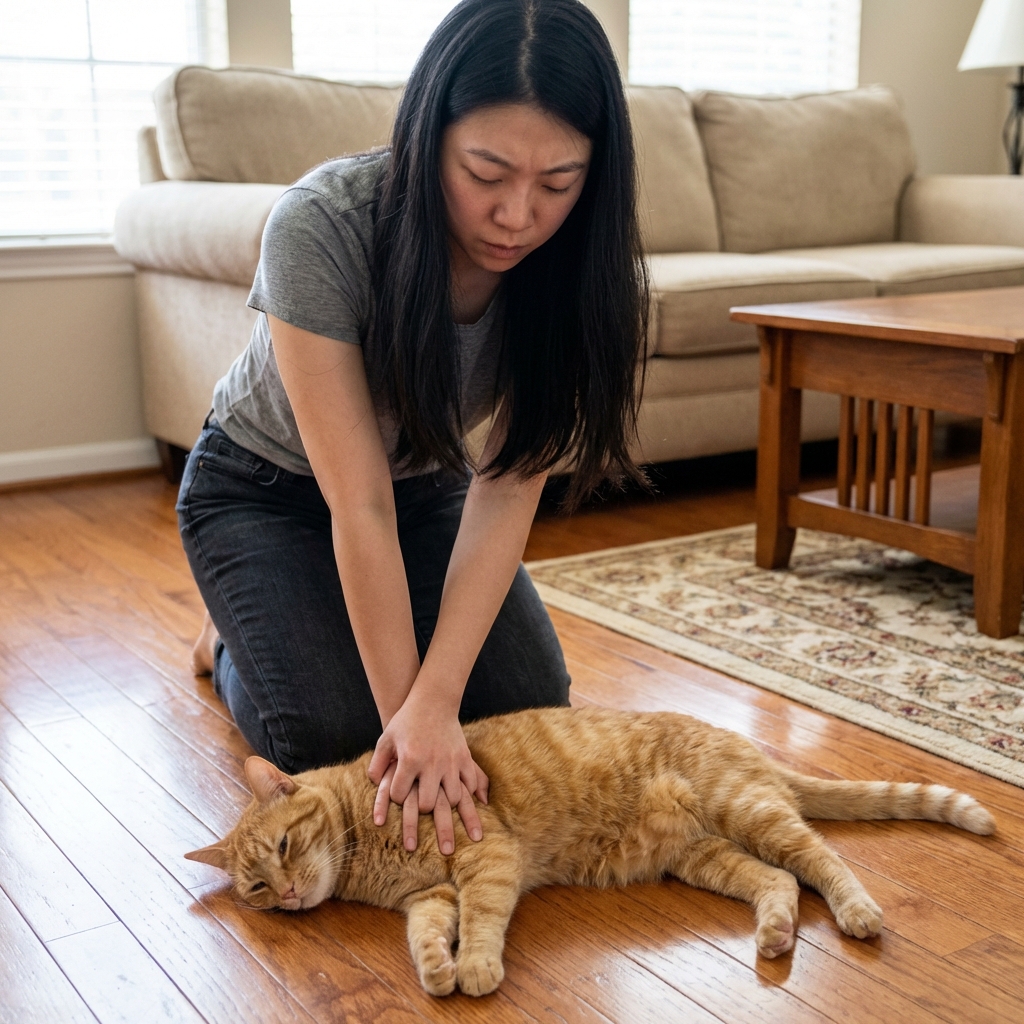
Step D: If your cat is unconscious, begin CPR and go to the ER
Cat CPR is a big topic, but here is the essential, evidence-based approach while you are en route to emergency care.
- Lay your cat on their side (often the right side) on a firm surface.
- Extend the head and neck gently to open the airway.
- Check the mouth for a visible obstruction and remove it if seen.
- Chest compressions: Compress the chest about one-third to one-half its width, at a rate of 100 to 120 compressions per minute.
- Rescue breaths: After 30 compressions, close the mouth and seal your mouth over the nose. Breathe in gently until the chest rises, then allow it to fall. Give 2 breaths.
If you can, have someone else drive. Continue CPR until you arrive or your cat starts breathing effectively.
What not to do
- Do not delay hoping it will pass if your cat is struggling to inhale.
- Do not do a blind finger sweep.
- Do not give food, water, oils, or butter to “wash it down.”
- Do not hang your cat upside down or shake them.
- Do not pull on string or ribbon that disappears down the throat.
After the episode: still see a vet
Even if your cat seems normal afterward, I recommend a veterinary exam the same day. Here is why: choking can irritate the airway, and cats can aspirate tiny bits of food or fluid into the lungs, which can lead to aspiration pneumonia.
Red flags in the next 24 to 72 hours
- Coughing, wheezing, or rapid breathing
- Lethargy, hiding, or reduced appetite
- Fever (temperature over 102.5°F or 39.2°C if you can safely measure)
- Vomiting or repeated gagging
- Hoarse meow or painful swallowing
If you see any of these, go to an emergency vet immediately.
Common choking hazards
Prevention is the quiet hero here. Cats are nimble, curious, and very good at finding trouble.
- String items: ribbon, yarn, dental floss, thread, tinsel
- Small toy parts: feathers, bells, detachable bits, tiny balls
- Human foods: bones, gristle, popcorn kernels, large chunks of meat
- Household items: rubber bands, hair ties, earplugs
- Medications: pills that are too large or given without water, especially in cats that resist
Lower the risk
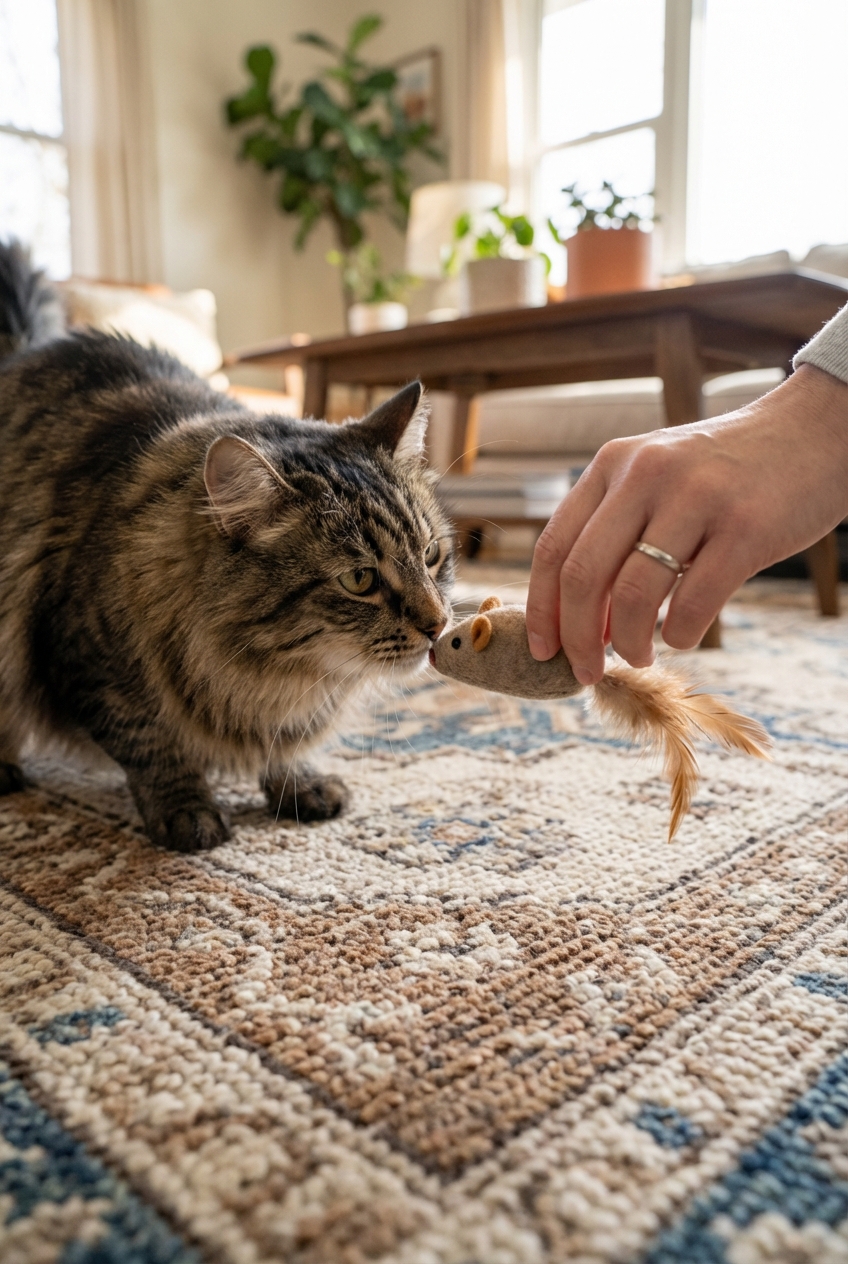
- Choose safer toys: opt for larger, sturdy toys that cannot be swallowed.
- Supervise string play: wand toys are great, but put them away after playtime.
- Feed smart: offer bite-sized pieces, especially for cats that gulp.
- Slow down fast eaters: use a puzzle feeder or spread food on a wide plate.
- Regular dental care: painful teeth can cause odd chewing and gulping habits.
- Hairball support: routine brushing helps reduce hair ingestion and retching episodes that look like choking.
When to go to the ER now
Go now if any of the following are true:
- Your cat cannot inhale normally
- Gums are blue, gray, or very pale
- Your cat collapses or cannot stand
- There is string or a foreign object you cannot safely remove
- Breathing remains noisy or labored after the episode
Transport tips
- Use a carrier if possible and keep your cat as calm and still as you can.
- Keep the head and neck in a natural, neutral position. Do not force the neck to bend.
- Once you are on the way, avoid repeated mouth checks unless your cat stops breathing.
Trust your instincts. If something feels “off,” you are not overreacting. With airway problems, time matters.