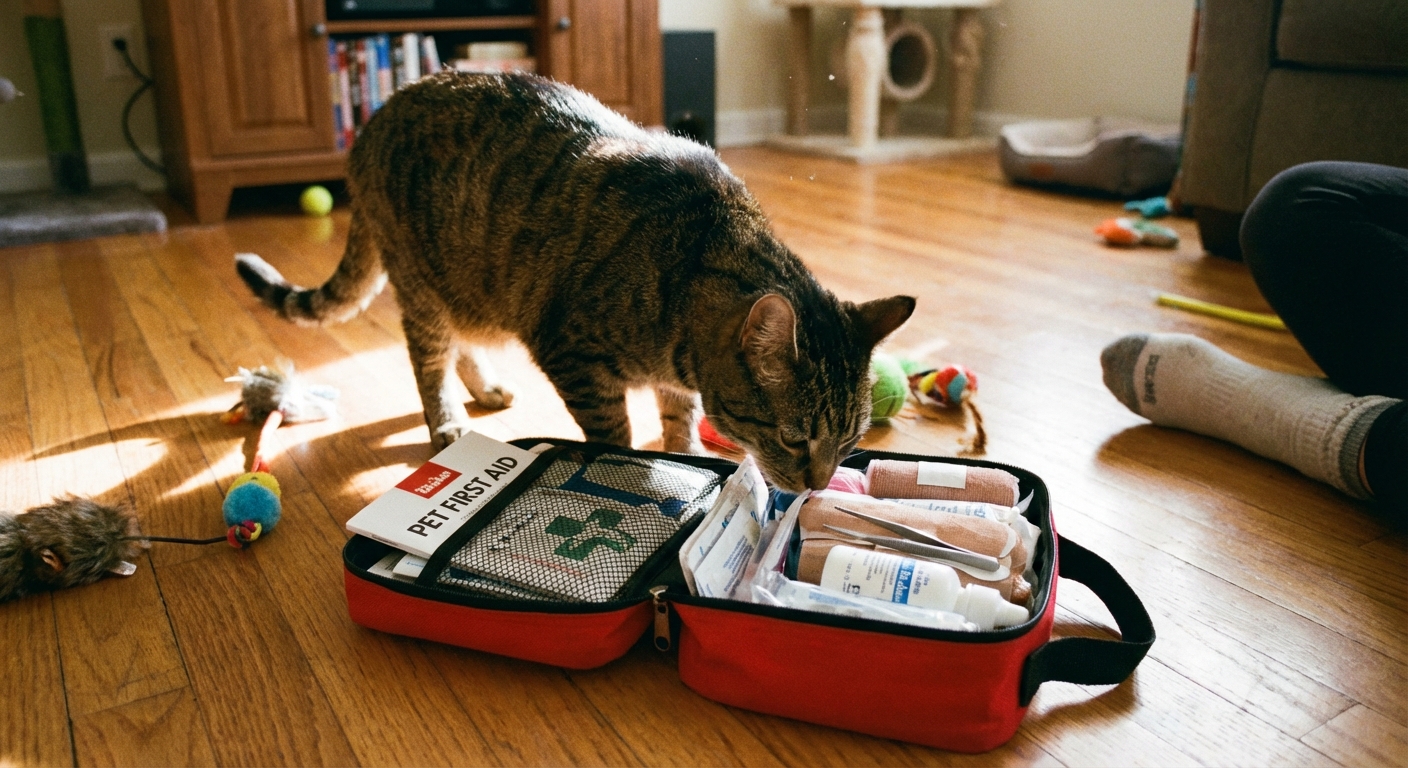
Understand cat seizure signs, phases, and top causes—from toxins to metabolic issues and brain disease. Learn the 5-minute emergency rule, what to do, and ...
Article
•
Designer Mixes
What To Do If Your Cat Has a Seizure

Shari Shidate
Designer Mixes contributor
If you have ever seen a cat have a seizure, you know how scary it feels. The good news is that many cats recover quickly, and what you do in the moment can make a real difference in their safety and your veterinarian’s ability to help.
As a veterinary assistant, I like to keep this topic simple and practical: protect your cat, time the episode, and get the right follow-up care. Let’s walk through exactly what to do, what not to do, and when it is an emergency.
Quick note: This guide is not a substitute for veterinary care. If you are unsure or worried at any point, call your veterinarian or an emergency clinic.

What a seizure can look like in cats
Seizures are caused by abnormal electrical activity in the brain. They can be obvious or subtle.
Common signs
- Sudden collapse or falling to one side
- Paddling or stiffening of the legs
- Loss of awareness or staring into space
- Jaw chomping, drooling, or foaming
- Vocalizing, agitation, or seeming frightened for no clear reason
- Loss of bladder or bowel control
- Afterward: confusion, hiding, restlessness, temporary blindness, or extreme hunger
Some cats have focal seizures that look like facial twitching, ear flicking, skin rippling, sudden aggression, or repetitive movements. Those still matter and should be discussed with your vet.
Not every collapse is a seizure
Some events look similar but have different causes, like fainting (syncope), severe balance issues (vestibular episodes), or sudden weakness. If you can safely take a short video, that is one of the fastest ways to help your vet sort out what you are seeing.

First aid: what to do during a seizure
Your job is not to stop the seizure with your hands. Your job is to prevent injury and gather information.
Step-by-step
- Stay calm and start a timer. Use your phone timer. Duration is one of the most important details.
- Prevent falls. If your cat is on a couch or bed, gently slide them onto the floor if you can do so safely.
- Clear hazards. Move chairs, lamps, cords, or anything your cat could hit.
- Cushion nearby. Place a folded blanket or pillow next to their body to soften bumps, but do not cover their face.
- Lower stimulation. Dim lights, reduce noise, and keep other pets and children out of the room.
- Keep hands away from the mouth. Cats do not “swallow their tongue,” but they can bite hard without meaning to.
- Record a short video if safe. Even 10 to 20 seconds can help your veterinarian identify the type of episode.
If your cat is actively seizing, do not try to give food, water, or medication by mouth.
Right after: what to do next
After a seizure, many cats go through a postictal period, meaning the recovery phase after a seizure. They may act disoriented, wobbly, clingy, or they may hide. This can last minutes to hours.
Help them recover safely
- Move them to a quiet, safe space away from stairs, ledges, and litter boxes with high sides until they are steady.
- Offer water once fully aware and swallowing normally. Wait on food until they seem coordinated.
- Look for injuries like broken nails, bleeding, limping, or facial trauma.
- Write down details while it is fresh: time, length, what happened before, what it looked like, and how long recovery took.
Tip: If your cat seems temporarily blind or panicky after a seizure, keep them contained and speak softly. Forcing interaction can increase stress.
When it is an emergency
Some situations require immediate veterinary care. If you are unsure, it is always appropriate to call an emergency clinic for guidance.
Go to an emergency vet now if:
- The seizure lasts more than 5 minutes
- Your cat has more than one seizure in 24 hours (cluster seizures) or any repeat seizure that worries you
- Your cat does not seem to fully recover between seizures
- Your cat is having trouble breathing, has blue or very pale gums, or is severely overheated
- The episode happens after a possible toxin exposure (for example: dog-only flea products with permethrin, rodent bait, certain essential oils, human medications, poisonous plants). Any lily exposure is a medical emergency for cats, even if seizures are not the main sign.
- Your cat is diabetic, has known kidney or liver disease, or is a young kitten
- This is your cat’s first seizure and you have no explanation for it
If you can, bring your video and notes. If poisoning is possible, bring the product packaging or a clear photo of the label.
Safe transport tips
- Use a carrier lined with a towel or small blanket for traction and padding.
- Keep it dark and quiet by covering part of the carrier with a light towel.
- Do not drive alone if you can help it if your cat is unstable or has had cluster seizures. Ask someone to ride with you.
What not to do
- Do not put anything in your cat’s mouth.
- Do not hold them down. You can accidentally cause injury.
- Do not splash water on them or try to “wake them up.”
- Do not give human medications unless a veterinarian has prescribed them specifically for your cat.
- Do not assume it is a one-time thing. One seizure is enough reason to call your vet. If your cat seems normal afterward, call the same day when possible, and go to the ER if any emergency criteria apply.
Why cats have seizures
Seizures are a symptom, not a diagnosis. Your vet’s job is to figure out the most likely underlying cause.
Common categories
- Toxin exposure: dog-only flea and tick meds, human medications, rodenticides (some cause neurologic signs and some cause bleeding), certain plants, and some essential oils
- Metabolic problems: low blood sugar, liver disease, kidney disease, electrolyte imbalances
- Brain-related causes: inflammation, infection, trauma, congenital issues, tumors (more common as cats age)
- High blood pressure: common in older cats and can cause serious issues like eye damage, and in some cases it can contribute to neurologic signs
- Idiopathic epilepsy: less common in cats than in dogs, but possible when no cause is found
Because cats are masters at hiding illness, a seizure can be the first obvious sign that something deeper needs attention.
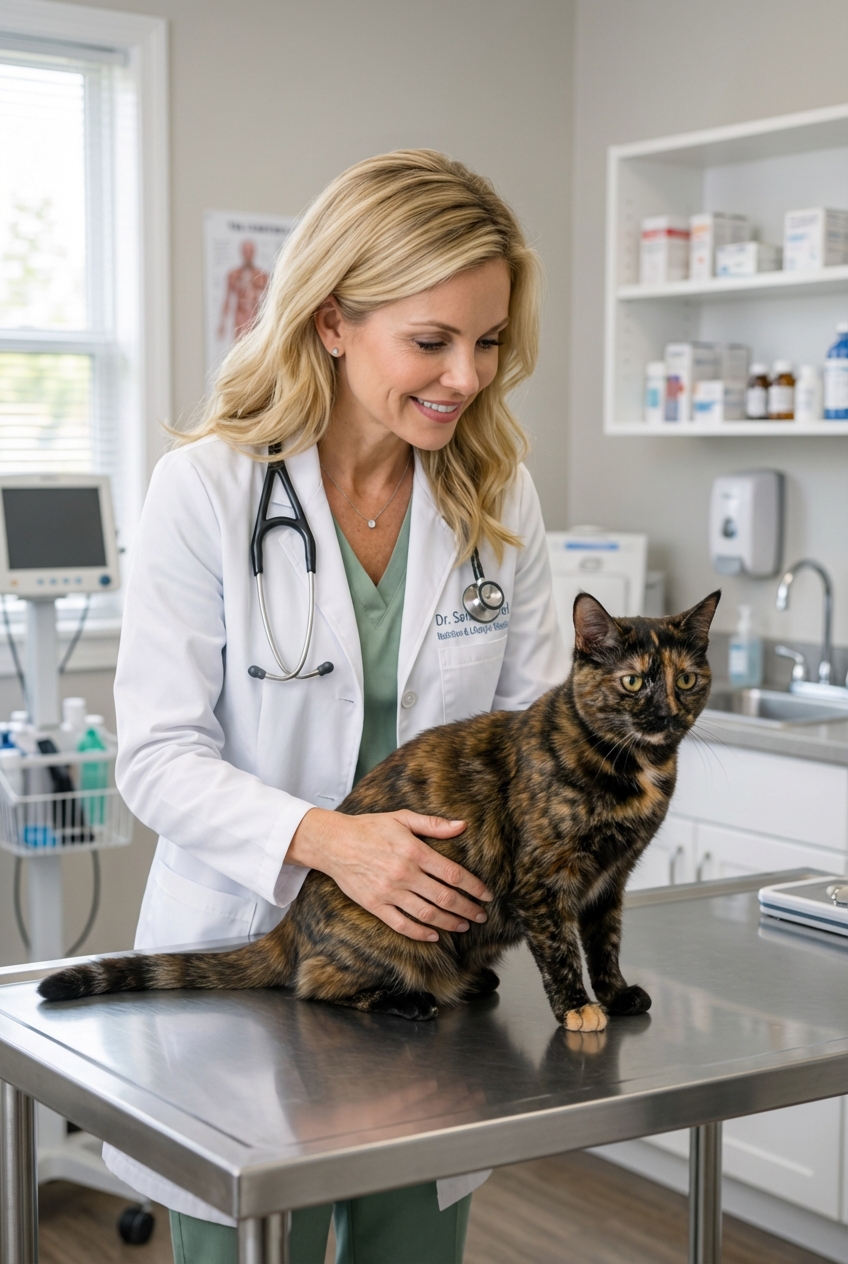
What to expect at the vet
Your veterinarian will start with a detailed history and a physical and neurologic exam. From there, testing is tailored to your cat’s age, health status, and seizure pattern.
What your vet will want to know
- When it happened, how long it lasted, and what the recovery looked like
- Any possible exposures (new plants, cleaners, pest control, garage access)
- Any recent flea or tick products used (and whether they were labeled for cats)
- All medications and supplements
- Diet changes, appetite changes, vomiting, or diarrhea
Common diagnostic steps
- Bloodwork and urinalysis to look for metabolic causes and organ function issues
- Blood pressure check
- Thyroid testing in older cats when appropriate
- FIV/FeLV testing depending on history and risk
- Advanced imaging (MRI or CT) and possible spinal fluid testing if a brain cause is suspected
If your cat has prolonged seizures or clusters, emergency staff may give fast-acting seizure medication and supportive care like temperature management and IV fluids.
Long-term management at home
Some cats never seize again. Others need ongoing treatment. If your veterinarian prescribes anti-seizure medication, consistency is key.
Helpful habits
- Give medication exactly as directed. Skipping doses can trigger seizures.
- Do not stop meds suddenly. Taper only under veterinary guidance.
- Keep a seizure log. Track date, time, length, triggers, and recovery. Patterns are valuable.
- Reduce stress when possible. Avoid sudden routine changes and limit access to high-stimulation areas during recovery if your cat is prone to episodes.
- Pet-proof risky areas. If your cat has recurring seizures, reduce fall risks from tall cat trees and open stair rails, and consider adding soft landing zones.
Also ask your vet whether periodic blood tests are needed to monitor medication safety and overall health. That follow-up is part of keeping treatment safe.
Quick checklist to save
- Start timer, stay calm
- Move hazards away, cushion nearby
- Do not touch mouth, do not restrain
- Video a few seconds if safe
- Afterward: quiet space, check for injuries
- Call your vet the same day when possible
- Go to ER if it lasts over 5 minutes, repeats, or your cat does not recover normally
You do not have to handle this perfectly to help your cat. Even small, steady steps like timing the seizure and keeping them safe are powerful.