Worried your dog ate a chicken bone? Follow the first-5-minutes checklist, avoid unsafe home tricks, know cooked vs raw risks, and spot red-flag symptoms tha...
Article
•
Designer Mixes
What To Do If A Dog Eats Chicken Bones

Shari Shidate
Designer Mixes contributor
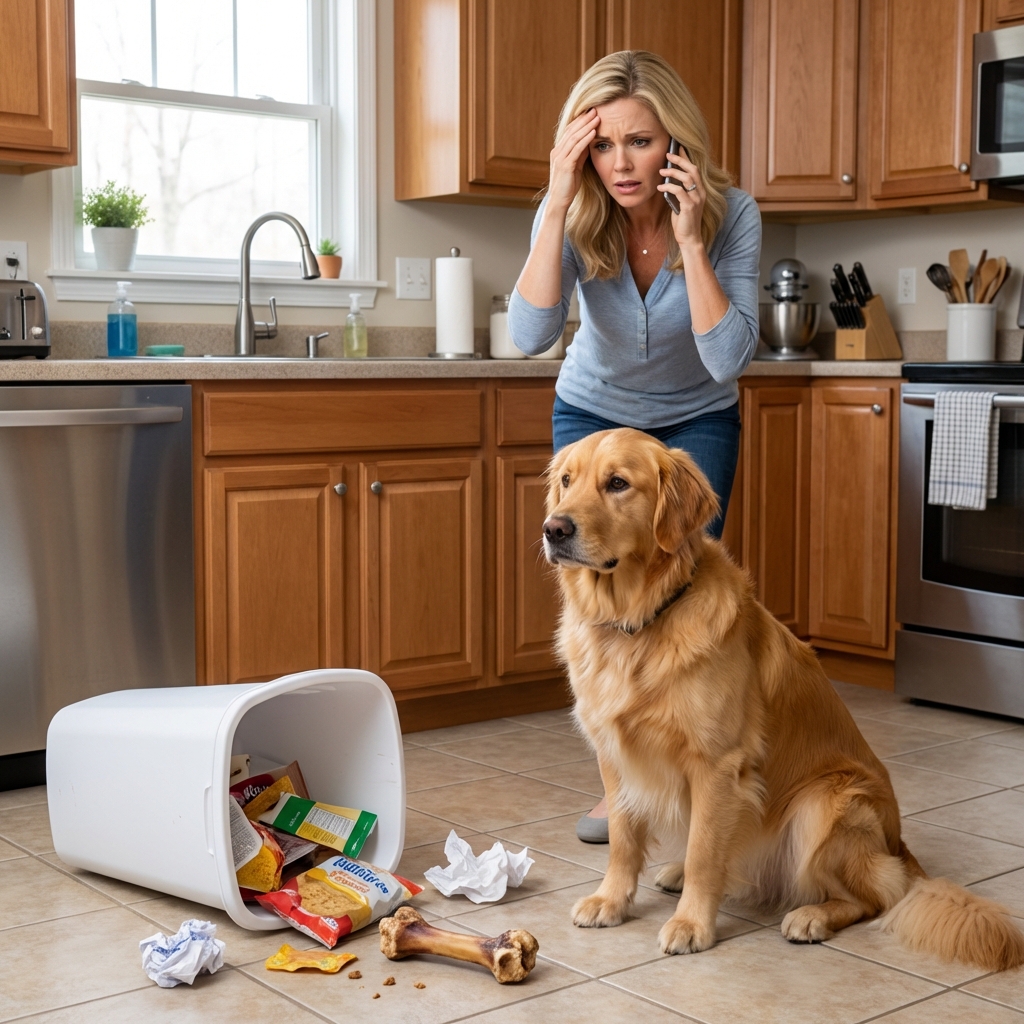
As a veterinary assistant here in Frisco, Texas, I can tell you this happens more often than you would think: a dog grabs chicken bones from the trash, a plate, or the sidewalk and swallows before you can blink. It is scary, but you are not powerless. The goal is to stay calm, avoid the most common mistakes, and decide quickly whether you need an emergency vet.
Important note: This guide is for immediate first aid and decision-making. It does not replace veterinary care. If you are unsure, it is always safer to call your vet or an emergency clinic.
Why chicken bones are risky
Chicken bones, especially cooked ones, can splinter into sharp pieces. Those fragments can irritate or injure the mouth, throat, esophagus, stomach, or intestines. Bones can also cause a blockage or lead to painful constipation.
Cooked vs. raw
- Cooked chicken bones: higher risk of splintering, puncture, and obstruction.
- Raw chicken bones: may be less brittle, but they still can cause choking, obstruction, tooth fractures, and bacterial contamination risk (for pets and for people handling the food, including Salmonella and Campylobacter). They are not “safe” just because they are raw.
Size and shape matter
- Large pieces (like a whole wing or drumstick) raise the risk of choking or an intestinal blockage.
- Small sharp fragments raise the risk of scratches and punctures as they move through the GI tract.
- Multiple bones (or repeated access to the trash) increases the odds that at least one piece causes trouble.
Small dogs and gulpers are higher risk
Dogs who swallow without chewing, brachycephalic breeds, puppies, and toy breeds tend to have a higher choking and obstruction risk. Seniors with slower gut motility can struggle more with passing bone fragments.
Do this first (5-minute plan)
1) Remove any remaining bones
Secure the trash, pick up dropped bones, and keep other pets away.
2) Check the mouth only if it is safe
If your dog will calmly allow it, gently look for obvious bone pieces stuck between teeth or across the roof of the mouth. Do not reach deep into the throat. Avoid doing a “finger sweep” unless you are trained and it is clearly safe. You can accidentally push a bone farther back or get bitten.
3) Do not induce vomiting at home unless a veterinarian directs you
For sharp objects like bones, vomiting can cause additional injury on the way back up, including tears to the throat or esophagus. There are rare situations where a veterinarian may still recommend inducing vomiting, but that decision should be made by a professional who knows your dog’s details and timing.
4) Offer water, then pause feeding briefly
Let your dog drink water. If your dog is acting normal, many clinics recommend pausing food for a short window (often a few hours), then following a veterinarian-approved plan. If your dog is choking, gagging nonstop, vomiting, or distressed, skip food and go to the ER.
5) Call your vet or an emergency clinic with details
If you can, call the same day even if your dog seems fine. Have this information ready:
- Your dog’s weight, age, and breed
- Whether the bones were cooked or raw
- How many bones and what type (wings, drumsticks, ribs)
- Rough size (whole bone vs. small pieces) and whether your dog chewed or gulped
- When it happened
- Any symptoms (vomiting, coughing, lethargy, bloody stool)
When it is an emergency (go now)
Go to an emergency veterinarian immediately if you see any of these signs:
- Choking, trouble breathing, blue or pale gums
- Repeated gagging, retching, or unproductive vomiting
- Drooling excessively, pawing at the mouth, or obvious mouth pain
- Swollen or painful abdomen, hunched posture, crying out
- Weakness, collapse, severe lethargy
- Vomiting that continues or contains blood
- Black, tarry stool or bright red blood in stool
- Inability to pass stool, straining, repeated small attempts, or signs of severe constipation
Quick choking note: A dog who cannot move air is an emergency. If your dog is struggling to breathe, do not spend time trying home fixes. Go now. If you are trained in pet first aid, you can ask the ER team on the phone for guidance while you head in.
Trust your gut: If your dog “just is not right,” it is worth an urgent call or visit.
If your dog seems okay
If your dog swallowed a small amount and is acting totally normal, your veterinarian may advise supportive care at home with close monitoring. Always confirm with your vet first, especially for small dogs, gulpers, or if multiple bones were eaten.
Food support (vet-guided)
Some clinics suggest a bland diet plan to reduce stomach upset while you monitor. The exact plan varies by dog. Do not assume bread or other “padding” foods are automatically helpful, and do not give a huge meal. Overfeeding can increase nausea or trigger vomiting. When in doubt, ask your veterinarian what and how much to feed.
What to avoid
- No hydrogen peroxide or home vomiting attempts unless directed by a veterinarian
- No laxatives unless prescribed
- No bones, rawhide, or hard chews “to push it through”
- No strenuous exercise right after, especially if your dog is uncomfortable
Monitor for at least 72 hours (and keep watching)
Many issues show up in the first few days, but some problems, especially constipation or a partial obstruction, can appear later. Keep an eye on:
- Appetite and energy
- Vomiting, gagging, coughing, or repeated lip licking
- Poop frequency and effort (straining, repeated small attempts)
- Stool appearance (hard, dry, chalky stool can happen with bone; also watch for blood or black tarry stool)
If symptoms appear at any point, call your vet right away.
What your vet may do
Your veterinarian will choose the safest plan based on your dog’s symptoms, the amount eaten, and whether the bones were cooked.
Common clinic steps
- Exam and oral check for stuck fragments
- X-rays to look for bone material or secondary signs like gas patterns (not all bones show clearly)
- Other imaging such as ultrasound or contrast studies in select cases
- Medications for nausea, pain, or GI support
- Endoscopy to retrieve bones from the esophagus or stomach in certain cases
- Surgery if there is an obstruction, perforation, or severe risk
Many dogs do pass small pieces without intervention. The veterinary job is to identify the situations where “wait and see” is not safe.
FAQs
Can chicken bones kill a dog?
They can in worst-case scenarios, especially if they cause choking, a perforation, or a complete obstruction. The good news is that prompt action and veterinary guidance dramatically improve outcomes.
Should I make my dog throw up?
Do not induce vomiting at home unless a veterinarian specifically instructs you to. Bones are often a reason not to induce vomiting because sharp fragments can cause damage coming back up.
My dog ate bones yesterday and seems fine. Am I in the clear?
Not always. Constipation or an obstruction can develop later. Monitor closely for at least 72 hours, and keep watching beyond that if poop, appetite, or behavior changes.
What about bone broth?
Bone broth is generally not a solution for passing bones, and it does not reduce the risk of obstruction. If your dog needs dietary support after a GI upset, your vet may suggest a bland diet plan instead.
Prevention that works
The easiest emergency is the one you never have to deal with. A few simple habits can prevent most bone incidents.
- Use a lidded, heavy trash can or keep it behind a closed door.
- Double bag chicken scraps before tossing them.
- Clear plates immediately and do not leave them on coffee tables.
- Teach “drop it” and “leave it” using positive reinforcement.
- On walks, scan ahead near apartment dumpsters, parks, and outdoor dining areas.
If your dog is a determined scavenger, a properly fitted basket muzzle on walks can be a game-changer. Your vet or trainer can help you choose the right one and condition your dog to it comfortably.
Bottom line
If your dog ate chicken bones, your safest approach is calm, fast decision-making: do not induce vomiting at home unless directed, watch for red-flag symptoms, and call a veterinarian with the details. Many dogs will be okay, but when bones cause trouble, they can do it quickly and seriously. When in doubt, get eyes on your dog and guidance from a professional.