Step-by-step home care for mild dog diarrhea and vomiting: short food break, small sips of water, bland diet, pumpkin, probiotics, dehydration checks, and ur...
Article
•
Designer Mixes
What To Do for a Dog With an Upset Stomach

Shari Shidate
Designer Mixes contributor
When your dog has an upset stomach, it can become scary quickly. One minute they are their normal, happy selves, and the next you are hearing gurgling sounds, seeing grass eating, or dealing with vomiting or diarrhea.
I am Shari Shidate, a veterinary assistant in Frisco, Texas, and here is the comforting truth: many mild tummy upsets improve with the right at-home support, careful monitoring, and a little patience. The key is knowing what is normal, what is not, and when to call your veterinarian.
Quick note: This article is general education and is not a substitute for veterinary diagnosis or treatment. When in doubt, call your clinic.
First, check for red flags
Before you try any home care, do a quick safety scan. Upset stomachs can be minor, but they can also be the first sign of something more serious like pancreatitis, an intestinal blockage, toxin exposure, or a painful condition.
Call your vet now or go to an emergency clinic if you notice:
- Persistent vomiting, or more than 2 to 3 vomiting episodes in a short period
- Blood in vomit or stool, or black, tarry stool
- Bloated or painful belly, pacing, or an unproductive urge to vomit
- Extreme lethargy, weakness, collapse, or pale gums
- Signs of dehydration (sticky gums, sunken eyes, skin does not bounce back quickly)
- A puppy, senior dog, or dog with a chronic condition (kidney disease, diabetes, Cushing’s, heart disease)
- A very small dog or toy breed (higher risk of low blood sugar), especially if they are not eating
- Known or suspected ingestion of toxins (xylitol, grapes, raisins, chocolate, rodent bait, medications, THC)
- Possible foreign body risk (toy pieces, socks, corn cobs, bones)
- Diarrhea that is very watery or frequent, especially with vomiting
If your gut says, “this is not my dog’s normal,” trust that instinct.
The steps that actually help (and why)
There is no magic trick, but there are a few evidence-based habits that help most mild cases. Think of these as gentle GI support steps you can do at home while you watch closely.
1) Pause food briefly, but hydrate carefully
If your adult dog vomited once or twice and is otherwise bright and alert, a short break from food can give the stomach a chance to settle. For many dogs, that is 6 to 12 hours. Avoid prolonged fasting without veterinary guidance.
Important exceptions: do not fast young puppies. Also check with your veterinarian first for dogs with diabetes, very small dogs or toy breeds, and dogs with other medical conditions where skipping meals can be risky.
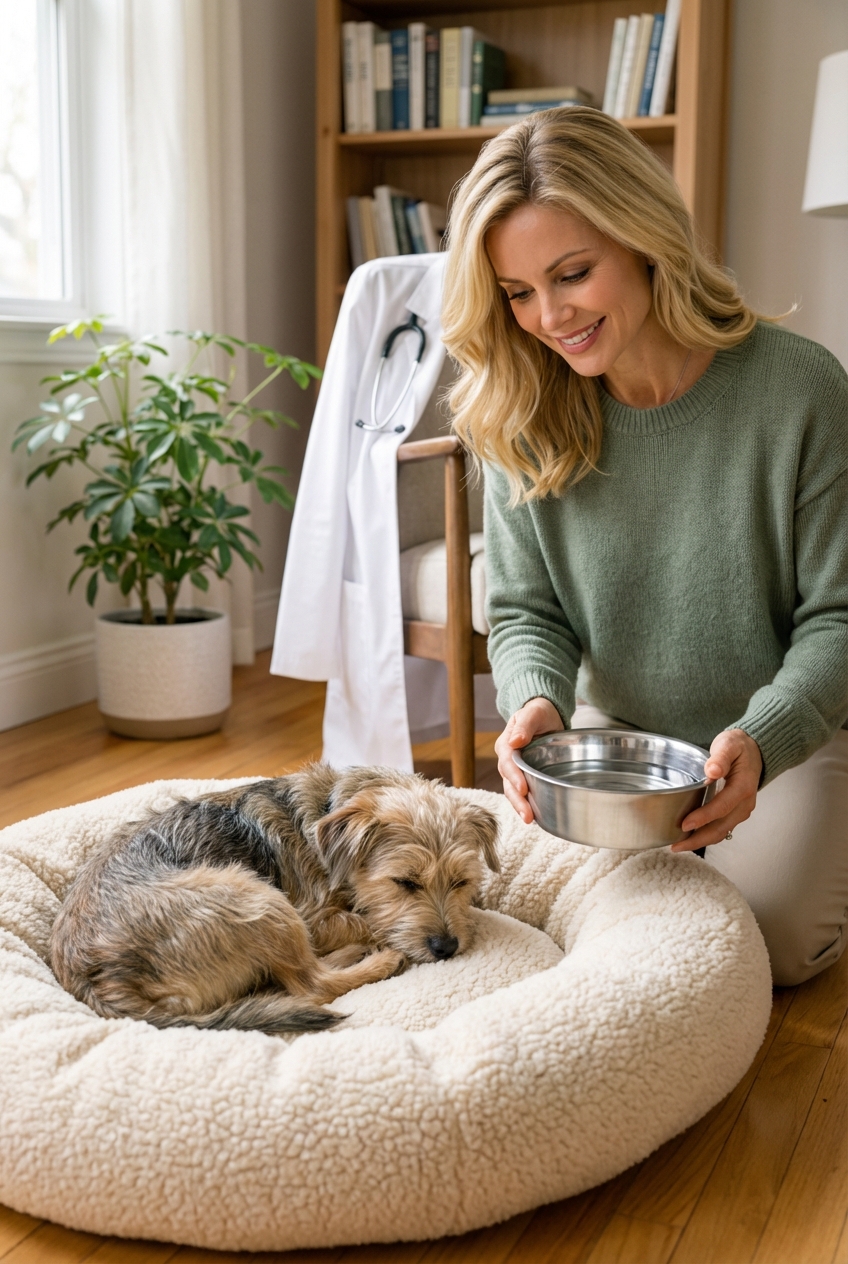
Water matters. In general, you do not want dehydration to sneak up on you. If your dog is actively vomiting or tends to gulp and vomit, it may help to pause free access briefly and offer very small amounts frequently. Try a tablespoon or two every 10 to 15 minutes, then slowly increase if it stays down.
2) Rehydrate smartly
Dehydration is one of the biggest risks with vomiting and diarrhea. If your vet has told you it is appropriate for your dog, you can offer:
- Fresh water
- Ice chips (some dogs tolerate these better)
- Unflavored oral electrolyte solution diluted with water (ask your vet for the right choice and amount)
Avoid sugary sports drinks, heavily flavored broths, or salty soups.
3) Use a bland diet for 24 to 72 hours
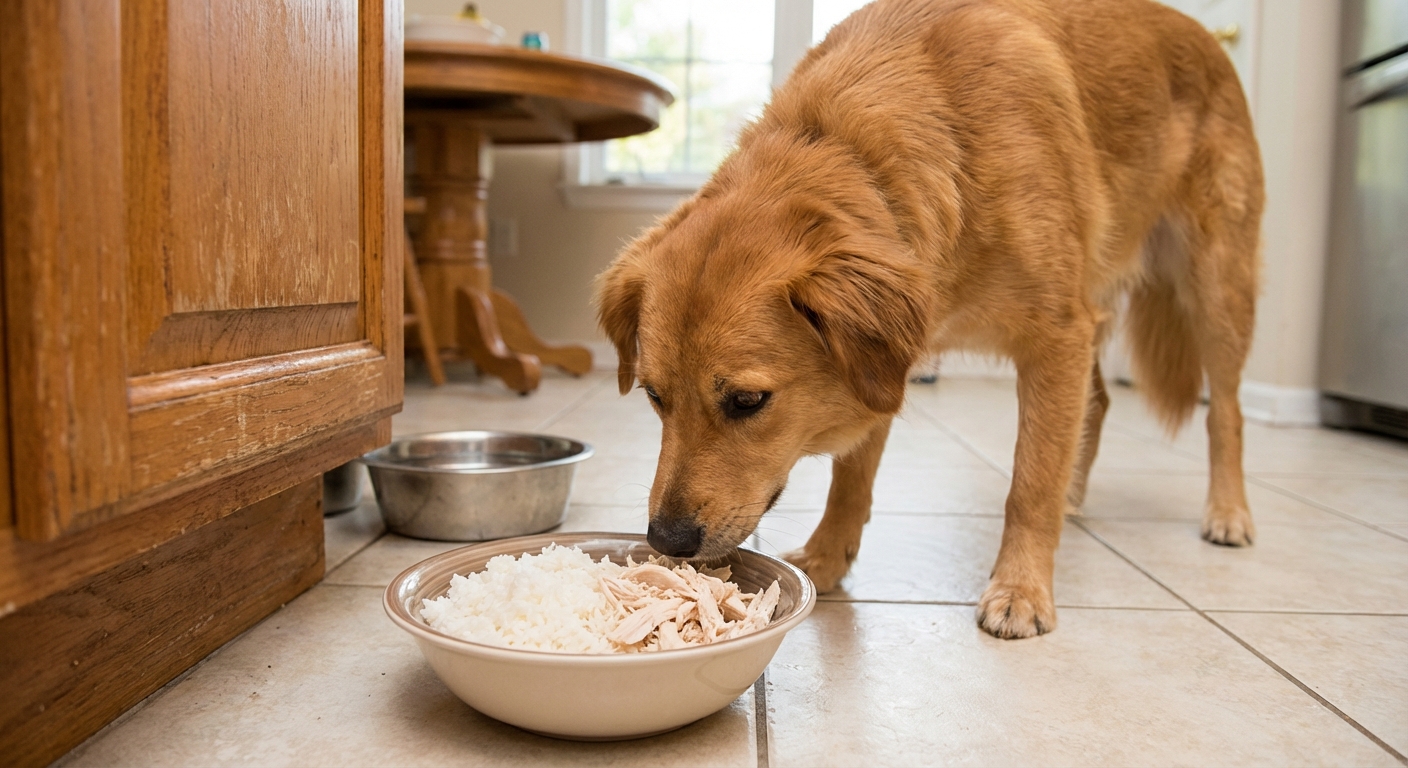
When your dog is ready to eat, go bland and simple. The goal is easy to digest protein plus a gentle carbohydrate.
Common bland options:
- Boiled skinless chicken breast with plain white rice
- Boiled lean ground turkey with white rice
- Plain pumpkin puree (100% pumpkin, not pie filling) added in small amounts
Feed small meals every 4 to 6 hours instead of one or two large meals.
How much should you feed? A simple starting point is to offer about one quarter to one third of their normal meal size per feeding, then gradually increase over 24 to 48 hours if they are keeping food down and acting normal. If you are unsure, or your dog has health conditions, ask your veterinary team for exact amounts.
If your dog improves, you can gradually transition back to their normal food over 3 to 5 days.
4) Add fiber gently
For mild diarrhea, a little added fiber can help firm stool for some dogs. Plain canned pumpkin is the classic choice because it is simple and usually well tolerated, but results can vary.
Typical starting amounts are small, based on size. When in doubt, ask your veterinary team. Too much fiber too fast can backfire and cause gas or looser stool.
5) Consider probiotics, but choose pet-specific
Some studies suggest certain veterinary probiotics may shorten the course of acute diarrhea in dogs. Look for a veterinary-formulated probiotic with clear strains and dosing, and use it exactly as directed. Human products are not always appropriate.
6) Rest the gut, and rest the dog
Skip hard play, big training treats, bones, rawhides, and rich chews while your dog is recovering. Calm walks for potty breaks are perfect.
Also, grass eating can happen with nausea or stomach irritation, but it is nonspecific. Focus more on overall behavior, hydration, and whether vomiting or diarrhea is continuing.
What not to do
When you are worried, it is tempting to try whatever you have in the medicine cabinet. Please be cautious.
- Do not give human medications like Pepto-Bismol, Imodium, aspirin, or ibuprofen unless your veterinarian specifically instructs you. Some can be dangerous for dogs, some can mask serious disease, and some are not safe for certain breeds or health conditions. For example, loperamide (Imodium) can be risky in MDR1-sensitive breeds, and bismuth products can darken stool and make assessment harder.
- Do not give fatty foods like bacon, sausage, greasy table scraps, or butter. Fat can trigger pancreatitis in susceptible dogs.
- Do not keep switching foods repeatedly in a single day. Too many changes can keep the GI tract irritated.
- Do not assume it is “just a bug” if symptoms persist. Parasites, foreign bodies, pancreatitis, food intolerance, and infections can look similar at home.
How to tell if your dog is improving
These are the signs I love to see when a mild stomach upset is resolving:
- Vomiting stops
- Stool becomes less frequent and more formed
- Energy returns and your dog seems comfortable
- They are interested in food again, but not frantic
- They are drinking normally and peeing normally
Keep a simple GI log for 24 to 48 hours: appetite, water intake, vomiting episodes, stool frequency, and stool appearance. If you end up calling your vet, this information is extremely helpful.
When to call the vet
Home care is for mild, short-lived cases. Contact your veterinarian if:
- Vomiting returns when you reintroduce food
- Diarrhea lasts more than 24 to 48 hours
- Your dog seems painful, tense, or keeps stretching like they cannot get comfortable
- Your dog has a history of pancreatitis, GI disease, or food sensitivities
- You suspect dietary indiscretion and your dog could have eaten something dangerous
- Your dog has recurrent episodes, even if each one seems mild
Your vet may recommend a fecal test for parasites, prescription GI food, anti-nausea medication, deworming, fluids, or bloodwork depending on the full picture.
Preventing the next upset
Many upset stomachs are preventable. Not all, but many. These habits help:
- Slow diet transitions over 7 to 10 days when changing foods
- Keep trash secured and keep counter-surfing foods out of reach
- Choose treats wisely, especially for dogs with sensitive stomachs
- Use parasite prevention recommended by your vet
- Keep a consistent feeding schedule and avoid sudden high-fat snacks
Hygiene tip: If your dog has diarrhea, pick up stools promptly, wash your hands, and consider avoiding dog parks or shared water bowls until things are back to normal. Some causes of diarrhea can be contagious.
Quick at-home plan
If your adult dog has mild symptoms and no red flags:
- Pause food for 6 to 12 hours (unless your vet advises otherwise), offer water in small, frequent amounts
- Start a bland diet in small meals for 24 to 72 hours
- Add a pet probiotic if appropriate
- Monitor hydration, energy, vomiting, and stool
- Transition slowly back to normal food over 3 to 5 days
If symptoms worsen, do not wait it out. Call your veterinarian. Getting ahead of dehydration and pain makes a big difference.