Learn a vet-approved, force-free way to teach “drop it” using trades, rewards, and simple games. Prevent resource guarding, gulping hazards, and make the...
Article
•
Designer Mixes
What to Do for a Cat in Heat

Shari Shidate
Designer Mixes contributor
If your female cat is “calling” (loud yowling), rolling, rubbing on everything, and acting extra affectionate or restless, she is likely in heat (estrus). It can feel dramatic, especially at night, but in most cases it is normal reproductive behavior, not an emergency. The goal is to keep her safe, reduce stress, and prevent an accidental pregnancy until you can schedule spaying.
Quick answers first
_class="">- Most important: Keep her strictly indoors and away from intact males.
- Do not: Punish her, spray her with water, or give human pain meds or sedatives.
- Best long-term solution: Spay her. It prevents heats and reduces the risk of uterine infection and mammary cancer.
- Call your vet urgently if: she seems sick (fever, not eating), has a distended or painful abdomen, foul discharge, or is lethargic. That is not typical heat behavior.
How to tell if your cat is in heat
Female cats can go into heat as early as about 4 months (often 5 to 9 months), depending on breed, body condition, and season. Many cats cycle more in longer-day months, but indoor cats can cycle year-round under artificial light. Common signs include:
- Very loud vocalizing that can sound like crying or yowling
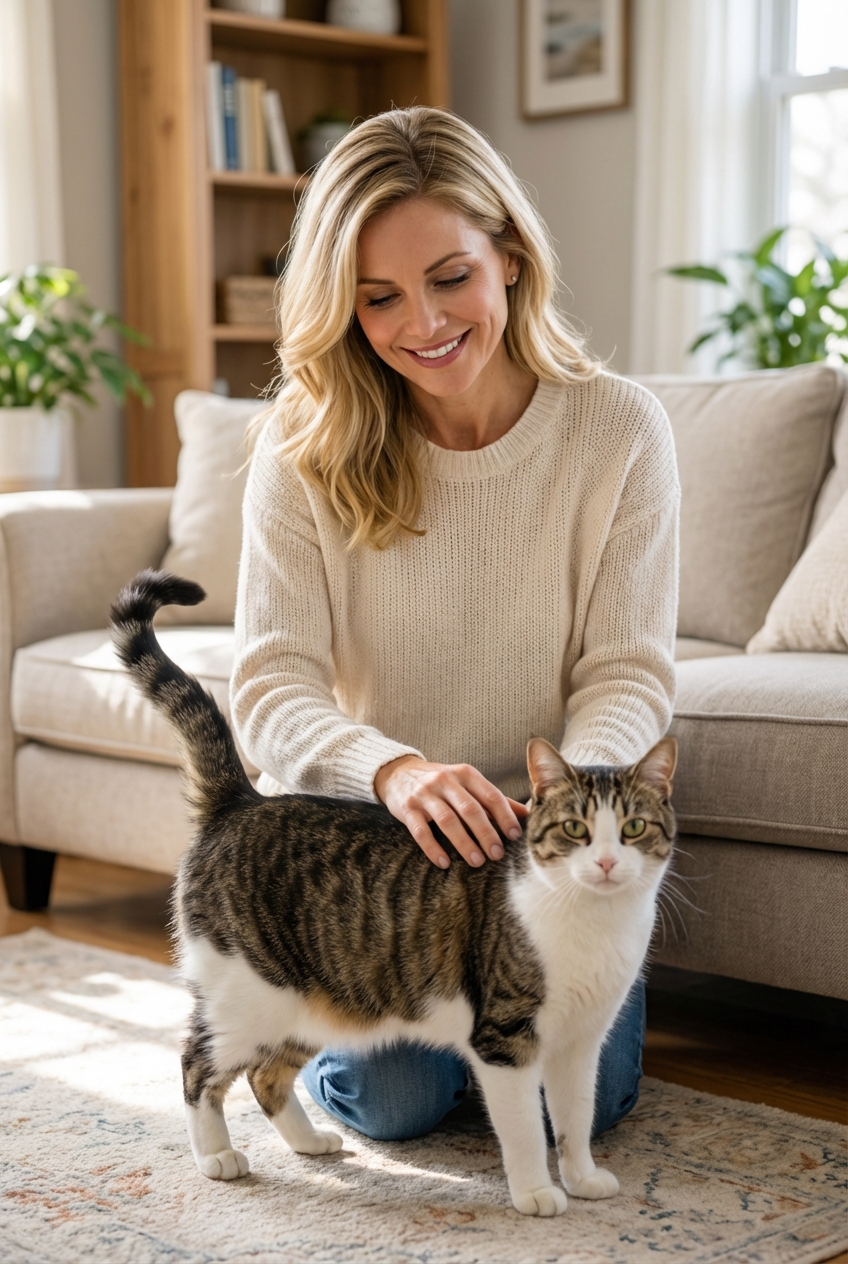
- Rubbing, rolling, and increased affection
- Restlessness, pacing, and trying to escape outdoors
- “Lordosis” posture: front end down, rear end raised, tail to the side
- Increased grooming around the rear
- Decreased appetite in some cats
Most cats in heat do not bleed like dogs. Rare light spotting can happen, but if you see blood, schedule a veterinary exam to rule out other issues.
What you can do at home
1) Lock down the environment
- Keep her indoors and supervise door openings. Cats in heat are very motivated escape artists.
- Close windows securely and check screens for gaps.
- If you have other cats, separate her from any intact males. Neutered males may still show interest, but they cannot impregnate. If you are not 100 percent sure a male is truly neutered, separate anyway.
Why this matters: Cats are induced ovulators, meaning mating can trigger ovulation. Pregnancy can happen after a very brief escape, and females may mate multiple times if given the opportunity.
2) Create a calm comfort zone
Many cats settle better with a predictable, quiet space.
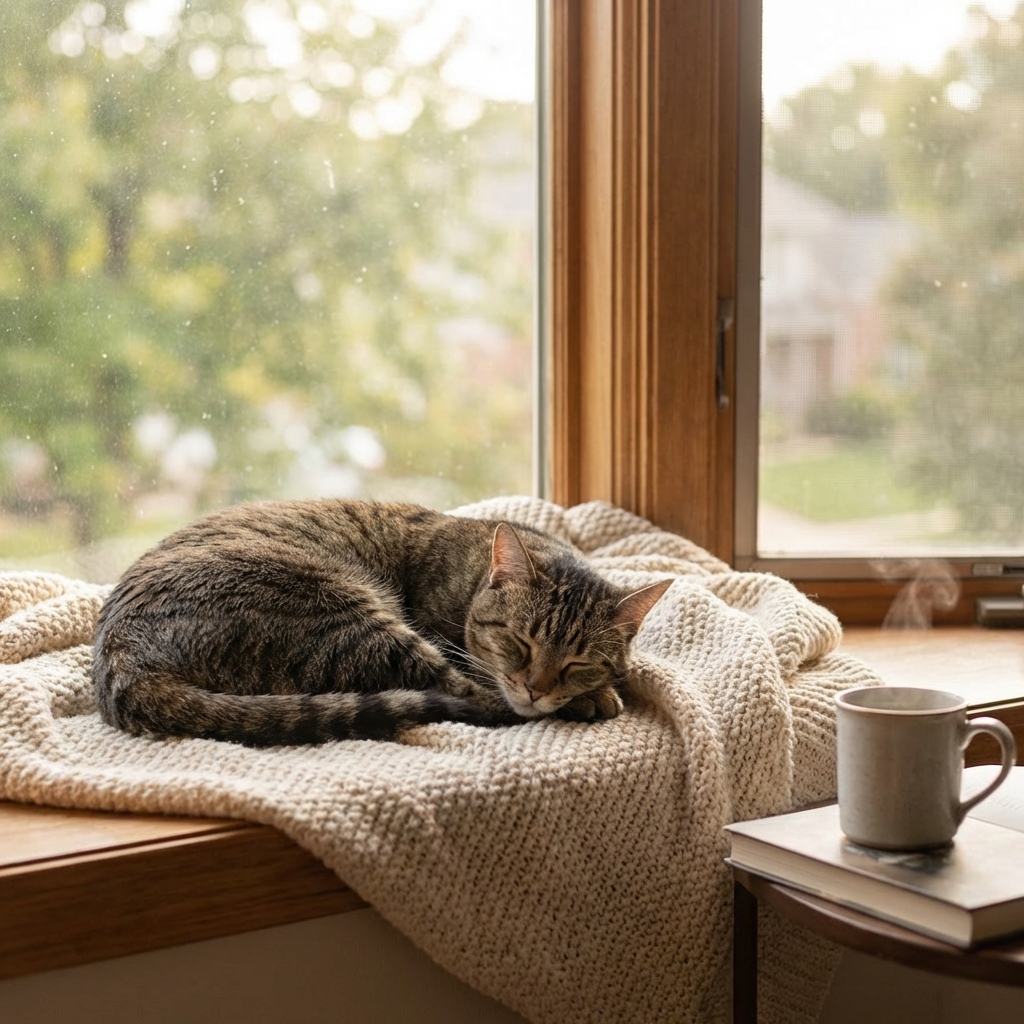
- Offer a cozy room with dim lighting and soft bedding.
- Use white noise or calming music if outside sounds trigger more calling.
- Keep a clean litter box nearby. Some cats urinate more frequently while in heat.
3) Add gentle enrichment and distraction
Heat can increase energy and restlessness. Safe distraction helps.
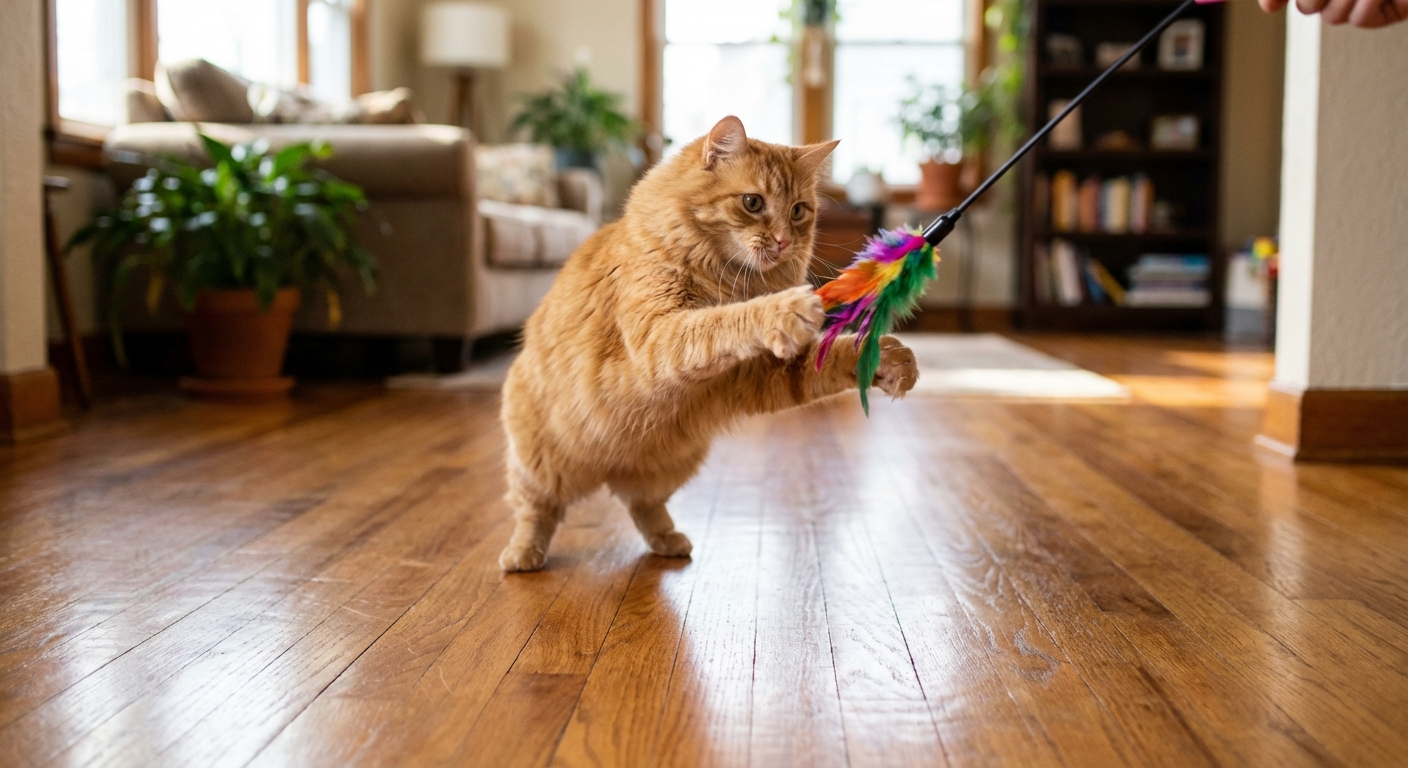
- Short play sessions several times a day using wand toys or tossed soft toys
- Food puzzles or lick mats (cat-safe, easy to clean)
- Extra affection if she seeks it, but let her lead
4) Comfort measures
- Warmth: a warm (not hot) heating pad on low under a blanket can be soothing. Always provide space to move away from heat.
- Gentle brushing: some cats relax with steady, calm grooming.
- Pheromones: a feline pheromone diffuser or spray may help take the edge off for some cats.
What not to do
- Do not punish her for vocalizing or restlessness. She is not being “bad.” She is responding to hormones.
- Do not give human medications (including acetaminophen, ibuprofen, aspirin). Many are dangerous to cats.
- Do not use essential oils as a calming remedy. Several are toxic to cats and can worsen respiratory irritation.
- Do not let her “have one litter first.” It is not medically necessary and can increase the chance of unplanned litters.
- Do not use hormones at home or any over-the-counter “heat stop” products. If spay must be delayed, ask your veterinarian about clinic-guided options and what is safest for your cat.
How long does heat last?
In many cats, heat lasts about 3 to 10 days, but it varies. If she does not mate, she may return to heat again in as little as 2 to 3 weeks during breeding season. Some cats can seem like they are in and out of heat almost constantly during active cycling, which is one reason it can feel nonstop.
When to call the vet
Heat itself is not usually dangerous, but certain signs mean something else may be going on.
Call promptly if you notice:
- Loss of appetite lasting more than 24 hours, vomiting, or diarrhea
- Lethargy, hiding, or signs of pain
- Foul-smelling discharge from the vulva
- Distended or painful abdomen
- Excessive drinking and urination
These can be red flags for illness, including uterine infection (pyometra), which is a medical emergency in unspayed cats.
Spaying: the real solution
Spaying stops heats and prevents pregnancy. It also significantly reduces the risk of:
- Pyometra (a life-threatening uterine infection)
- Mammary cancer (risk drops the most when spayed before the first heat)
- Stressful, repeated heat cycles
Can a cat be spayed while in heat? Often yes, but some veterinarians prefer to wait until the heat ends because blood flow to reproductive tissues can be higher during estrus. Your veterinarian can advise what is safest for your cat and their surgical protocols. If you are struggling at home, let them know. Many clinics will work with you on timing.

Frequently asked questions
Is my cat in pain in heat?
Most cats are not in pain, but they can be uncomfortable, restless, and stressed. Think of it as a strong hormonal drive rather than injury. If you suspect pain, especially if she is not eating or is hiding, check in with your vet.
Why is she trying to escape?
Instinct. A cat in heat is strongly motivated to find a mate. This is why indoor-only containment is so important during this time.
Will she calm down if I let her mate?
She may temporarily stop showing heat behaviors if she mates, but this can lead to pregnancy and does not solve the long-term cycle. Because cats are induced ovulators, mating can quickly lead to ovulation and pregnancy. Spaying is the responsible, lasting answer.
Can a male cat smell a female in heat from far away?
Yes. Intact males can detect pheromones from a surprising distance. This is another reason to keep doors and windows secured.
A gentle plan for tonight
- Set up a quiet room with litter, water, and a cozy bed.
- Play with her for 10 to 15 minutes, then offer a small meal or treat puzzle.
- Try a warm resting spot and a pheromone diffuser if you have one.
- Double-check screens, doors, and any escape routes.
- Call your vet tomorrow to schedule a spay consult or discuss timing if she is currently in heat.
You are not doing anything wrong if she is loud and clingy. With calm management now and a spay plan soon, this becomes a short chapter, not a constant struggle.