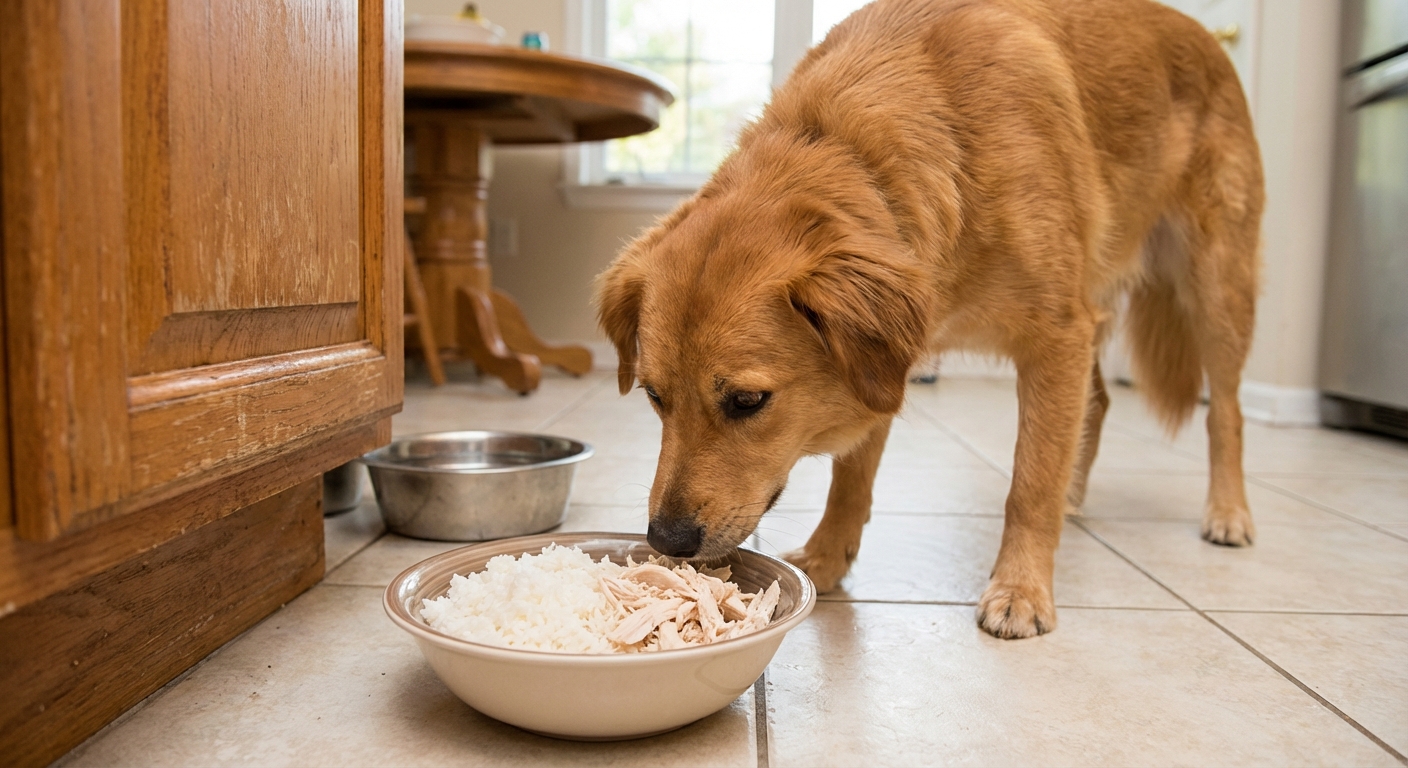
Chicken and rice can soothe mild stomach upset and help dogs transition back to normal food. Learn safe recipes, portions, how long to feed it, and when to c...
Article
•
Designer Mixes
What Should I Feed My Dog With Diarrhea?

Shari Shidate
Designer Mixes contributor
Diarrhea is one of the most common reasons dog parents call the clinic. Sometimes it is a quick, mild tummy upset. Other times, it is your dog’s body waving a big red flag that they need help fast. The good news is that many mild cases improve with the right short-term diet, hydration, and close observation.
Below, I will walk you through what to feed, what to avoid, when to call your veterinarian, and how to transition back to normal food safely. This is general education and not a substitute for veterinary care.
First, check for emergency signs
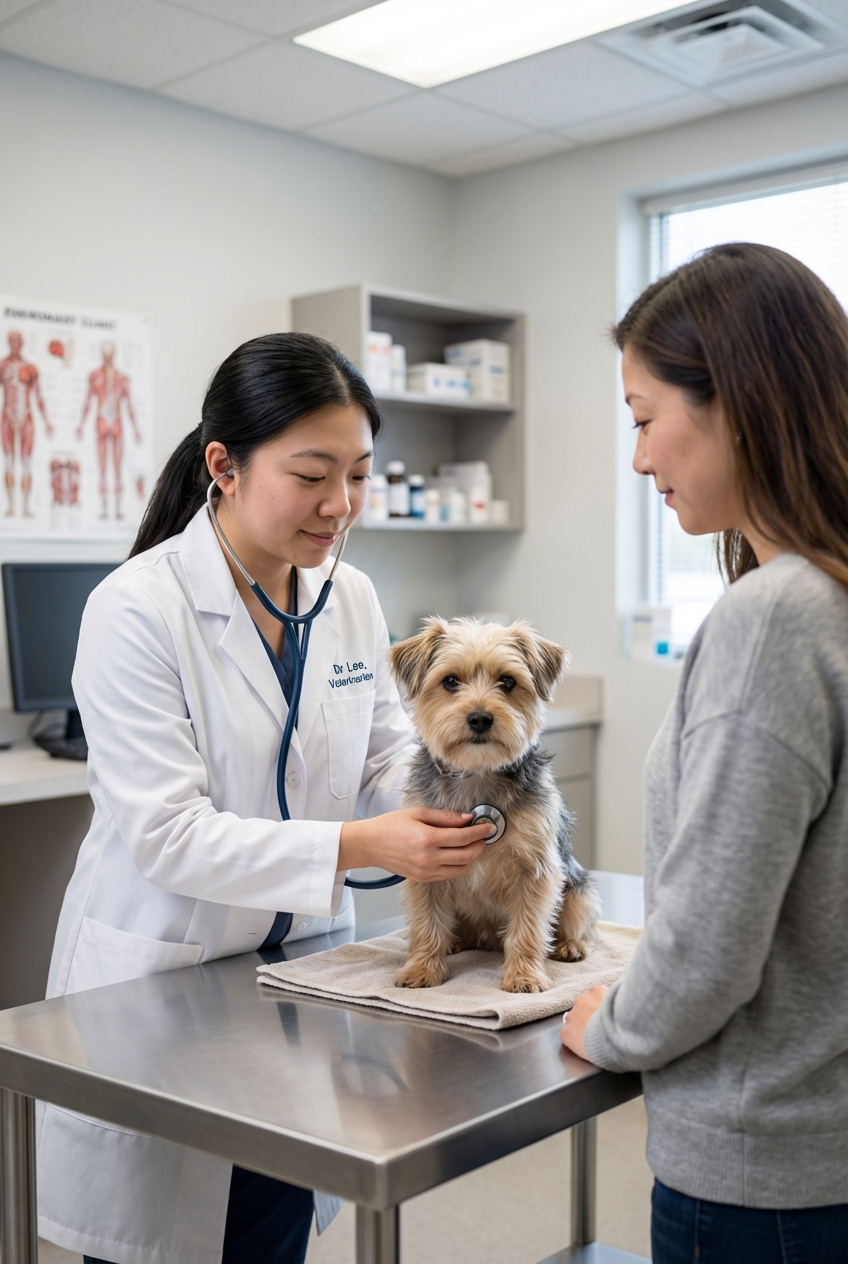
If your dog has diarrhea plus any of the signs below, skip home care and contact your veterinarian or an emergency clinic right away. In veterinary medicine, these symptoms raise concern for dehydration, pancreatitis, toxin exposure, intestinal blockage, parvovirus, hemorrhagic diarrhea syndrome, or other serious problems.
- Repeated vomiting or can’t keep water down
- Blood in the stool (bright red or black, tarry stool)
- Extreme lethargy, collapse, painful belly, or hunched posture
- Bloated abdomen or unproductive retching
- Diarrhea in a puppy, senior dog, or immunocompromised dog
- Known exposure to garbage, toxins, human medication, or foreign objects
- Signs of dehydration: sticky gums, sunken eyes, weakness
- Diarrhea that lasts more than 24 to 48 hours, or sooner if it is worsening
Quick hydration check: lift the skin at the back of your dog’s neck and release. If it does not spring back quickly, dehydration may be present. This is only a rough clue and can be less reliable in overweight dogs, seniors, and some breeds, so when in doubt, call your vet.
Why dogs get diarrhea
Most cases fall into a few common buckets. Knowing the “why” helps you choose the best “what to feed.”
- Dietary indiscretion: trash, table scraps, rich treats, sudden food switch
- Stress: travel, boarding, new pets, schedule changes
- Parasites: Giardia and other intestinal parasites
- Infections: bacterial or viral causes
- Food intolerance or allergy: common with recurring loose stools
- Inflammation: IBD and other chronic gut conditions
- Pancreatitis: often triggered by high-fat foods
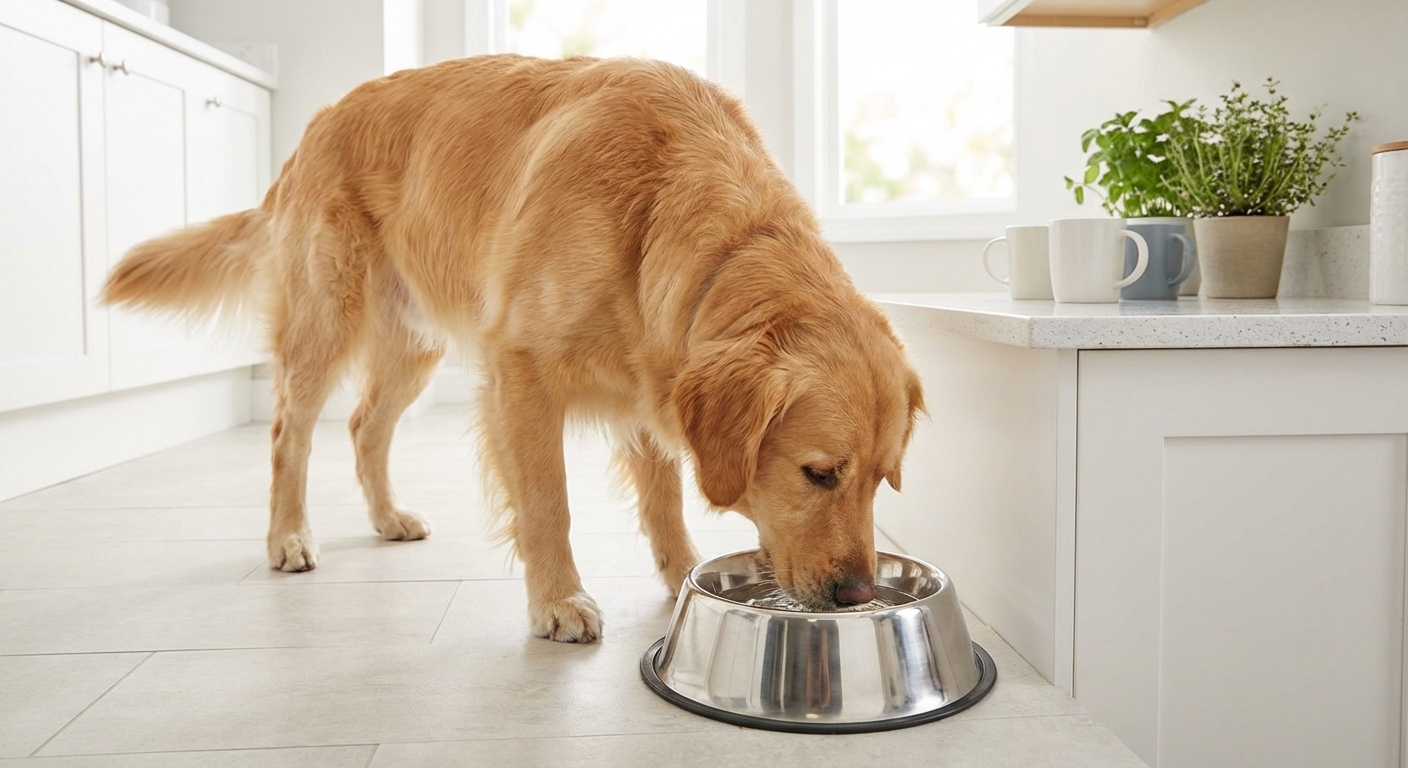
What to feed your dog with diarrhea
For a healthy adult dog with mild diarrhea and no red flags, the goal is to rest the gut, support hydration, and feed easily digestible foods for a short period. These are commonly recommended options that work well for many dogs, but your dog is an individual, so monitor closely.
Step 1: Hydration first
Diarrhea pulls water and electrolytes out of the body. Encourage drinking. Offer fresh water and consider adding a small amount of broth for aroma and taste.
- Offer water frequently, especially after each potty trip.
- If your dog gulps and then vomits, offer smaller amounts more often.
- If you use broth, make sure it is low-sodium and onion and garlic-free.
- Ask your vet before using electrolyte solutions, especially for small dogs or dogs with underlying conditions. Avoid sports drinks unless your veterinarian specifically directs you.
Step 2: Bland diet (24 to 72 hours)
A bland diet is not meant to be “perfect nutrition.” It is a short-term gut reset that is gentle, low-fat, and easy to digest.
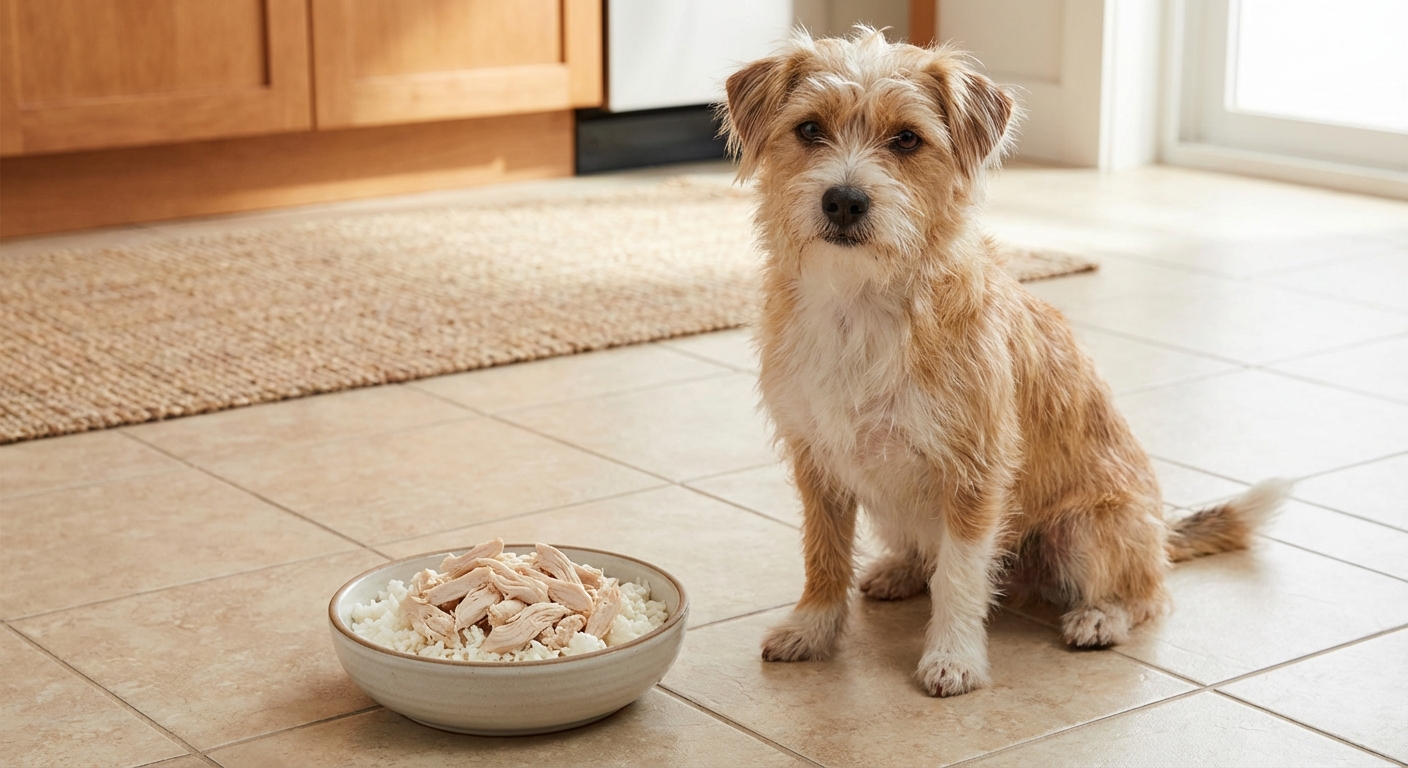
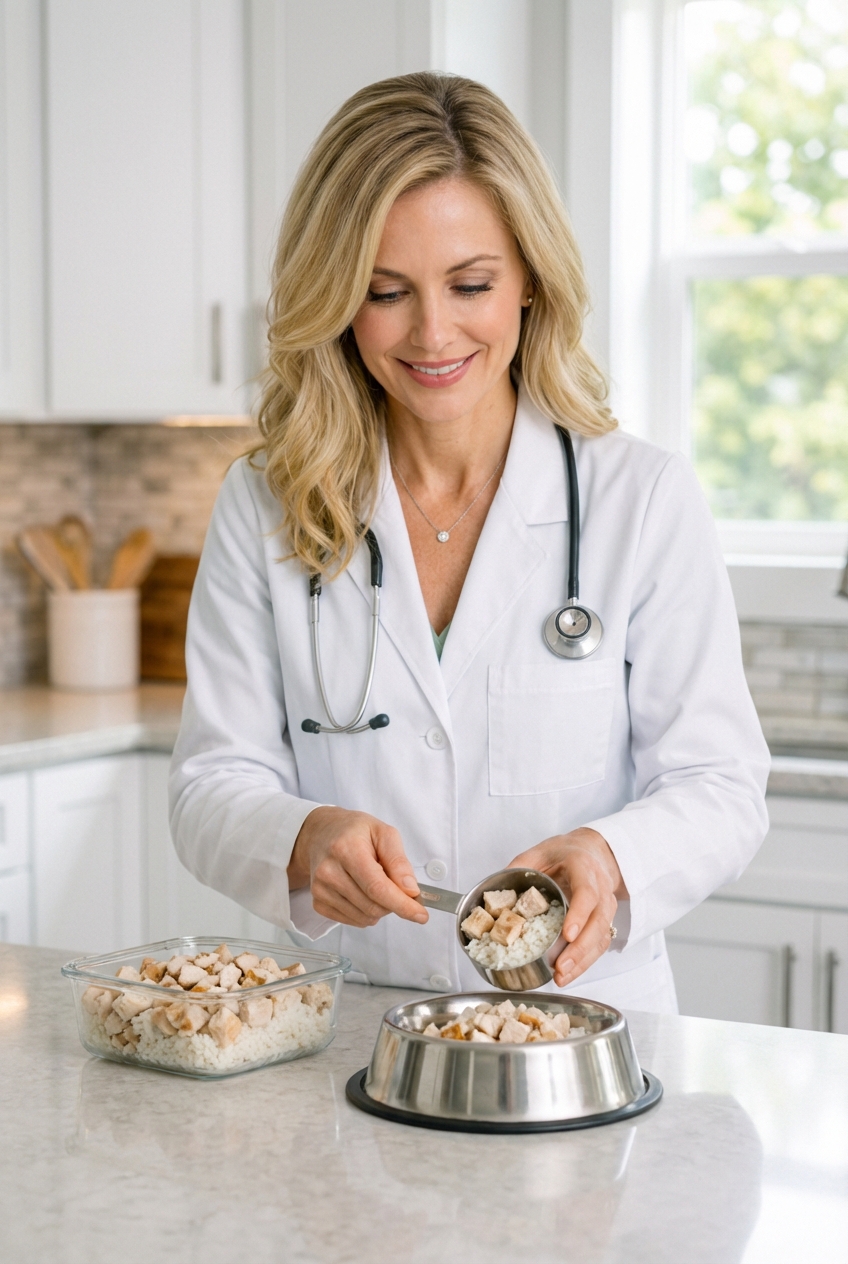
- Boiled, skinless chicken breast (shredded, no seasoning)
- Boiled lean turkey (no skin, no seasoning)
- White rice (softly cooked)
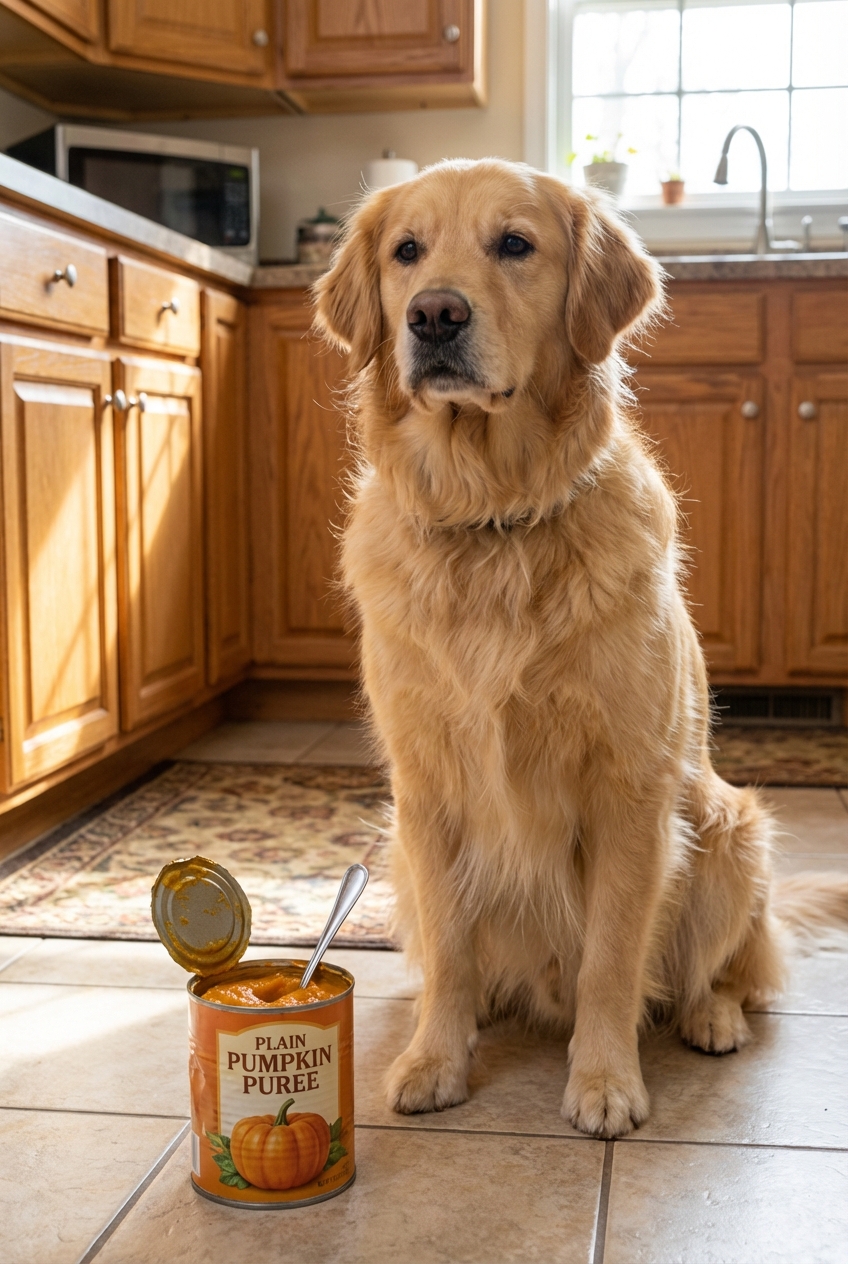
- Plain canned pumpkin (not pumpkin pie filling) as an add-in for fiber balance
Simple starting ratio: a common starting point is about 2 parts carbohydrate (usually rice) to 1 part lean protein (chicken or turkey) for a day or two. Rice is typically the preferred “bulk” carbohydrate for gentle calories. Pumpkin is usually best as a small add-in, not as the main carbohydrate, because too much fiber can worsen diarrhea in some dogs.
Step 3: Gut helpers (when appropriate)
These can help stool quality in many dogs, but it is still important to watch your individual dog’s response.
- Plain canned pumpkin: often helps firm stools because it adds soluble fiber, but use small amounts and stop if stools worsen.
- Probiotics made for dogs: can support a healthier gut microbiome after stress or diet changes.
- Veterinary GI diets: if diarrhea is recurring or your dog needs something more targeted, your vet may recommend a prescription intestinal diet.
How much should I feed?
Smaller, more frequent meals are usually easiest on an irritated gut.
- Split the day’s food into 3 to 6 small meals.
- Start small, then increase gradually if stools improve and vomiting is not present.
A practical starting point: begin with about 1 to 2 tablespoons per meal for small dogs, 1/4 to 1/2 cup per meal for medium dogs, and 1/2 to 1 cup per meal for large dogs, then adjust based on your dog’s size, appetite, and how they are doing.
Should I withhold food?
Some people have heard to “fast” a dog with diarrhea. In my clinic experience, that is not a one-size-fits-all recommendation. Many dogs do better with small bland meals. Do not fast puppies, toy breeds, or dogs with other medical conditions unless your veterinarian tells you to.
What to monitor at home
- Energy level and comfort (bright and normal, or quiet and painful)
- Appetite and ability to keep water down
- Stool frequency and stool appearance
- Urination (peeing less can be a dehydration clue)
If this is a mild case, you should usually see improvement within about 24 to 72 hours. If you are not seeing progress, or anything feels “off,” call your veterinarian.
Foods to avoid
When stools are loose, this is not the time for rich foods or new snacks. Keep it simple and bland for a few days.
- Fatty foods (bacon, sausage, greasy leftovers)
- Dairy (many dogs are lactose intolerant)
- Spicy or heavily seasoned foods, onions, and garlic
- High-fiber raw vegetables (can worsen gas and stool volume)
- New treats, chews, bones, and table scraps
- Grain-free boutique foods as a “quick fix” unless your vet recommends it
OTC meds: check first
Please do not give over-the-counter diarrhea medications without veterinary guidance. Some can be unsafe depending on your dog’s size, breed, or symptoms, and they may mask a problem that needs treatment. If you are considering products like loperamide (Imodium) or bismuth subsalicylate (Pepto-Bismol), call your veterinarian first.
Special situations
Puppies
Puppies can dehydrate quickly, and diarrhea can signal parasites or serious infection. If your puppy has diarrhea, especially with vomiting or lethargy, contact your veterinarian promptly. If your puppy is not fully vaccinated, your vet may also be concerned about parvovirus.
Dogs on medication or with chronic disease
If your dog has diabetes, kidney disease, Cushing’s, Addison’s, IBD, or is taking steroids or NSAIDs, do not guess. Call your vet before making big diet changes.
Suspected pancreatitis
If your dog has diarrhea plus belly pain, vomiting, or a history of flare-ups after fatty foods, keep meals very low-fat and call your veterinarian. Pancreatitis can become serious quickly.
When improving: transition back slowly
Many dogs relapse because they go from bland food straight back to their normal diet too quickly.
- Day 1 to 2: 75% bland diet, 25% regular food
- Day 3 to 4: 50% bland diet, 50% regular food
- Day 5 to 6: 25% bland diet, 75% regular food
- Day 7: 100% regular food if stools remain normal
If loose stool returns at any point, pause the transition and contact your veterinarian for guidance.
Prevention tips
As a veterinary assistant, I have seen how often diarrhea is linked to simple, fixable patterns. These habits can make a big difference.
- Keep food changes gradual: transition over 7 to 10 days whenever possible.
- Limit rich treats: especially around holidays and family gatherings.
- Prevent garbage access: secure trash cans and supervise outdoor time.
- Stay current on fecal tests: parasites are common and treatable. If diarrhea keeps coming back, ask your vet whether a fecal test is needed.
- Consider a consistent probiotic: especially for stress-sensitive dogs, with your vet’s approval.
If your dog is bright, eating, drinking, and the diarrhea is mild, simple bland food and hydration can be very effective. If your gut says something is “off,” trust that instinct and call your veterinarian.