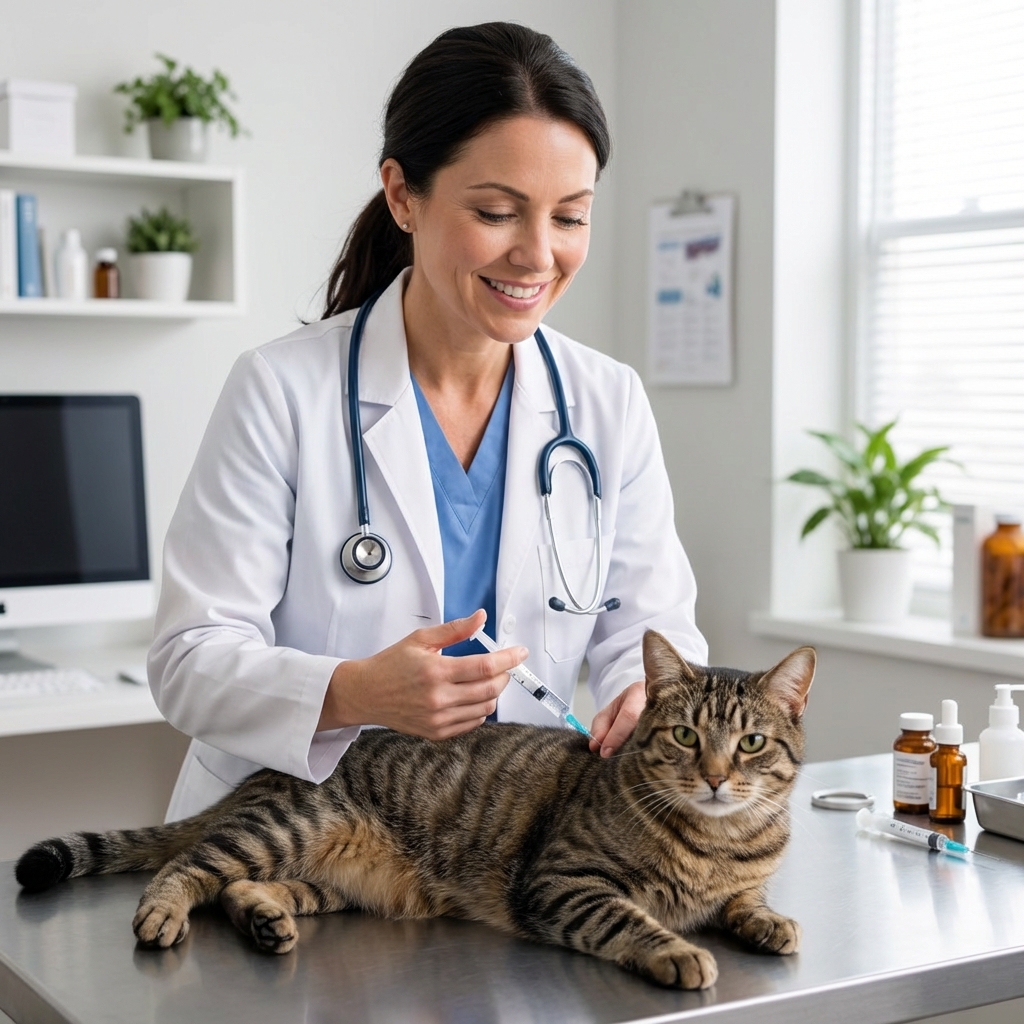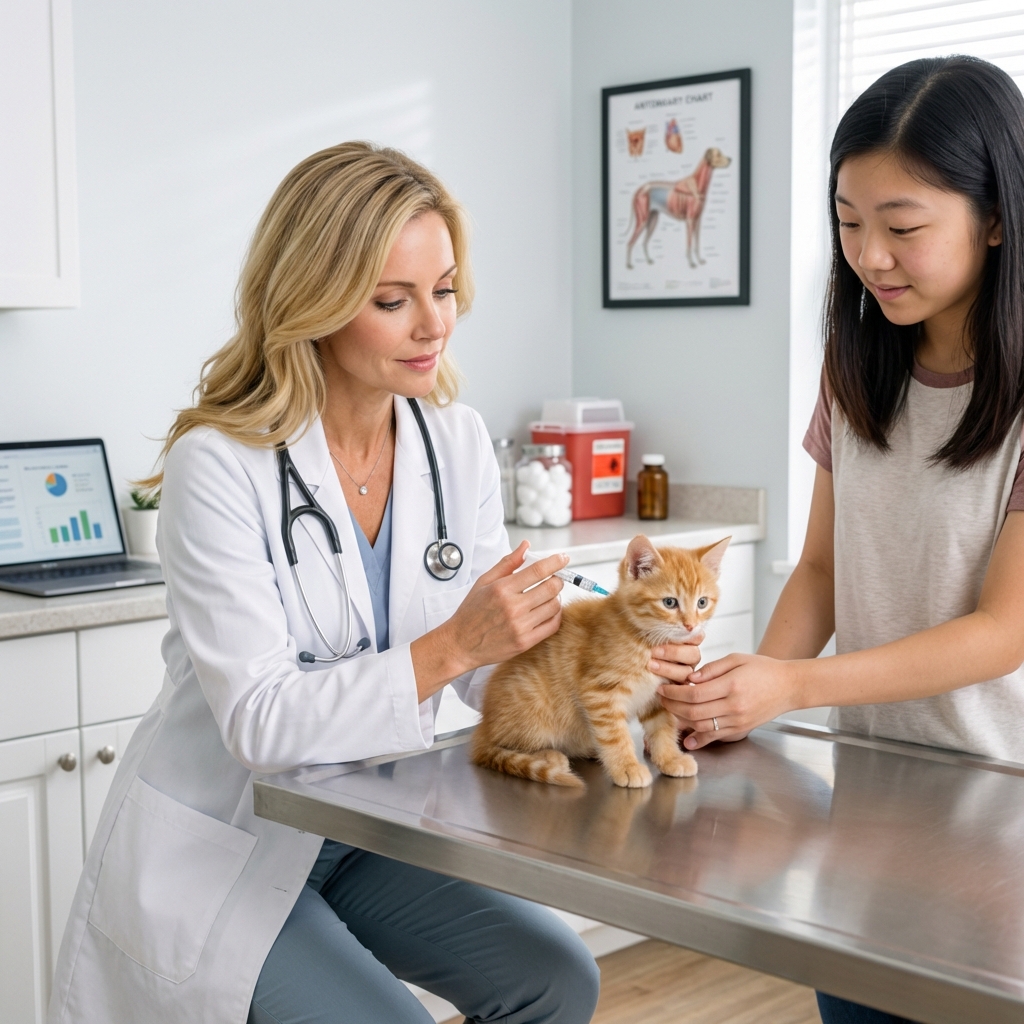
Easy cat vaccine timeline for kittens, adults, and indoor cats. Learn when to get FVRCP, rabies, and FeLV shots, how boosters work, and when to delay vaccines.
Article
•
Designer Mixes
What Shots Does My Cat Need?

Shari Shidate
Designer Mixes contributor
As a veterinary assistant here in Frisco, Texas, I hear this question all the time: “What shots does my cat actually need?” The honest answer is that every cat’s vaccine plan should be tailored to their lifestyle, age, and health status. The good news is that once you understand the basics, it gets a lot less confusing.
This guide walks you through the core vaccines most cats need, the optional vaccines that depend on risk, and a practical timeline so you can feel confident at your next vet visit.
Core vs. lifestyle vaccines
Veterinarians typically group cat vaccines into two categories:
- Core vaccines: Recommended for almost every cat because the diseases are widespread, severe, and often highly contagious.
- Non-core (lifestyle) vaccines: Recommended only when a cat’s exposure risk is higher, based on environment and habits.
Your vet will also consider things like your cat’s age, immune status, travel or boarding plans, whether you foster, and how many cats live in the home. Many clinics also base recommendations on guidance from groups like the AAFP and WSAVA, then tailor from there.
Core vaccines most cats need
FVRCP (the “distemper” combo)
FVRCP is a combination vaccine that helps protect against:
- Feline viral rhinotracheitis (herpesvirus)
- Calicivirus
- Panleukopenia (sometimes called feline distemper, but it is different from canine distemper)
These illnesses can cause severe upper respiratory disease, painful mouth ulcers, dehydration, and in the case of panleukopenia, life-threatening infection especially in kittens.
Typical schedule: kittens get a series, then a 1-year booster, then boosters every 1 to 3 years depending on vaccine type and risk.
One quick note that can reduce confusion: some FVRCP vaccines are injectable and others are intranasal. Your veterinarian will choose what fits your cat’s age, risk, and medical history.
Rabies
Rabies is fatal once symptoms appear, and it is also a human health concern. In Texas, rabies vaccination is required by state law for cats and dogs (with local cities sometimes adding their own registration or enforcement rules). Even for indoor cats, exposure can happen through a bat in the house or a surprise escape outdoors.
Typical schedule: the first rabies vaccine is usually given around 12 to 16 weeks of age (timing depends on the product), then boosted 1 year later. After that, it may be every 1 or 3 years based on the vaccine label and Texas requirements.
Non-core vaccines based on risk
These vaccines can be very important for the right cat, but they are not one-size-fits-all.
FeLV (Feline Leukemia Virus)
FeLV is spread through close, prolonged contact, especially saliva sharing, like mutual grooming, bites, and sharing food and water dishes. It can also pass from a mother cat to kittens. FeLV can suppress the immune system and increase the risk of serious infections and certain cancers.
Who often needs it:
- Kittens (many guidelines recommend FeLV for all kittens because their future lifestyle may change)
- Adult cats who go outdoors, escape often, or live with FeLV-positive cats
- Cats in multi-cat homes, rescue environments, or foster situations
Typical schedule: a 2-dose initial series, then a booster 1 year later, then ongoing boosters for cats at continued risk. Annual boosters are common, and some clinics may use longer intervals depending on the product and your cat’s risk level.
If your cat’s FeLV status is unknown, your veterinarian will often recommend testing before vaccination, especially for new cats, rescues, or any cat with potential exposure history.
Bordetella
Bordetella can contribute to respiratory disease, especially in high-density cat populations. In pet cats, this vaccine is usually reserved for specific situations such as shelter settings, outbreak control, or when a boarding facility requires it.
Who might need it: cats frequently boarded, shown, or exposed to large groups of cats, especially if a facility specifically recommends it.
Chlamydia felis
This bacteria is linked to conjunctivitis and upper respiratory signs. It is not routinely recommended for every pet cat, but it can be helpful in specific multi-cat settings where the disease has been confirmed.
FIV vaccine
The FIV vaccine is generally no longer available in the U.S. (manufacturing for the North American market was discontinued). Today, FIV prevention focuses on lifestyle and exposure control, especially avoiding outdoor fights and limiting contact with unknown cats. If you have questions, ask your veterinarian what prevention steps make the most sense for your cat.
Kitten vaccine schedule
Kittens are not “tiny adults.” Their immune systems are developing, and protection from mom’s antibodies fades over time. That is why kittens need a series of vaccines rather than a single shot.
Common kitten timeline
- 6 to 8 weeks: FVRCP starts
- Every 3 to 4 weeks: continue FVRCP boosters until at least 16 weeks (and sometimes to 20 weeks in higher-risk kittens, like those in shelter or foster environments)
- FeLV: often started around 8 to 12 weeks (usually 2 doses total)
- Rabies: commonly 12 to 16 weeks (based on product and Texas requirements)
- 1 year later: booster visit for FVRCP and rabies (and FeLV if still at risk)
Your veterinarian may adjust this slightly based on your kitten’s health, where you live, and which products your clinic uses.
Adult boosters
This is where many cat parents feel unsure, because recommendations have evolved over the years. Many core vaccines are now labeled for every 3 years after the 1-year booster, but that is not always the right fit for every cat. Vaccine labels, your cat’s risk level, and local and state requirements all matter.
In general:
- FVRCP: often every 1 to 3 years depending on lifestyle and vaccine type
- Rabies: every 1 or 3 years depending on the product label and Texas requirements
- FeLV: for at-risk cats, often annual (some protocols and products may allow longer intervals in select cases)
Even if your cat does not need vaccines every year, an annual wellness exam is still incredibly valuable for catching dental disease, weight changes, kidney issues, thyroid problems, and more.
Indoor cats and vaccines
Most indoor cats still need at least the core vaccines. Here is why:
- Indoor does not always mean “no exposure.” Viruses can hitch a ride on shoes, hands, and items brought into the home.
- Emergencies happen. Fire, storms, or a door left open can turn an indoor cat into an outdoor cat fast.
- Rabies risk is real. Bats can enter homes, and that counts as potential exposure.
If your cat is truly indoor-only and low-risk, your vet may recommend longer booster intervals for certain vaccines, but skipping them entirely is rarely the safest choice.
Special situations
Senior cats
Older cats still need protection, but their health status matters. Seniors may be more vulnerable to vaccine side effects if they have certain conditions, so your vet may recommend careful timing and only what is truly needed.
Chronic illness
Cats with kidney disease, hyperthyroidism, diabetes, cancer, or immune-related conditions may need a customized plan. Always tell your vet about medications and any recent illness before vaccines.
Pregnancy
Vaccinating pregnant cats is generally avoided unless there is a clear medical reason, especially with certain vaccine types. If you are rescuing a pregnant cat, ask your vet for a tailored strategy.
Side effects
Most cats do very well after vaccines. Mild effects can happen and typically resolve within 24 to 48 hours.
Common mild reactions
- Sleepiness or lower energy
- Mild soreness at the injection site
- Decreased appetite for a day
Call your vet urgently if you notice
- Facial swelling, hives, intense itching
- Vomiting or diarrhea that is severe or persistent
- Difficulty breathing
- Collapse or extreme weakness
Also important: if you feel a lump at the injection site, monitor it and contact your veterinarian if it follows the veterinary 3-2-1 rule: it is still there after 3 months, it is larger than about 2 cm, or it is growing 1 month after the vaccine. Injection-site sarcomas are rare, but this rule helps catch problems early while also avoiding unnecessary panic over normal, temporary swelling.
Save money without skipping protection
I know veterinary care costs are a real concern. Here are practical ways to keep your cat protected and your budget steady:
- Ask for a written vaccine plan with dates, so nothing gets repeated too soon or missed.
- Do wellness plus vaccines together when possible to reduce extra visit fees.
- Use low-cost vaccine clinics carefully for straightforward boosters, but keep a relationship with a full-service vet for exams, diagnostics, and illness care.
- Consider pet insurance or a dedicated pet savings fund, especially for young cats.
Questions to ask your veterinarian
If you want a truly customized plan, these questions help you and your vet get on the same page quickly:
- Which vaccines are core for my cat, and why?
- Based on my cat’s lifestyle, which non-core vaccines do you recommend?
- What booster interval do you recommend for FVRCP and rabies for my cat specifically?
- Is my cat due for FeLV testing or other screening?
- What side effects should I watch for in the first 48 hours?
My favorite takeaway for cat parents is this: the goal is not “all the shots.” The goal is the right protection for your cat’s real life, delivered on a schedule that makes medical sense.