Cloudy aquarium water? Use color clues to find the cause, then test ammonia and nitrite, do safe water changes, boost filtration and aeration, and stop haze ...
Article
•
Designer Mixes
What Makes Fish Tanks Cloudy

Shari Shidate
Designer Mixes contributor
Cloudy aquarium water can feel discouraging, especially when you are doing your best to care for your fish. The good news is that most cloudiness has a clear cause, and once you identify it, the fix is usually simple and very doable.
Think of “cloudy” as a symptom, not the diagnosis. Your job is to figure out what kind of cloudy you are seeing, then match it to the right solution.
Quick diagnosis checklist
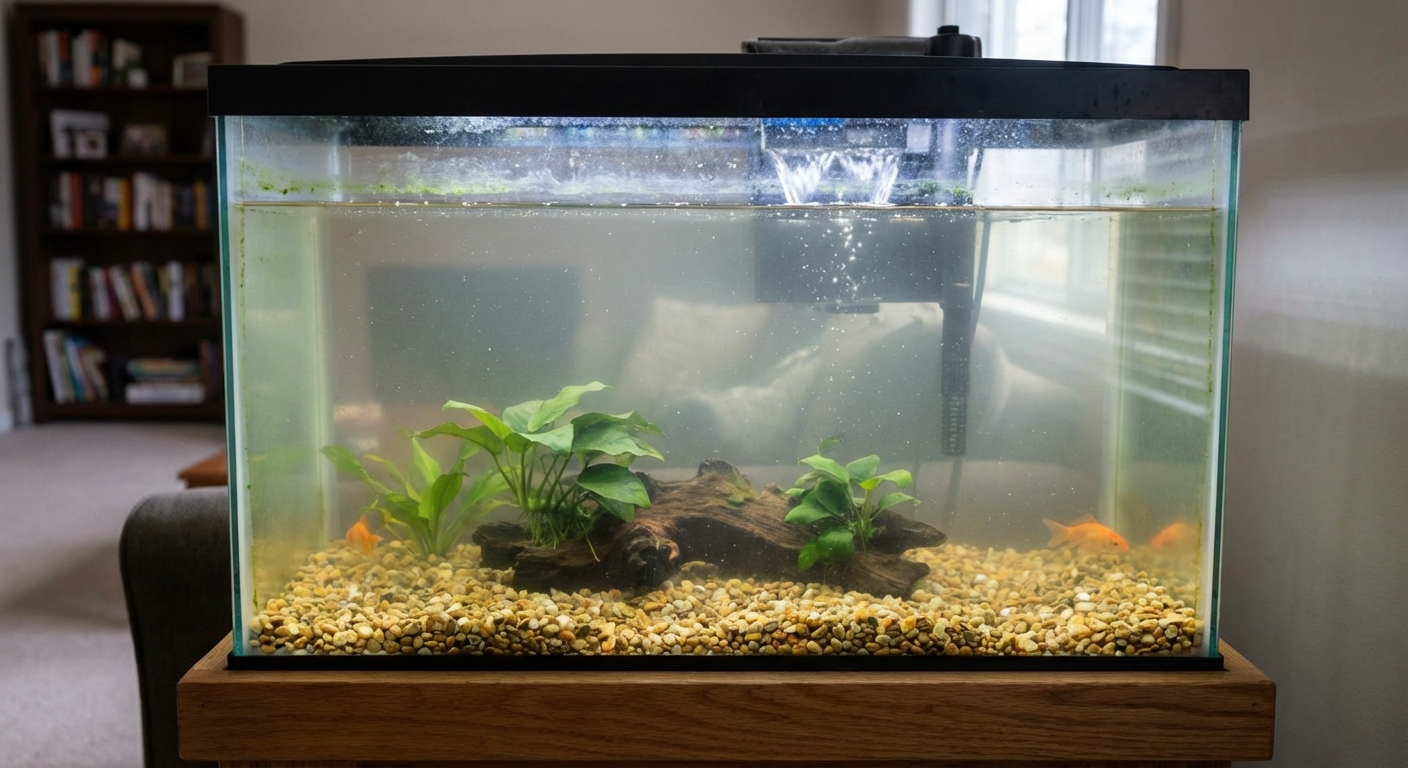
If you only do one thing before troubleshooting, answer these quick questions. They point to the most common causes fast.
- Is the tank new (or recently re-started)?
- Did you recently clean or replace filter media?
- Did you add new sand or gravel or stir the substrate?
- Was there a recent water change and now the tank looks “milky” but full of tiny shimmering dots?
- Is the tank getting direct sun or long light hours?
- Did you feed heavier than usual?
- Did you add chemicals (pH buffers, mineral salts, bacterial starters, medications, conditioners) recently?
First: identify the type of cloudiness
Different cloudiness colors and textures point to different problems. Before you change anything, take 30 seconds to observe.
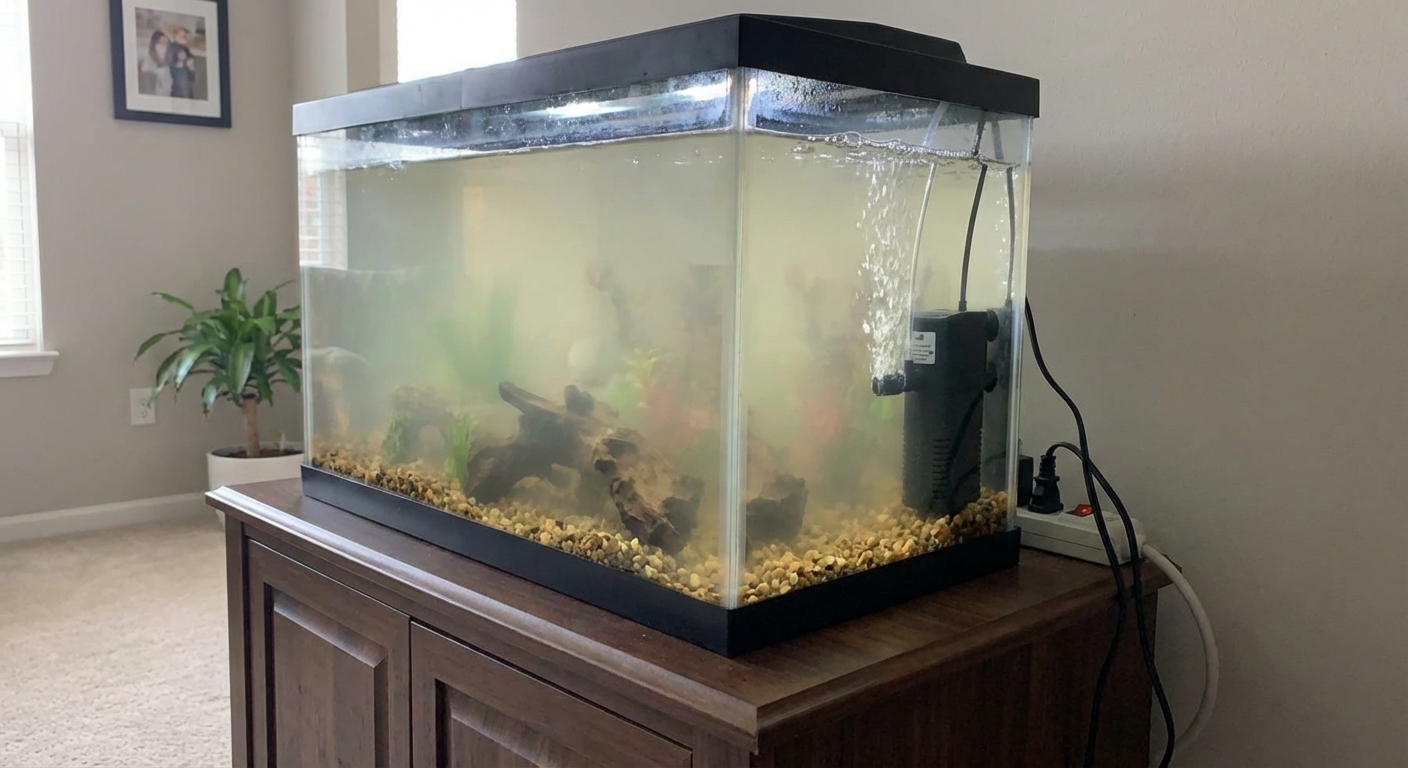
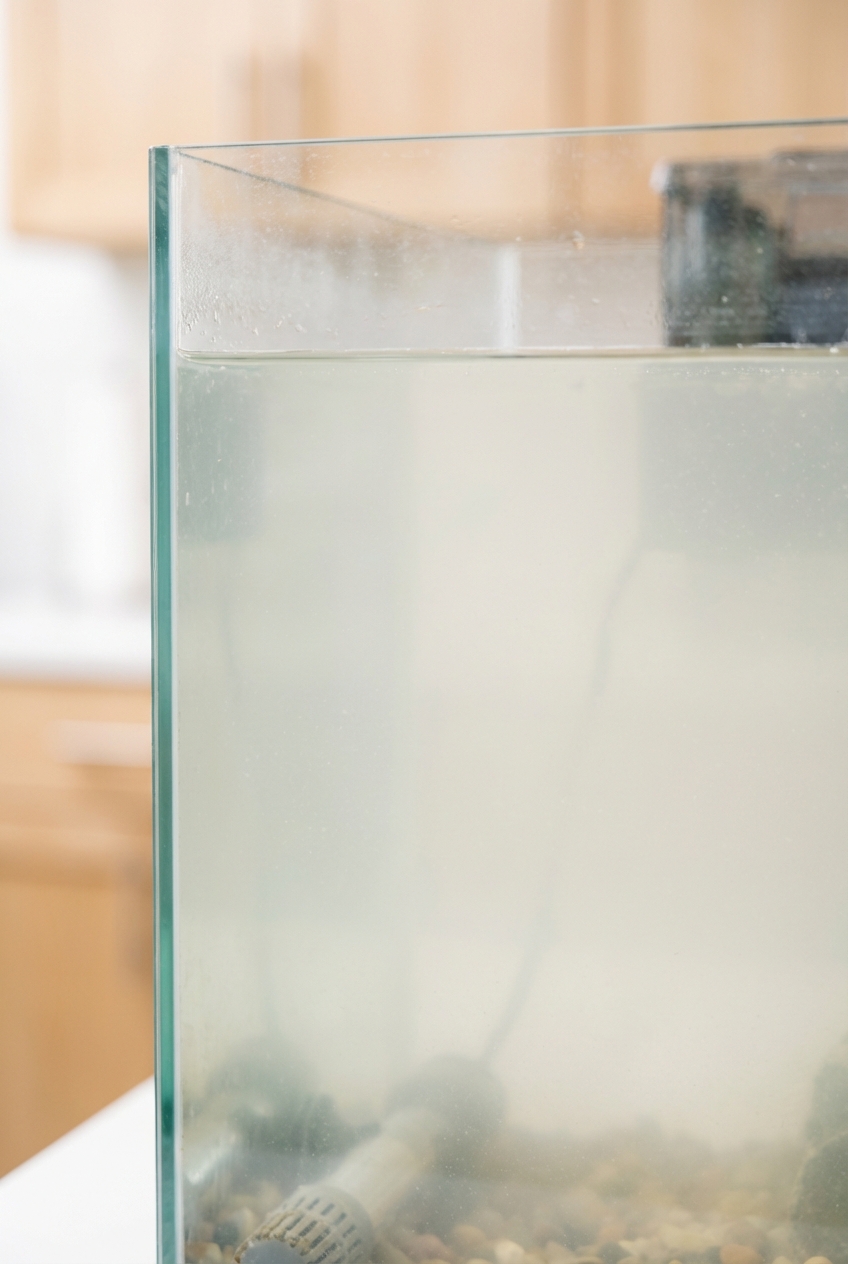
- Milky white haze: often a bacterial bloom or stirred-up fine particles.
- Tiny “sparkly” dots that rise and vanish: usually microbubbles after a water change or filter maintenance.
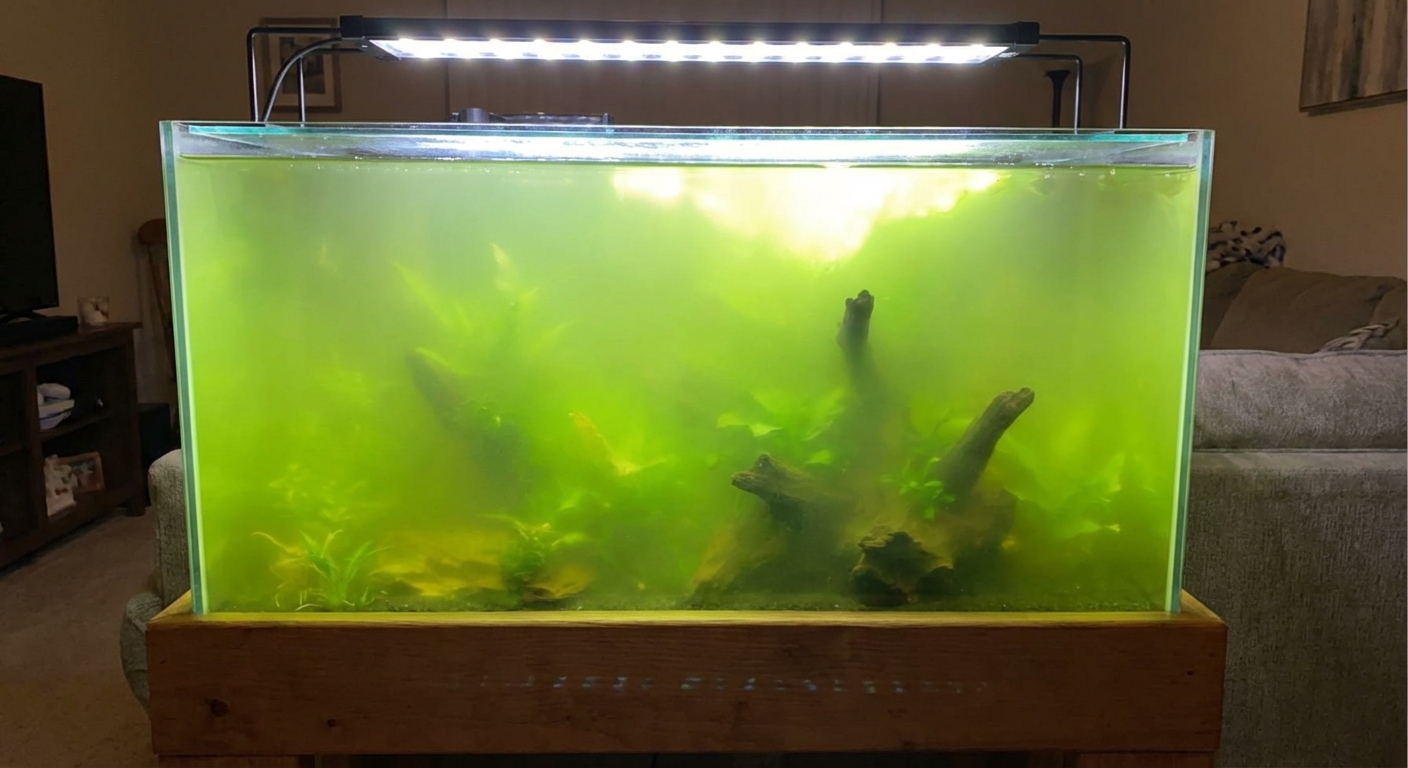
- Green water: free-floating algae, usually light and nutrient related.
- Brown or tea-colored water: tannins from driftwood or certain botanicals.
- Gray haze with visible specks: debris, uneaten food, dirty substrate, or insufficient mechanical filtration.
- Yellow-brown dusty coating on surfaces (not just the water): often diatoms (common in newer tanks).
The most common causes and what to do
1) New tank bacterial bloom (very common)
If your tank is new, or you recently cleaned the filter too aggressively, you can see a cloudy white bloom. This is often a surge of bacteria responding to available nutrients. It can happen even when you have “good intentions,” like doing large cleanings too quickly.
What helps:
- Test your water daily for ammonia and nitrite until stable. A liquid test kit is usually more reliable than strips.
- Do partial water changes (typically 20 to 30%) if ammonia or nitrite are detectable (especially at or above 0.25 ppm), or any time fish show stress.
- Do not replace all filter media. Rinse sponges or media in dechlorinated tank water, not tap water, to protect beneficial bacteria.
- Feed lightly for a few days. Extra food fuels blooms.
- Be patient. Many blooms clear on their own once the tank stabilizes.
Helpful parameter context: Aim for ammonia 0, nitrite 0, and keep nitrate low (many freshwater tanks do well when nitrate is kept under about 20 to 40 ppm, depending on stocking and species).
When to worry: If fish are gasping at the surface, acting lethargic, or if ammonia or nitrite are detectable, prioritize water changes and aeration.
2) Overfeeding and excess waste
Overfeeding is one of the fastest routes to cloudy water. Uneaten food breaks down into ammonia, which stresses fish and feeds bacteria and algae.
What helps:
- Feed what your fish can finish in 30 to 60 seconds, once or twice a day depending on species.
- Remove uneaten food with a net or siphon if it settles.
- Gravel vacuum during water changes to pull waste out of the substrate.

3) Poor mechanical filtration (particles staying suspended)
If the water looks hazy and you can see tiny particles, your filter may not be catching fine debris, or the flow might be too low for your tank size. A mild haze can also happen right after maintenance and may clear on its own within a day.
What helps:
- Add or upgrade mechanical media like filter floss, a polishing pad, or a finer sponge.
- Replace or rinse polishing media often. Fine pads and floss clog quickly, which reduces flow and performance.
- Check filter flow and clean the impeller if it is clogged.
- Avoid over-cleaning all media at once. Stagger cleaning so you keep beneficial bacteria.
- Use a pre-filter sponge on the intake to catch debris and protect small fish or shrimp.
- Fast option for stubborn fine particles: a diatom filter (or very fine polishing media) can clear “dusty” water quickly.
4) Microbubbles (looks like a white haze, but it is air)
Microbubbles are easy to confuse with a bacterial bloom. The difference is that microbubbles look like tiny glittering dots in the water column. They often appear right after a water change, after you top off the tank, or when the filter intake is pulling in air.
What helps:
- Wait 30 to 120 minutes. Microbubbles often clear on their own.
- Raise the water level so the filter intake is fully submerged.
- Check for air leaks in tubing or loose fittings (common on canister filters).
- Aim returns gently. Splashy outflows and spray bars can inject air.
5) Algae bloom (green water)
Green water is typically caused by too much light, too many nutrients, or both. It is not usually dangerous short term, but it is a sign the system is out of balance.
What helps:
- Reduce light duration to 6 to 8 hours per day.
- Keep the tank out of direct sunlight.
- Review feeding and reduce if needed.
- Do regular water changes to reduce nitrate and dissolved organics (helpful, but green water can rebound quickly).
- Consider live plants to compete for nutrients.
Quick reset option: A 3-day blackout can help some tanks, but keep aeration strong and resume a shorter light schedule afterward.
If it keeps coming back: A UV sterilizer is one of the fastest, most reliable fixes for free-floating green water.
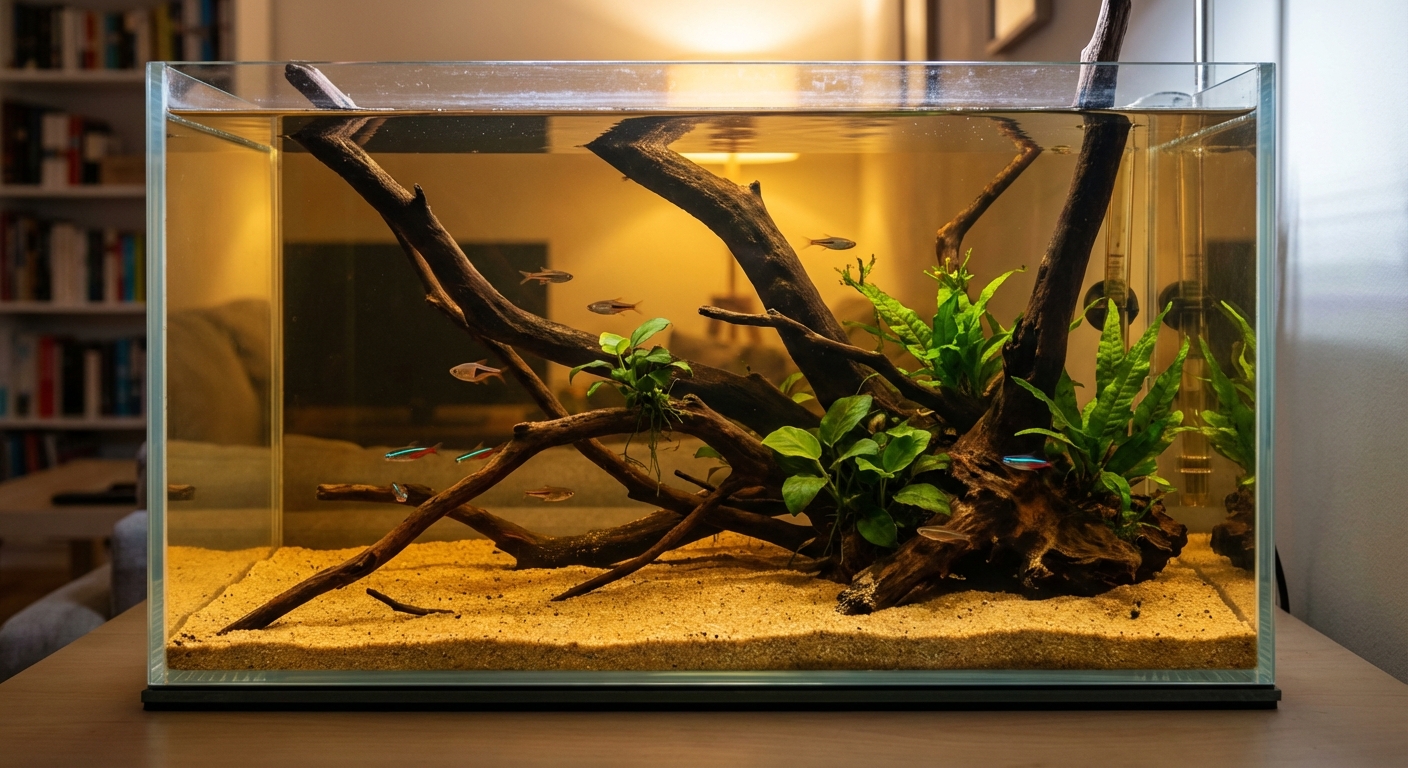
6) Tannins from driftwood (brown water)
Tea-colored water from driftwood is very common and often harmless. Many blackwater species tolerate, and often prefer, tannin-stained water with a softer, more acidic profile (as long as parameters are stable and appropriate for the fish you keep).
What helps if you want it clearer:
- Run activated carbon temporarily in the filter.
- Do partial water changes weekly.
- Pre-soak or boil driftwood before adding it to reduce tannins.
7) Substrate dust or stirred-up debris
New gravel or sand can cloud a tank if it was not rinsed well. Also, some fish, like corydoras or goldfish, can stir substrate constantly. If the cloudiness appeared right after you rearranged decor or vacuumed, it may simply be fine debris that needs time and filtration to remove.
What helps:
- Use filter floss or a polishing pad to trap fine dust.
- Avoid rearranging decor until the tank clears.
- Rinse new substrate thoroughly in a bucket until the water runs mostly clear before adding next time.
8) Diatoms (brown dusting in newer tanks)
Diatoms often show up as a brown, dusty film on glass, decor, or substrate, and sometimes make the water look slightly dull. They are common in newer setups and usually fade as the tank matures.
What helps:
- Wipe and siphon during maintenance.
- Keep lighting reasonable and avoid direct sun.
- Be consistent. Diatoms often resolve with time as the tank stabilizes.
9) Chemical cloudiness (minerals, buffers, overdosing)
Some cloudiness is not biological at all. It can happen after adding mineral-heavy substrates (like aragonite or crushed coral), pH buffers, certain medications, bacterial starters, or too much water conditioner. It often looks like a uniform haze that appears soon after dosing.
What helps:
- Stop additional dosing unless it is medically necessary.
- Double-check the label and your tank volume to confirm the correct dose.
- Run activated carbon (if compatible with what you added; do not use carbon if you are actively medicating and the medication requires it to stay in the water).
- Give it time and filtration. Many chemical hazes fade within 24 to 72 hours.
Don’t make these common cloudy-water mistakes
- Replacing all filter media at once. This can crash your cycle and make cloudiness much worse.
- Big water changes daily “just in case”. If parameters are safe, excessive changes can keep the tank from settling. Exception: frequent changes are appropriate when ammonia or nitrite are detectable (especially 0.25 ppm or higher) or when fish are distressed.
- Adding clarifiers without diagnosis. Water clarifiers can clump particles, but they do not fix the underlying cause.
- Skipping water testing. Cloudiness is often tied to ammonia or nitrite. Testing keeps you from guessing.
A simple step-by-step plan
If you are not sure where to start, here is a gentle, evidence-based approach that works for most home aquariums.
- Test ammonia, nitrite, and nitrate. If ammonia or nitrite are detectable (especially at or above 0.25 ppm), do a 20 to 30% water change and add extra aeration.
- Look closely at the “cloud.” If you see shimmering dots that rise and pop, it is likely microbubbles, not a bloom.
- Check your filter. Make sure it is running properly and add fine mechanical media like filter floss or a polishing pad.
- Feed lightly for 2 to 3 days. This reduces waste and helps the tank catch up.
- Vacuum the substrate. Remove trapped waste without tearing the whole tank apart.
- Adjust lighting. If water is green, reduce to 6 to 8 hours and avoid sunlight.
- Re-test in 24 hours. Keep tracking until you see stable, safe parameters and improving clarity.
If your fish show distress at any point, prioritize oxygenation and water quality first.
When cloudy water is an emergency
Most cloudiness is not immediately dangerous, but it becomes urgent when it pairs with poor water quality or oxygen issues.
Act quickly if you see:
- Fish gasping at the surface or hanging near the filter outflow
- Sudden fish deaths
- Ammonia or nitrite detectable (especially at or above 0.25 ppm)
- A strong rotten or sulfur smell (can indicate disturbed anaerobic pockets in deep substrate)
Immediate steps: Add aeration, do a partial water change (20 to 40%), dose dechlorinator correctly, and stop feeding for 24 hours. Then continue testing and small changes as needed.
Keeping water clear long-term
Clear water is usually the result of small, consistent habits.
- Weekly maintenance: 20 to 30% water change plus a light substrate vacuum.
- Filter care: Rinse media in old tank water, and clean the impeller occasionally.
- Stocking and feeding: Avoid overcrowding and feed modestly.
- Light control: Use a timer for a steady schedule (and keep the tank out of direct sun).
- Patience with new tanks: Stability comes with time and a healthy nitrogen cycle.
If you remember one thing: cloudy water is usually your tank telling you it needs balance, not perfection. Small changes, done steadily, are what get you to crystal-clear water.