Understand common causes of excessive cat drooling—dental pain, nausea, toxins, foreign objects, and breathing issues—plus home steps and when to seek ur...
Article
•
Designer Mixes
What It Means When Your Cat Is Drooling

Shari Shidate
Designer Mixes contributor
Seeing drool on your cat’s chin or finding a wet spot where they were lounging can be surprising. Cats are usually tidy, and many have a fairly “dry mouth” most of the time, so drooling tends to grab our attention. The tricky part is that cat drooling can be completely harmless in one moment and a red flag the next.
As a veterinary assistant, I like to break this down into two simple questions: Is this drooling a one-time event, or is it new, frequent, or paired with other symptoms? Once you answer that, the next steps become much clearer.
Quick note: This article is educational and not a substitute for veterinary care. If you are worried, it is always okay to call your veterinarian.
Quick first step: what kind of drool is it?
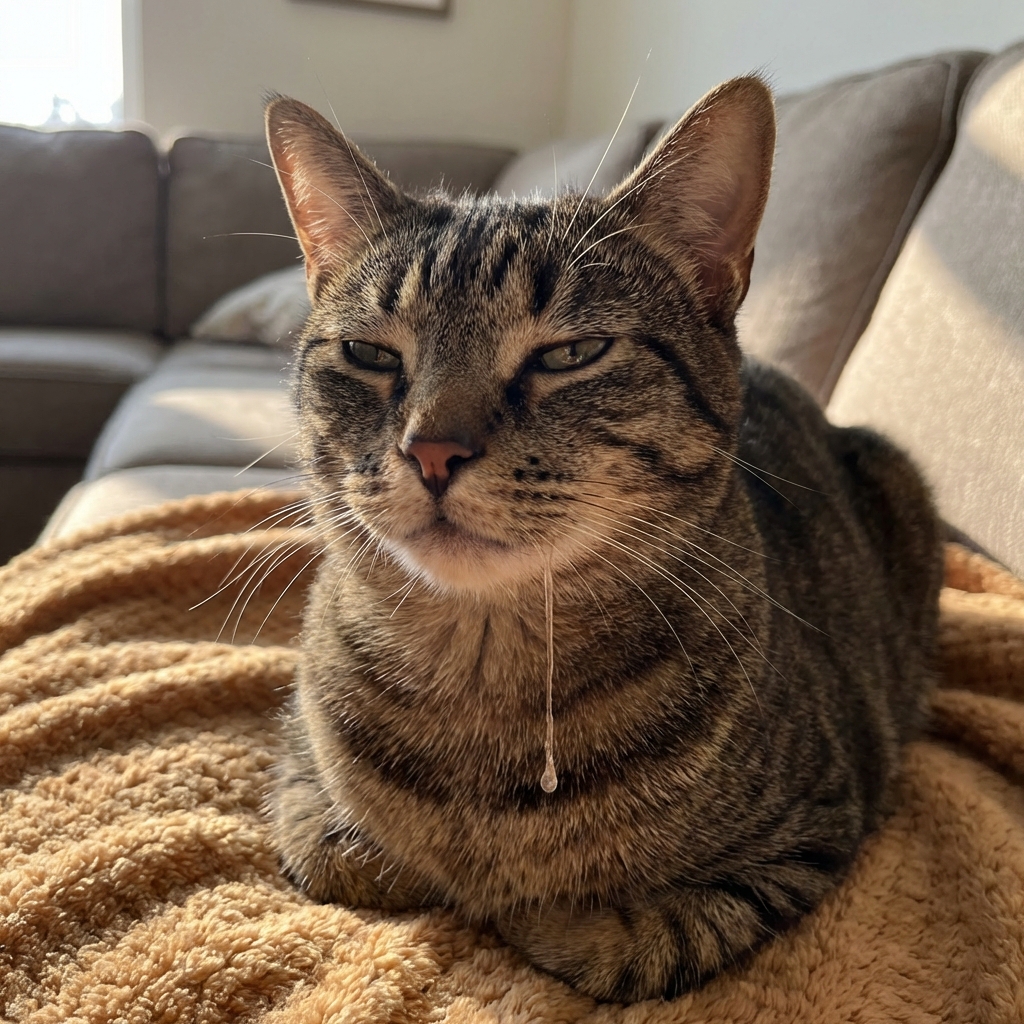
Drooling can look different depending on the cause. Before you do anything else, take a calm look at what you’re seeing.
- Small damp chin after kneading or purring: often normal in relaxed cats.
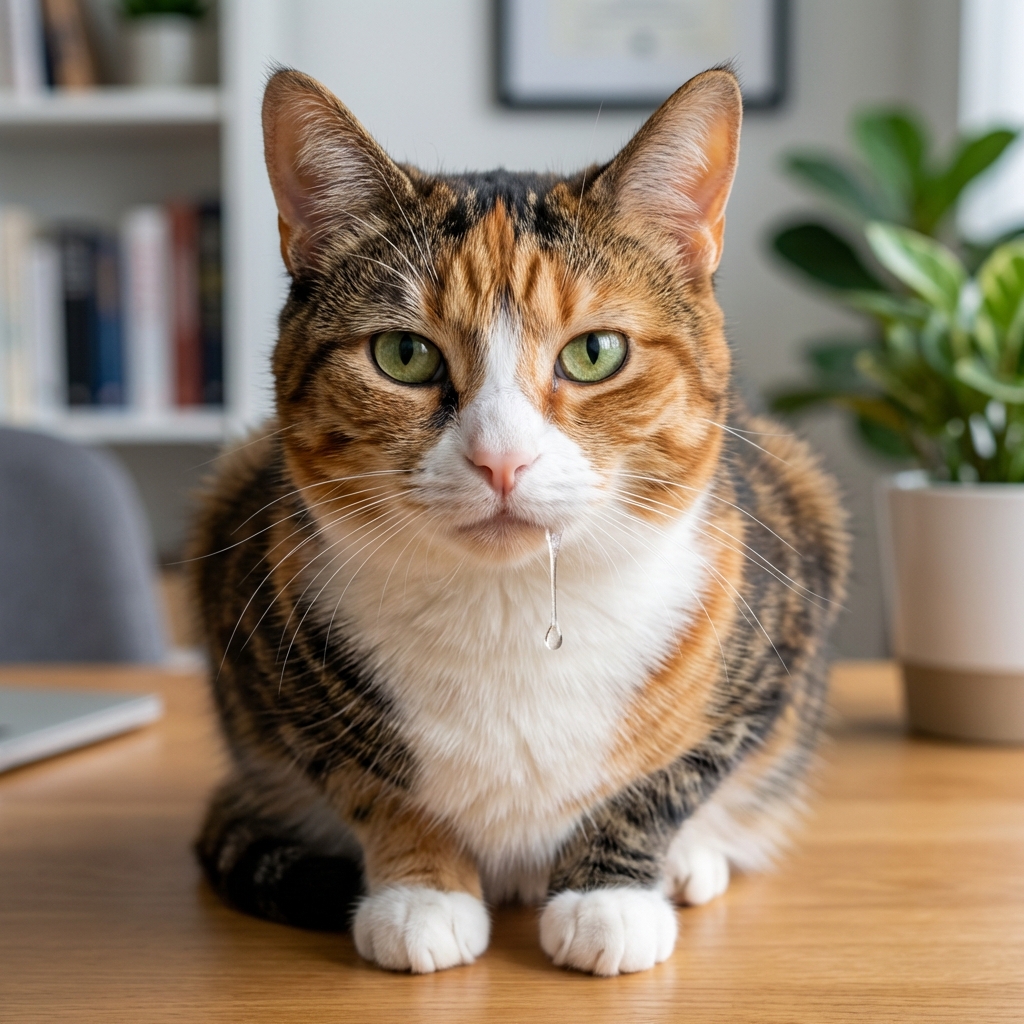
- Clear, watery drool: can be seen with nausea, stress, motion sickness, or mild oral irritation.
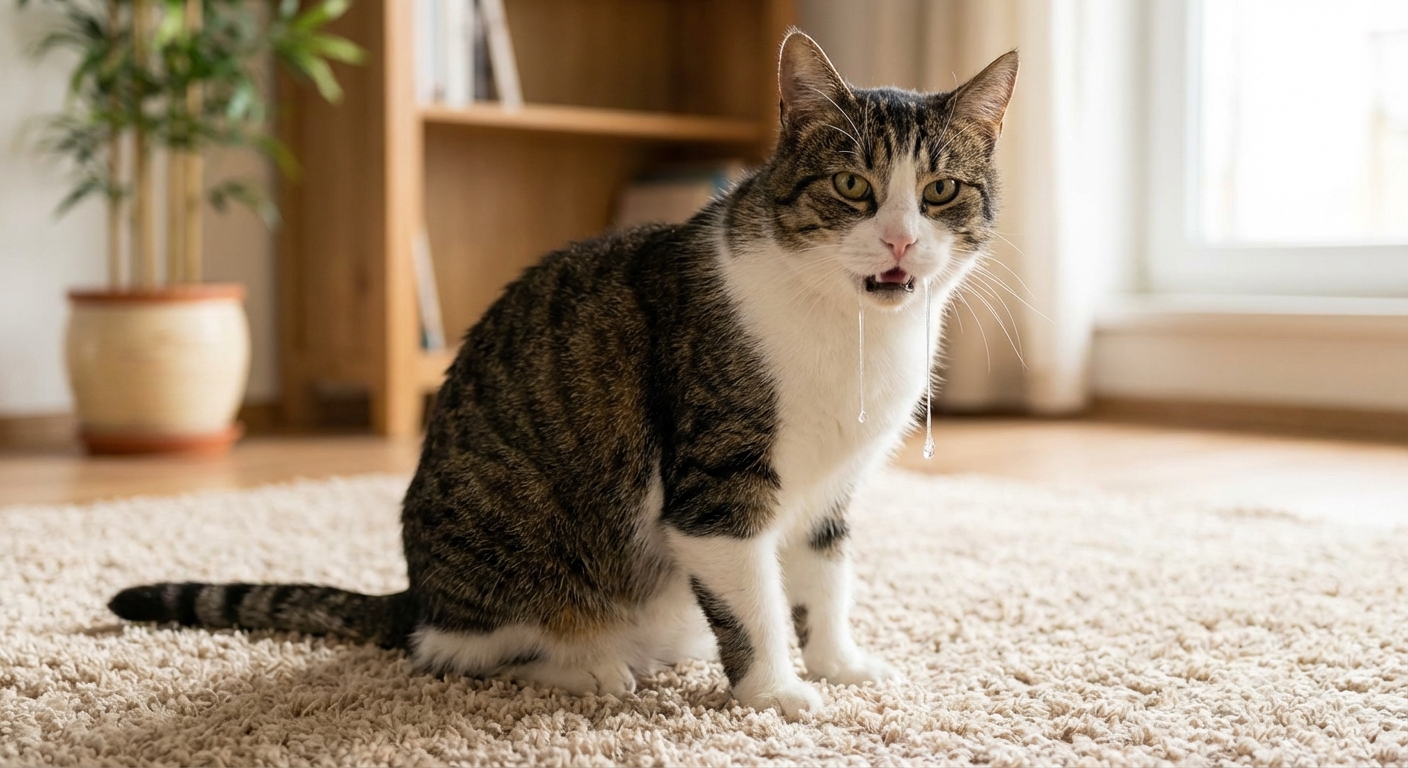
- Thick or stringy drool: can be seen with dental disease, oral pain, stomatitis, or something stuck in the mouth (but consistency alone is not diagnostic).
- Drool with blood or a bad odor: more concerning for gum disease, injury, infection, ulcers, or a mass.
- Foamy drool: can happen with nausea or after tasting something bitter, but it can also occur with toxin exposure.
Normal reasons cats drool
Yes, some drooling can be totally normal, especially if it is occasional and your cat is acting like their usual self.
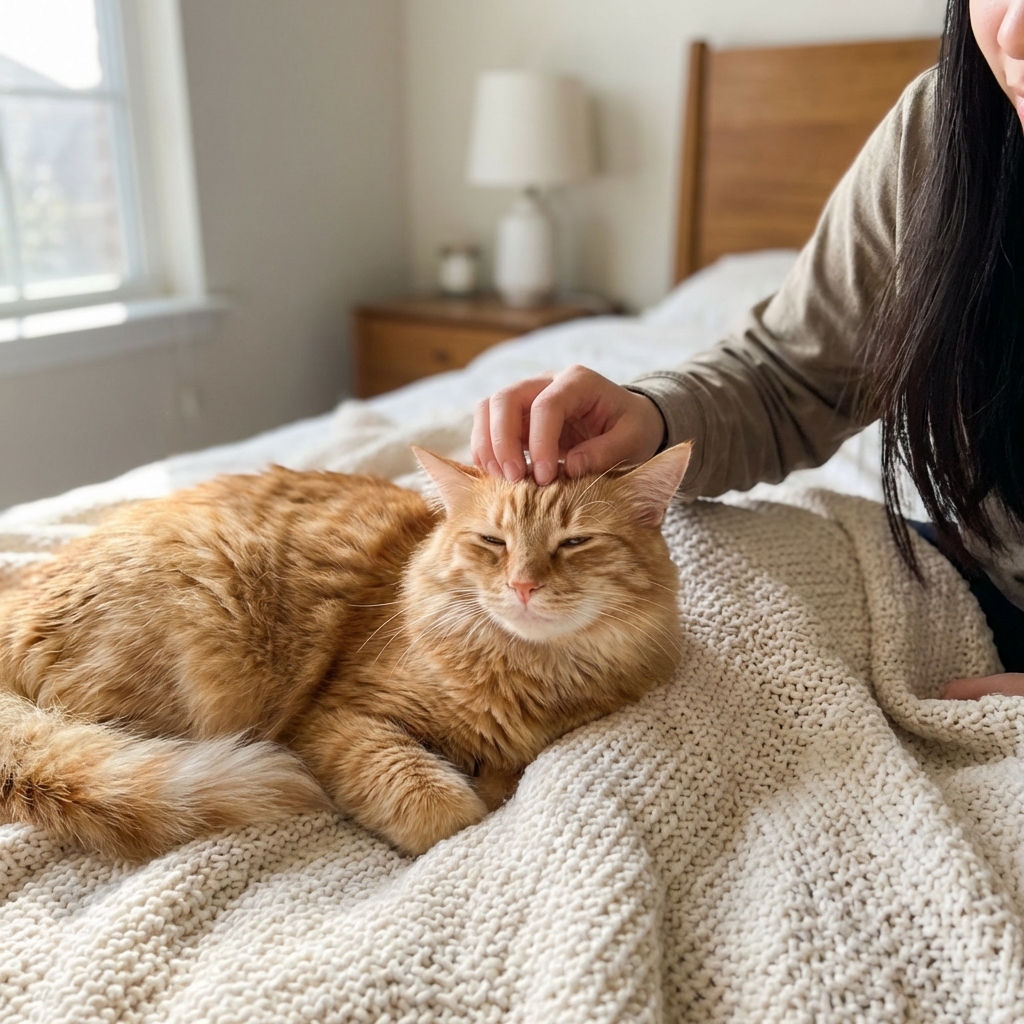
Happy, relaxed drooling
Some cats drool when they are deeply content. You might see it during petting, purring, or kneading. It is typically light and brief, and your cat otherwise seems comfortable and normal.
After smelling catnip
Catnip can trigger drooling, cheek rubbing, and goofy behavior in sensitive cats. If it resolves quickly and they are otherwise fine, it is usually harmless.
Car rides and stressful events
Stress can cause nausea, and nausea can cause drooling. Some cats get motion sickness and drool, swallow repeatedly, or vomit during travel.
After bitter medications
Some oral medications taste awful. If a pill or liquid hits the tongue and tastes bitter, cats can drool or foam dramatically for a short time, even though nothing “dangerous” is happening. Call your vet if it does not settle quickly, if your cat seems painful, or if you are not sure the dose was swallowed.
After anesthesia or dental work
Temporary drooling can happen after anesthesia or a procedure, especially if the mouth was held open or the throat was irritated by an airway tube. Your clinic should tell you what to expect and what would be abnormal.
Common medical causes
If drooling is new, frequent, or paired with other symptoms, it is time to think medical. In cats, the mouth is one of the most common sources of drooling.
Dental disease and gum inflammation
Periodontal disease is extremely common in adult cats. Inflamed gums and infected teeth can make chewing and swallowing painful, so cats may drool, paw at the mouth, or chew oddly.
- Bad breath
- Tartar buildup
- Red gumline
- Dropping food or chewing on one side
- Hiding or crankiness (pain can look like “attitude”)
Stomatitis
Feline stomatitis is a painful inflammatory condition that can cause heavy drooling, foul breath, reduced appetite, and weight loss. Cats may yowl when trying to eat or avoid kibble.
Something stuck in the mouth
String, thread, a piece of plastic, a bone fragment, or plant material can lodge between teeth or under the tongue. This can trigger sudden drooling and frantic pawing.
Important: If you see string coming from the mouth, do not pull it. This can be part of a linear foreign body and pulling can cause severe internal injury. Go to a veterinarian urgently.
Oral ulcers and infections
Viruses like feline calicivirus can cause mouth ulcers, drooling, and pain. You might also see sneezing, eye discharge, fever, or a sudden refusal to eat.
Oral masses and tumors
In older cats especially, a new increase in drooling, bad breath, blood-tinged saliva, facial swelling, or new trouble eating can be caused by an oral mass. Any lump, sore that does not heal, or one-sided swelling deserves a prompt veterinary exam.
Nausea and digestive upset
Cats can drool before vomiting. Causes range from hairballs and diet changes to pancreatitis, kidney disease, or other illnesses. If drooling is paired with repeated vomiting, lethargy, or not eating, it needs a veterinary check.
Toxins or caustic tastes
Cats may foam or drool heavily after licking something bitter or irritating. Some exposures are emergencies, including certain household cleaners, many insecticides, and human medications. Cats are also more sensitive than many pets to a variety of essential oils, especially when oils are concentrated, sprayed, diffused, or applied to fur. If you think your cat got into something, treat heavy drooling as urgent and call your vet or a pet poison hotline right away.
Heatstroke
Cats can overheat, especially in hot garages, closed rooms with poor ventilation, or during power outages. Drooling can be one sign, along with panting, red or pale gums, weakness, vomiting, or collapse. This is an emergency.
Step-by-step: what to do now
If your cat is drooling, here is a safe, practical sequence you can follow.
Step 1: Check overall behavior
- Are they bright, alert, and interested in food?
- Are they hiding, growling, or acting painful?
- Any vomiting, diarrhea, or breathing changes?
- Any trouble chewing, dropping food, or refusing treats?
Step 2: Do a quick mouth and chin check (only if safe)
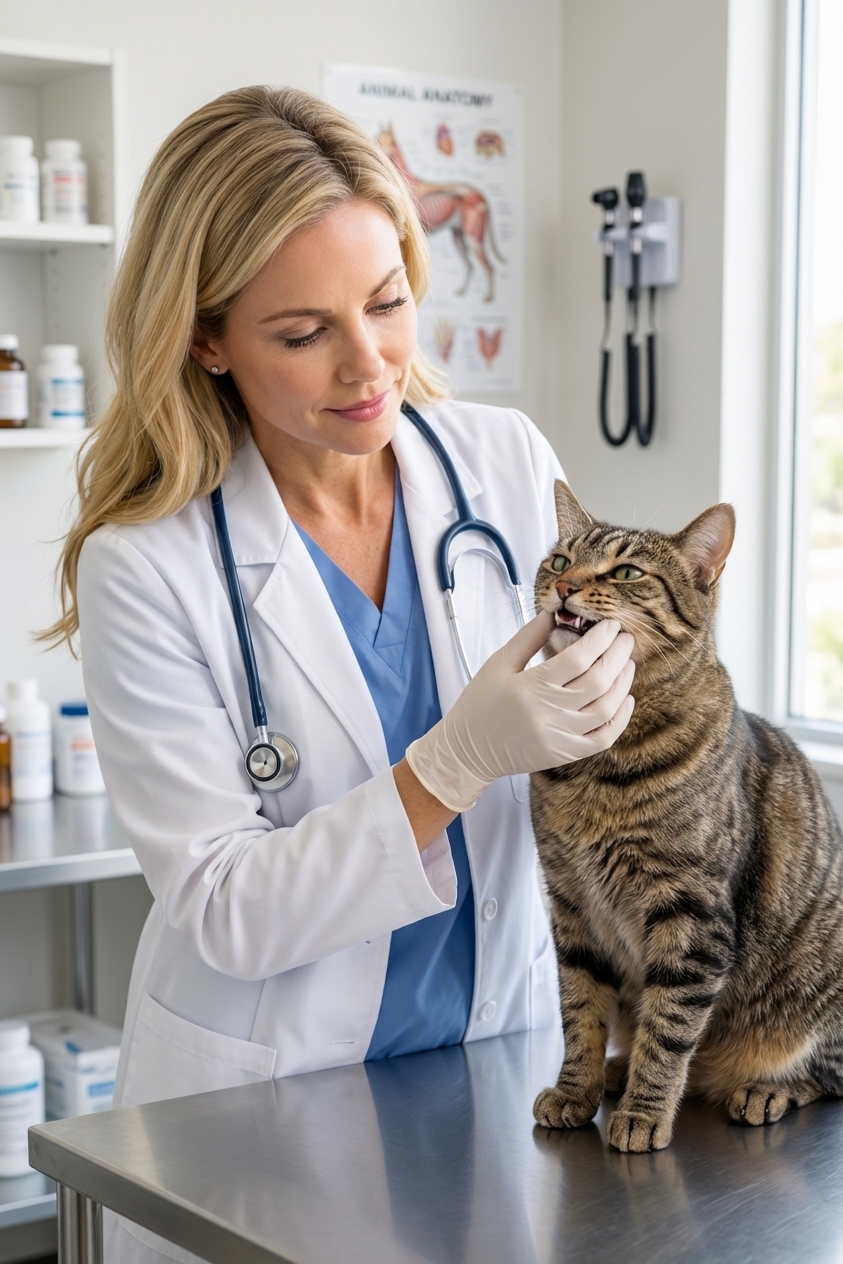
If your cat is calm and will allow it, gently lift the lips and look for obvious redness, bleeding, swelling, broken teeth, or a lodged object. If your cat is stressed or may bite, stop. A bite wound to your hand can become serious quickly.
Step 3: Remove possible irritants
- Pick up houseplants they may have chewed.
- Put away cleaners, diffusers, oils, sprays, and pest products.
- Check for string, ribbon, sewing thread, or dental floss access.
- Think about recent medications or supplements that could taste bitter.
Step 4: Offer water and a quiet space
Stress and nausea often improve with calm. Encourage hydration, but do not force water by syringe unless your veterinarian instructs you.
Step 5: Document what you see
Take a short video of the drooling and note timing, any new foods, treats, medications, plants, or chemicals. This helps your veterinarian tremendously.
Step 6: Monitor or call the vet
If your cat drooled briefly during cuddling and is totally normal afterward, monitoring may be reasonable. If drooling lasts more than a few hours, happens daily, or keeps coming back over several days, call your vet for guidance. If anything feels “off,” it is always okay to call.
When it is an emergency
Seek urgent veterinary care if you notice any of the following:
- Drooling plus trouble breathing, open-mouth breathing, or blue or very pale gums
- Drooling with repeated vomiting or inability to keep water down
- Known or suspected toxin exposure (cleaners, essential oils, lilies, insecticides, human medications)
- String or thread seen in the mouth
- Seizures, collapse, extreme weakness, or disorientation
- Heat exposure with panting, drooling, vomiting, red or pale gums, or a very hot body
- Drool that is bloody, has a strong foul odor, or is paired with sudden swelling of the face or mouth
- Cannot eat, cries when chewing, or repeatedly drops food (especially if this is new)
If your gut says this is not your cat’s normal, trust that instinct. Cats are masters at hiding pain.
What your veterinarian may do
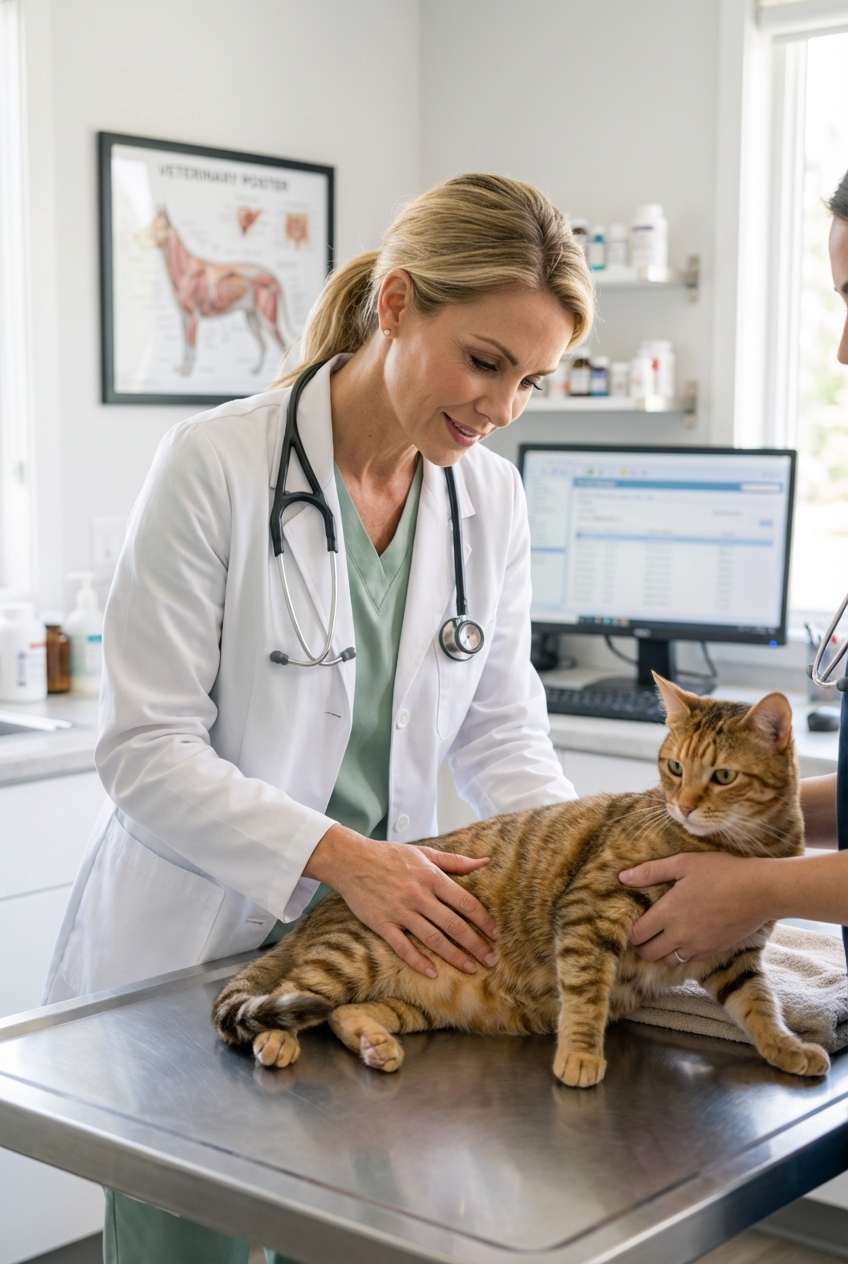
At the clinic, your vet will focus on the fastest way to identify pain, dental disease, infection, foreign material, or systemic illness.
- Physical exam with a careful look at the mouth and throat
- Oral exam under sedation if your cat is painful or the mouth cannot be safely examined while awake
- Dental X-rays to check tooth roots and hidden infection
- Bloodwork to screen for kidney disease, diabetes, infection, inflammation, and dehydration
- Testing for viral disease when ulcers or upper respiratory signs are present
- Additional testing if a mass is suspected, such as a fine-needle aspirate or biopsy
- Treatment may include dental cleaning or extractions, pain control, antibiotics when appropriate, anti-nausea meds, fluids, or supportive care
At-home care and prevention
Once the cause is addressed, a few simple habits can reduce the chance of drooling problems returning.
Support dental health
- Ask your vet how often your cat needs professional dental cleanings.
- Consider products accepted by the VOHC (Veterinary Oral Health Council), such as certain dental treats, diets, gels, or water additives.
- If your cat allows it, gentle tooth brushing with cat toothpaste can help.
Reduce nausea triggers
- Slow down diet changes over 7 to 10 days.
- Use a hairball plan if your cat has frequent hairballs (grooming plus vet-approved products).
- For car sickness, ask your veterinarian about anti-nausea options before travel.
Make your home safer
- Keep string, ribbon, and floss secured.
- Use extra caution with essential oils and diffusers. Cats are more sensitive to many oils, and concentrated exposures can be risky.
- Know toxic plants, especially lilies, and keep them out of cat homes.
FAQ
Why is my cat drooling but acting normal?
Occasional drooling during purring, petting, or catnip exposure can be normal. If it becomes frequent, lasts more than a few hours, or you notice bad breath, appetite changes, or pawing at the mouth, schedule a vet visit to rule out dental pain.
Can teething cause drooling in kittens?
Yes, some kittens drool a little while teething. It should be mild. If drooling is heavy, your kitten stops eating, or you see swelling or bleeding, have them checked.
Is drooling a sign of poisoning?
It can be. Heavy drooling or foaming, especially after possible exposure to chemicals, plants, essential oils, or human medications, should be treated as urgent until proven otherwise.
The bottom line
Cat drooling is one of those symptoms that ranges from “my cat is blissed out” to “my cat needs help right away.” The safest approach is to notice the pattern, look for other symptoms, and act quickly when drooling is new, persistent, or paired with behavior changes.
If you are unsure, call your veterinarian. A quick conversation can save you a lot of worry and, in some cases, protect your cat from a serious emergency.