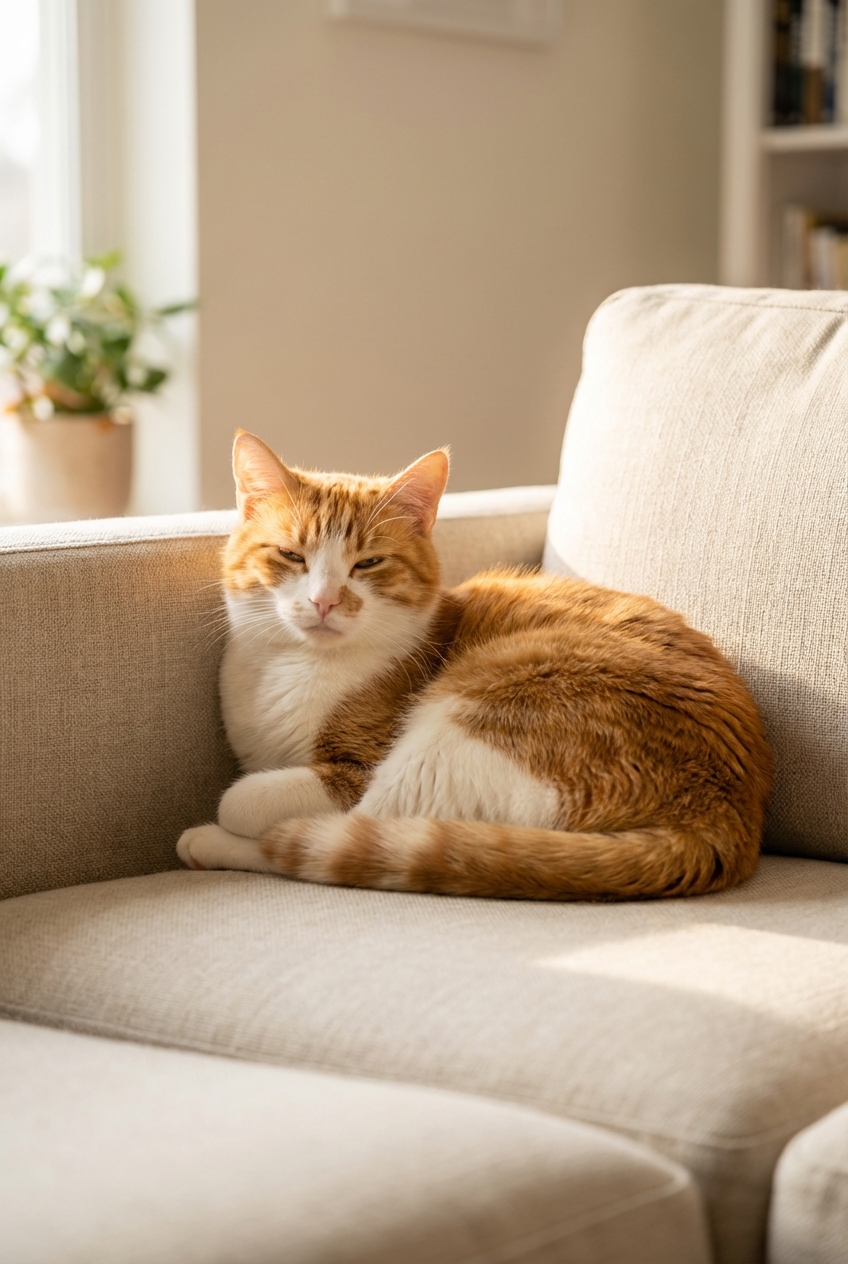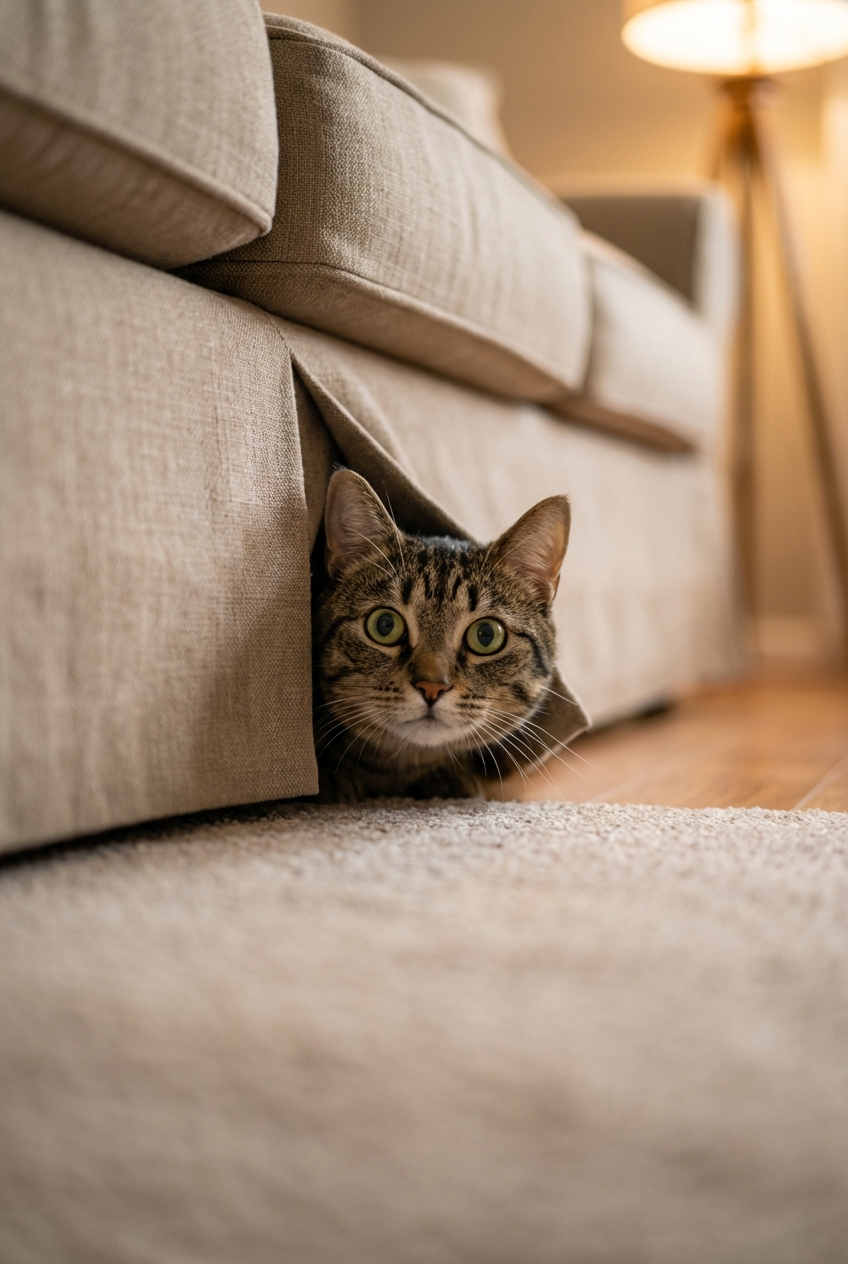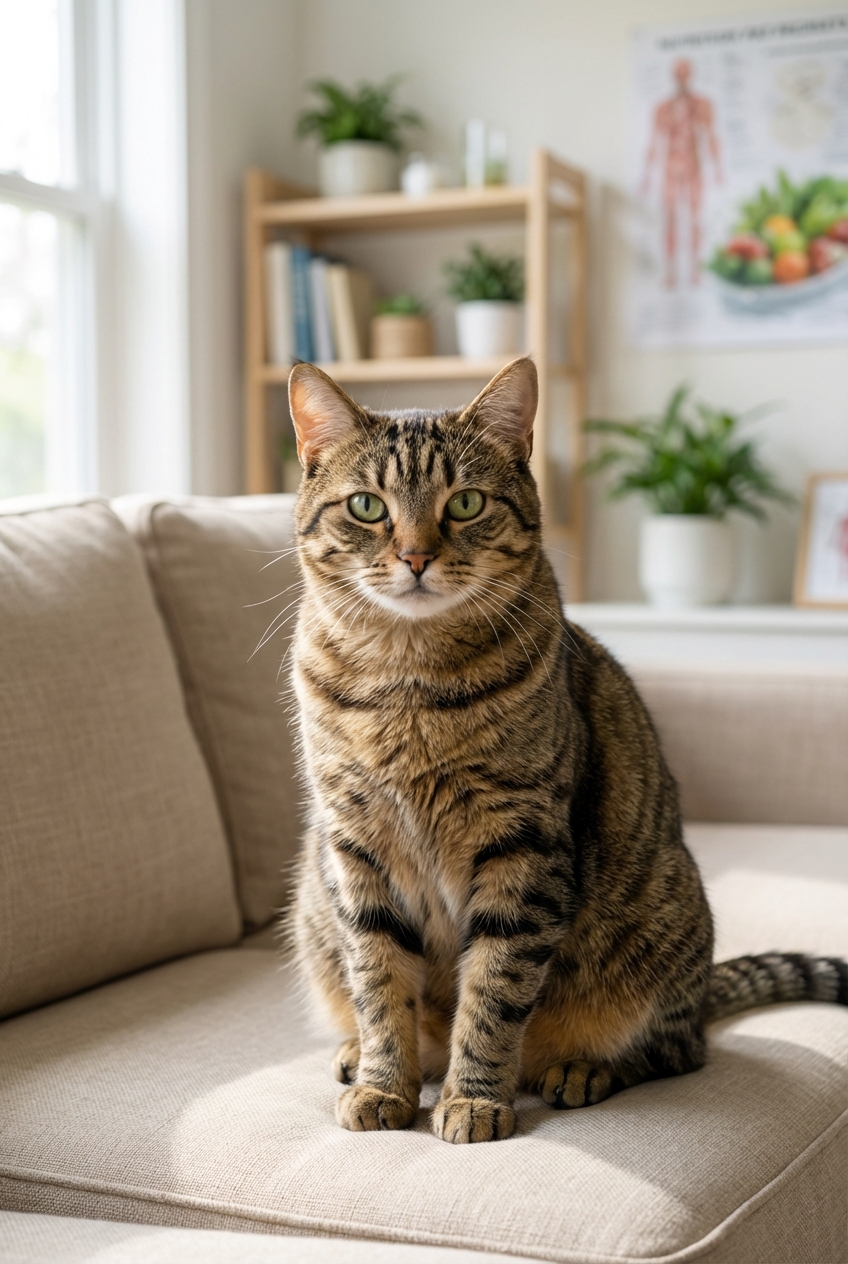
Cats stare for many reasons: trust, attention, food, curiosity, or stress. Learn how to read eyes and body language, respond calmly, and spot signs that need...
Article
•
Designer Mixes
What It Means When Cats Stare at You

Shari Shidate
Designer Mixes contributor
If you live with a cat, you have probably felt it: you look up from your phone or coffee and your cat is locked in, staring as if they are trying to read your mind. The good news is that staring is usually normal cat communication, not a sign your cat is plotting anything. The key is context: their body, their eyes, their ears, and what is happening around them.
As a veterinary assistant, I like to remind people that cats are masters of subtle signals. A stare can mean affection, curiosity, a request, or sometimes stress. Let’s break it down in a clear, behavior-informed way so you can respond confidently.
Quick takeaway: Soft eyes and a slow blink usually mean comfort. A fixed, unblinking gaze with a stiff body, pinned ears, or big pupils can mean high arousal, fear, or tension.
Why cats stare
Cats are hunters, but they are also cautious animals that can be prey for bigger animals. That means they are wired to watch closely. Staring helps them gather information, predict movement, and feel safe in their environment. When the “target” of that attention is you, it is often because you are the most important and interesting part of their territory.
It also helps to know that cats do not rely on facial expressions the way humans do. They do use facial cues, but they lean heavily on eye behavior and full-body language together. Sometimes what looks intense to us is simply their normal way of checking in.
Common meanings
1) Affection and trust
A relaxed gaze paired with soft eyes, loose whiskers, and a calm body often means your cat feels safe with you. If they give you a slow blink, that is one of the most reliable friendly signals in cat communication.
What to do: Slow blink back. Many cats will return it, and it can strengthen your bond.
2) They want something
Some cats learn very quickly that staring works, especially if it has been rewarded in the past. If your cat watches you and then leads you to the kitchen, sits by the food bowl, or looks between you and a toy, they are requesting a resource: food, water, play, an open door, or attention. The time of day matters too, because many cats stare most right before a routine meal or playtime.
What to do: Check the basics: fresh water, a clean litter box, meal schedule, and a short play session. If they stare at a specific spot, investigate for anything unusual.
3) Curiosity and information gathering
If you are doing something new, like folding laundry, moving furniture, or bringing in bags, your cat may stare to assess whether the situation is safe. Cats are detail-oriented. Watching is how they decide if they should approach, avoid, or join in.
What to do: Let them observe. You can speak softly and move a little more slowly than usual, but let them choose to approach or hang back. If they seem uncertain, offer a treat or toss a toy nearby so they can investigate on their terms.
4) They are hunting or ready to play
A focused, still gaze with a slightly crouched posture, tail twitching, and forward ears can mean your cat is in hunting mode. Sometimes the “prey” is your feet under a blanket, your hands, or another pet.
What to do: Redirect that energy to a wand toy or a thrown toy. Try not to use your hands or feet as toys, because it teaches your cat that pouncing on you is part of play. Short, daily play sessions help reduce unwanted ambushes.
5) Fear, stress, or feeling threatened
A hard, unblinking stare with a stiff body can be a warning sign, especially if paired with dilated pupils, flattened ears, growling, hissing, or a tucked tail. In cat-to-cat interactions, staring can be a challenge and can build tension over time. Toward people, it can indicate the cat feels cornered, overstimulated, or unsure.
What to do: Give space. Avoid reaching toward them. Let them have an exit route and a quiet place to decompress. In multi-cat homes, interrupt tense staring by calmly distracting with a toy toss, treating in separate areas, or guiding one cat away so they can reset.
6) Pain or illness
Sometimes cats stare because they are not feeling well. They may sit still, appear withdrawn, and hold a fixed gaze. Episodes of “zoning out,” a new or persistent fixed stare, or staring spells that seem unusual for your cat are worth a call to the vet, especially if they are prolonged or paired with other symptoms. Pain can also cause squinting, changes in pupil size, or a tense facial expression.
What to do: If staring comes with appetite changes, hiding, litter box changes, vomiting, diarrhea, limping, squinting, or behavior changes, schedule a vet visit. Cats are experts at masking discomfort.
Body language checklist
- Slow blink: friendly, relaxed, trust.
- Soft eyes, relaxed body: calm attention, affection, curiosity.
- Dilated pupils with still body: excitement, fear, or high arousal. Check the rest of the body.
- Ears forward: interest or play focus.
- Ears sideways or flat: stress, irritation, fear.
- Tail gently upright: friendly greeting.
- Tail twitching or thumping: stimulation, possible irritation or hunting focus.
- Hissing, growling, stiff posture: back off, your cat needs space.
Should you stare back?
Direct staring can feel confrontational to some cats, especially nervous or newly adopted cats. If your cat seems relaxed, a soft gaze and a slow blink back is a wonderful way to communicate safety.
If your cat looks tense or over-alert, it is better to break eye contact, turn your body slightly sideways, and give them room. That small change can reduce pressure and help them calm down.
When it is a red flag
Most staring is normal. Still, I recommend calling your veterinarian if you notice any of the following along with staring:
- Sudden behavior changes, especially in a previously social cat
- Squinting, eye discharge, redness, or one pupil larger than the other
- Bumping into objects, acting disoriented, or seeming not to recognize familiar people
- Head pressing, seizures, or abnormal walking
- Hiding more than usual, not eating, or litter box accidents
These signs can be associated with eye pain, neurological issues, high blood pressure, or other medical problems that need prompt attention.
How to respond
- Offer a slow blink: It is one of the easiest ways to say “I am safe.”
- Meet needs before assuming attitude: Food, water, litter box, enrichment, and predictable routines reduce attention-seeking stares.
- Add daily play: Even 10 minutes can help reduce intense, hunting-focused watching.
- Create safe perches and hiding spots: Cats feel calmer when they can observe from above or retreat without being followed.
- Do not punish: If the stare is paired with aggression or fear, punishment increases stress and can make behavior worse.
If you are ever unsure, take a quick video of the staring behavior and your cat’s body language. It can be incredibly helpful for your veterinarian to see what you are seeing at home.