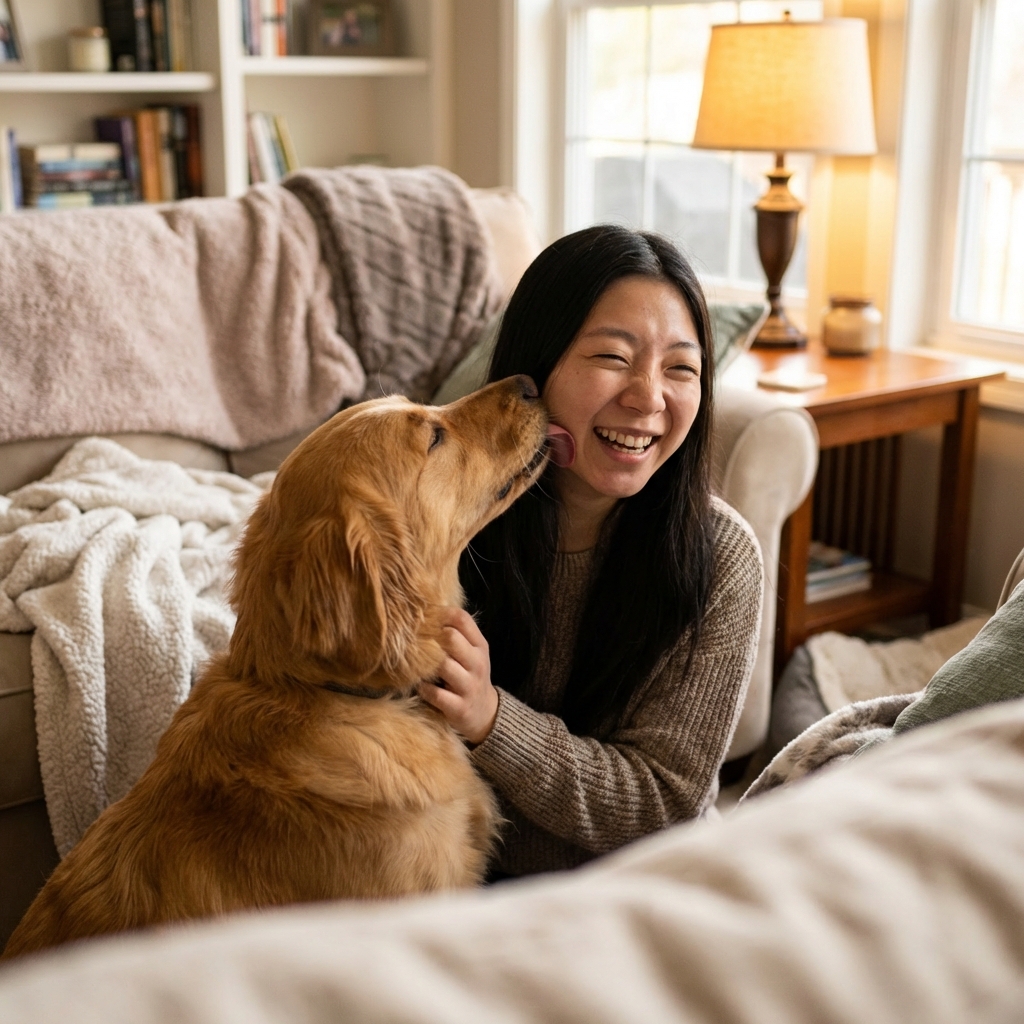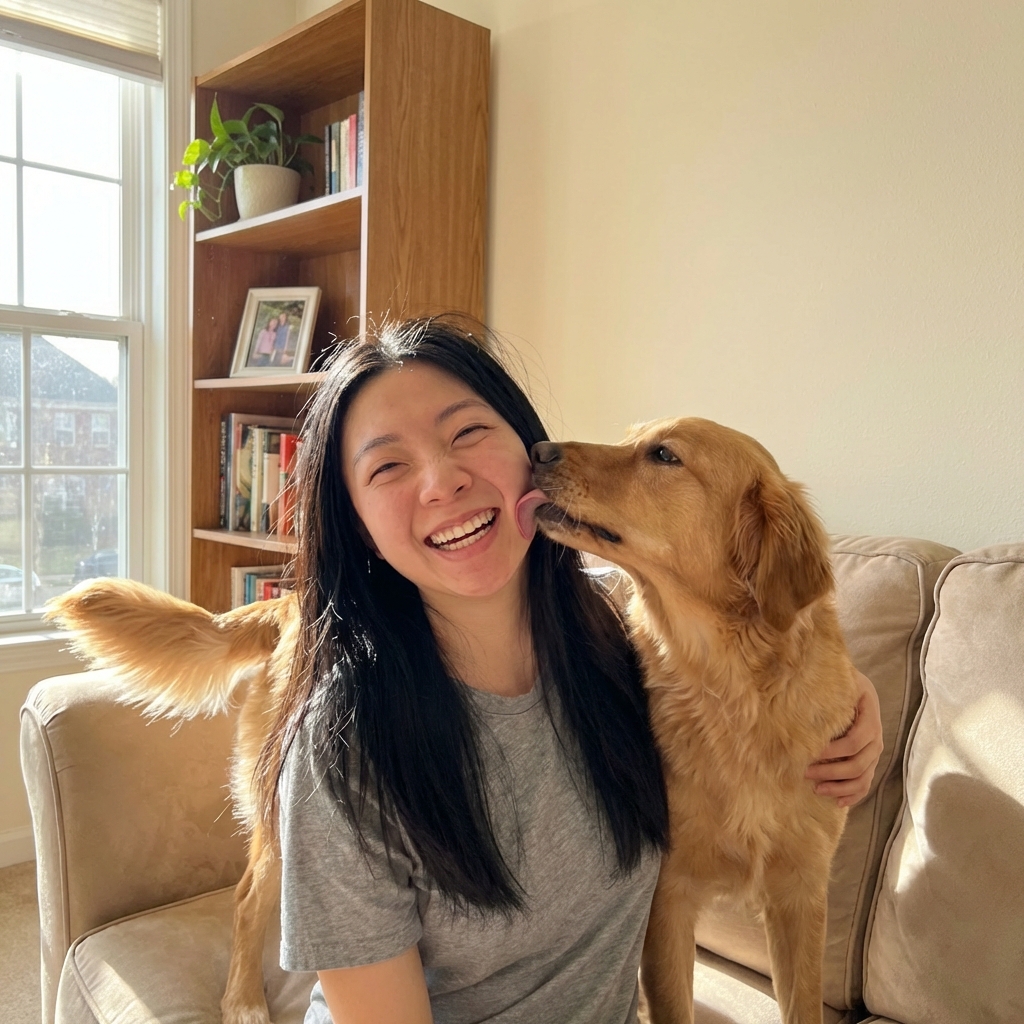
Dogs lick faces for bonding, communication, taste, attention, and stress relief. Learn when it’s normal, when to be cautious, and how to set kind “no kis...
Article
•
Designer Mixes
What It Means When a Dog Licks Your Face

Shari Shidate
Designer Mixes contributor
When a dog licks your face, it can feel like the sweetest little love note. And often, it is. But in practice, face-licking can mean several different things depending on your dog’s age, personality, training, and the situation.
As a veterinary assistant in Frisco, Texas, I like to remind pet parents of this one simple truth: licking is communication. Your dog is “saying” something, and the best way to understand it is to look at the whole picture: body language, timing, and context.
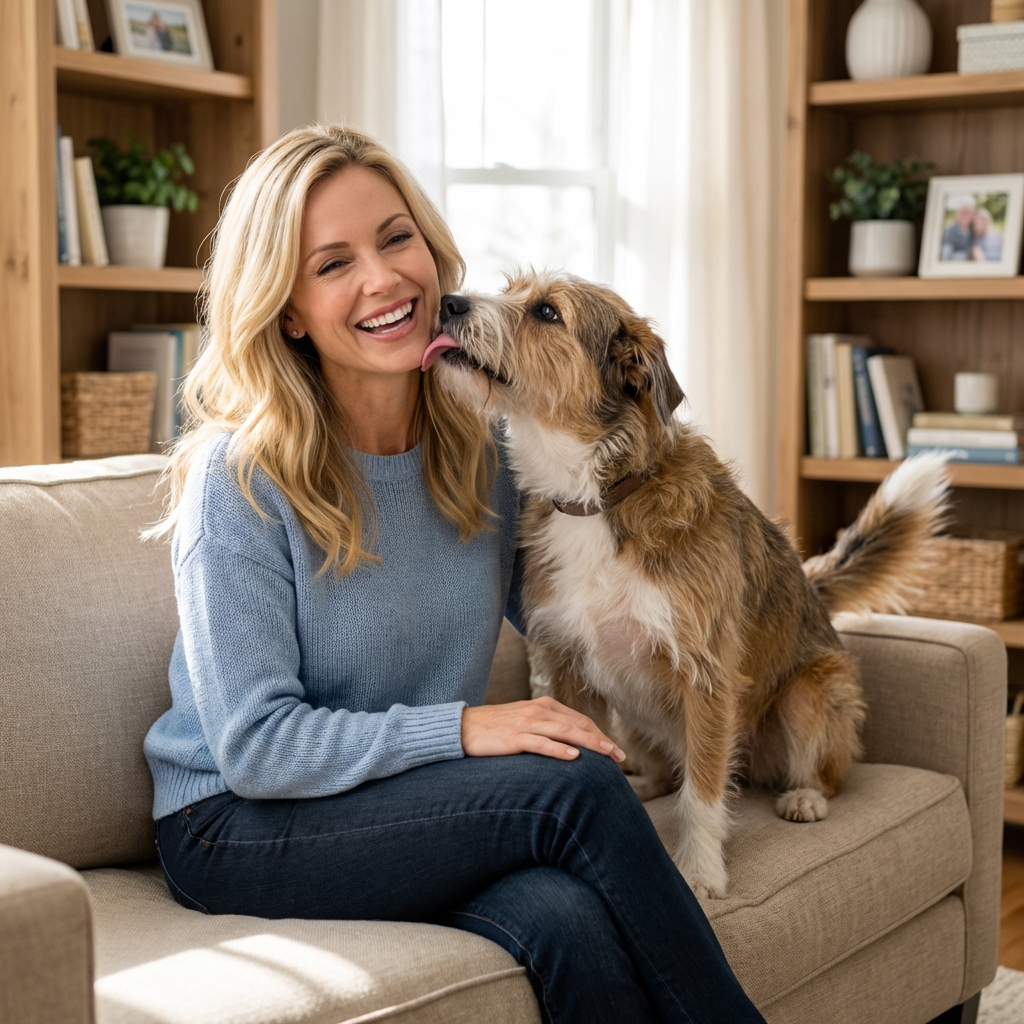
Most common reasons dogs lick faces
Face-licking is a normal canine behavior. Here are the most common explanations, from totally sweet to mildly stressful.
Affection and bonding
Many dogs lick their favorite humans because it helps them connect. Licking can be a social behavior that supports bonding, similar to how dogs groom each other. If your dog’s body is relaxed, tail is loose, and they are wiggly and happy, this is often simple affection.
They like the taste
Human skin can taste salty, especially after exercise, being outside in Texas heat, or even just natural skin oils and lotion. Sometimes it is not “kisses” as much as “snack time.” If your dog goes for your face more after you have been sweating, this could be the main reason.
Attention seeking
Dogs repeat behaviors that work. If licking your face reliably gets a big reaction (laughter, talking, petting, eye contact), your dog may be using it as a reliable way to start interaction.
Appeasement or calming signals
In dog body language, licking can also be a polite, “I am not a threat” signal. Some dogs lick faces when someone is leaning over them, hugging them, or when there is a lot of excitement. You might also see lip licking, yawning, turning the head away, ears pinned back, or a slightly tense body.
Stress, anxiety, or over-arousal
In some dogs, licking becomes a way to self-soothe. This is more likely when the licking is intense, hard to interrupt, or happens during stressful moments like guests arriving, loud noises, or after being left alone.
Learned puppy behavior
Puppies naturally lick. In wolves and other wild canids, and in some free-ranging dogs, puppies may lick an adult’s mouth to encourage regurgitation of food and to strengthen social bonds. Many pet dogs keep the social licking pattern into adulthood, especially with the humans they feel safest with.
Medical causes (yes, sometimes)
If face-licking increases suddenly or becomes frantic, consider health factors. Dogs may lick more with nausea, dental pain, skin irritation, or certain compulsive disorders. A sudden behavior change is always worth mentioning to your veterinarian.
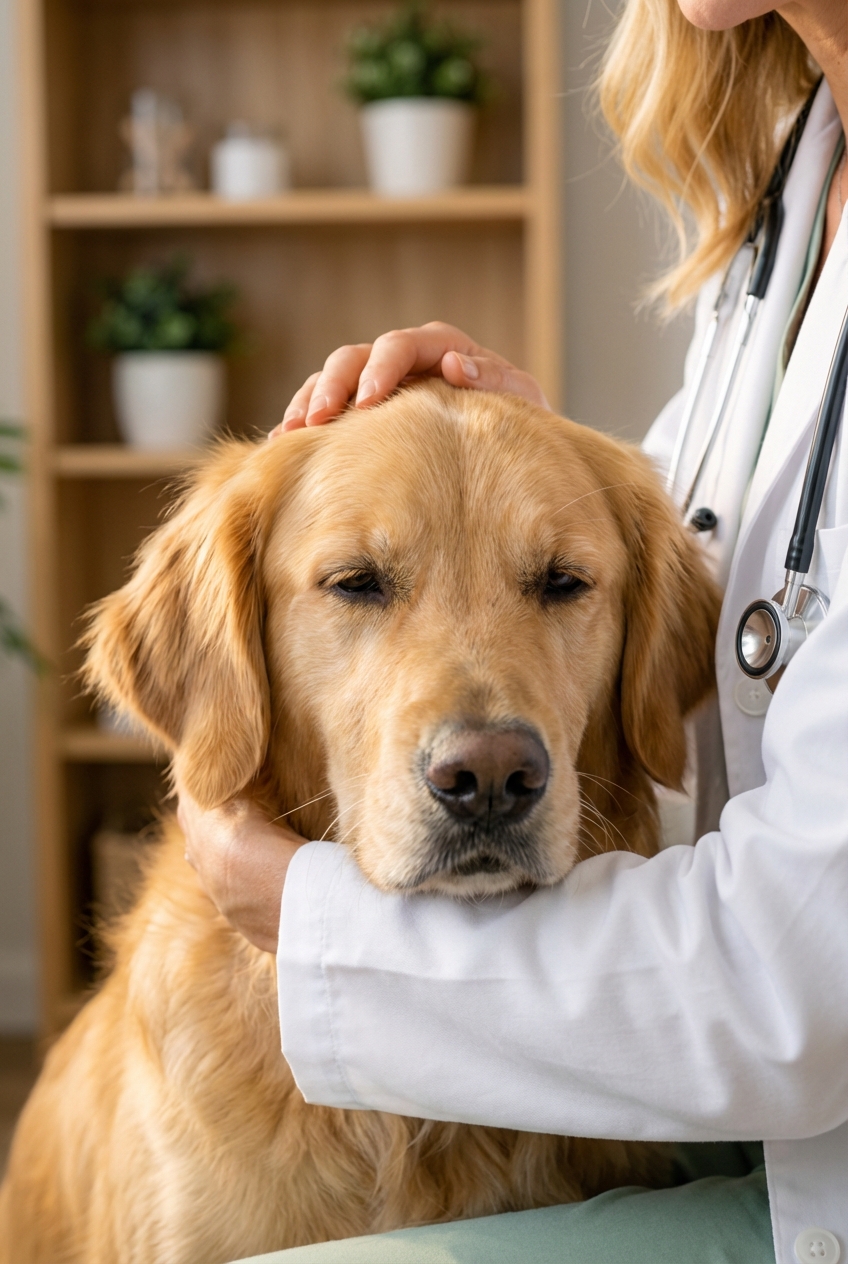
How to tell what your dog is saying
The meaning becomes clearer when you look at what comes before and after the licking.
- Relaxed and happy: loose body, soft eyes, wagging tail, playful energy. Licking is likely affection or attention seeking.
- Nervous or conflicted: stiff posture, whale eye (white of the eye showing), lip licking, yawning, turning away, crouching. Licking is more likely appeasement or stress.
- Hard to stop: persistent licking that escalates, seems frantic, or interrupts normal activities. Consider anxiety or a medical issue.
If you are unsure, a helpful rule of thumb is this: affectionate licking is often easy to interrupt. Stress licking often is not. Either way, always weigh it against the rest of your dog’s body language.
One more important note: if licking happens while you are hugging, leaning over, or holding your dog in place, take that as feedback. Many dogs lick as a “please give me space” signal. Loosen your hold, turn your body sideways, and let your dog choose to re-engage.
Is it safe to let your dog lick your face?
For most healthy adults living with a healthy dog, the risk from an occasional lick is generally low, but it is not zero. It is smart to be cautious, especially with the mouth, nose, and eyes.
Do and don’t
- Do: wash your face or hands after heavy licking, especially before eating.
- Do: keep your dog on veterinarian-recommended flea, tick, and intestinal parasite prevention.
- Don’t: let your dog lick your eyes, nose, or mouth if you can help it (those are mucous membranes).
- Don’t: allow licking on broken skin, including cuts, acne lesions, or fresh scrapes.
- Don’t: encourage face-licking if your dog currently has vomiting, diarrhea, or an unknown illness.
What to consider
- Your health status: If you are immunocompromised, undergoing chemotherapy, very elderly, have chronic illness, or do not have a spleen, avoid face licking and wash hands after close contact. Rare infections such as Capnocytophaga can be serious in higher-risk people.
- Kids: Young children are more likely to get sick and may not wash well. I typically recommend teaching dogs to lick hands instead of faces.
- Dental health: With dental disease, oral bacteria and inflammation can increase, and breath often worsens. Keeping up with dental care helps everyone’s comfort.
It is also worth remembering: dogs explore the world with their mouths, and they lick many things we would rather not think about. If face kisses make you uncomfortable, you are not overreacting. Setting a boundary is completely reasonable.

When face-licking is a red flag
Face-licking is usually normal, but these situations deserve attention.
- Sudden increase in licking with no clear cause
- Other signs of nausea: drooling, gulping, lip smacking, eating grass, decreased appetite
- Signs of anxiety: pacing, whining, panting when not hot, clinginess, trembling
- Warning signs around handling: licking paired with stiff body, freezing, whale eye, growling, or snapping
- Compulsive behavior: licking that interferes with eating, sleeping, or relaxing
If you see these patterns, schedule a veterinary visit. If medical causes are ruled out, a qualified trainer or a veterinary behaviorist can help you build a plan that reduces stress and teaches healthier coping behaviors. If licking is followed by freezing or growling, stop the interaction right away and get professional help. That combination can be an early warning that a bite could happen.
How to manage face-licking kindly
You do not have to choose between letting your dog lick your face forever or pushing them away harshly. The goal is to teach a simple alternative behavior.
If you do not mind occasional licking
- Set a time limit: offer a quick greeting, then calmly redirect.
- Reward calm: pet and praise when your dog is sitting or resting instead of climbing up to lick.
If you want it to stop
- Remove the reward: turn your head away, stand up, or gently step back. No yelling, because big reactions can feel like attention.
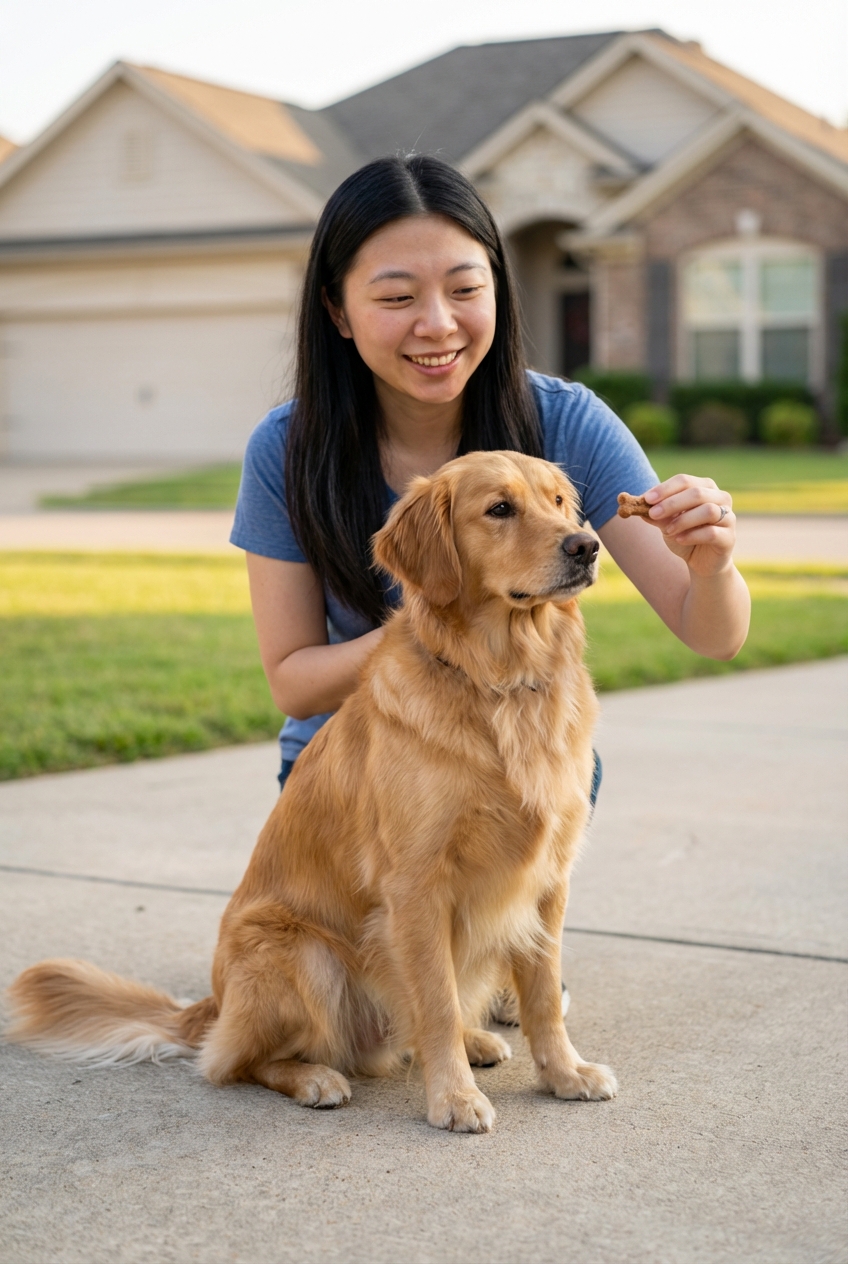
- Teach an alternate cue: “sit” or “touch” (nose to hand) is perfect. Reward it every time at first.
- Offer a better outlet: give a lick mat, frozen stuffed Kong, or chew during high-excitement times like visitors arriving.
- Manage the environment: if your dog rushes your face when you sit down, use a leash indoors for greetings for a couple weeks while you train the new habit.
Consistency matters. If face-licking gets rewarded sometimes, it is much harder to change.
Breed notes
On Designer Mixes, we talk a lot about how genetics and temperament shape behavior. Many doodles, companion mixes, and social breeds are naturally people-focused, which can make face-licking more common. But training and routine still matter more than the label.
If your dog is a rescue, face-licking can also be part of their history. Some dogs learned that licking keeps humans close, prevents conflict, or earns affection. A gentle training plan can help your dog feel secure without needing to lick as much.
Quick FAQ
Is licking the same as kissing?
Sometimes it is affection. Other times it is taste, habit, appeasement, or stress. Think of it as communication, not a single emotion.
Why does my dog lick my face more than anyone else’s?
You are their safe person, you taste familiar, and your reaction might be more rewarding. Dogs are excellent at learning what works with each individual.
My dog only licks my face at night. Why?
Nighttime routines can increase closeness and calm. Some dogs also lick more when they are tired or seeking soothing contact. If it becomes intense or restless, consider anxiety or nausea and talk to your vet.
Should I let my puppy lick my face?
From a training standpoint, it is easier to prevent the habit early. I recommend teaching “kiss” to the hand or cheek only, and rewarding calm greetings.
The bottom line
When your dog licks your face, it is usually a normal social behavior and often a sign of connection. Your job is to read the context: happy and relaxed is one story, tense and persistent is another. If the licking feels excessive or suddenly changes, check in with your veterinarian to rule out medical issues, then use reward-based training to set a loving, clear boundary.
If you want your dog to stop face-licking, you are not rejecting them. You are teaching them a more comfortable way to say hello.