Discover what catnip does, how long it lasts, and the best ways to use dried catnip, spray, toys, and fresh plants for play, scratching, and stress relief—...
Article
•
Designer Mixes
What Is Catnip and What Does It Do to Cats?

Shari Shidate
Designer Mixes contributor
Catnip is one of those pet care topics that feels like magic until you understand the science behind it. As a veterinary assistant, I’ve seen everything from a calm senior cat suddenly rolling like a kitten again, to a confident kitty turning into a wiggly goofball for a few minutes. The good news is that for most cats, catnip is a safe, simple enrichment tool when you use it thoughtfully.
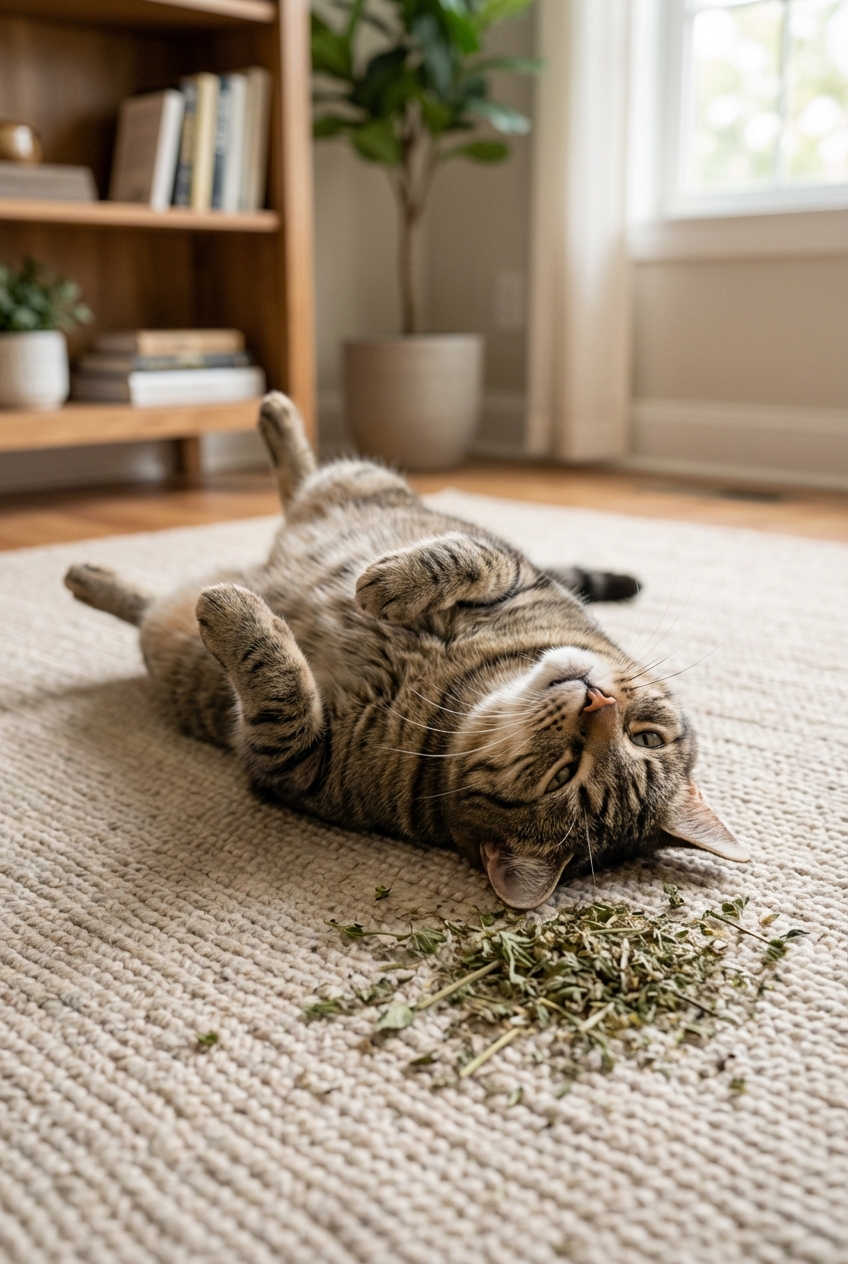
Let’s walk through what catnip actually is, why some cats love it (and some do not), what reactions are normal, and how to use it safely.
Quick note from the clinic: This article is for general education and is not a substitute for veterinary advice. If your cat has asthma or other respiratory sensitivity, or a complex medical history, check with your veterinarian before introducing new scented products.
What catnip is
Catnip (Nepeta cataria) is an herb in the mint family. The leaves and stems contain natural oils, and the star ingredient is a compound called nepetalactone. When cats smell nepetalactone, it can trigger a short-lived behavioral response that looks like excitement, playfulness, or bliss.
You can find catnip in several forms:
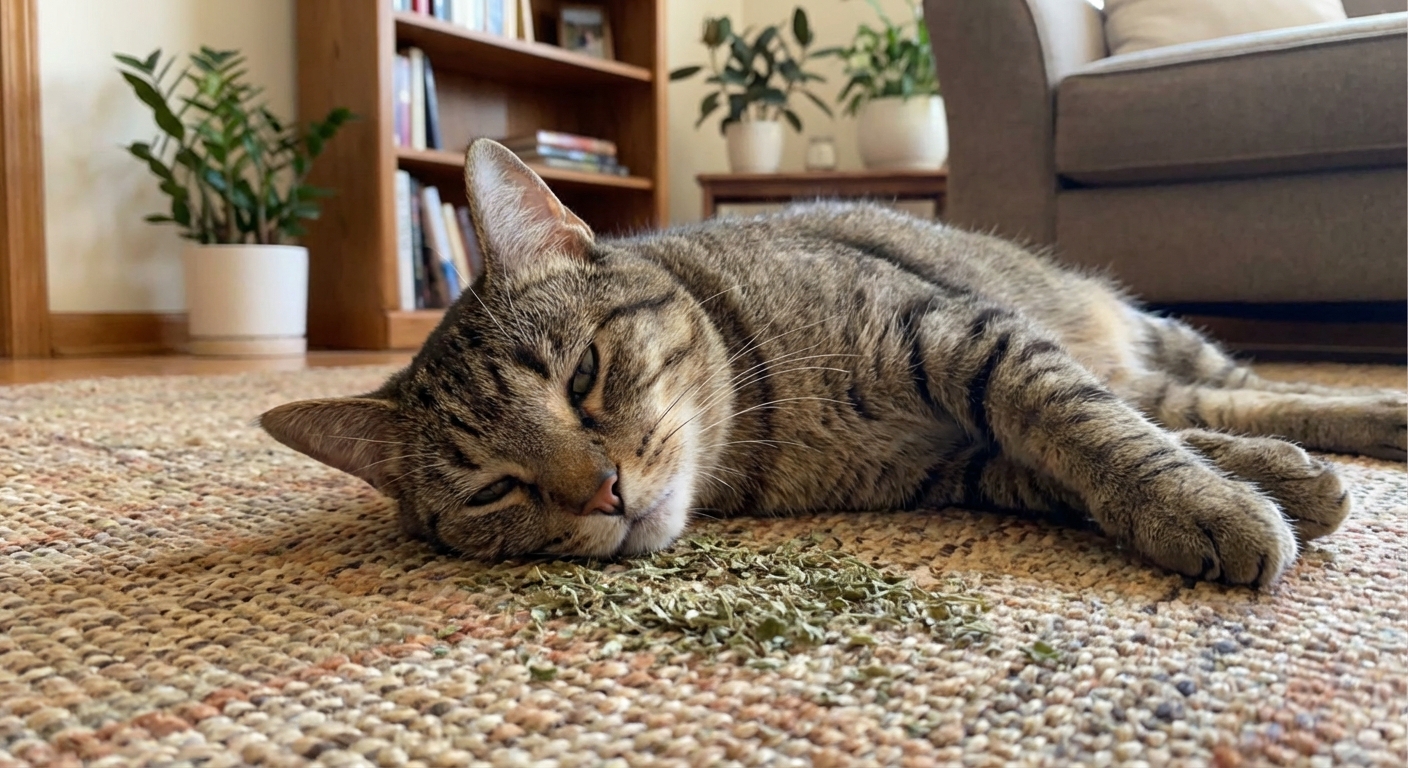
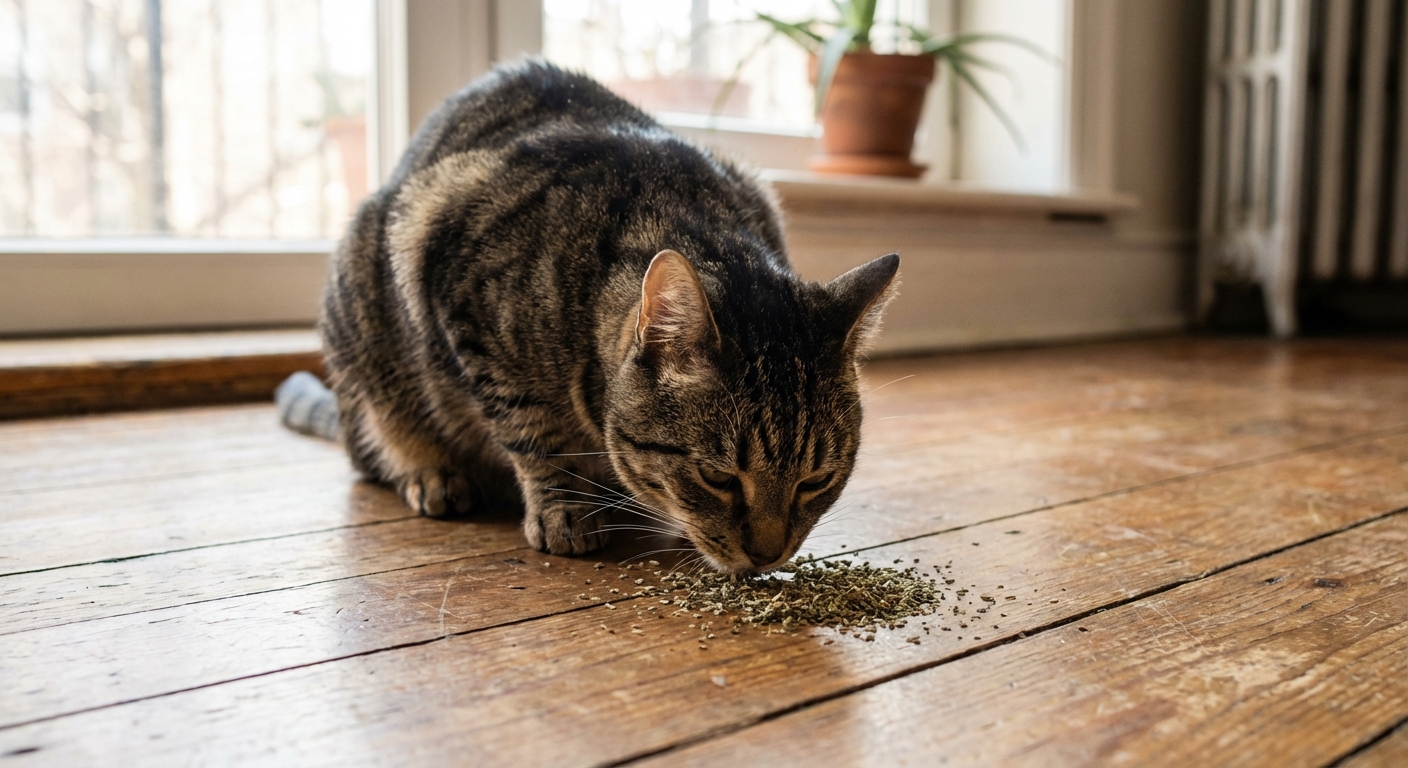
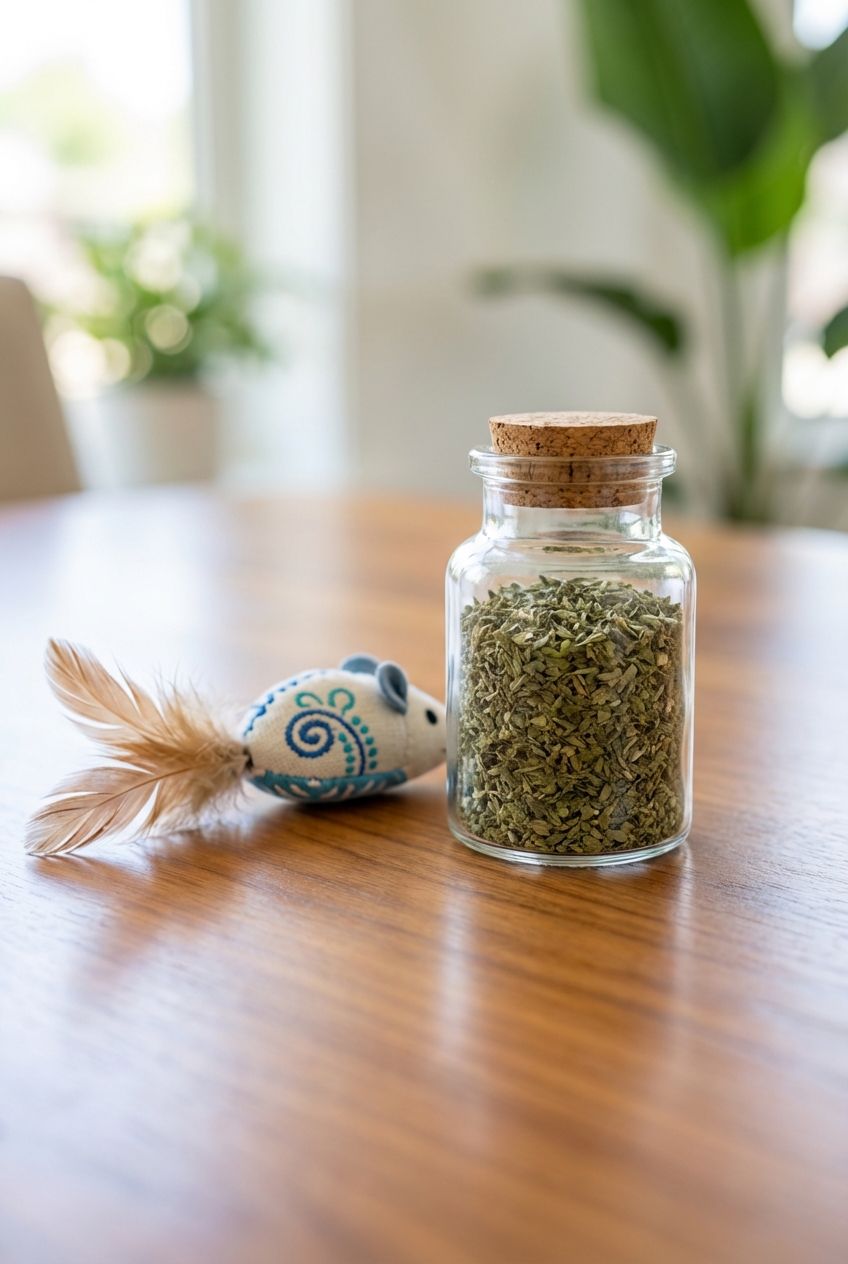
- Dried herb (sprinkles easily on toys and scratchers)
- Catnip spray (usually an extract, handy for targeted use)
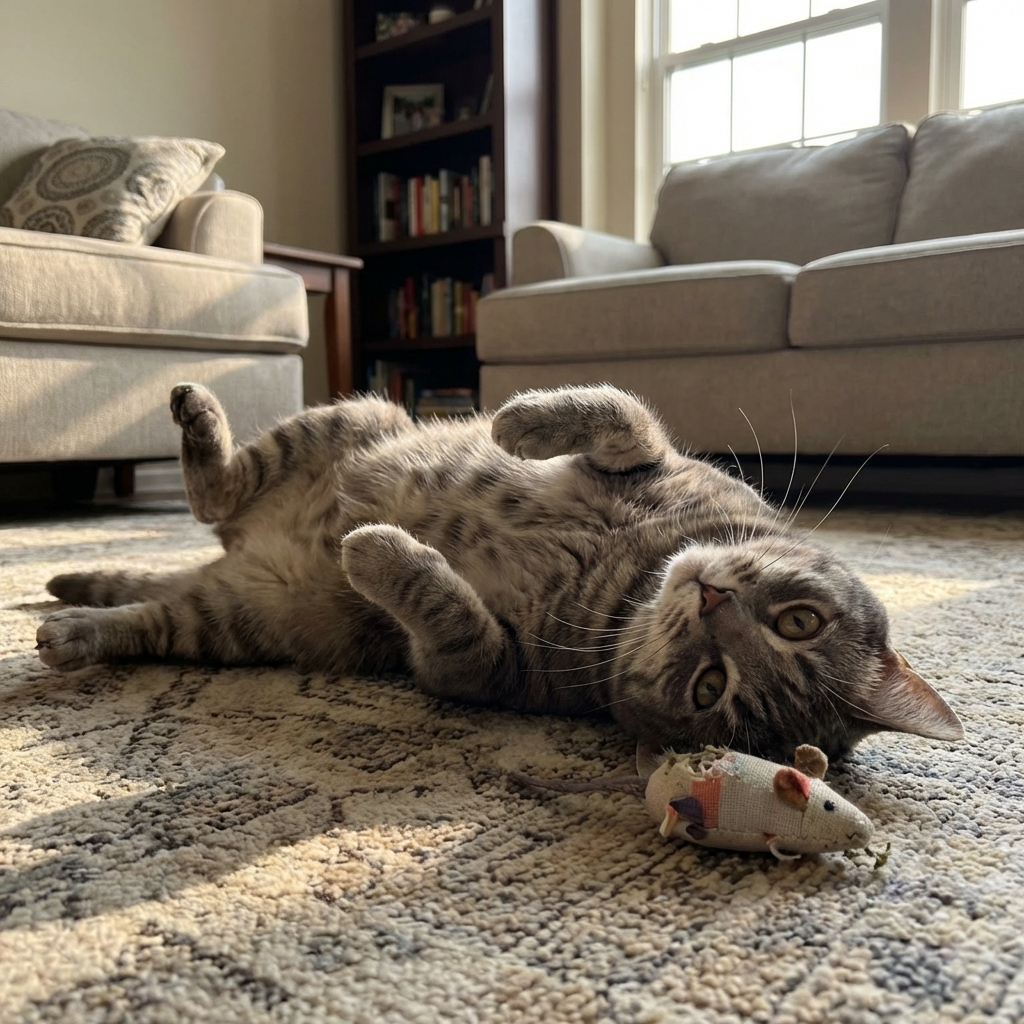
- Catnip-infused toys (stuffed mice, kickers, scratch pads)
- Fresh catnip plant (some cats love to rub on it, others try to chew it)
Product tip: Sprays can be convenient, but some are milder than dried or fresh catnip. Choose products labeled for cats, and avoid essential oils or highly concentrated “catnip oil” products that are not specifically formulated for feline use.
What catnip does to cats
Catnip works primarily through your cat’s sense of smell. When nepetalactone binds to receptors in the nasal tissue, it affects parts of the brain involved with behavior and emotion. That is why the response can look so dramatic even though catnip is not a stimulant like caffeine.
Common catnip behaviors include:
- Sniffing intensely
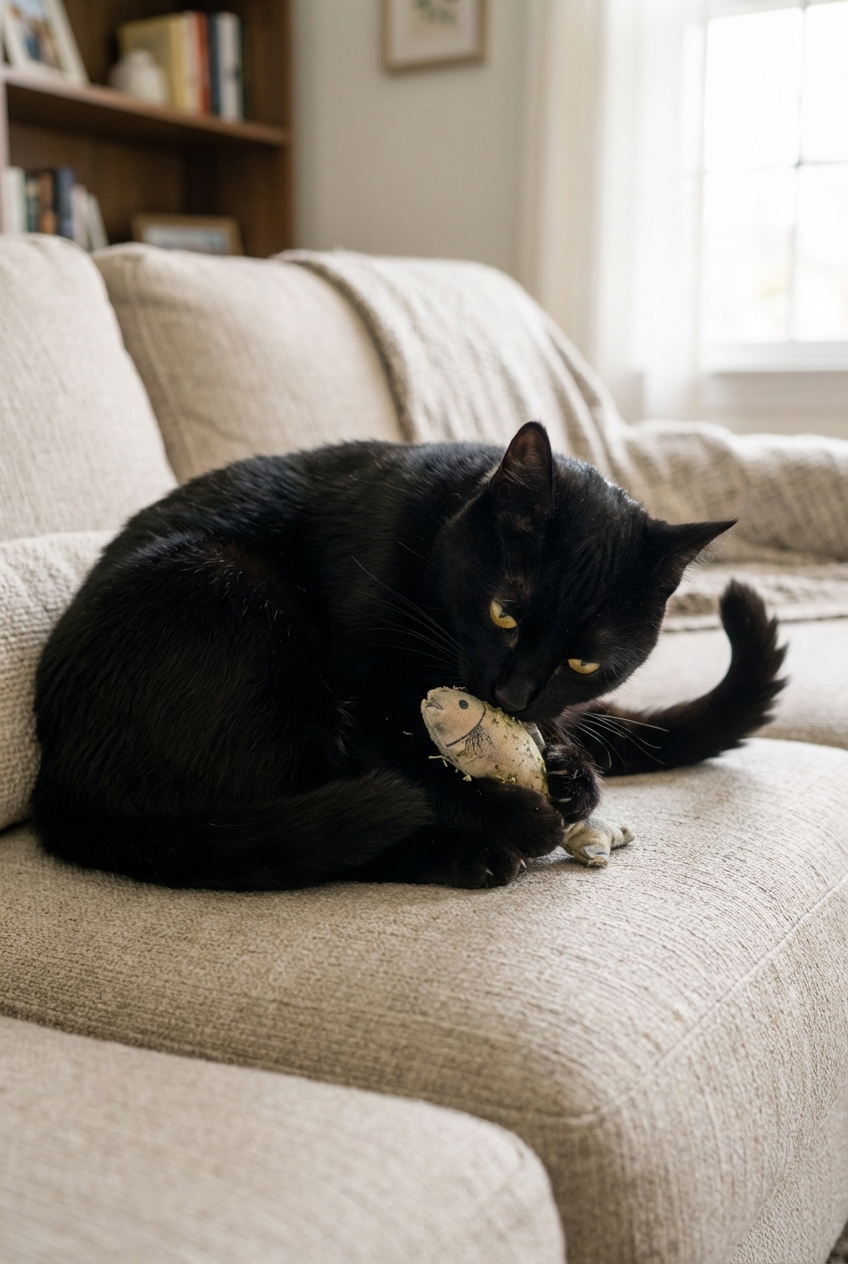
- Cheek and chin rubbing
- Rolling, twisting, and flopping
- Drooling (a little can be normal)
- Zoomies or playful pouncing
- Happy “trance-like” stillness for a moment
The typical catnip response lasts around 5 to 15 minutes, though it varies by cat. After that, most cats lose interest. There is often a “reset” period (commonly 30 minutes to a couple of hours, sometimes longer) where catnip will not have much effect.
Smelling vs eating: The classic catnip “high” is mainly from smelling it. If a cat eats catnip, the effect may be milder for some cats, and it can be more likely to cause stomach upset if they eat a lot.
Why some cats do not react
If your cat sniffs catnip and walks away like it’s yesterday’s news, that’s normal. Sensitivity to catnip is genetic, and a significant portion of cats simply do not respond.
Also keep in mind:
- Kittens often do not respond until they are older. Many start showing interest around 3 to 6 months, but it can be later.
- Senior cats may have a milder response, especially if their sense of smell is reduced.
- Quality and freshness matter. Old catnip loses potency as the oils evaporate.
Is catnip safe?
For most cats, catnip is considered low-risk when used in moderation. It is not considered chemically addictive in the way people sometimes worry about, but some cats may seek it out or become overly focused during sessions. Most cats self-limit because the effect fades quickly.
When catnip can be a problem
Catnip can cause issues when a cat gets too much, ingests a large amount, or when it triggers overstimulation.
- Stomach upset: Eating a lot of dried catnip or fresh leaves can lead to vomiting or diarrhea.
- Over-arousal: Some cats get edgy, swatty, or bitey, especially in multi-cat homes.
- Resource guarding: A cat may guard the catnip toy or the spot where it was sprinkled.
- Non-cat-safe ingredients: Some sprays or scented products contain ingredients that are not a good match for cats. Stick with reputable, cat-labeled products.
If your cat consistently gets aggressive with catnip, it’s okay to skip it and use other enrichment methods instead.
Tips for using catnip
1) Start small
A pinch of dried catnip (about 1/8 teaspoon) is plenty for a first try. You can always add more later, but it’s harder to calm an overstimulated cat in the moment. Try not to leave big piles out for free-eating.
2) Pick a good setup
- Use a washable surface (a towel, mat, or easy-to-clean floor area) if your cat drools or rolls hard.
- Supervise sessions, especially the first few times.
- In multi-cat homes, offer separate toys and space. If guarding or squabbling starts, remove the catnip item and reset.
3) Use it strategically
Catnip is a great way to encourage healthy behaviors:
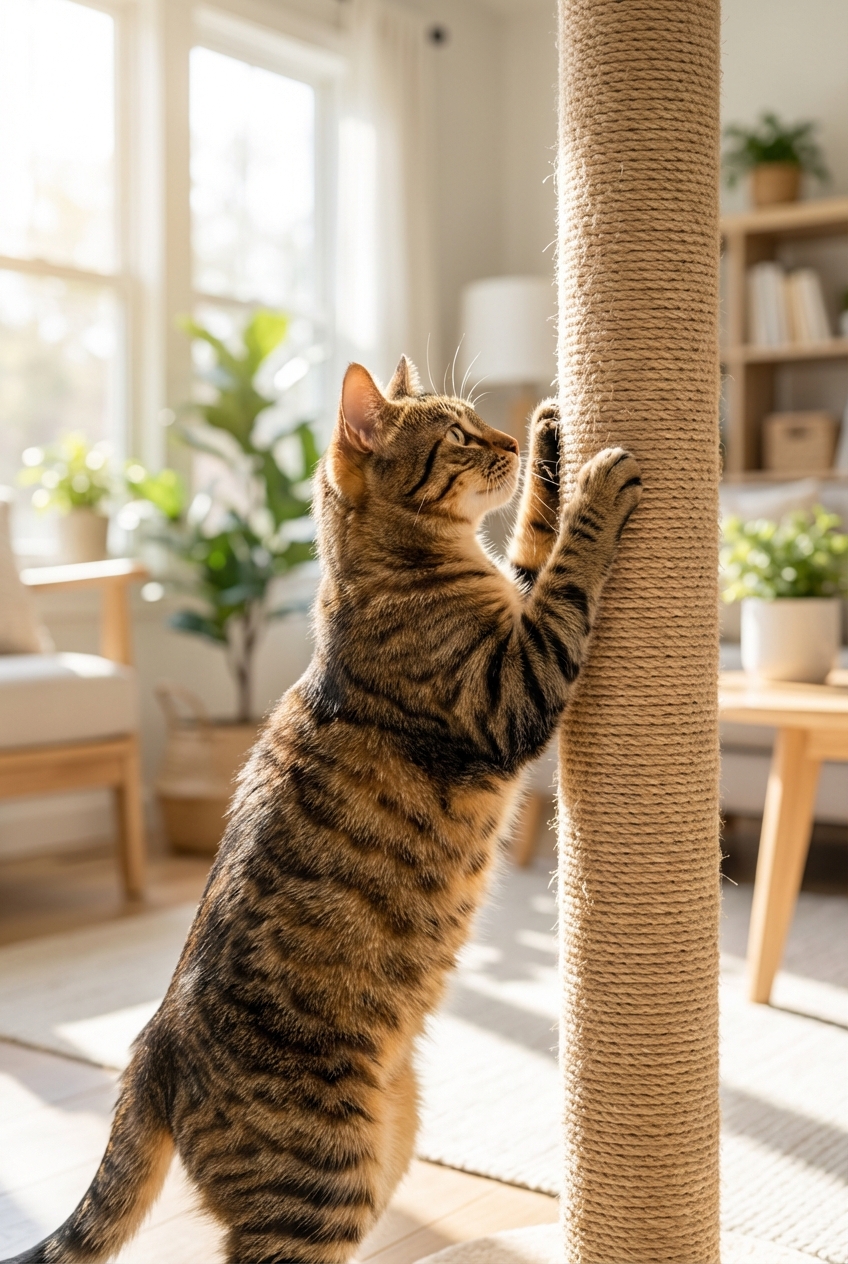
- Scratch training: Sprinkle a tiny amount on a scratching post to make it more appealing.
- Exercise: Put it inside a toy to spark chasing and kicking.
- Carrier comfort: Rub a little catnip on bedding near the carrier (not inside if your cat gets too wild).
- Confidence building: For shy cats, a light catnip session can help them explore and play.
How often to give catnip
There is no single perfect schedule, but for most healthy adult cats, 2 to 3 times per week is a reasonable starting point for enrichment. Some cats can handle small amounts daily, while others do best with less frequent use to keep it “special.”
If you notice your cat becomes less interested, take a break for a week and try again with fresh catnip.
How to store catnip
Catnip loses strength when exposed to air, heat, and light. To keep it potent:
- Store dried catnip in an airtight container
- Keep it in a cool, dark place (a cabinet is fine)
- Consider storing extra in the freezer to preserve the oils longer
If your catnip smells faint to you, it may not be very exciting to your cat either.
Catnip alternatives
Some cats ignore catnip but react strongly to other safe plant-based scents. Two popular options are:
- Silvervine (often effective even in some cats who do not respond to catnip)
- Valerian root (the odor can be strong to humans; supervise use and start with a tiny amount)
As always, introduce new enrichment items one at a time, and watch for tummy upset or overstimulation.
When to call your vet
Catnip reactions are usually harmless, but reach out to your veterinarian if:
- Your cat vomits repeatedly after catnip
- You see diarrhea that lasts more than a day
- Your cat becomes unusually aggressive, seems disoriented, or has trouble breathing
- You suspect your cat ate a large amount of catnip packaging, toy stuffing, string, or plastic
If your cat has a medical condition or is on medication and you are unsure, your vet can help you decide what’s appropriate for your specific kitty.
Tip from the clinic: Catnip is best thought of as “spice,” not “food.” A little goes a long way, and using it purposefully can make playtime and scratching habits much easier.
Bottom line
Catnip is a mint-family herb that can trigger a short burst of playful, blissed-out behavior in many cats. It’s generally low-risk, it’s not considered chemically addictive, and it can be a wonderful enrichment tool when used in small amounts and stored properly. If your cat does not respond, that’s normal too. There are other options like silvervine that may be a better fit.
If you want to start today, sprinkle a tiny pinch on a scratching post, set out a favorite toy, and let your cat show you what they think.