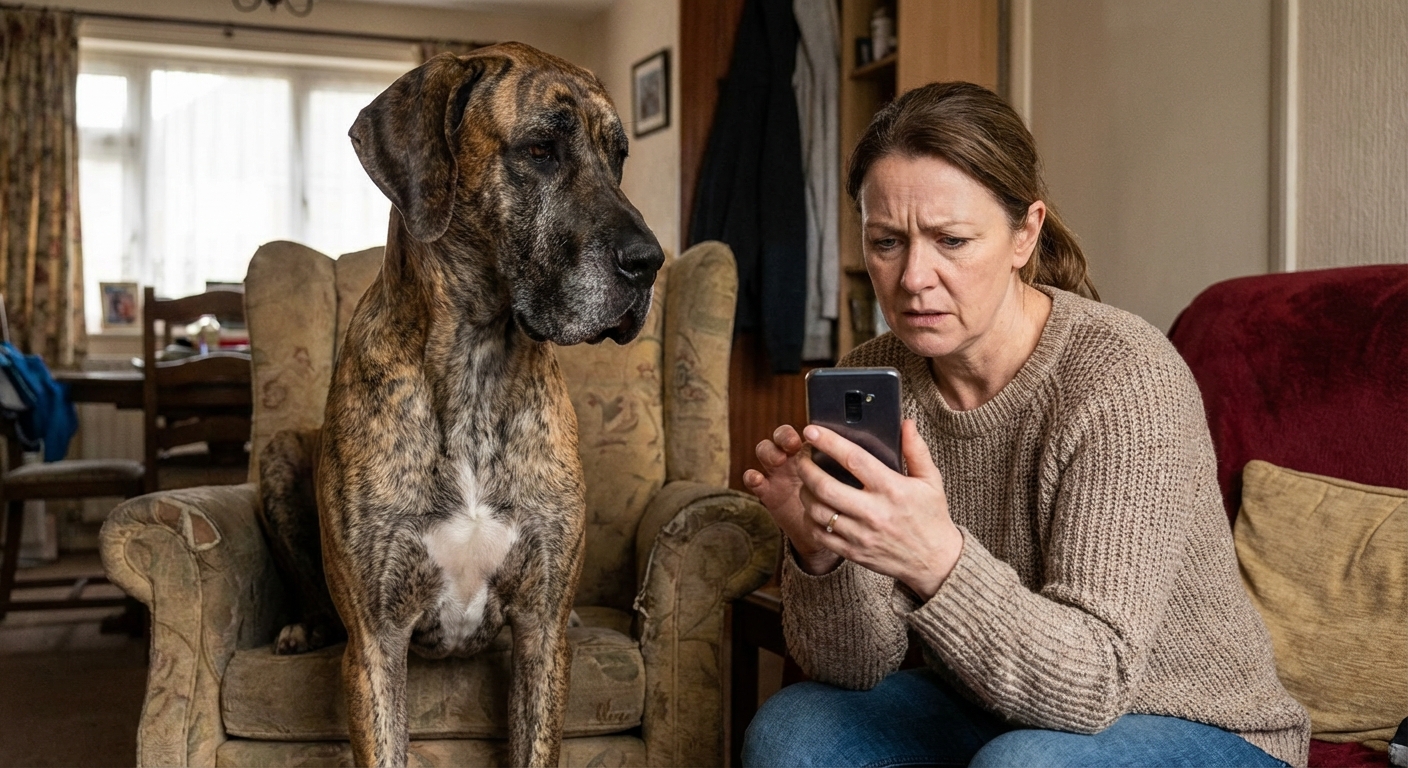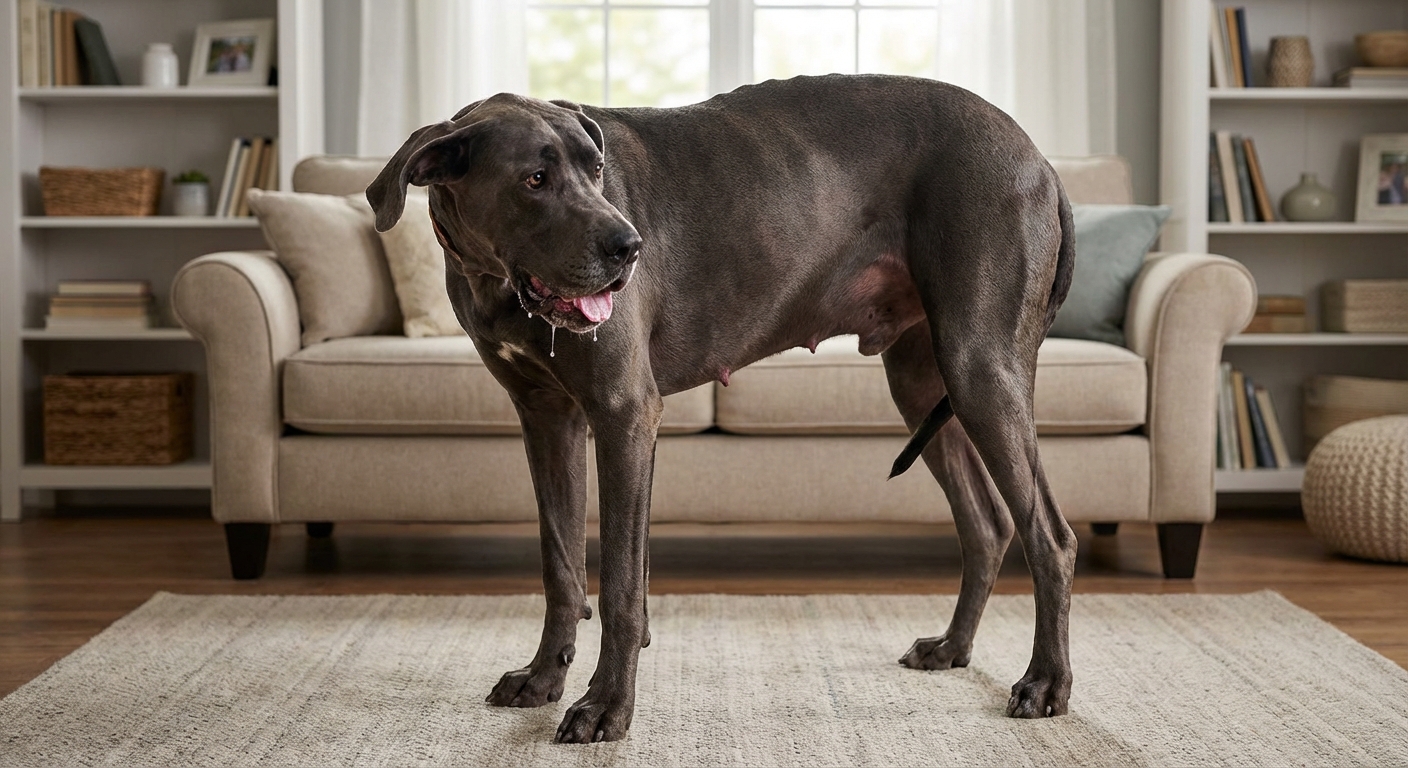
Recognize dangerous canine bloat (GDV) signs—unproductive retching, a tight swollen abdomen, drooling, restlessness, fast breathing, pale gums—and learn ...
Article
•
Designer Mixes
What Is Bloat in Dogs

Shari Shidate
Designer Mixes contributor
Bloat is one of those dog emergencies I wish every pet parent understood before they ever need it. It can look like “just an upset stomach” at first, but it can turn life-threatening fast. The good news is that when you know the early signs and what to do next, you can make decisions quickly and confidently.
What “bloat” really means
In everyday conversation, “bloat” usually refers to a dog’s stomach filling with gas, food, or fluid and becoming painfully distended. In veterinary medicine, there are two related conditions people may be talking about:
- Simple gastric dilatation (GD): the stomach expands and causes discomfort. This can sometimes improve with treatment and decompression.
- Gastric dilatation-volvulus (GDV): the stomach expands and then twists, trapping gas and cutting off blood flow. This is a true emergency and usually requires surgery.
When most professionals warn about “bloat,” we are especially worried about GDV because it can progress rapidly to shock, organ damage, and death without treatment.
Why GDV is so dangerous
With GDV, the twist can block both the entrance and exit of the stomach. That means your dog cannot burp or vomit up the pressure. As the stomach enlarges:
- Blood flow back to the heart can decrease, leading to shock.
- The stomach wall and spleen can lose blood supply, causing tissue damage.
- Heart rhythm problems can occur, even after surgery in some cases.
Time matters. A dog that gets help early has a much better chance than a dog that waits hours.
Signs of bloat in dogs
Some dogs show obvious belly swelling, and some do not. I always tell families to focus on behavior + belly + breathing.
Common early warning signs
- Unproductive retching or trying to vomit but nothing comes up (sometimes only foam or drool)
- Restlessness, pacing, unable to get comfortable
- Excess drooling or stringy saliva
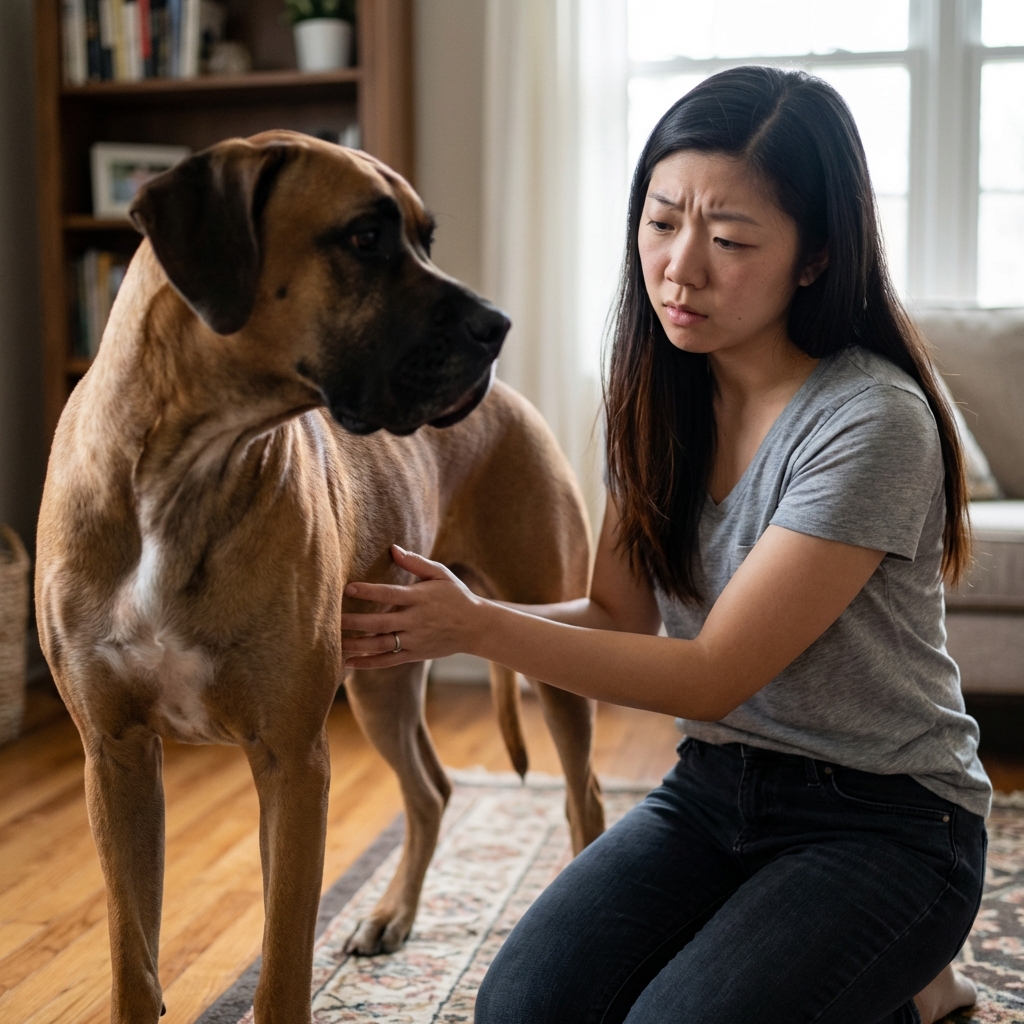
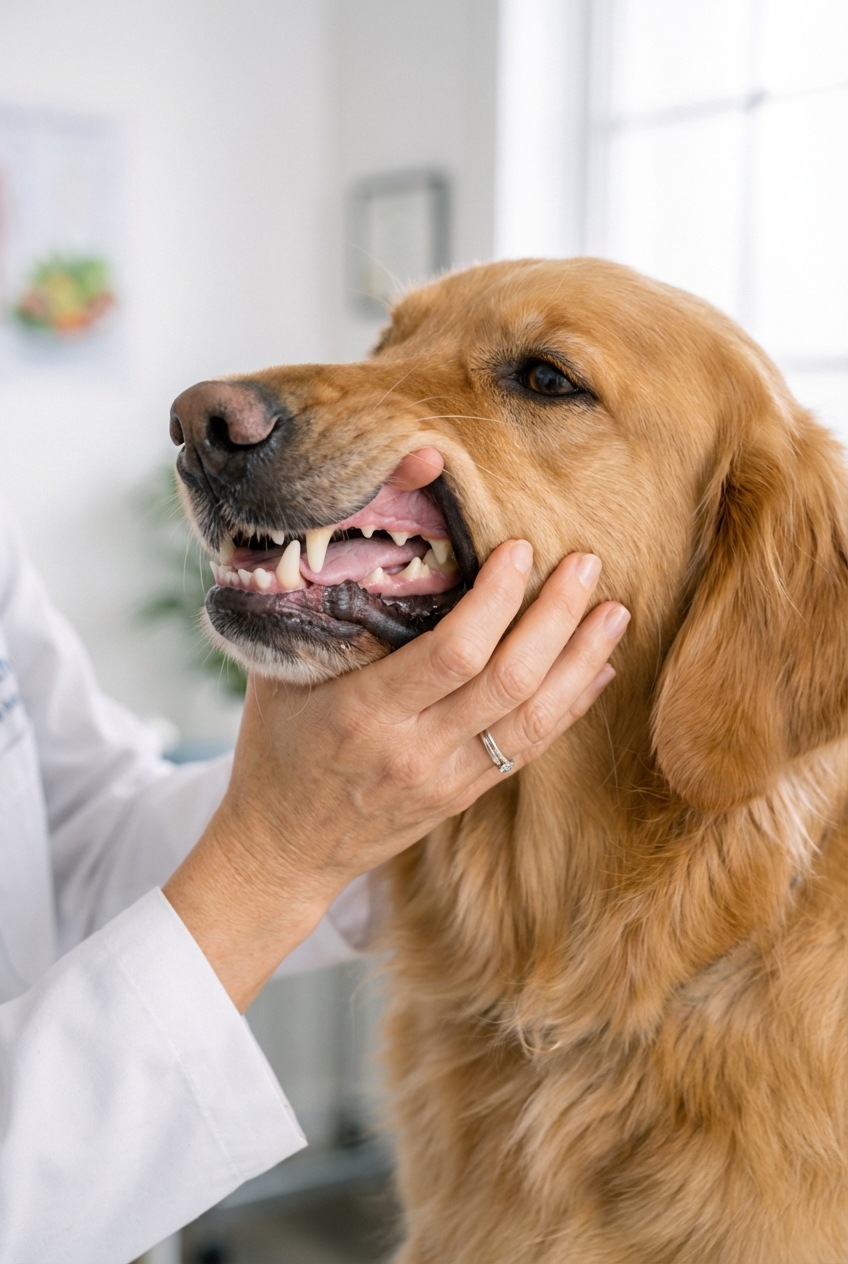
- Distended or tight abdomen that may feel like a drum
- Signs of pain, including whining, looking at the belly, or reluctance to lie down
Advanced signs (emergency now)
- Rapid breathing or trouble breathing
- Weakness, collapse, or inability to stand
- Pale gums or gums that feel tacky and dry
- Fast heart rate
If you see unproductive retching plus restlessness, treat it as an emergency even if the belly does not look huge yet.
Which dogs are most at risk
Any dog can bloat, but GDV is seen most often in large, deep-chested breeds. Risk also increases with age.
Higher-risk body types and breeds
- Great Danes, German Shepherds, Weimaraners, Standard Poodles, Dobermans, Setters
- Large mixed-breed dogs with deep chests (yes, mixes can be at risk too)
Other risk factors commonly discussed
- History of GDV in a close relative
- Eating very fast or gulping air
- Large meals (especially one big meal per day)
- High stress or anxiety around meals
- Heavy exercise right before or after eating
Not every risk factor is fully proven, but these are common patterns veterinarians see clinically.
What to do if you suspect bloat
This is the part where I want you to have a plan in your back pocket.
Do this immediately
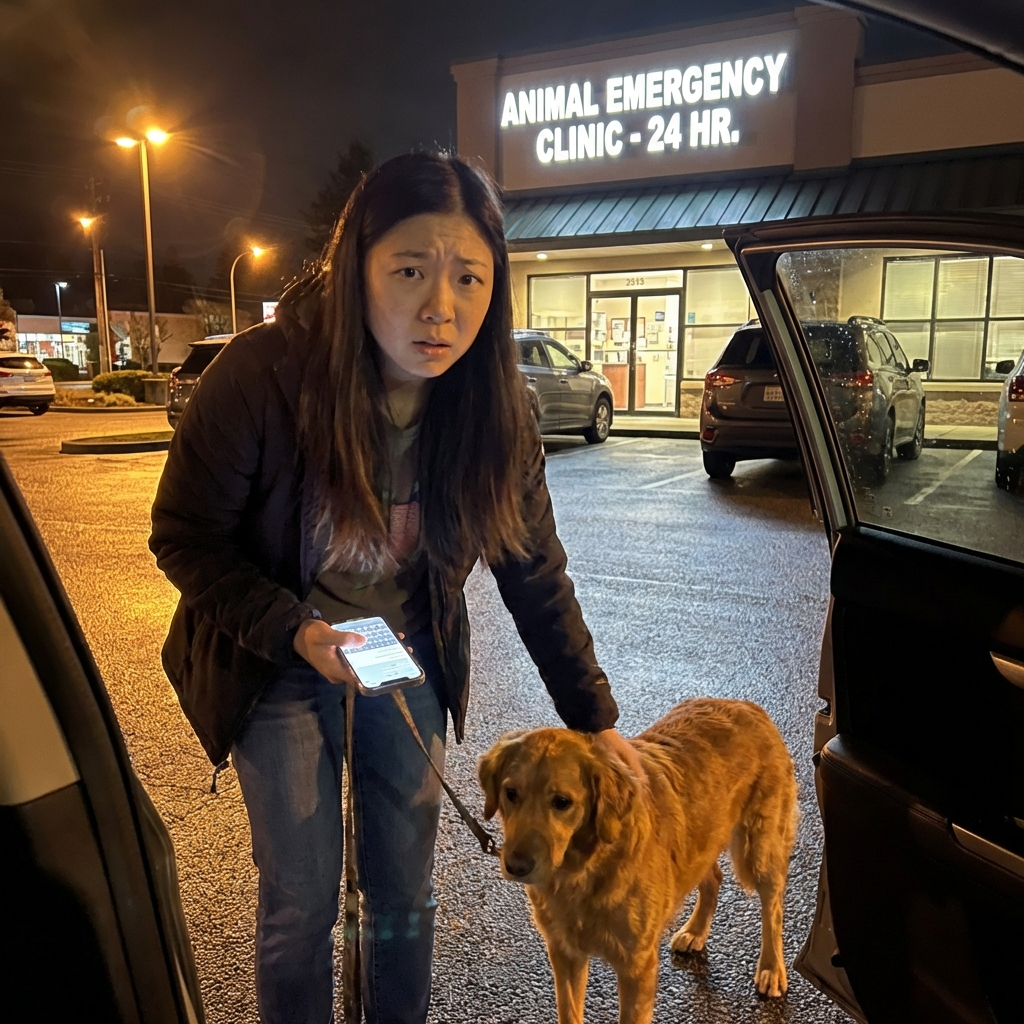
- Call an emergency vet or your nearest 24-hour hospital and tell them you suspect bloat or GDV.
- Leave right away. Do not wait to “see if it passes.”
- Do not give food, water, or medications unless a veterinarian instructs you to.
- Keep your dog as calm as possible and transport safely.
Please do not do this
- Do not try to make your dog vomit at home.
- Do not massage the belly or attempt “home decompression.”
- Do not assume a normal-looking belly means it is not GDV.
Quick rule: unproductive retching + restlessness = emergency trip, even if you are not 100% sure.
How vets diagnose and treat bloat
At the hospital, your veterinary team will move quickly. You may see:
- Physical exam and vital signs to assess shock
- X-rays to confirm stomach dilation and check for twisting (GDV)
- IV fluids and pain control
- Stomach decompression with a tube or needle (depending on the case)
- Surgery if the stomach has twisted
During surgery for GDV, a veterinarian often performs a gastropexy, which tacks the stomach to the body wall to reduce the risk of the stomach twisting again in the future.
Can bloat be prevented?
You cannot prevent every case, but you can lower risk, especially for deep-chested dogs.
Everyday prevention habits
- Feed smaller meals (often 2 to 3 per day instead of one large meal)
- Slow down fast eaters using a slow feeder bowl, food puzzle, or spreading food out
- Limit intense exercise around mealtimes (ask your vet for a reasonable window for your dog)
- Reduce mealtime stress by feeding in a calm, consistent environment
- Know your dog’s normal so subtle changes are easier to spot
Preventive gastropexy
For very high-risk dogs (like Great Danes), some veterinarians recommend a preventive gastropexy, often done at the same time as a spay or neuter. It does not prevent the stomach from dilating, but it can greatly reduce the chance of the deadly twisting component of GDV. Your vet can help you weigh benefits, timing, and cost for your dog.
Bloat vs other stomach issues
Lots of things can cause belly discomfort, including gas, dietary indiscretion, parasites, pancreatitis, or obstruction. What makes bloat and GDV different is the combination of rapid progression and hallmark signs like unproductive retching and severe restlessness.
If you are unsure, it is always safer to call your veterinarian or an emergency clinic. I would rather a family come in and have it be “just gas” than wait too long on a true GDV.
Quick checklist to save to your phone
- Unproductive retching
- Sudden restlessness or pacing
- Bloated, tight belly or signs of pain
- Drooling, rapid breathing, weakness
- Call ER vet and go now
Important: This article is for educational purposes and is not a substitute for veterinary care. If you suspect bloat, treat it as an emergency.