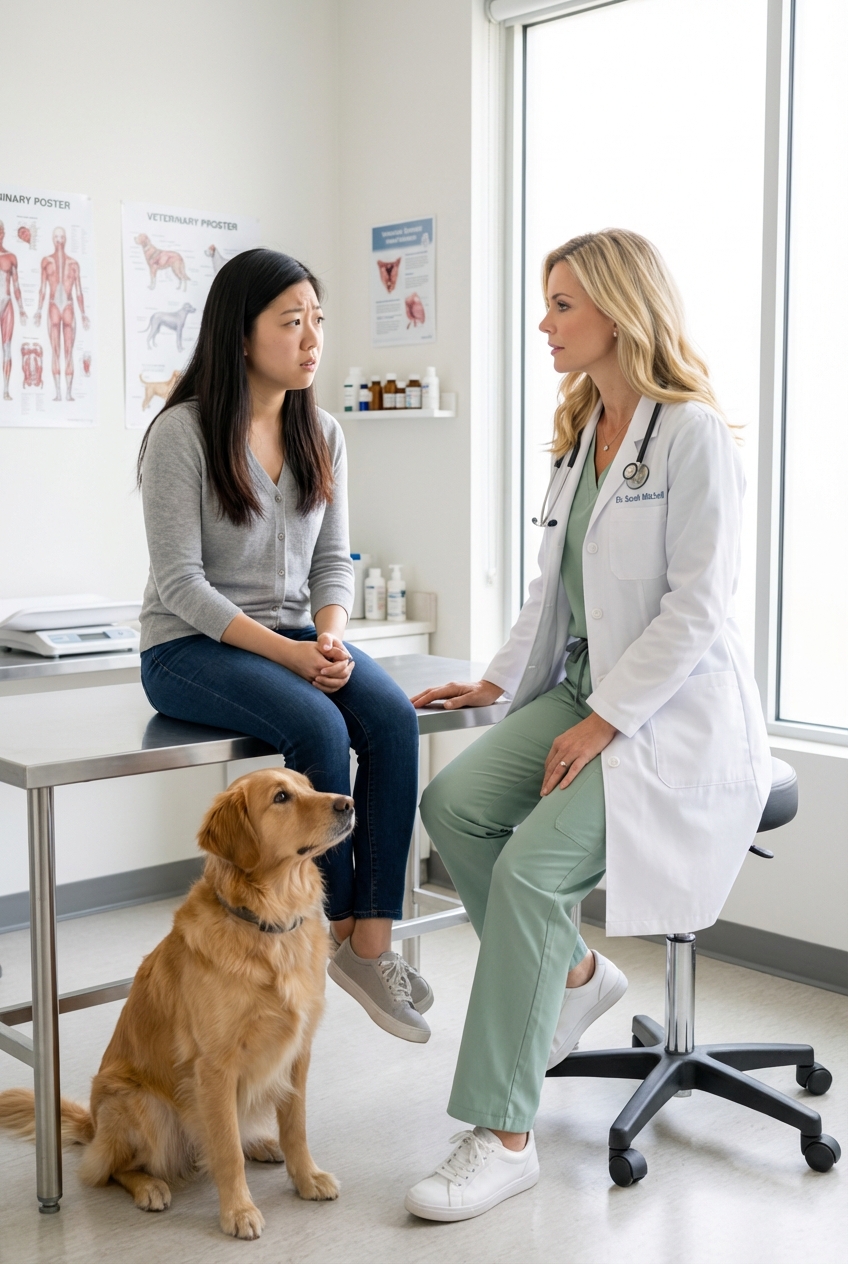
A practical, vet-informed FAQ for your dog’s first heat: stages and timing, fertility myths, normal vs concerning bleeding, cleaning/diaper tips, walk safe...
Article
•
Designer Mixes
What Happens When a Female Dog Is in Heat

Shari Shidate
Designer Mixes contributor
If you have an unspayed female dog, her heat cycle can feel like it shows up overnight. One day everything is normal, and the next you notice swelling, spotting, extra licking, and very persistent male dogs in your neighborhood.
As a veterinary assistant here in Frisco, Texas, I like to reassure families that most heat cycles are normal, manageable, and temporary. The key is knowing what is typical, what needs a vet call, and how to keep your girl safe from an accidental pregnancy.

The heat cycle in plain language
A dog in “heat” is in the fertile part of her reproductive cycle. The medical term people hear most is estrus, but in everyday conversation, “in heat” usually means the whole visible heat period, which often includes proestrus plus estrus (the weeks when you may see swelling, discharge, and behavior changes).
Most dogs cycle about every 6 months on average, but that range is wide. Some cycle every 4 months, others closer to every 8 to 12 months. Some large and giant breeds may be closer to 12 to 18 months between heats.
- First heat: commonly between 6 and 18 months, depending on breed and size
- How long it lasts: typically 2 to 4 weeks from the first signs until things settle
- Fertile window: often around the middle of the cycle, but it can vary from dog to dog
Day-by-day: what you may notice
Every dog is a little different, but these patterns are common. If you are tracking your dog’s heat for the first time, a quick note in your phone each day can be surprisingly helpful.
Important note on timing: the day ranges below are estimates based on an “average” cycle. Some dogs ovulate earlier or later, and fertility can shift. If preventing pregnancy is the goal, it is safest to assume she could be fertile outside the textbook window.
Early days: swelling and spotting starts (often days 1 to 7)
Many owners first notice a swollen vulva and a small amount of bloody discharge. Some dogs keep themselves very clean, so you may see more licking than spotting.
- Increased licking of the rear end
- Mild clinginess or restlessness
- More interest from male dogs, but she often will not allow mating yet
Middle days: discharge changes and fertility increases (often days 8 to 14)
This is the time many accidental breedings happen. The discharge can shift from bright red to watery pink or straw-colored, and her body language may change. Ovulation commonly occurs around the middle of the cycle, but it varies, and some dogs ovulate later than expected.
- “Flagging” behavior: moving the tail to the side when touched near the rear
- More frequent urination or marking on walks
- Actively seeking male dogs, attempting to slip out doors or gates
Important: even if the discharge looks lighter, she can be very fertile. Do not use bleeding as your only guide.
Later days: interest fades and swelling decreases (often days 15 to 28)
Most dogs gradually return to normal. Discharge decreases and the vulva slowly returns to its usual size.
- Less attention from male dogs
- Energy and appetite normalize (some dogs eat less during heat, others eat more)
- Behavior settles
Common behaviors during heat
Hormones are doing a lot of heavy lifting right now, so behavior changes do not mean your dog is being “bad.” She is responding to powerful biological signals.
- Extra affection or extra moodiness: both are normal
- Restlessness: pacing, whining, or difficulty settling
- Escape attempts: this is a big safety concern, especially around the fertile window
- Male dogs show up: you may notice more dogs hanging around your yard or pulling toward you on walks
Care at home
Prevent pregnancy first
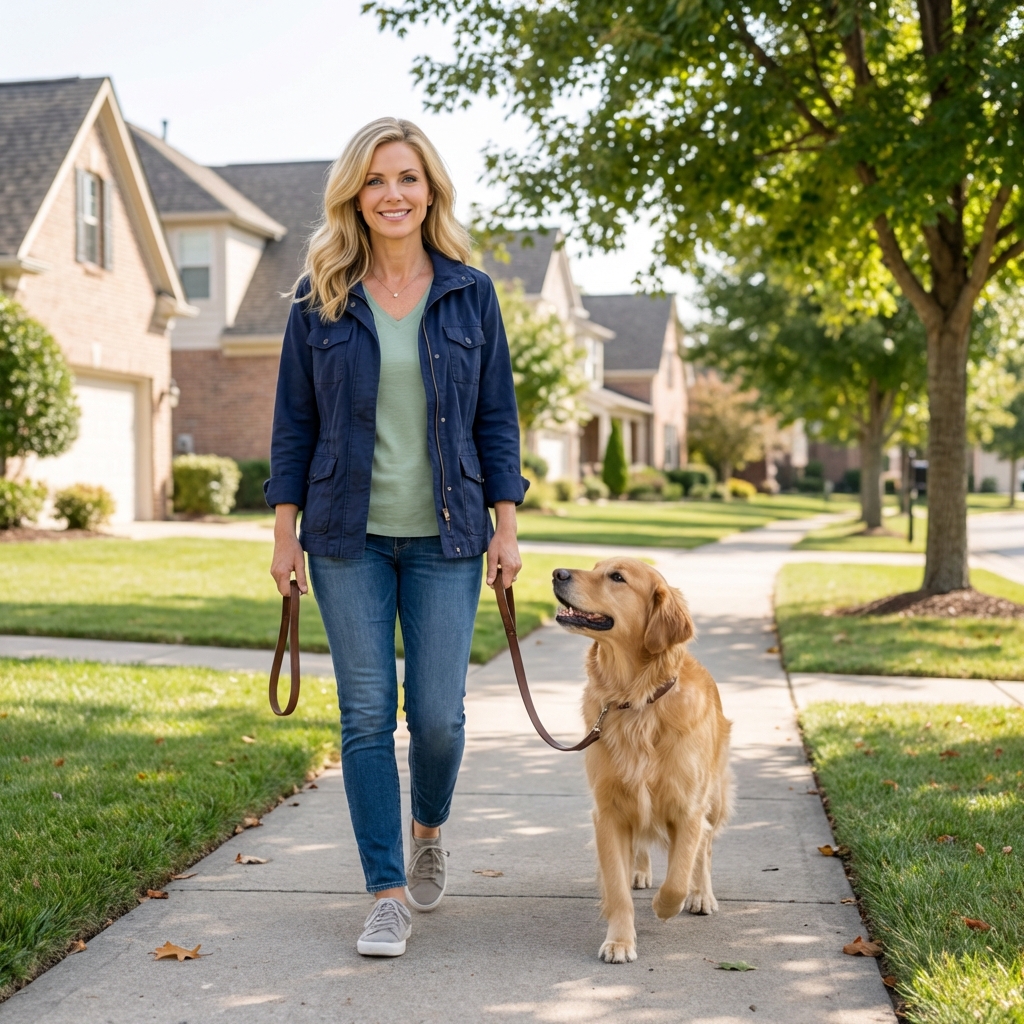
- No off-leash time, even in familiar areas.
- Supervise backyard time. Check fences and gates like you mean it.
- Avoid dog parks and daycare until the cycle is fully over. (Many facilities will not allow dogs in heat anyway.)
- Keep her separated from intact male dogs in the home. Use two barriers when possible (for example: a closed door plus a crate).
Quick reality check: dogs can mate very quickly if given the chance, and determined males can climb, dig, or push through weak spots. Even brief “just for a second” moments can end in a pregnancy risk.
Manage discharge and cleanliness
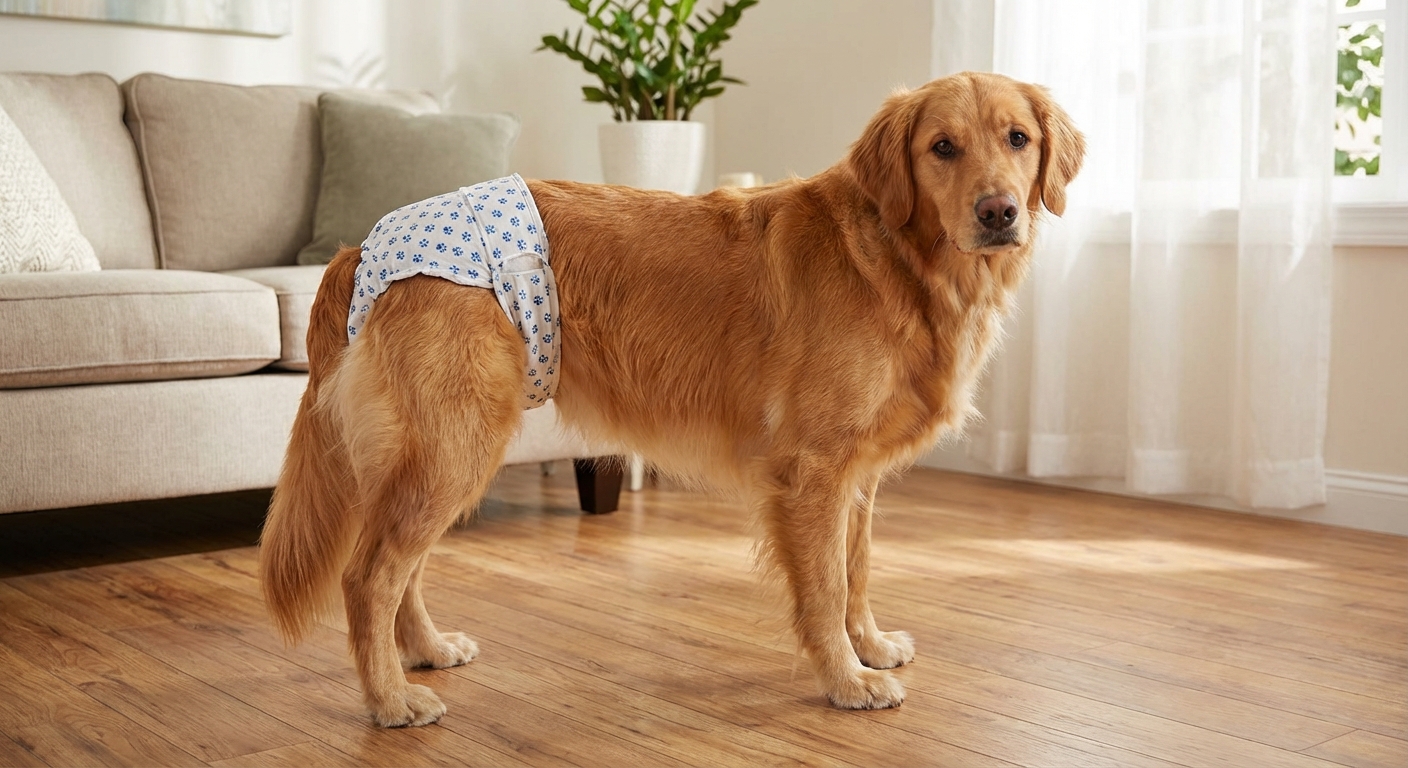
- Dog heat diapers can help protect floors, but change them often to prevent skin irritation.
- Remove diapers for potty breaks and do not rely on them for pregnancy prevention. They are for mess control, not supervision.
- Wipe the vulva gently with a soft, damp cloth if needed.
- Watch for licking. Mild licking is normal. Excessive licking can lead to irritation.
Keep her comfortable
- Offer calm enrichment like puzzle toys or gentle training sessions.
- Stick to a routine for meals and potty breaks.
- If she seems more anxious, give her a quiet rest area away from windows and door traffic.
How long is a dog in heat?
Most heat cycles last about 2 to 4 weeks. Some dogs appear “done” sooner, but males may still show interest near the tail end.
A safe rule of thumb is to keep strict pregnancy prevention measures in place for about 28 days from the first day you noticed signs, and longer if she is still showing discharge, swelling, or flirtatious behavior. If you need a more conservative timeline for your specific dog, your veterinarian can guide you.
When to call your veterinarian
Many heats are routine, but some symptoms are not. Call your veterinarian promptly if you notice any of the following:
- Heavy bleeding, large clots, or discharge that seems excessive
- Foul-smelling discharge at any point
- Significant lethargy, weakness, or collapse
- Fever, vomiting, or not eating for more than a day
- Increased thirst and urination combined with being unwell
- Swollen belly or obvious pain
One major concern in unspayed female dogs is pyometra, a uterine infection that can become life-threatening. It often occurs weeks after a heat. Pyometra can be open (you may see discharge) or closed (no discharge), so a sick-looking dog with no discharge still deserves urgent attention.
Can my dog be spayed during heat?
Spaying is the most reliable way to prevent pregnancy and eliminates future heat cycles. Many veterinarians prefer to spay when a dog is not actively in heat because the tissues can be more vascular during this time, which may increase bleeding risk.
That said, dogs can be spayed while in heat in some cases. The right answer depends on your dog’s age, health, timing, and your veterinarian’s comfort level. If you are dealing with repeated heats, escape attempts, or neighborhood males, it is worth discussing scheduling options.
Frequently asked questions
Does my dog feel pain when she is in heat?
Most dogs are not in pain, but they can feel uncomfortable due to swelling and hormonal changes. If you see obvious pain, trembling, or she will not sit or walk normally, call your vet.
Why is my dog peeing more?
Hormones can increase marking behavior, and female dogs may urinate more frequently to signal availability to males. If urination seems painful, there is blood in the urine (not discharge), or she is straining, ask your vet about a urinary tract infection.
Can she get pregnant if she is still bleeding?
Yes. Fertility does not line up perfectly with bleeding. Treat the entire heat as a pregnancy risk period.
Will male dogs stop trying if I use sprays?
There are masking products on the market, but they are not dependable. The safest plan is management: leash, supervision, secure fencing, and separation.
What is a false pregnancy?
Some unspayed dogs develop a false pregnancy (also called pseudopregnancy) about 6 to 10 weeks after a heat. You might notice nesting behavior, mothering toys, enlarged mammary glands, or even milk production. Many cases are mild and resolve on their own, but call your vet if she seems unwell, her mammary glands are painful, or the behavior is intense or not improving.
How do vets pinpoint the fertile days?
If exact timing matters (for planned breeding, or to confirm where she is in the cycle), veterinarians can use tools like vaginal cytology and progesterone testing to better estimate fertility and ovulation.
A gentle takeaway
Your dog’s heat cycle is a normal biological process, but it comes with real responsibilities. If you focus on prevention of mating, cleanliness, and watching for red flags, you will get through it smoothly.
If you are ever unsure about what you are seeing, take a quick photo of the discharge (yes, really) and jot down the date you first noticed signs. That simple information can help your veterinary team guide you faster and more accurately.