A practical guide to at-home dog hospice care: pain and nausea control, easier breathing, mobility and hygiene help, comfort-station setup, and when to call ...
Article
•
Designer Mixes
What Happens When a Dog Is Dying

Shari Shidate
Designer Mixes contributor
One of the hardest things we do as dog parents is witness the end of a life that has been pure love. If you are here because you are worried, I want you to know this: you are not failing your dog by noticing changes. You are advocating.
Every dog’s final days look a little different depending on age, diagnosis, and personality. But there are common patterns, and understanding them can help you make calm, kind decisions about comfort care, veterinary support, and when it may be time to consider euthanasia.
Quick note: This article is for general education and support. It is not a substitute for veterinary diagnosis or urgent care. If your dog has sudden severe symptoms (especially breathing trouble, collapse, seizures, or uncontrolled pain), contact your veterinarian or an emergency hospital right away.
Common signs a dog is nearing the end
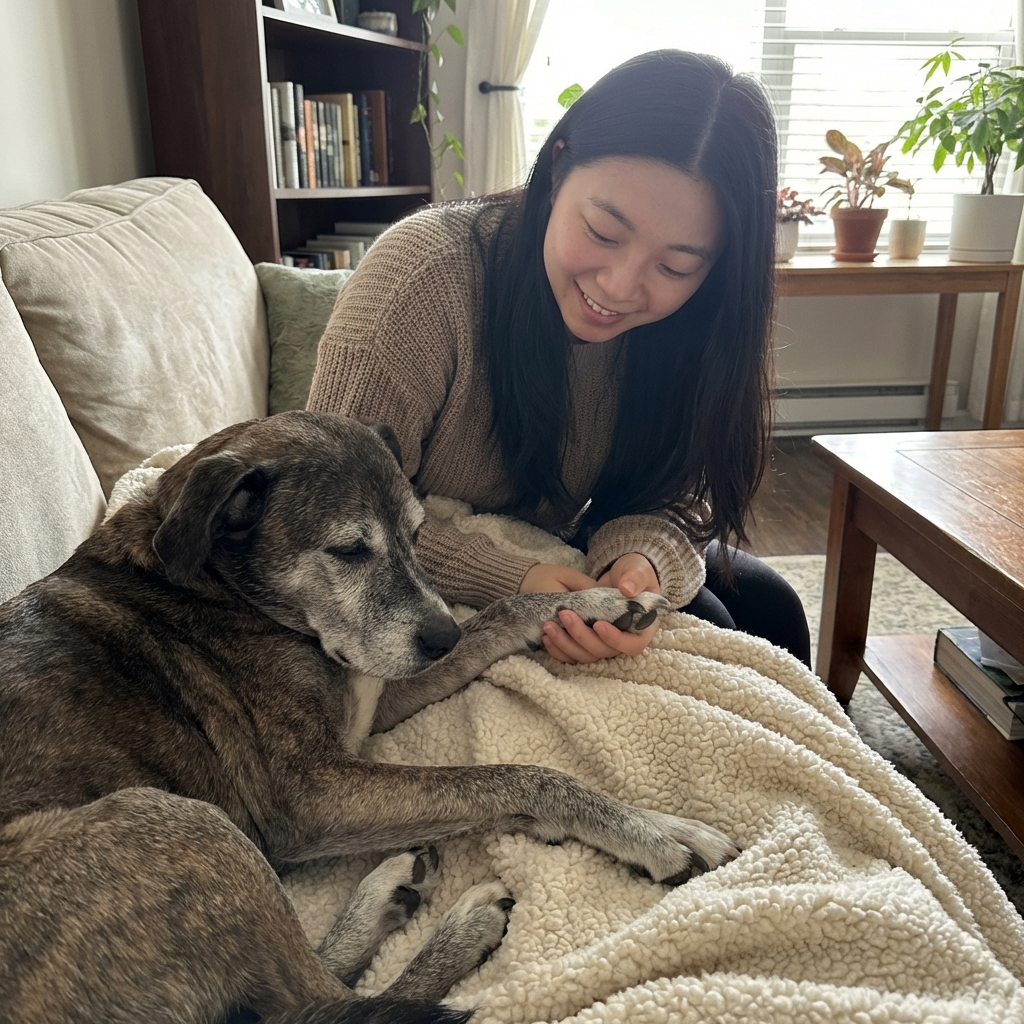
Many dogs show a gradual winding down. Some decline slowly over weeks, while others change quickly over hours to days. The most helpful approach is to track what you see and call your veterinarian early.
Energy and movement changes
- Extreme tiredness and sleeping most of the day
- Weakness, wobbliness, or trouble standing
- Less interest in walks, play, or greeting family
- Restlessness or difficulty getting comfortable, especially if pain or breathing issues are present
Eating and drinking changes
- Reduced appetite or refusing favorite foods
- Drinking changes (less or sometimes more) depending on the condition, nausea, kidney disease, diabetes, or medications
- Weight loss and muscle wasting over time
- Difficulty chewing or swallowing in some conditions
Bathroom and hygiene changes
- Accidents in the house due to weakness, confusion, or incontinence
- Constipation or diarrhea, sometimes linked to disease progression, stress, or medications
- Less grooming and a messier coat as energy fades
Breathing and circulation changes
Breathing changes can be especially scary to watch, and they deserve prompt veterinary guidance. Also, sudden or severe changes (like very pale gums or rapidly worsening weakness) can signal an emergency, not just natural decline.
- Faster breathing at rest, or working harder to breathe
- Coughing or noisy breathing
- Pale or bluish gums (urgent)
- Cooler paws/ears as circulation changes
Behavior and awareness changes
- Withdrawing or hiding
- Clinginess or seeking constant contact
- Confusion, staring, getting stuck, or seeming disoriented
- Less response to name or normal household sounds
Trust your instincts. If your dog looks uncomfortable, not themselves, or you see a sudden change, call your veterinarian. It is always better to ask one day early than one day late.
What the dying process can look like
Families often ask, “What will happen at the very end?” While every case differs, there are a few patterns veterinarians commonly describe.
Gradual decline
In chronic illness (like kidney disease, cancer, heart disease, severe arthritis), dogs often have more bad days than good days as the body loses resilience. Appetite, mobility, and social interaction typically decrease. This is often when comfort-focused care makes the biggest difference.
Active dying
In the final hours (sometimes up to a day), you may notice:
- Very low energy and limited responsiveness
- Minimal interest in food and water
- Irregular breathing with pauses between breaths
- Incontinence or inability to get up to eliminate
- Cool extremities and a weaker pulse
These changes are not your dog giving up. They are signs the body is conserving energy and systems are slowing.
Comfort care at home
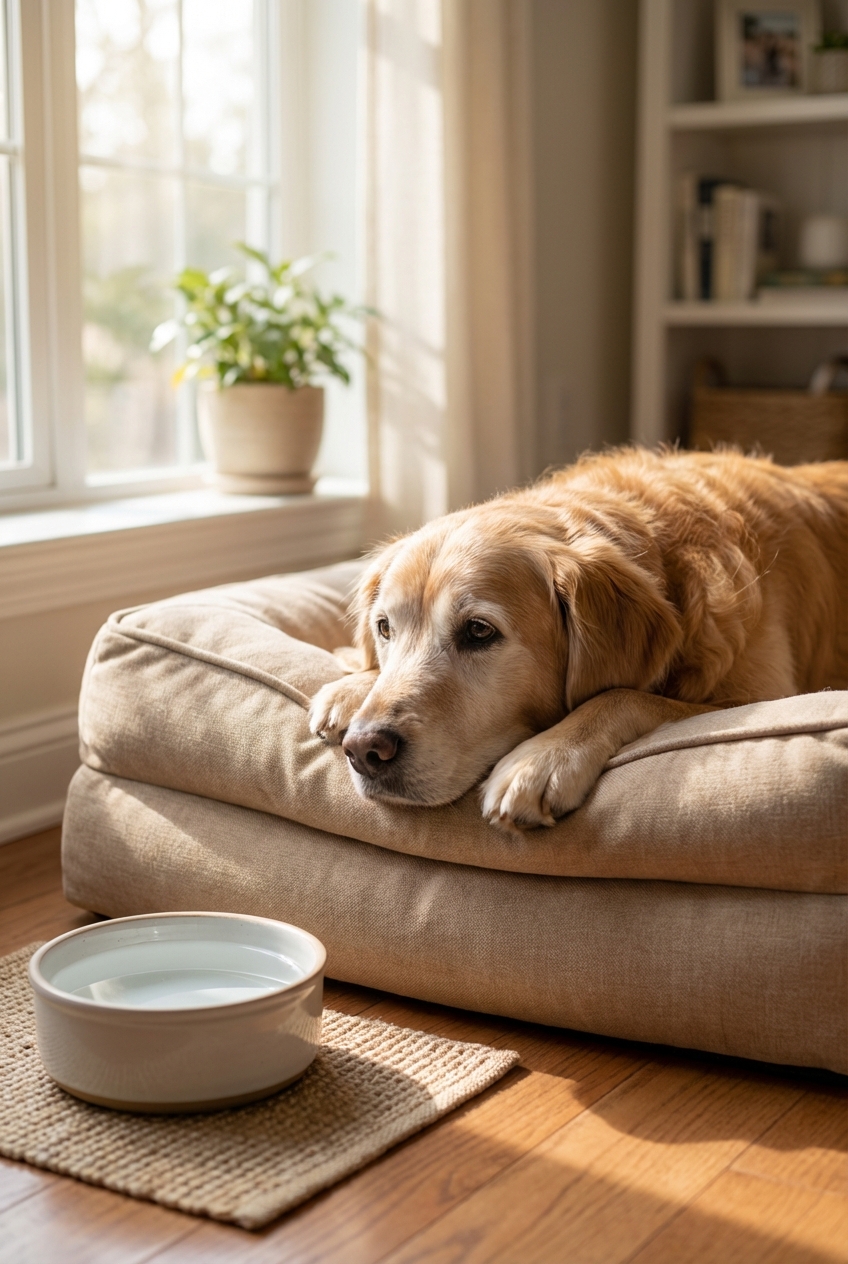
Home can be a beautiful place for a dog to feel safe. The goal is simple: reduce pain, reduce anxiety, and preserve dignity. Always coordinate with your veterinarian, especially regarding medications.
Make breathing easier
- Keep the room cool and well-ventilated.
- Use soft bedding that supports the chest and joints.
- Limit stress and excitement if your dog is short of breath.
Support mobility and prevent sores
- Use non-slip rugs or yoga mats for traction.
- Try a support harness or towel sling for potty trips.
- Add extra padding under bony areas.
- If your dog cannot reposition well, ask your veterinarian what is appropriate, but many families aim to gently change position every few hours to reduce pressure sores.
Help with hydration and nutrition
Near the end, many dogs eat less. That can be normal, but you still want to keep them comfortable.
- Offer small, warm, aromatic meals (like plain cooked boneless, skinless chicken or a vet-approved prescription diet).
- Try hand-feeding if it comforts your dog.
- Ask your veterinarian about anti-nausea medications and appetite support if appropriate.
- Never force food or water, especially if swallowing is difficult.
Keep them clean and cozy
- Use pet wipes or a warm damp cloth for gentle cleanup.
- Trim fur around soiled areas if your dog tolerates it.
- Layer bedding with washable blankets for easy changes.
- If you use warmth, keep it gentle and supervised. Avoid placing heating pads directly against the skin.
Comfort their mind
- Speak softly and keep a predictable routine.
- Dim lights at night if your dog seems confused.
- Play quiet background sound if sudden noises startle them.
Medication safety note
Only give medications that your veterinarian has recommended for your dog. Many human pain relievers (including ibuprofen and acetaminophen) can be dangerous for dogs unless specifically prescribed.
When to call the vet now
Some signs mean your dog needs urgent support, even if you are already providing comfort-focused care at home.
- Labored breathing, open-mouth breathing at rest, or gums that look blue or gray
- Uncontrolled pain (crying, trembling, unable to settle)
- Repeated vomiting, severe diarrhea, or signs of dehydration
- Collapse, seizures, or sudden inability to stand
- Suspected bloat: swollen abdomen, retching without producing vomit, distress
- Active bleeding or large swelling that appears suddenly
If your regular clinic is closed, contact an emergency hospital. Tell them your dog’s age, diagnosis (if known), medications, and what changed today.
How to know when it may be time
This is the question that keeps loving people up at night. I have seen families carry guilt because they worry about acting too soon or too late. A helpful way to think about it is this: we are looking for the point where comfort and joy are no longer realistically achievable, even with good care.
A simple quality-of-life check
Consider tracking these daily on a note in your phone:
- Pain: Can pain be controlled with vet guidance?
- Breathing: Is your dog comfortable at rest?
- Eating and drinking: Are they able and willing, even in small amounts?
- Mobility: Can they stand and get to their potty spot with help?
- Hygiene: Can they stay reasonably clean and dry?
- Connection: Do they still seek affection or respond to loved ones?
You may also hear your veterinarian mention the HHHHHMM quality-of-life scale (Hurt, Hunger, Hydration, Hygiene, Happiness, Mobility, More good days than bad). It can be a helpful way to put words and numbers to what your heart is already noticing.
If there are more bad days than good days, or if your dog cannot rest comfortably, it is time to have a direct conversation with your veterinarian about next steps.
Choosing euthanasia can be an act of protection, not abandonment. It is a way to prevent suffering when the body cannot recover.
What euthanasia looks like
Knowing the process ahead of time often reduces fear.
- Most veterinarians give a sedative first so your dog becomes sleepy and relaxed.
- When you are ready, the veterinarian administers a medication that causes a peaceful loss of consciousness, then breathing and the heart stop.
- Many dogs take a few deeper breaths or may have small muscle twitches afterward. These are reflexes and do not mean your dog is aware or in pain.
- Your dog’s eyes typically remain open after passing.
- It is also common for the bladder or bowels to release after death. This can be upsetting if you are not expecting it, but it is a normal body change.
You can ask about in-home euthanasia if that is available in your area, which can be gentler for dogs who are anxious in clinics.
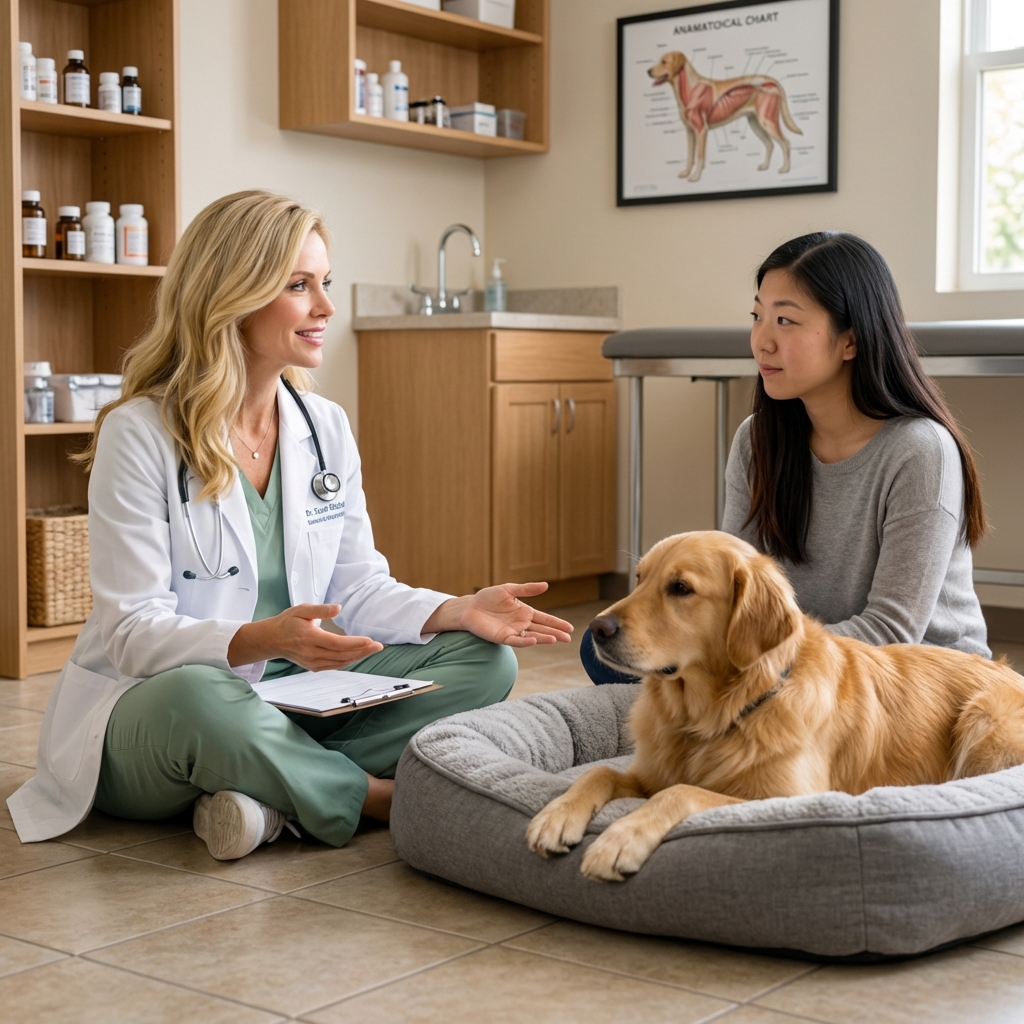
Helping kids and other pets cope
Children
Use honest, simple language. Avoid phrases like “went to sleep” if your child might fear bedtime. You might say: “Their body was very sick, and the veterinarian helped them die peacefully.” Let them ask questions and share feelings in their own time.
Other pets
Companion pets may search, vocalize, or act clingy. Keep routines steady, offer extra enrichment, and talk to your veterinarian if appetite or behavior changes last more than a couple of weeks.
Aftercare and honoring your dog
Grief is love with nowhere to go, and it deserves respect.
- Ask your clinic about private or communal cremation and memorial options.
- Consider a small ritual: a walk to their favorite spot, planting a flower, creating a photo book.
- If you are struggling to function day to day, it is okay to seek help. Pet loss hotlines and grief counselors can be genuinely supportive.
Your dog’s life was not defined by their final day. It was defined by thousands of ordinary moments you gave them: safety, food, warmth, and family.
Quick checklist
- Your veterinarian’s phone number and the nearest emergency hospital
- A written list of current medications and doses
- Extra towels, washable bedding, pet wipes
- A night light for late potty trips
- A plan for aftercare (cremation or burial rules in your area)