Is your cat yowling, restless, and trying to escape? Learn the signs and length of heat, calming care strategies, training tips, what to avoid, and why spayi...
Article
•
Designer Mixes
What Happens When a Cat Is in Heat

Shari Shidate
Designer Mixes contributor
If you have an unspayed female cat, her first heat cycle can feel like it comes out of nowhere. One day she is her normal self, and the next she is yowling, rolling around, and acting extra affectionate. This is common, hormonally driven, and usually manageable once you know what you are seeing.
Let’s walk through what heat looks like, why it happens, fun facts you can share, and the best tips to keep your cat comfortable and safe.
What “in heat” means
When a cat is “in heat,” she is in a fertile phase of her reproductive cycle called estrus. This is when her body is biologically primed to mate and become pregnant.
Most cats are seasonally polyestrous, meaning they can go into heat repeatedly during longer daylight months. Indoor cats, because they live with artificial lighting and stable temperatures, may cycle almost year-round.
When heat starts
Many cats have their first heat around 4 to 9 months of age, but it can happen earlier or later depending on breed, body size, light exposure, and environment. In warmer climates or in homes with long daily light exposure, we often see earlier or more frequent cycling because conditions support longer “breeding season” patterns.
How long does heat last?
- Estrus (heat) commonly lasts: about 3 to 10 days, and sometimes longer.
- If she does not mate: she may cycle back into heat again in as little as 1 to 3 weeks.
- If she mates and ovulates: pregnancy is possible, or she may enter a short diestrus-like phase (sometimes called pseudopregnancy or “false pregnancy”) even if she does not conceive.
This frequent cycling is why heat behavior can feel nonstop if your cat is not spayed.
Signs of heat
One of the biggest misconceptions is that a cat in heat is “in pain.” Most cats are not in pain, but they can be intensely uncomfortable, restless, and driven to seek a mate.
Common behaviors
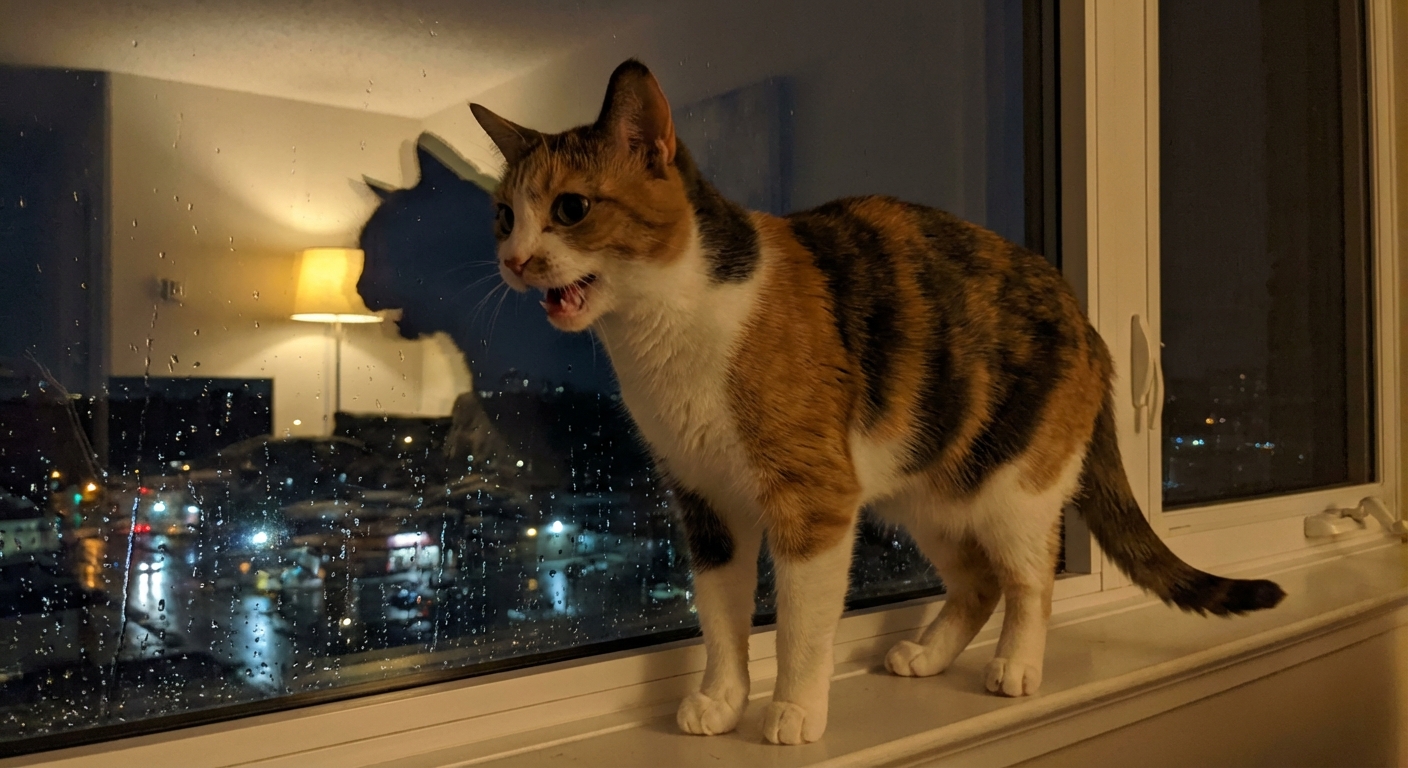
- Very loud vocalizing: yowling, howling, and persistent meowing, often worse at night
- Extra affection: rubbing on you, furniture, door frames, rolling on the floor
- Restlessness: pacing, inability to settle
- “Lordosis” posture: front end down, hind end raised, tail held to the side when touched near the back
- Increased attention to doors and windows: trying to escape to find a male cat
- Reduced appetite: some cats eat less while in heat
Do cats bleed?
Usually no. Unlike dogs, most cats do not have visible bleeding during heat. If you see blood, call your veterinarian, especially if it is more than a tiny spot.
What is happening in her body
Heat is driven by hormones from the brain and ovaries. Estrogen rises, and your cat’s body is essentially advertising fertility through scent and behavior.
Fun fact: induced ovulation
Most female cats ovulate because of mating, not on a strict schedule. That is one reason a cat can cycle repeatedly if she is not bred, and why pregnancy can happen quickly if she escapes outdoors. (A small number of cats can ovulate spontaneously, but induced ovulation is the usual pattern.)
Fun facts
- Male cats can show up fast: intact males may travel surprisingly far when they detect a female in heat.
- Heat calls are unique: the yowl many owners describe is a classic estrus vocalization, and it can sound urgent or distressed.
- Multiple matings are common: a female may mate with more than one male, and kittens from the same litter can have different fathers.
- Outdoor drama can increase: intact males may spray, pace, or fight outside doors and windows if they sense her.
How to help at home
Your goal is to reduce stress, prevent escape, and keep her routine calm. These tips are gentle, evidence-based, and commonly recommended in veterinary settings.
1) Keep her indoors
- Check window screens for gaps.
- Be careful when opening doors, especially at night when she may try to dart out.
- If you have a balcony or patio, supervise closely or avoid access during heat.
2) Add comfort and distraction
- Play therapy: wand toys, short frequent sessions, and puzzle feeders can burn off restless energy.
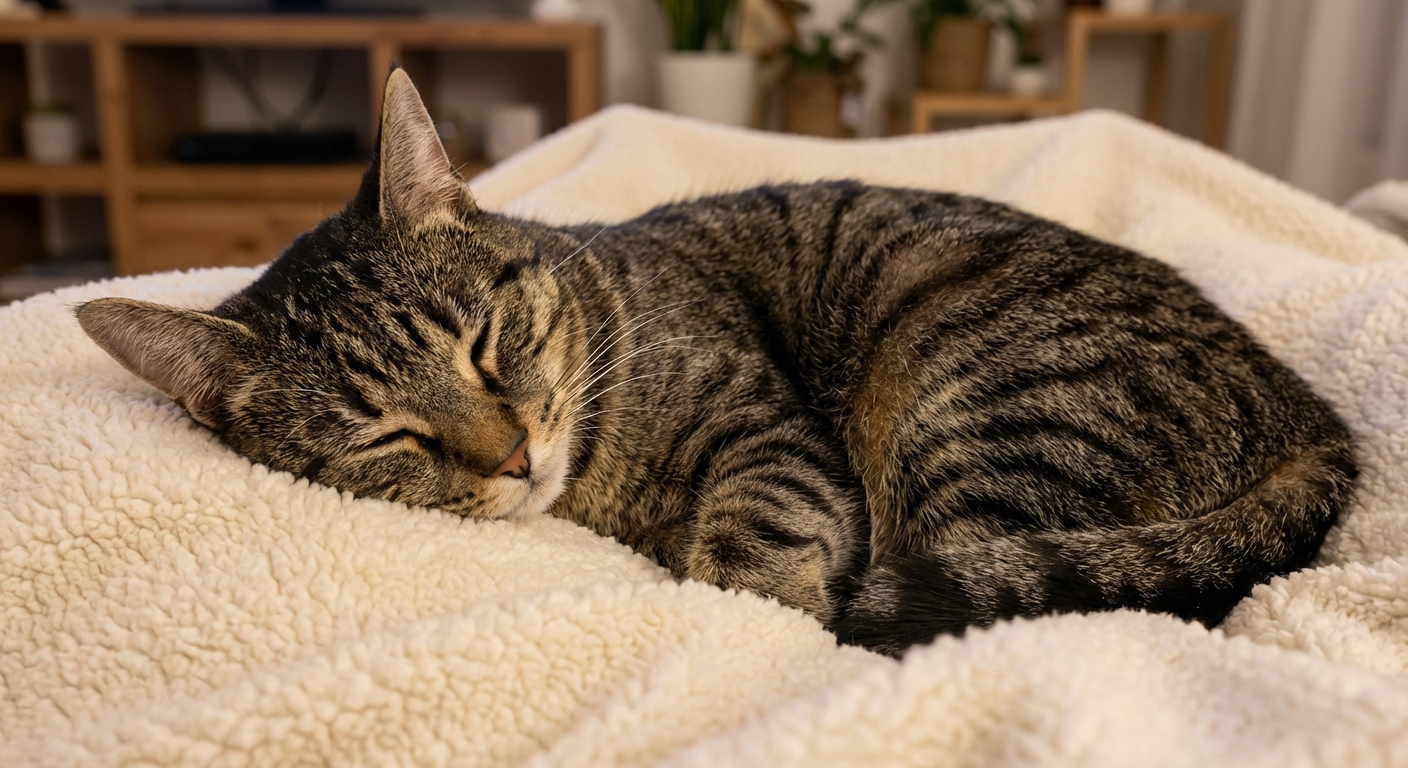
- Warmth: a warm blanket or a safe heating pad designed for pets can be soothing.
- Enrichment: a bird feeder view, cat TV, or treat scavenger hunt can redirect attention.
3) Offer affection, on her terms
If she seeks cuddles, gentle petting is fine. Many cats prefer head and cheek rubs over back or tail-base touch during heat because those areas can intensify the mating posture.
4) Keep the litter box extra clean
Cats in heat may urinate more frequently or “mark” small amounts. A clean box reduces stress and helps you notice anything abnormal, like blood or straining.
5) Consider pheromones
A feline facial pheromone diffuser may help some cats feel calmer. It will not stop heat, but it can reduce stress behaviors in certain households.
What not to do
- Do not punish vocalizing: she is not being “bad,” she is following hormones. Punishment increases anxiety.
- Do not give human medications: pain relievers and sedatives can be toxic to cats.
- Do not let her outside “just once”: pregnancy can happen fast, and males may be waiting nearby.
- Do not try to breed her to “calm her down”: mating does not solve the underlying cycle pattern and adds pregnancy and health risks.
- Do not use hormonal products without veterinary guidance: hormone injections or pills can carry serious risks and are not a casual fix.
When to call the vet
Heat itself is normal, but certain signs suggest something else is going on.
- Bleeding more than a tiny spot, or bleeding that continues
- Not eating for more than 24 hours, or acting weak and lethargic
- Vomiting, diarrhea, or fever
- Straining to urinate or crying in the litter box
- A swollen abdomen or nipple changes that make you suspect pregnancy
Also call your vet if her heat cycles seem constant with barely any breaks. Sometimes this is normal cycling, but your veterinarian can help you confirm what is typical for her age and situation.
Long-term solution: spaying
If you are not planning to responsibly breed your cat, spaying is the kindest and most effective way to prevent repeated heat cycles and accidental litters. It also reduces the risk of serious reproductive problems later, including pyometra (a life-threatening uterine infection) and lowers the risk of mammary cancer. The greatest mammary cancer risk reduction is seen when spaying is done before the first heat, but spaying later is still beneficial.
If your cat is in heat right now, you can still call and discuss timing with your veterinarian. Many clinics prefer to spay when a cat is not in active heat, and some will spay during heat if needed, but it can involve more bleeding and the decision is clinic-dependent.
Quick recap
- A cat in heat is in estrus, a fertile hormonally driven phase.
- Heat often lasts around 3 to 10 days and can repeat frequently if she does not mate.
- Common signs include loud yowling, rolling, rubbing, restlessness, and escape attempts.
- Your best help is indoor safety, calm routines, play, and comfort.
- Spaying is the most reliable way to prevent future heat cycles and protect long-term health.