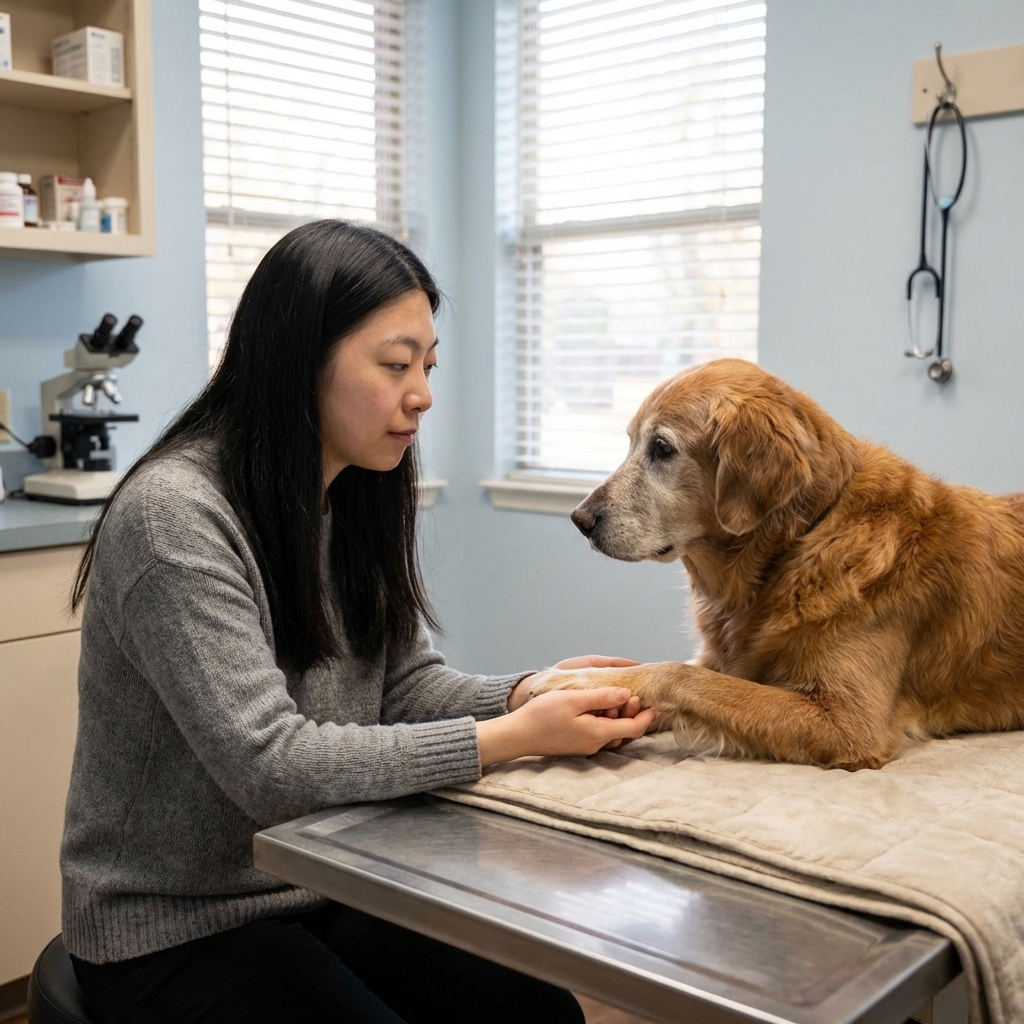
A compassionate, evidence-based guide to deciding when to euthanize a dog. Track quality of life, recognize urgent red flags, ask the right vet questions, an...
Article
•
Designer Mixes
What Happens During Dog Euthanasia

Shari Shidate
Designer Mixes contributor
Saying goodbye to a dog is one of the hardest moments in a pet parent’s life. As a veterinary assistant here in Frisco, Texas, I have seen how much fear and uncertainty can surround euthanasia, especially if you have never been present for it before.
The good news is that euthanasia is designed to be peaceful, gentle, and humane. In a typical two-step process (sedation first, then the euthanasia medication), most dogs become very sleepy and unaware before they pass. That said, every pet and every body is different. A few dogs can have atypical reactions to sedatives, or the timeline can be slower if circulation is poor or breathing disease is advanced. Your veterinary team can adjust the plan and pacing to keep things as calm and comfortable as possible.
In this guide, I’ll walk you through what typically happens step by step, what you can ask for, and how to prepare so you can focus on loving your dog well in their final moments.
Quick overview
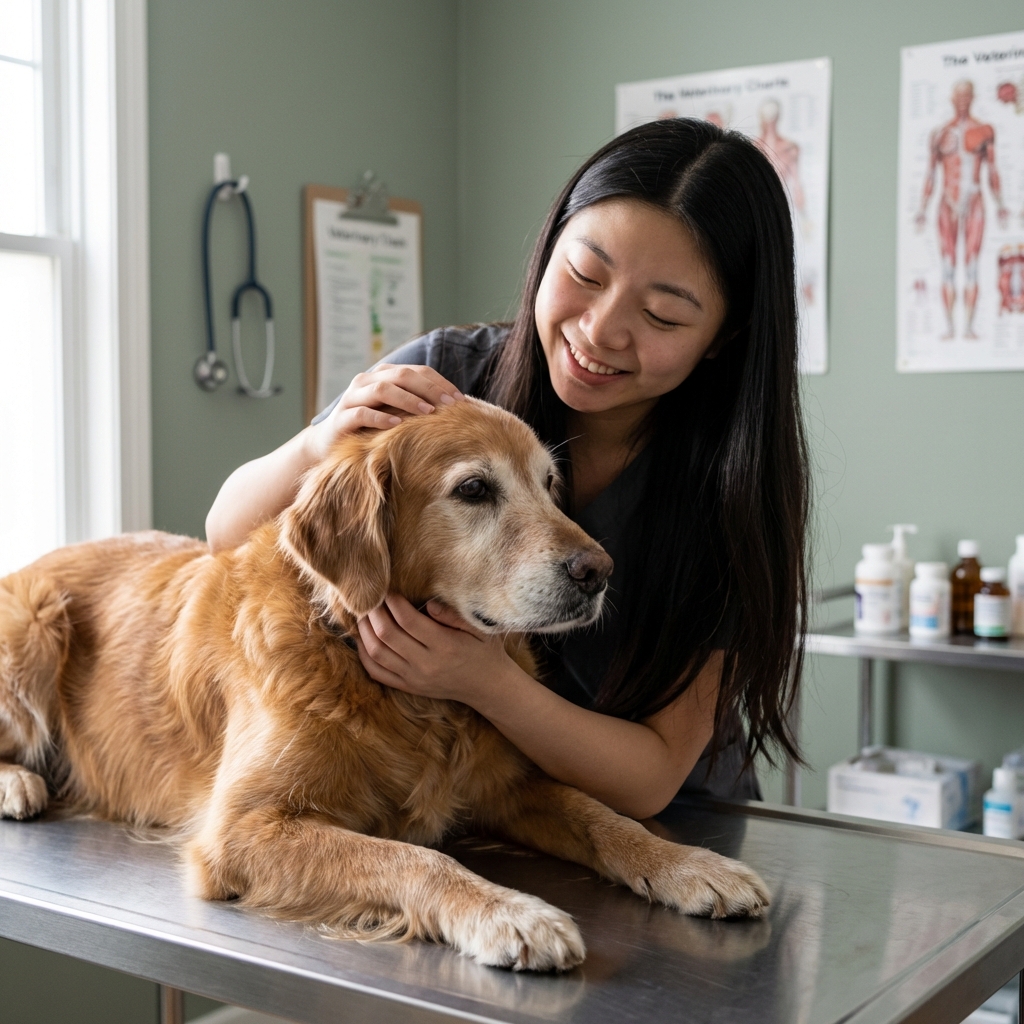
While each clinic and each dog is a little different, euthanasia usually follows this general flow:
- Comfort measures (quiet room, soft bedding, time to settle)
- Sedation to relieve anxiety and allow your dog to become deeply relaxed
- Placement of an IV catheter (often after sedation)
- Euthanasia medication given through the IV (or another route if needed)
- Confirmation of passing by the veterinarian
- Aftercare choices (private cremation, communal cremation, home burial where legal and safe)
If you take only one thing from this article, let it be this: you can ask questions and request accommodations. Veterinary teams want this to be as calm and meaningful as possible for you and your dog.
Step by step
Step 1: Arrival and settling
Many clinics offer a quieter room or a comfort room for euthanasia appointments. You may be invited to take as much time as you need to sit with your dog before anything begins.
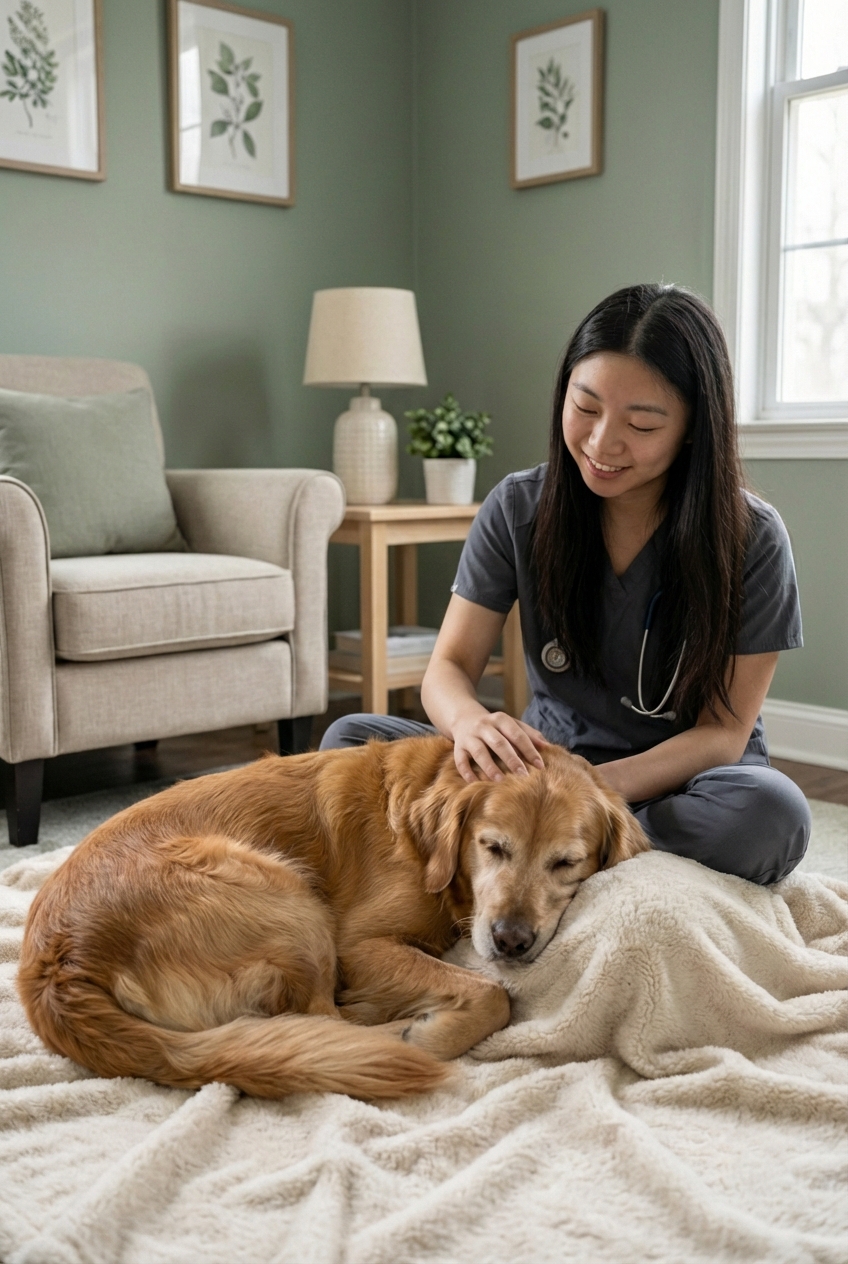
Depending on the clinic, they may dim the lights, offer a blanket, tissues, and sometimes small comfort touches like a battery candle. Your dog may be allowed to stay on a favorite blanket, bed, or even in your lap if it is safe and comfortable.

Step 2: Paperwork, payment, and consent
The veterinarian or a trained team member will usually review:
- Your dog’s current condition and what you are seeing at home
- What to expect during the procedure
- Your wishes for being present (or not)
- Aftercare decisions
- A consent form (required in most practices)
Many clinics also handle payment and paperwork before the appointment or before the procedure begins, specifically so you can leave without having to stop at the front desk afterward. If that is important to you, ask. It is a very common request.
This part can feel formal when your heart is breaking, but it is important for legal and ethical reasons. If you feel overwhelmed, it is okay to ask them to slow down and explain each choice one at a time.
Step 3: Sedation
In many clinics today, the first step medically is sedation. The goal is to let your dog fall into a calm, sleepy state before the euthanasia medication is given.
Sedation may be given as an injection (often under the skin or into a muscle). Within several minutes, most dogs become:
- Very relaxed
- Sleepy or fully asleep
- Less aware of their surroundings
Some dogs still keep their eyes open even when they are asleep, which can look surprising.
Rarely, a dog can have a paradoxical reaction (restlessness or excitement) as sedatives take effect. If that happens, it does not mean you made the wrong choice. It means the team may need to adjust medications or give it a little more time.
What you can do: speak softly, pet your dog, hold their paw, or offer gentle forehead rubs if they enjoy that. This is a good time to play quiet music on your phone if it comforts you and the clinic allows it.
Step 4: IV catheter
Once your dog is sedated, a veterinary professional often places an IV catheter, usually in a front leg. The catheter provides a reliable way to give the euthanasia medication smoothly.
Not every euthanasia uses an IV catheter, but it is common because it helps ensure the medication is delivered properly and quickly. The leg may be shaved and cleaned, and a small bandage may be placed to keep the catheter secure.
If your dog is very small, very ill, or has poor circulation, catheter placement can be more challenging. In those cases, the veterinarian may recommend an alternate approach (for example, a different vein or a different route). They should explain what they are doing and why, and you can always ask them to pause and talk you through it.
Step 5: The euthanasia medication
The medication used most commonly in veterinary medicine is an overdose of an anesthetic drug (often a barbiturate such as pentobarbital). Given through the IV, it works quickly.
In simple terms, here is what typically happens:
- Your dog becomes fully unconscious first
- Then breathing slows and stops
- Then the heart stops
This is often within seconds to minutes after the medication is administered, but it can vary based on circulation, underlying illness, and the route used. If things take longer than you expected, it is not your dog “fighting it.” It is physiology, and your veterinarian will stay with you and guide the process. Occasionally, an additional dose is needed, and that is still considered a normal, humane part of care.
Step 6: Confirming passing
The veterinarian will listen to your dog’s heart with a stethoscope and confirm when they have passed. They will let you know gently and clearly.
You may be offered more private time afterward. Take it if you want it. There is no “right” way to behave in this moment.
Also, a gentle note for you: grief can be physical. Shaking, nausea, feeling numb, feeling calm, or feeling nothing at all can all be normal.
Step 7: Aftercare
After your dog has passed, the team will follow the aftercare plan you selected. Common options include:
- Private cremation (ashes returned to you)
- Communal cremation (ashes not returned)
- Home burial (where legal and safe)
If you choose cremation, you can often request memorial items like a clay paw print, ink paw print, or a fur clipping. Ask what your clinic offers.
What you may see
Even when everything is peaceful, the body can do things that surprise people. These are common and usually do not mean your dog is in pain or aware.
- Eyes remaining open
- Muscle twitching or small movements
- Loss of bladder or bowel control
- A deep breath or sigh near the end or after unconsciousness (a reflex)
- Vocalization in rare cases, which can be reflexive or related to sedation, anxiety, or handling. Your team can confirm your dog is unconscious and comfortable.
If anything worries you in the moment, ask the veterinarian to explain what you are seeing. You deserve reassurance and clarity.
Home vs. clinic
Both options can be loving choices. The “best” setting is the one that keeps your dog calm and keeps you supported.
Home euthanasia
- Often less stressful for dogs who fear the clinic
- Allows a familiar, quiet environment
- May be easier for multi-pet households to say goodbye
Clinic euthanasia
- Immediate access to medical support if your dog’s condition changes quickly
- Often more affordable
- Aftercare logistics are simpler for many families
If you are considering home euthanasia, ask about scheduling, cost, and aftercare pickup in advance, since availability can vary.
How to prepare
Before the appointment
- Bring a comfort item: favorite blanket, bed, or toy
- Plan your drive: allow extra time so you do not feel rushed
- Decide who will attend: only the people who can remain calm and supportive
- Ask about sedation and pacing: most clinics can slow down and give you quiet time
- Ask about paying ahead: many clinics can do this to reduce stress afterward
Special treats
If your dog still wants to eat and your veterinarian says it is okay, many families bring a special treat like a cheeseburger bite, a little ice cream, or cooked chicken. For some dogs, appetite is gone at the end, and that is okay too. Love does not require a last meal.
Kids in the family
Children can be present if they are prepared in an age-appropriate way. Consider explaining it as: the veterinarian will give medicine that makes the dog fall asleep, and their body stops working, and they do not wake up. If you are unsure, ask your veterinary team for guidance on what is appropriate for your child’s age.
Other pets
Some families ask if another dog in the home can be present or can sniff and say goodbye afterward. Some clinics allow it and some do not, and it depends on safety and space. If this matters to you, ask ahead of time.
Knowing when it is time
Families often wait because they fear choosing “too soon.” In my experience, the bigger risk is waiting until a pet is in crisis and suffering.
You can talk with your veterinarian about a quality-of-life scale. Common markers include:
- Uncontrolled pain
- Not eating or drinking for an extended period
- Repeated vomiting or diarrhea causing weakness
- Labored breathing
- Inability to stand, walk, or stay clean
- More bad days than good days
One gentle rule many families use: if you are keeping your dog alive mainly for you, not for them, it may be time to talk about a peaceful goodbye.
Questions to ask
- Will my dog receive sedation first?
- How long will the appointment take?
- Can we have time alone before and after?
- Can my dog stay on my lap or on the floor?
- Do you recommend paying ahead of time so we can leave quietly?
- What aftercare options do you offer, and what are the costs?
- Can we request paw prints or other memorials?
- If my dog is anxious, what can we do ahead of time to help?
- If IV access is difficult, what is your backup plan?
- If I cannot stay in the room, can someone be with my dog?
If you cannot stay
Some people cannot be present, and that does not mean they love their dog any less. If you are worried about this, tell the clinic. Many teams will have a staff member stay close, speak softly, and keep your dog comfortable. You can also ask if you can say goodbye during sedation and step out before the final medication, if that feels like the right balance for you.
Home burial notes
If you are considering home burial in Texas, check your city and county rules first. Regulations can vary, and some areas have requirements about location, depth, or setbacks from water sources.
Also ask your veterinarian about safety. With barbiturate euthanasia, small amounts of medication can remain in the body. If burial is allowed, it should be deep enough and secured well enough to reduce any risk to wildlife or other pets.
A final note
Euthanasia is not giving up. It is a medically guided, compassionate way to prevent suffering when the body can no longer be helped. Your dog has spent a lifetime trusting you. When you choose a peaceful passing, you are honoring that trust with kindness.
If you are approaching this decision, please lean on your veterinarian, your support system, and your own bond with your dog. You do not have to carry it alone.
Sources
- American Veterinary Medical Association (AVMA). AVMA Guidelines for the Euthanasia of Animals.
- The Ohio State University Veterinary Medical Center. Honoring the Bond: Support (pet loss resources).
- Cornell University College of Veterinary Medicine. End-of-life care (quality of life and support).