A vet assistant’s guide to toxic fruits for dogs—grapes/raisins, currants, cherries, pits/cores, and avocado. Learn symptoms, urgent steps, and safer fru...
Article
•
Designer Mixes
What Fruits Should Dogs Not Eat

Shari Shidate
Designer Mixes contributor
As a veterinary assistant here in Frisco, Texas, I love when pet parents add fresh foods to a dog’s routine. Fruit can be a wonderful treat, but not every fruit belongs in a dog bowl. Some are outright toxic, and others are simply risky because of sugar, pits, seeds, rinds, or stomach upset.
This guide breaks down which fruits dogs should not eat, what to do if your dog gets into them, and how to offer safer fruit options in a way that supports long-term health.
Quick note: This article is educational and not a substitute for veterinary care. If you’re worried about an exposure, your veterinarian (or a pet poison hotline like ASPCA Animal Poison Control or Pet Poison Helpline) can guide you based on your dog and the amount eaten.

Fruits dogs should not eat
These are the big ones I want you to remember. If your dog eats any of these, it is worth contacting your veterinarian or a pet poison helpline promptly, even if your dog seems fine at first.
Grapes, raisins, and currants
Grapes, raisins, and currants can cause sudden kidney failure in dogs. The tricky part is that we still do not fully understand why, and the toxic dose can be unpredictable. Some dogs get very sick from a small amount.
- Risk: Potential acute kidney injury or kidney failure.
- Watch for: Vomiting, diarrhea, lethargy, refusing food, abdominal pain, increased thirst or decreased urination.
- What to do: Treat this as urgent and contact your vet right away.
- Also watch for: Raisins can show up in trail mix, granola, cereal, baked goods, and some “healthy” snacks.
Cherries
The fruit flesh is generally low risk only if it is fully pitted and offered in very small amounts. The real concern is that pits, stems, and leaves contain cyanogenic compounds (which can release cyanide when chewed). Pits can also cause choking or intestinal blockage, especially in small dogs.
- Risk: Cyanide toxicity (from plant parts) and GI blockage or choking (from pits).
- Watch for: Drooling, difficulty breathing, weakness, bright red gums, vomiting, constipation, abdominal discomfort.
- What to do: If your dog chewed or swallowed pits, stems, or leaves, contact your vet. If your dog is struggling to breathe, collapsing, or repeatedly vomiting, seek emergency care.
Avocado
Avocado is a common “gray area” food. In dogs, true persin toxicity is uncommon, but avocado is high in fat and can cause vomiting or diarrhea, and it may trigger pancreatitis in sensitive dogs. The pit is also a serious choking and intestinal obstruction hazard.
- Risk: Vomiting, diarrhea, pancreatitis risk in sensitive dogs, and obstruction from the pit.
- Extra caution: Dogs with a history of pancreatitis or frequent GI upset should avoid avocado.
- What to do: If your dog ate the pit or is showing repeated vomiting, belly pain, or lethargy after avocado, contact your vet.
Green tomatoes and tomato plants
Ripe tomato flesh is generally considered low risk in small amounts for many dogs, but green (unripe) tomatoes and the plant itself contain higher levels of glycoalkaloids (tomatine and solanine-like compounds) that can be irritating or toxic.
- Risk: GI upset, weakness, tremors in larger exposures.
- Watch for: Drooling, vomiting, diarrhea, lethargy, wobbliness.
- Best practice: Keep dogs away from tomato plants in the yard or garden beds.
Star fruit (carambola)
Star fruit is not common in every home, but it is worth calling out. Star fruit has been associated with kidney and neurologic issues, especially in individuals with underlying kidney problems.
- Risk: Vomiting, diarrhea, weakness, tremors, and more serious effects in higher-risk pets.
- What to do: If your dog ate star fruit, contact your veterinarian for guidance.
Wild berries (unknown varieties)
Many common store-bought berries are dog-friendly in small amounts, but wild berries are a different story. Some are harmless, some cause GI upset, and some can be toxic. If you cannot identify it with confidence, treat it as unsafe.
- Risk: Varies by species, from mild diarrhea to more serious toxicity.
- Best practice: Keep dogs from foraging on walks or in the backyard.
Not toxic, but still risky
These fruits are not the “rush to the ER” kind in most cases, but they are common troublemakers. The problem is usually sugar, fiber, acidity, pits, seeds, or choking hazards.
Important: If your dog ate a pit, a core, a lot of seeds, or a large amount of fruit at once, it is smart to check in with your veterinarian.
Citrus (orange, lemon, lime, grapefruit)
Small amounts of orange segments are often tolerated, but citrus can cause stomach upset. The peel and pith are more irritating, harder to digest, and can contain essential oils that may worsen GI irritation.
- Risk: Vomiting, diarrhea, mouth irritation.
- Tip: If you offer orange, keep it to a couple of bite-sized pieces and skip peel and seeds.
Pineapple
Pineapple is not toxic, but it is acidic and sugary.
- Risk: Loose stool, tummy discomfort.
- Tip: Offer small cubes only, not canned in syrup.
Mango, peach, plum, apricot
The fruit flesh is typically okay in small amounts, but the pits are the issue. Pits can cause choking or obstruction and can contain cyanogenic compounds. Peach and plum pits are especially concerning if chewed.
- Risk: Choking, intestinal blockage, potential toxin exposure from pits.
- Tip: Never offer the fruit with the pit present.
Apples and pears (seeds and core)
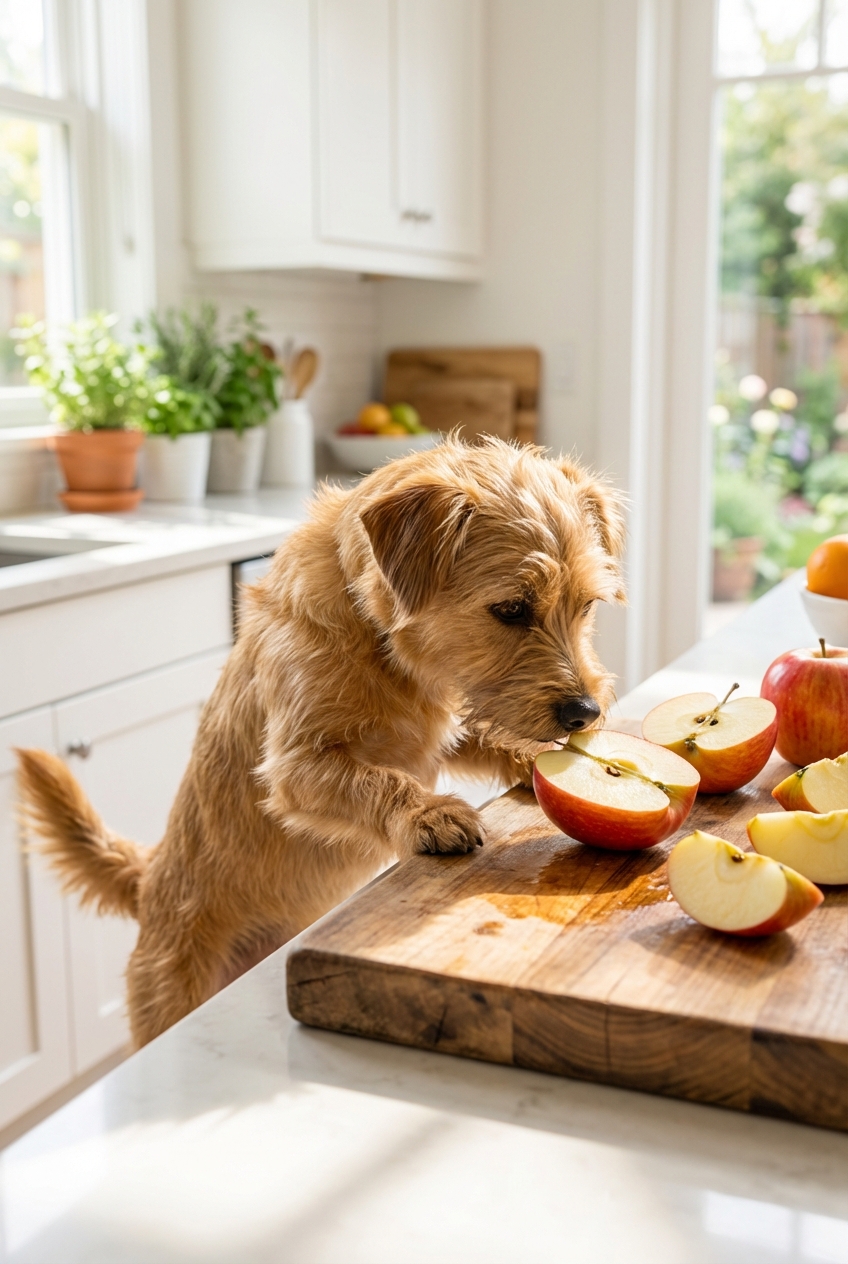
Apples can be a nice crunchy snack, but the seeds and core should be removed. Seeds contain amygdalin and other compounds that can release cyanide when chewed and consumed in significant quantity.
- Risk: Choking (core), stomach upset, toxicity risk from many chewed seeds.
- Tip: Slice and remove the core and seeds before serving.
Bananas
Bananas are a popular dog treat, but they are high in sugar and can contribute to weight gain in generous portions.
- Risk: Weight gain, diarrhea, constipation (too much at once).
- Tip: Think “treat,” not “side dish.”
Persimmons
Persimmons are not always toxic, but they can be trouble. The seeds and fibrous parts can irritate the GI tract, and in some dogs they may contribute to intestinal blockage.
- Risk: Vomiting, diarrhea, abdominal pain, constipation or straining, obstruction risk.
- Tip: If you offer persimmon at all, it should be seedless and in tiny amounts. Many families choose to skip it.
Why “safe” fruit still causes issues
Even dog-friendly fruits can backfire if we forget a few basic realities about canine digestion.
- Dogs are not built for lots of sugar: Fruit sugar can contribute to weight gain and dental issues, and can be a bad match for dogs with diabetes.
- Too much fiber too fast: Fruit can cause gas, loose stools, and belly pain if introduced quickly.
- Pits, seeds, cores, and rinds: These can be choking hazards and can cause intestinal obstruction. Several seeds and pits also contain cyanogenic compounds.
- Underlying conditions: Dogs with pancreatitis history, sensitive stomachs, or chronic GI disease often need tighter treat boundaries.
When fruit becomes more risky
How fruit is prepared matters as much as which fruit you choose.
- Dried fruit is concentrated: It packs more sugar into a smaller bite, and raisin exposures are a classic emergency.
- Canned fruit and fruit cups: Often stored in syrup, which adds a lot of sugar.
- Fruit snacks, gummies, and “diet” products: Some contain xylitol, a dangerous sweetener for dogs. If a product is sugar-free, assume it is unsafe until you confirm ingredients.
- Juice: Grape juice is not a safe alternative to grapes, and most juices are too sugary to be a good dog treat anyway.
What to do if your dog eats a harmful fruit
If your dog gets into a fruit on the “do not eat” list, time matters. Here is a calm, practical approach.
Step 1: Remove access and estimate the amount
Note what fruit, how much, and when it happened. If it was grapes, raisins, or currants, even “a few” can be enough to be serious.
Step 2: Contact your veterinarian
Your clinic can advise next steps based on your dog’s size, health history, and exposure. Many fruit-related toxicities are best handled early. If your regular clinic is closed, an emergency hospital or a pet poison helpline can help you decide what to do next.
Step 3: Watch for red flags
- Repeated vomiting or dry heaving
- Diarrhea that is severe or bloody
- Lethargy, weakness, collapse
- Swollen or painful abdomen
- Drooling, tremors, trouble breathing
- Straining to poop or inability to keep water down
Important note
Do not induce vomiting unless a veterinarian tells you to. With certain situations, vomiting can make things worse.
Safer fruit treats
If you want to include fruit as an occasional treat, stick with options that are generally well tolerated and easy to portion. In most healthy dogs, small amounts of these fruits can work well:
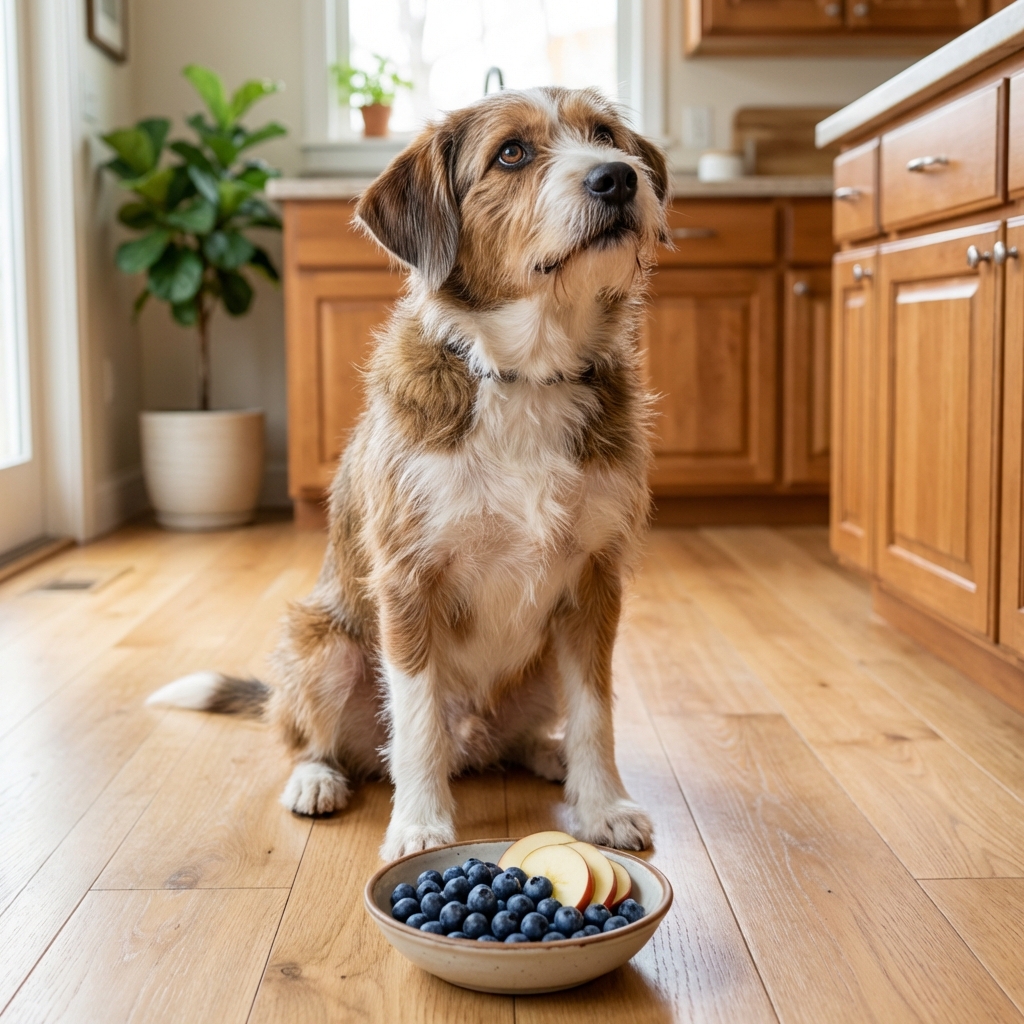
- Blueberries (great as tiny training treats)
- Strawberries (slice for small dogs)
- Watermelon (no rind, no seeds)
- Cantaloupe (small cubes, no rind)
- Apple slices (no seeds, no core)
Portion guidance
Treats, including fruit, should generally make up no more than 10 percent of your dog’s daily calories. If you are using fruit daily, keep it small and consistent, and cut back elsewhere.
Prep tips
- Wash fruit well to remove pesticide residue.
- Remove pits, seeds, cores, rinds, and stems.
- Cut into bite-sized pieces to reduce choking risk.
- Introduce one fruit at a time to spot sensitivities.

Quick avoid checklist
If you only remember a few things, remember these:
- No grapes, raisins, or currants. Any amount can be risky.
- No cherry pits, stems, or leaves, and avoid whole cherries.
- No avocado pit, and be cautious with the flesh, especially for pancreatitis-prone dogs.
- No green tomatoes and no tomato plant access.
- No star fruit.
- No unknown wild berries.
- Avoid xylitol-sweetened fruit products and “sugar-free” fruit items.
If you are building a healthier treat routine, start small. Even swapping a couple of high-calorie treats for a few blueberries can make a real difference over time, especially for dogs who gain weight easily.
Ask your vet first
Fruit treats are not one-size-fits-all. Check in with your veterinarian first if your dog has:
- Diabetes or suspected blood sugar issues
- A history of pancreatitis
- Chronic GI disease or frequent vomiting or diarrhea
- Kidney disease
- Food allergies or sensitivities
With a little guidance and the right portions, fruit can stay in the “fun and healthy” category where it belongs.