A vet assistant’s guide to safe fruit treats for dogs: 20 dog-friendly fruits, simple prep rules (no pits/seeds), portion tips by size, and a quick list of...
Article
•
Designer Mixes
What Fruits Can Dogs Eat

Shari Shidate
Designer Mixes contributor
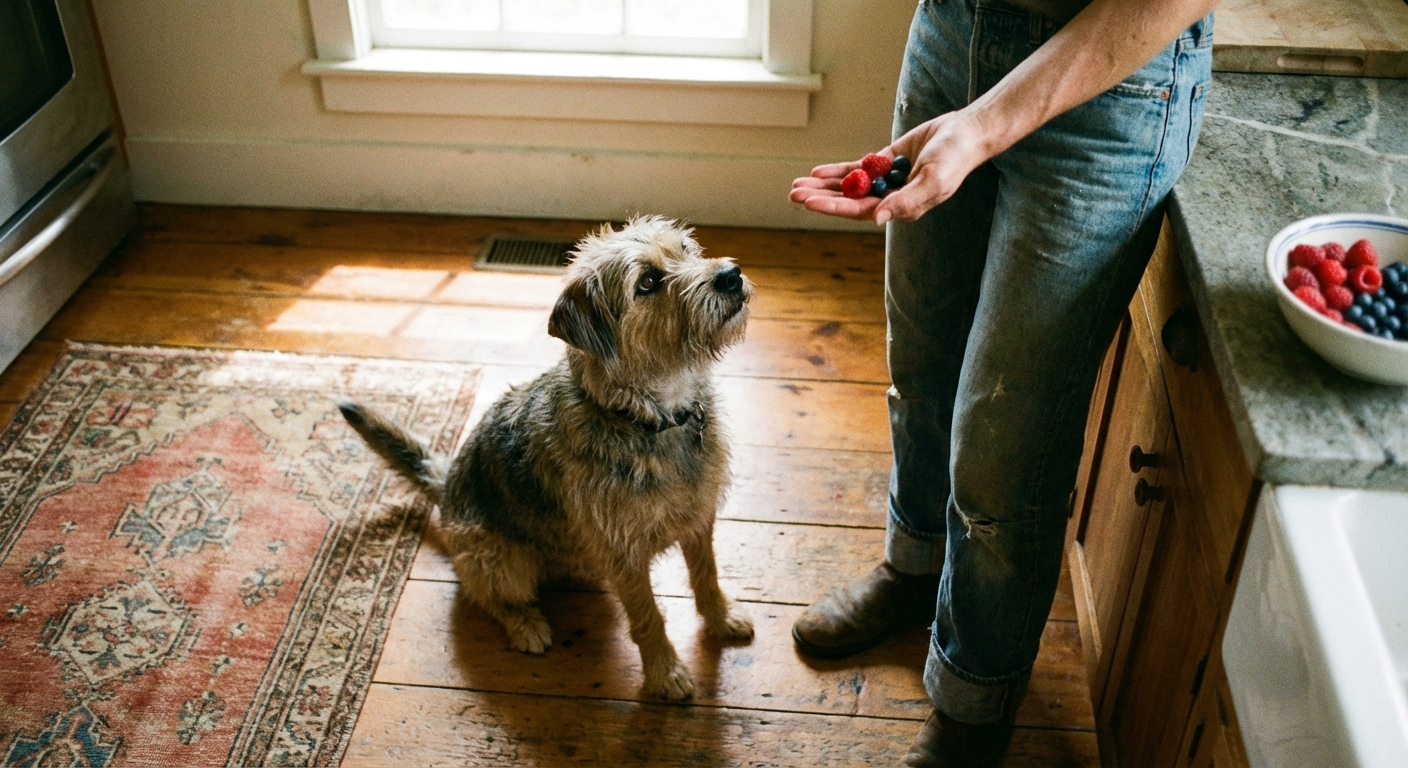
If you have ever caught your dog giving you those hopeful eyes while you slice fruit, you are not alone. As a veterinary assistant here in Frisco, Texas, I get this question all the time: what fruits can dogs eat, and how do you serve them safely?
The good news is that many fruits are dog-friendly and can be a fun, nutrient-rich treat. The key is portion size, prep, and knowing which fruits are strictly off-limits.
Quick rules for fruit safety
- Fruit is a treat, not a meal. Keep treats (including fruit) to about 10% or less of your dog’s daily calories.
- Go slow if your dog is new to fruit. Too much, too fast can cause gas or diarrhea.
- Wash fruit and serve it plain. Skip seasonings like chili-lime, salt, sugar, and honey.
- Remove pits, cores, rinds, and peels. These are common choking or blockage hazards. Some also contain toxins.
- Seeds vary. Some are mainly a mechanical risk (like many watermelon seeds), while others can be toxic (like apple seeds). When in doubt, remove them.
- Skip added sugar. No fruit syrups, canned fruit in heavy syrup, jams, or sweetened fruit cups.
- Avoid dried fruit. It is concentrated in sugar and calories, and dried grapes are raisins (never safe).
- When in doubt, call your vet, especially if your dog has diabetes, pancreatitis, obesity, or food allergies.
Best fruits dogs can eat
Here are my go-to “yes” fruits, plus simple ways to offer them safely and gently.
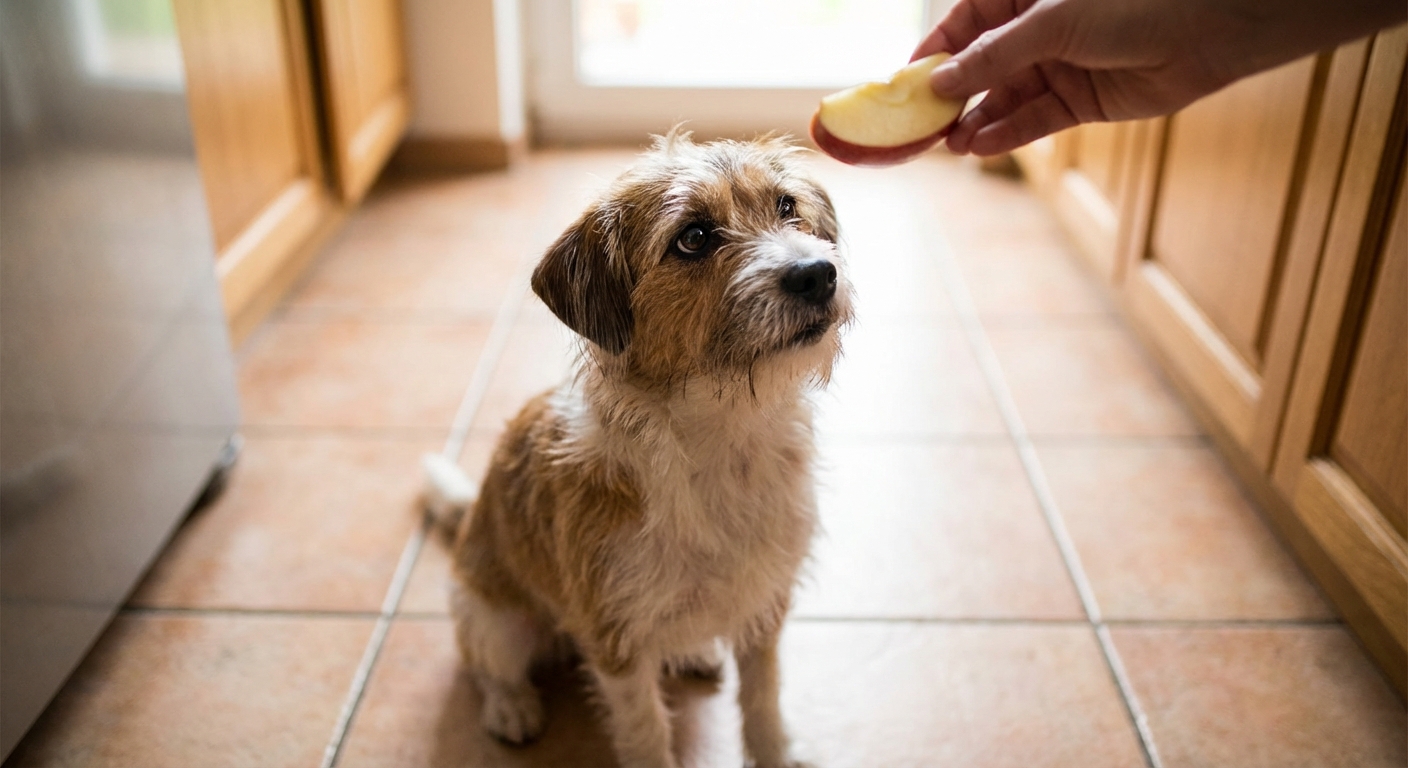
Apples (yes)
Crunchy, hydrating, and a nice source of fiber.
- Serve: Thin slices or small cubes
- Prep: Remove the core and seeds (seeds contain small amounts of cyanogenic compounds)
- Tip: If your dog gulps food, chop smaller to reduce choking risk
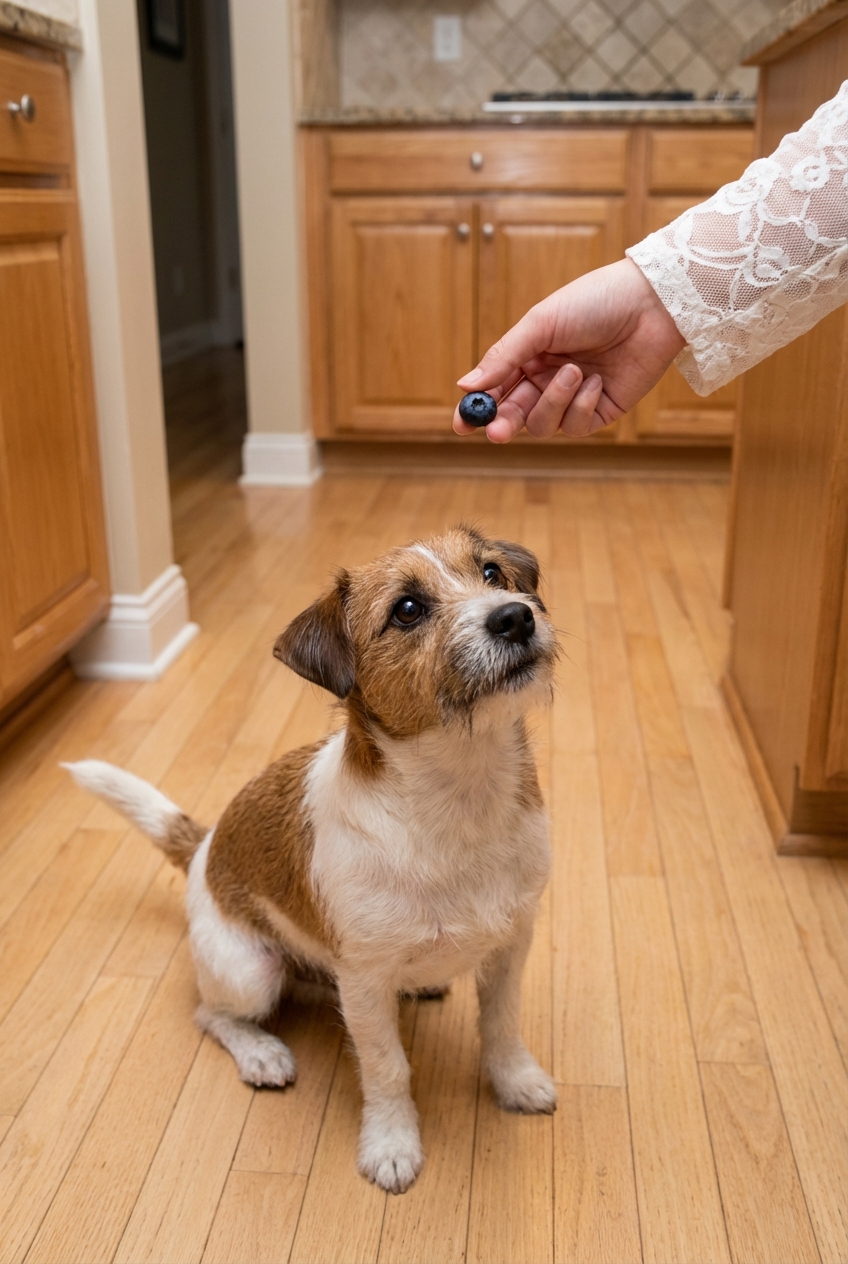
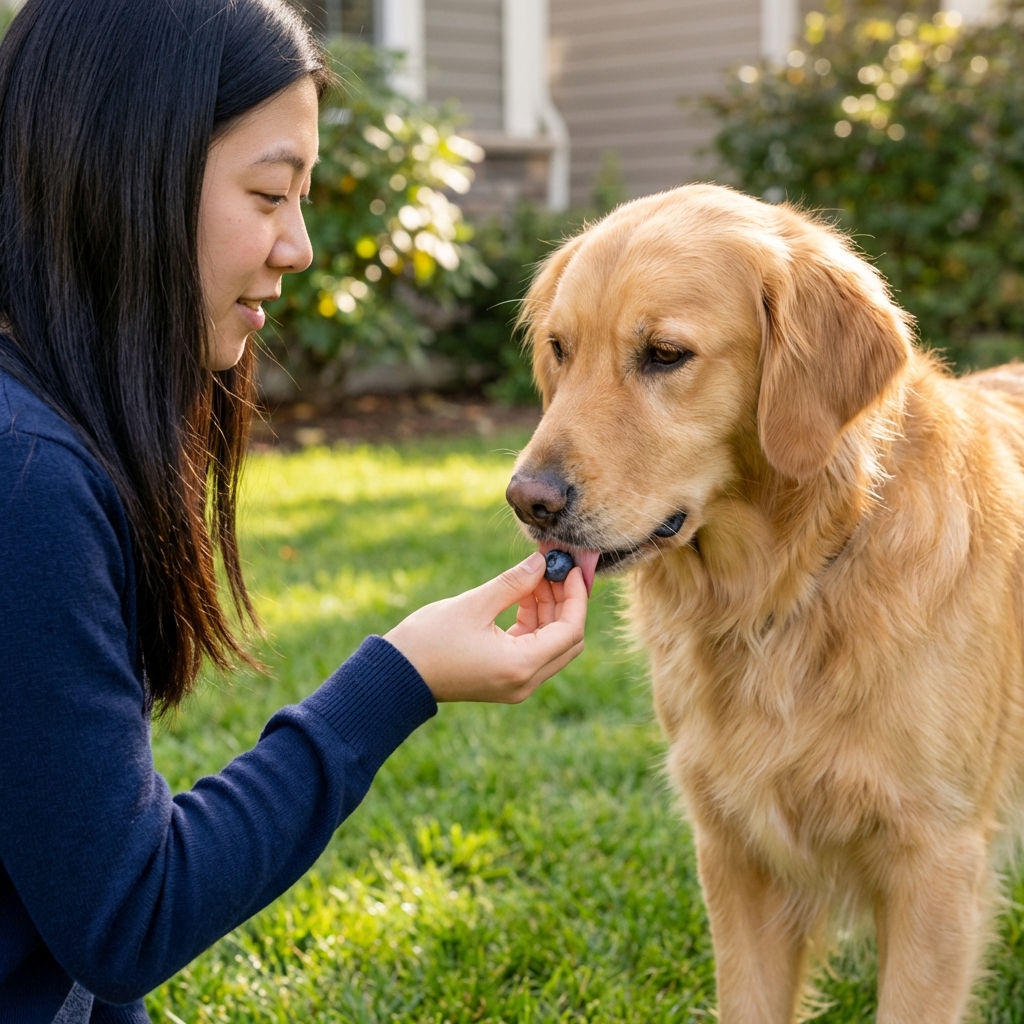
Blueberries (yes)
One of the easiest training treats. They are tiny, soft, and lower in sugar than many fruits.
- Serve: Whole berries for most dogs, or mashed for seniors
- Portion idea: Small dog 3 to 5 berries, medium dog 6 to 10, large dog 10 to 15
Strawberries (yes)
Great fresh or frozen, especially in warm weather.
- Serve: Sliced
- Prep: Remove stems and leaves
- Note: Keep portions modest because they are sweeter than blueberries
Bananas (yes, small amounts)
Bananas are tasty but higher in sugar and starch.
- Serve: Small slices
- Best for: Occasional treat, not daily for most dogs
- Portion idea: Small dog 1 to 2 thin slices, medium 2 to 4, large 4 to 6
Watermelon (yes, prepared)
Hydrating and refreshing.
- Prep: Remove the rind. Remove seeds when you can, since they can be a choking risk for some dogs.
- Serve: Small cubes
- Tip: Frozen cubes can be a quick summer treat
Cantaloupe and honeydew (yes, moderate)
Safe for most dogs, but they are on the sweeter side.
- Prep: Remove rind and seeds
- Serve: Small cubes
Pears (yes)
Pears offer fiber and a softer texture.
- Prep: Remove the core and seeds
- Serve: Small slices
Pineapple (yes, small portions)
Some dogs love the tart-sweet taste, but too much can cause digestive upset.
- Serve: Small chunks
- Avoid: Canned pineapple in syrup
Peaches and nectarines (yes, strict prep)
The flesh is fine for most dogs, but the pit is a big problem.
- Remove the pit completely (choking hazard and contains cyanogenic compounds)
- Serve: Small pieces of flesh only
Mango (yes)
Rich and sweet, so keep it as a small treat.
- Prep: Remove the pit and skin
- Serve: Small cubes
Fruits dogs should avoid
These are the big ones I want every dog parent to memorize. If your dog gets into any of these, contact your veterinarian or an animal poison control hotline right away.
Grapes and raisins (never)
Grapes and raisins can cause kidney failure in dogs. The toxic dose can be unpredictable, meaning even small amounts can be dangerous for some dogs.
Currants (treat like grapes)
Currants (including dried currants) are often discussed with grapes and raisins as a potential kidney risk in dogs. I recommend treating them as not safe.
Cherries (skip)
Cherry flesh is not the main issue, but pits, stems, and leaves contain cyanogenic compounds and can be a choking and intestinal blockage risk. Also, many cherry products (like maraschino cherries) come with lots of sugar, and some “sugar-free” products may contain dangerous sweeteners like xylitol.
Avocado (usually avoid)
In real life, avocado problems in dogs are most often about GI upset and the high fat content (which can be a pancreatitis trigger in susceptible dogs). The pit and skin are also a serious choking or obstruction hazard. While persin exists, clinically significant toxicity is considered uncommon in dogs, but it is still not a fruit I recommend feeding.
Citrus (tiny amounts only)
Many dogs can tolerate a small piece of peeled orange or mandarin, but citrus can cause stomach upset. The peel, pith, and seeds are more likely to irritate the GI tract. If you try it, offer a tiny bite, keep it rare, and stop if you see diarrhea or vomiting.
Star fruit (avoid)
Star fruit can be risky, especially for pets with kidney issues. Since it is not a common dog treat anyway, it is safest to skip it.
Pits, seeds, cores, and rinds (never feed)
Apple seeds and stone fruit pits can be toxic, and many pits, cores, rinds, and peels can cause choking or an intestinal blockage. Always serve fruit “ready to eat” for your dog.
How much fruit can a dog have?
Most healthy dogs do best when fruit is used like a bonus, not a bowlful. Keep all treats (including fruit) to about 10% or less of daily calories.
- Small dogs: 1 to 3 bite-size pieces (or 1 tablespoon total)
- Medium dogs: 3 to 6 bite-size pieces (or 1 to 2 tablespoons total)
- Large dogs: 6 to 10 bite-size pieces (or 2 to 3 tablespoons total)
If your dog has a sensitive stomach, start with one bite and wait 24 hours before offering more.
Easy ways to serve fruit
Frozen training treats
Freeze blueberries or small watermelon cubes and use 2 to 6 pieces for a quick reward.
Fruit topper
Add a few berries to a balanced meal for variety. Think “sprinkle,” not “main ingredient.”
Simple blender snack
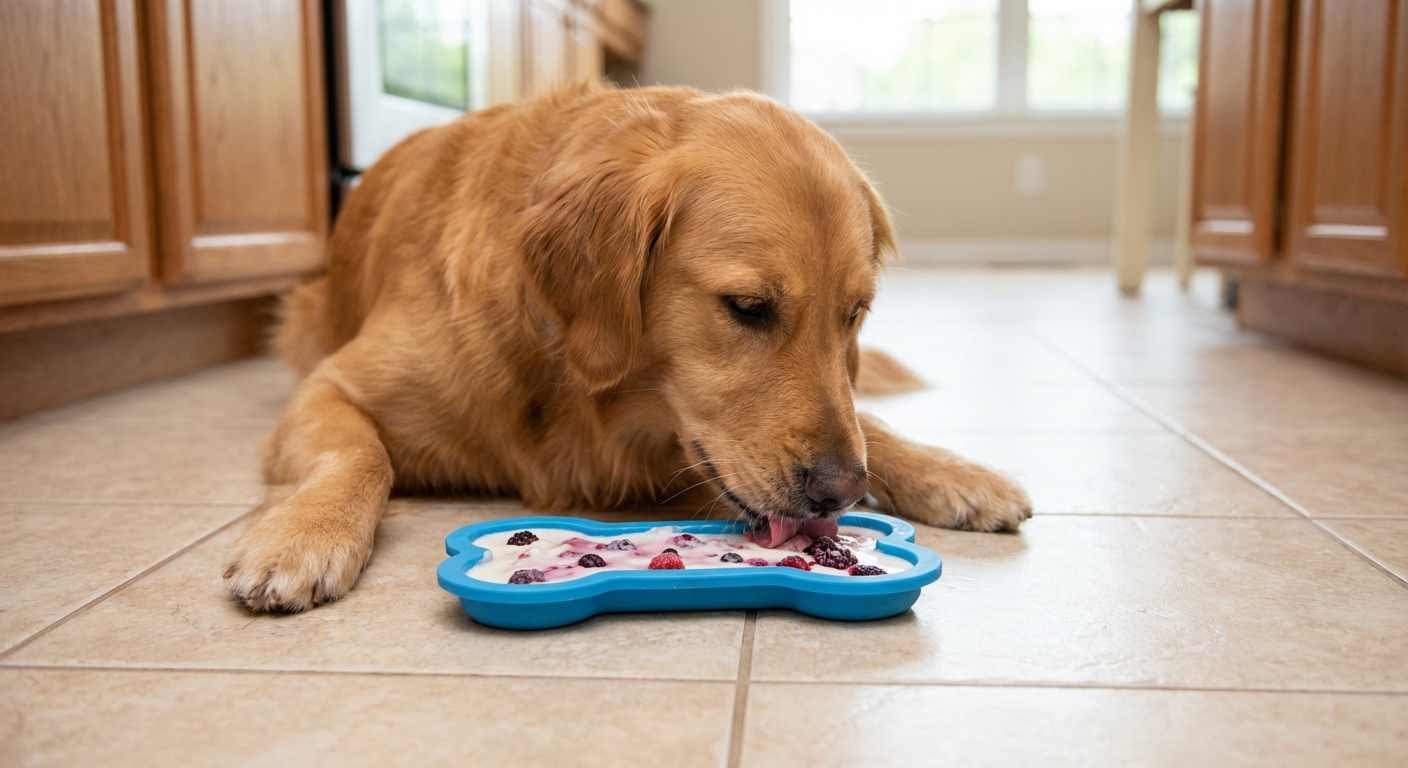
Blend unsweetened plain yogurt with a few strawberries and freeze in a silicone mold for an occasional treat. Skip xylitol and any artificial sweeteners. If your dog is lactose sensitive (very common), use a tiny test portion first or choose lactose-free plain yogurt or plain kefir.
When fruit is not a good idea
Even safe fruits may not be right for every dog. Talk with your veterinarian before offering fruit regularly if your dog has:
- Diabetes or trouble regulating blood sugar
- Pancreatitis history or a very low-fat prescription diet
- Chronic GI issues like colitis
- Obesity or needs strict calorie control
- Known food allergies or recurring ear and skin flare-ups
Signs your dog did not tolerate a fruit
Call your veterinarian if you notice vomiting, diarrhea, belly pain, lethargy, or repeated drooling after fruit. If grapes, raisins, or currants are involved, treat it as urgent, even if your dog seems fine.
If you cannot reach your vet quickly, you can also contact ASPCA Animal Poison Control (888-426-4435) or Pet Poison Helpline (855-764-7661). Fees may apply.
My simple rule: choose a safe fruit, prep it like you would for a toddler, and keep portions small. Your dog gets the joy and the nutrients without the stomachache.