Cats purr for more than happiness. Learn the science, common meanings, stress and pain signs, a quick checklist to read context, and when to call your vet.
Article
•
Designer Mixes
What Does a Cat Purring Mean?

Shari Shidate
Designer Mixes contributor
As a veterinary assistant, one of the most common questions I hear is, “My cat purrs all the time. Does that mean she’s happy?” Sometimes yes. But purring can also show stress, pain, or a need for comfort. The good news is that you can usually figure it out by looking at the whole cat, not just the sound.
The basics of purring
Purring is a rhythmic vibration that is thought to be produced by rapid, repeated activation of muscles in and around the larynx (voice box), which changes airflow as your cat breathes in and out. The exact mechanism is still being studied, but what you hear is that steady, soothing rumble.
There is still active research into exactly why cats purr, but behaviorally we know this much: purring is communication. It can signal comfort, but it can also be a coping tool when a cat feels unwell or unsure.
One more helpful note: some cats are simply quieter than others. Not purring much (or at all) does not automatically mean a cat is unhappy.
Common reasons cats purr
1) Contentment and social bonding
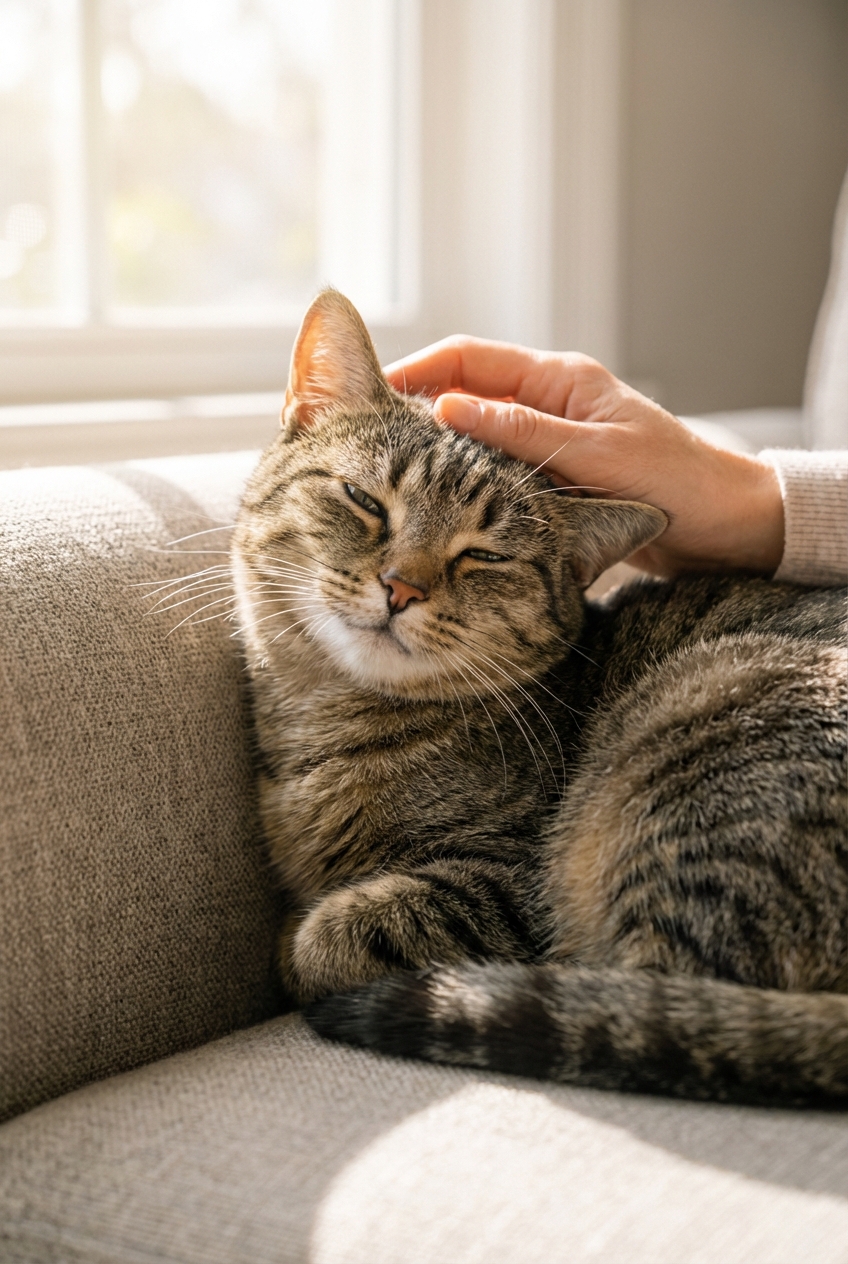
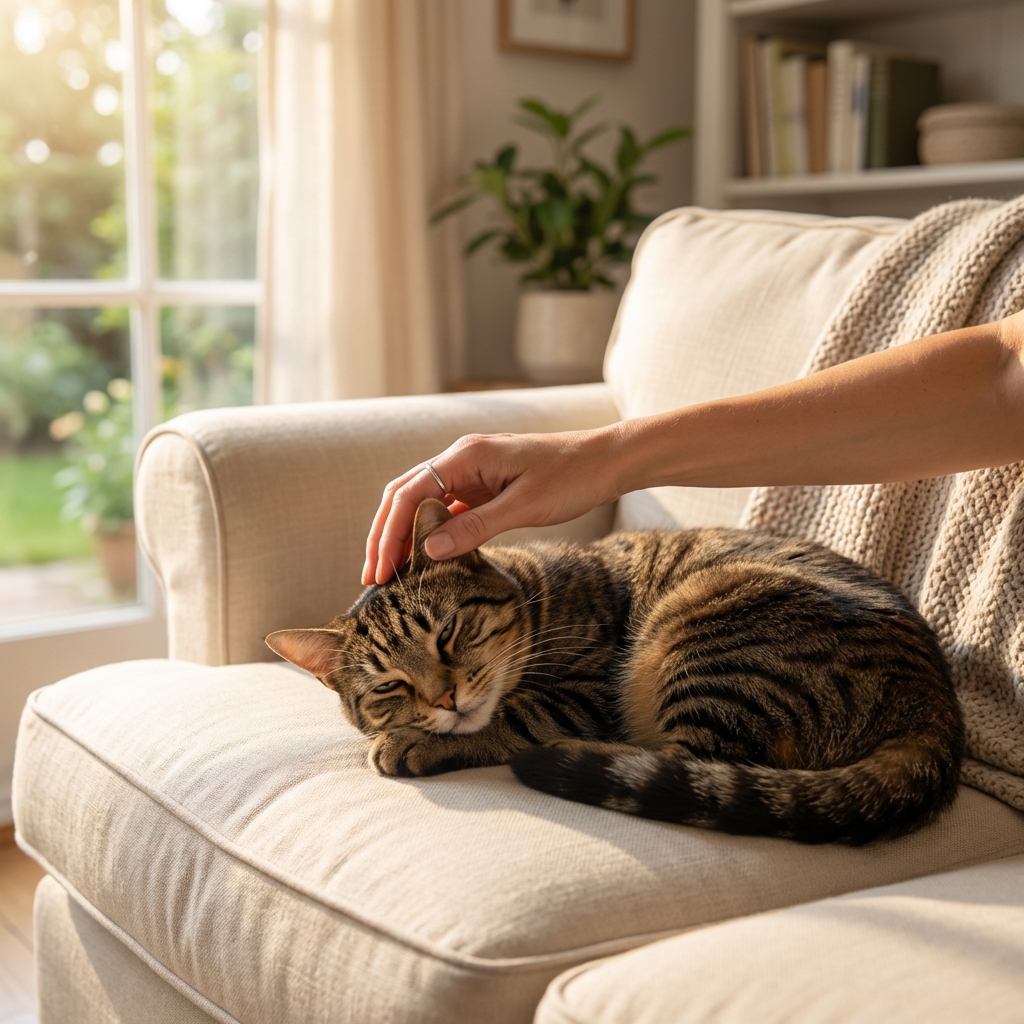
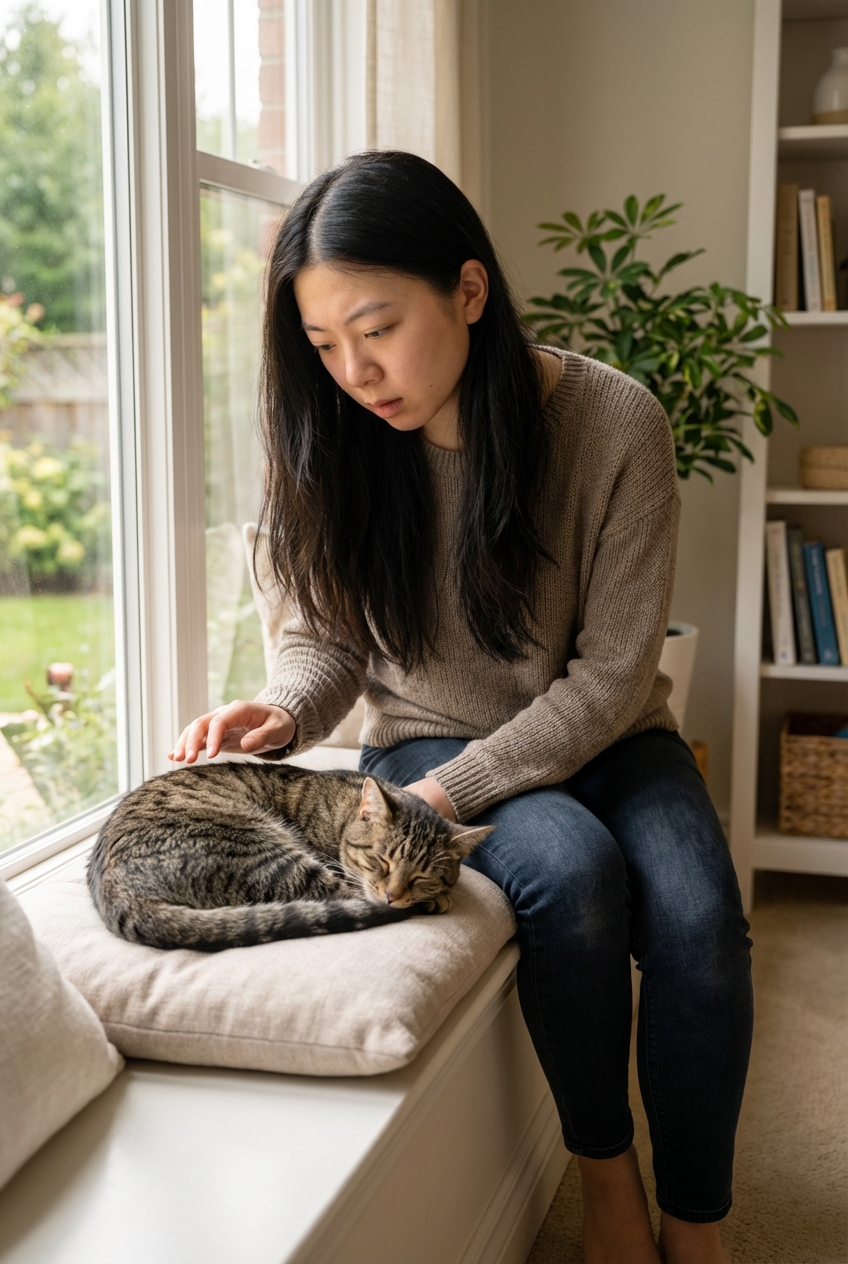
This is the purr most people recognize. Your cat is relaxed, safe, and enjoying your company.
- What you might see: soft eyes or slow blinks, relaxed body, tail still or gently curved, kneading, leaning into petting. Some cats also purr as they settle in for sleep.
- How to respond: keep doing what your cat likes, but let them set the pace. Many cats prefer short sessions with breaks.
2) Greeting and attention-seeking
Some cats purr as a “hello” or to encourage you to interact, especially around mealtimes. This can overlap with a higher-pitched, more urgent sound sometimes called a “solicitation purr,” which may include a cry-like element mixed into the purr.
- What you might see: weaving around your legs, head-butting, following you, sitting near the food area.
- How to respond: reward calm behavior. If purring is paired with persistent meowing for food, use scheduled meals and enrichment (like puzzle feeders) to reduce stress and begging.
3) Stress relief or self-soothing
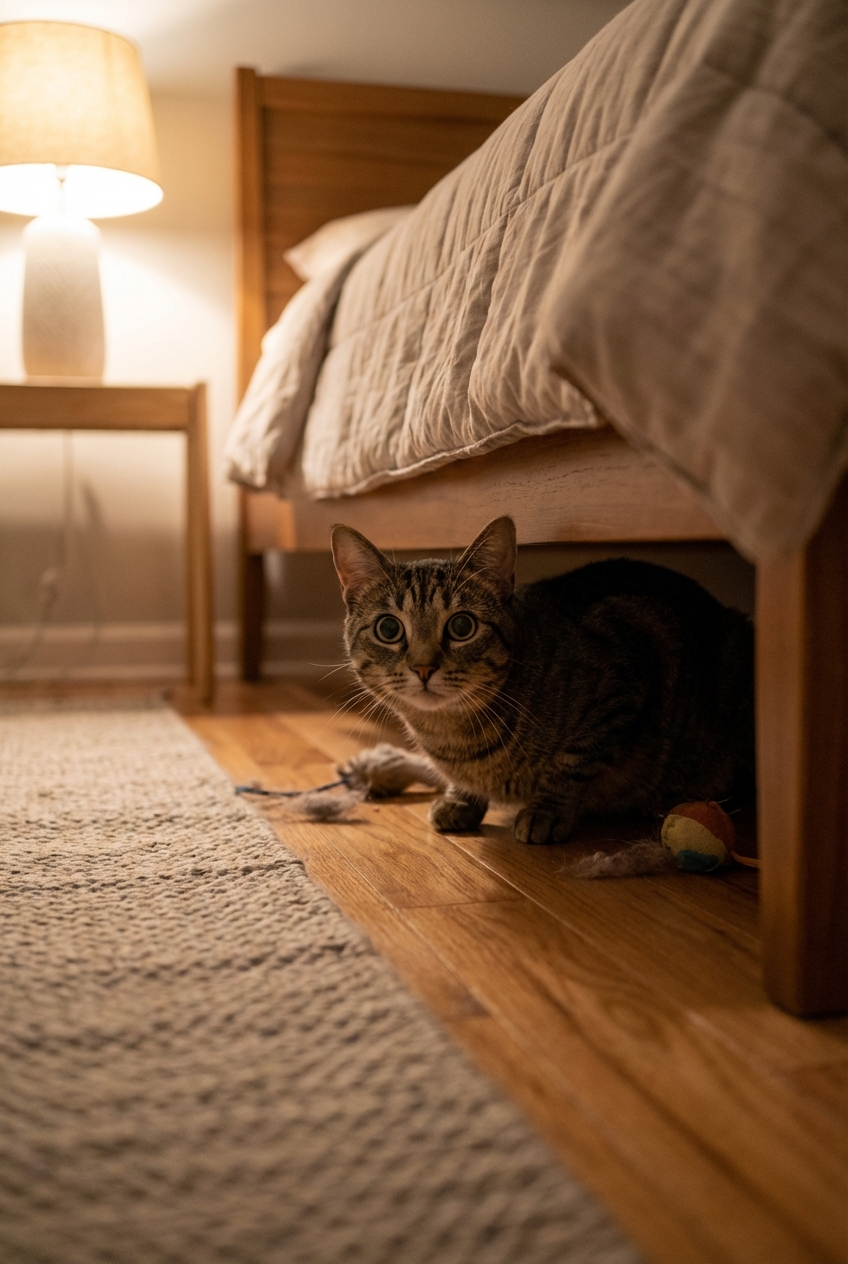
Yes, cats can purr when they are nervous. You might notice this at the vet, during car rides, when strangers visit, or after a loud noise. Purring can be a self-calming behavior.
- What you might see: ears turned sideways or back, crouched posture, tucked tail, hiding, tense muscles, dilated pupils.
- How to respond: give space, reduce noise and handling, and offer a quiet hiding spot. Consider pheromone diffusers, predictable routines, and gentle play to rebuild confidence.
4) Pain, illness, or discomfort
Some cats purr when they hurt. It can be confusing, because the purr sounds “happy,” but the rest of the body language does not match. Cats are masters at masking illness, so this is where your observation matters most.
- What you might see: decreased appetite, hiding more than usual, sudden irritability, limping, squinting, faster breathing at rest, vomiting, diarrhea, straining in the litter box, or a “meatloaf” posture with the head lowered.
- How to respond: do not assume a purring cat is fine. If anything feels “off,” call your veterinarian. Early care often means simpler, more affordable treatment.
5) Comforting behavior during labor or nursing
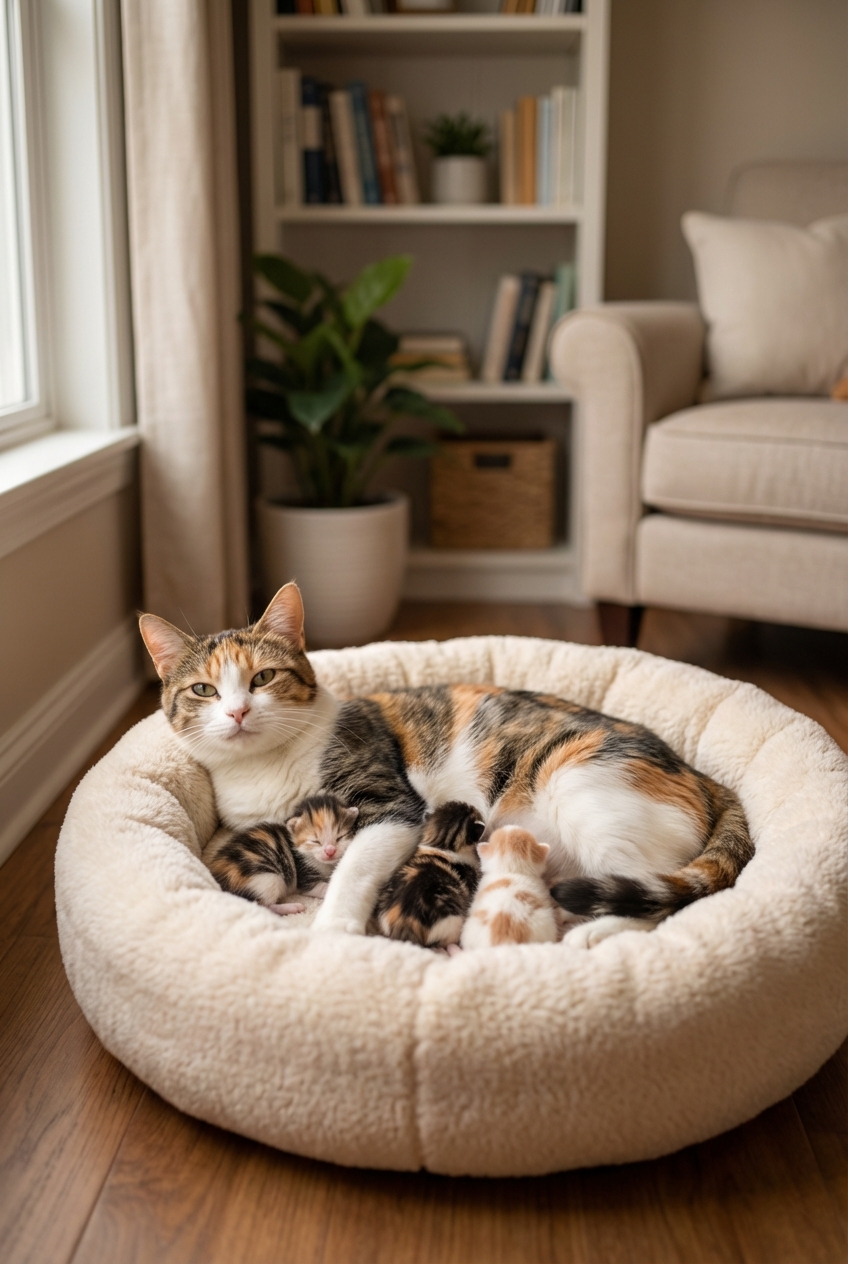
Mother cats may purr while giving birth and while nursing. Kittens also purr very early in life. This likely supports bonding and helps kittens locate mom.
- What you might see: nesting, protective behavior, frequent nursing sessions, kittens kneading and purring.
- How to respond: keep the environment quiet and warm, and contact a vet if mom seems distressed, stops eating, or has discharge with a foul odor.
How to read a purring cat
Because purring can mean different things, body language matters. Use this quick check-in:
- Eyes: soft, half-closed, or slow blinking suggests calm. Wide eyes with dilated pupils can signal fear or pain.
- Ears: forward or neutral is usually relaxed. Flattened, swiveling, or pinned back can mean stress.
- Body: loose, sprawled, or comfortably curled is a good sign. Tense, hunched, or hiding is not.
- Tail: gently resting is calm. Thrashing or tightly tucked is a red flag.
- Breathing: calm and quiet is normal. Open-mouth breathing or noticeable effort is urgent.
When purring is a concern
Call your veterinarian promptly if purring is paired with any of these:
- Not eating for 24 hours (or any appetite drop in kittens, seniors, or cats with medical conditions), or sooner if other symptoms are present
- Hiding and acting “not like themselves”
- Vomiting repeatedly, vomiting with blood, or signs of dehydration
- Diarrhea lasting more than a day, or any diarrhea with blood, black stool, marked lethargy, or dehydration
- Straining to urinate or frequent trips to the litter box with little output (this can be an emergency)
- Limping, crying, or sensitivity to touch
- Rapid breathing at rest, wheezing, or open-mouth breathing
- Sudden weight loss, increased thirst, or dramatic behavior changes (these can be seen with issues like kidney disease or hyperthyroidism)
If your cat is purring but their body looks tense or unwell, trust your instincts. The purr does not cancel out symptoms.
How to support a purring cat
Create a calm space
- Provide a cozy hiding option like a covered bed or a box in a low-traffic area.
- Keep litter boxes clean and easy to access.
- Maintain a consistent feeding routine.
Handle with respect
- Let your cat choose interaction. Offer a hand to sniff first.
- Many cats prefer cheek and chin rubs over full-body petting.
- Stop if you see tail flicking, skin twitching, or ears turning back.
Add enrichment
- Short play sessions with wand toys can reduce stress and boredom.
- Puzzle feeders encourage natural hunting behavior.
- Window perches provide safe “cat TV.”
Support health
- Annual or twice-yearly vet exams help catch issues early, especially dental disease and arthritis.
- Keep parasites controlled with vet-recommended products.
- Monitor weight. Extra pounds can worsen pain and lower energy.
Quick FAQ
Do cats purr only when they’re happy?
No. Cats also purr when anxious, in pain, or when they want comfort.
Can a cat purr to heal itself?
We cannot say purring “heals” in a direct medical sense. Some researchers have suggested low-frequency vibrations could have calming or supportive effects, but evidence is limited and the idea is still considered a hypothesis.
Why does my cat purr and bite me?
This often happens with overstimulation. Your cat may enjoy petting at first, then hit a threshold. Watch for warning signs like tail flicking or skin ripples, and keep sessions shorter.