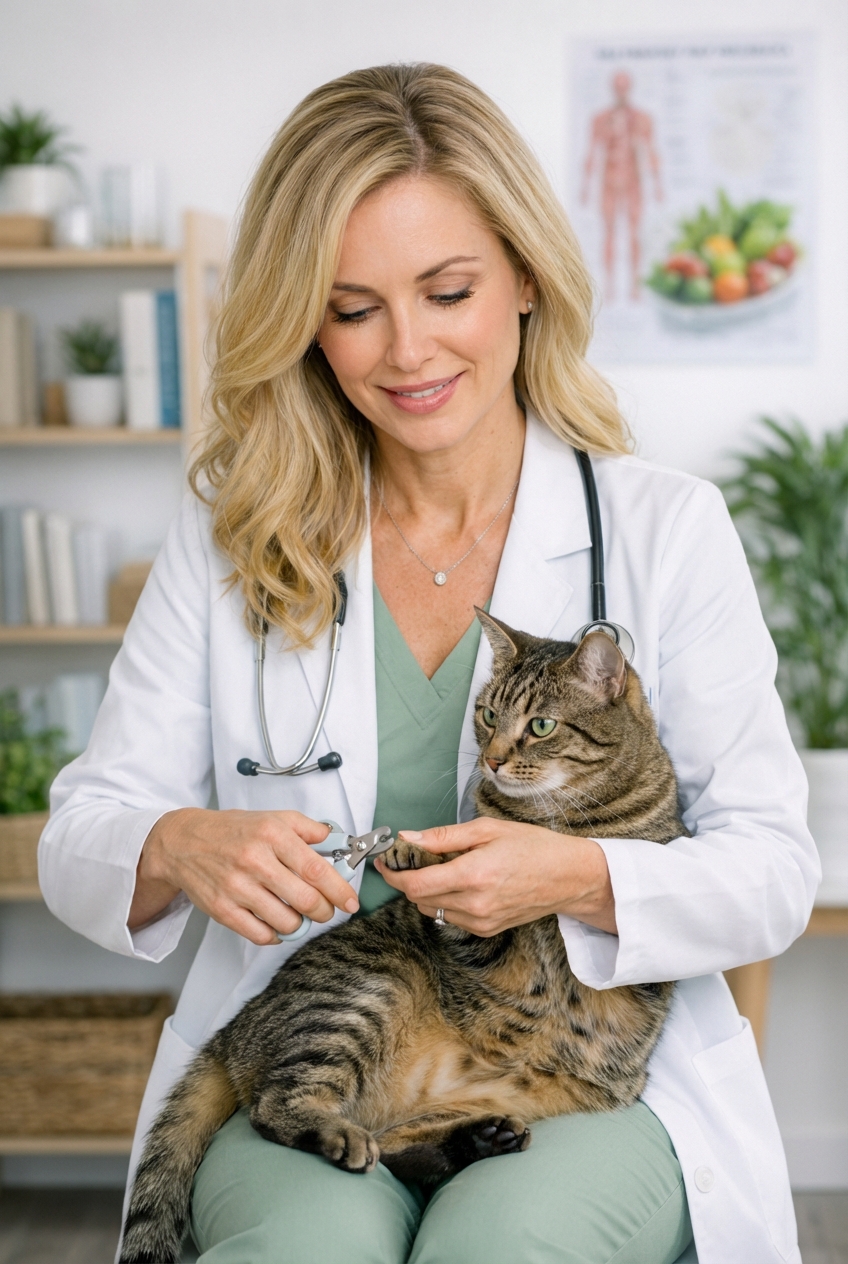
As a veterinary assistant here in Frisco, Texas, I can tell you ingrown claws are one of those “quiet” problems that can get painful fast, especially in senior cats. Older cats often nap more, scratch less, and may not wear their nails down like they used to. The claw keeps growing, curves tighter, and can end up pressing into, or even puncturing, the paw pad.
The good news is that once you know what to look for, you can catch it early. And routine nail trims are one of the simplest ways to prevent it.
What an ingrown claw looks like
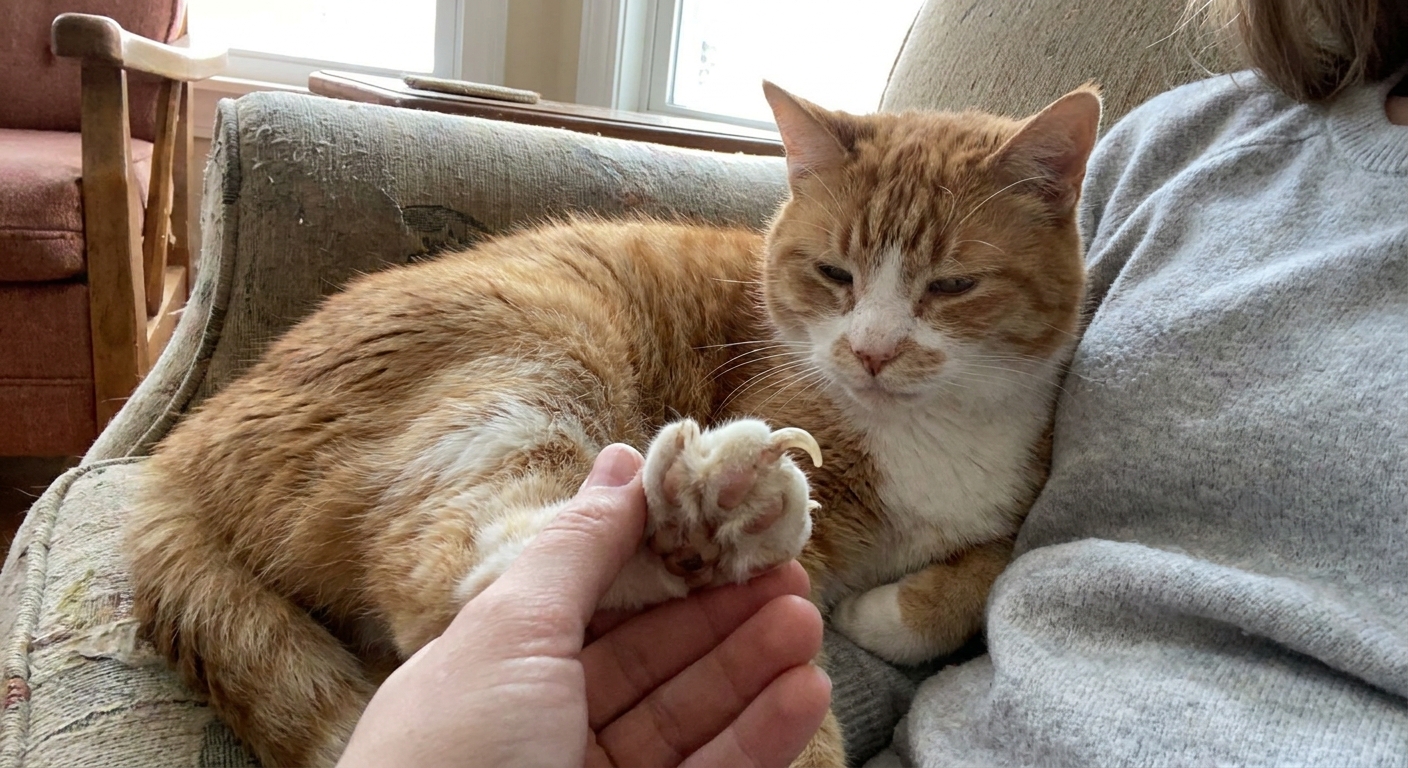
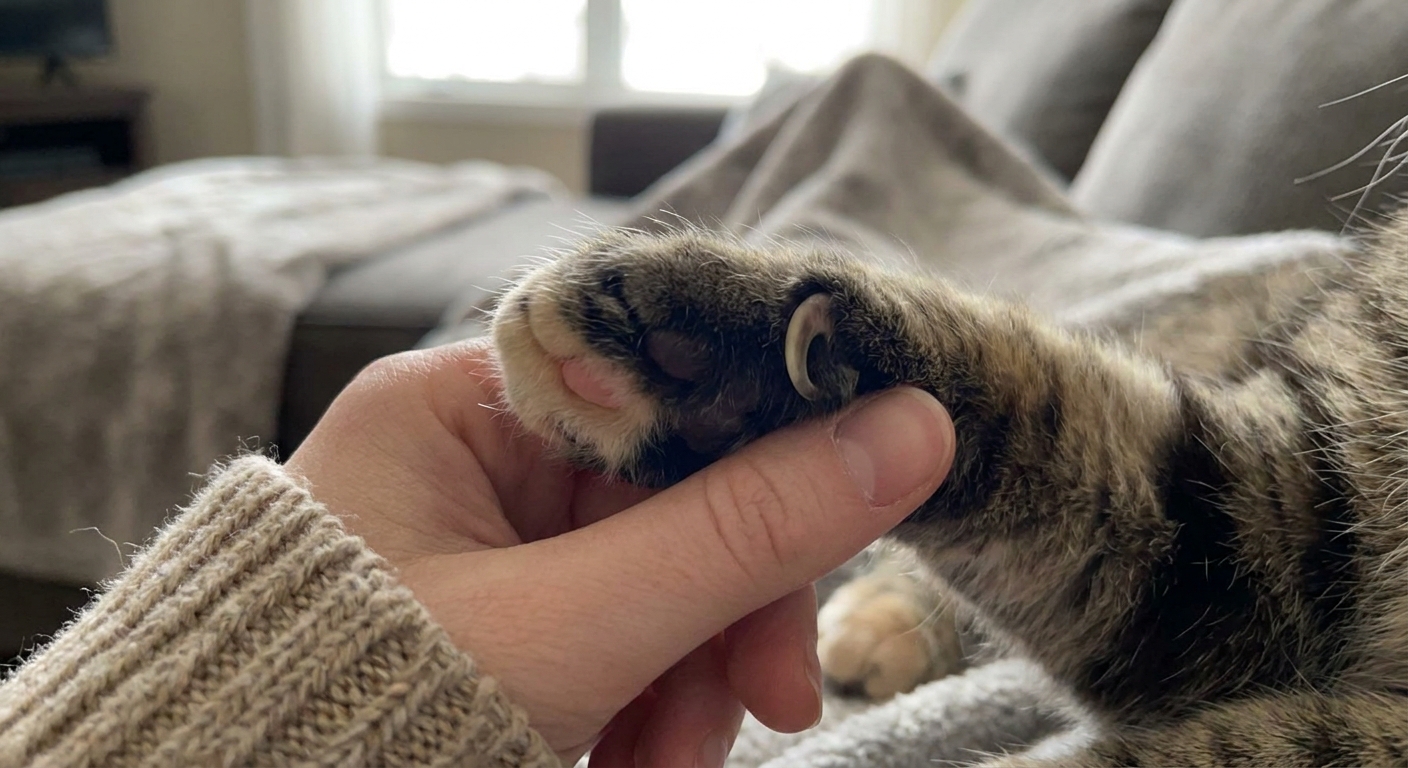
An ingrown claw (sometimes called an embedded nail) is usually an overgrown nail that has curved so far that it presses into the paw pad or actually pierces the skin. In practice, we commonly see it involve the dewclaw (the “thumb” nail) on the front paws, because it does not contact scratching surfaces as consistently and can overgrow more easily.
That said, any nail can overgrow, including back feet, and sometimes more than one nail is involved.
Early visual signs
- A nail that looks unusually long, often curling into a tight “C” or even a spiral
- The tip of the claw touching the paw pad when your cat is standing or when the paw is relaxed
- A nail growing sideways instead of forward (sometimes due to age-related changes, arthritis, or previous nail trauma)
- Thick, brittle, or layered nail texture that can happen as cats age
More advanced signs (when the claw is injuring the pad)
- Redness or swelling around one toe or the entire paw
- A visible puncture mark or small hole in the paw pad
- Crusting, discharge, or a bad smell, which can indicate infection
- Bleeding from the pad or along the nail
- Your cat flinches, pulls away, or vocalizes when you touch that foot
If the claw is truly embedded, you may see the nail tip disappear into the pad or see a swollen “puffy” toe where the nail is pressing into soft tissue.
Why senior cats are more prone to ingrown claws
Ingrown claws can happen at any age, but I see them more often in older and less active cats for a few common reasons.
- Less natural wear: Cats who scratch less (or have fewer scratching opportunities) do not shed the outer nail layers as effectively.
- Arthritis or stiffness: Painful joints can make scratching and normal grooming less frequent, which means nails grow unchecked.
- Thicker, more brittle nails: Aging nails can become harder to maintain naturally and may curve more dramatically.
- Indoor lifestyle: Indoor cats often have less vigorous climbing and scratching activity than they did when younger, so nails can stay sharper and longer unless we trim them regularly.
Even very loved, well-cared-for cats can develop this. It is not a reflection of you as a pet parent. It is just one of those senior-cat realities that needs a little extra routine care.
Symptoms you might notice at home
Sometimes you do not see the nail right away, but you notice your cat acting “off.” These are common behavior clues that make me think “check the paws”:
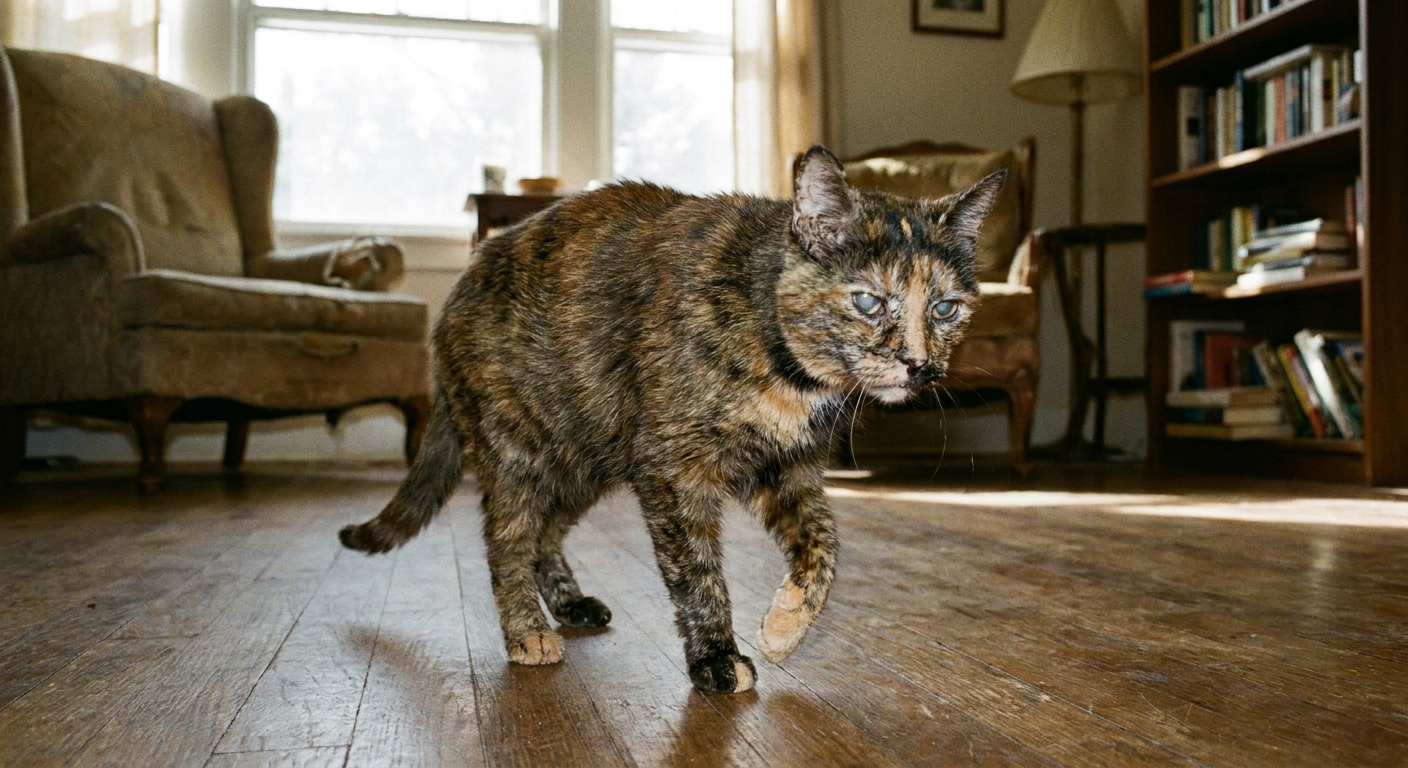
- Limping or walking gingerly
- Suddenly refusing to jump (this can be pain from the paw, or arthritis, or both)
- Excessive licking of one paw
- Hiding or being more irritable than usual
- Not wanting you to touch their feet
- Tracking a little blood or leaving small spots on bedding
One important note: limping in a senior cat is not always “just old age.” Ingrown claws are common, but so are things like a foreign object stuck between toes, a small abscess, a sprain, a fracture, or an arthritis flare. If you are unsure, it is always worth calling your vet.
How to check paws safely
Pick a calm moment, like after a meal or during a nap. Keep it gentle and short.
- Start with one paw and extend one claw at a time by gently pressing on the toe pad so the nail slides forward.
- Look at the curve. Is the tip close to the pad or touching it?
- Check the dewclaw on both front legs. These are common troublemakers.
- Scan the pads for redness, swelling, cracks, punctures, or discharge.
- Sniff for odor. A foul smell from a toe can signal infection.
If your cat is stressed, stop. You can try again later, or have your vet or groomer check. Forcing it can make future nail care much harder.
Routine trims prevent most cases
In a healthy routine, nails are trimmed before they get long enough to curve into the pad. For many senior cats, that means trimming about every 2 to 4 weeks, but there is no perfect schedule for every cat.
A practical cue I tell people is this: if nail tips start to hook into blankets, snag carpet, or you hear clicking on hard floors, it is time to trim.
What you are aiming for is simple: a nail tip that clears the pad and does not hook into fabric, carpet, or your clothes.
- Focus on the front paws first, especially dewclaws.
- Use sharp cat nail trimmers so the nail is cut cleanly instead of crushed.
- Trim just the sharp tip if you are nervous. Small, frequent trims are safer than big cuts.
If your senior cat has arthritis, consider adding more scratching options at easy-to-reach heights, like horizontal scratchers or low ramps to favorite resting spots.
Home trim or vet visit?
This part matters because an embedded claw is not the same as a long claw. Sometimes it is a quick fix. Sometimes it is a medical problem.
Home trim may be appropriate if:
- The nail is long and curving, but has not punctured the paw pad
- There is no swelling, bleeding, discharge, or odor
- Your cat is comfortable enough that you can handle the paw without a fight
If you trim at home, avoid the quick (the pink area inside the nail). If you accidentally clip a tiny bit too far and the tip bleeds, apply gentle pressure. Many people use styptic powder, and in a pinch, plain cornstarch can help. If bleeding does not stop quickly, call your vet.
In that situation, trim the tip to remove the hook and monitor the paw over the next day or two. If lameness or licking continues, call your vet.
Go to the vet (do not try to fix it at home) if:
- The claw is embedded in the pad or you cannot tell where the nail ends
- There is bleeding, a puncture, or an open wound
- You see swelling, heat, discharge, or a bad smell
- Your cat is limping or not bearing weight
- Your cat will not let you touch the paw, and restraint would be required
- Your cat has diabetes, kidney disease, or immune suppression, which can complicate wound healing
At the clinic, we can remove the nail safely, assess the pad injury, provide pain control, and treat infection when needed. Aftercare sometimes includes antibiotics, prescription pain relief, an e-collar to prevent licking, and occasionally a light bandage or a recheck if the pad is badly irritated.
What not to do
- Do not yank a nail out of the pad. It can tear tissue and worsen bleeding.
- Do not dig with tweezers to “find the tip.” That introduces bacteria and increases trauma.
- Do not use peroxide or alcohol routinely at home on an open paw pad wound. They can sting and may slow healing. If you think the pad is punctured, call your vet and ask what is safe to use for gentle cleaning.
- Do not give human pain medication. Many are toxic to cats, including acetaminophen.
If there is bleeding while you are waiting for veterinary care, you can apply gentle pressure with clean gauze or a clean cloth and keep your cat from licking as best you can.
Quick FAQ
Do ingrown claws smell?
They can. If a claw has punctured the pad, bacteria can get in and cause infection. A sour or foul odor from one toe is a big red flag.
Can an ingrown claw cause a swollen paw?
Yes. You may see swelling in one toe, or the whole paw can look puffy if your cat is inflamed and licking.
Is it always the dewclaw?
Not always, but dewclaws are common because they do not wear down as naturally as the other nails. That is why I recommend checking dewclaws first when a senior cat is limping.
My cat hates nail trims. What is the simplest prevention plan?
Pick one paw per day, or even one or two nails at a time. Consistency beats speed. If it is still too stressful, a vet clinic or experienced groomer can often do quick trims with minimal fuss.
The bottom line
Ingrown claws in senior cats often look like a dramatically curved nail that is pressing into, or disappearing into, the paw pad. The first clues at home are usually limping, licking, swelling, or a sudden “do not touch my feet” attitude.
Routine nail trims prevent most cases. But if the claw is embedded, bleeding, swollen, smelly, or your cat is clearly painful, that is a vet visit. Getting help early helps prevent infections and gets your cat comfortable again faster.