
What Do Cats Eat?

Cats are not small dogs. They are obligate carnivores, meaning their bodies are built to run on animal-based nutrition. If you have ever watched a cat stalk a toy mouse and then proudly “eat” it, you have seen that instinct in action. In this guide, I will walk you through what cats eat in the wild, what they should eat at home, how to choose between wet and dry food, which human foods are safe, what to avoid, how much to feed, and what warning signs can point to a nutritional problem.
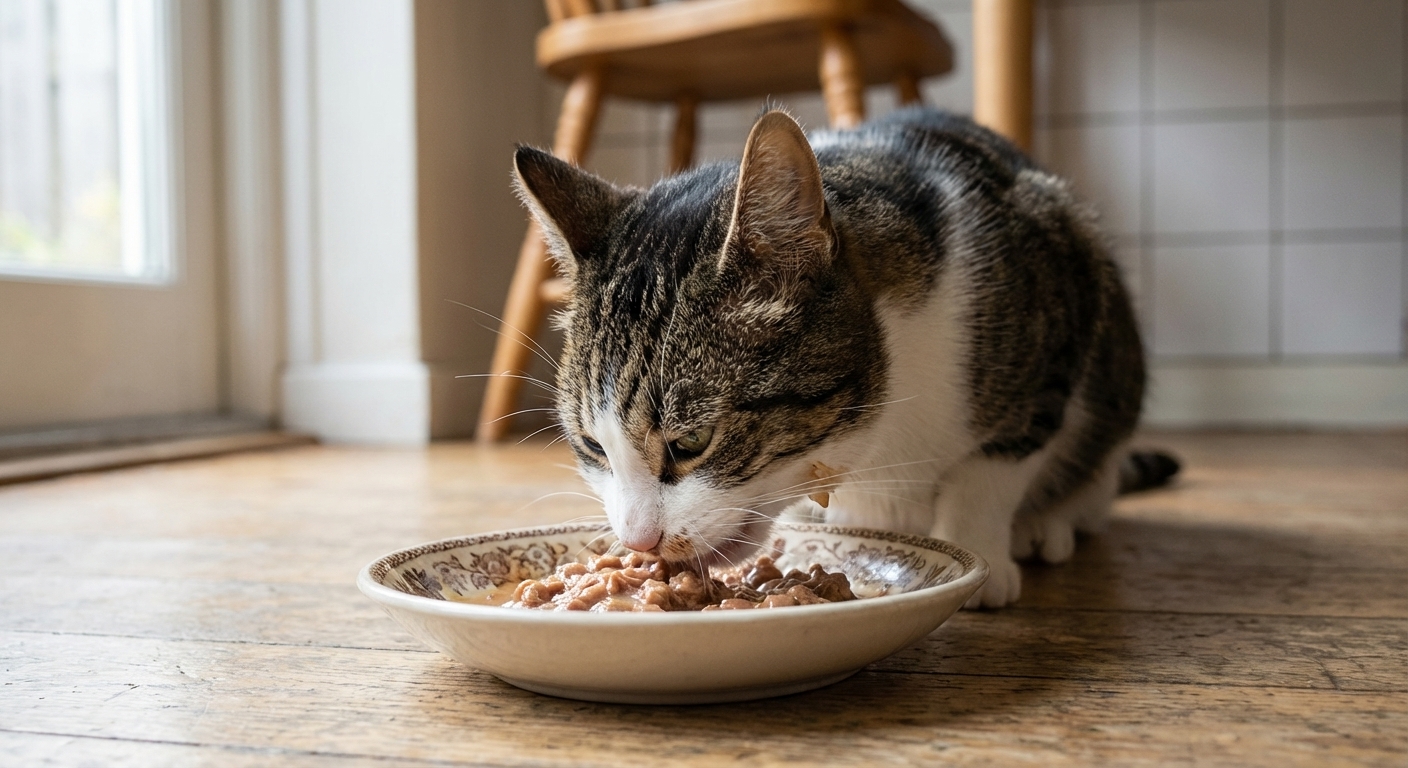
What cats eat in the wild vs. at home
In the wild
Free-roaming and feral cats primarily eat small prey. Think rodents, small birds, and sometimes insects. This matters because whole prey provides a very specific nutrient pattern: high protein, moderate fat, very low carbohydrates, and lots of moisture.
- Protein for muscle, immune function, and basic body repair
- Fat for energy and to help absorb fat-soluble vitamins
- Moisture because prey is mostly water, which supports hydration and urinary health
- Micronutrients that come from organs and bones, like vitamin A and calcium
At home
Pet cats rely on us to provide a complete and balanced diet. “Complete and balanced” is not a marketing phrase. It is a nutrition standard. A well-formulated commercial cat food is designed to meet a cat’s required amino acids, fatty acids, vitamins, and minerals in the right amounts and ratios.
If you choose homemade, it must be properly formulated, ideally with a veterinary nutritionist. Cats have several non-negotiable nutrient needs that are easy to miss when we just “add some chicken and rice.”
One more practical note: when switching foods, transition gradually over about 7 to 10 days to reduce stomach upset. Mix a little more of the new food in each day while decreasing the old.
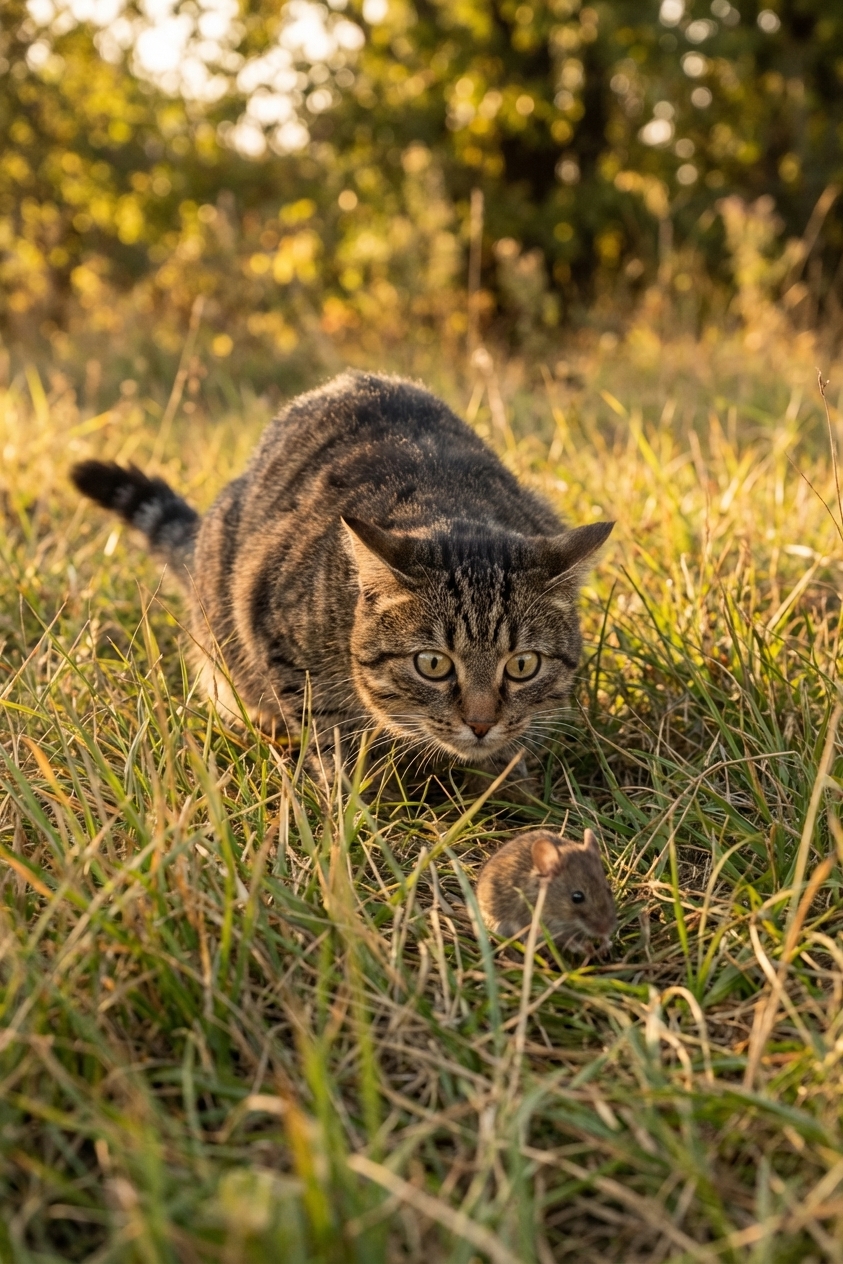
Why cats are obligate carnivores
Cats thrive on animal tissue. Their metabolism depends on nutrients that are naturally abundant in meat, organs, and animal fat. When a cat diet is too plant-heavy, it can create deficiencies over time.
Key nutrients cats must get from animal sources
- Taurine: Essential for heart health, vision, and reproduction. Deficiency can lead to dilated cardiomyopathy and retinal degeneration.
- Arachidonic acid: A fatty acid cats cannot make efficiently from plant oils.
- Preformed vitamin A: Cats do not convert beta-carotene to vitamin A well enough to meet needs.
- Vitamin D: Cats synthesize very little vitamin D in their skin and rely on diet.
- High-quality protein: Cats use protein differently than many other species and have a higher baseline protein requirement.
Bottom line: cats can eat small amounts of plant ingredients, but their diet should be built around animal-based protein and fat, with careful attention to complete nutrition.
Wet vs. dry cat food
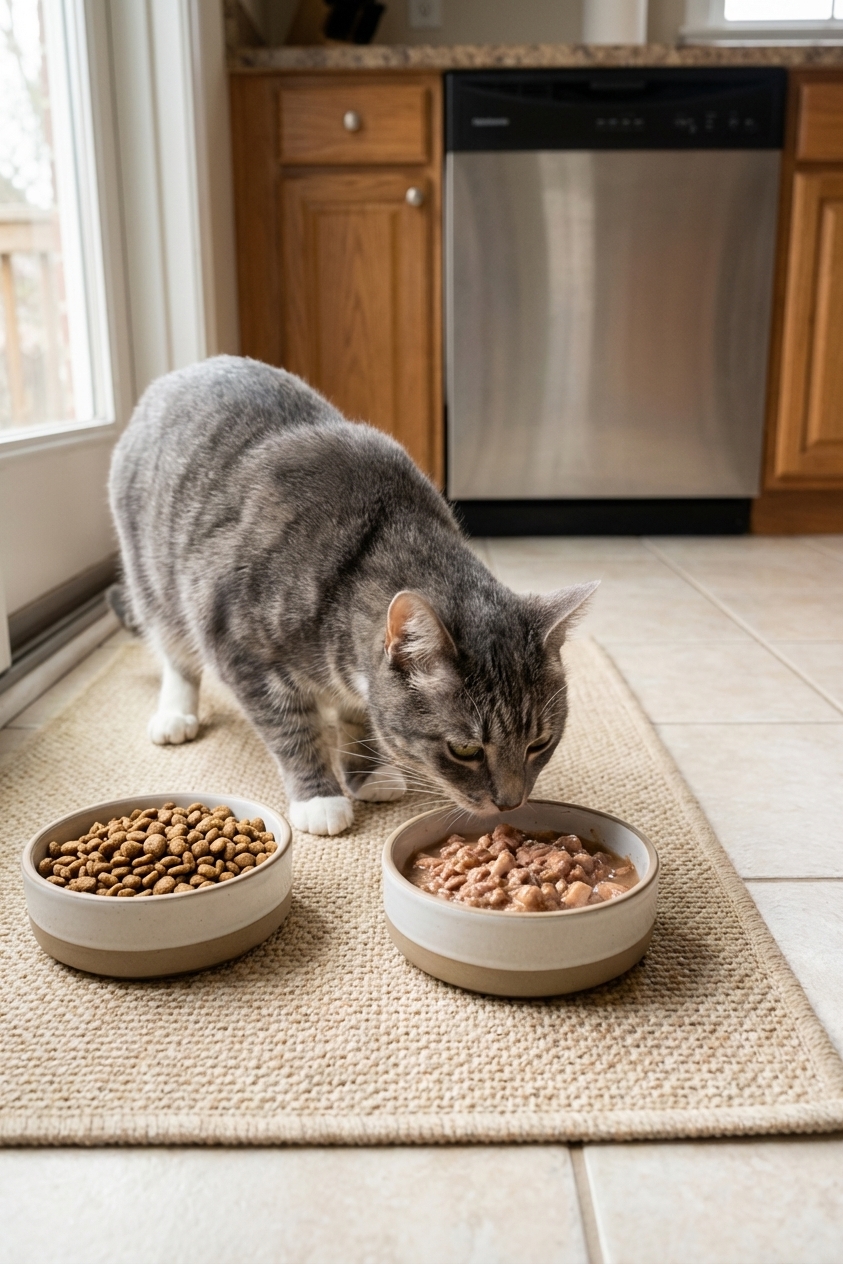
Both wet and dry diets can work, and many households use a mix. The best choice depends on your cat’s health history, preferences, and your routine.
Wet food: pros and cons
- Pros: Higher moisture supports hydration and urinary tract health. Often higher protein and lower carbs than kibble. Great for picky eaters and for cats who find chewing uncomfortable.
- Cons: More expensive per calorie. Needs refrigeration after opening. Can spoil if left out too long.
Dry food: pros and cons
- Pros: Convenient. Often less expensive. Easier for automatic feeders and multi-cat homes.
- Cons: Lower moisture. Some formulas are higher in carbohydrates. Free-feeding kibble can contribute to weight gain in many indoor cats.
A practical approach
If you are unsure where to start, consider using wet food as the “foundation” for hydration and protein, and use measured portions of dry food if needed for budget or schedule. The key is portion control and choosing a diet labeled complete and balanced for your cat’s life stage.
Quick dental reality check: wet food can be easier to eat, but it does not treat dental disease. If your cat has bad breath, drooling, pawing at the mouth, or trouble chewing, schedule a dental exam and ask your veterinarian about brushing, dental treats, or veterinary dental diets.
What to look for on a cat food label
As a veterinary assistant, one of the most helpful habits I see in pet parents is simply reading labels with a little strategy.
- Life stage match: Kitten, adult maintenance, or all life stages. Seniors may benefit from targeted formulas, but “senior” is not a regulated nutrient profile by itself. Kittens and pregnant or nursing cats should be on a kitten or all life stages diet unless your veterinarian recommends otherwise.
- AAFCO statement: Look for “complete and balanced” plus the life stage. Also note how it was substantiated. “Formulated to meet AAFCO nutrient profiles” is different from “animal feeding tests using AAFCO procedures,” which means the food was actually fed in a trial.
- Named animal proteins: Chicken, turkey, beef, salmon. “Meat by-product” can be nutritious, but many owners prefer more transparency.
- Calories: Calories per can or per cup matter more than most people realize, especially for indoor cats.
If your cat has a medical condition like kidney disease, urinary crystals, diabetes, or food allergies, ask your veterinarian before switching diets. Therapeutic diets are formulated very differently than over-the-counter foods.
Safe human foods for cats (in small amounts)
Many cats love to “help” in the kitchen. Some human foods are safe as an occasional treat, but treats should stay under about 10 percent of total daily calories so they do not unbalance the diet.
Also, think of treats and toppers as extras, not meal replacements. A cat needs a complete and balanced base diet to cover the essentials.
Safer options
- Cooked, plain meats: Chicken, turkey, lean beef. No seasoning, no onion or garlic powder.
- Cooked eggs: Scrambled or hard-boiled, plain.
- Small amounts of fish: Cooked salmon or tuna as an occasional treat. Avoid making fish the daily main protein unless it is a complete food.
- Plain pumpkin: A small spoonful can help some cats with stool consistency.
- Steamed vegetables: Tiny tastes of carrots or green beans, if your cat is interested.
Always introduce new foods slowly, and stop if you see vomiting, diarrhea, itching, ear debris, or excessive gas.

Foods cats should not eat
This is the section I wish every pet parent could keep on the fridge. Some foods are toxic, and others are simply too risky because they can trigger pancreatitis, GI upset, or choking.
- Onions, garlic, chives, leeks: Can damage red blood cells and cause anemia.
- Grapes and raisins: Clearly dangerous in dogs. In cats, data is limited, but because kidney injury is a concern and the risk is unpredictable, the safest move is to avoid completely.
- Chocolate, coffee, caffeine: Contain methylxanthines that are dangerous.
- Alcohol and raw dough: Serious toxicity risk.
- Xylitol: Extremely dangerous for dogs. In cats, severe reactions are not well-documented the same way, but it is still best practice to keep xylitol products away and call your veterinarian if your cat eats any.
- Cooked bones: Can splinter and cause obstruction or perforation.
- High-fat scraps: Bacon, sausage grease, fried foods. Pancreatitis risk.
- Milk and lots of dairy: Many cats are lactose intolerant and get diarrhea.
- Raw fish too often: Certain raw fish contain thiaminase, an enzyme that can break down thiamine. Cooking inactivates thiaminase, which is one reason cooked fish is a safer choice.
If you think your cat ate something toxic, call your veterinarian right away. Time matters.
How much should cats eat?
There is no single perfect amount because age, activity, body size, metabolism, and whether your cat is spayed or neutered all matter. That said, you can get very close with a few simple steps.
Start with calories
Find the calories on the food label, then build portions around your cat’s ideal weight and body condition. As a general guide for many indoor adult cats, daily needs often fall around 40 to 60 kcal per kg of ideal body weight, but individual needs can be higher or lower.
Example: A cat with an ideal weight of 4.5 kg might start around 180 to 270 kcal per day. If your cat is gaining, losing, or begging constantly, adjust with your veterinarian rather than guessing.
Feeding by life stage
- Kittens (up to 1 year): Need more calories and nutrients for growth. Most do best with multiple meals per day and a kitten-labeled diet.
- Adults (1 to about 7 years): Focus on maintaining a lean body condition and preventing slow “creep” weight gain.
- Seniors (about 7+ years): Monitor muscle mass, hydration, and appetite. Some seniors need more calories, not less, if they are losing weight.
Meal feeding vs. free-feeding
Many cats gain weight when kibble is left out all day. If weight is a concern, switch to measured meals. Puzzle feeders can help indoor cats eat slower and stay mentally engaged.
Hydration tips
If your cat is on a dry-heavy diet or does not drink much, try a water fountain, multiple water stations, or adding a little water or broth made for pets to wet food. Hydration is a big deal for urinary health.

Signs of a diet problem
Nutrition issues can be subtle at first, and they can look like “just getting older” or “just picky.” If you notice any of the signs below, it is worth a veterinary visit and a diet review.
- Dull coat, dandruff, or excessive shedding
- Weight loss or muscle wasting, especially along the spine and hips
- Lethargy or reduced playfulness
- Chronic vomiting or diarrhea
- Constipation or consistently dry, hard stools
- Increased thirst or frequent urination
- Bad breath beyond normal “cat breath,” which can also signal dental disease
- Eye problems like poor night vision (a red flag for taurine issues, among other causes)
Also watch the litter box. Changes in urine volume, straining, blood, or crying can be an emergency in some cats, especially males.
Homemade and raw diets
I understand the desire to feed fresh, whole foods. It feels loving and intentional, and it can be done safely. The challenge is that cats are very easy to accidentally short on critical nutrients if recipes are not professionally formulated.
Homemade cooked diets
If you want to cook for your cat, work with a board-certified veterinary nutritionist or use a recipe from a trusted veterinary source that includes the necessary supplements. Meat alone is not complete, and neither is meat with rice and veggies.
Raw diets
Raw feeding comes with additional food safety concerns for cats and people in the home, including bacterial contamination and parasite risk. Households with young children, seniors, pregnant family members, or immunocompromised individuals should be especially cautious. Talk with your veterinarian about your cat’s risk factors before switching.
Quick answers
- Cats eat primarily animal-based proteins and fats, with very limited need for carbohydrates.
- Most pet cats should eat a complete and balanced commercial diet, wet, dry, or a measured combination.
- Cats can have small amounts of plain cooked meats or eggs as treats.
- Cats should not eat onions, garlic, chocolate, alcohol, cooked bones, or high-fat scraps. Grapes, raisins, and xylitol products should also be avoided, even though cat-specific data is limited for some exposures.
If you take just one action step today, make it this: check your cat’s food label for a complete and balanced statement for the right life stage, then measure portions for one week. That simple reset can improve weight, energy, and litter box habits.
Next steps on Designer Mixes
If you are ready to go deeper, explore our cat nutrition guides on safe human foods, specific fruits, and smart treat ideas. And if your cat has a health condition, ask your veterinarian what diet goals matter most for their diagnosis so you can choose food with confidence.