Understand why yeast overgrows in your dog’s ears—especially allergies, trapped moisture, and anatomy. Learn the signs, how vets diagnose it, treatment o...
Article
•
Designer Mixes
What Causes Yeast Infection in Dogs’ Ears

Shari Shidate
Designer Mixes contributor
As a veterinary assistant in Frisco, Texas, I hear this concern all the time: “Why does my dog keep getting yeast infections in its ears?” The comforting news is that you are not doing anything “wrong” by noticing it. Yeast ear infections are common, often recurring, and usually tied to an underlying trigger we can identify and manage.
Let’s walk through what yeast is, what causes it to overgrow, what symptoms to watch for, and when it is time to see your veterinarian.
What a yeast ear infection is
Most canine “yeast ear infections” involve an overgrowth of Malassezia, a type of yeast that normally lives on the skin. In healthy ears, it stays in balance. But when the ear canal becomes warm, moist, inflamed, or full of debris, yeast can multiply quickly and cause infection.
Dogs also have a vertical and horizontal (L-shaped) ear canal. That shape can make drainage and airflow harder, especially when there is swelling, wax, or trapped moisture. That trapped environment is a perfect recipe for yeast.
Top causes of yeast in dog ears
A yeast infection rarely happens “out of nowhere.” In many dogs, it is a symptom of a bigger issue. Here are the most common causes veterinarians see.
1) Allergies (a leading trigger)
In my experience at the clinic, allergies are one of the most common reasons a dog develops recurring ear problems.
- Environmental allergies (atopy) like pollens, grasses, dust mites, and molds can inflame the skin and ear canals, setting the stage for yeast.
- Food sensitivities can also contribute in some dogs, especially when ear infections are frequent or year-round.
Allergies make the ear canal skin irritated and swollen, and inflamed skin produces more wax and debris. Yeast loves that environment.
2) Moisture and trapped humidity
Yeast thrives in warm, damp places. Common moisture triggers include:
- Swimming
- Baths where water gets into the ears
- Humid climates
- Dogs with very hairy ear canals that hold moisture
If your dog is a frequent swimmer or gets regular baths, ask your vet what ear-drying routine is safest for your dog’s specific ear health.
3) Ear anatomy and breed tendencies
Some dogs are simply built in a way that makes yeast more likely. Risk increases with:
- Floppy ears (less airflow)
- Narrow ear canals
- Hairy ear canals that trap wax and moisture
This is why some doodle mixes, spaniels, and retrievers may be more prone to recurring ear issues. It is not a “bad dog” problem. It is often a ventilation, moisture, and inflammation problem.
4) Wax buildup, debris, and overcleaning
Too much wax and debris can feed yeast and block proper airflow. But here is the tricky part: overcleaning or using the wrong products can irritate the ear canal and worsen inflammation, which also supports yeast overgrowth.
One evidence-based takeaway: ear cleaners are not “one size fits all.” Some are drying, some are wax-lifting, and some are designed to help manage microbes. Your vet can recommend the right approach based on what is actually happening in your dog’s ear.
5) Underlying endocrine or immune conditions
When a dog has recurring yeast infections, your veterinarian may consider medical conditions that make yeast more likely, such as:
- Hypothyroidism
- Cushing’s disease
- Immune suppression, including long-term or higher-dose steroid use in some patients
These conditions can change the skin barrier and oil production, creating a more yeast-friendly environment.
Other issues that look like yeast
Not every itchy ear is yeast. Some problems can mimic yeast symptoms, and mixed infections are common.
- Bacterial ear infections can cause odor, discharge, redness, and discomfort that look very similar to yeast.
- Ear mites can cause intense itchiness and debris, especially in younger dogs or multi-pet homes.
- Foreign material (like foxtails) can trigger sudden head shaking and pain.
This is one reason accurate diagnosis matters. If you treat the wrong problem at home, the real issue can continue and the ear can stay inflamed.
Signs of a yeast ear infection
Many dogs show a few classic symptoms. Watch for:
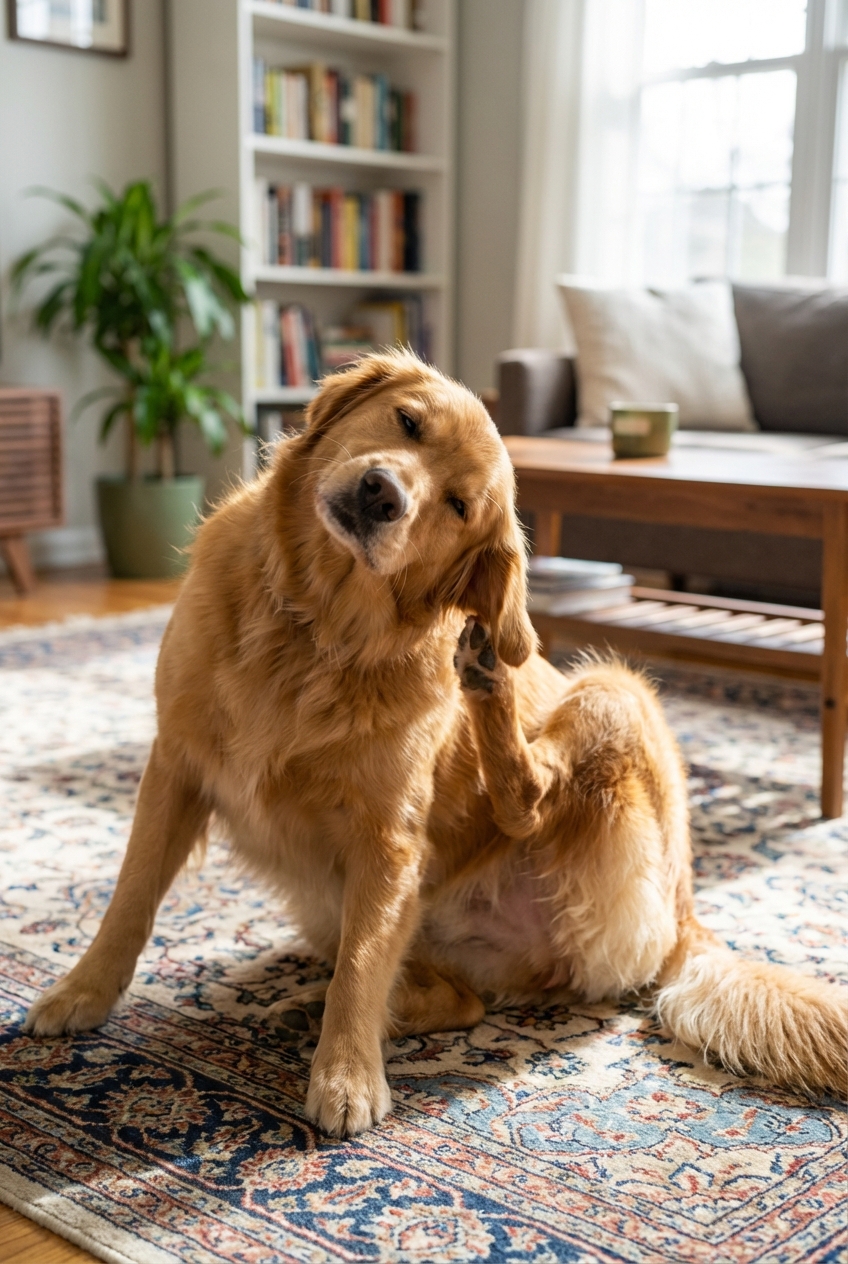
- Head shaking
- Scratching at the ears or rubbing the face on the floor
- Redness or swelling of the ear canal
- A strong, “yeasty” or musty odor
- Brown, yellow, or greasy discharge
- Sensitivity when you touch the ear
- Head tilt or balance issues (more urgent)
If you notice pain, significant swelling, or a sudden head tilt, that is a strong sign to get seen promptly. Head tilt, stumbling, or balance problems can suggest middle or inner ear involvement, not just the outer ear canal.
How vets confirm yeast
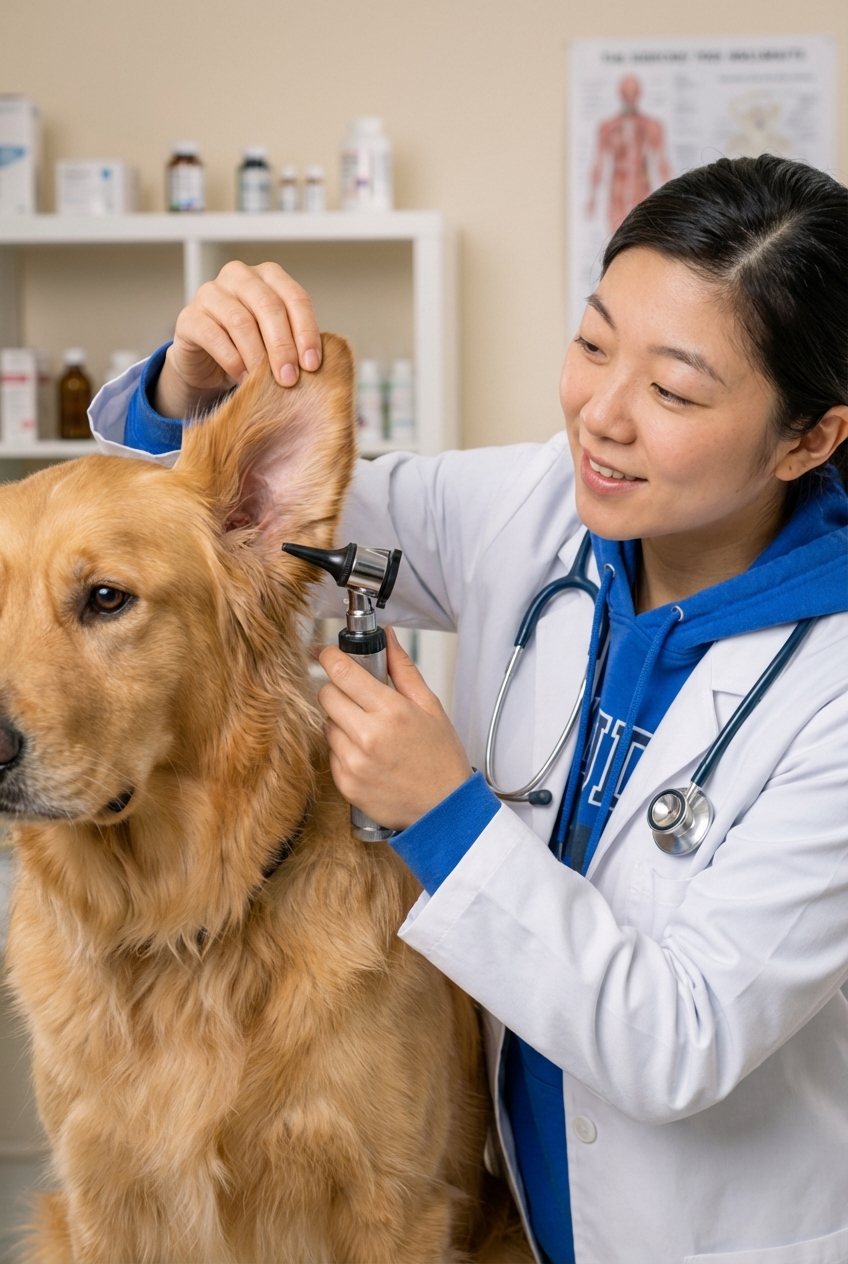
A standard first step is simple and quick: your veterinarian will look in the ear with an otoscope and often perform ear cytology, which involves checking a sample of debris under a microscope.
This matters because treatment changes depending on what is found:
- Yeast requires antifungal therapy.
- Bacteria may require antibiotic drops or other medications.
- Severe inflammation may require anti-inflammatory medication too.
For chronic, severe, or recurrent cases, your vet may also recommend additional testing like an ear culture, a deeper otoscopic exam (sometimes with sedation), or imaging. These steps help when infections keep coming back or are not responding as expected.
When owners treat “guess-and-check” at home, the infection can linger for weeks and become harder to resolve.
Why yeast keeps coming back
Recurring yeast infections usually mean one of two things:
- The underlying trigger is still active, especially allergies or chronic moisture.
- The infection never fully cleared, or the ear canal stayed inflamed enough for yeast to return quickly.
For dogs with repeat infections, your veterinarian may recommend a longer treatment course, recheck exams, or an allergy workup. It is not about “more medication.” It is about making sure the root cause is addressed.
What you can do at home (safely)
Here are practical, vet-friendly steps that can help reduce yeast flare-ups, especially for dogs prone to them.
Clean ears the right way
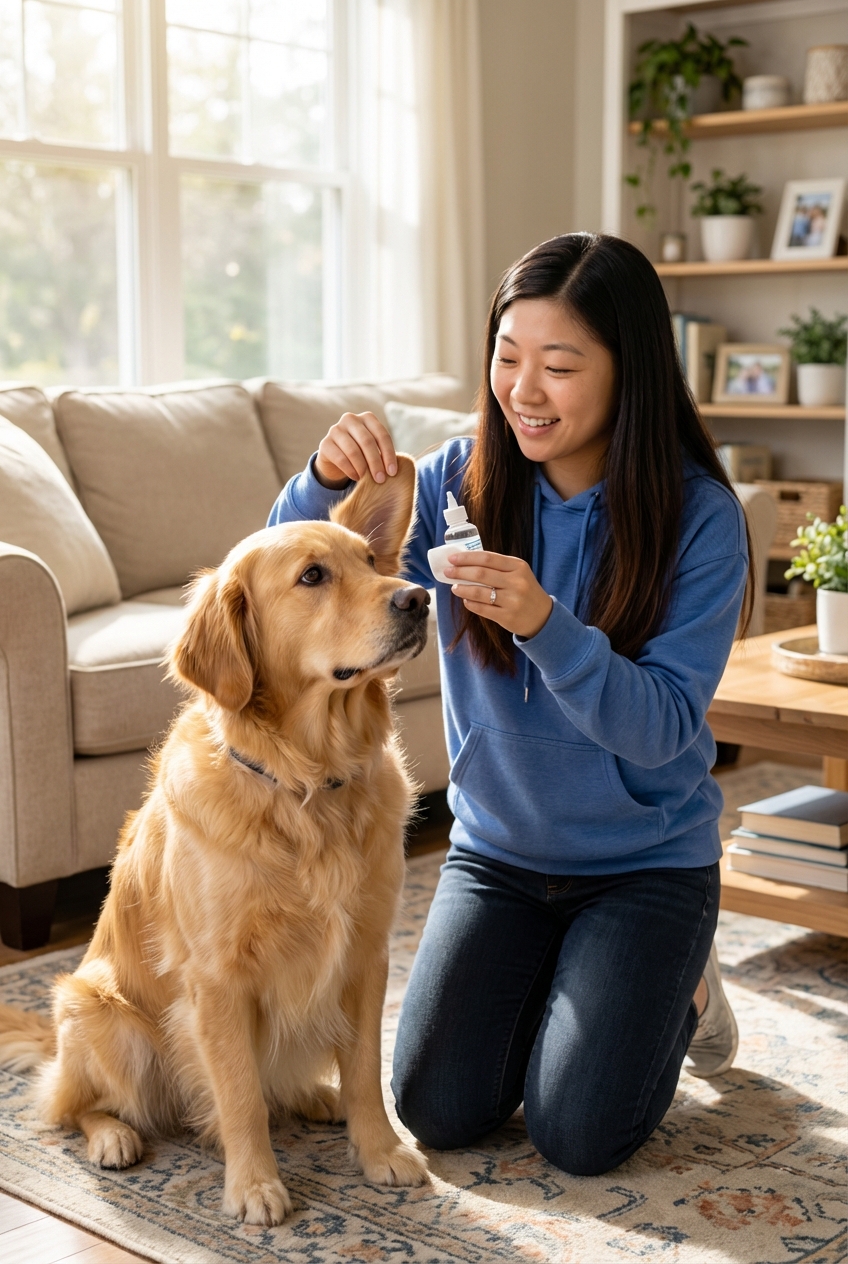
- Only use ear cleaners made for dogs.
- Ask your vet how often to clean. More is not always better.
- Do not use hydrogen peroxide, alcohol, or vinegar unless your veterinarian specifically instructs it for your dog.
- If the ear is very painful, swollen shut, bleeding, or you are worried about a ruptured eardrum, do not flush or rinse the ear at home. Get your dog checked first.
Keep ears dry after water
- After swimming or baths, gently dry the outer ear with a soft towel.
- If your vet approves it, use a drying ear rinse designed for pets after water activities.
Use medications safely
Many prescription ear medications are combination products (for example, antifungal plus antibiotic plus a steroid to calm inflammation). This is exactly why it is best not to use leftover ear drops from a previous infection. The “right” medication depends on what is in the ear today.
Support the underlying problem
If allergies are suspected, your vet may discuss options like prescription allergy medications, immunotherapy, parasite control, diet trials, or management of secondary skin infections.
For chronic cases, a maintenance plan can make a big difference. This might include scheduled rechecks, a vet-approved cleaning routine, and coordinating with your groomer if your dog tends to trap hair and moisture in the ear canal.
If ear infections are frequent, focus on the “why” as much as the “what.” Treating yeast is important, but preventing the next flare often comes down to controlling inflammation and moisture.
When to see the vet
Please schedule a veterinary visit if:
- This is your dog’s first ear infection.
- There is a foul odor, discharge, or visible redness.
- Your dog seems painful, cries, or pulls away.
- Symptoms return within weeks of finishing treatment.
Seek prompt care if you see:
- Head tilt, stumbling, or balance problems
- Swelling that closes off the ear canal
- Bleeding or severe pain
These can indicate a deeper infection or significant inflammation that needs medical attention.
Key takeaways
- Yeast lives naturally on the skin, but it overgrows when the ear becomes inflamed, moist, or debris-filled.
- Allergies are a leading underlying cause of recurrent yeast ear infections.
- Moisture, ear shape, wax buildup, and medical conditions like hypothyroidism can contribute.
- Ear cytology is a common first step that helps your vet choose the right treatment and avoid guesswork. In some cases, culture or more advanced evaluation is needed.
- Prevention often means managing allergies and keeping ears appropriately clean and dry.
If you are dealing with recurring ear infections, you are not alone. With the right diagnosis and a consistent plan, most dogs can get real relief and fewer flare-ups over time.