
Mange looks scary but is treatable. Learn the signs, how vets diagnose sarcoptic vs demodectic mange, safe home steps, cleaning tips, and when to seek urgent...
Article
•
Designer Mixes
What Causes Mange in Dogs

Shari Shidate
Designer Mixes contributor
Mange is one of those skin conditions that can look scary fast. One day your dog has a little itch, and the next you are seeing hair loss, red patches, crusting, and nonstop scratching. As a veterinary assistant, I want you to know two reassuring truths: most mange cases are treatable, and the “cause” becomes much clearer once you know what type you are dealing with.
One quick note before we dive in: this article is for education and cannot replace a diagnosis from your veterinarian. Skin conditions can look very similar, and the right treatment depends on the exact cause.
Mange is not a single disease. It is a skin problem caused by mites. The type of mite, plus your dog’s immune health and environment, determines how severe it gets and how contagious it is.
What is mange?
Mange is an inflammatory skin condition caused by microscopic mites. These mites either live on the skin surface or in hair follicles. With some mites (especially Demodex), disease can occur when a normal mite population overgrows. With others (especially Sarcoptes), disease is typically due to infestation after exposure, not an “out of balance” normal population.
In dogs, the two most important categories are:
- Demodectic mange (Demodex mites)
- Sarcoptic mange (Sarcoptes scabiei mites, also called canine scabies)
There are a couple of other mite-related issues that can look similar, such as ear mites and Cheyletiella (often nicknamed “walking dandruff”), but Demodex and Sarcoptes are the big ones behind classic “mange.”
Main causes
1) Demodectic mange (Demodex)
Cause: Demodectic mange happens when Demodex mites multiply excessively, primarily in hair follicles (and sometimes involving nearby oil glands). Here is the key point: many dogs have Demodex mites normally. In healthy dogs, the immune system keeps the population under control.
So what actually causes the problem? Usually, it is an immature or suppressed immune response that allows the mites to overgrow.
- Puppies and adolescents are more likely to get localized Demodex because their immune system is still maturing. Some localized cases can self-resolve, but they still deserve monitoring because they can worsen or become infected.
- Adult-onset Demodex raises a bigger red flag that something is suppressing immunity.
Is it contagious? Typically, no. Demodex is not considered contagious in the way scabies is. Very young puppies may acquire mites from their mother during early nursing and close contact, but most dogs do not “catch” Demodex from random dogs at the park.
2) Sarcoptic mange (scabies)
Cause: Sarcoptic mange is caused by the Sarcoptes mite. Dogs usually develop it after contact with an infected animal or contaminated items and spaces such as bedding, brushes, collars, kennels, and grooming environments. These mites do not survive off-host for long, typically a few days, depending on temperature and humidity.
Is it contagious? Yes. Sarcoptic mange is highly contagious to other dogs. It can also cause temporary itchy bumps in humans after handling an infected pet, although the mites do not thrive long-term on people.
Why it looks so miserable: Many dogs develop a hypersensitivity reaction to the mites, so the itching can be extreme even if only a small number of mites are present.

Why some dogs get mange
The mite is the root cause, but several factors influence whether the problem starts, how severe it becomes, and how quickly it spreads.
Immune stress and underlying illness
When I see repeated or severe Demodex, I immediately think about what might be impairing the dog’s natural defenses. Common contributors include:
- High stress (new home, shelter transition, major routine change)
- Other infections that tax the immune system
- Hormonal disease (for example, hypothyroidism or Cushing’s disease)
- Cancer or other chronic illness
- Immune-suppressing medications (your veterinarian will weigh risks and benefits)
Age
Puppies can get localized Demodex spots (often around the face or front legs). Older dogs may have more trouble controlling mites if overall health is declining.
Genetics
Some dogs appear genetically predisposed to Demodex, likely due to inherited immune response differences. Many veterinarians recommend not breeding dogs that have had generalized demodectic mange, because susceptibility can be passed along.
Nutrition and skin barrier health
Nutrition does not “cause” mange, but the skin is an organ that depends on quality protein, essential fatty acids, vitamins, and minerals. Poor nutrition can weaken the skin barrier and make secondary bacterial or yeast infections more likely, which can make mange look and feel much worse.
If you are improving your dog’s diet, go slowly and be consistent. Supporting the skin from the inside out can make treatment more comfortable, especially for chronic cases.
Common mange myths
Myth: Mange is caused by being dirty
No. Clean, well-loved dogs can get mange. Sarcoptic mange is about exposure and contagion. Demodex is about overgrowth related to immune control.
Myth: You will always see mites
Mites are microscopic. Sarcoptic mange can be particularly tricky because mites can be hard to find on skin scrapings. Veterinarians often diagnose based on history, pattern of itch, distribution of lesions, response to treatment, and ruling out other causes.
Myth: Hair loss automatically means mange
Hair loss can also come from allergies, ringworm, endocrine disease, bacterial folliculitis, yeast dermatitis, and more. Mange is common, but it is not the only explanation. Also important: ringworm is contagious too, but it needs very different management than mites.
Symptoms by type
Demodectic mange signs
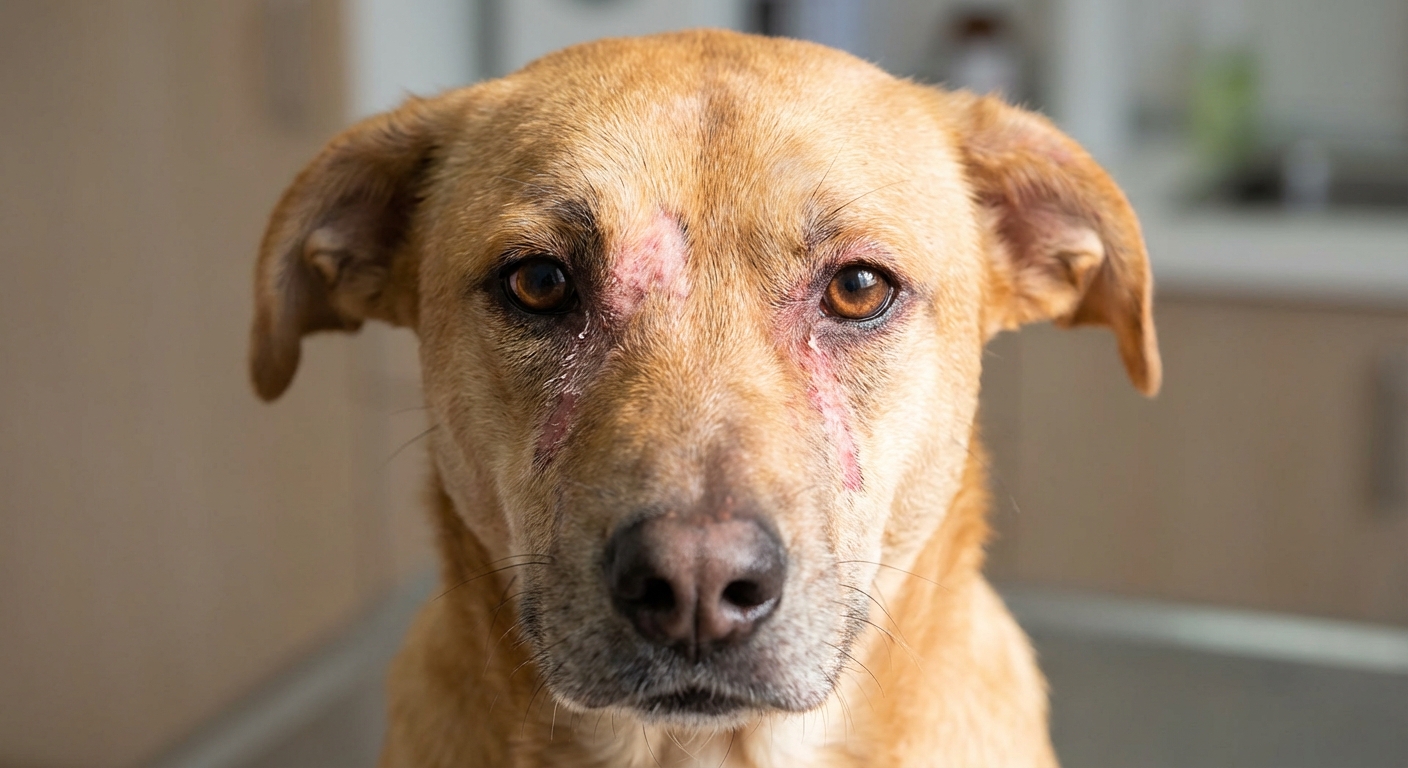
- Patchy hair loss, often around the eyes, muzzle, and front legs
- Mild to moderate itch (some dogs are not very itchy at first)
- Redness, scaling
- If generalized or complicated: odor, crusting, oozing, painful skin due to secondary infection
Sarcoptic mange signs
- Intense itching, often sudden onset
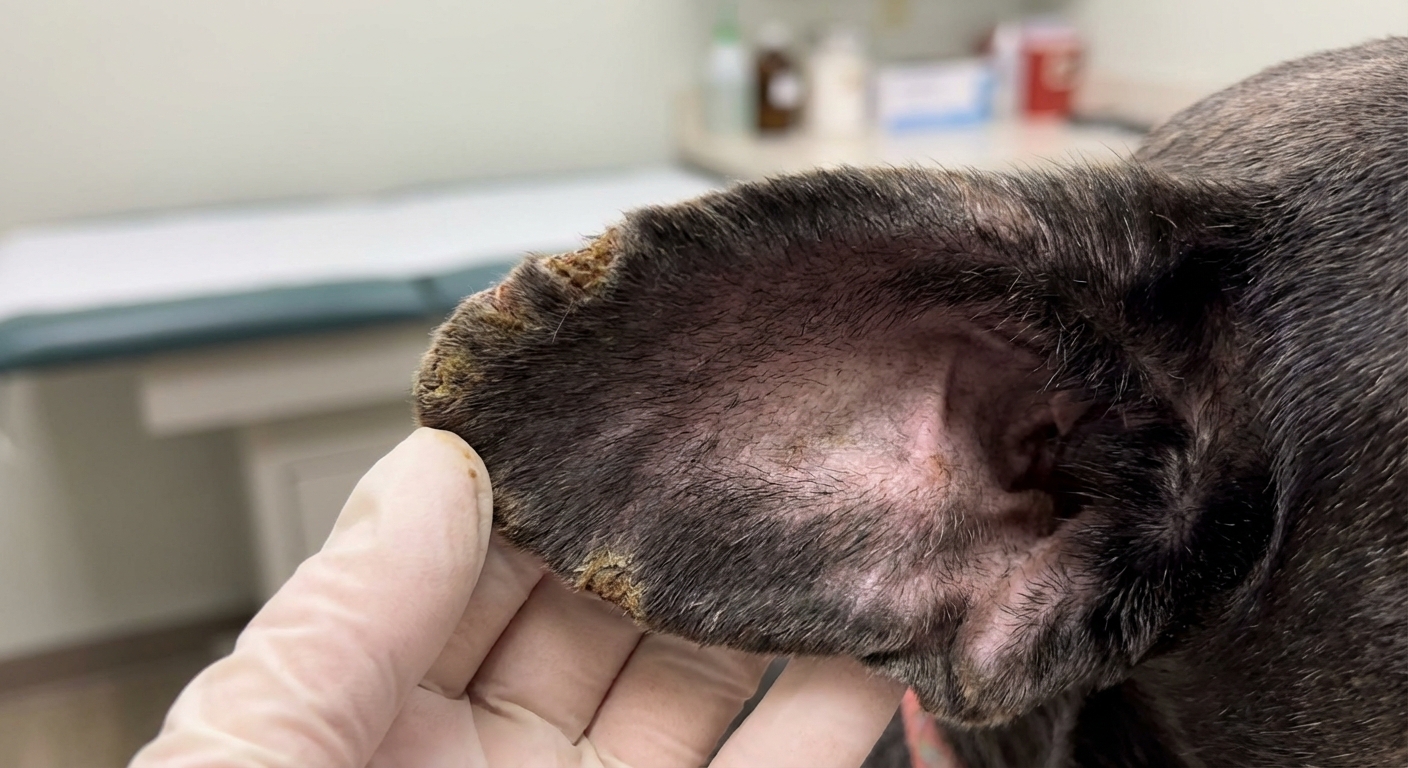
- Red bumps, scabs, crusts
- Common areas: ear margins, elbows, hocks, belly, chest
- Hair loss from chewing and scratching
- Other pets in the home may start itching too
- Humans in the home may develop temporary itchy bumps after contact
How vets confirm the cause
Because many skin issues look alike, diagnosis matters. In a clinic setting, your veterinarian may use:
- Skin scrapings (deep scrapings for Demodex; superficial for Sarcoptes)
- Hair plucks (trichograms) to look for mites in follicles
- Skin cytology (tape or swab) to check for bacteria and yeast
- Fungal testing if ringworm is a possibility
- Response-to-treatment approach when scabies is suspected but hard to prove on a scraping
Sarcoptes scrapings are often negative even when scabies is present. Some veterinarians also consider clues like the typical pattern of lesions and a positive pinnal-pedal reflex.
If Demodex starts in adulthood or is severe, your veterinarian may recommend lab work to look for underlying conditions.
What treatment looks like
Treatment depends on the mite, your dog’s age and health, and whether there is a secondary infection. Your veterinarian may recommend:
- Prescription anti-parasite medication (many clinics use isoxazoline-class medications; options and labeling vary by country and by patient)
- Medicated baths or rinses in some cases, especially when there is heavy crusting or infection
- Antibiotics and or antifungals if there is a secondary bacterial or yeast infection
- Itch and inflammation support as appropriate, while being careful not to worsen mite problems with the wrong medications
- Rechecks to monitor progress (for Demodex, this may include repeat scrapings and longer treatment courses)
- Time: some cases improve quickly, but others take weeks to months for full skin recovery and hair regrowth
If scabies is suspected: your veterinarian often recommends treating all in-contact dogs, and may advise environmental cleaning. Ask your vet whether other pets in the home (like cats) need treatment too, since recommendations depend on the household and the products used.
What to do if you suspect mange
Step 1: Schedule a vet visit soon
Mange can progress quickly, and secondary infections are common. Early treatment is usually simpler and less expensive.
Step 2: Limit contact until you know the type
If scabies is possible, keep your dog away from dog parks, daycare, grooming facilities, and close contact with other pets until your veterinarian gives guidance.
Step 3: Avoid random home remedies
I understand the temptation, especially when you are watching your dog itch. But some DIY treatments can irritate the skin, delay diagnosis, or be unsafe if ingested. Mange is highly treatable with modern veterinary medications, and the right product depends on the type of mite and your dog’s age and health.
Helpful rule of thumb: if your dog is itchy enough to lose sleep, bleed from scratching, or develop scabs fast, that is a medical problem that deserves medical treatment.
Prevention tips
You cannot control everything, but you can reduce risk and catch problems early.
- Use veterinarian-recommended parasite prevention as advised for your region and your dog’s lifestyle. Some modern preventives can help protect against, or treat, certain mite problems. Product coverage varies, so ask your vet what is appropriate.
- Support skin health with balanced nutrition, steady routine, and good grooming habits.
- Quarantine new pets or fosters for a short period when possible, especially if they are itchy or have hair loss.
- Wash bedding regularly, and more frequently if any skin issue is present.
- Address underlying health issues promptly, particularly in adult dogs with recurring skin flare-ups.
When to seek urgent care
Please contact your veterinarian quickly, or seek urgent care, if you notice any of the following:
- Rapidly spreading hair loss with inflamed, painful skin
- Pus, oozing, strong odor, or widespread crusting
- Your dog seems lethargic, feverish, or stops eating
- Severe itching that causes bleeding or nonstop distress
- Multiple pets in the home suddenly becoming itchy
The good news is that once you identify what is causing your dog’s mange, you can move forward with a plan. With the right treatment and a little patience, most dogs get comfortable again and grow their coat back beautifully.